Key takeaways
- Plan decoration around door openings, walking space and routine plant care.
- Keep vents, drainage outlets and plant daylight clear.
- Choose lighting for its intended conditions and follow the manufacturer's instructions.
- Check pumpkins regularly and remove any that soften or decay.
- Treat the practical advice as Garden UK's guidance, not Kemp's gardening method.
Shirlie Kemp’s autumn greenhouse ideas start with a documented scene dated 21 October 2026. The public Instagram post by maisonnumber9 shows harvested pumpkins among plants inside a greenhouse. Its caption refers to carving the pumpkins.
That gives a clear seasonal reference, but it does not establish how the greenhouse was arranged or maintained. The practical guidance below is Garden UK’s advice, not a description of Kemp’s installation or gardening method.
Use it to plan a display around working doors, open vents and plants that still need daylight. Start with access and care, then decide where decoration can fit. For broader layout choices, browse the garden design guides.
Start with what the post establishes
The post establishes a simple visual idea: harvested pumpkins placed among greenhouse plants. The caption adds a practical purpose, because it refers to carving those pumpkins.
The available evidence does not establish the light type, wiring or installation method. It also does not establish the greenhouse location or property details.
Borrow the idea of a seasonal display without treating the photograph as an installation guide. The checks below are Garden UK’s editorial framework for planning your own arrangement.
Plan a ten-minute greenhouse display audit
Set aside ten minutes for an initial check before adding decoration. This is a suggested planning allowance, not a tested completion time.
Garden UK’s display audit checks five parts of the working space:
- Open the door fully and check the access route. Carry a watering can through without moving decorations.
- Open each vent through its normal travel. Keep handles and moving panels clear.
- Find the drainage outlets. Remove anything that covers an outlet or obstructs the route water takes.
- Check plant daylight. Move proposed decorations away from glazing that supplies light to occupied benches.
- Check electrical suitability. Read lighting instructions and identify a position that keeps wiring out of walking routes.
If a decoration fails a check, move it or leave it out. Repeat the relevant check after rearranging pots or adding pumpkins.
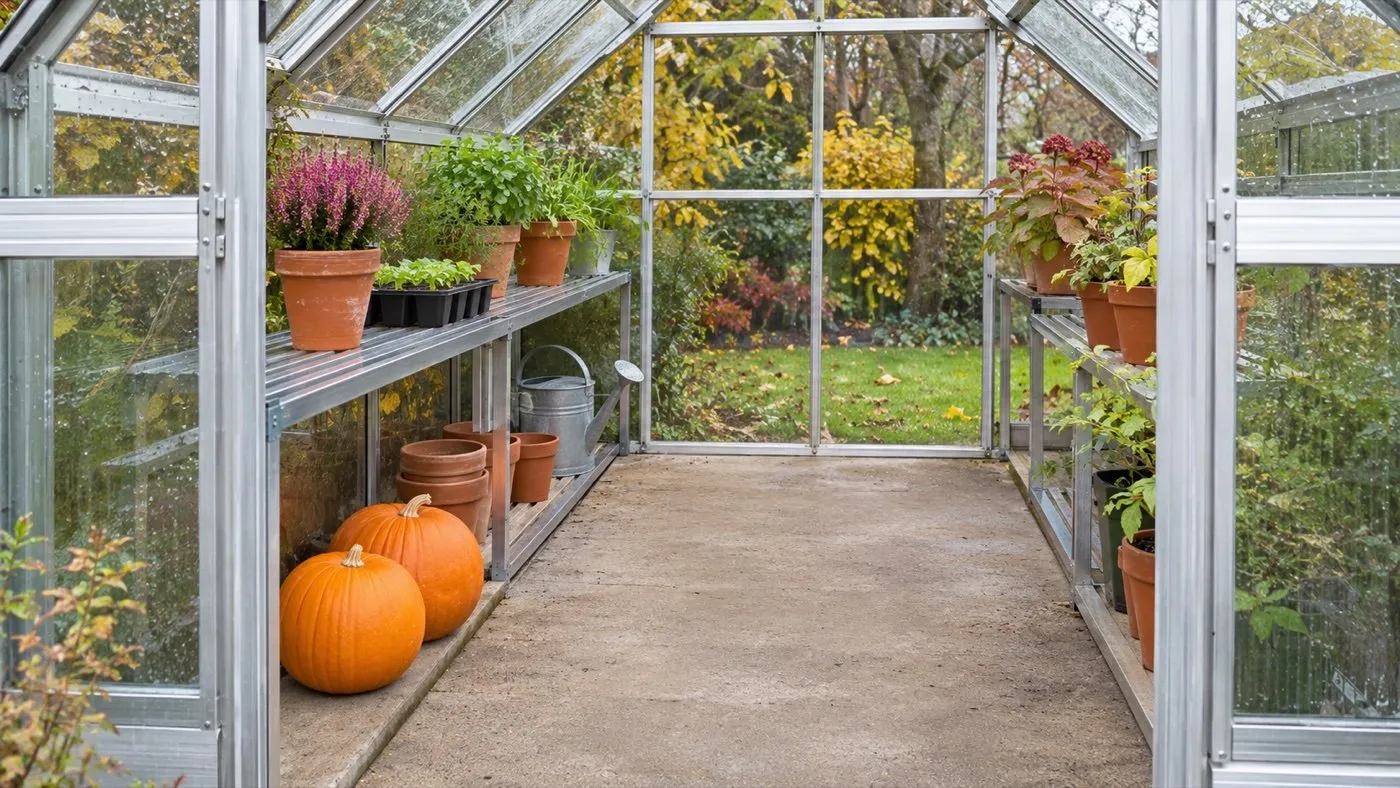
Generated editorial photograph of a generic greenhouse with pumpkins beside an unobstructed central aisle.
Protect airflow and drainage
Greenhouses can overheat from spring until autumn. An autumn display still needs room for ventilation when required.
Keep pumpkins and lanterns outside the opening path of doors and vents. Check the full movement of each opening after placing decorations.
Leave vent controls easy to reach. A display should not require dismantling before the greenhouse can be aired.
Keep drainage outlets visible and clear. Check beneath pots and display containers rather than judging the arrangement only at eye level.
The greenhouse ventilation and humidity guide explains how ventilation fits into routine greenhouse care.
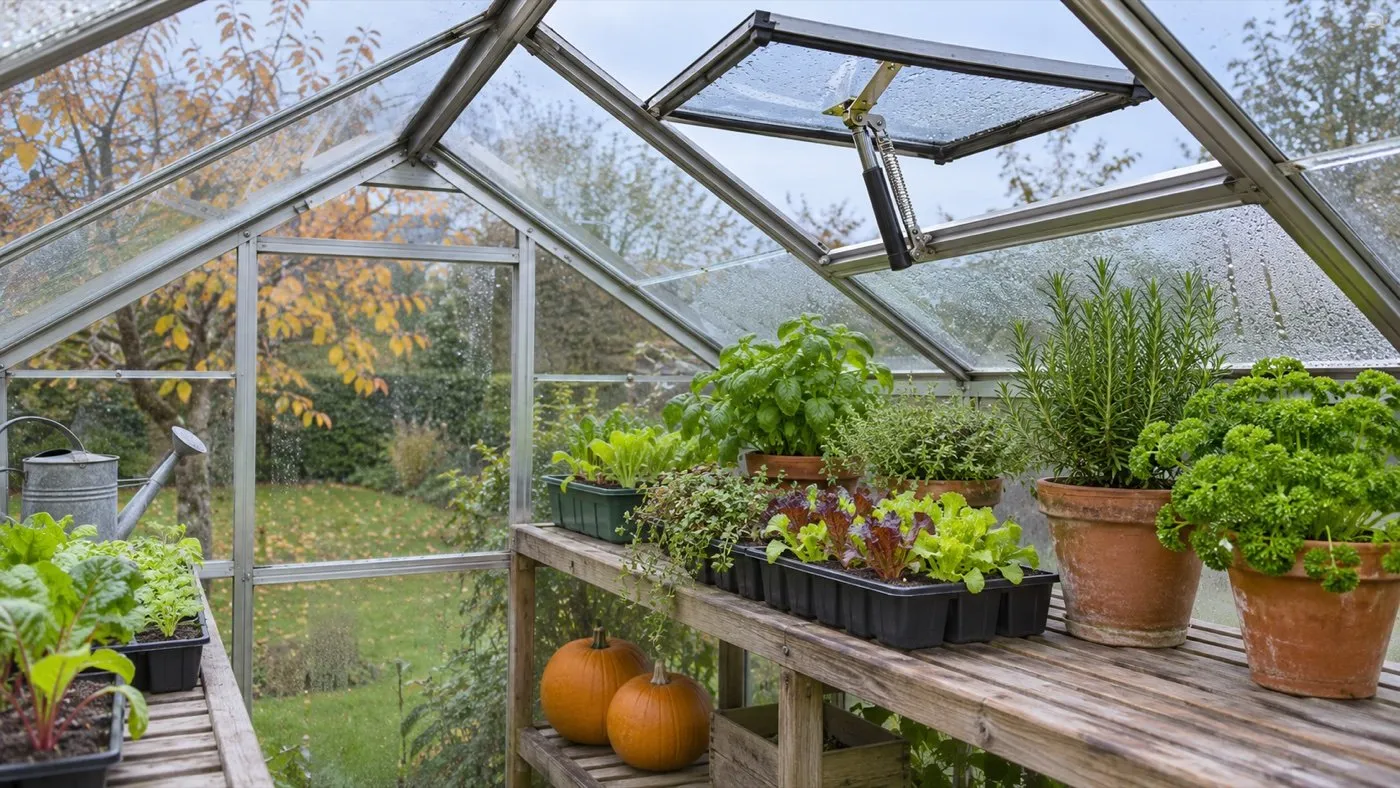
Generated editorial photograph of a generic greenhouse with an open vent and unobstructed controls.
Leave daylight for plants
Place decoration around the plants already using the greenhouse. Avoid covering useful glazing with fabric, foliage or tall displays.
Reduce shading gradually by September. Do not replace removed shading with a dense seasonal arrangement across the same glass.
Before placing a large pumpkin, check which plants sit behind it. A lower position may leave more glazing clear.
Use the UK greenhouse growing calendar to plan growing space alongside the display. Keep room for watering and routine checks throughout autumn.
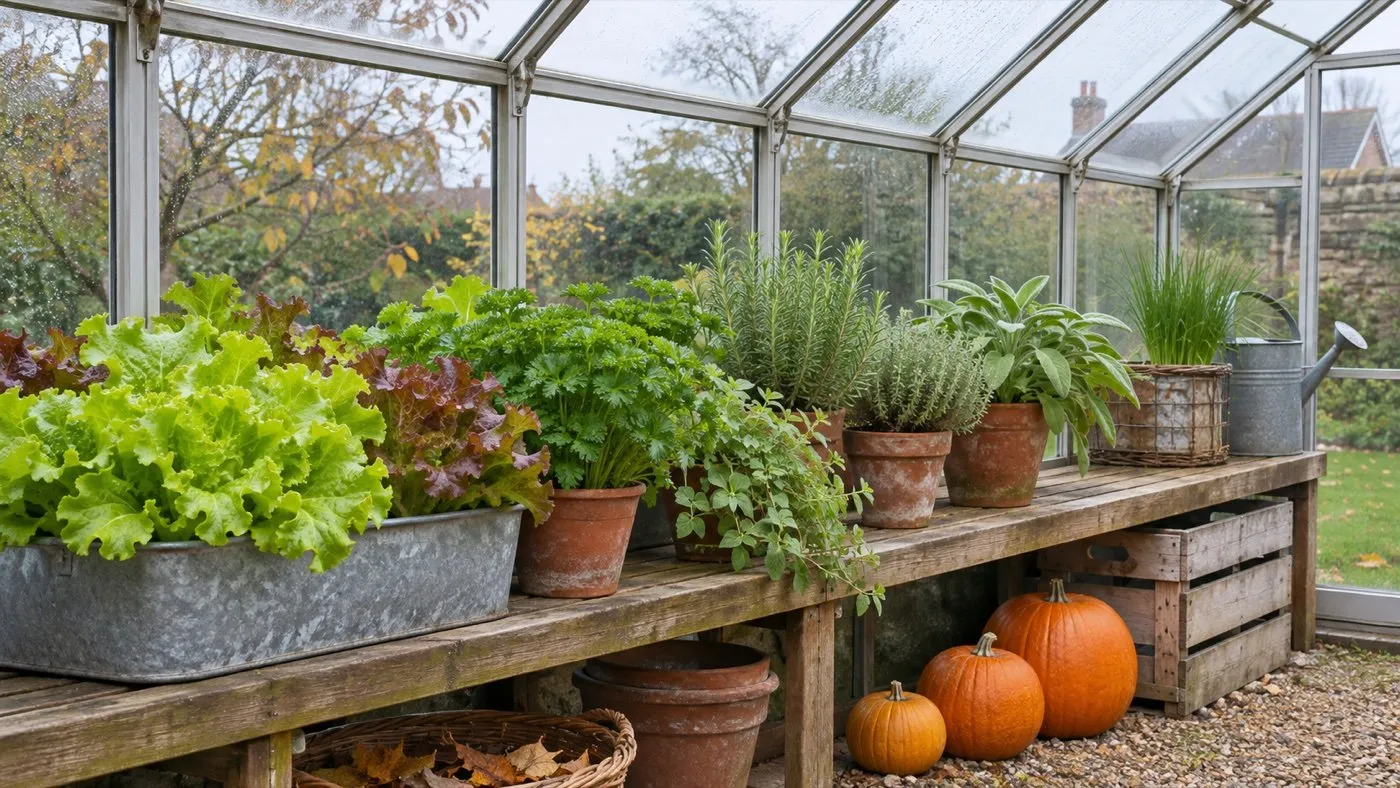
Generated editorial photograph of a generic greenhouse with clear glazing above an autumn display.
Which lights suit an autumn greenhouse display?
Choose lighting by its intended conditions and instructions. None of these options is established as part of Kemp’s installation.
| Lighting approach | Practical placement | Safety check |
|---|---|---|
| Battery lanterns | Choose a stable position clear of doors, vents and watering access. | Check the lantern’s suitability for the intended conditions. Battery power alone does not establish suitability. |
| Solar lights | Check the manufacturer’s placement instructions before planning the display around them. | Check outdoor-use markings and inspect the light for damage. |
| Mains-powered outdoor-rated lights | Plan the cable route before positioning decorations. | Follow the instructions and keep wiring outside walking routes. Check the lights and wiring for damage. |
Outdoor-use lights should carry a water-drop symbol or IP code. For outside use, the final IP digit should be three or higher.
Extra-low-voltage lights are typically 12-24V. Voltage alone does not confirm suitability for the intended position.
Electrical Safety First’s lighting guidance explains these markings and precautions. It also advises following instructions, checking for damage and keeping wiring out of trip routes.
Switch lights off when unattended. For layout inspiration, use the outdoor garden lighting ideas alongside these safety checks.
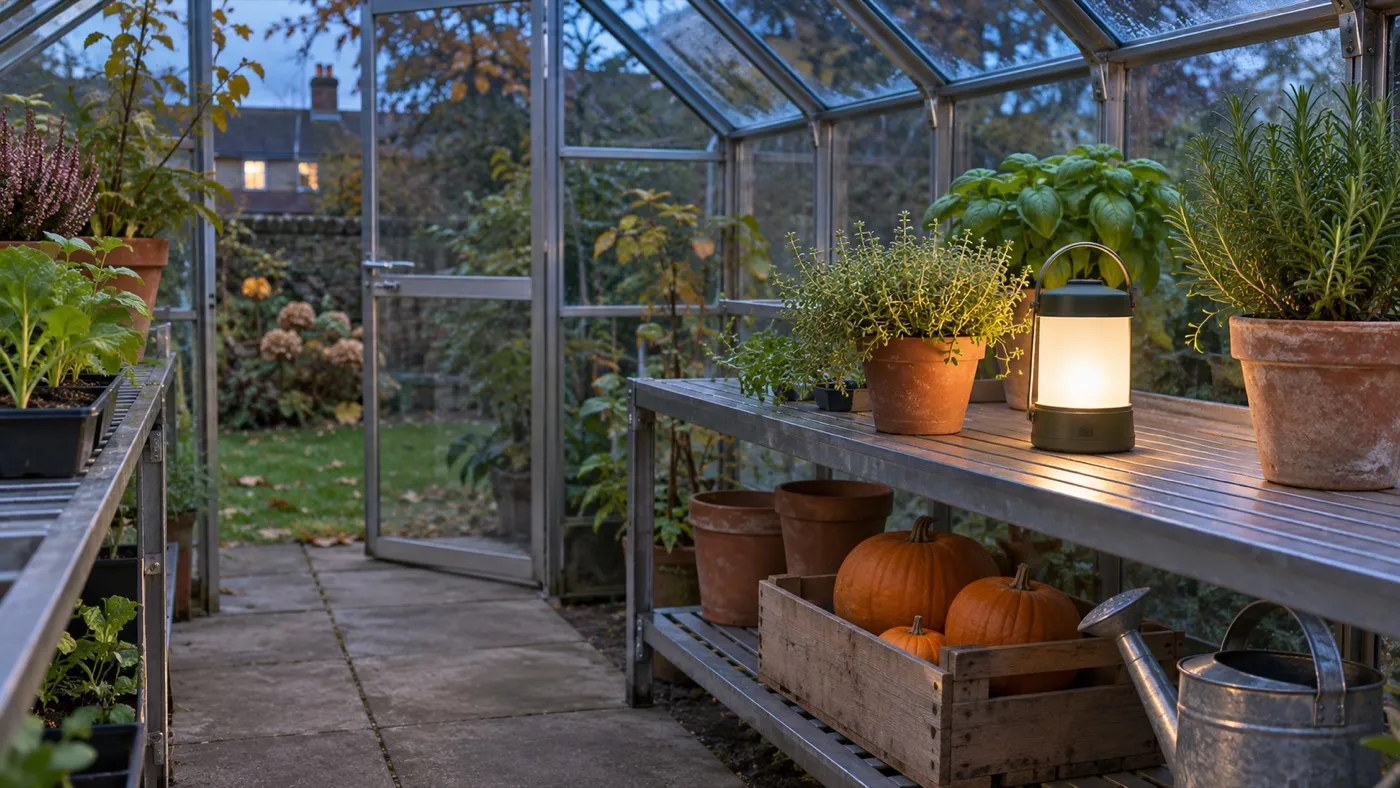
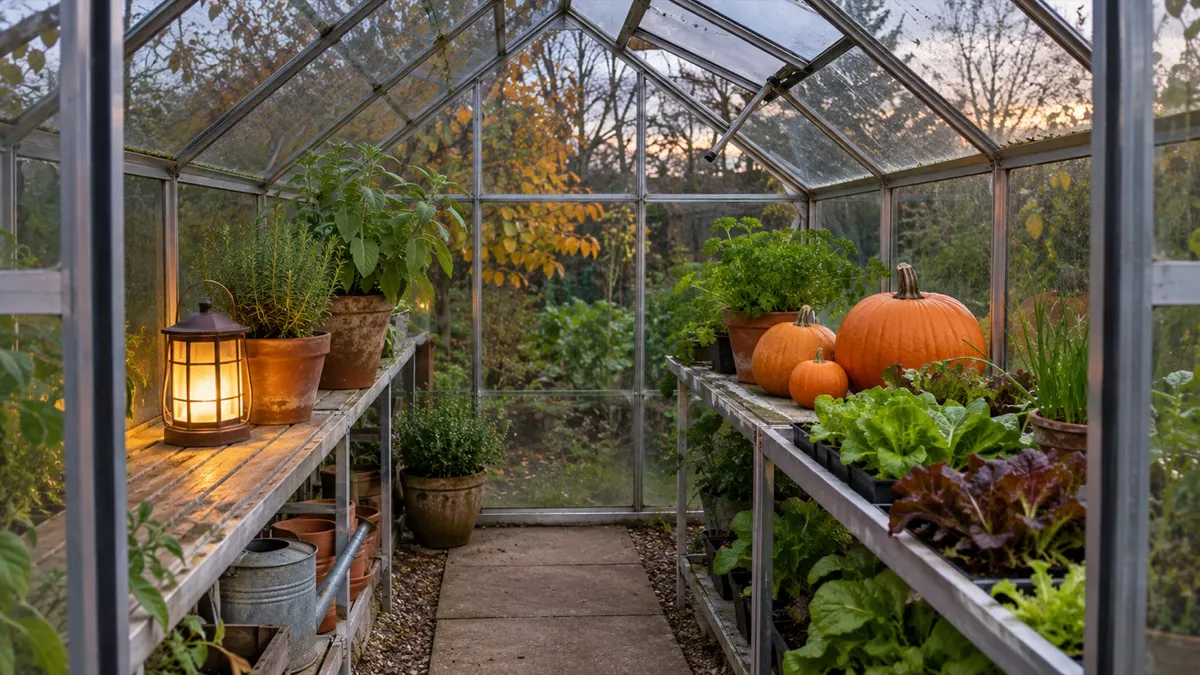
Generated editorial photograph of a generic greenhouse with a lantern positioned away from the walking route.
A September-November display calendar
Use this calendar to review the arrangement as autumn progresses. Repeat the audit whenever decorations or plants move.
| Month | Display task | Greenhouse care check |
|---|---|---|
| September | Choose display positions before adding bulky decorations. | Reduce shading gradually and retain access to ventilation controls. |
| October | Add harvested pumpkins where space allows. Remove each pumpkin for carving. | Keep doors, vents, drainage and watering routes clear. |
| November | Review whether each decoration still fits around the plants. Remove pumpkins that soften or decay. | Check plant daylight and inspect lights before use. |
Fit these checks around the wider autumn gardening jobs. Keep the display small enough to move when greenhouse work needs the space.
What should happen to harvested pumpkins?
Decide whether each pumpkin is for display, carving or later use. Keep access to it straightforward so regular checks are easy.
For pumpkins grown at home, follow the pumpkin and squash growing guide for harvesting and storage guidance.
Treat a greenhouse display as a decorative choice. Do not assume that a good display position is also suitable for storage.
Move pumpkins to a separate work surface before carving. Clear away the cut material before returning any carved pumpkin to the display.
Check pumpkins regularly. Remove any that soften or decay, and keep them away from drainage outlets and walking space.
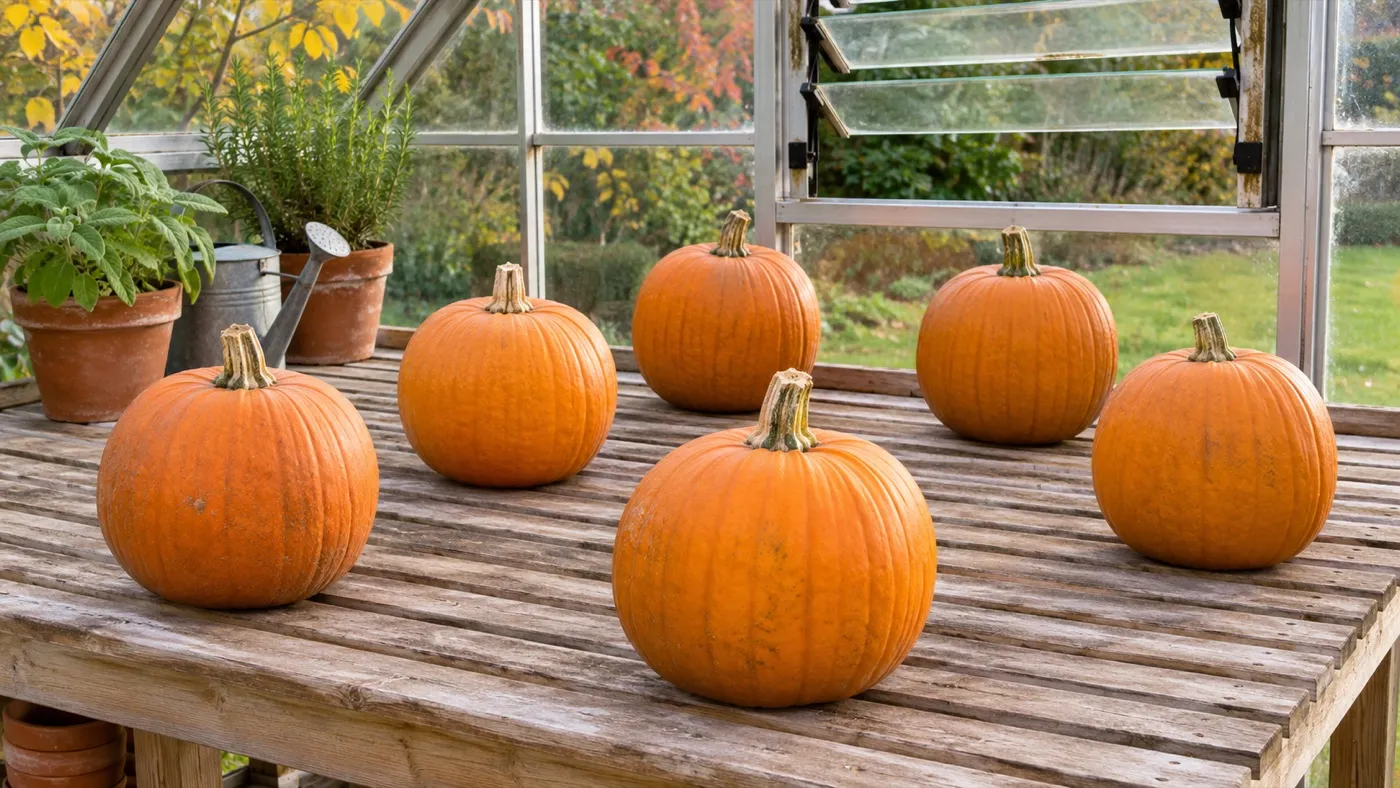
Generated editorial photograph of a generic gardening task with harvested pumpkins arranged for inspection.
Common display mistakes
Small placement choices can make routine greenhouse work awkward.
- Blocking the door with a pumpkin that must move every time someone enters.
- Placing decorations beneath a vent without checking its opening movement.
- Covering useful glazing while plants remain inside.
- Choosing lights by appearance without checking markings and instructions.
- Leaving pumpkins unchecked after carving.
Frequently asked questions
What does the public autumn greenhouse post show?
It shows harvested pumpkins among plants inside a greenhouse. The caption refers to carving the pumpkins.
Which lights were used in the greenhouse?
The public post does not establish the light type or installation method. Garden UK’s lighting advice is separate from that scene.
Can a greenhouse still overheat in autumn?
Yes. Greenhouses can overheat from spring until autumn. Keep vents accessible and use ventilation when required.
What markings should outdoor lights carry?
Look for a water-drop symbol or an IP code. For outside use, the final IP digit should be three or higher. Follow the manufacturer’s instructions.
When should pumpkins be removed from a display?
Remove pumpkins when they start to soften or decay. Check them regularly and keep them clear of plants, drainage and walking space.
Complete the five checks before choosing your display positions. Then use the UK greenhouse ideas guide to plan the layout around your available space.
Our team produces practical UK gardening guidance from source research, contributor records and established horticultural practice. Editorial standards are overseen by Matt W.