Key takeaways
- A Spanish courtyard works best in an enclosed, south-facing space that traps warmth and shelter
- Layer terracotta, gravel and patterned tiles for the floor, with warm white or ochre walls
- A small wall fountain or central rill adds the cooling sound at the heart of every Moorish courtyard
- Winter wet kills Mediterranean plants in the UK, not cold, so sharp drainage is essential
- Grow hardy structure (lavender, rosemary, olive, star jasmine) and overwinter tender pots indoors
- Use terracotta and glazed pots of citrus, pelargoniums and agave for instant Spanish character
A Spanish courtyard is a garden built for shelter and shade: enclosing walls, a cool splash of water, warm terracotta underfoot and pots of scented plants. It is a surprisingly good fit for a UK plot, because the one thing a British garden often has is an enclosed, sheltered corner that traps every scrap of sun.
The style comes from the Moorish courtyards of southern Spain, where a high-walled space, a central fountain and deep shade make a cool retreat from the heat. In the UK the maths is reversed: the walls trap warmth and shelter, turning a small yard into a sun-trap. Get the drainage and the planting right and you can grow a convincing Mediterranean garden in Manchester. This guide covers the elements that make the look, and the practical changes that make it survive a British winter.
Why a courtyard suits the Spanish style in the UK
A Spanish courtyard depends on enclosure, and UK gardens often supply it for free. A space boxed in by house walls, fences or boundary walls does three useful things.
- It traps heat. Walls absorb sun by day and release it at night, lifting the temperature a few degrees above the open garden.
- It gives shelter. Out of the wind, tender and Mediterranean plants cope far better, and you can sit out earlier and later in the year.
- It frames the design. Enclosure is the whole point of the style. The walls are the room, and you decorate them.
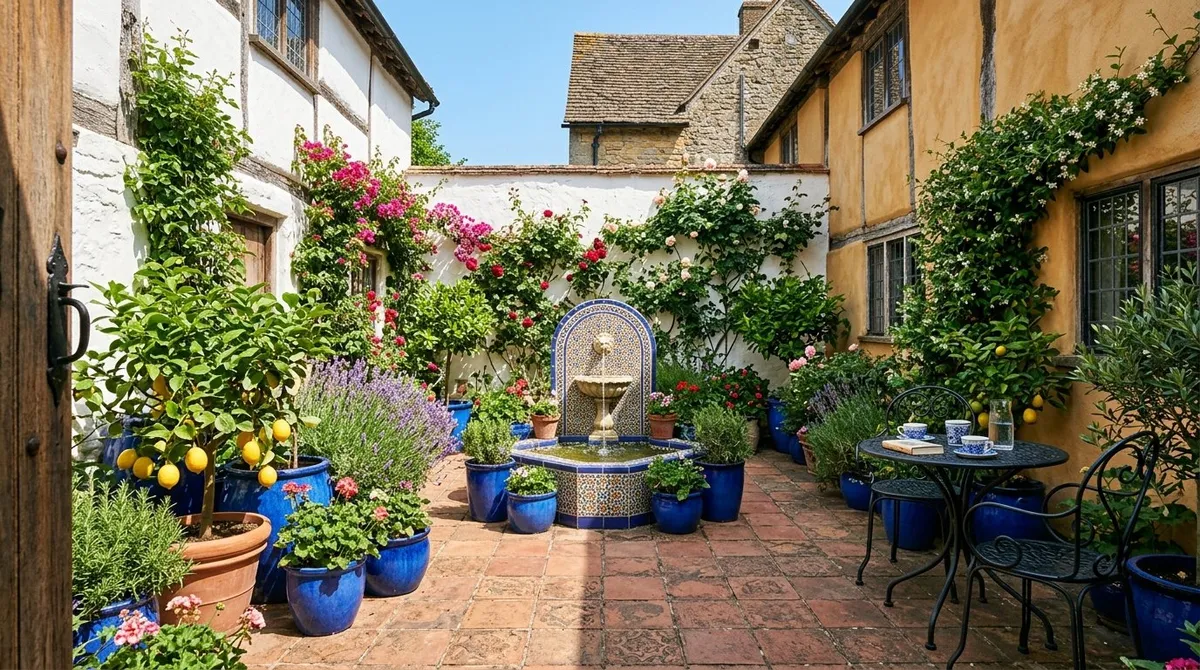
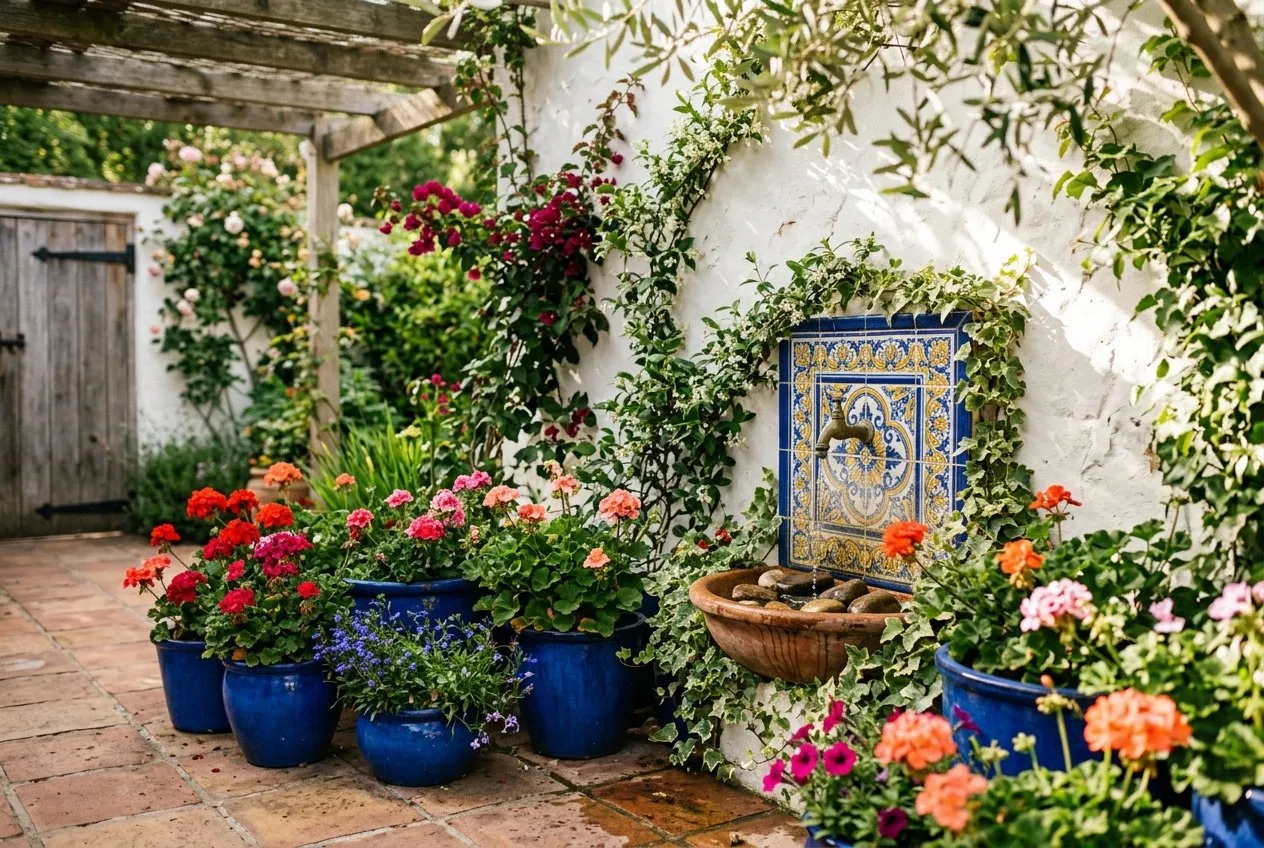 Enclosing walls, terracotta underfoot and a splash of water are the three ingredients every Spanish courtyard needs.
The floor: terracotta, tiles and gravel
The ground does most of the work in setting the style. Warm, earthy materials read as Mediterranean instantly.
- Terracotta tiles are the classic choice, in warm orange-brown. Use frost-proof tiles in the UK, as cheap terracotta spalls in a hard winter.
- Patterned ceramic tiles in blue, white and yellow add the Moorish note. Use them in bands, as a fountain surround, or up a step riser, not over the whole floor.
- Warm gravel is cheap, drains freely and suits the look. It also lets you plant straight into it, as in a gravel garden.
- Cobbles and pebble mosaic add texture for small areas and thresholds.
Mix a main surface of terracotta or pale stone with bands of decorative tile and pockets of gravel for planting. Lay everything on a free-draining base so the courtyard never holds water.
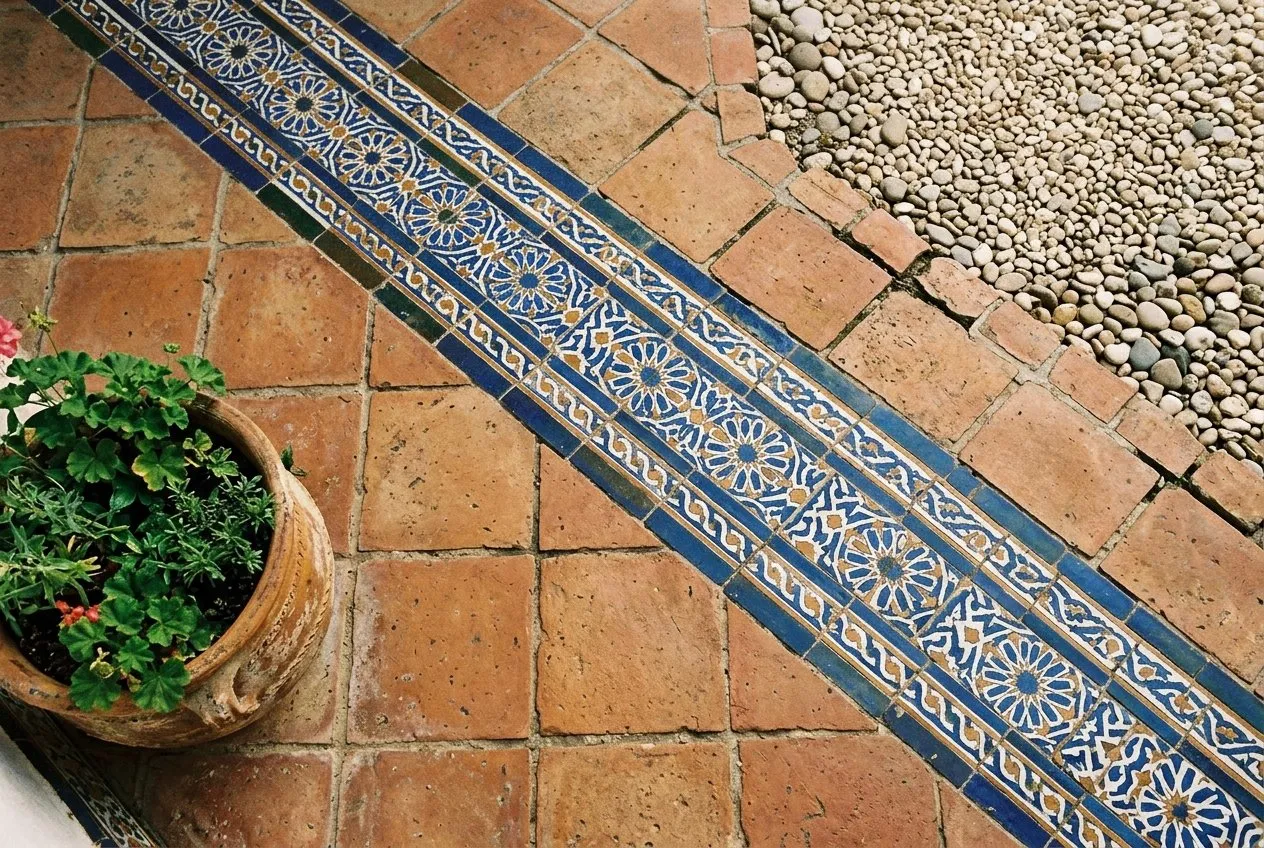 Warm terracotta with a band of patterned blue-and-white tile gives the Moorish note. Use frost-proof tiles so they survive a UK winter.
Water at the heart of the courtyard
Every Moorish courtyard centres on water. The sound cools the air and the still surface reflects the sky. You do not need much.
- A wall fountain is the easiest option for a small UK courtyard. A tiled spout trickling into a basin needs only a small pump and a power supply.
- A central rill or narrow channel echoes the Alhambra on a domestic scale. Keep it shallow and formal.
- A raised tiled pool doubles as seating and a home for a waterlily or two.
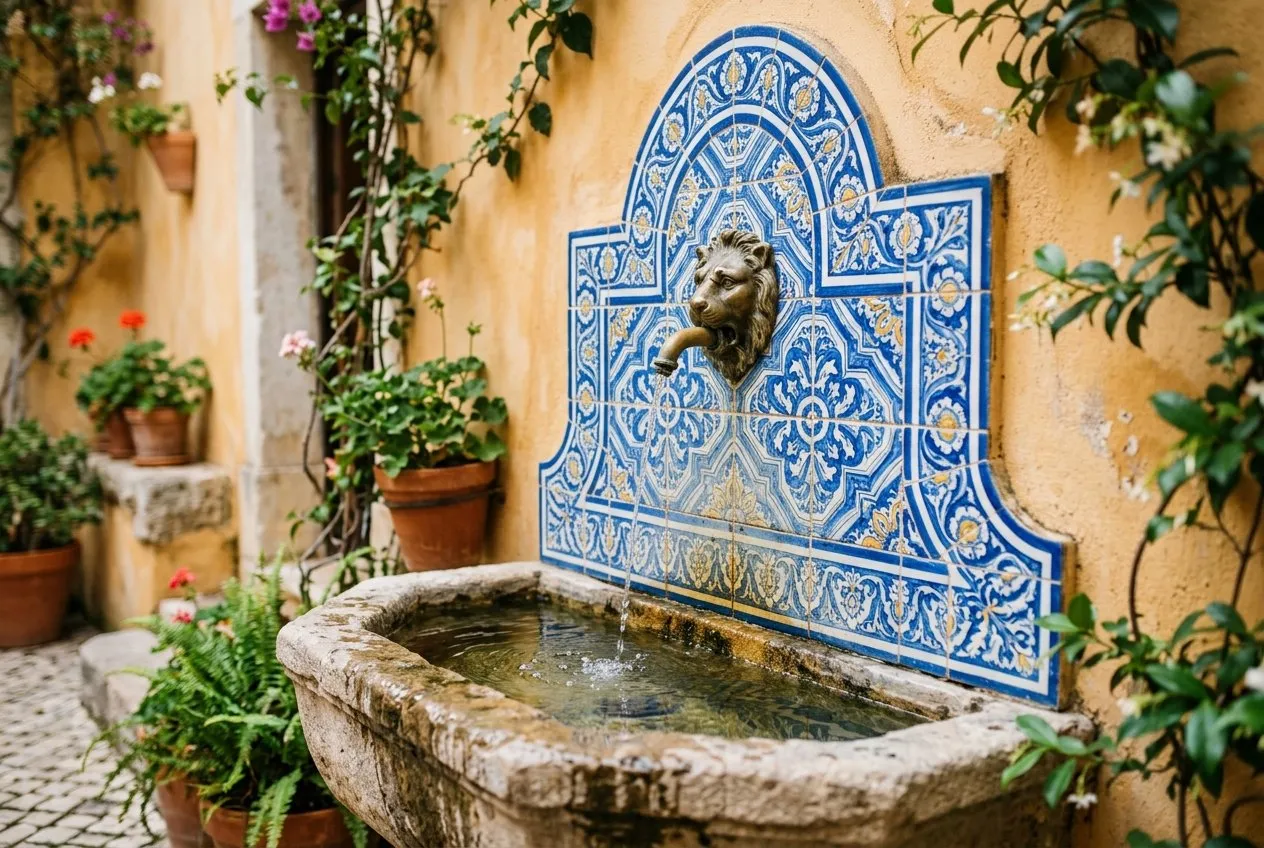 A wall fountain in patterned blue tiles brings the cooling sound of water that sits at the heart of every Moorish courtyard.
Shade, walls and colour
A sun-trap needs shade to be usable in July, and warm colour to set off the planting.
Shade comes from a timber pergola draped in grapevine or wisteria, a small fig or olive, or a simple canvas awning. Dappled shade over a seating corner makes the courtyard a place to linger.
Walls should be warm: limewashed white, soft ochre or terracotta render. Paint a tired fence or wall in one of these tones and the whole space shifts south. Add a strip of blue-and-white tiles, a wrought-iron grille, or a row of pegged pots for detail.
Colour runs warm throughout: white, ochre and terracotta as the backdrop, with cobalt blue and green in the pots, tiles and shutters. Avoid cool grey, which kills the Mediterranean warmth at once.
Pots, citrus and Mediterranean planting
Pots are central to the style. Group terracotta and glazed ceramic containers in odd numbers, vary the heights, and plant them for scent and structure.
| Plant | Role in the courtyard | UK hardiness |
|---|---|---|
| Olive (in a pot) | Sculptural centrepiece | Half-hardy, shelter or move under cover |
| Lavender | Scented edging | Hardy in free-draining soil |
| Rosemary | Evergreen structure | Hardy |
| Star jasmine (Trachelospermum) | Scented wall climber | Hardy in a sheltered spot |
| Cistus | Summer flowering shrub | Mostly hardy, needs sharp drainage |
| Pelargoniums | Hot pot colour | Tender, overwinter indoors |
| Agave and aeonium | Sculptural pots | Tender, overwinter frost-free |
| Citrus (lemon, in a pot) | Scent and fruit | Tender, overwinter under glass |
| Bougainvillea | Hot climbing colour | Tender, conservatory or sheltered |
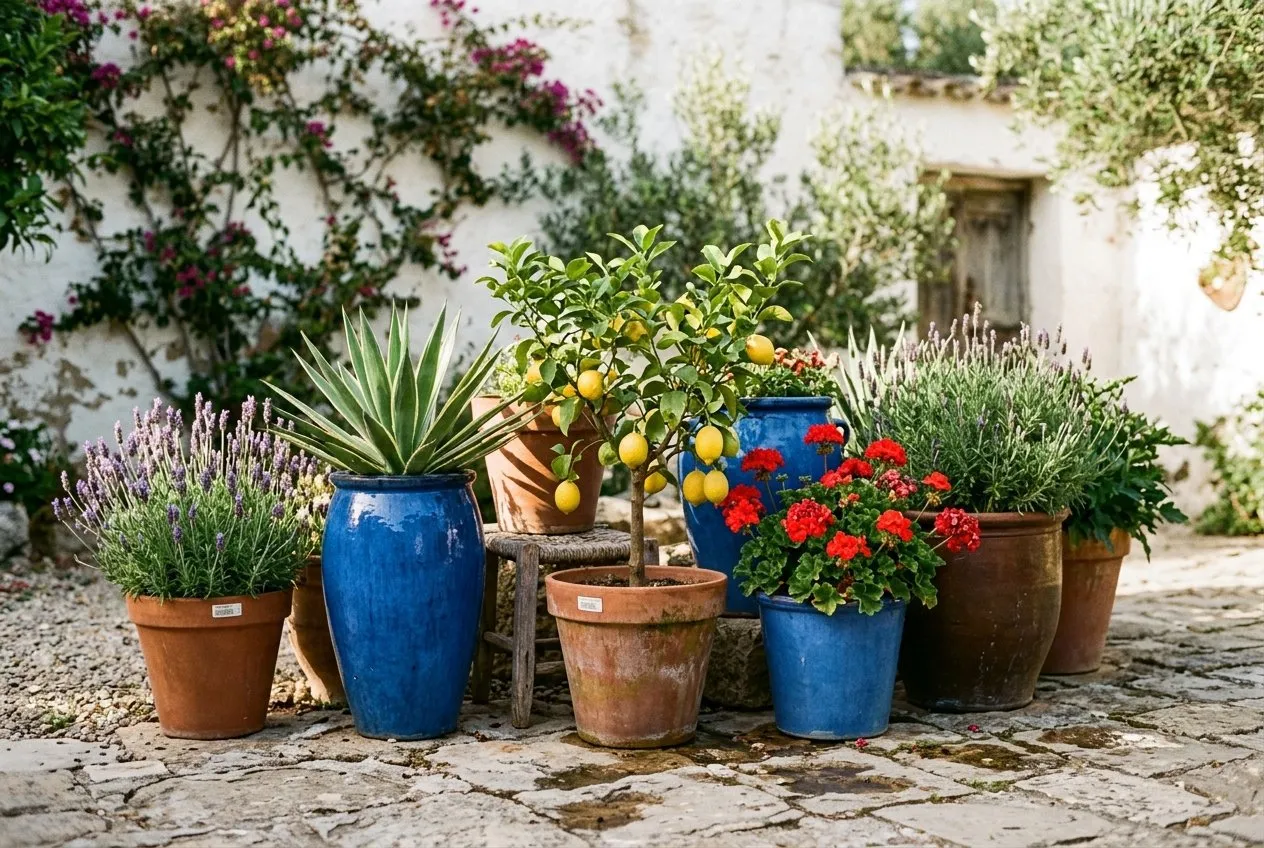 Group terracotta and glazed pots in odd numbers, mixing hardy lavender and rosemary with tender citrus and pelargoniums for colour.
Making it survive a UK winter
This is where most Mediterranean gardens fail, and where a little knowledge saves the whole scheme. The enemy is winter wet, not winter cold.
- Plant into free-draining soil. Raise the beds, add a third grit by volume, and lay them over a free-draining base. Soggy roots rot over winter.
- Mulch with gravel. A 5cm gravel mulch keeps water away from stems and crowns and looks the part.
- Overwinter the tender plants. Move citrus, pelargoniums, agave and bougainvillea into a frost-free greenhouse, porch or conservatory before the first frost, as our guide on how to overwinter plants sets out.
- Choose hardy substitutes where you can. Star jasmine for the scent of true jasmine, hardy salvias for long colour, phormium for an architectural pot.
Get the drainage right and the hardy plants look after themselves. The tender pots are a winter job, not a year-round worry.
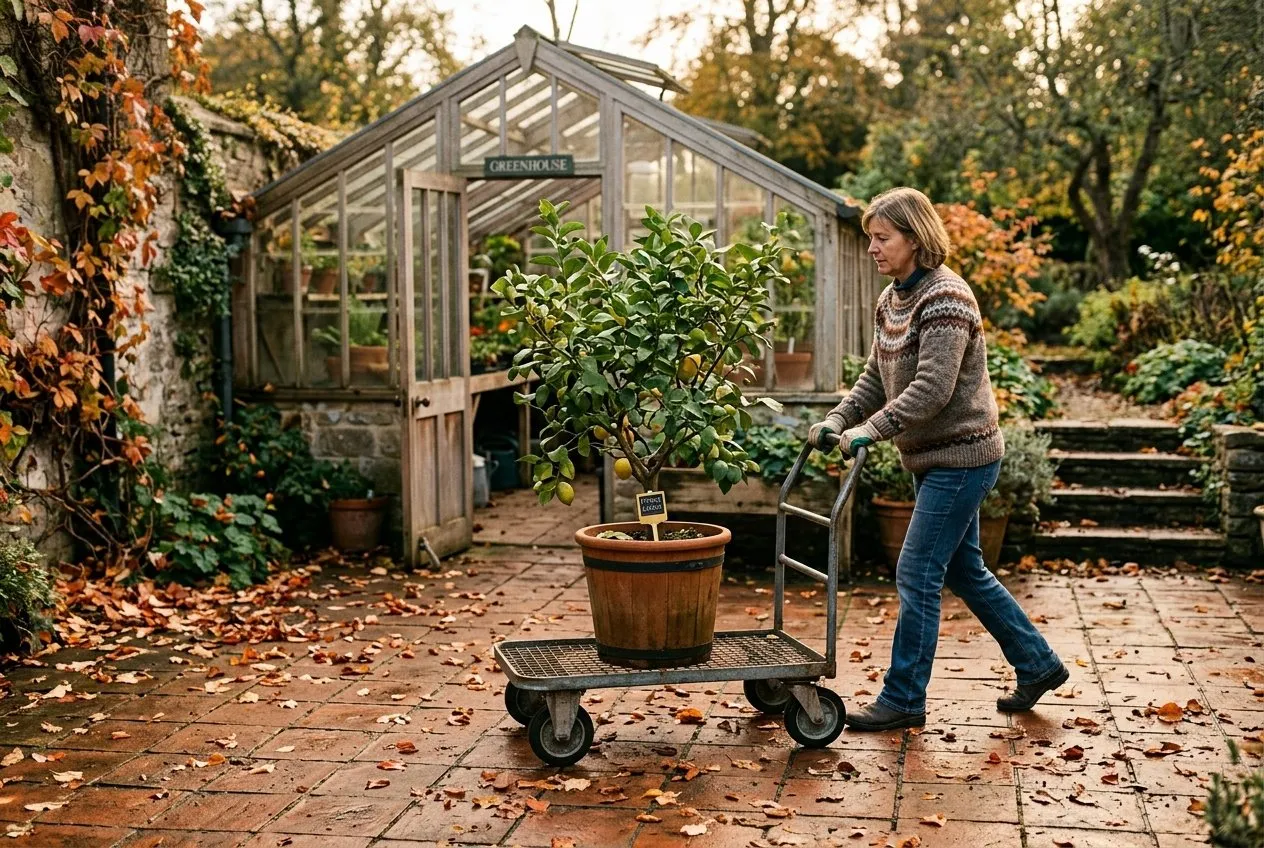 Winter wet and frost are the only real threats. Wheel tender citrus and pelargoniums under cover before the first frost arrives.
A rough cost guide
A courtyard makeover scales to your budget. These are realistic UK figures.
| Element | Budget approach | Higher spend |
|---|---|---|
| Floor | Gravel over membrane, £8-15 per m² | Frost-proof terracotta, £40-70 per m² |
| Walls | Limewash existing walls, £30-60 | Render and tile bands, £500 plus |
| Water | Solar wall fountain kit, £60-120 | Plumbed tiled rill, £800 plus |
| Shade | Large parasol, £80-200 | Built pergola with vine, £600 plus |
| Planting | Hardy plants and terracotta, £150 | Specimen olive and citrus, £400 plus |
You can capture the feel for a few hundred pounds with gravel, limewash, a solar fountain and clever planting, then add the permanent hard surfaces over time.
Furniture, lighting and finishing touches
Wrought iron or a mosaic-topped bistro table sets the tone. Add lanterns, a string of festoon lights and a few wall-mounted candle holders for warm evening light. A patterned outdoor rug, glazed bowls and a row of pegged terracotta pots up a wall finish the look. Keep it warm, simple and a little worn; a Spanish courtyard should feel lived in, not showroom-new.
Common Spanish courtyard mistakes
- Ignoring drainage. Mediterranean plants in heavy, wet soil rot. Raise and grit the beds.
- Cool grey hard surfaces. Grey paving and render kill the warmth. Go terracotta and ochre.
- No shade. A sun-trap with nowhere shaded is unusable in July. Add a pergola or parasol.
- Leaving tender plants out. Citrus and pelargoniums need winter cover in the UK.
- Tiling the whole floor in pattern. Patterned tile overwhelms in quantity. Use it in bands and accents.
Avoid those and a UK courtyard can carry the warmth of southern Spain for most of the year.
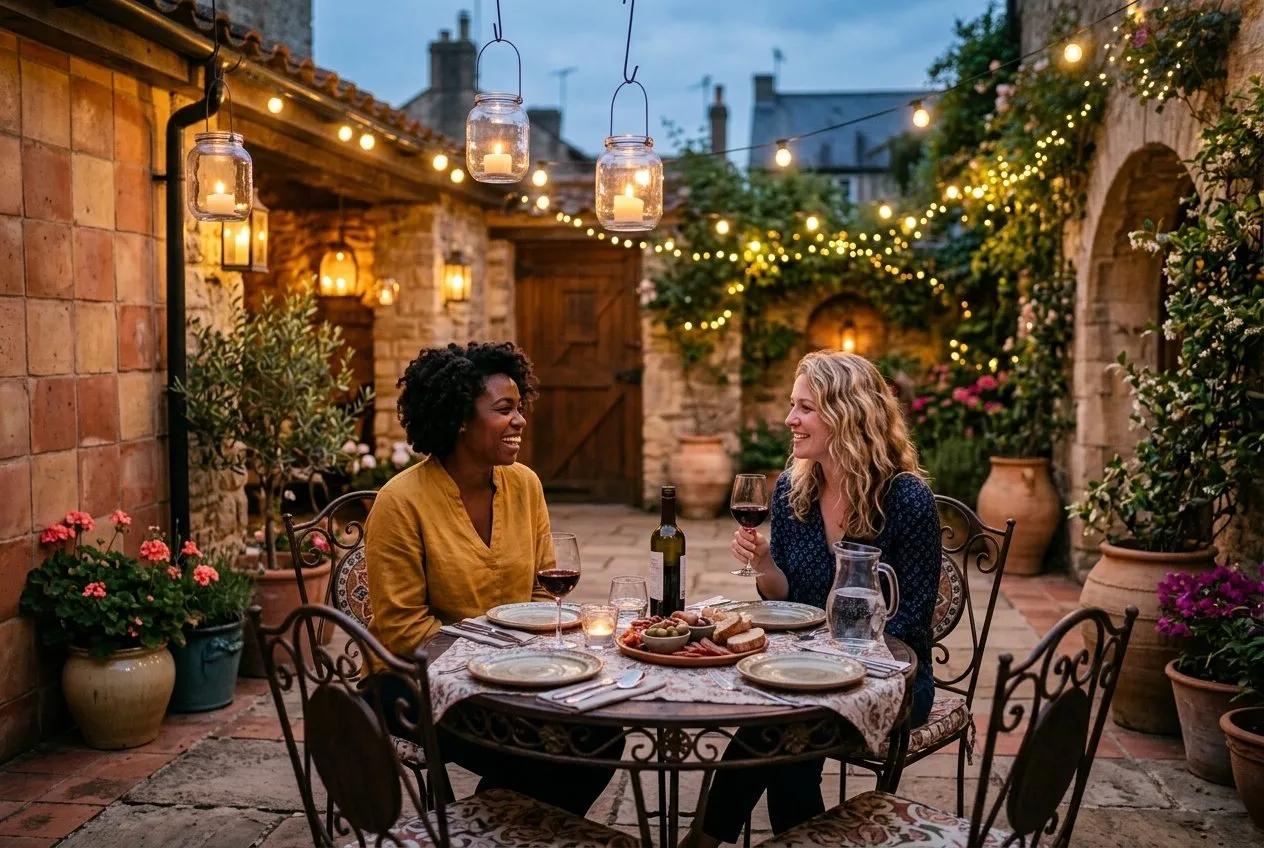 Warm evening light from lanterns and festoons turns a sheltered courtyard into a Mediterranean retreat well into the British autumn.
Our team produces practical UK gardening guidance from source research, contributor records and established horticultural practice. Editorial standards are overseen by Matt W.