Key takeaways
- Full sun means 6 or more hours of direct light; partial shade is 3 to 6 hours; deep shade is under 3 hours
- UK midsummer sun reaches about 61 degrees altitude in the south, but only 15 degrees in midwinter
- Log sun position at 6 fixed times: 8am, 10am, 12pm, 2pm, 4pm and 6pm
- A 2m fence casts a 7.5m shadow at the winter solstice but only 1.1m at midday in June
- Map in June for maximum sun, then near the equinoxes (20 March, 22 September) for a fair average
- Aspect sets the baseline: south faces get 6 to 8 hours, north faces often under 2 hours
Sun mapping a garden is the first step that turns guesswork into a planting plan that actually works. A garden sun map records how many hours of direct light each bed gets, then sorts your space into full sun, partial shade, and deep shade. Most plant failures come from putting a sun lover in shade, or a shade plant in scorching light. The fix is data, not luck. This guide shows you how to log the sun hour by hour, how the UK sun changes between summer and winter, and how to read shadows from fences, walls and trees. By the end you can match every plant to the right zone with confidence.
Why a garden sun map beats guesswork
A garden sun map is a scale plan of your plot marked with the hours of direct sun each area receives. It is the single most useful planning document you can make. Plant labels say “full sun” or “partial shade”, but they mean nothing until you know what your own beds actually get.
The map fixes three problems at once. It tells you where sun lovers like lavender and salvia will thrive. It shows where shade plants like hostas and ferns belong. It also reveals microclimates: a warm south wall that ripens tomatoes, or a frost pocket that kills tender growth. A good map pays for itself in plants that live rather than sulk.
The three sun zones every UK plant needs
Plants sort into three light zones, defined by hours of direct sun across the growing season. Get this right and most planting decisions follow.
Full sun means 6 or more hours of direct light per day. This is the bright, open part of the garden, usually south or west facing, away from buildings and trees. Mediterranean herbs, roses, and most vegetables need it.
Partial shade means 3 to 6 hours of direct sun. This often means morning sun and afternoon shade, or dappled light under a high tree canopy. Many of the best UK garden plants prefer this band because it avoids midday scorch.
Deep shade, also called full shade, means under 3 hours of direct sun. North-facing beds, the base of a tall hedge, and gaps between buildings fall here. Plenty of plants love it. Our best plants for shade in UK gardens guide lists the reliable performers.
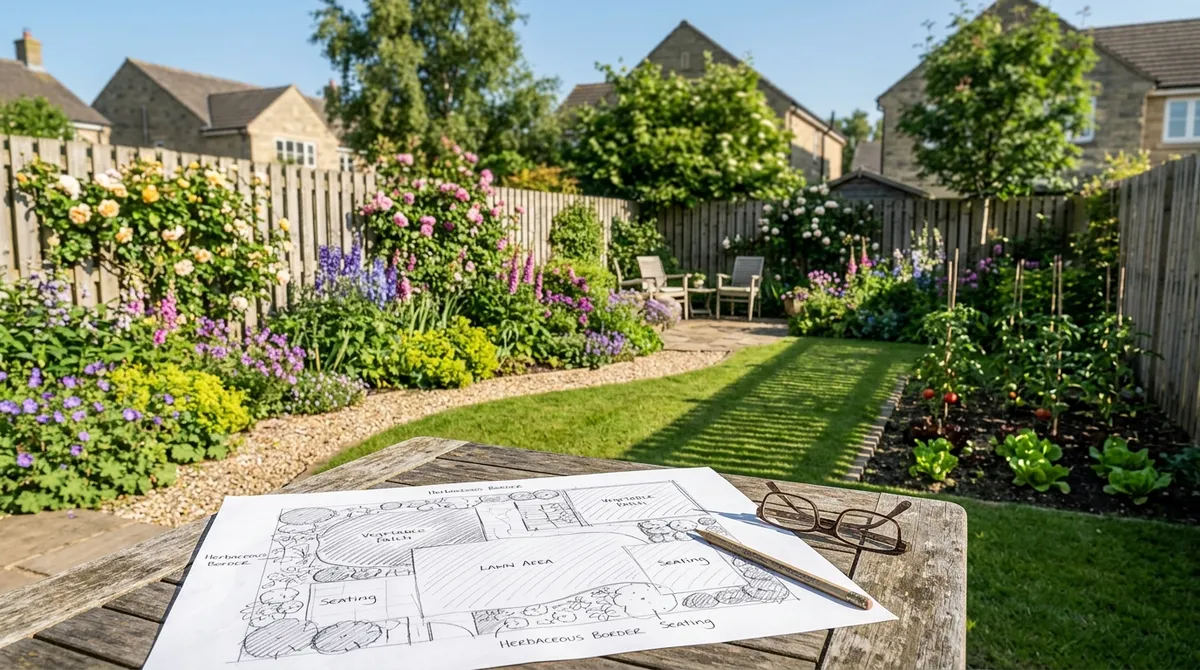
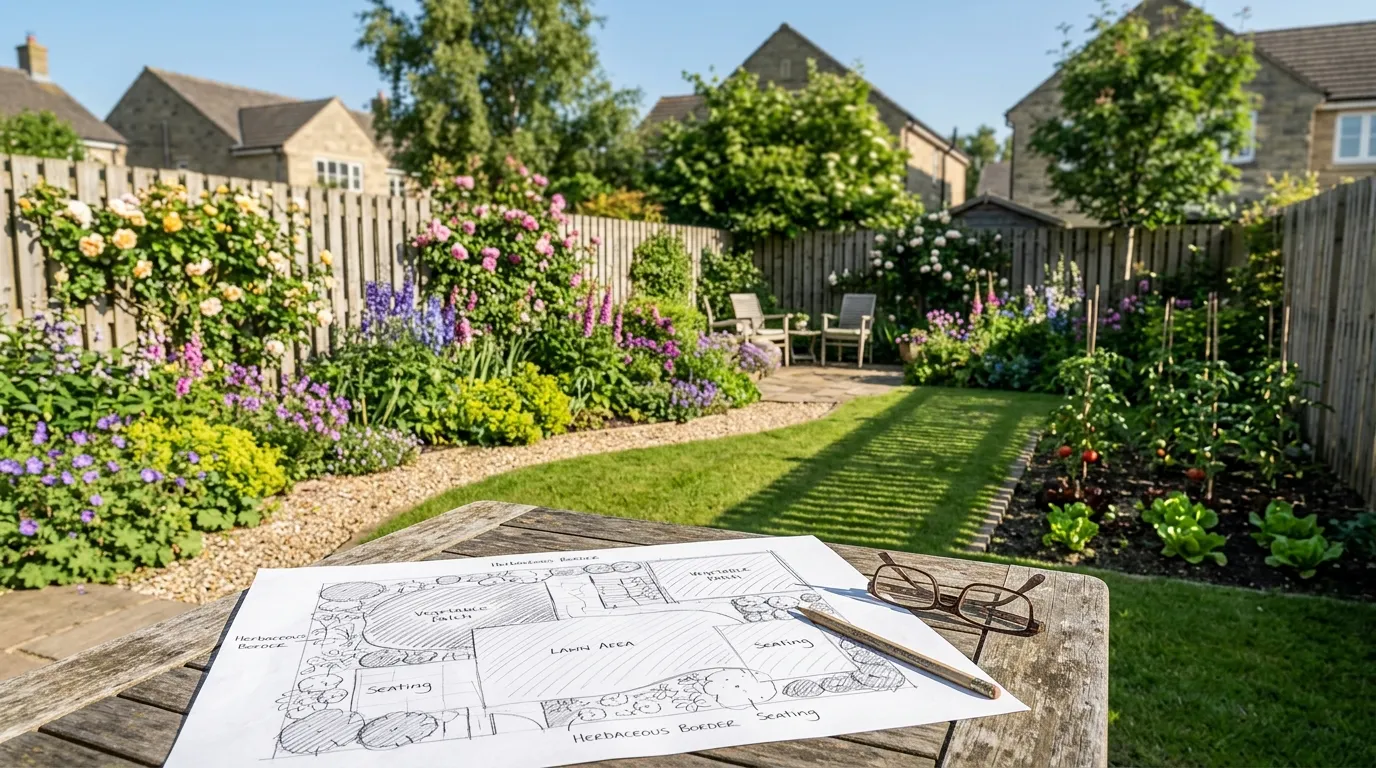 A finished sun map. The three zones are marked after six fixed observations through a June day in a Yorkshire suburban garden.
How aspect sets your starting point
Aspect is the compass direction a garden or wall faces. It sets the baseline before you account for any obstacles. Stand with your back to the house, use a compass or phone app, and the direction you face is your aspect.
The four main aspects behave very differently in the UK.
| Aspect | Summer sun hours | Light quality | Best suited to |
|---|---|---|---|
| South | 6 to 8 | Strong all-day sun | Roses, lavender, tomatoes, fruit |
| West | 4 to 6 | Afternoon and evening sun, warm | Climbers, late perennials, salvias |
| East | 3 to 5 | Morning sun, cooler | Camellias, fruit blossom, ferns |
| North | 0 to 2 | Even, gentle, no direct midday sun | Hostas, hellebores, ivy, shade shrubs |
Aspect is only the start. A south-facing garden with a tall neighbouring conifer can still have a deep shade corner. That is why you log the real shadows.
Logging the sun hour by hour: the photo grid method
Follow these steps for an accurate log.
- Sketch the plot. Draw a rough scale plan on paper or graph paper. Mark the house, fences, trees, sheds and existing beds.
- Pick a clear day. Choose a sunny or lightly clouded day. Heavy overcast hides shadows and ruins the log.
- Photograph at each fixed time. At 8am, stand at the same spot and photograph the whole garden. Repeat at 10, 12, 2, 4 and 6. Use a fixed marker so each photo matches.
- Shade the shadows. On a fresh copy of the plan for each time, pencil in where shadow falls. Six sheets give you six snapshots.
- Count the sunny hours. For each bed, count how many of the six observations showed direct sun. Multiply by roughly two to estimate daily hours.
- Mark the zones. Colour the plan: full sun, partial shade, deep shade. This is your finished sun map.
The photo grid method works because it records real conditions, not predicted ones. A weather app cannot see your neighbour’s leylandii. Your camera can.
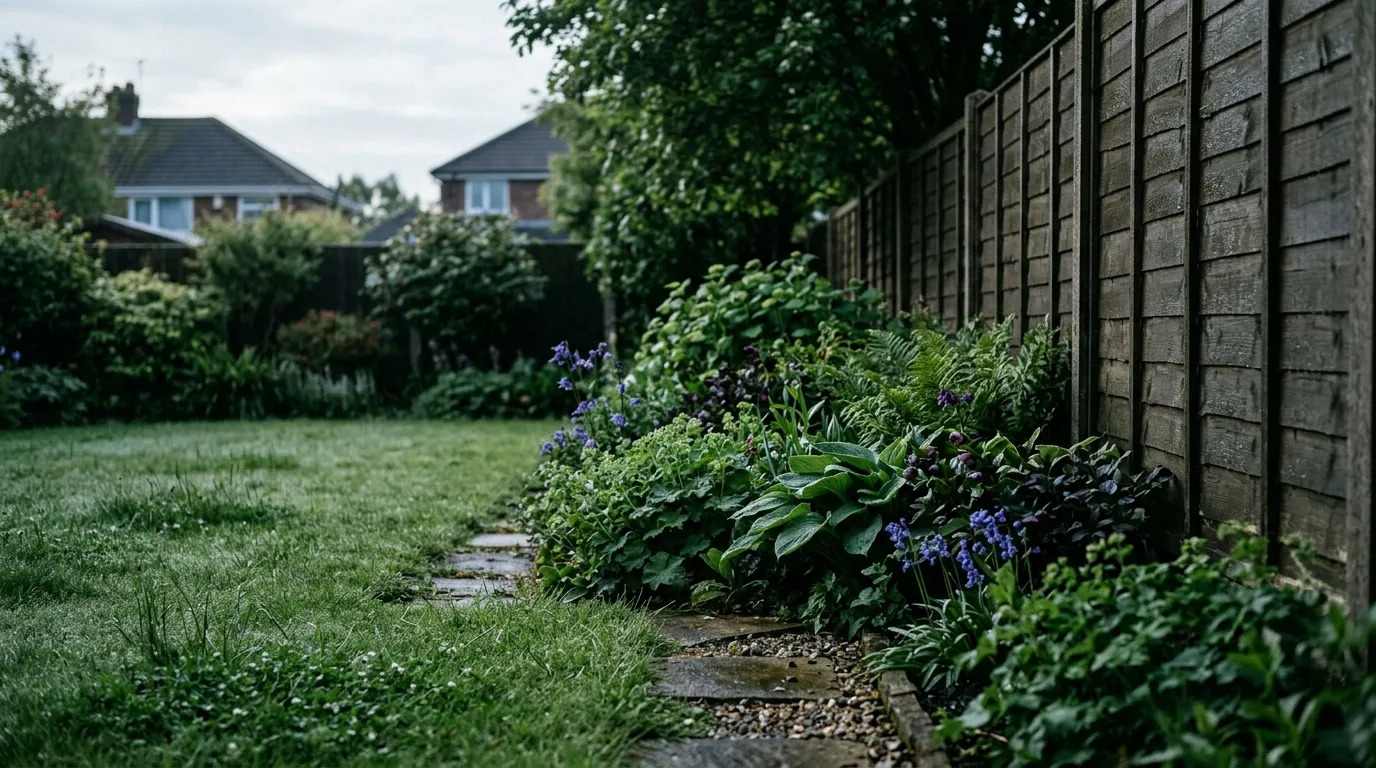 The same corner at 9am, still in shadow. The fence to the east blocks direct light until the sun rises higher.
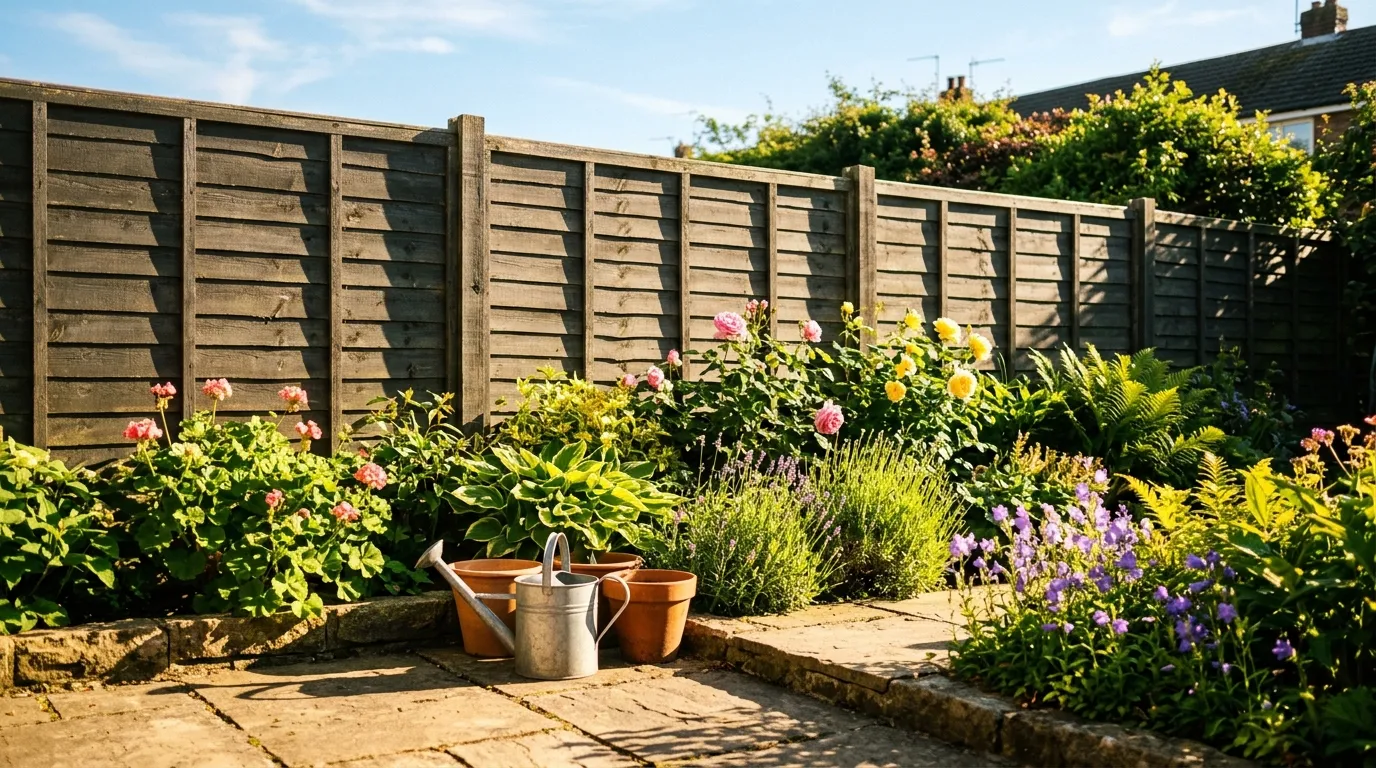 The identical corner at 3pm, now in full sun. A single bed can shift from shade to sun in a few hours, which is why fixed-time logging matters.
How high the UK sun climbs through the year
The sun’s angle above the horizon changes dramatically through the year. It is the reason a garden looks bright in June and gloomy in December. The higher the sun, the shorter the shadows and the deeper the light reaches into the plot.
In southern England, the summer solstice sun on 21 June sits about 61 degrees above the horizon at midday. By the winter solstice on 21 December it climbs to only about 15 degrees. At the equinoxes, 20 March and 22 September, the midday angle sits around 38 degrees. Further north the figures drop: in Edinburgh the midsummer peak is closer to 57 degrees and midwinter under 11 degrees.
This 46-degree swing transforms shadow length. A low winter sun rakes long shadows right across the garden. The same object barely casts shadow at midsummer noon. A bed that bakes in July can sit in permanent shade from November to February.
The practical lesson is simple. A garden mapped only in June overstates the sun. A garden mapped only in December understates it. You need both ends of the year to plan honestly.
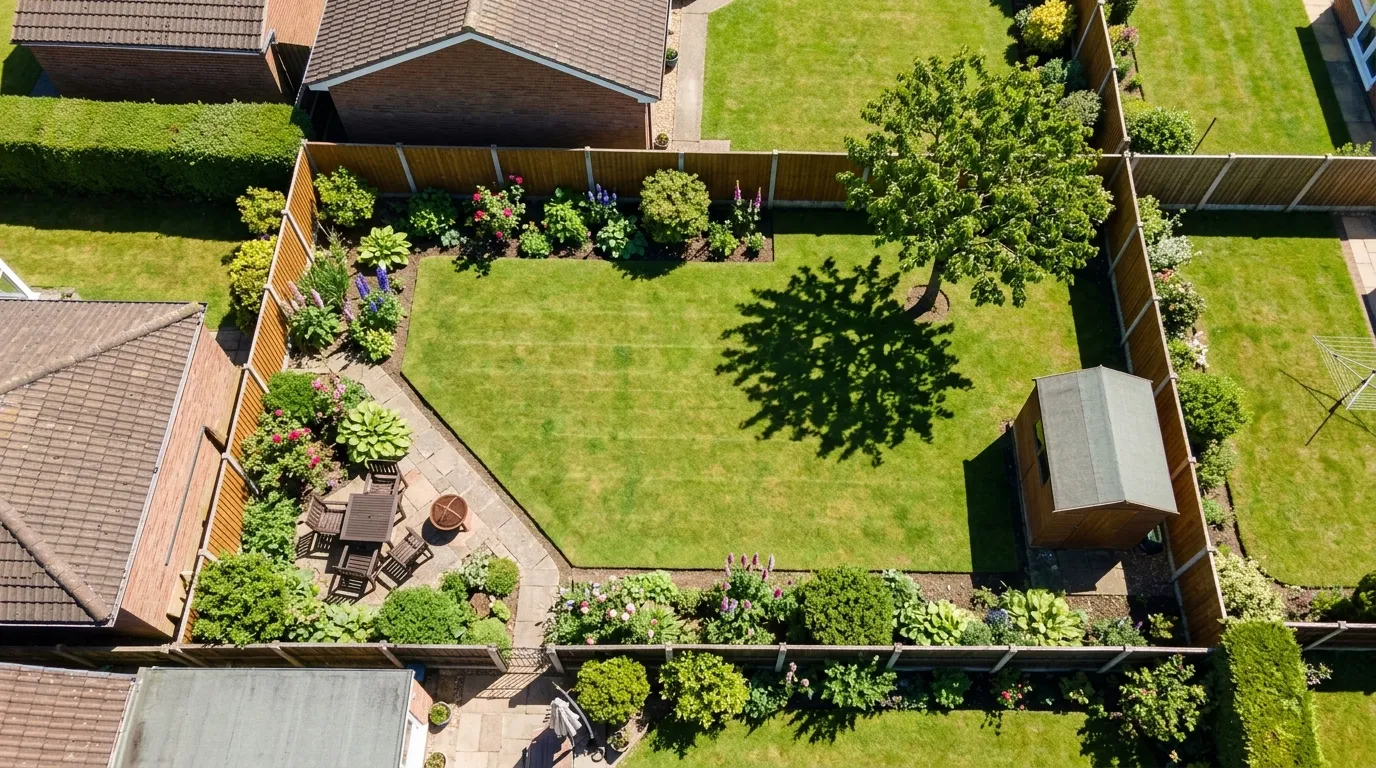 An overhead midday view in June. With the sun at 61 degrees, shadows are short and crisp. The same scene in December would be almost entirely shaded.
Working out shadow length from fences, walls and trees
Any object that blocks the sun casts a shadow whose length depends on the sun’s angle. You can calculate it. Shadow length equals object height multiplied by a shadow factor set by the time of year.
The shadow factor is one divided by the tangent of the sun’s angle. You do not need the maths. Use this table for a 2m fence in southern England at midday.
| Date | Sun angle | Shadow factor | Shadow of a 2m fence |
|---|---|---|---|
| 21 June | 61° | 0.55 | 1.1m |
| 20 March / 22 September | 38° | 1.28 | 2.6m |
| 6 November / 6 February | 23° | 2.36 | 4.7m |
| 21 December | 15° | 3.73 | 7.5m |
The numbers are striking. The same 2m fence throws a 1.1m shadow in June but a 7.5m shadow in December. A 6m tree at the winter solstice shades a strip 22m long. This is why north-facing beds behind tall structures stay cold and dark for months.
Trees add a complication. A deciduous tree such as a birch or oak drops its leaves in winter, so it casts far less shade from November to March even though the sun is low. An evergreen conifer shades all year. When you map, note which trees lose their leaves. The shade picture changes with both the sun and the canopy.
Gardener’s tip: Measure your tallest boundary structure and check its December shadow before planting anything permanent near it. A 3m hedge casts an 11m winter shadow. That strip will never grow sun lovers, whatever the plant label promises.
Matching plants to each sun zone
Once the map is done, planting becomes straightforward. Each zone has a reliable plant list that suits its light and the typical aspect that produces it.
| Sun zone | Direct sun hours | Typical aspect | Example UK plants |
|---|---|---|---|
| Full sun | 6+ | South, open west | Lavender, salvia, roses, sedum, tomatoes, thyme |
| Partial shade | 3 to 6 | East, dappled west | Astilbe, geum, hardy geranium, heuchera, foxglove |
| Light dappled shade | 4 to 5 | High canopy edge | Japanese anemone, hellebore, pulmonaria, ferns |
| Deep shade | Under 3 | North, base of walls | Hosta, fern, ivy, vinca, Skimmia, sarcococca |
Full sun beds suit Mediterranean plants that evolved under strong light. Lavender wants 6 or more hours or it grows leggy and shy of flower. Partial shade is the most forgiving band and supports the widest plant range, which is why it is the easiest zone to fill.
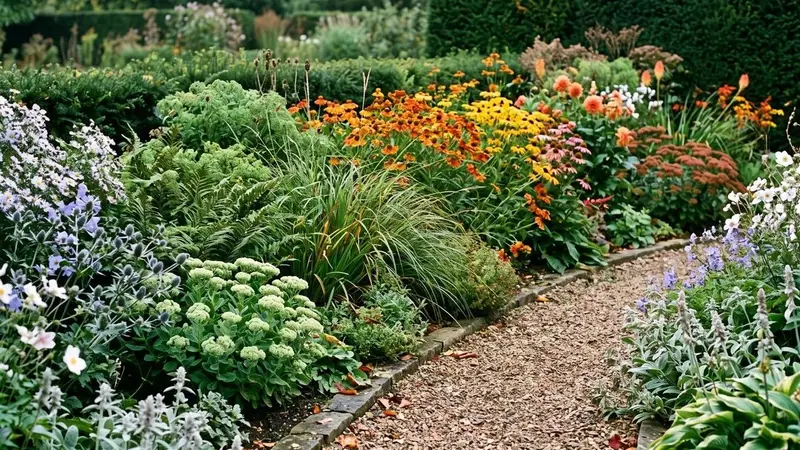
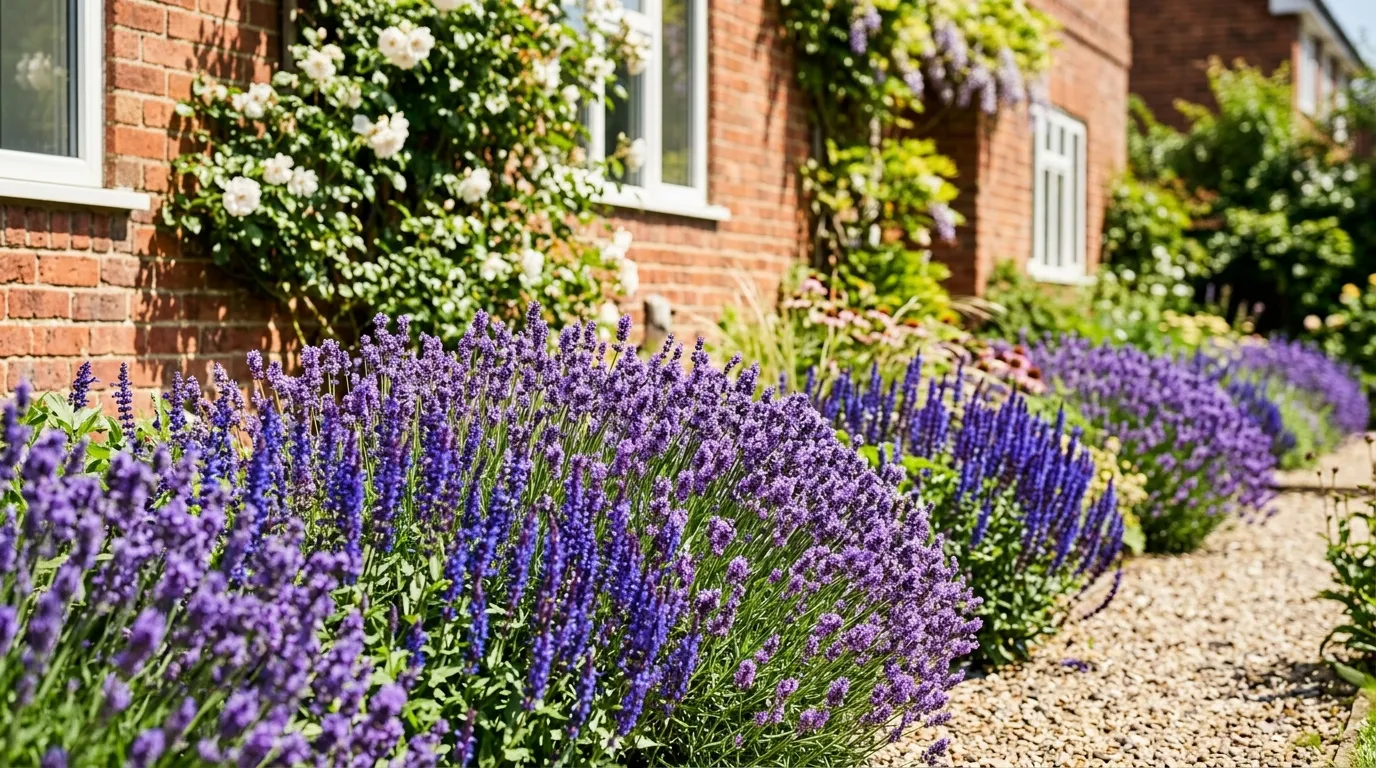 A full sun border in July. Lavender and salvia need 6 or more hours of direct light and flower poorly with less.
When to map: the month-by-month calendar
The sun’s height changes every week, so timing your mapping matters. Map at the wrong time and the data misleads. This calendar shows the best and worst months to log sun in the UK.
| Month | Mapping value | Notes |
|---|---|---|
| January | Poor | Sun too low, deciduous trees bare, misleading |
| February | Poor | Same low-sun problem, useful only for worst-case shade |
| March | Good | Equinox average, sun at 38 degrees, trees still bare |
| April | Very good | Growing season starts, sun climbing, reliable |
| May | Very good | Near-peak light, canopy filling, strong data |
| June | Best | Maximum sun at 61 degrees, longest day, full leaf |
| July | Best | Peak sun continues, full canopy shade visible |
| August | Very good | Still strong, slight decline begins |
| September | Good | Equinox average, useful counterpoint to June |
| October | Fair | Sun dropping fast, leaves starting to fall |
| November | Poor | Low sun, long shadows, only for shade extremes |
| December | Fair | Worst-case shade map, useful for the dark corners |
The two key sessions are June for maximum sun and either March or September for the average. Map both and you bracket the whole year. A bed that gets full sun in June and partial shade in September is, in truth, a partial shade bed for planning. Plan for the average, not the peak.
Common mistakes when sun mapping
Mapping once in midsummer only. This is the biggest error. A June-only map shows every bed at its sunniest. Beds that look like full sun in June can drop to 3 hours by September. Always map a second time near an equinox.
Forgetting deciduous trees. A bare winter tree casts little shade even with low sun. The same tree in full leaf shades heavily. If you map under a bare canopy, you will badly overstate summer sun. Note which trees lose leaves.
Trusting the plant label over the map. A “full sun” plant in a 4-hour bed will survive but sulk. Always trust your logged hours over the generic label. The label assumes ideal conditions you may not have.
Mapping on a cloudy day. Diffuse light hides shadows. You cannot see where direct sun falls under thick cloud. Wait for a clear or lightly clouded day, or the whole exercise fails.
The apps still earn a place for forward planning. If you want to know whether a new shed will shade the vegetable patch, the app answers before you build. For the garden you already have, your camera is the better tool.
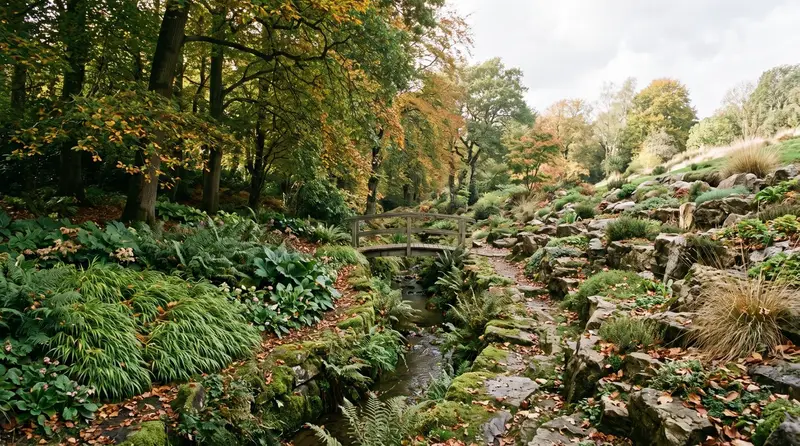
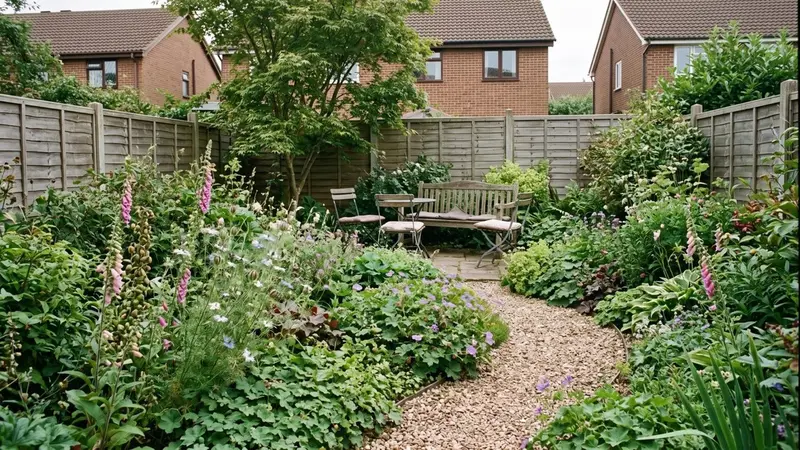
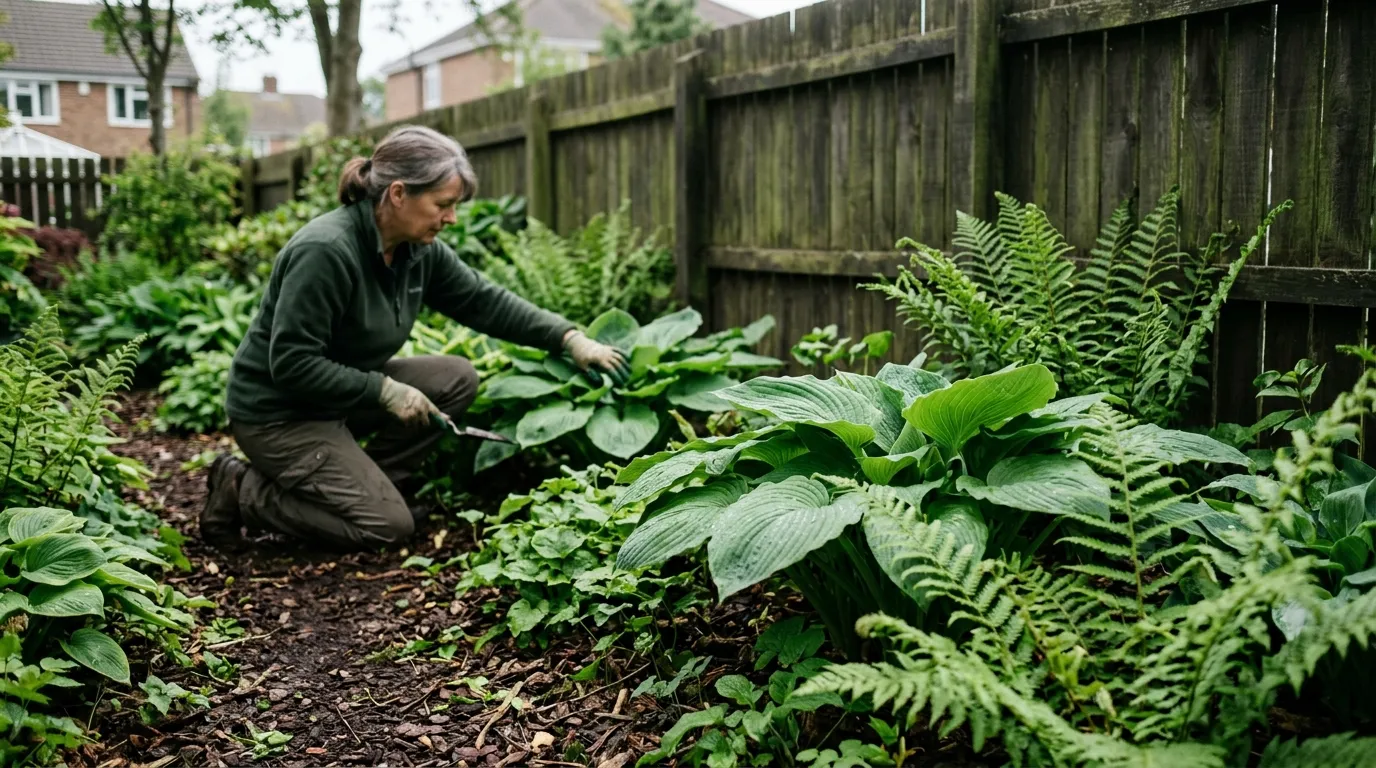 A north-facing bed under 2 hours of direct sun. Hostas and ferns thrive in the even, gentle light that defeats sun-loving plants.
Using the map to plan a whole garden
A finished sun map is the foundation of every other design decision. With zones marked, you place sun-hungry features in the bright areas and tuck shade lovers into the dark ones. Seating goes where the evening sun lands, usually a west-facing spot. A greenhouse or vegetable bed goes in the brightest, most open zone you have.
Keep your sunlight notes beside your moisture observations before choosing plants. Our Church Gill garden-zone lessons translate an official case study into a practical home-garden framework. Use it to consider how contrasting areas relate, then mark any unanswered questions on your sketch.
The map also guides hard choices. If your only full sun zone is small, you decide what earns that space: tomatoes, roses, or a sunny seat. If most of the plot is shade, you lean into woodland planting rather than fighting it. Working with the light always beats working against it.
A garden mapped properly removes the two most expensive mistakes in gardening: buying the wrong plant, and planting it in the wrong place. One clear day with a camera saves seasons of disappointment.
Next step
Our team produces practical UK gardening guidance from source research, contributor records and established horticultural practice. Editorial standards are overseen by Matt W.