Key takeaways
- Chervil prefers partial shade, the opposite of most UK herbs
- Sow direct March to September for cuts in 6-8 weeks
- Each plant yields 80-150g of leaves before bolting
- Hot dry summer sun triggers bolting; partial shade extends the harvest
- Self-seeds readily and gives volunteer crops the following year
- Cornerstone of fines herbes alongside parsley, tarragon, and chives
Chervil is the herb UK kitchens overlook. Every French recipe lists it; every British supermarket fails to stock it. The leaves taste like a cross between parsley and tarragon with subtle aniseed; the texture is delicate and lacy. It belongs in spring omelettes, vichyssoise, and the classic fines herbes alongside parsley, tarragon, and chives. UK gardeners who try chervil once usually grow it every year afterwards.
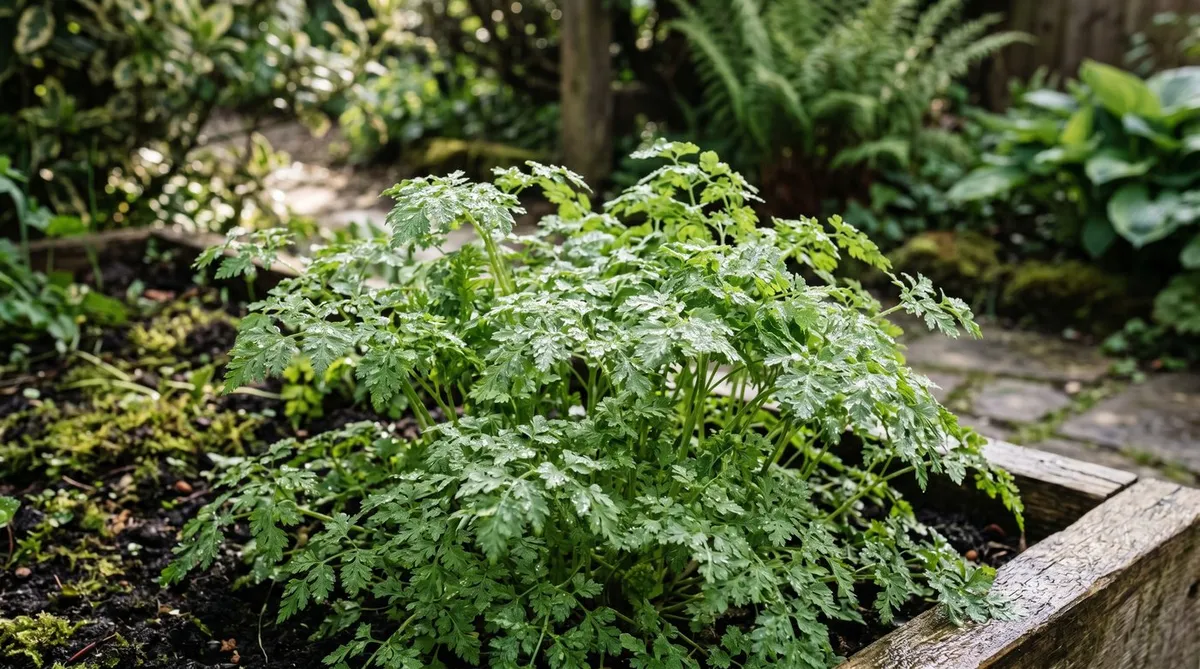
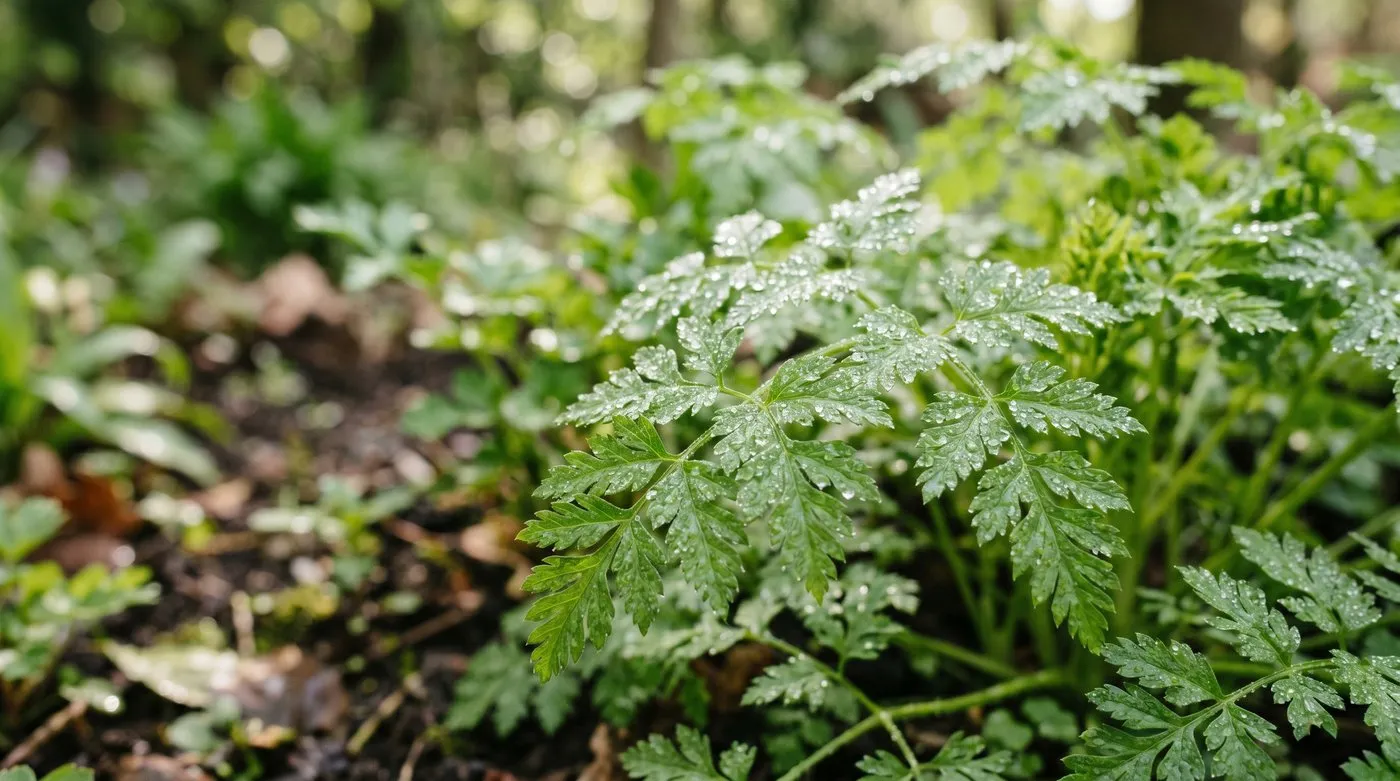 Mature chervil at 8 weeks from a March direct sowing. The lacy serrated leaves are the signature texture; harvest by cutting outer stems at the base
What chervil is and why it suits UK conditions
Chervil (Anthriscus cerefolium) is an annual herb in the carrot family. Native to southeast Europe and western Asia, naturalised across Europe since Roman times. The herb has been grown in the UK since at least the 16th century but never gained the popularity of parsley or mint.
Two cultivar groups exist: plain-leaved and curled-leaved. Plain (the standard form) is the culinary herb. Curled types like ‘Vertissimo’ are slightly more decorative but less flavoursome. The variety ‘Vit’ is more bolting-resistant than the standard form.
Chervil prefers cool damp conditions. Native habitats are forest margins and dappled shade. UK summer heat triggers bolting; UK spring and autumn are ideal cropping windows.
The herb grows 30-50cm tall and 20-30cm wide. Annual lifecycle: sow, grow, crop, bolt, set seed, die. Total cycle 12-16 weeks. Plants left to self-seed deposit hundreds of seeds; volunteer crops the following year are vigorous.
Hardy to -10C when established. Autumn sowings overwinter under cloches or in cold frames for spring cuts.
| Feature | Detail |
|---|---|
| Family | Apiaceae (carrot family) |
| Type | Annual |
| Height | 30-50cm |
| Hardiness | -10C established |
| Best position | Partial shade |
| Soil | Cool, moisture-retentive |
| Days to first cut | 42-56 |
| Productive life | 8-14 weeks before bolting |
Sowing dates: the 3-week succession plan
Sow chervil direct March to September for UK harvests April to October. Direct sowing is preferred; chervil dislikes root disturbance from transplanting.
Three-week stagger gives continuous harvest. One sowing crops for 6-10 weeks before bolting. Three-week stagger gives overlapping batches and fresh herb year-round in season.
Sowing depth 5-10mm. Chervil seed germinates in light to moderate moisture. Cover seed lightly with sieved compost or sand.
Soil temperature minimum 7C for germination, optimum 15-20C. March sowings germinate in 14-21 days; May sowings in 7-10 days; September sowings in 14-21 days as temperatures drop.
Row spacing 25-30cm, thin plants to 15-20cm within the row. Closer than 15cm produces small straggly plants that bolt early.
Autumn sowings September-October overwinter in cold frames. Crop February-April under protection. Useful for early spring fines herbes.
| Sowing date | Harvest date | Cropping window | Notes |
|---|---|---|---|
| Mid-March | Mid-May | 6-10 weeks | First main crop |
| Early April | Early June | 8-12 weeks | Best yield in cool springs |
| Late April | Late June | 6-10 weeks | Standard timing |
| Mid-May | Mid-July | 4-6 weeks | Heat shortens window |
| Early August | Late September | 8-12 weeks | Autumn flush |
| Early September | Early November | 6-8 weeks | Late season, under cloche if frosty |
Soil, shade and position
Cool moisture-retentive soil with high organic matter content. Add 3-5kg per square metre of garden compost or leaf mould before sowing. Heavy clay benefits from sand or grit to improve drainage while keeping moisture.
Soil pH 6.0-7.0 is ideal. Chervil tolerates a wide range but performs best in near-neutral conditions.
Partial shade is critical. Three hours of morning sun and afternoon shade is the gold standard. East-facing positions, the lee of a tall hedge or fence, or interplanting with taller crops all work.
Avoid full sun positions. Plants bolt within 4-5 weeks in midsummer sun. The harvest window halves. Full-shade positions also fail; plants grow leggy and weak.
Companion planting with chervil between taller crops is the easiest way to get partial shade. Plant chervil in the row between sweetcorn, runner beans, or behind brassicas. The taller crop provides afternoon shade automatically.
Avoid windy exposed positions. Wind dries out the delicate foliage and triggers bolting. Plant in sheltered corners.
Water consistently through the season. Chervil’s lifespan is determined by soil moisture as much as sun. Mulch around plants with 3-5cm of compost to retain moisture.
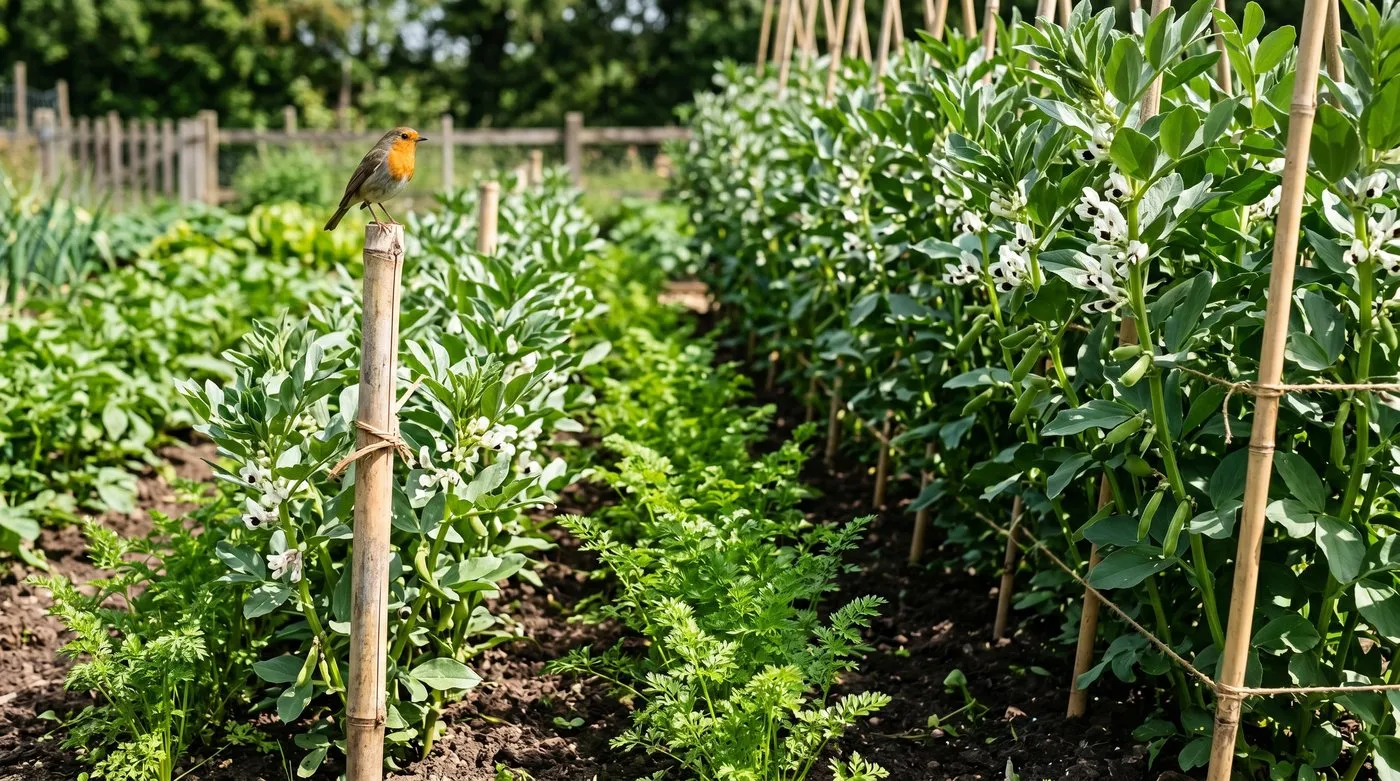 Chervil planted between rows of broad beans for natural afternoon shade. This companion arrangement extends the chervil harvest by 4-6 weeks
Harvest method and yield
First cut at 6-8 weeks from sowing when plants are 15-20cm tall. Use sharp scissors or a knife. Cut outer stems at the base, leaving the central growing point untouched.
Take only 30-50% of the plant per cut. Aggressive cutting kills the plant. Light regular harvesting extends productive life.
Subsequent cuts every 7-14 days. Each plant gives 4-5 cuts before bolting. Total yield 80-150g per plant.
Cut in the cool of the morning. Stems are crisp and full of moisture. Afternoon cuts wilt faster after picking.
Use within 24 hours. Refrigerate in a damp tea towel. Chervil deteriorates quickly; the bright flavour is at peak the day of cutting.
Stop harvesting if flower stems emerge. Pinch off flower stems immediately to extend the leaf-cropping window by 2-3 weeks. Once a plant flowers, the leaves turn bitter and tough.
Yield per row of 5 plants: 400-750g per cropping cycle. Successional sowings of 5 plants every 3-4 weeks supply a household fines herbes mix from May to October.
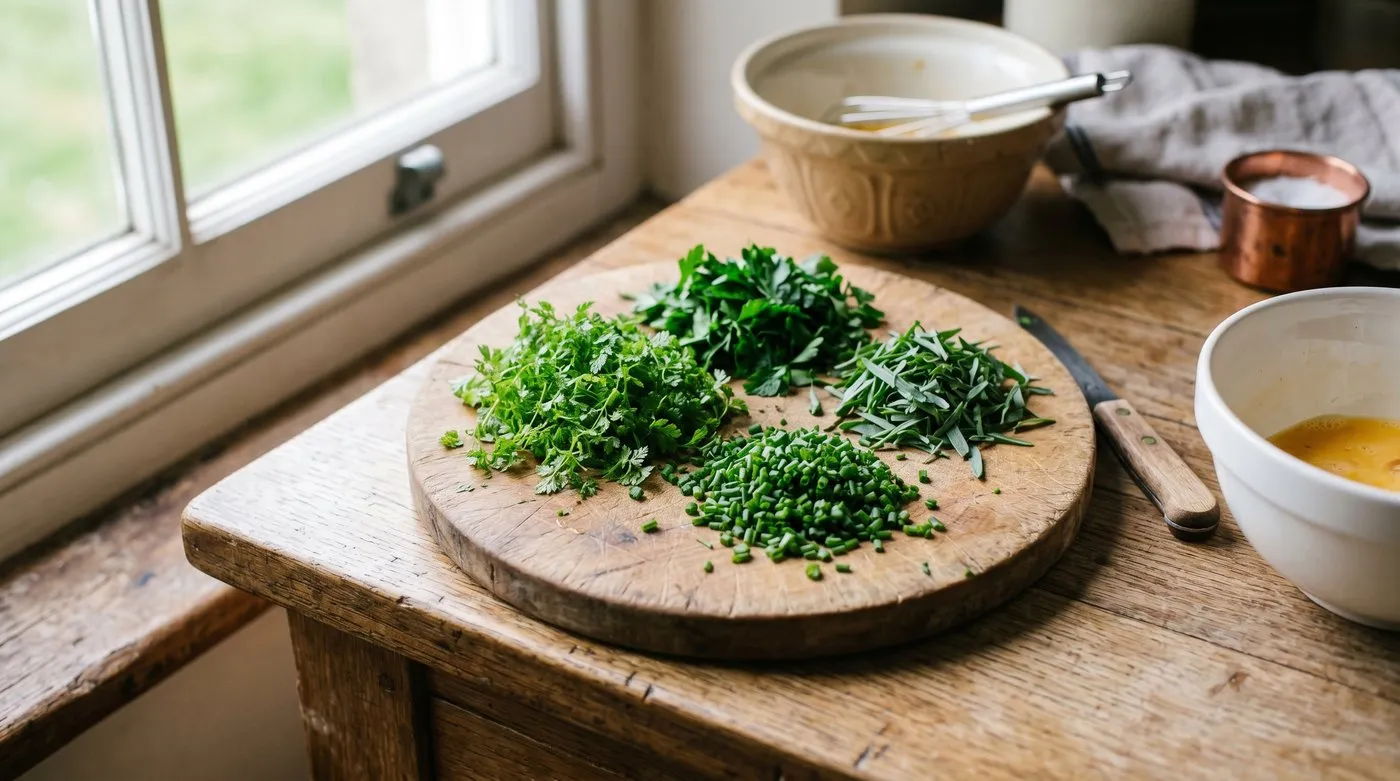 Fines herbes mix on a kitchen board: parsley, chervil, tarragon and chives in equal parts. The classic French combination that defines spring egg dishes
| Cut sequence | Days after previous | Approximate weight | Notes |
|---|---|---|---|
| First cut | 42-56 days from sowing | 30g per plant | Outer stems only |
| Second cut | 7-14 days | 30-40g | Steady regrowth |
| Third cut | 7-14 days | 30-40g | Peak harvest |
| Fourth cut | 14-21 days | 25-30g | Plants thinning |
| Fifth cut | 14-21 days | 20-25g | Last before bolt |
Fines herbes and the kitchen uses
Fines herbes is the classical French herb mix of equal parts parsley, chervil, tarragon, and chives, finely chopped. Used fresh in omelettes, scrambled eggs, fish sauces, vichyssoise, and butters. The mix is added at the end of cooking; heat destroys the flavour.
Chervil pairs particularly well with eggs, white fish, chicken, and spring vegetables. The aniseed note complements asparagus, peas, broad beans, and new potatoes.
Chervil butter: Cream 100g unsalted butter with 30g finely chopped chervil. Roll in clingfilm, refrigerate, slice as needed. Lasts 7-10 days in the fridge.
Chervil oil: Bruise 50g chervil leaves and stems, cover with 200ml sunflower or rapeseed oil, infuse 5-7 days in the fridge, strain. Use within 2 weeks. Avoid letting fresh herbs in oil sit unrefrigerated; botulism risk applies.
Spring chervil soup: Sweat 300g leeks and 200g potatoes in butter, add 1 litre stock, simmer 20 minutes, blend, finish with 100g chopped chervil. Pure spring flavour.
Vichyssoise variation: Add 50-80g chervil to a standard vichyssoise recipe at the end of cooking. The aniseed lift makes a familiar soup memorable.
Gardener’s tip: A few sprigs of chervil scattered over a ready-to-eat green salad with a sherry vinegar dressing is the simplest way to taste the herb at its best. Most chervil recipes overcomplicate it; the leaf is delicate enough to need almost no preparation.
Common pests and problems
Chervil pest pressure is low in UK plots. The main issues are aphids, slugs, and carrot fly.
Aphids cluster on young growth in spring. Hose off with cold water or wait for ladybirds to arrive. Severe infestations are rare.
Slugs eat seedlings overnight. Use copper rings around individual plants or beer traps at intervals along the row. Slug pellets work but kill beneficial soil life.
Carrot fly can affect chervil because it is in the same family. Cover plants with fleece for the first 6-8 weeks. Plants over 25cm tall are too tough for carrot fly larvae to colonise.
Powdery mildew develops in dry windy conditions. Water at soil level rather than overhead. Remove affected leaves promptly.
Bolting is the main problem, not a pest. Heat, drought, and full sun all trigger it. Manage with shade and water rather than treatment.
Self-seeding and saving seed
Let two plants flower at the end of the season. Tall umbels of small white flowers attract hoverflies and other beneficial insects.
Seed ripens 4-6 weeks after flowering. Pale brown, long, thin seeds. The plant drops seed naturally; volunteer crops appear the following spring.
To save seed deliberately, cut umbels just before they shatter. Dry on a sheet for 7-10 days. Store in paper envelopes in cool dry conditions.
Saved seed remains viable for 1-2 years. Older seed germinates poorly. Fresh seed is best.
Volunteer plants the next spring are vigorous and early. Many growers stop deliberately sowing chervil after year 2-3; the self-seeded plants supply the household with no further work.
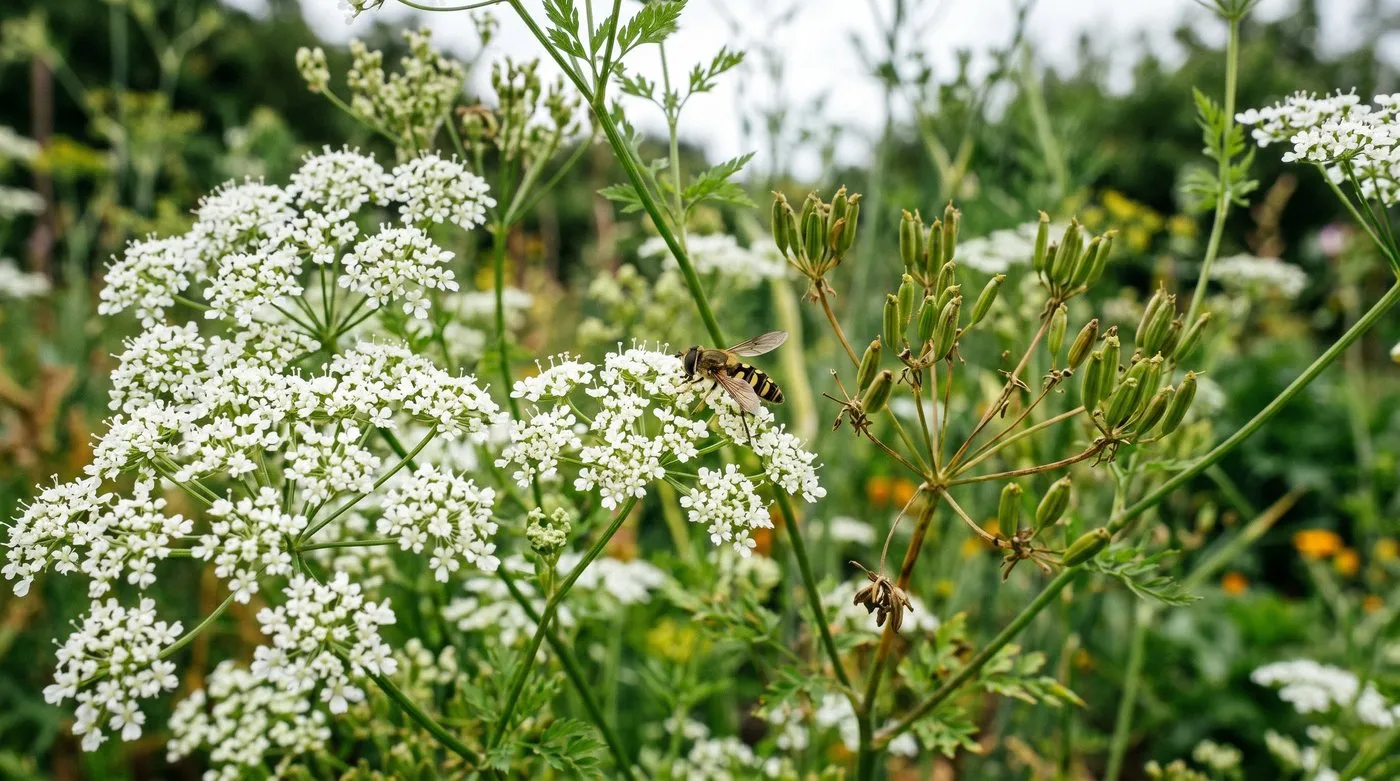 Chervil in flower, with hoverfly visitors. Two plants left to flower drop hundreds of seeds and supply volunteer crops the following spring
Common mistakes to avoid
Planting in full summer sun. Chervil bolts within 4-5 weeks. Always use partial shade in UK summers.
Single large sowing in spring. All plants bolt at the same time in early summer, leaving no chervil for the rest of the year. Stagger sowings every 3-4 weeks.
Transplanting from modules. Chervil dislikes root disturbance. Direct sow always.
Cutting all the foliage at once. Plants stripped of more than 50% of leaves recover slowly or die. Light regular cuts work better.
Drying or freezing for storage. Flavour vanishes in both methods. Plan succession sowings for continuous fresh supply instead.
Watering overhead. Wet foliage in still UK weather develops mildew. Water at soil level.
Step-by-step: sowing a chervil row
Step 1: choose a partially shaded bed. Three hours of morning sun is ideal. Avoid full sun and full shade.
Step 2: prepare the soil. Dig over, work in 3-5kg per square metre of garden compost, rake level.
Step 3: water the row the day before sowing. Moist soil grips small seeds.
Step 4: draw a shallow drill 5-10mm deep. Use a length of cane or string.
Step 5: sow seed thinly along the drill. One seed every 2-3cm. Chervil seed is small but visible on dark soil.
Step 6: cover with 5-10mm of fine soil. Firm lightly.
Step 7: water in with a fine rose. Keep soil damp for the first 14-21 days.
Step 8: thin to 15-20cm spacing at 4 true leaves. Use the thinnings as the first salad. Cut at ground level.
Step 9: mulch with 3-5cm of compost. Keeps soil cool and moist through summer.
Step 10: first cut at 6-8 weeks from sowing. Outer stems at the base, leave central crown intact.
Step 11: continue cutting every 7-14 days. Pinch off any flower stems that emerge.
Step 12: stagger next sowing 3 weeks after the current one. Continuous fresh chervil from March to October.
Frequently asked questions
What is chervil and how does it taste?
Chervil (Anthriscus cerefolium) is a French herb with delicate parsley-like leaves and a mild aniseed flavour. It tastes like parsley crossed with tarragon, with subtle aniseed notes. Used fresh in fines herbes (parsley, chervil, tarragon, chives), spring soups, and egg dishes. The flavour vanishes when dried, so the herb is fundamentally for fresh use. Most UK supermarkets do not stock it.
When should I sow chervil in the UK?
Sow chervil direct March to September for UK harvests April to October. Stagger sowings every 3-4 weeks for continuous cropping. Avoid sowing in midsummer heat unless the bed is shaded; July sowings in full sun bolt within 4-5 weeks. Autumn sowings overwinter in cold frames or under cloches for early spring cuts. Sow seed 5-10mm deep.
Why does my chervil keep bolting?
Chervil bolts (runs to seed) when stressed by heat, drought, or full UK summer sun. The first sign is taller central stems and rounder lower leaves. To extend the harvest, plant in partial shade, water consistently, and pinch off any flower stems as they emerge. Hot dry July weather is the main bolting trigger in UK plots. Mulching with compost keeps soil cool and extends cropping by 2-4 weeks.
Does chervil grow well in shade?
Yes, chervil is one of the few herbs that prefers partial shade in UK conditions. Three hours of morning sun and afternoon shade gives the longest cropping window. Full sun causes early bolting and bitter flavour. Plant alongside taller crops, behind shrubs, or in the lee of a fence for the best results. Companion planting between rows of taller vegetables works well.
Can chervil be dried or frozen?
No, chervil loses almost all flavour when dried. Freezing in ice cubes or oil preserves some flavour but the texture changes. Chervil is fundamentally a fresh herb; eat within 24 hours of cutting for the best flavour. Successional sowing year-round gives a continuous supply rather than preservation. Autumn sowings under cloches extend the season into November and December.
Our team produces practical UK gardening guidance from source research, contributor records and established horticultural practice. Editorial standards are overseen by Matt W.