Key takeaways
- Dwarf varieties produce 60-80% of full-sized crop yields in pots half the size
- Tomato 'Tumbling Tom' fruits in just 55-60 days from transplanting in a 25cm pot
- A 1m x 1m balcony fits 6 productive pots yielding fresh food from June to October
- Courgette 'Patio Star' produces 8-12 fruits per plant in a 40cm container
- Sow most dwarf varieties indoors from March, transplant outdoors after last frost in May
Dwarf vegetable varieties let you grow proper food in the smallest spaces. A sunny balcony, patio corner, or wide windowsill is enough. These compact plants stay small but still produce full-flavoured harvests. If you’re starting a vegetable garden for the first time, dwarf varieties are the simplest way in.
What are dwarf vegetable varieties?
Dwarf varieties are bred to stay compact, 30-60cm tall instead of the 90-180cm you’d get from standard plants. The fruit and flavour stay the same. Only the plant size changes.
Plant breeders achieve this through shorter internodes, the gaps between leaf joints. The result is a bushy, dense plant that puts its energy into fruit rather than foliage. Most dwarf varieties also mature 2-3 weeks earlier than their full-sized equivalents, which suits the UK’s shorter growing season.
Dwarf doesn’t mean low-yielding. A well-grown Tomato ‘Tumbling Tom’ produces 2-3kg of cherry tomatoes in a 25cm hanging basket. That matches many full-sized plants grown in open ground.
Best dwarf tomato varieties for pots and hanging baskets
Tomatoes are the standout crop for small-space growing. Bush and trailing varieties need no staking, no side-shooting, and no string supports. They’ll fruit reliably from July to October on a sunny patio.
| Variety | Height | Pot Size | Yield | Days to Harvest |
|---|---|---|---|---|
| ’Tumbling Tom Red’ | 20-30cm trailing | 25cm+ | 2-3kg | 55-60 |
| ’Tumbling Tom Yellow’ | 20-30cm trailing | 25cm+ | 2-3kg | 55-60 |
| ’Micro Tom’ | 15-20cm | 15cm+ | 0.5-1kg | 50-55 |
| ’Totem’ | 40-50cm bush | 30cm+ | 3-4kg | 65-70 |
| ’Balconi Red’ | 25-35cm trailing | 25cm+ | 2-3kg | 60-65 |
| ’Vilma’ | 25cm bush | 20cm+ | 1-2kg | 55-60 |
Sow indoors from mid-March in modules on a warm windowsill. Transplant to final containers after the last frost in mid-May. Feed weekly with liquid tomato fertiliser once the first truss sets. For more detailed growing advice, see our full guide to growing tomatoes.
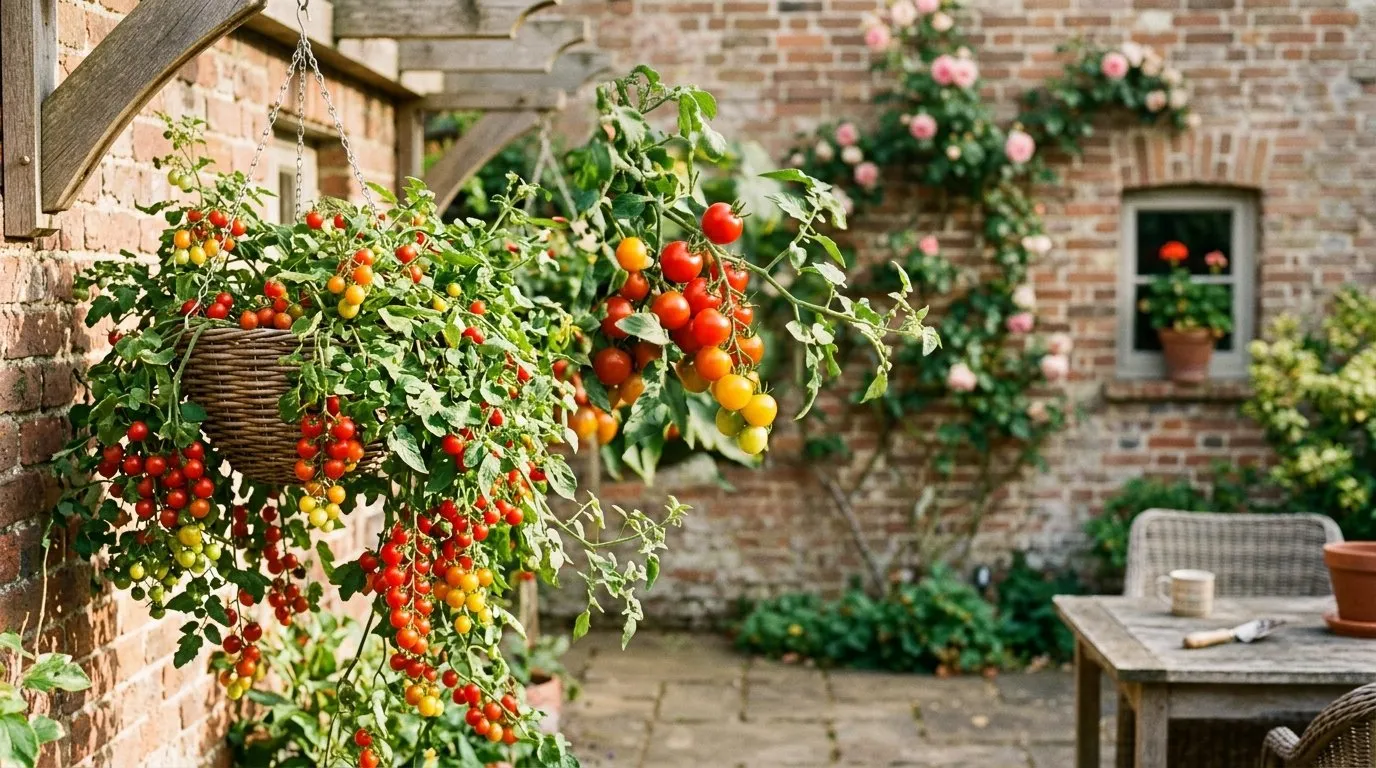 Tumbling Tom cherry tomatoes produce 2-3kg of fruit from a single hanging basket on a sunny patio.
‘Micro Tom’ is worth singling out. At just 15-20cm tall, it grows happily on a kitchen windowsill in a 15cm pot. The fruits are small, marble-sized, but the flavour is intense. It’s the world’s smallest tomato variety.
Compact peppers and chillies for containers
Peppers and chillies take well to container growing. Dwarf varieties stay under 45cm and produce generous harvests from a single pot on a warm, sheltered patio.
| Variety | Type | Height | Pot Size | Yield |
|---|---|---|---|---|
| ’Redskin’ | Sweet pepper | 30-40cm | 25cm+ | 8-12 fruits |
| ’Mohawk’ | Sweet pepper | 35-45cm | 30cm+ | 10-15 fruits |
| ’Lunchbox Red’ | Sweet snacking | 40-50cm | 30cm+ | 20-30 small fruits |
| ’Apache’ | Chilli (hot) | 30-40cm | 25cm+ | 40-60 fruits |
| ’Prairie Fire’ | Chilli (very hot) | 20-25cm | 20cm+ | 50-80 small fruits |
| ’Basket of Fire’ | Chilli (medium) | 25cm trailing | 25cm+ | 60-100 fruits |
Peppers need warmth. Start seeds indoors in February using a heated propagator set to 21-25C. They’re slow germinators, expect 10-14 days. Move to a sunny windowsill after germination, then transplant outdoors in early June when night temperatures stay above 10C. Our guide on growing chilli peppers covers the full process.
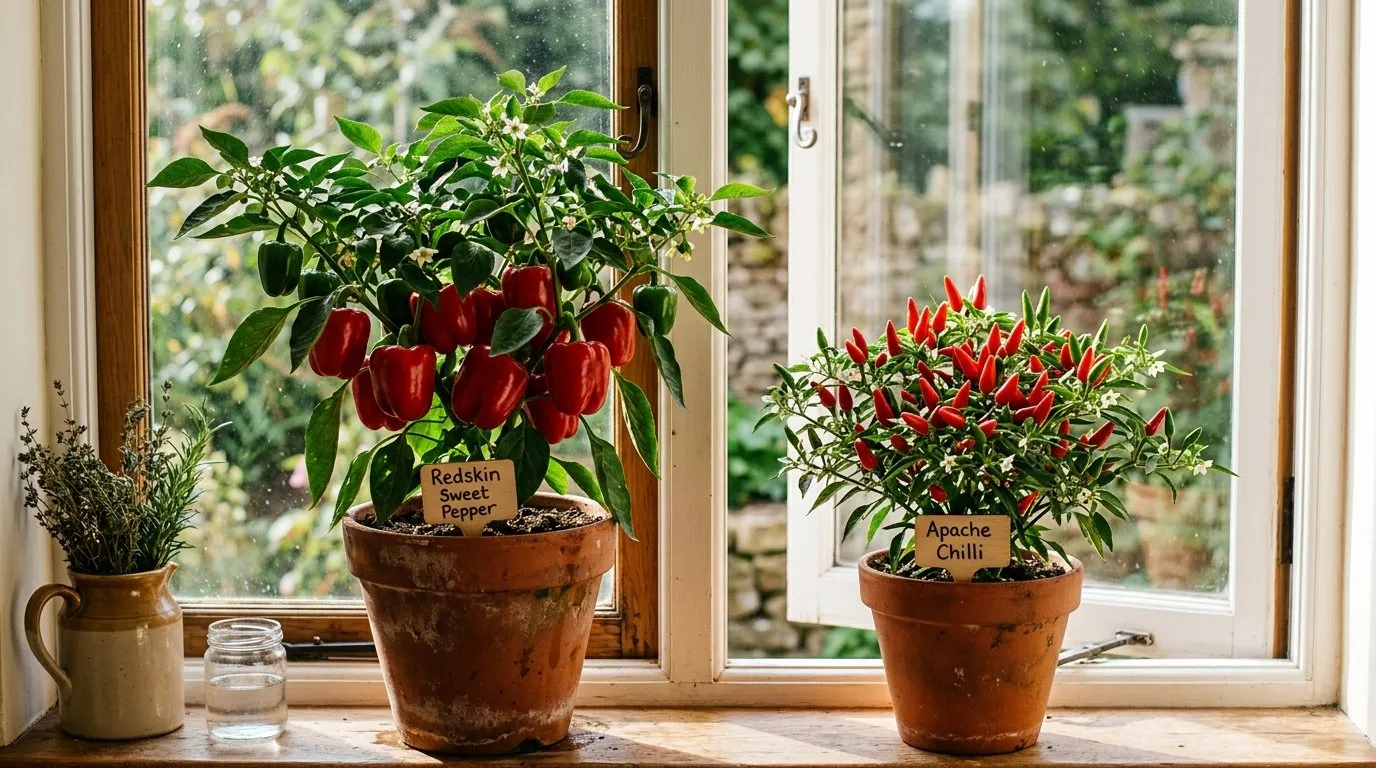 Dwarf peppers and chillies thrive on a warm windowsill. Redskin sweet pepper (left) and Apache chilli (right).
‘Redskin’ is hard to beat for beginners. Full-sized sweet peppers on a plant just 35cm tall, no staking required. The RHS recommends it as one of the best container peppers for UK gardeners.
Dwarf courgettes and cucumbers for patio growing
Standard courgettes sprawl over 1m of ground. Dwarf varieties stay in a single 40cm pot and still produce a worthwhile harvest.
Courgette ‘Patio Star’ is the benchmark. It grows to 40-50cm across in a 40cm container and produces 8-12 courgettes per plant between July and September. Harvest when fruits reach 15-20cm for the best flavour.
Courgette ‘Buckingham’ offers similar compact growth with slightly higher yields of 10-15 fruits. It handles cool summers better than most.
Cucumber ‘Patio Snacker’ climbs to 60cm with a small support and produces 15-20 snack-sized cucumbers per plant in a 30cm pot. No greenhouse needed. Sow indoors in April and transplant outdoors in early June.
Water courgettes and cucumbers generously. They need 2-3 litres daily in hot weather. Irregular watering causes bitter fruit and blossom end rot.
Best dwarf salad and leafy varieties
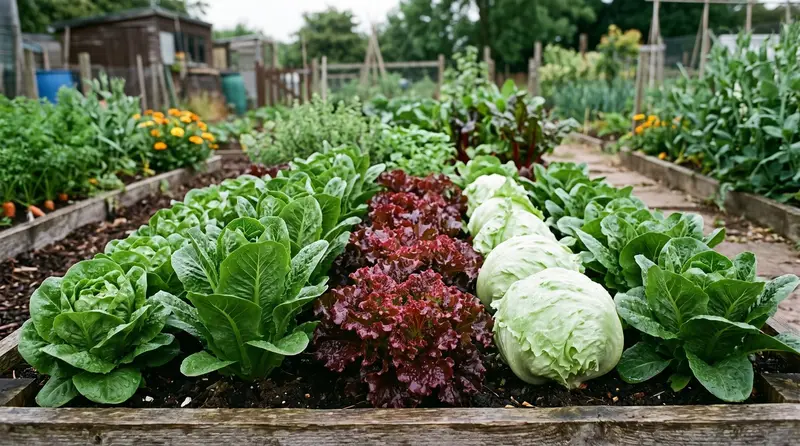
Salad crops give you the quickest return. Many produce a first harvest within 3-4 weeks of sowing, and they’ll thrive in shallow containers, window boxes, and even guttering mounted on walls.
| Variety | Type | Container | Weeks to Harvest | Notes |
|---|---|---|---|---|
| Lettuce ‘Little Gem’ | Cos | 15cm+ deep | 8-10 | Compact, sweet hearts |
| Lettuce ‘Tom Thumb’ | Butterhead | 15cm+ deep | 8-10 | Heritage, very small |
| Spinach ‘Lazio’ | Smooth leaf | 20cm+ deep | 6-8 | Slow to bolt |
| Rocket (wild) | Salad leaf | 10cm+ deep | 3-4 | Cut-and-come-again |
| Radish ‘French Breakfast’ | Root | 15cm+ deep | 4-5 | Any shallow pot |
| Spring onion ‘White Lisbon’ | Allium | 15cm+ deep | 8-10 | Tight spacing works |
| Beetroot ‘Pablo’ | Root | 25cm+ deep | 10-12 | Globe shape, sweet |
Sow salad seeds directly into containers from April onwards. Successional sowing, a new batch every 2-3 weeks, gives continuous harvests from May to October. A single 60cm window box produces enough mixed salad for 2-3 meals per week.
For indoor growing through winter, many of these varieties also thrive on a bright windowsill.
Dwarf beans and peas for small spaces
Bush beans and dwarf peas crop well without the tall supports climbing varieties demand. They fit neatly into 30cm pots on a patio or balcony.
Dwarf French Bean ‘Safari’ grows to 35cm and produces slim, stringless pods over 6-8 weeks. Expect 1-1.5kg per plant in a 30cm pot. Sow direct in May after the last frost.
Dwarf French Bean ‘Compass’ is even more compact at 30cm, heavy yielding with flat, green pods and good disease resistance.
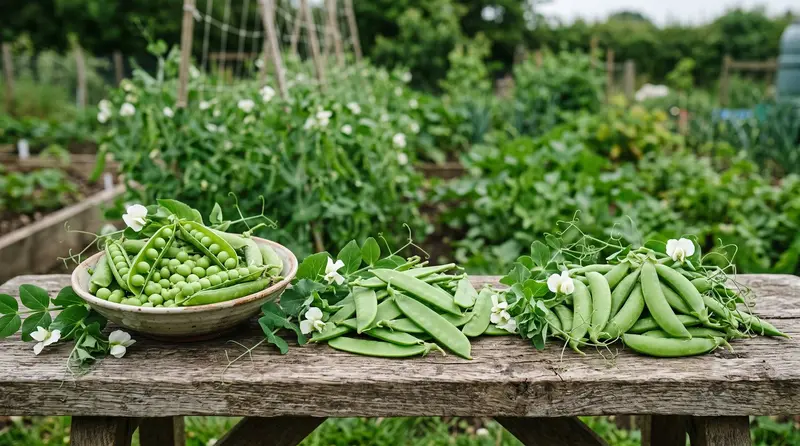
Dwarf Pea ‘Tom Thumb’ reaches just 20-25cm and needs no support at all. The pods are small but sweet. Children love this one.
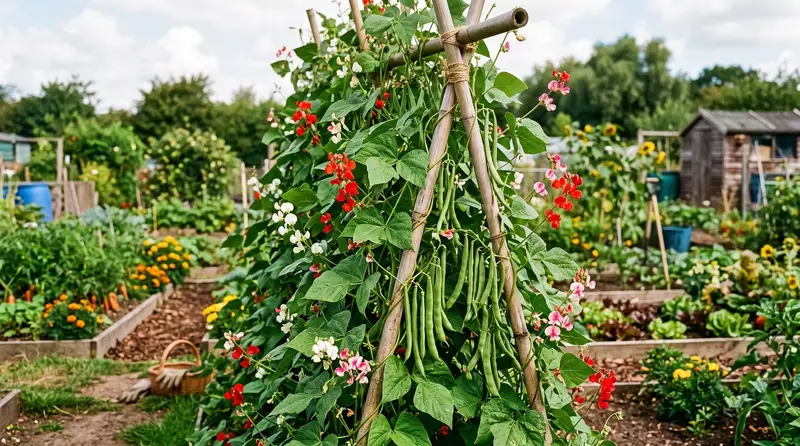
Dwarf Runner Bean ‘Hestia’ stays under 45cm, which is remarkable for a runner bean. Standard-sized pods without the usual 2m climbing frame, and the red and white flowers look good too.
Sow beans and peas directly into their final containers from mid-May, they dislike root disturbance. Push seeds 5cm deep and 10cm apart, water well, and keep moist until germination.
Here’s the same crop grown as a dwarf variety versus a standard one. The differences in space and yield help you decide what suits your setup.
| Crop | Dwarf Variety | Standard Variety | Dwarf Height | Standard Height | Dwarf Yield | Standard Yield | Min Pot (Dwarf) |
|---|---|---|---|---|---|---|---|
| Tomato | ’Tumbling Tom' | 'Gardener’s Delight’ | 25cm | 180cm | 2-3kg | 3-5kg | 25cm |
| Pepper | ’Redskin' | 'California Wonder’ | 35cm | 75cm | 10 fruits | 15 fruits | 25cm |
| Courgette | ’Patio Star' | 'Black Beauty’ | 45cm | 90cm+ | 10 fruits | 20 fruits | 40cm |
| French Bean | ’Safari' | 'Blue Lake’ | 35cm | 180cm | 1.5kg | 3kg | 30cm |
| Cucumber | ’Patio Snacker' | 'Marketmore’ | 60cm | 180cm | 18 fruits | 30 fruits | 30cm |
| Pea | ’Tom Thumb' | 'Kelvedon Wonder’ | 25cm | 60cm | 0.5kg | 1.5kg | 25cm |
Dwarf varieties produce 60-80% of the yield in roughly a third of the space. The trade-off is worthwhile when space is the limiting factor. You can also fit 3-4 dwarf plants in the area one standard plant needs.
How to maximise yield in a small space
Choosing dwarf varieties is only half of it. These techniques squeeze the most from every pot and square centimetre.
Vertical growing. Mount window boxes, hanging baskets, and wall planters at different heights. A single 1m-wide wall holds 3 tiers of growing. Trailing tomatoes and strawberries work well overhead. Balcony gardening uses this approach extensively.
Succession sowing. Sow small batches every 2-3 weeks instead of everything at once. This extends your harvest window from a 4-week glut to a 4-month supply.
Companion planting. Pair crops that share space efficiently. Radishes between lettuce. Basil alongside tomatoes. Spring onions around pepper pots. Our companion planting guide covers the best UK pairings.
Right pot, right crop. Match container size to the crop precisely. Oversized pots waste compost. Undersized pots restrict roots. The tables above give minimum sizes for each variety.
Feed consistently. Container crops depend entirely on you for nutrients. Slow-release fertiliser granules at planting give a baseline, then start weekly liquid feeds once plants flower. Garden Organic recommends a balanced seaweed feed for container vegetables.
Water management. Group pots together to create a humid microclimate. Stand pots on trays filled with gravel to catch drainage and maintain moisture. Water in the morning before the heat of the day.
Sowing and harvest calendar for dwarf vegetables
Plan your growing season with this month-by-month guide. All dates suit most of England and Wales. Add 2-3 weeks for Scotland and northern England.
| Crop | Sow Indoors | Sow/Plant Outdoors | First Harvest | Last Harvest |
|---|---|---|---|---|
| Dwarf tomatoes | Mid-March | Late May | Mid-July | October |
| Compact peppers | February | Early June | August | October |
| Dwarf courgettes | April | Late May | July | September |
| Compact cucumbers | April | Early June | July | September |
| Lettuce / salad | March | April onwards | May | October |
| Dwarf beans | , | Mid-May | July | September |
| Radishes | , | April onwards | May | October |
| Spring onions | March | April onwards | June | October |
Starting seeds on a windowsill gives dwarf varieties a 6-8 week head start over direct sowing, critical for tomatoes, peppers, and aubergines in the UK climate. Raised beds offer another space-efficient option if you’ve got even a small patch of ground.
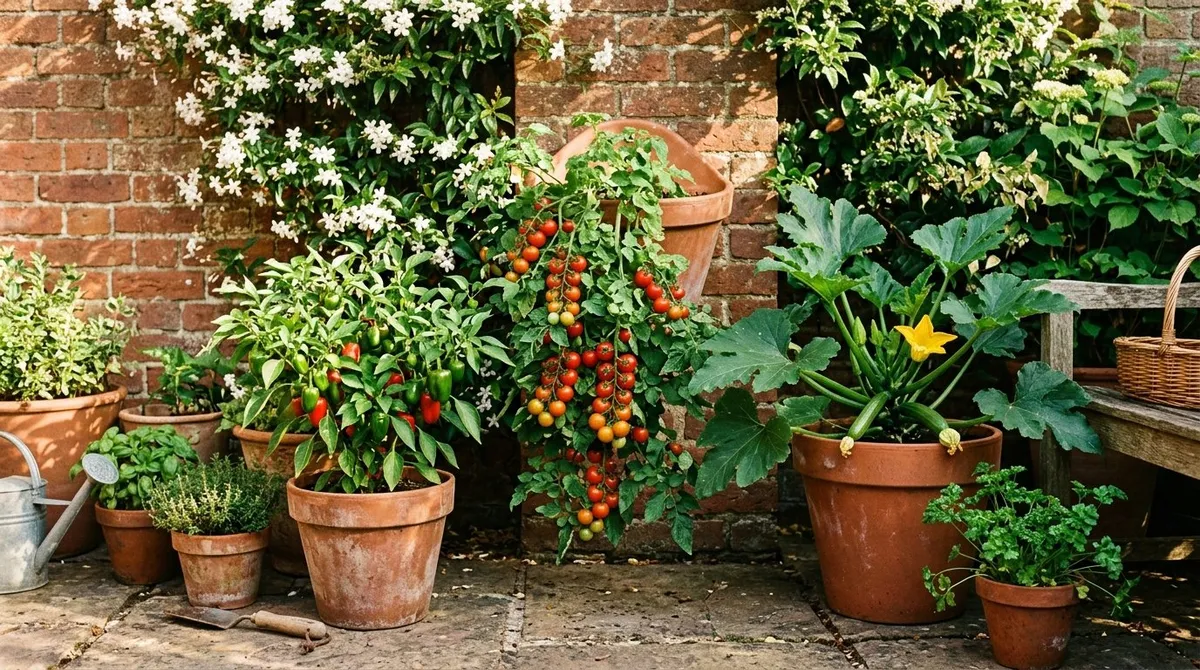
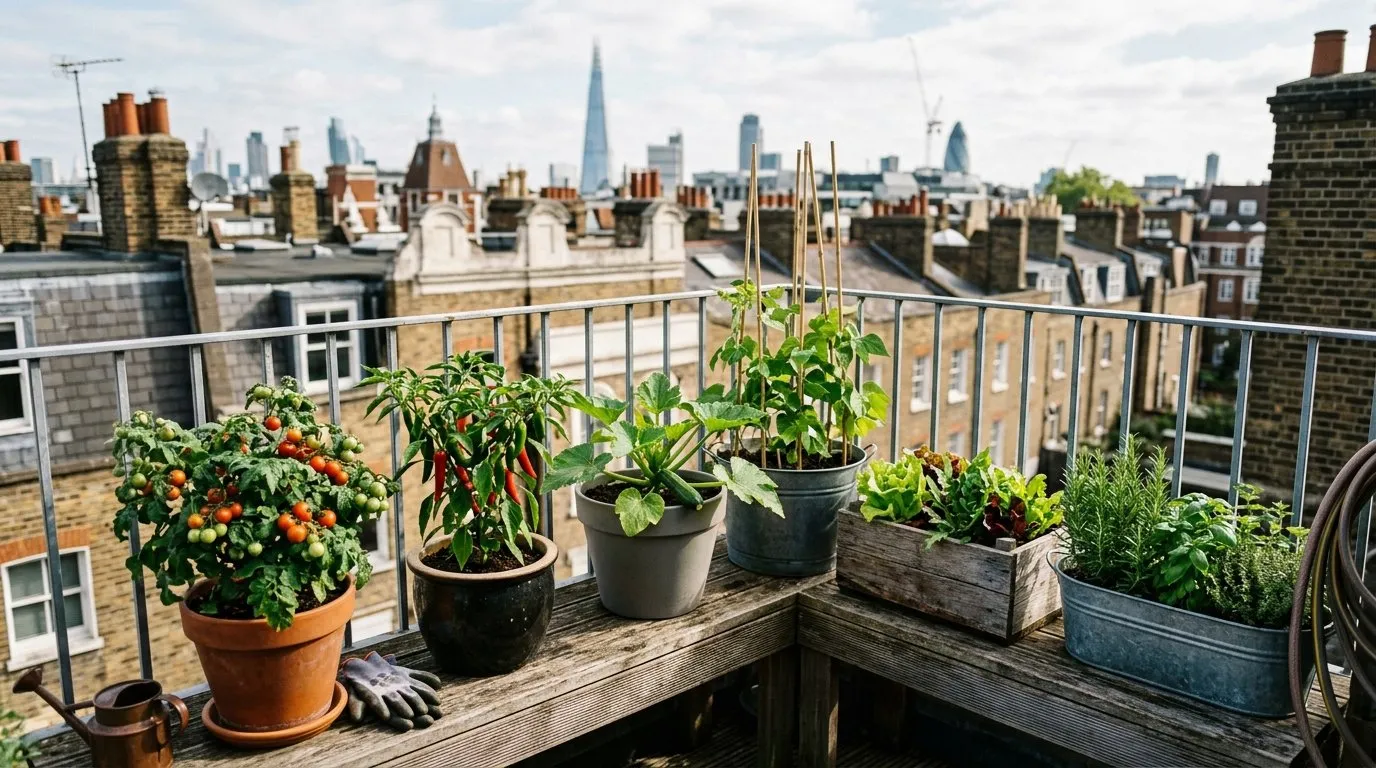 A six-pot patio plan fits a 1m x 1m space and provides fresh food from June to October.
Getting started: a six-pot patio plan
New to growing? Start with six pots on a sunny patio or balcony. This setup fits a space just 1m x 1m and provides fresh food from June to October.
- Pot 1 (30cm): Tomato ‘Totem’, bush variety, 3-4kg of cherry tomatoes
- Pot 2 (25cm): Pepper ‘Redskin’, 8-12 sweet peppers, no staking
- Pot 3 (30cm): Dwarf French Bean ‘Safari’, 1-1.5kg of stringless pods
- Pot 4 (40cm): Courgette ‘Patio Star’, 8-12 courgettes
- Pot 5 (60cm window box): Mixed salad leaves, cut-and-come-again all summer
- Pot 6 (25cm): Herbs, basil, parsley, chives in one pot
Total cost: roughly 20-30 pounds for seeds, compost, and pots. You’ll get 80-120 pounds worth of fresh produce over the season. Every variety here is available from major UK seed suppliers including Thompson and Morgan, Suttons, and Mr Fothergill’s.
Fill each pot with peat-free multipurpose compost mixed with 20% perlite. Add slow-release fertiliser granules at planting. Water daily in summer. Feed weekly with liquid tomato food once flowers appear.
Our team produces practical UK gardening guidance from source research, contributor records and established horticultural practice. Editorial standards are overseen by Matt W.