Key takeaways
- Stump carrots: blunt-ended, 100-150mm long, smooth, no forking
- Best varieties: Flyaway F1, Sytan F1, Eskimo F1 (carrot fly resistant)
- Grow in sand-filled drums or deep stone-free trenches
- Sow late April to late May for late August or September shows
- Lift 2-3 days before show with smooth sideways pressure
- Wash with soft sponge in cool water, never a stiff brush
Stump-rooted carrots are the most-entered carrot class at UK village and county shows. The class rewards uniformity, clean shape, smooth skin and a clean blunt stump end. Unlike long carrots, length is not the goal. The skill is producing 5-6 identical, smooth, well-coloured roots from a sand-filled drum or stone-free trench, then handling them without bruising on the way to the show bench.
After 5 seasons of stump carrot classes at the village show circuit, the difference between a third and a first comes down to sand quality, dibber technique, and lift-day handling. Variety choice matters but is the easier half.
Stump-Rooted vs Long Carrots: What Judges Want
Stump-rooted carrots are a distinct show class. The NVS specification:
- Length: 100-150mm root, blunt finish at the stump end
- Diameter at shoulder: 30-50mm uniform across the dish
- Stump end: clean, blunt, no taper, no splitting
- Colour: rich uniform orange, no green shoulders
- Skin: smooth, no cracking, no scab
- Tops: bright green, trimmed neat, 25-40mm above shoulder
- Dish size: 5 or 6 carrots per dish depending on class
The contrast with the long carrot class is sharp. Long carrots target 600mm+ with extreme taper. Stump carrots target precise uniform shape with a blunt finish.
Best UK Stump-Rooted Show Varieties
Three varieties dominate the UK stump show circuit. Each has a strong case.
| Variety | Length | Colour | Carrot fly resistance | Best for |
|---|---|---|---|---|
| Flyaway F1 | 110-140mm | Deep orange | Yes (partial) | All-round UK show choice |
| Sytan F1 | 100-130mm | Bright orange | Yes (partial) | Best uniformity, fast growing |
| Eskimo F1 | 110-140mm | Orange | No | Late-season shows (October) |
| Resistafly F1 | 100-130mm | Deep orange | Yes (high) | Carrot-fly-heavy plots |
| Autumn King | 150-200mm | Mid orange | No | Avoid (too long for stump class) |
| Nantes 2 | 120-150mm | Pale orange | No | Avoid (forks too easily) |
Flyaway F1 is the safest choice for any first-time UK stump exhibitor. The variety produces 95%+ uniform roots from a single sowing if the growing medium is consistent. Seed available from Suttons, Mr Fothergill’s and Marshalls at £2.50-£4.50 per packet.
Sytan F1 wins more village classes by uniformity than any other variety. The growing window is 95-105 days. Slightly more demanding on feed than Flyaway.
Eskimo F1 is the late-season specialist. Sow in late May for an October show. The cool-weather growth produces deeper colour than spring-sown crops.
Avoid Autumn King, Nantes 2, and any open-pollinated heritage variety. These produce too much length variation and fork too easily on UK clay soils.
Sand-Filled Drum Method for Show-Quality Roots
The gold standard growing method for UK stump carrots is the sand-filled drum. Same principle as long carrot drums but shorter.
Build the drum:
- Use a 400-500mm diameter plastic or galvanised steel drum, 500-600mm tall.
- Drill 4-6 drainage holes in the base.
- Stand on bricks 25mm clear of the ground for drainage.
- Fill with a 3:1 mix of horticultural soft sand and peat-free seed compost.
- Add 30g of Vitax Q4 (or similar slow-release general fertiliser) per drum.
- Wet thoroughly and let settle for 14 days before sowing.
Make the bores:
A “bore” is a deeper pocket of fine sand for the developing root. Use a 50mm wooden dibber to make 6-8 vertical holes 250-300mm deep, spaced 100-150mm apart across the drum top. Fill each bore with pure horticultural soft sand. This is the secret of forking-free stump carrots.
Sow:
Place one seed in the centre top of each filled bore. Cover with 5-8mm of sand. Water lightly. Thin to one seedling per bore after germination. A standard drum produces 6 candidate show roots from 6 bores.
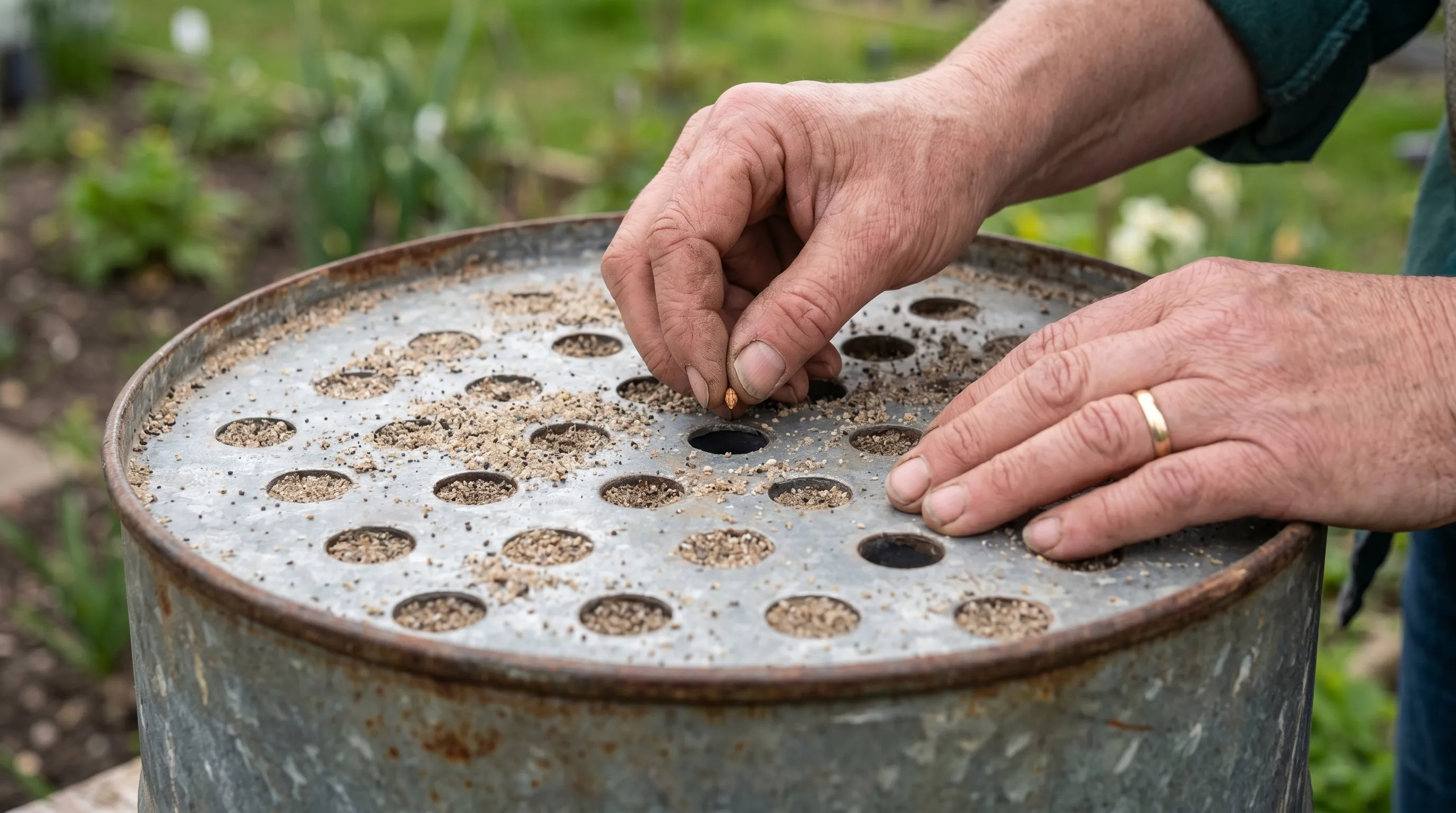 Single-seed sowing into each sand-filled bore. One seed per bore eliminates thinning damage to neighbouring roots. The hexagonal layout spaces 6 candidate carrots evenly across a 500mm drum.
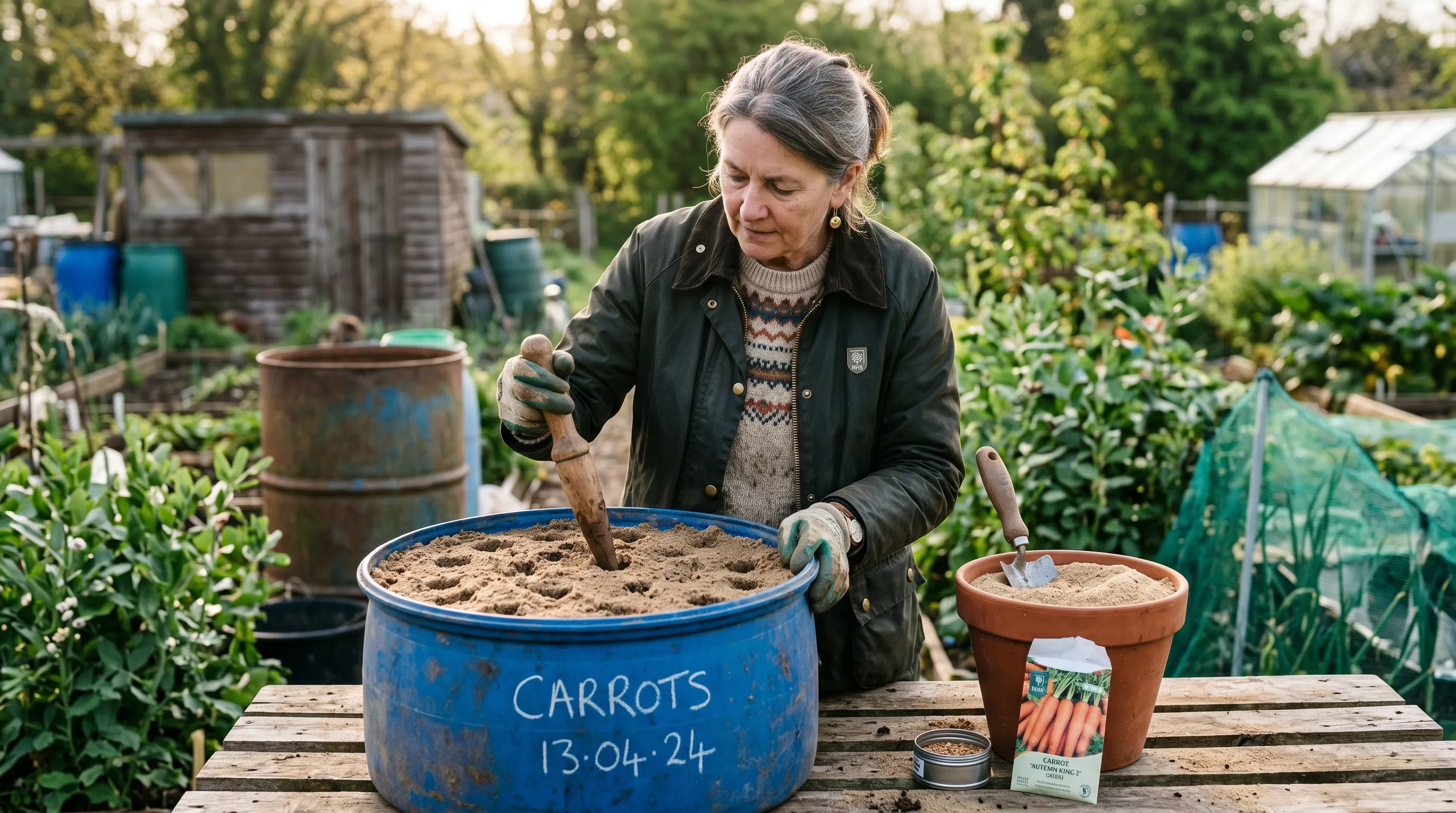 Bore-and-fill technique for show stump carrots. Each 250-300mm bore is filled with horticultural soft sand. The smooth sand environment around the developing root prevents forking and produces the uniform shape judges want.
When to Sow for UK Show Dates
UK village and county shows run from late July to mid-September. Show stump carrots take 90-105 days from sowing to peak harvest.
| Show date | Sow indoors or sown direct | Notes |
|---|---|---|
| Late July show | 18-24 April | Cover bores with cloches for early warmth |
| First Saturday August | 25 April - 1 May | Optimal for most UK regions |
| Mid August | 2-8 May | Most reliable timing |
| Late August | 9-15 May | Safest for southern England |
| Early September | 16-22 May | Risk of summer heat affecting colour |
| Late September | 23-31 May | Best for late-season Eskimo F1 |
| October shows | 1-15 June | Specialist late class |
Always sow two drums one week apart as insurance against variable weather. The first batch tests timing; the second usually wins.
Feeding and Watering Show Carrots
Stump carrots need controlled, steady feeding. Too much nitrogen produces forked, hairy roots. Too little produces small pale roots.
Base feed at sowing: 30g of Vitax Q4 per drum (provides balanced NPK plus trace elements through the season).
Mid-season feeds:
- Week 4-6: light seaweed extract foliar feed at 5ml per litre
- Week 6-8: 0.5g per litre potassium sulphate as a root drench (encourages colour)
- Week 8-10: stop nitrogen completely; light potassium only
- Week 10+: water only, no feed
Watering:
Apply 2-3 litres per drum every 3-4 days in dry weather. Use a soft-rose can to avoid washing sand off the bores. Mulch the drum top with 25mm of leafmould or sharp sand to reduce evaporation.
Carrot Fly: Protection Through the Season
UK show carrots are highly vulnerable to carrot fly (Psila rosae). Even the most carefully grown root is worthless with a tunnel through the shoulder.
Three-layer protection:
- Variety choice: Flyaway F1, Sytan F1 and Resistafly F1 carry partial resistance.
- Physical barrier: 600mm-tall fine mesh (Envirotect or similar) around the drums. Carrot flies cannot fly above this height.
- Cultural rotation: keep drums at least 5m away from any previous carrot crop.
For the full carrot fly prevention protocol, our dedicated guide covers Lansdown method, fleece tunnels and onion intercropping options.
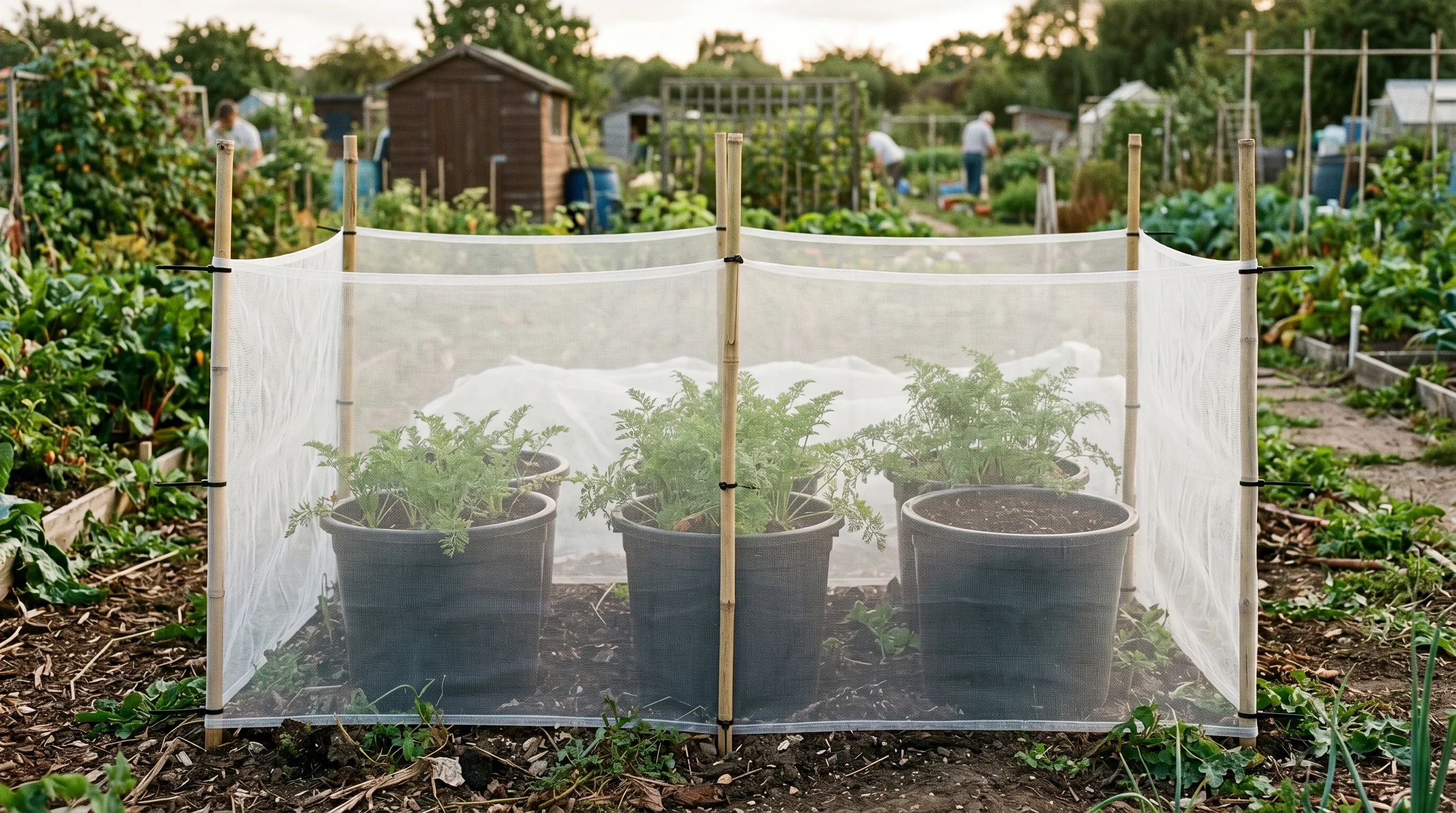 A 600mm-tall mesh barrier around the show drums. Carrot flies fly at low altitude and cannot reach above this height. Combined with a resistant variety, it eliminates fly damage on UK show carrots.
Lifting Show Carrots Without Damage
The lift is the most stressful 90 seconds in the show carrot’s life. Get it wrong and the dish is lost.
Two to three days before the show:
- Water the drum thoroughly the night before. Carrots lift cleaner from damp sand.
- Trim the foliage to 200-250mm above the shoulder using sharp scissors. Long tops are easier to pull but bruise more.
- Apply gentle sideways and upward pressure on the foliage base. Never pull straight up.
- The whole sand column should lift with the root. Tap the sand off in a tray.
- Wipe the root with a soft cloth to remove the bulk of the sand. Do not rinse yet.
- Lay each candidate root in a shallow box on damp newspaper in a cool dark place at 8-12C.
Lifting on show morning risks shoulders going limp during the 2-3 hour journey and staging window. Lifting more than 3 days early risks loss of root colour and shoulder firmness.
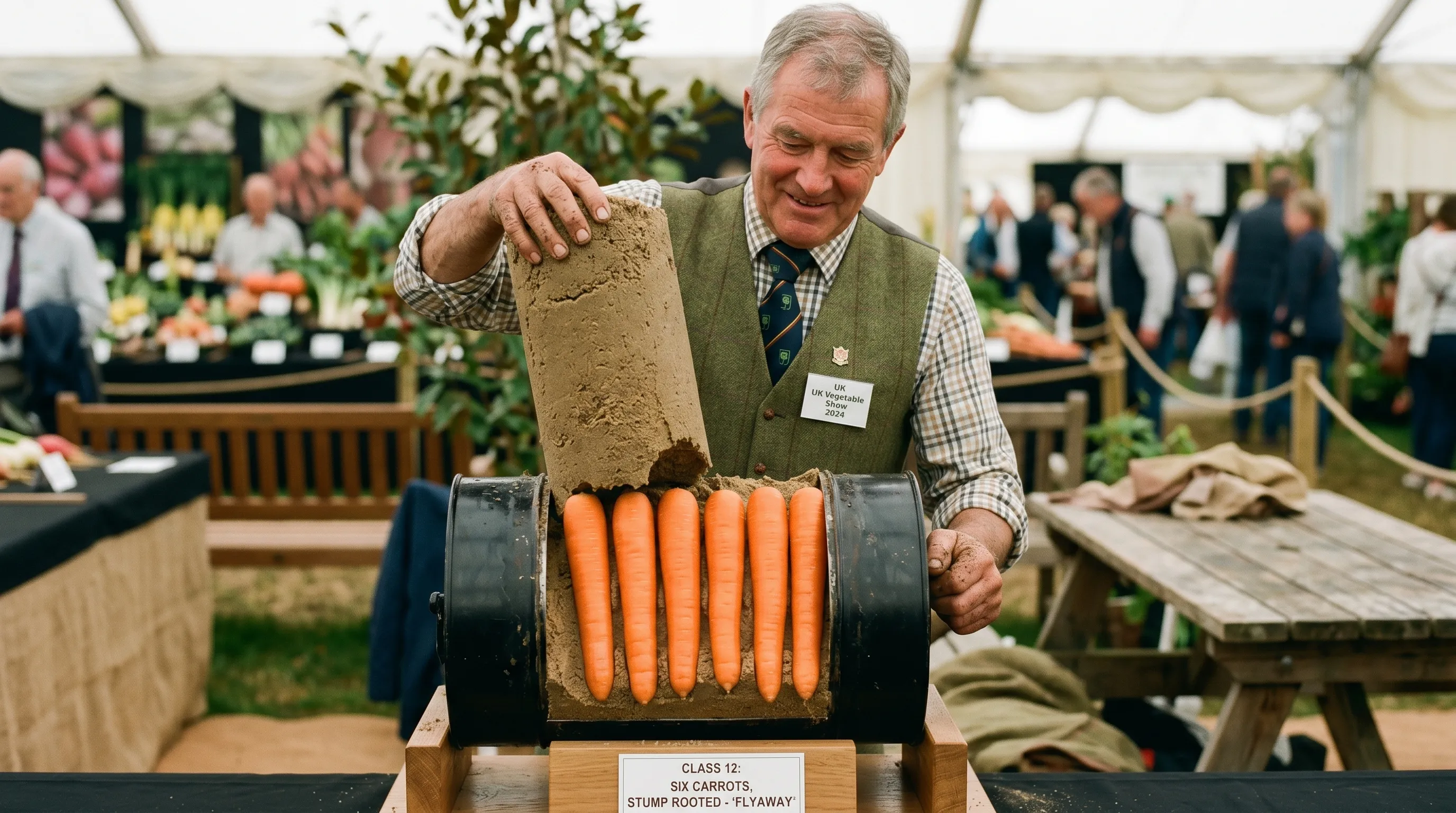 Lift day: the sand column comes out of the drum cleanly, revealing the six candidate stump carrots side by side. Uniform shape and length from the bore-and-fill method makes the dish-of-six selection straightforward.
Washing and Staging Show Stump Carrots
The wash is where many beginners lose points. Stiff brushes scratch the smooth carrot skin and judges deduct heavily for scuff marks.
Wash routine:
- Soak roots in cool water for 20-30 minutes to soften any clinging sand.
- Use a clean soft household sponge (not a brush, not a scourer) to gently rub away surface soil.
- Rinse with fresh cool water.
- Pat dry with a soft clean towel.
- Trim tops to 25-40mm above the shoulder using sharp scissors.
- Trim the stump end clean of any straggling fine roots.
Do not use detergent. Do not oil the skin. Do not polish.
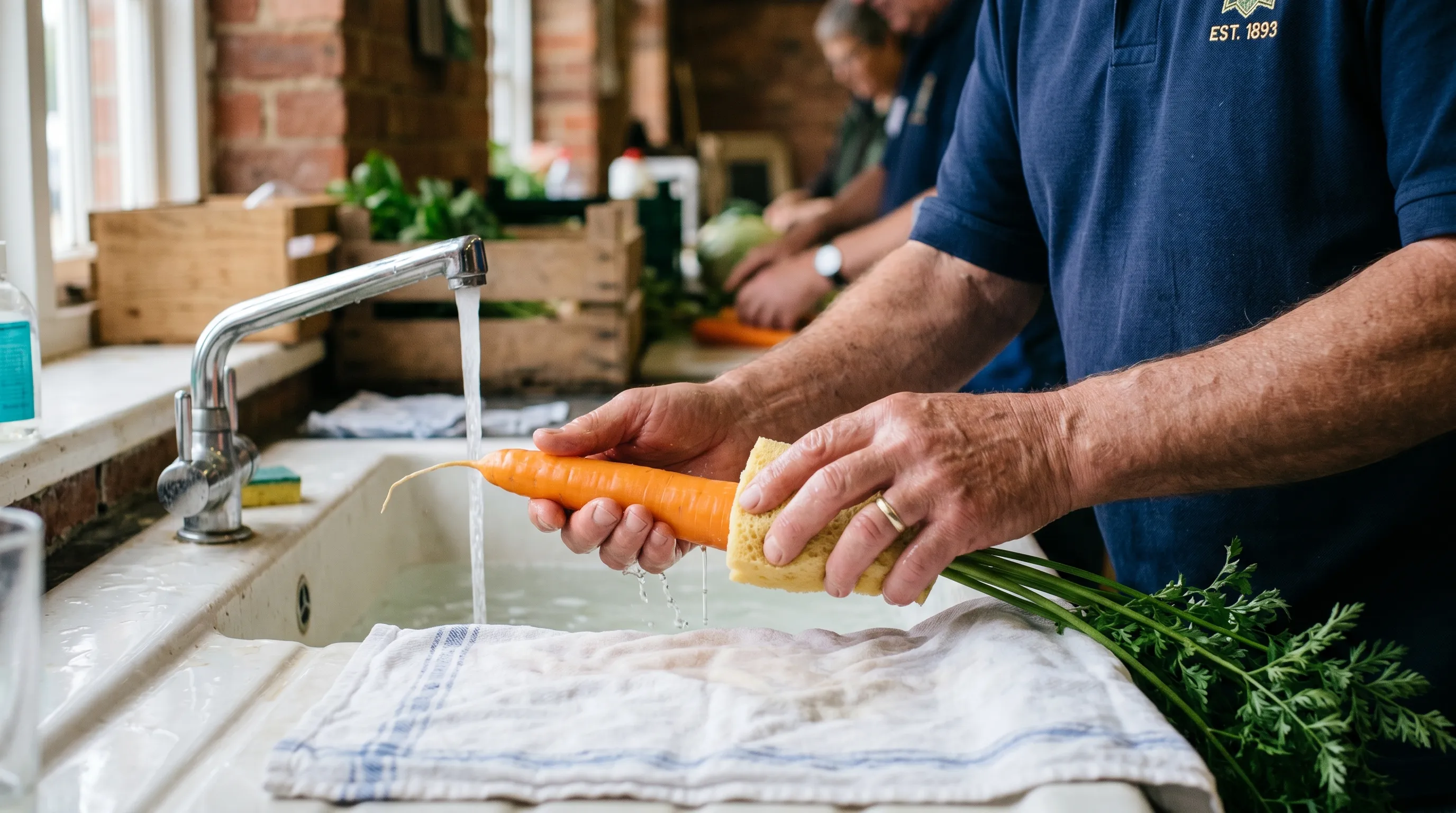 Soft sponge wash in cool water. A stiff brush would leave visible scratches and lose points on the show bench. The soft sponge removes soil without damaging the smooth carrot skin.
NVS staging for stump carrots:
- 5 or 6 roots per dish depending on class
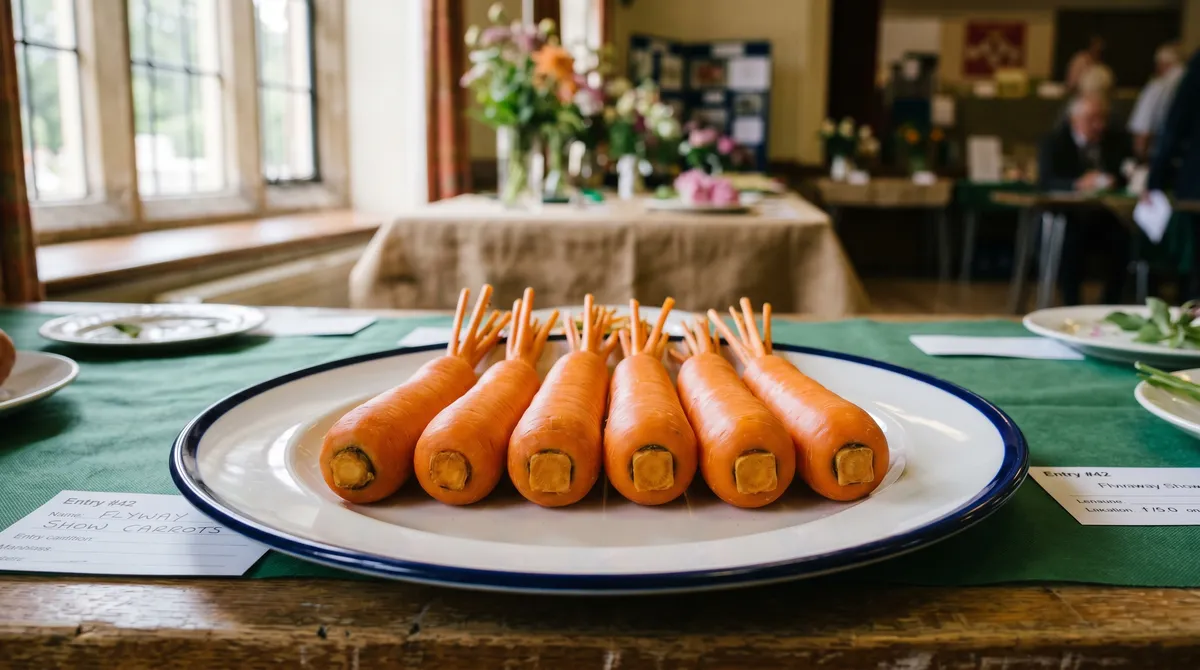
- Roots placed side by side, parallel, on a black or white show plate
- Tops to the back, stump ends to the front
- Roots must not touch each other but should be close
- Trim all tops to identical length (within 5mm)
- Each root identical in shoulder diameter and overall length within 5mm
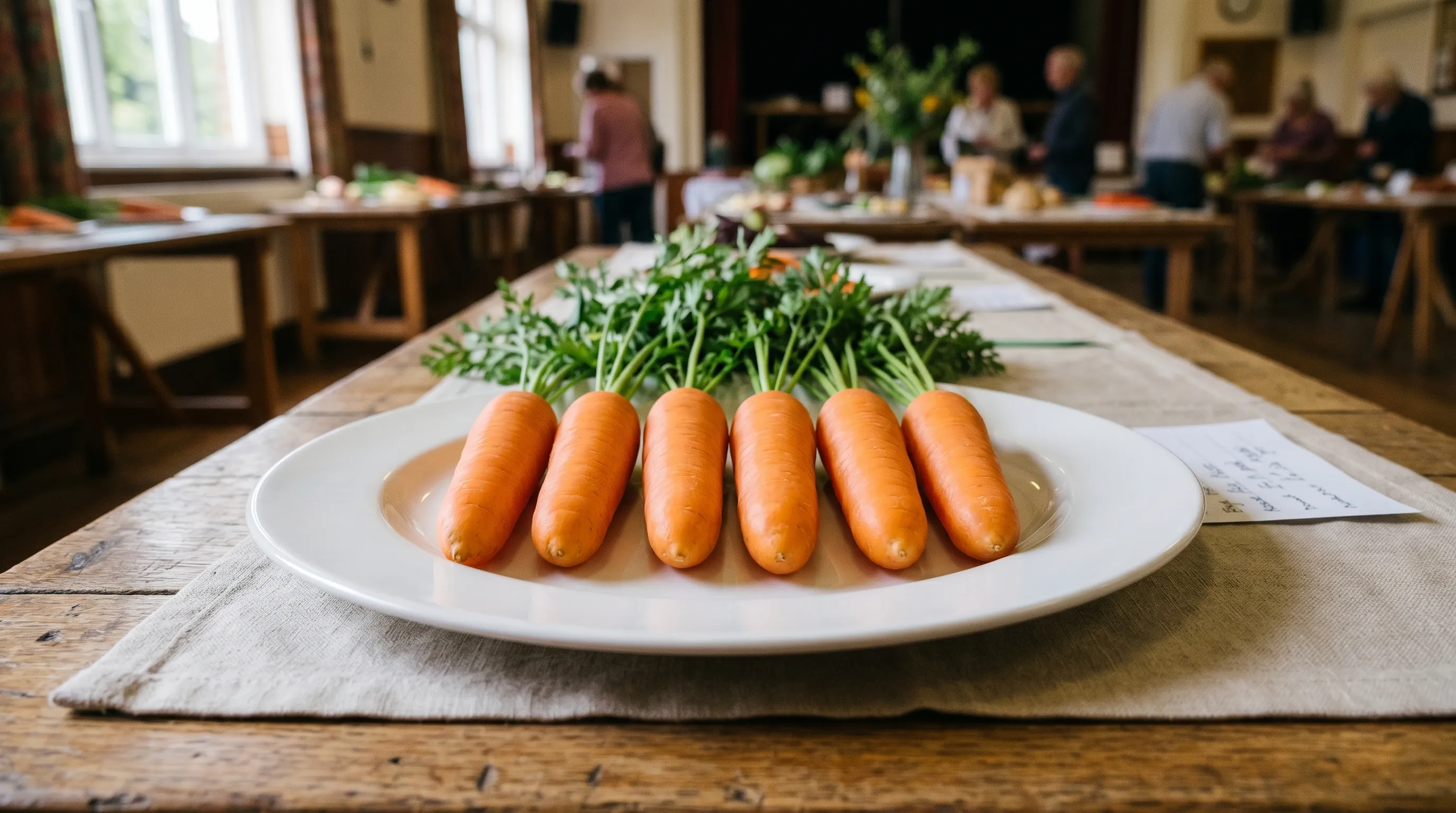 NVS standard staging for show stump carrots. Six identical roots, parallel, tops to the back, trimmed to 30mm. The uniformity is the result of consistent sand-filled drum technique combined with careful selection from 8-12 candidates.
Common Mistakes With Show Stump Carrots
Mistake 1: using ordinary garden soil in the drum. Stones, clay clumps and old root debris all cause forking. Use a 3:1 sharp sand to peat-free compost mix only.
Mistake 2: dry bores at sowing. A dry sand bore at sowing leaves a permanent dry channel that the developing root cannot cross. Wet the drum thoroughly 14 days before sowing.
Mistake 3: heavy nitrogen feed in late summer. Excess nitrogen produces lush tops and hairy, forked roots. Stop nitrogen 6-8 weeks before show date.
Mistake 4: washing with a stiff brush. Brush marks scratch the skin and lose 5-15 points on condition. Use a soft sponge only.
Mistake 5: lifting on show morning. Same-day lifts often arrive with limp shoulders. Lift 2-3 days early and store cool.
Stump Carrot Calendar UK Month-by-Month
| Month | Show stump carrot task |
|---|---|
| January | Order Flyaway F1, Sytan F1 seed |
| February | Source horticultural sand for drum fills |
| March | Prepare drums: drainage holes, fill, settle |
| April | Sow first drum end of April for August shows |
| May | Sow second drum first week of May |
| June | Apply mesh barrier. Begin seaweed foliar feeding |
| July | Peak watering season. Stop nitrogen feeds |
| August | Show season. Lift 2-3 days before each show |
| September | Late shows. Begin lifting remaining roots for kitchen use |
| October | Lift Eskimo F1 for late shows. Clear drums |
| November | Empty drums, store sand under cover for next year |
| December | Plan next year’s variety mix and show calendar |
Frequently asked questions
What is a stump-rooted show carrot?
Stump-rooted carrots are blunt-ended, 100-150mm long with a clean blunt finish. Different from long carrots which run to 600mm-plus. Stump classes at UK shows reward uniformity, smooth skin and clean stump end, not extreme length.
Best varieties for UK stump-rooted show carrots?
Flyaway F1 and Sytan F1 are the dominant UK show varieties. Both carry partial resistance to carrot fly. Eskimo F1 wins late-season classes. Avoid Nantes or Autumn King for showing as they fork too easily.
How do I grow show-quality stump carrots without forking?
Sow into stone-free sandy compost in deep drums or trenches. Use a 150mm-diameter dibber filled with soft sand, then sow one seed per hole. The fine sand around the developing root produces forking-free, smooth carrots.
When should I lift stump carrots for a UK show?
Lift 2-3 days before the show. Earlier risks shoulders going limp. Later risks shoulders bursting under heat. Lay each root in a shallow box on damp newspaper in a cool dark place between lifting and showing.
How do I wash show carrots without damaging them?
Soak in cool water for 20-30 minutes to loosen soil. Wash with a clean soft sponge in fresh water, never a brush. Pat dry with a soft towel. Never use detergent. Stains on the shoulder reduce points more than light soil residue.
Now plan the rest of the show bench
Stump carrots win one class. The big trophies come from entering five or six classes on the same day. Now you’ve sorted the stump class, our long carrots for show guide covers the 600mm-plus class. The exhibition onions guide covers the dressed-onion class. Our exhibition peas guide covers the dish-of-nine pod class. And the allotment show judging guide explains exactly how every dish is scored against the 140-point NVS framework.
Our team produces practical UK gardening guidance from source research, contributor records and established horticultural practice. Editorial standards are overseen by Matt W.