Key takeaways
- Hurst Greenshaft and Show Perfection are the dominant UK show pea varieties
- Target pod length 110-150mm with 8-10 well-filled peas per pod
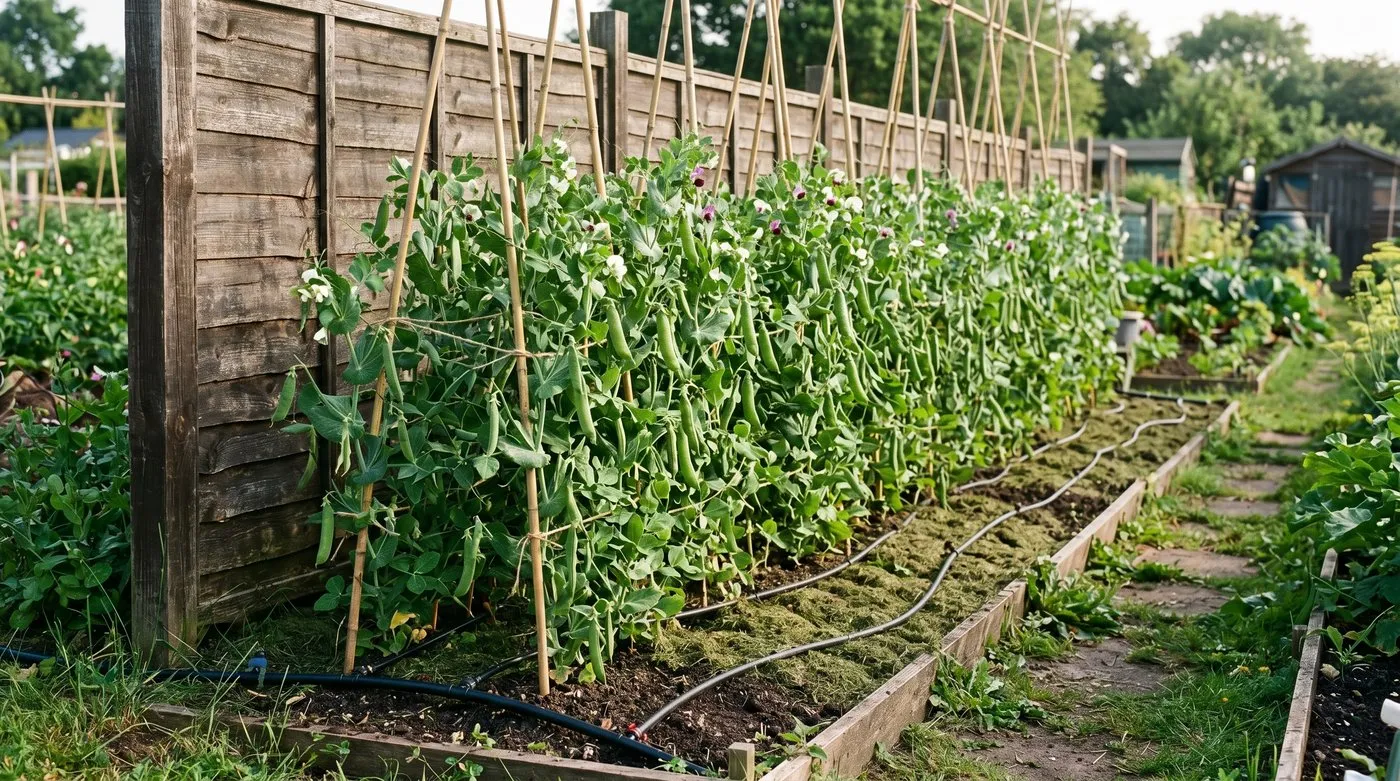
- Grow as single cordon, side-shoot removed, supported with 2.4m canes
- Sow indoors mid-March, plant out early May after hardening off
- Pick a dish of 9 pods on show morning, pods must match
- Allow 60-80 candidate pods per dish to select 9 matched winners
Exhibition peas separate growers who want a good crop from growers who want a perfect dish. The UK show circuit rewards uniformity above yield, length above number, and freshness above all else. This guide covers variety selection, sowing dates, training, pollination help, harvest timing and selection. Compare Hurst Green Shaft with kitchen and edible-pod choices in our guide to the best pea varieties.
After seven seasons on the village show circuit, the patterns are clear. Variety choice decides 40% of the result. Selection decides another 40%. Growing technique only decides the remaining 20%. Choose the right variety, grow enough plants to give selection room, and you can compete with anyone.
Best Pea Varieties for UK Showing
Two varieties dominate the UK show bench: Hurst Greenshaft and Show Perfection. A handful of others appear regularly but struggle to win consistently.
| Variety | Pod length | Peas per pod | Days to mature | Show win rate | Notes |
|---|---|---|---|---|---|
| Hurst Greenshaft | 110-140mm | 9-11 | 90-95 | Highest at village level | Reliable, uniform, double-podded |
| Show Perfection | 130-150mm | 10-12 | 100-110 | Highest at county level | Long pods, harder to grow even |
| Alderman | 100-130mm | 8-10 | 95-105 | Strong at village level | Tall (1.8-2.4m), traditional |
| Onward | 90-110mm | 7-9 | 85-90 | Rare wins | Better as kitchen pea |
| Kelvedon Wonder | 80-100mm | 7-8 | 75-85 | Rare wins | Too early, pods too small |
| Markana | 100-120mm | 8-9 | 90-95 | Occasional wins | Leafless type, novelty entry |
Hurst Greenshaft is the safe choice for any UK grower entering their first shows. Pods are 110-140mm with 9-11 well-filled peas. The plant is double-podded, meaning each node produces two pods rather than one, doubling candidate selection. Seed is available from Suttons, Marshalls, and most independent UK seed merchants for £2.50-£4.50 per packet.
Show Perfection produces the longest reliable pod in UK showing (130-150mm) and wins at county and national level. The downside is that the plant produces a higher proportion of mis-shaped pods, requiring more candidate plants to find matching nines. Seed is harder to find: try the National Vegetable Society seed exchange or specialist suppliers like Robinson’s Mammoth Onions.
Alderman is the traditional Victorian show pea, still grown by some northern UK clubs. At 1.8-2.4m tall it needs serious support but produces a respectable 100-130mm pod with 8-10 peas.
Skip the early varieties (Kelvedon Wonder, Feltham First). They mature too fast and produce pods too small for the show bench.
When to Sow Show Peas for UK Show Dates
The UK village and county show season runs from late July to mid-September. Most local shows fall on a Saturday in the first three weekends of August.
Show peas take 90-110 days from sowing to peak pod stage. Working back from show date:
| Show date | Sow indoors | Plant out | Notes |
|---|---|---|---|
| Last Sat July | 14 March | 21 April | Risk of late frost on planting out |
| 1st Sat August | 18 March | 25 April | Optimal for most UK regions |
| 2nd Sat August | 25 March | 2 May | Most reliable timing |
| 3rd Sat August | 1 April | 9 May | Safest for southern England |
| Last Sat August | 8 April | 16 May | Risk of summer heat affecting pod set |
| Early September shows | 15 April | 23 May | Hard to keep pods fresh |
Always sow two batches a week apart. Variable spring weather and unpredictable summer temperatures mean a single sowing rarely peaks on the right day. A 7-day window between sowings gives one batch likely to be at peak on show morning.
Sow in 9cm pots filled with peat-free seed compost, two seeds per pot, thin to the strongest seedling after germination. Keep at 18-21C for the 6-10 day germination window. Drop to 12-15C once cotyledons open to prevent leggy growth.
Plant out when seedlings are 100-150mm tall with 3-4 true leaves and a strong root system filling the 9cm pot. Harden off over 7-10 days before planting. Plant 200-250mm apart in a single row, with cane support installed before planting.
Single Cordon Training for Show Pods
Show peas are grown as single cordon, not bushy. The principle is the same as cordon tomato training: remove every side-shoot to concentrate energy into the main stem and the pods on it.
The training method:
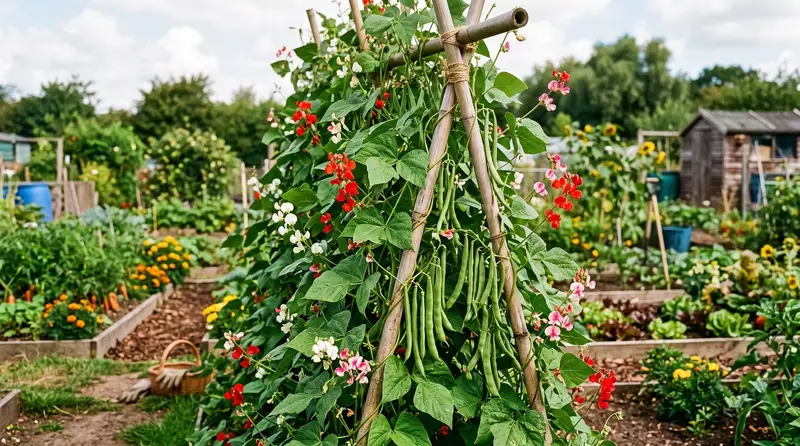
- Install a 2.4-2.7m cane behind each plant at planting time. Lash the cane firmly to a horizontal wire at the top.
- Remove all tendrils as they appear. Tendrils waste plant energy and tangle neighbours.
- Remove all side-shoots below the first flowering node. Each leaf axil produces a side-shoot.
- Tie the main stem to the cane every 200mm using soft twine or pea ring clips. Never use plastic ties that cut into the stem.
- Stop the plant at 1.8-2.1m by pinching the growing tip after the desired flowering nodes have set.
The cordon system produces 8-12 large, evenly-filled pods per plant rather than 20-30 small unevenly-filled pods on a bushy plant. Pod length increases by 15-25mm versus uncordoned growth.
For pea support detail beyond the cordon system, our hazel and pea stick guide covers the traditional UK pea support methods that suit non-show crops.
Hand-Pollination for Even Pod Set
UK summer weather can fail show peas. A cool, wet, overcast July reduces bee activity, leaving partial pods and uneven dishes. Hand-pollination prevents this entirely.
Pea flowers are self-pollinating but benefit from gentle disturbance. The technique:
- Wait until the flower is fully open and white-cream in colour (day 1-2 of flowering)
- Use a soft watercolour brush (size 4-6) to gently brush inside each open flower
- Move the brush from flower to flower across the plant to spread pollen
- Repeat every other morning for the 14-21 day flowering window
A single 30-minute pollination session covers 10-12 plants. Time investment for a show entry: 4-6 hours across the flowering window.
Feeding and Watering the Show Pea Row
Show peas need consistent feeding but cannot tolerate high-nitrogen growth that promotes leaf over pod.
Base feed: Dig in well-rotted compost at 4-6kg per square metre the autumn before planting. Add a slow-release general fertiliser (Vitax Q4 or similar) at 70g per square metre at planting time.
Liquid feeds:
- Weeks 1-4 after planting: Half-strength tomato feed weekly (high potassium, moderate nitrogen, low phosphorus)
- Flowering (week 5-7): Full-strength tomato feed weekly to support pod set
- Pod fill (week 8-12): Full-strength tomato feed twice weekly, plus weekly seaweed extract for trace minerals
Watering: Show peas need 15-20 litres per plant per week at full growth. Water at the base, never on the foliage, between 06:00 and 09:00. Drip irrigation outperforms hand watering for evenness. Mulch with 50mm grass clippings to hold moisture and suppress weeds.
Picking and Selecting a Show Dish of Nine
The selection process decides 40% of show success. The growing has been done; now the choices.
Pick the morning of the show. Pea pods lose 5-8% of weight and bloom per 12 hours off the plant. Pick between 06:00 and 07:30 on show morning. Use sharp scissors and cut the pedicel (the small stalk attaching the pod to the plant) cleanly. Leave 10mm of pedicel attached.
Carry the picked pods in a single layer in a shallow tray, lined with damp kitchen paper, in the shade. Never stack pods or carry in a bag.
Lay out all candidate pods on a clean tea towel on the kitchen table. Sort by length first. Group all pods within a 5mm length range together (eg 115-120mm, 120-125mm).
Within each length group, sort by pod fill. Hold each pod up to a window or bright light. Count the silhouetted peas. Group pods with matching pea counts.
Within each fill group, sort by colour. Most show varieties produce 80% of pods in a single shade; the remainder are slightly paler or darker. Discard outliers.
Pick the 9 matching pods. Look for pods that match on length to within 5mm, pea count exactly, colour exactly, and pod shape (straight, slight curve, etc) exactly. The 9 winning pods almost always come from a 60-pod sample.
Final check: every pod must have bloom (the natural pale powder on the surface) intact. Any pod with bloom rubbed off or showing handling marks must be replaced. Keep gloved hands or hold by pedicel only.
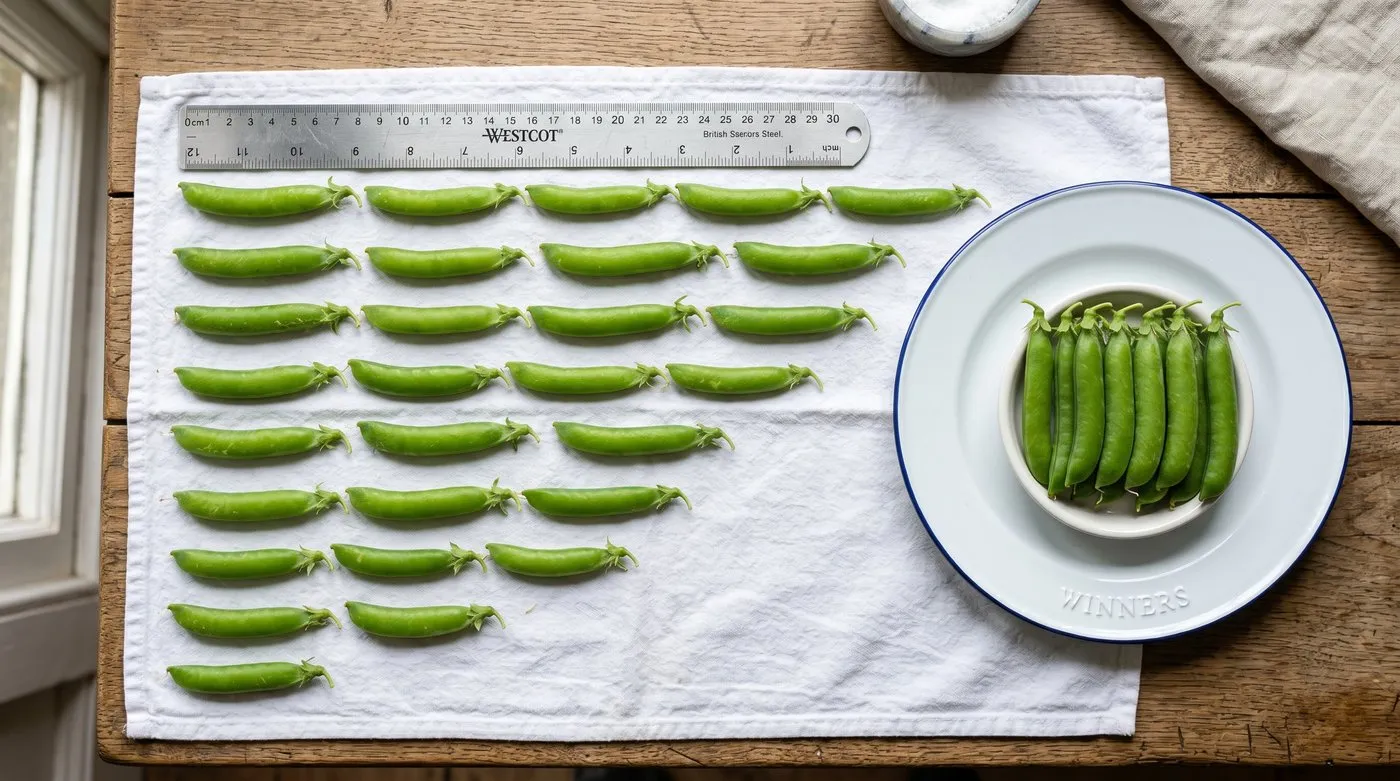 The Saturday morning selection process. All 60 candidate pods graded by length first, then by pea count, then by colour. The winning nine (right) all match within 5mm length and identical fill.
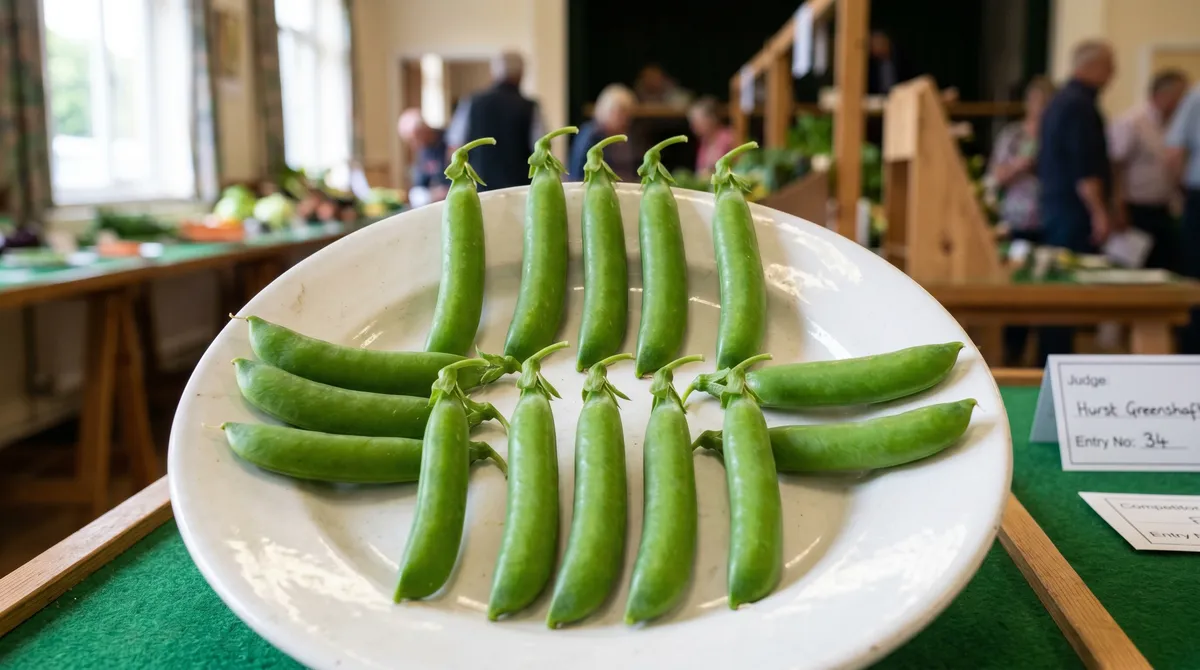
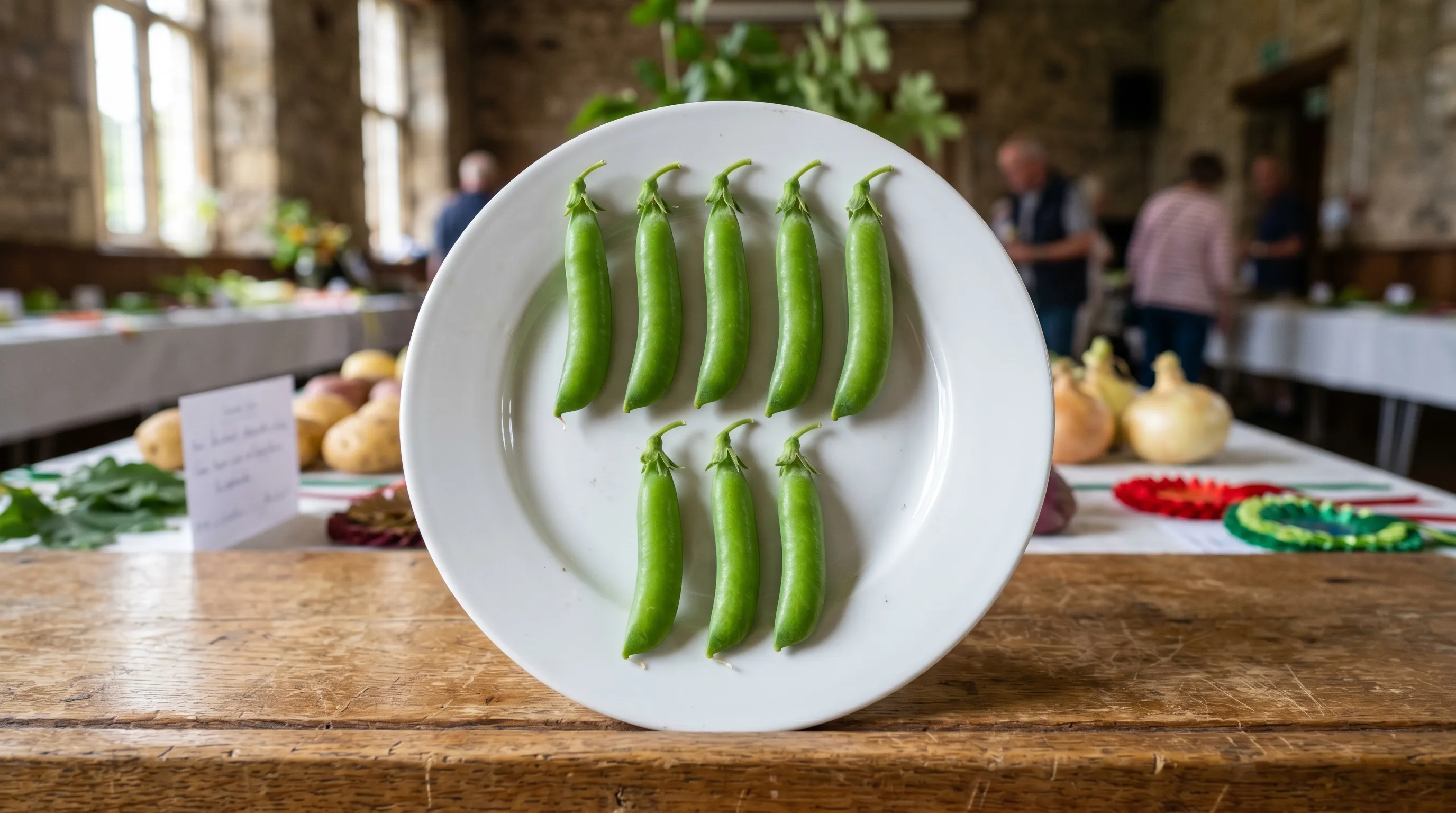 The winning dish of nine. Pods matched within 5mm on length, identical pea count, single colour shade, stalks pointing up. Three rows of three, longest at the top. Standard NVS staging.
Staging Show Peas to NVS Standards
The National Vegetable Society sets the staging standard followed by 90%+ of UK village and county shows.
The NVS staging rules for peas:
- Dish of nine pods for class entry (some classes specify dish of 6 or 12)
- Pods presented on a black, white or paper plate supplied by the show
- Stalks pointing up, away from the judge
- Arranged in three rows of three, longest pods at the top
- Pods should touch but not overlap
- Pedicel intact, 10mm cut clean
- No washing, no oiling, no polishing
- Discard any pod showing pest damage, disease, or handling marks
Judging looks for: condition (freshness, bloom), uniformity, pod length, pod fill, pod colour, freedom from blemish, and presentation. Each item scores out of 20, total out of 140. A winning dish typically scores 115-125.
Common Mistakes Exhibition Pea Growers Make
Mistake 1: not sowing two batches. A single sowing rarely peaks on show day. Sow 7 days apart for insurance. The cost is two extra packets and 30 minutes.
Mistake 2: picking the night before. Pods lose bloom and freshness within 4-8 hours of picking. Always pick on show morning, even if it means a 05:30 alarm.
Mistake 3: under-growing. 6 plants will not produce a winning dish. Grow 12-15 plants per dish entry. The non-winners can still go in the kitchen.
Mistake 4: feeding nitrogen too late. A nitrogen-heavy feed during pod fill produces lush plants with empty pods. Switch to high-potassium tomato feed from flowering onwards.
Mistake 5: handling pods with bare hands in warm weather. Skin oils rub off the bloom and discolour the pod. Wear cotton gloves or handle by pedicel only.
The National Vegetable Society publishes the full NVS exhibition handbook covering peas, beans, onions, carrots and all other show classes. Membership at £24 per year gives access to the seed exchange, where rare show varieties (Show Perfection, Carter’s Daisy and others) appear.
Show Peas Month-by-Month Calendar UK
| Month | Show pea task |
|---|---|
| January | Order Hurst Greenshaft and Show Perfection seed |
| February | Prepare bed: dig in 5kg/m² compost plus 70g/m² Vitax Q4 |
| March | Sow indoors 14-25 March in 9cm pots at 18-21C |
| April | Pot on if needed. Harden off from late April |
| May | Plant out 200mm apart with 2.4m cane each. Start cordon training |
| June | Continue cordon training. Hand-pollinate flowering plants |
| July | Pod fill stage. Twice-weekly tomato feed. 20L water per plant per week |
| August | Show season. Pick and select on show morning |
| September | Save best 9 pods for seed if needed. Late-season shows |
| October | Pull plants, compost. Plan next year’s variety mix |
| November | Order new seed catalogues |
| December | Plan show calendar and class entries for new season |
Frequently asked questions
What is the best variety for show peas in the UK?
Hurst Greenshaft is the most consistent UK show pea, with 110-140mm pods. Show Perfection produces longer pods (130-150mm) but is harder to grow evenly. Both win at village and county shows. Avoid early or mangetout varieties for showing.
How do you judge exhibition peas at a UK show?
Pods are judged on length, uniformity, colour, freshness, and pea development. A winning dish has 9 matching pods, all the same length to within 5mm, evenly filled, fresh green colour with bloom. Wrinkled or yellowing pods score zero.
When should I sow peas for a late August show?
Sow indoors in pots on 14-18 March for an early August show, or 28-30 March for a late August show. Show peas take 90-110 days from sowing to peak pod stage. Always sow two batches a week apart to spread the picking window.
How many pea plants do I need to win a show dish?
Plan on 12-15 plants per show dish you want to enter. Each plant produces 8-12 usable pods at peak. You need 60-80 candidate pods to select 9 matching pods. Single cordon training maximises pod size per plant.
How should I present exhibition peas on the show bench?
Present 9 pods stalk-up on a black or white show plate (judging society standard). Pods should be arranged in three rows of three, all touching, with the longest at the top. Wipe pods clean of dust with a soft cloth before staging. Never wash.
Now plan the rest of the show bench
Our team produces practical UK gardening guidance from source research, contributor records and established horticultural practice. Editorial standards are overseen by Matt W.