Key takeaways
- Water mint, watercress and brooklime are the three easiest edible aquatics for a UK container pond
- A 90-litre half-barrel grows enough watercress and mint for a household through summer
- Chinese water chestnut needs a warm, sheltered spot and crops corms in autumn
- Wasabi is a bog-edge crop, not a pond plant; it wants cool running shade
- Never forage wild watercress without checking for liver fluke and hemlock water dropwort
- Hemlock water dropwort is Britain's deadliest plant and grows in the same ditches as watercress
Most people think growing your own food at the waterside needs a stream, a spring, or a wild pond. It does not. A lined half-barrel on a patio grows watercress, water mint, and a handful of stranger crops just as well, and you control the water, so there is no liver fluke and no risk from the deadly plants that share wild ditches. This guide covers the edible aquatic plants worth growing in a UK garden, how to crop them from a container pond, and the one lookalike that should make every forager think twice.
The pay-off is a fresh, peppery crop from a corner most gardens waste. The catch is knowing which plants are safe, which need warmth, and which will poison you if you pick the wrong leaf from a ditch.
Which edible aquatic plants grow easiest in the UK
Water mint, watercress, and brooklime are the three easiest edible aquatics for a British garden. All three are native, fully hardy, and crop from still water in a container, so none needs a flowing stream. Plant them once and they return every spring.
Water mint (Mentha aquatica) is the toughest. It grows in a few centimetres of water or in saturated soil at a pond edge, spreads fast, and gives a strong minty leaf for teas and sauces. Watercress (Nasturtium officinale) wants clean, cool, regularly changed water and rewards you with the familiar peppery crop. Brooklime (Veronica beccabunga) is the forgotten one: a sprawling marginal with a mild, slightly bitter leaf that old herbals used like watercress.
Our guide to the best pond plants for UK gardens covers the ornamental marginals that sit alongside these edibles, and if you have not built your pond yet, start with how to build a garden pond.
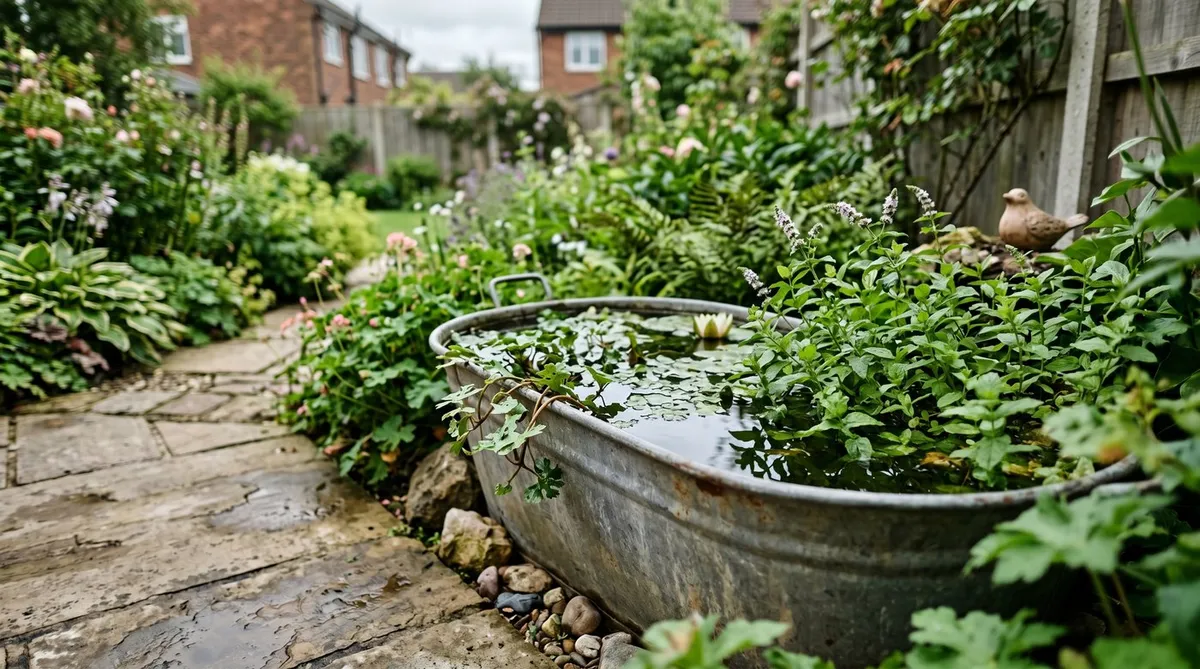
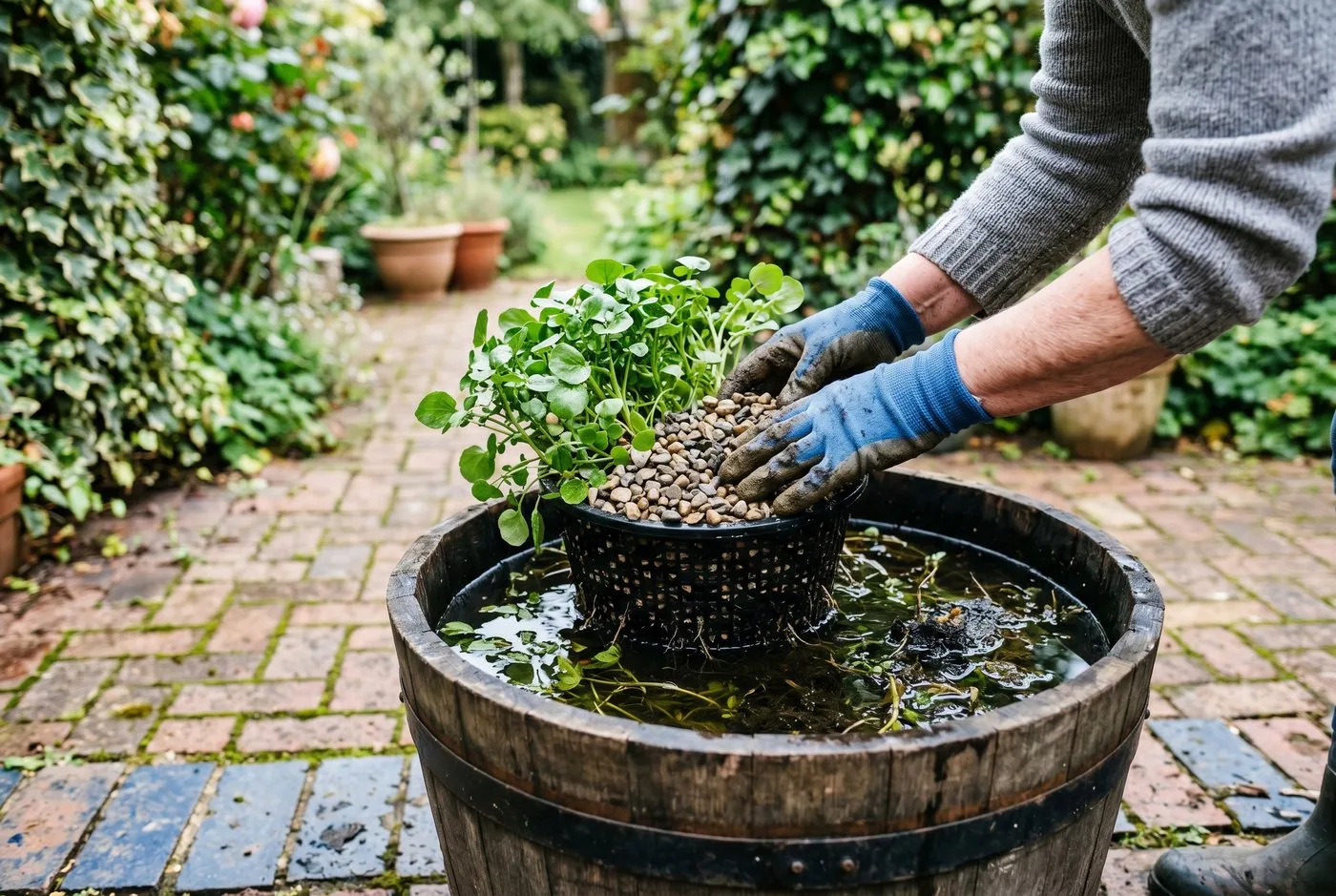 A 90-litre oak half-barrel is enough to crop water mint and watercress for a household through summer. Keep it off the lawn, on a hard, level base.
How to set up an edible container pond
You do not need a dug pond to grow water crops. A container pond, a half-barrel or a large trough, grows edible aquatics in any garden, even a paved yard. The key difference from an ornamental pond is that edibles want clean water you can refresh, not a balanced wildlife system you leave alone.
Line a wooden half-barrel so no preservative leaches in. Stand it on a level, hard base in sun for watercress and mint, or light shade for leafier crops. Fill with rainwater if you can, since tap water feeds algae. Plant in aquatic baskets of plain loam topped with grit, never multipurpose compost, which clouds the water and rots.
Gardener’s tip: Keep your edible pond well away from any pond with fish. Fish ponds often get treatments for parasites or algae that are not safe on food crops, and the two should never share water or nets.
Growing watercress and water mint
These two carry an edible container pond, so they are worth getting right. Watercress crops fastest in the cool weather of spring and autumn, while water mint runs all summer.
For watercress, sow seed in spring on the surface of wet loam, or root supermarket sprigs in a glass of water first. Stand the basket so the crown sits at the waterline and the roots are submerged. Pinch out flowering shoots to keep the leaf tender. In a heatwave, move it to light shade or the leaf turns hot and bitter.
Water mint is almost too easy. Confine it to a basket or it colonises the whole barrel. Cut it hard and often. It dies back in winter and bursts up again in April. Mint grown in water is milder and juicier than the border kind; our notes on growing mint cover the varieties and how to stop it taking over.
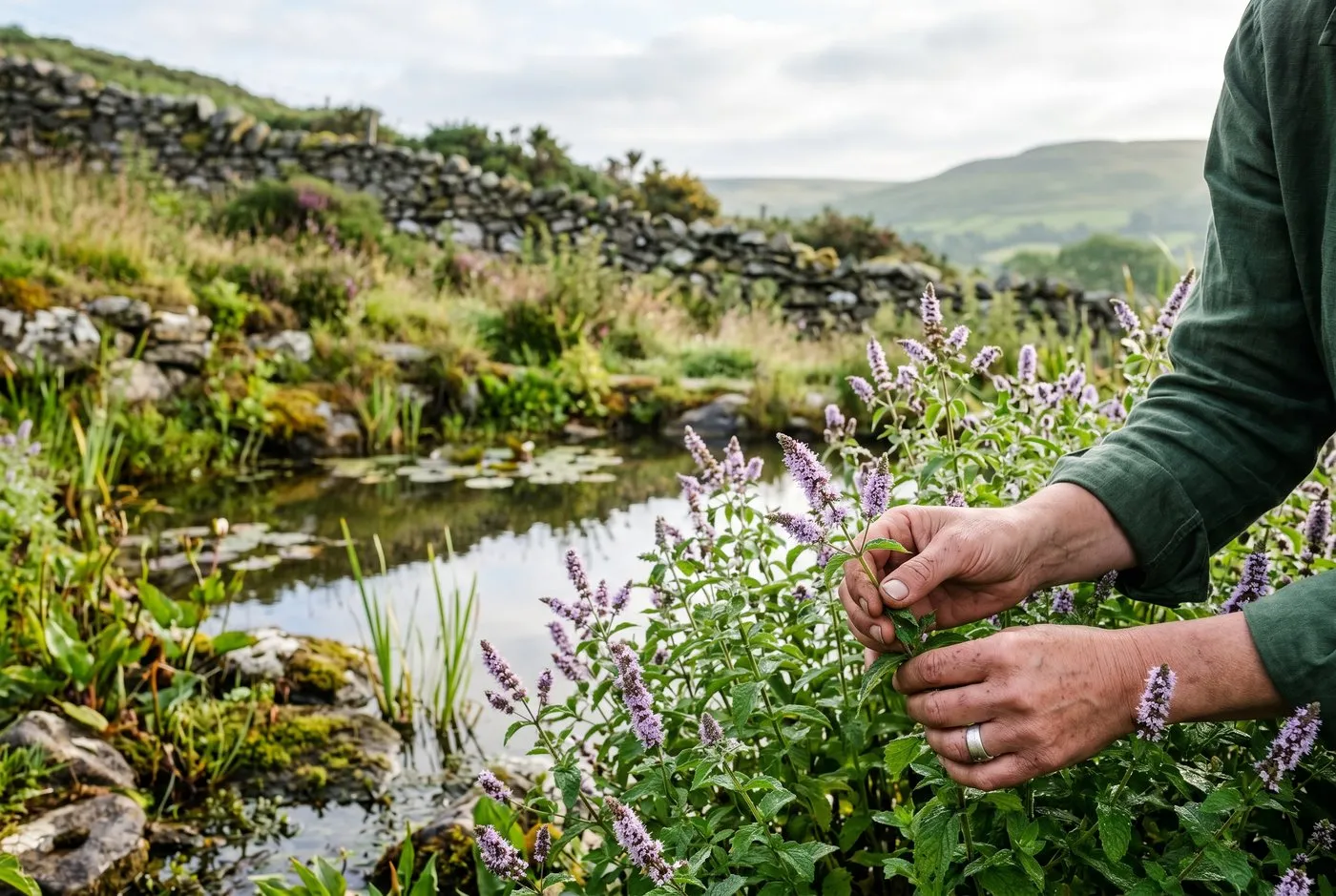 Cut watercress and water mint little and often from June onward. Regular picking keeps the leaf tender and stops either crop flowering early.
Unusual edible aquatics worth trying
Once the easy three are running, a few stranger crops reward the effort. Chinese water chestnut and water celery both grow in a UK container pond, while wasabi needs a cool, shaded bog edge instead.
Water celery (Oenanthe javanica, the safe cultivated form, not its deadly cousin) gives a celery-flavoured leaf and the variegated ‘Flamingo’ form looks the part in a barrel. Wasabi (Eutrema japonicum) is the awkward one. It is not a pond plant at all but a streamside woodlander that wants cool, shaded, moving moisture, so it suits a bog garden edge far better than open water.
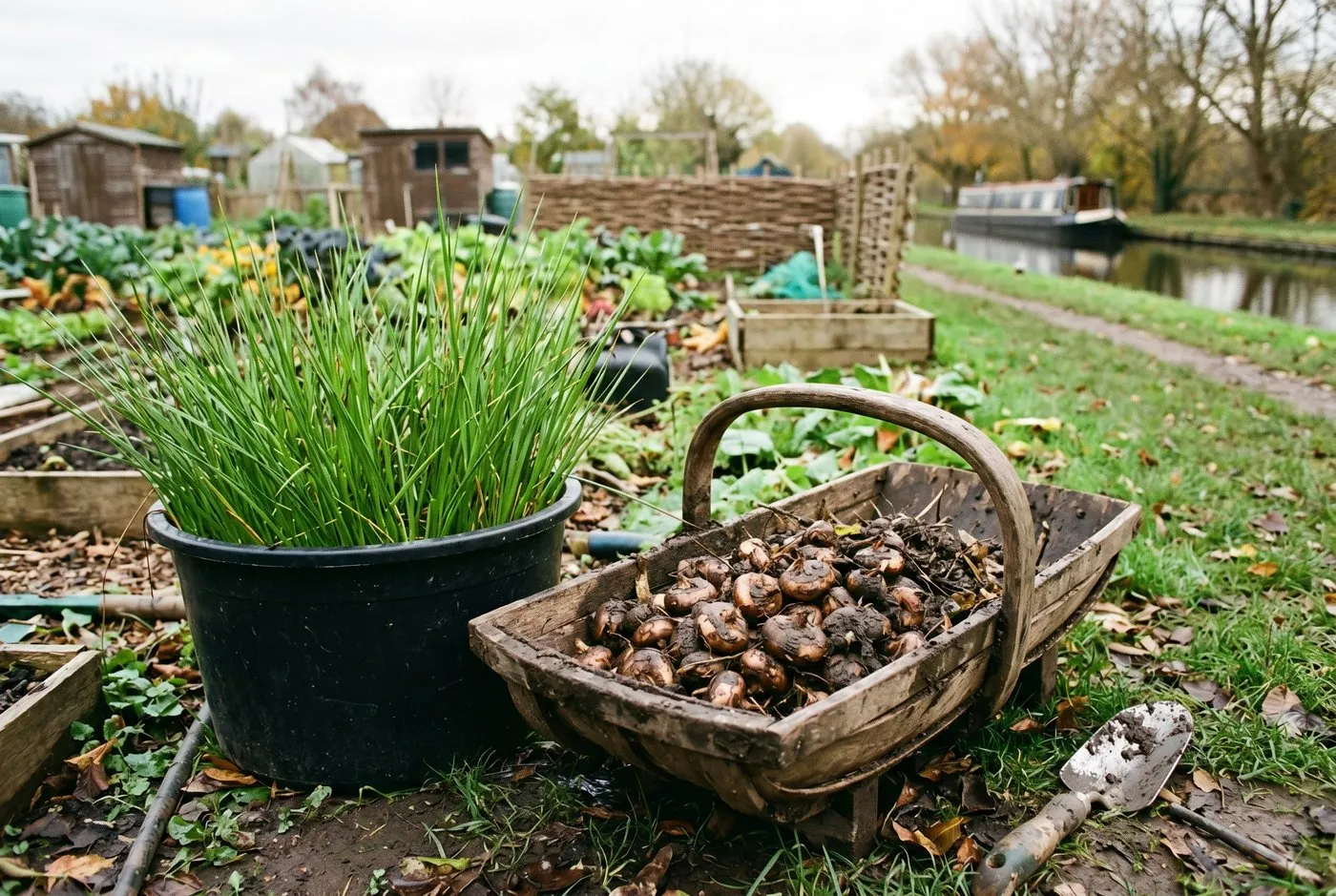 Chinese water chestnut corms lifted in November from a single submerged tray. They need the warmest, most sheltered corner of the garden to crop well.
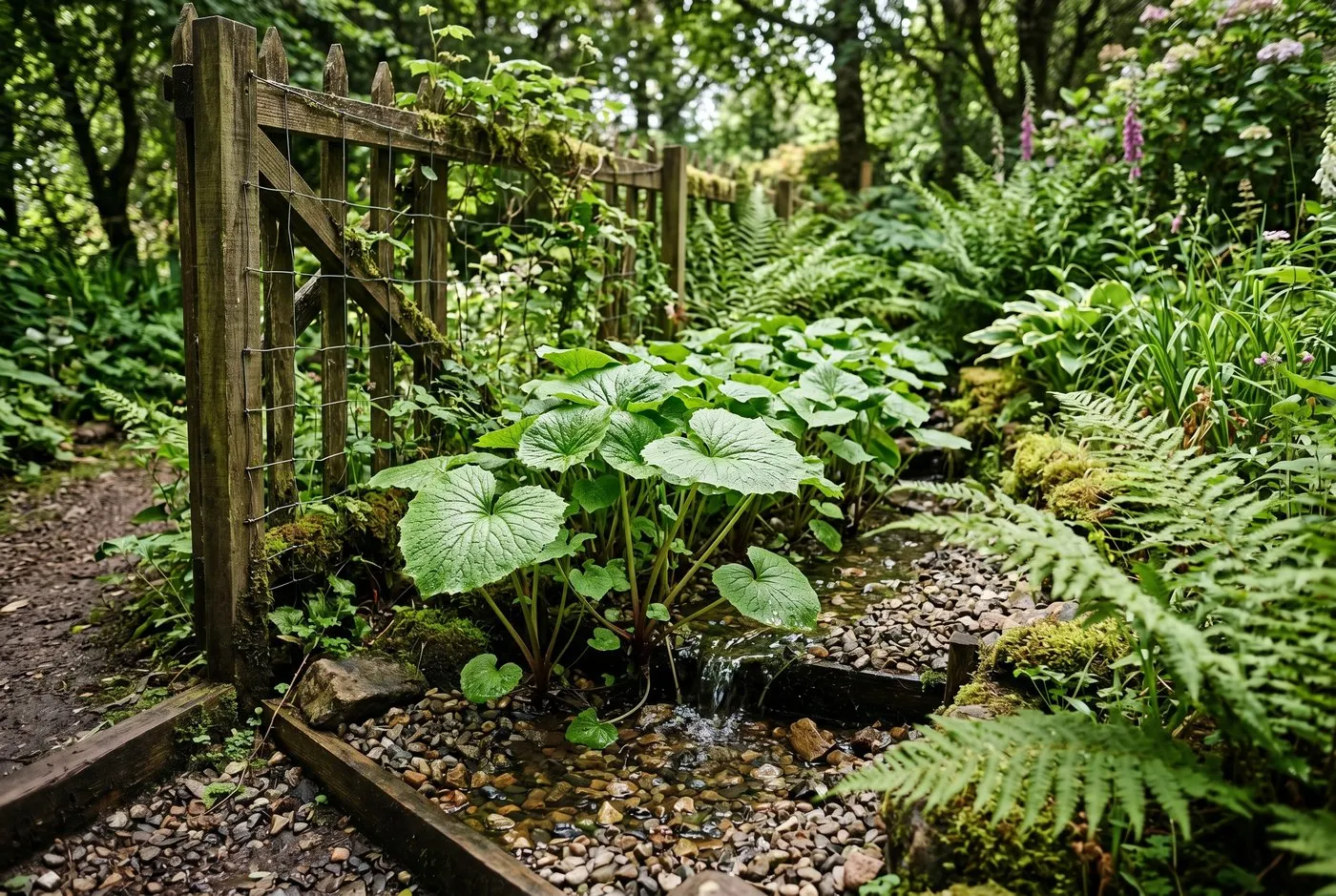 Wasabi is not a pond plant but a streamside woodlander. It wants cool, shaded, moving moisture at a bog edge, with the crown sitting above the waterline.
Edible aquatic plants compared
Not every water crop suits every garden. This table ranks the main edible aquatics by how easy they are, what they want, and what you actually harvest.
| Plant | Edible part | Conditions | Difficulty | Best for |
|---|---|---|---|---|
| Water mint | Leaf, for tea and sauce | Sun or part shade, shallow water | Very easy | Any container pond |
| Watercress | Peppery leaf and stem | Cool, clean, refreshed water | Easy | Spring and autumn crops |
| Brooklime | Mild leaf, salad | Sun, shallow margin | Easy | Filling a barrel edge |
| Chinese water chestnut | Crisp corms | Warm, sheltered, submerged | Moderate | Sunny sheltered plots |
| Water celery | Celery-flavoured leaf | Sun or light shade, margin | Moderate | Stir-fries and looks |
| Wasabi | Rhizome and leaf | Cool, shaded, moving water | Expert | Bog edge, not open pond |
The deadly lookalike every forager must learn
This is the section that matters most. Hemlock water dropwort is the most poisonous plant in Britain, and it grows in the same ditches as wild watercress. Foragers have died mistaking its roots for parsnip and its leaf for celery or cress.
It looks like oversized flat-leaf parsley or celery, with white umbrella flowers in summer and a cluster of pale, finger-like roots that earn it the name dead man’s fingers. It favours wet ditches, stream banks, and pond margins, exactly where watercress grows. There is no safe home test. The only protection is to know it on sight, or to skip wild foraging entirely.
Warning: Never eat any wild plant from a ditch or pond margin unless an expert has confirmed it in person. Hemlock water dropwort can be fatal in a small dose, and it grows side by side with edible watercress and celery-leaved plants.
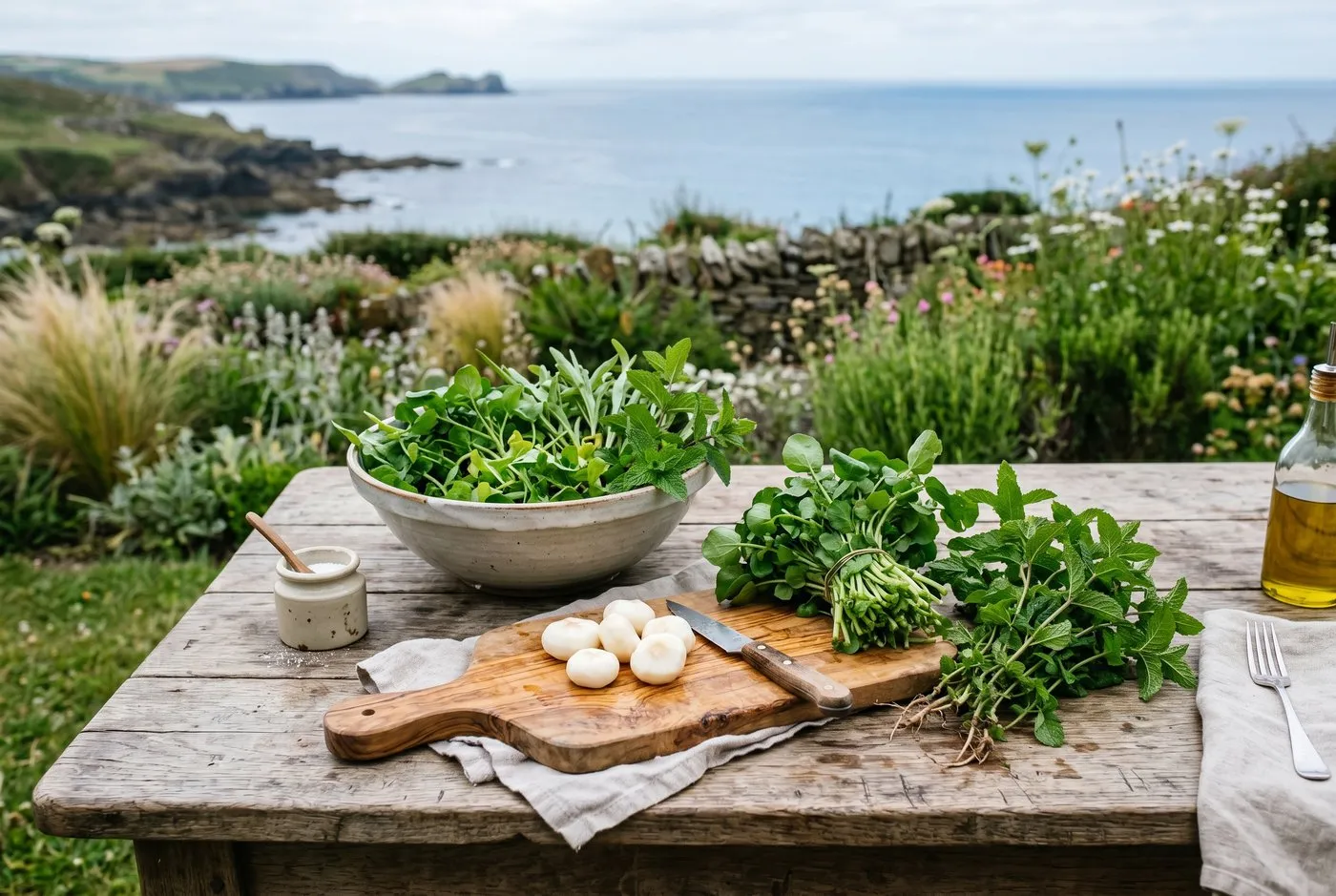 A late-summer crop from one barrel: watercress, water mint and freshly lifted water chestnut. Home-grown means no liver fluke and no lookalike risk.
Keeping an edible pond healthy
A food pond needs more attention than an ornamental one because you are eating what grows in it. Change part of the water weekly, skim off blanketweed by hand, and never add chemical algae treatments.
Top up with rainwater, not tap water, which carries nutrients that feed algae. Twist out blanketweed on a cane like candyfloss before it smothers the crop. Keep fallen leaves out in autumn, since rotting matter fouls the water and taints the harvest. In a hard winter, the hardy natives die back and return, but lift tender water chestnut corms before the first frost.
Frequently asked questions
What edible plants can you grow in a pond?
Water mint, watercress and brooklime are the easiest edible pond plants for UK gardens. All three crop from a container pond with no flowing water. For something unusual, Chinese water chestnut produces edible corms and water celery gives a celery-flavoured leaf. Keep edible plants in their own clean pond, never one with fish chemicals or tap-water treatments.
Can you grow watercress without a stream?
Yes, watercress grows well in a container of still water if you change the water often. Stand pots in a tray topped up to 5cm, or float them in a half-barrel, and refresh the water twice a week. Stale, warm water turns it bitter and invites algae. Watercress crops fastest in cool spring and autumn weather.
Is wild watercress safe to eat?
Wild watercress is risky and best avoided unless you know the water source. Cress in livestock pasture can carry liver fluke, and the deadly hemlock water dropwort grows in the same ditches. Home-grown watercress in clean container water removes both dangers. If you must forage, cook it thoroughly and never pick near grazing animals.
How do you grow Chinese water chestnuts in the UK?
Plant water chestnut corms in trays of loam in late spring, then submerge them under 10cm of water in a warm, sheltered pond. They need a long, warm season, so a south-facing container pond suits them best. Lift the corms in November once the foliage dies back. One tray of corms can yield several times what you plant.
What is the most poisonous plant in a UK pond?
Hemlock water dropwort is the most poisonous plant in British waterways, often called dead man’s fingers. It resembles celery, parsley and watercress, grows in ditches and pond margins, and a small amount can kill. Learn to identify it before foraging anything near water. When in doubt, grow your edibles in a container pond instead.
Our team produces practical UK gardening guidance from source research, contributor records and established horticultural practice. Editorial standards are overseen by Matt W.