Key takeaways
- Cycle 4 plant families through 4 beds over 4 years
- Year 1 Legumes, Year 2 Brassicas, Year 3 Roots, Year 4 Potatoes
- Legumes fix nitrogen that feeds the following brassicas
- Breaks disease cycles (clubroot, white rot, blight) by moving crops
- Reduces fertiliser need - the rotation feeds itself
- Add a 5th 'perennial' bed for asparagus, rhubarb, soft fruit
The 4-year crop rotation is the standard UK allotment vegetable plan. Four plant families cycle through four beds across four years in a fixed order: Legumes, Brassicas, Roots, Potatoes (with onions). The cycle breaks disease, balances soil fertility, and reduces fertiliser need. It’s the proven, repeatable system that thousands of UK allotment plots use as their planting backbone.
For the underlying plant-family principles, see our plant families crop rotation UK and crop rotation planner UK guides.
The 4-year sequence at a glance
| Year | Bed | Crops |
|---|---|---|
| Year 1 | Bed A | Legumes - peas, broad beans, French beans, runner beans |
| Year 2 | Bed A | Brassicas - cabbage, kale, broccoli, cauliflower, sprouts |
| Year 3 | Bed A | Roots - carrots, parsnips, beetroot, swede |
| Year 4 | Bed A | Potatoes + onions/garlic/leeks |
| Year 5 | Bed A | Back to Legumes - cycle complete |
Each bed runs through the same 4-year cycle but offset - so in any given year, you have one bed of each family being grown across the four beds.
In Year 1:
- Bed A: Legumes
- Bed B: Brassicas
- Bed C: Roots
- Bed D: Potatoes
In Year 2:
- Bed A: Brassicas
- Bed B: Roots
- Bed C: Potatoes
- Bed D: Legumes
And so on, with each family shifting one bed each year.
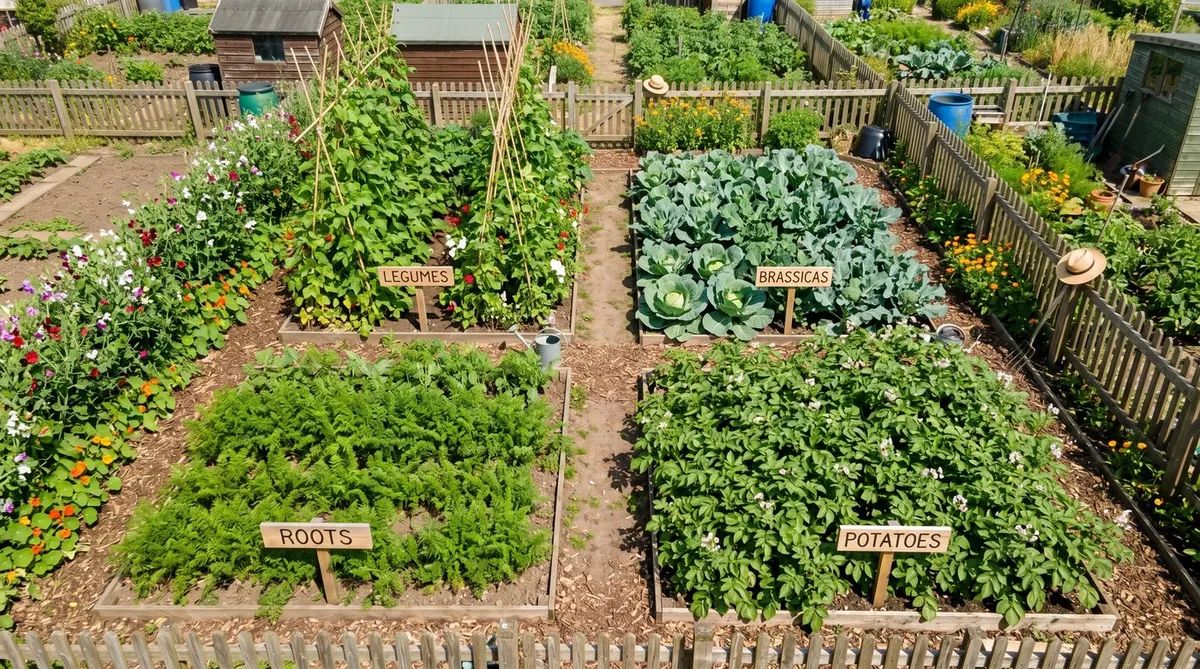
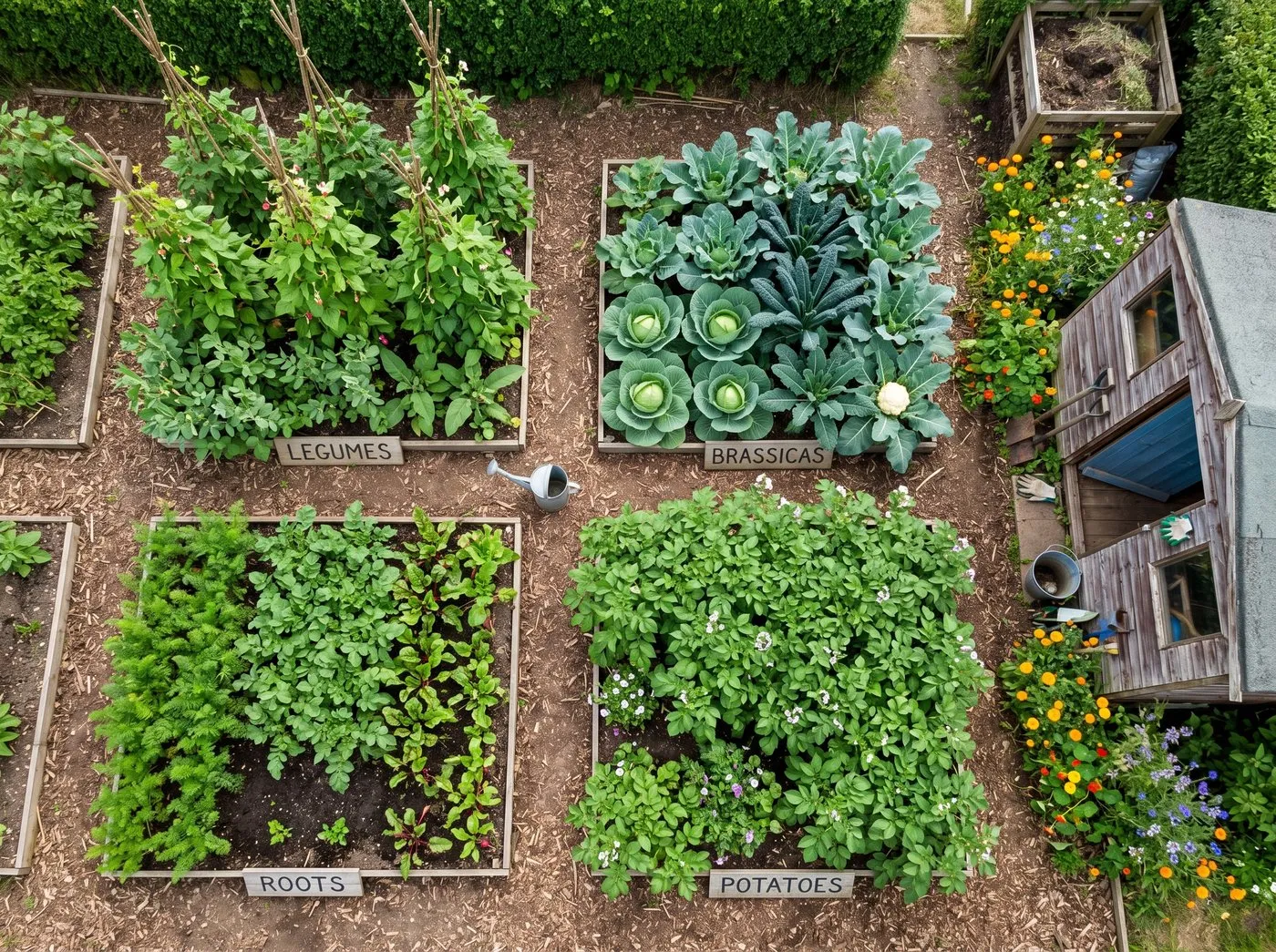 A UK 4-bed rotation in midsummer. Each bed holds one plant family; next year they all move one slot down the line.
Why this order works
The sequence is not arbitrary. Each family prepares the soil for the next:
Legumes → Brassicas
Legumes (peas and beans) have nitrogen-fixing bacteria in root nodules. They pull nitrogen from the air and store it in the soil. When the legume plants finish, dig in the roots and stems - the bed is now nitrogen-rich.
Brassicas are heavy nitrogen feeders. They take the nitrogen the legumes deposited and produce big leafy heads of cabbage, kale and broccoli. The transition is direct and biologically efficient.
Brassicas → Roots
Brassicas are large surface-feeding plants with shallow roots. They leave the deeper soil layers undisturbed.
Roots (carrots, parsnips, beetroot) need clean, stone-free, well-drained soil deeper down. Following brassicas suits them - the topsoil structure is intact, and brassica leaf debris has improved organic matter without compacting the lower bed.
Roots → Potatoes
Roots loosen the soil with their thick tap roots. They leave the bed friable.
Potatoes need loose soil for tuber formation. The earthing-up process during potato growth further breaks up the bed. Following potatoes with anything else needs little prep.
Potatoes → Legumes
Potatoes are heavy feeders but leave the soil in good tilth after harvest. The earthing-up has buried weed seeds; the haulm has shaded out competition.
Legumes prefer slightly poorer soil - too much nitrogen makes them leafy at the expense of pod-set. A bed depleted by potatoes is ideal for legumes, which will then refill the nitrogen.
The 4-year cycle balances itself. No bed becomes nitrogen-depleted; no bed becomes pest-saturated.
The family-by-family planting plans
Legume bed (Year 1)
Spring sowing (March-April):
- Broad beans (Aquadulce, Sutton)
- Early peas (Meteor, Kelvedon Wonder)
Late spring (May):
- French beans (Tendergreen, Cobra)
- Runner beans (Painted Lady, Lady Di)
Summer (June):
- Second-cropping French beans
- Second-cropping peas
End of season:
- Cut down plants at the base; leave roots in the ground to decay (nitrogen returns to soil)
- Compost the haulm
- Optional: sow a green manure cover crop for winter
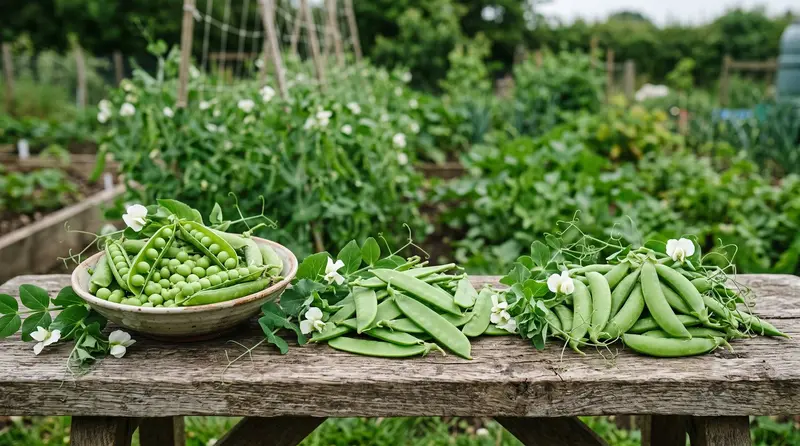
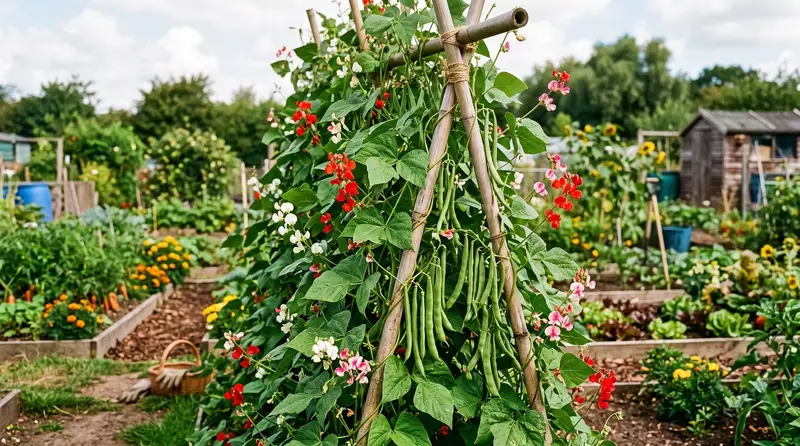
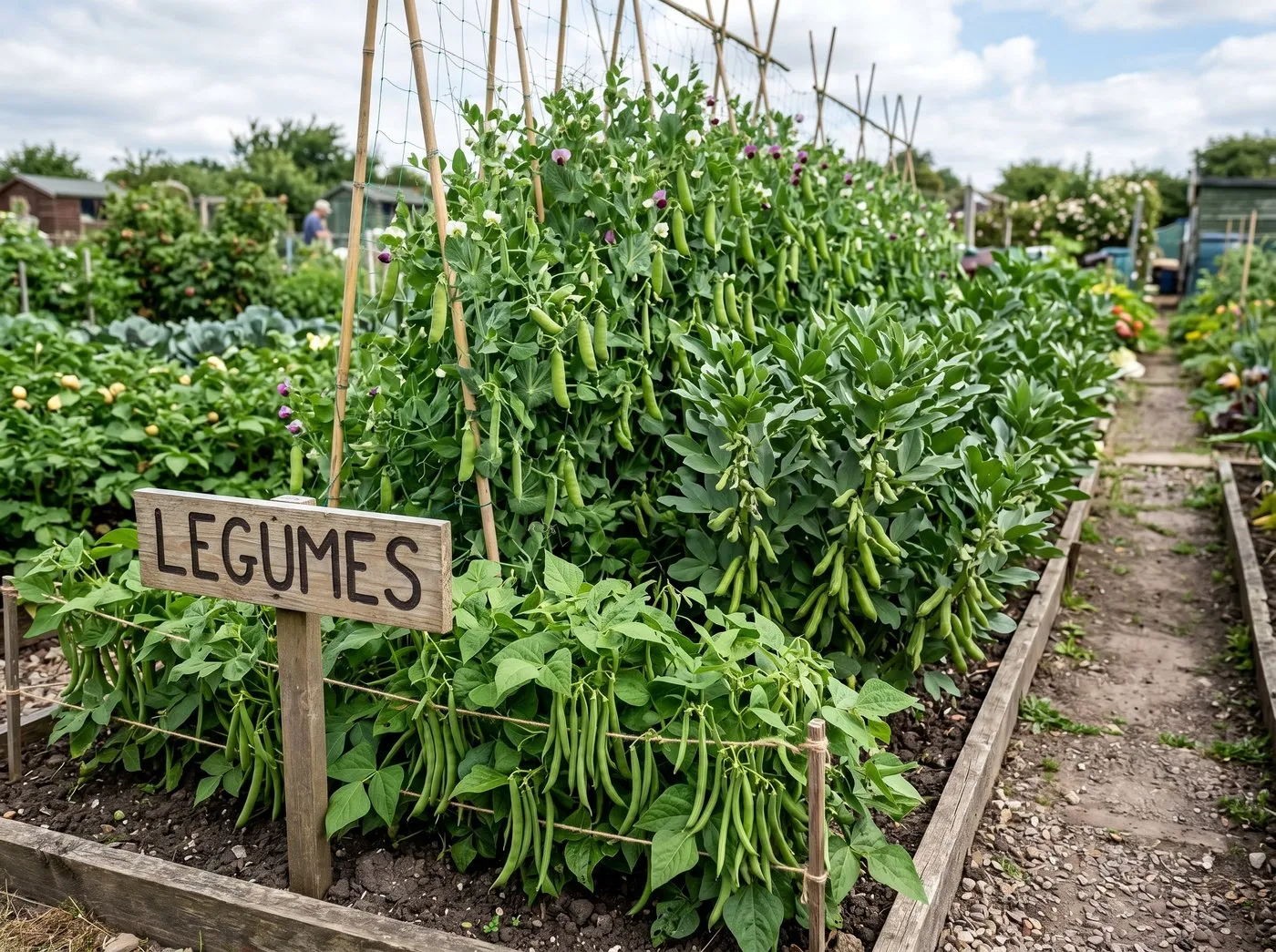 The legume bed in midsummer - peas, beans and broad beans together, fixing nitrogen that will feed next year’s brassica crop.
Brassica bed (Year 2)
The bed enters Year 2 with high nitrogen content from the legume residues.
Spring (March-April):
- Early cabbage (Hispi, Greyhound) - module-sown indoors, planted out April
- Calabrese broccoli (Marathon)
Summer (May-June):
- Summer cabbage (Greyhound)
- Cauliflower (Snowball)
- Kale (Cavolo Nero, Dwarf Green Curled)
- Brussels sprouts (Trafalgar, Petit Posy)
Autumn (August-September):
- Winter cabbage (Tundra, Savoy)
- Spring greens
Year-round care: netting against cabbage white butterfly from May to September. Liquid feed monthly with comfrey or seaweed.
Root bed (Year 3)
The bed in Year 3 has been brassica-cleansed (most brassica diseases don’t affect roots) and is now ready for clean root vegetables.
Early spring (March-April):
- Parsnip (Tender and True, Gladiator)
- Early carrots (Nantes, Amsterdam)
Late spring (May):
- Maincrop carrots (Autumn King, St Valery)
- Beetroot (Boltardy, Bull’s Blood)
- Swede (Brora, Best of All)
Throughout season:
- Successional sowing of carrots every 4 weeks until July
- Successional beetroot every 6 weeks
Defence: carrot root fly mesh barriers around the carrot rows. See our carrot root fly prevention UK guide.
Potato and allium bed (Year 4)
The bed in Year 4 is the heaviest-cropping of the rotation - potatoes are gross feeders and benefit from added compost.
Early spring (March):
- First early potatoes (Charlotte, Pentland Javelin)
- Onion sets (Sturon, Centurion)
- Garlic if not planted in autumn
Late spring (April):
- Second early potatoes (Kestrel, Maris Peer)
- Spring planting of shallots
- Leek transplants (Musselburgh, Bandit)
Mid-late spring (April-May):
- Maincrop potatoes (Maris Piper, Cara)
Summer:
- Successional spring onion sowing
- Tomato bushes (Solanaceae family - can be co-located here in the same rotation slot)
End of season: lift potatoes August-October. Harvest onions when tops fall over July-August. Garlic dug up June-July.
The 5th bed - perennials and soft fruit
Most UK allotments have a 5th area used for permanent crops that don’t enter the rotation:
- Rhubarb - lives 10-15+ years in one place
- Asparagus - lives 15-20 years
- Globe artichoke - lives 5-8 years
- Soft fruit - blackcurrants, raspberries, strawberries
- Herbs - perennial herbs (rosemary, thyme, sage, chives, mint)
This bed is separate from the rotation. Keep it well-mulched and well-fed with compost each year.
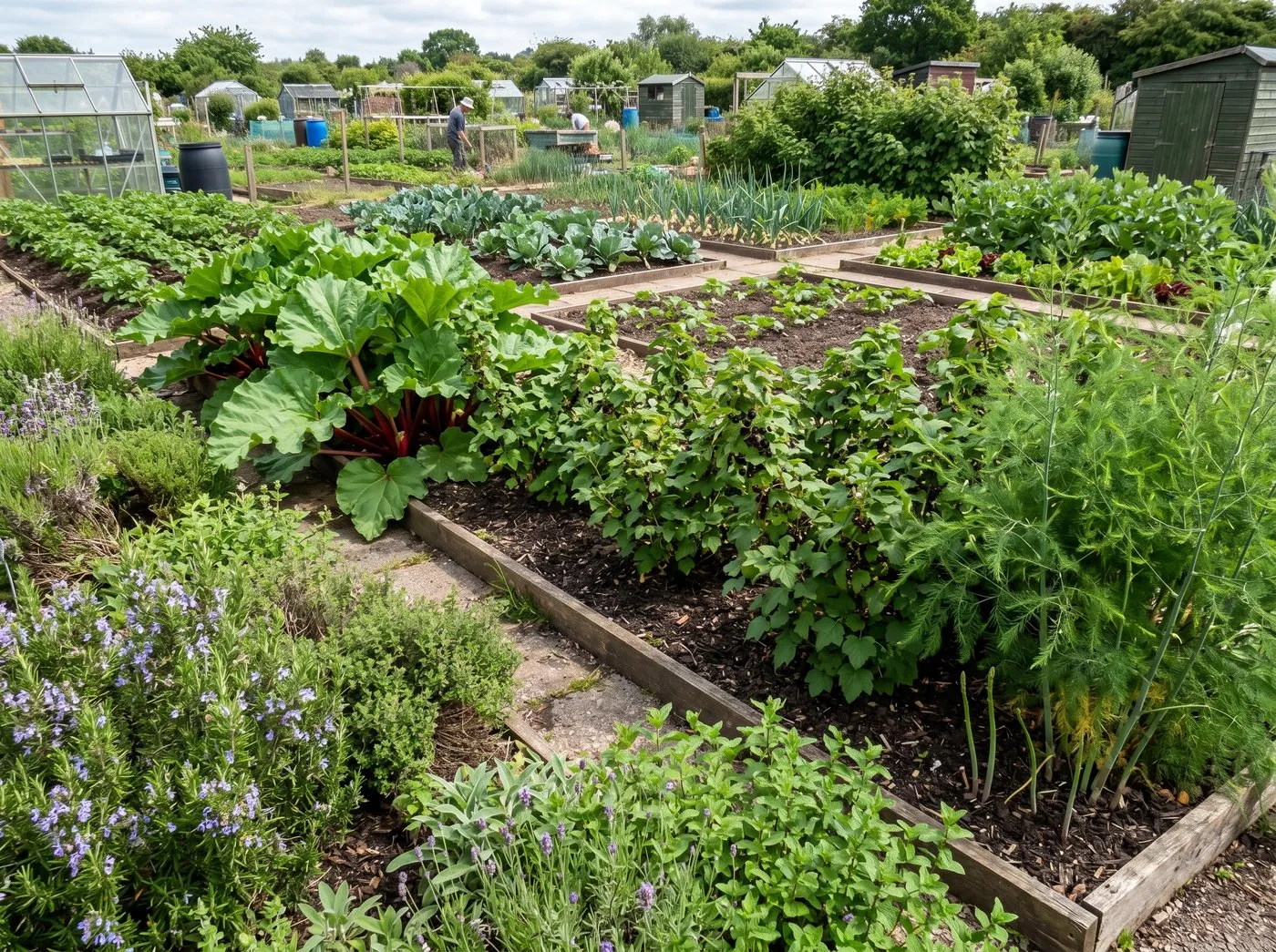 The fifth bed - perennials and soft fruit. Outside the 4-year rotation because these plants live for years in the same spot.
The annual switchover
Every January-February, the rotation moves one slot:
| Bed | Year 4 to Year 5 |
|---|---|
| A | Potatoes → Legumes |
| B | Brassicas → Roots → Potatoes → Legumes… |
The transitions:
Brassicas → Roots: lift the last brassicas in February-March. Clear stems and roots to compost. Light forking only - don’t dig deep. Top-dress with 2-3cm of compost. Sow first root crops in March-April.
Roots → Potatoes: lift the last root crops in November-December. Dig the bed lightly to incorporate compost. Add compost or well-rotted manure at 5-7kg/m². Plant potatoes from March.
Potatoes → Legumes: lift all potatoes by October. Clear haulm. Light fork to remove any stragglers. No need to add nitrogen-rich manure - legumes don’t want it. Plant broad beans in autumn for overwintering, or wait for spring peas.
Legumes → Brassicas: cut down legumes at base in autumn. Leave roots in the soil. Top with 3-5cm of well-rotted manure or mature compost. Plant brassica modules in spring.
Common 4-year rotation issues
A bed lags behind the others. Some beds have heavier clay, more shade, or worse drainage. Match the family to the conditions - put heavy-feeding brassicas in the richest bed; put drought-tolerant beans in the sunniest one.
One year’s crops fail. Don’t shift the rotation. Replant the same family next year (or sow green manure) - the rotation logic is about the bed not the crop.
You want more space for one family. Split the bed - half potatoes, half onions for example. This is standard. The rotation still works as long as the family stays in its slot.
You forget which bed is which. Number the beds permanently with stakes and write the family on each. Photograph the layout each spring and store in the shed.
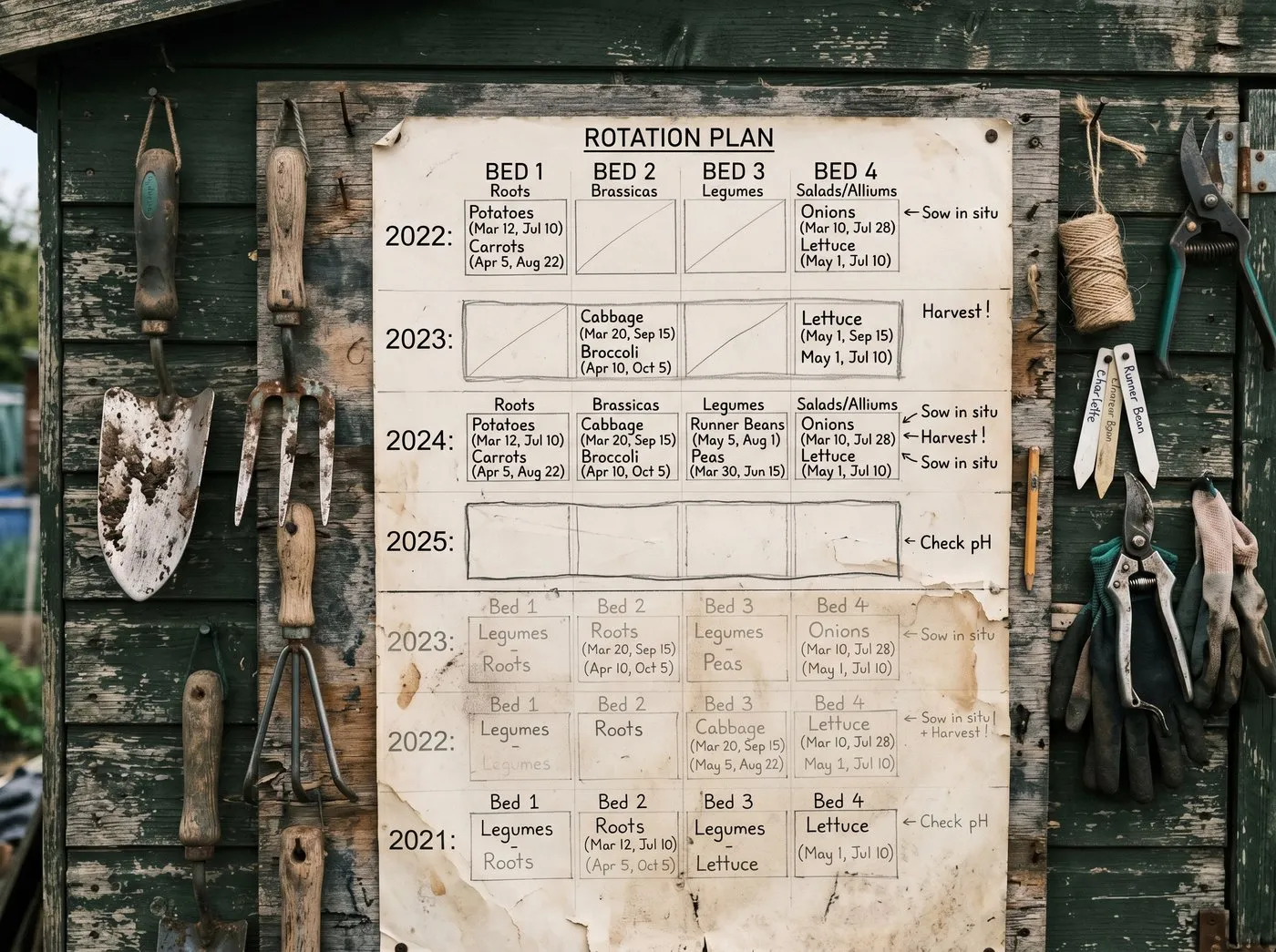 Hand-drawn rotation plan on the shed wall - the practical record that prevents drift across years. Update it annually.
Disease and pest pressure reduction
The 4-year rotation directly reduces these UK problems:
Clubroot (brassica fungal disease): spores survive 7+ years in infected soil. A 4-year gap before brassicas return reduces but doesn’t eliminate. For confirmed clubroot, extend to 5-7 years.
White rot (onion fungal disease): spores survive 10+ years. The 4-year rotation reduces but doesn’t fully cure. Once established, 7-10 year breaks needed.
Eelworm (potato cyst nematode): 4-year rotation breaks the cycle on light infestations. Heavy infestations need 6-year breaks.
Carrot root fly: the rotation moves the host bed each year, reducing local adult fly populations finding the new bed.
Bean and pea weevils, aphids, brassica caterpillars: rotation has marginal effect - these pests fly between beds easily.
The 4-year vs other options
3-year rotation: combine roots and potatoes into a single year. Saves a bed but loses one cycle of clean soil between root and potato families. Acceptable for smaller plots.
5-year rotation: add a 5th year between potatoes and legumes for sweetcorn, courgettes and squash (Cucurbitaceae). Standard for larger allotments and market gardens. Better disease management.
6-year rotation: professional vegetable growing standard - 6 distinct slots with one or two left fallow. Overkill for hobby allotments.
No rotation (monoculture): continuous tomatoes, continuous brassicas. Works for 2-3 years; declines from year 4 as diseases accumulate. Avoid for vegetable beds.
Yields and soil-organic-matter results
The rotation more than doubled brassica yield, increased potato yield 50%, halved fertiliser use, and improved soil organic matter from typical clay to genuinely loamy.
The annual calendar at a glance
| Month | Legume bed | Brassica bed | Root bed | Potato bed |
|---|---|---|---|---|
| Jan | Plan | Winter brassicas crop | Lift last roots | Order seed |
| Feb | Add manure | Crop continues | Bed cleared | Chit seed |
| Mar | Sow broad beans, peas | Cut last brassicas | Sow parsnips | Plant first earlies |
| Apr | Plant out modules | Bed cleared, light dig | Sow early carrots | Plant maincrops |
| May | Plant French beans | Plant out brassicas | Sow main carrots | Earth up |
| Jun | Crops developing | Liquid feed weekly | Successional sow | Earth up, hill |
| Jul | Peas cropping | Cabbages heading | Beetroot harvest | Watch for blight |
| Aug | Beans cropping | Continuous picking | Carrot harvest | First lift |
| Sep | Last harvests | Net for caterpillars | Maincrop harvest | Main lift |
| Oct | Cut down haulm | Pre-winter feed | Last roots | Lift last |
| Nov | Compost residue | Net for pigeons | Store roots | Bed cleared |
| Dec | Bed resting | Pick brussels | Empty bed | Plan next year |
Field note: The RHS crop rotation guidance covers UK-specific family groupings and rotation timings. The Garden Organic at Ryton demonstration vegetable garden uses a standard 4-bed rotation publicly for educational purposes.
A simple starting plan
For a UK gardener starting a 4-bed rotation this year:
-
Mark out 4 equal beds plus a separate perennial area. Each bed 4-5m long by 1.2m wide is standard.
-
Decide Year 1 layout. If unsure, start: Bed 1 Legumes, Bed 2 Brassicas, Bed 3 Roots, Bed 4 Potatoes.
-
Add appropriate compost to each bed. Heavy organic matter to potato and brassica beds; lighter to root and legume beds.
-
Plant according to the year’s plan. Use the timings in the table above.
-
In January next year, shift everything one slot. Bed 1 becomes Brassicas; Bed 2 becomes Roots; Bed 3 becomes Potatoes; Bed 4 becomes Legumes.
-
Repeat annually. After 4 years, Bed 1 is back to Legumes - one full cycle.
The system is simple once running. The hardest part is the first January switchover.
Now you’ve got the rotation framework
For the family-by-family detail that underpins this system, our plant families crop rotation UK and crop rotation planner UK guides cover the principles in more depth.
Our team produces practical UK gardening guidance from source research, contributor records and established horticultural practice. Editorial standards are overseen by Matt W.