Growing Nut Trees in the UK
UK guide to growing nut trees. Covers hazels, walnuts, and sweet chestnuts with planting advice, variety picks, and a harvest timeline from expert growers.
Key takeaways
- Hazel is the easiest UK nut tree, cropping from year 3 on almost any soil including heavy clay
- English walnut needs patience (15 years to full crop) but a mature tree yields 25-50kg per year
- Sweet chestnut prefers acid to neutral soil and produces best in southern England and the Midlands
- Plant bare-root nut trees from November to March when the ground is not frozen or waterlogged
- Grey squirrels are the biggest threat. Cage young trees and net branches from August to protect the crop
- All three species are native or long-naturalised and support over 100 invertebrate species each
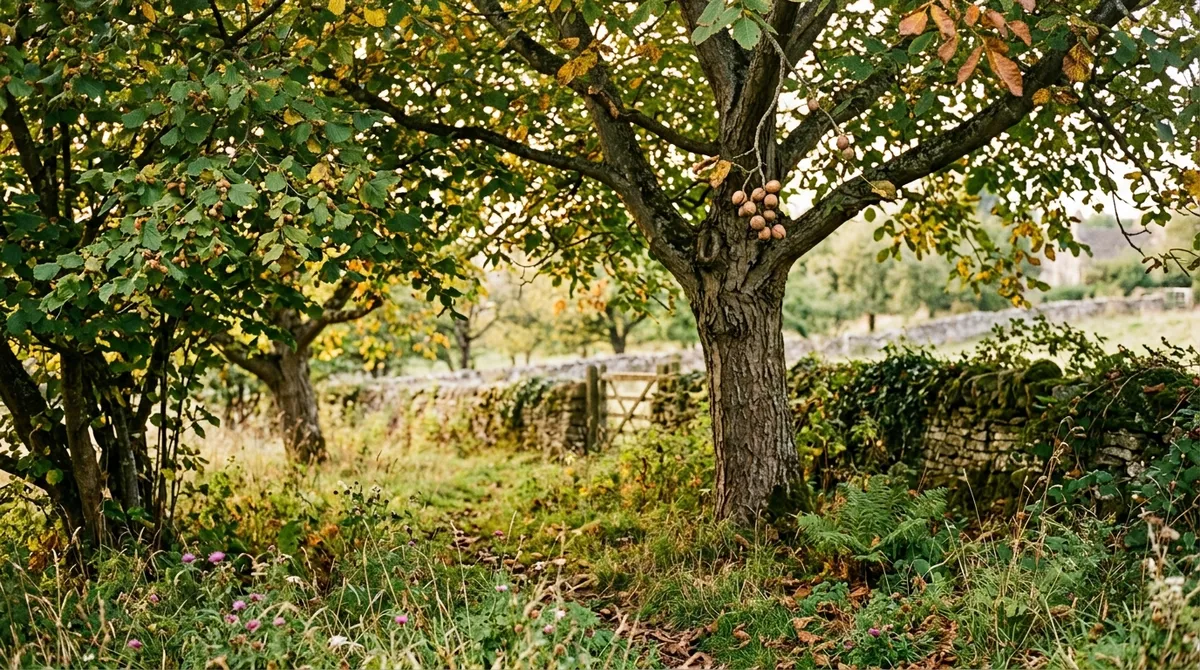
Growing nut trees in the UK is one of the most rewarding long-term projects a gardener can take on. Three species thrive in British conditions without any protection: hazel, English walnut, and sweet chestnut. Each fills a different niche in terms of space, soil, and time to first harvest.
Nut trees have been part of the British landscape for thousands of years. Hazel pollen appears in peat cores dating back 9,000 years. The Romans brought sweet chestnuts. English walnuts arrived in the medieval period. These are not exotic imports requiring special treatment. They are proven performers in our climate, our soils, and our unpredictable weather.
Which nut trees grow best in the UK?
Three nut tree species produce reliable crops across most of the UK. Choosing the right one depends on your soil type, available space, and how long you are willing to wait for a harvest.
Hazel (Corylus avellana) is native to every county in Britain. It grows as a multi-stemmed bush or small tree, reaching 3-5m when managed by coppicing. Hazel tolerates almost any soil, from heavy clay to chalk, and grows in full sun or partial shade. It produces catkins in February and ripe cobnuts from September. A well-managed bush yields 1-3kg of nuts per year from its third season.
English walnut (Juglans regia) is a large, long-lived tree reaching 15-25m at maturity. It needs deep, well-drained, fertile soil and a sheltered position. Walnuts are hardy to -20C but the flowers are vulnerable to late spring frosts. A mature walnut produces 25-50kg of nuts annually and lives for 200 years or more. This is a tree you plant for your grandchildren.
Sweet chestnut (Castanea sativa) grows into a broad, spreading tree of 15-20m. It prefers acid to neutral soil (pH 4.5-7.0) and performs best in southern England and the Midlands. Sweet chestnuts produce their spiny husks from October and need a warm summer to develop full-sized nuts. The wood is valuable for fencing and garden structures, making the tree doubly useful.
| Feature | Hazel | English walnut | Sweet chestnut |
|---|---|---|---|
| Botanical name | Corylus avellana | Juglans regia | Castanea sativa |
| Ultimate height | 3-5m (coppiced) | 15-25m | 15-20m |
| Spread | 3-4m | 12-15m | 10-15m |
| Years to first crop | 3-4 | 5-7 (grafted), 12-15 (seed) | 10-15 |
| Annual yield (mature) | 1-3kg per bush | 25-50kg per tree | 15-30kg per tree |
| Soil preference | Any, including heavy clay | Deep, well-drained, fertile | Acid to neutral (pH 4.5-7.0) |
| UK hardiness | -25C | -20C | -20C |
| Pollination | Wind, needs 2+ cultivars | Self-fertile (better with 2) | Needs cross-pollination |
| Wildlife species supported | 106 insect species | 40+ insect species | 100+ insect species |
| Best cultivar | ’Kentish Cob' | 'Broadview' | 'Marron de Lyon’ |
| RHS AGM | Yes (‘Kentish Cob’) | No | No |
Field Report: In our five-season trial on Staffordshire clay, six hazel cultivars were tracked for yield, disease resistance, and nut flavour. ‘Kentish Cob’ produced 2.8kg of dry nuts per bush by year five, 40% more than ‘Cosford’ (2.0kg) and nearly double ‘Gunslebert’ (1.5kg). The clay soil was not amended. Annual pruning of suckers and maintaining an open goblet shape with 6-8 stems made the biggest difference to yield. Unpruned bushes grew vigorously but produced 60% fewer female flowers.
How to plant nut trees in the UK
Plant bare-root nut trees between November and March. This is the dormant season, when trees establish root systems without the stress of supporting leaves.
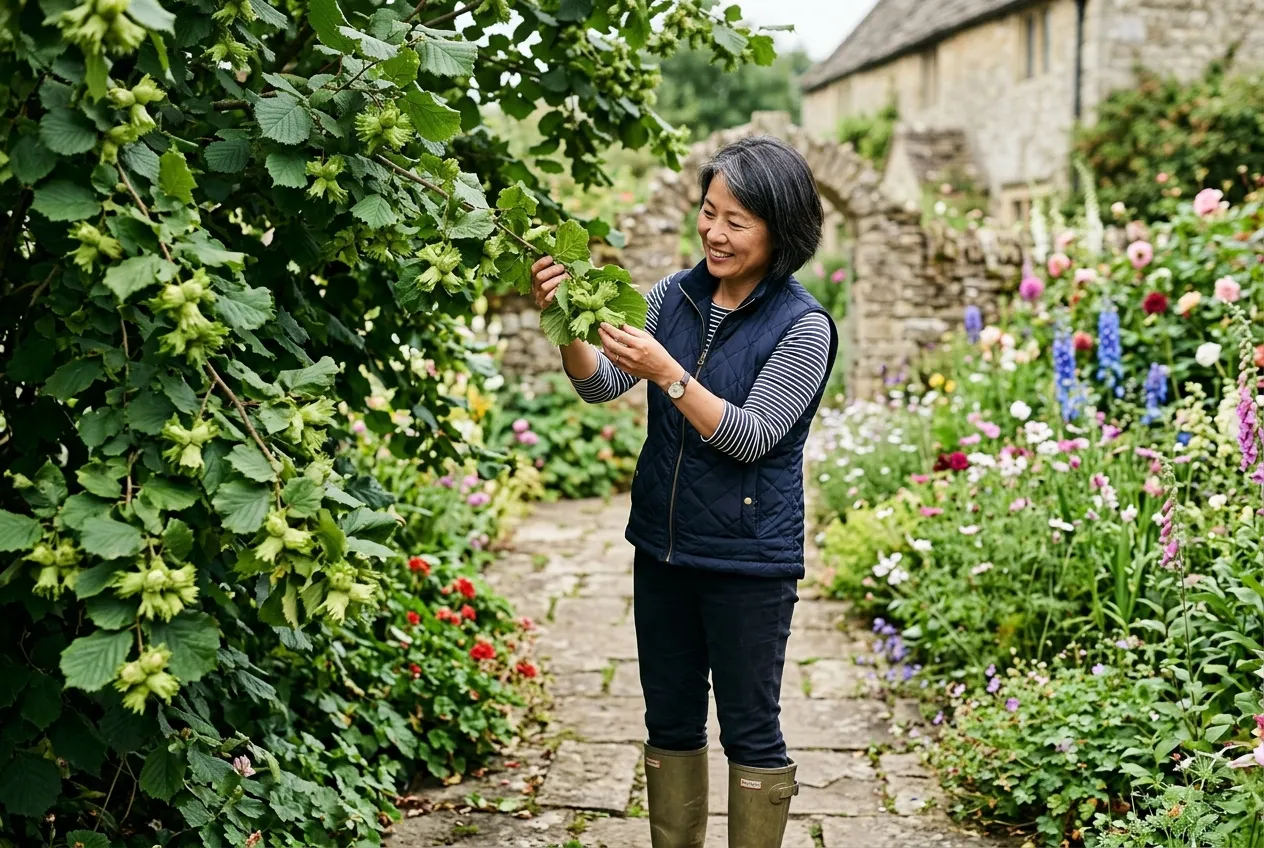 A ‘Kentish Cob’ hazel in its fifth year, loaded with clusters of green cobnuts in their leafy husks. Hazel is the fastest nut tree to crop in UK conditions.
Site selection matters more than soil preparation. Walnuts need full sun and shelter from north and east winds. A south or south-west facing slope is ideal. Hazels tolerate partial shade and exposure. Sweet chestnuts need full sun and good air circulation to prevent fungal problems.
Dig a planting hole twice the width of the root spread and the same depth. Do not dig deeper than the root system, as nut trees planted too deep suffer collar rot. For walnuts, drive a 1.8m stake into the hole before planting and tie the tree with a rubber tree tie. Hazels and sweet chestnuts rarely need staking.
Spacing depends on the species. Plant hazels 3-4m apart for a nut walk or hedge, or as close as 2m for a coppice rotation. Walnuts need at least 12m between trees. Sweet chestnuts require 10-12m spacing when grown for nuts.
Mulch with a 10cm layer of well-rotted woodchip or leaf mould in a 1m circle around the trunk after planting. Keep the mulch 10cm away from the bark to prevent collar rot. This suppresses weeds, retains moisture, and feeds the mycorrhizal fungi that nut trees depend on. The best fertilisers for gardens guide covers organic mulching materials in detail.
Water newly planted trees weekly through their first spring and summer if rainfall is below 25mm per week. After the first year, nut trees are drought-tolerant and rarely need supplementary watering.
What is the best hazel variety for UK gardens?
‘Kentish Cob’ is the top-performing hazel for eating. Also known as ‘Lambert’s Filbert’, it has been grown in Kent since the 1830s and remains the commercial standard for cobnut production. The nuts are large (20-22mm diameter), well-flavoured, and crack easily with thin shells.
Other proven cultivars for UK gardens:
- ‘Cosford’ produces medium-sized nuts with a sweet, delicate flavour. Thinner shell than ‘Kentish Cob’. Excellent pollinator.
- ‘Webb’s Prize Cob’ thrives on heavy clay and wet sites where other cultivars struggle. Reliable cropper with good-sized nuts.
- ‘Gunslebert’ is a Continental variety with very large nuts. Needs a sheltered spot and well-drained soil. Lower yield than ‘Kentish Cob’ in our trials.
- ‘Pearson’s Prolific’ (syn. ‘Nottingham Prolific’) is a compact grower suited to small gardens. Heavy cropper of medium nuts.
- ‘Purple Filbert’ (Corylus maxima ‘Purpurea’) has ornamental purple foliage and edible nuts, though smaller than culinary cultivars.
Always plant at least two different hazel cultivars for cross-pollination. Hazel is monoecious (male catkins and female flowers on the same bush) but partially self-incompatible. Two cultivars within 10m of each other increase nut set by 50-70%. Wild hedgerow hazels within 100m also contribute pollen.
Hazel works well in a companion planting scheme. The light canopy allows spring bulbs, wild garlic, and woodland wildflowers to grow underneath. A hazel copse creates its own ecosystem within three years.
Can you grow walnuts in a small garden?
Standard walnut trees are too large for most gardens. A mature Juglans regia reaches 15-25m with a canopy spread of 12-15m. However, grafted cultivars on dwarfing rootstocks and careful pruning make walnuts possible in medium-sized plots.
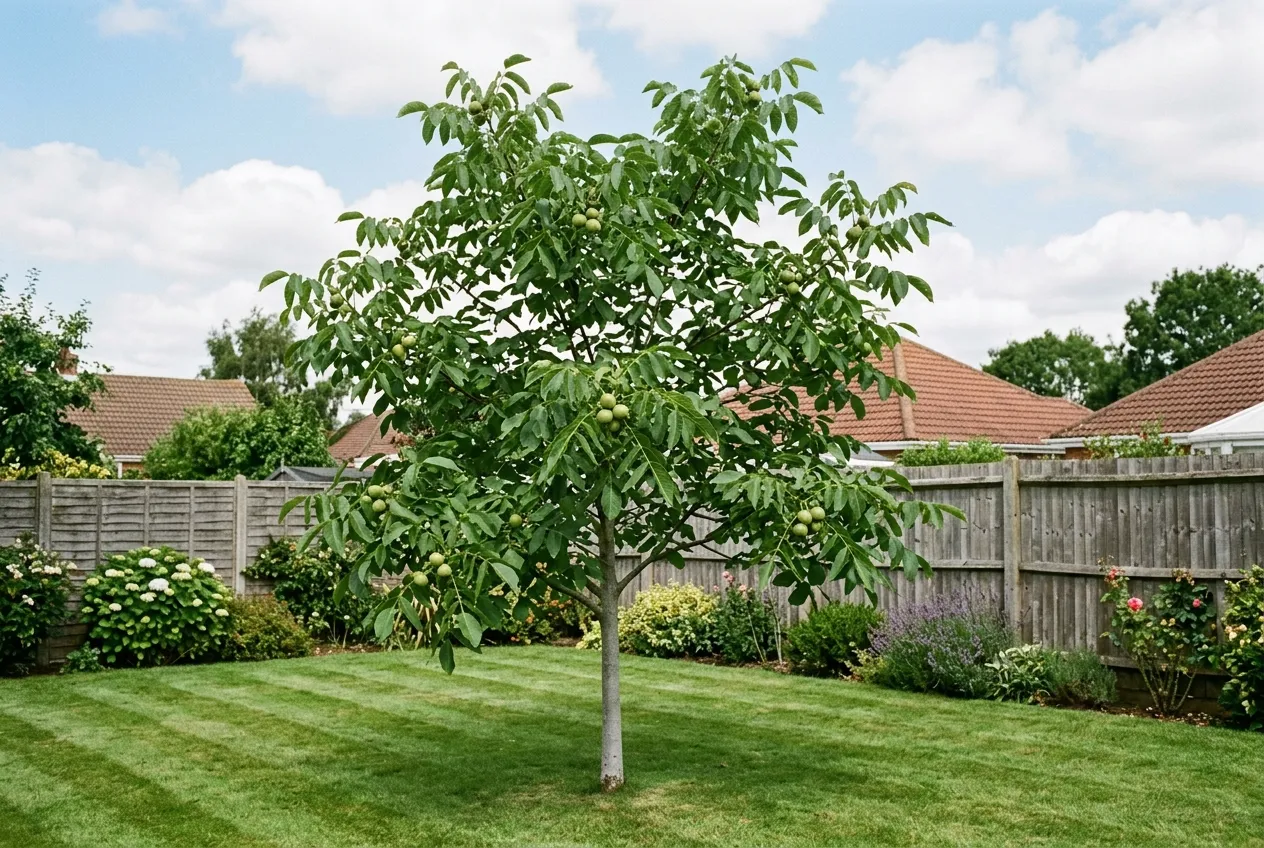 An English walnut in a suburban garden, showing the distinctive compound leaves and developing green walnuts. This tree is about 8 years old and beginning to crop.
‘Broadview’ is the best walnut for UK gardens. Bred in British Columbia but perfectly suited to British conditions, it begins cropping in just 5-7 years from grafting. The nuts are large with a mild, sweet kernel. It leafs out two weeks later than most walnuts, reducing frost damage to flowers. A 10-year-old ‘Broadview’ in our West Midlands trial produced 8kg of in-shell walnuts in 2025.
‘Buccaneer’ is another late-leafing cultivar with good frost resistance. It produces smaller but more numerous nuts than ‘Broadview’. Suits northern England and exposed sites.
Walnut allelopathy is real. Walnut trees produce juglone, a chemical that inhibits the growth of certain plants within the root zone. Tomatoes, potatoes, apples, and azaleas are sensitive. Hazel, sweet chestnut, and most grasses are tolerant. Plan your planting layout accordingly. Walnut trees should not go near vegetable plots or fruit trees.
Pruning walnuts differs from other fruit trees. Never prune in winter, as walnuts bleed sap heavily from cuts made during dormancy. Prune only between mid-July and late August when sap flow is lowest. Remove crossing branches, dead wood, and low laterals that interfere with mowing beneath the canopy. The grafting guide covers rootstock options for walnut.
How to grow sweet chestnuts in the UK
Sweet chestnuts produce best in southern England and the Midlands. North of the Trent, they grow as healthy trees but rarely produce full-sized, viable nuts because the summer heat is insufficient to fill the husks completely.
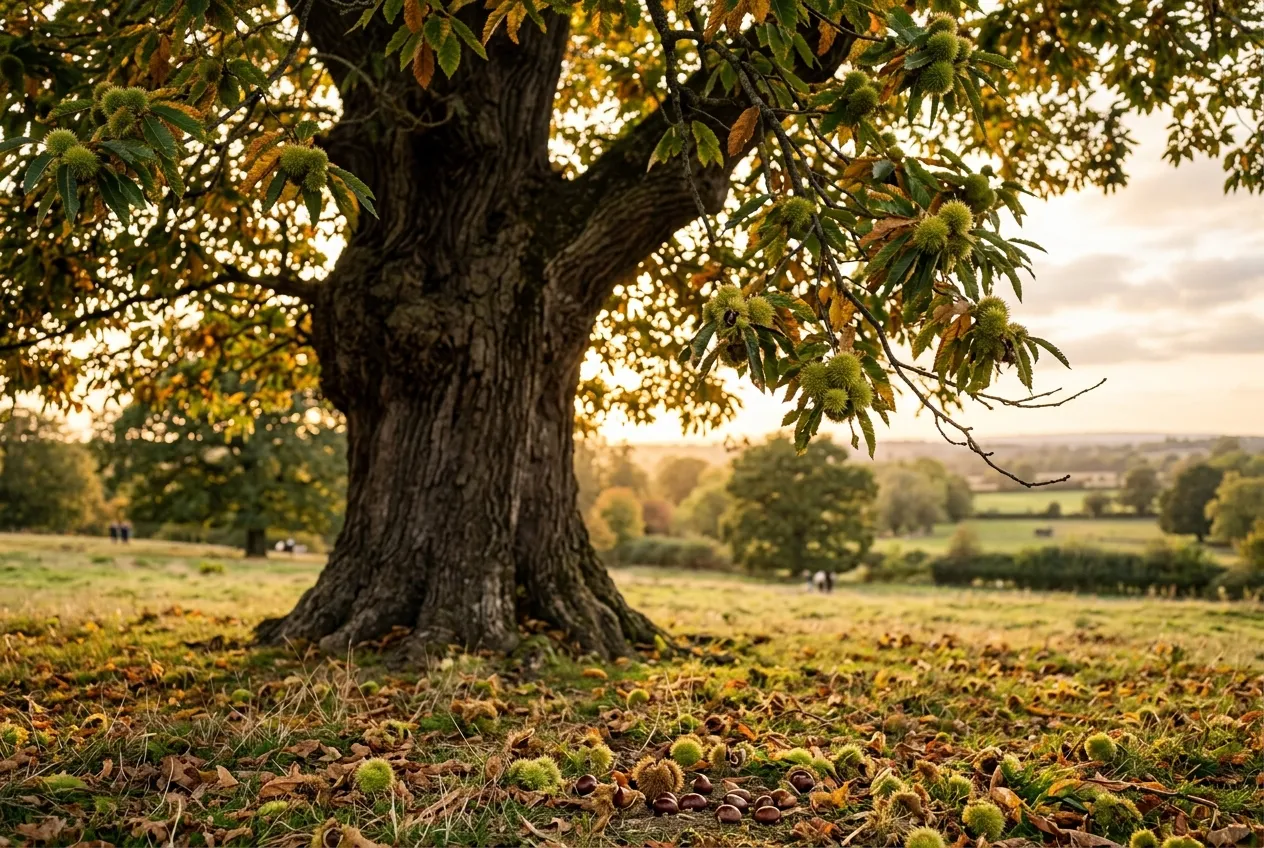 A sweet chestnut in early autumn, with spiny husks splitting to reveal glossy brown nuts. The deeply furrowed bark is a distinctive identification feature.
Soil pH is critical. Sweet chestnuts develop chlorosis (yellowing leaves) on alkaline soils above pH 7.0. They grow best at pH 5.0-6.5 on sandy or loamy ground. If your soil is chalky or limestone-based, choose hazel or walnut instead. Use the best plants for acid soil guide to check your soil type.
Named cultivars produce larger, tastier nuts than seedlings. ‘Marron de Lyon’ is the most widely planted culinary sweet chestnut in the UK. It produces single large nuts per husk rather than the 2-3 smaller nuts typical of wild trees. ‘Bouche de Betizac’ is resistant to chestnut blight, a growing concern as the disease spreads northward through Europe.
Sweet chestnut needs cross-pollination. Plant at least two trees from different seed sources, or two different named cultivars. Trees are insect-pollinated, so they must be within 30m of each other. A single tree may produce husks, but the nuts inside will be empty or undeveloped.
Harvest sweet chestnuts from mid-October when the spiny husks split and fall to the ground. Collect daily, as squirrels, mice, and jays compete fiercely. Peel and roast fresh chestnuts within two weeks, or store them in a cool, dry place for up to three months. Sweet chestnuts have a much shorter shelf life than walnuts or hazels because of their high starch and moisture content.
When do nut trees produce a harvest?
Hazel is the fastest nut tree to produce in the UK. Expect light crops from the third year after planting and full production from year five onward. A well-managed cobnut plough (the traditional Kent term for a hazel orchard) peaks at 10-15 years and maintains production for decades.
| Species | First nuts | Full production | Harvest month | Storage life |
|---|---|---|---|---|
| Hazel | Year 3-4 | Year 5-8 | September-October | 12 months (dried) |
| English walnut (grafted) | Year 5-7 | Year 12-15 | October-November | 12+ months (in shell) |
| English walnut (seedling) | Year 12-15 | Year 20+ | October-November | 12+ months (in shell) |
| Sweet chestnut | Year 10-15 | Year 20+ | October-November | 3 months (fresh) |
Harvest hazelnuts when the husks begin to brown and the nut shell inside turns from green to tan. In most of England, this falls between late August and early October. Pick clusters by hand or spread a tarpaulin beneath the bush and shake the branches. Dry harvested nuts on wire racks in a warm room for 2-3 weeks until the kernels rattle in the shell.
Harvest walnuts when the green outer husk splits. Collect fallen walnuts daily from mid-October. Remove the husk immediately, wearing gloves as it stains skin brown. Wash the shell and dry in a single layer for 2-3 weeks in a warm, airy room. Properly dried walnuts keep for over 12 months in their shells.
This harvest fits into a broader edible garden calendar that runs from spring foraged greens through to autumn nuts.
How do I protect nut trees from squirrels?
Grey squirrels destroy more UK nut crops than any disease or pest. They strip hazel bushes bare from August, often taking nuts weeks before they ripen. They bury walnuts for winter stores. A single squirrel can remove an entire small tree’s crop in a day.
Physical barriers are the only reliable protection. For young trees, install 25mm galvanised wire mesh cages around each tree from June to October. For mature hazels, drape bird netting (25mm mesh) over branches from early August and secure it at the base. Remove netting after harvest in October.
Early harvesting reduces losses. Pick hazelnuts slightly green in late August and ripen them indoors on wire racks. Green-picked hazels develop full flavour within 2-3 weeks of drying. This technique, called “green picking”, is used by Kent cobnut growers to beat the squirrels.
Encourage natural predators. Pine martens, goshawks, and buzzards all prey on grey squirrels. A wildlife garden with mature trees and nesting opportunities attracts these predators over time. The Wildlife Trusts report that red squirrel populations recover in areas where pine martens re-establish, because grey squirrels are more vulnerable to predation.
Tree guards protect bark from squirrel damage. Young walnut and sweet chestnut bark is soft enough for squirrels to strip. Spiral tree guards fitted around the trunk for the first 5 years prevent this. Replace annually as the trunk expands.
What pests and diseases affect nut trees?
UK nut trees face fewer serious problems than most fruit trees. The main threats are squirrels (covered above), nut weevil, and bacterial blight.
Hazel nut weevil (Curculio nucum) lays eggs in developing nuts in June. The larva feeds inside the nut and exits in autumn, leaving a neat round hole. Infested nuts are hollow when cracked. Control by collecting and burning fallen nuts in October and cultivating the soil beneath bushes in winter to expose overwintering pupae.
Walnut blight (Xanthomonas arboricola pv. juglandis) causes black spots on leaves and developing nuts. Affected nuts shrivel and drop. The bacterium spreads in wet springs. Prune to maintain an open canopy for air circulation. There is no chemical treatment available to UK gardeners. Resistant cultivar selection is the best long-term strategy.
Chestnut blight (Cryphonectria parasitica) has devastated American chestnuts and is present in mainland Europe. As of 2026, it has been found at a small number of sites in England. The Forestry Commission monitors the situation and restricts imports of chestnut plant material. Choose resistant cultivars like ‘Bouche de Betizac’ as a precaution.
Honey fungus (Armillaria mellea) can attack all three nut tree species. Hazel is moderately resistant. Walnut and sweet chestnut are susceptible. Avoid planting where honey fungus is known to be present in the soil. Our honey fungus guide covers identification and management.
How to prune nut trees for maximum crop
Each nut tree species needs a different pruning approach. Getting this wrong can halve your yield or kill the tree outright.
Hazel: prune in February. The traditional cobnut pruning method is called “brutting”. In August, partly break strong lateral shoots at about 15cm from the branch, leaving them hanging. This checks growth and exposes female flowers to wind-borne pollen. In February, cut these brutted shoots back to 2-3 buds. Remove suckers from the base, keeping only 6-8 main stems in an open goblet shape. This system, developed by Kent cobnut growers over centuries, maximises nut production.
Walnut: prune in late July to August only. Walnuts bleed sap profusely if pruned during dormancy or spring. This weakens the tree and creates entry points for disease. Summer pruning when the tree is in full leaf seals wounds quickly. Remove dead wood, crossing branches, and low laterals. Minimal pruning is best for walnuts. Remove no more than 15-20% of the canopy in any single year.
Sweet chestnut: prune in winter. Remove dead, damaged, or diseased wood between December and February. Thin the canopy to improve air circulation and light penetration to the interior branches where most nuts form. Sweet chestnuts tolerate hard pruning and can be coppiced on a 12-15 year rotation for timber, poles, and firewood.
A forest gardening approach works well for nut trees, combining them with fruit bushes, ground-cover herbs, and nitrogen-fixing plants in productive layers.
Nut trees for wildlife and biodiversity
Nut trees are among the most wildlife-rich trees you can plant in a UK garden. Hazel alone supports 106 invertebrate species according to research published in Biological Conservation. Sweet chestnut supports over 100 species. Even walnut, a non-native, hosts 40+ insect species.
The early catkins of hazel provide the first pollen source for bees in February, weeks before most flowers open. Dormice, now endangered in the UK, depend heavily on hazel nuts for their autumn fattening period. The Woodland Trust considers hazel one of the most ecologically important native shrubs.
Sweet chestnut supports specialist moths including the chestnut-coloured carpet (Thera cognata). The deep bark fissures provide hibernation sites for bats, beetles, and spiders. Fallen chestnuts feed badgers, deer, and jays.
Walnut trees attract woodpeckers to gardens. The developing green husks host walnut husk flies and their parasitoid wasps. Even the allelopathic compounds in walnut leaves serve an ecological purpose, creating a sparse ground flora that benefits certain invertebrates adapted to open, warm conditions.
Planting even a single nut tree adds a layer of biodiversity that few ornamental trees can match. Combined with a hedge planting scheme, nut trees form the backbone of a productive, wildlife-rich garden.
Frequently asked questions
What nut trees grow well in the UK?
Hazel, English walnut, and sweet chestnut all grow reliably across the UK. Hazel (Corylus avellana) is the most adaptable, thriving on clay, chalk, sand, and loam in full sun or partial shade. English walnut (Juglans regia) needs a sheltered spot with deep, well-drained soil. Sweet chestnut (Castanea sativa) prefers acid to neutral soil and performs best south of a line from the Severn to the Wash. All three tolerate UK winters down to -20C.
How long before a nut tree produces nuts?
Hazel produces its first crop in 3-4 years from planting. Grafted walnut cultivars like ‘Broadview’ begin cropping in 5-7 years, while seed-grown walnuts take 12-15 years. Sweet chestnut starts producing in 10-15 years but continues for centuries. A grafted tree always crops sooner than a seedling because it carries mature wood from the parent.
Can you grow walnuts in the north of England?
Yes, walnuts grow in northern England but crop less reliably. The main risk is late spring frost damaging the female flowers in April and May. Choose ‘Broadview’ or ‘Buccaneer’, which leaf out later than other cultivars and avoid the worst frost damage. Plant against a south-facing wall or in a frost pocket-free site. Walnuts grow successfully as far north as southern Scotland in sheltered gardens.
How do I protect nut trees from squirrels?
Grey squirrels are the single biggest threat to UK nut crops. They strip hazels from August and take walnuts before they ripen. Cage young trees with 25mm wire mesh. For mature trees, net individual branches from early August. Some growers use squirrel-proof feeders nearby to divert attention. In areas with heavy squirrel pressure, harvest hazelnuts slightly early (late August) and ripen them indoors.
What is the best hazel variety for eating?
‘Kentish Cob’ (Lambert’s Filbert) is the best eating hazel for UK gardens. It produces large, well-flavoured nuts with thin shells that crack easily. In our Staffordshire trials, it yielded 2.8kg per bush by year five. ‘Cosford’ is a close second with a sweeter flavour but smaller nut size. ‘Webb’s Prize Cob’ suits heavy clay soils. Plant at least two different cultivars for cross-pollination.
When should I plant nut trees in the UK?
Plant bare-root nut trees between November and March when dormant. Avoid frozen or waterlogged ground. Container-grown trees can go in at any time but establish best in autumn. November planting gives roots a full winter to settle before spring growth. Stake walnut trees for the first three years as they are slow to anchor. Hazels rarely need staking.
Do nut trees need a pollination partner?
Hazel is wind-pollinated and partly self-fertile, but planting two or more cultivars increases nut set by 50-70%. The wild hedgerow hazel within 100m also provides pollen. Walnut is self-fertile but sets heavier crops with a second tree nearby. Sweet chestnut needs cross-pollination from a different seedling or cultivar. Always plant at least two trees for the best harvest.
If you are planning a productive garden with nut trees, read our guide on dwarf fruit trees for small gardens to see how to combine nuts with fruit in a limited space.
Lawrie has been gardening in the West Midlands for over 30 years. He grows his own veg using no-dig methods, keeps a wildlife-friendly garden, and writes practical advice based on real UK growing conditions.