Key takeaways
- Plant freesia corms 5cm deep from March (indoors) or April (outdoors) for flowers 10-12 weeks later
- Double-flowered varieties like 'Oberon' and 'Ballerina' produce the strongest fragrance
- Freesias perform best in pots with free-draining compost and full sun, not heavy garden soil
- Cut stems when the first 2 buds open for vase life of 7-10 days with intense scent
- Force corms in a cool greenhouse from September for fragrant flowers in January and February
- Lift corms after foliage dies back and store dry at 25C for 12 weeks to break dormancy
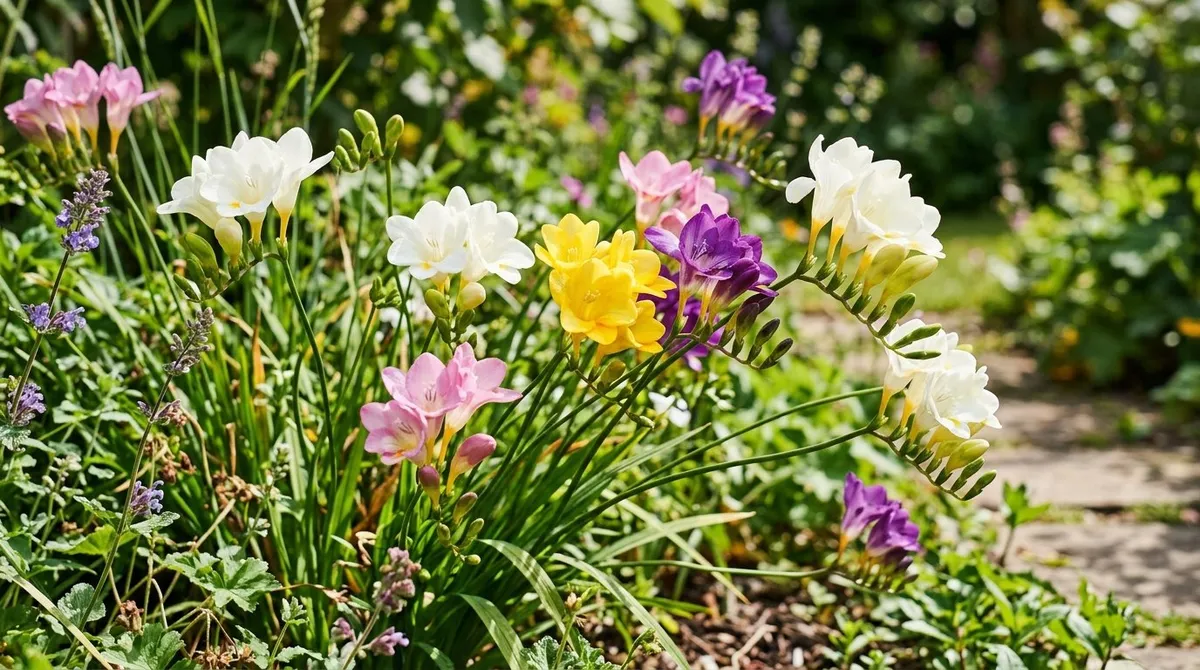
Freesias produce some of the most intensely fragrant flowers you can grow in a British garden. The scent is sweet, clean, and unmistakable. A single stem of freesias in a vase fills an entire room. They are half-hardy South African corms that thrive in UK conditions when grown in pots or under glass, flowering 10 to 12 weeks after planting.
This guide covers everything you need to grow freesias successfully in the UK, from planting corms in spring to forcing them for winter flowers in an unheated greenhouse.
Freesia corms planted 5cm deep in a terracotta pot with gritty, free-draining compost. Space corms 5cm apart for the best display.
When to plant freesia corms in the UK
Plant freesia corms from March to June for flowers from July to October. Starting indoors in March gives the earliest blooms. Outdoor planting from mid-April, once soil temperature reaches 10C, suits most UK regions. In northern England and Scotland, wait until May.
Succession planting every three weeks from March to June extends the flowering period significantly. A batch planted in March flowers in June. A batch planted in June flowers in August and September. This staggered approach provides cut flowers through the entire summer.
| Planting time | Method | Expected flowers |
|---|---|---|
| March | Pots indoors, sunny windowsill | June-July |
| April | Pots on patio or cold frame | July-August |
| May | Outdoors in borders or pots | August-September |
| June | Outdoors, last batch | September-October |
| September | Pots in cool greenhouse (forcing) | January-February |
How to plant freesia corms
In pots (recommended)
Pots give the best results in the UK because you control drainage and can move plants under cover. Use a 20cm terracotta pot and plant 7-9 corms per pot. Fill with a mix of two parts multipurpose compost to one part horticultural grit. This mimics the free-draining, sandy soils of their native South Africa.
Plant corms 5cm deep with the pointed end facing upward. Water once after planting and then sparingly until shoots appear in two to three weeks. Once growth is visible, water regularly but never let pots sit in saucers of water. Freesia roots rot quickly in waterlogged compost.
In garden borders
Freesias can grow in open ground in sheltered, south-facing positions with free-draining soil. Add a bucketful of grit per square metre to heavy clay before planting. Plant corms 5cm deep and 5cm apart in groups of 10-15 for visual impact.
In a greenhouse or conservatory
A cool greenhouse is the ideal growing environment for freesias. The controlled conditions produce the tallest stems, strongest fragrance, and longest vase life. Plant in large pots or directly into greenhouse border soil. Maintain temperatures between 12 and 18C. Ventilate well above 20C because excessive heat produces weak, floppy growth.
Greenhouse-grown freesias planted in March produce exhibition-quality stems by June. This is how commercial cut-flower growers produce the freesias sold in florists and supermarkets.
Best freesia varieties for UK growers
Double-flowered varieties (strongest fragrance)
Double freesias carry twice the petals of singles, and their fragrance is noticeably stronger. The extra petals hold more scent-producing oils. For cut flowers, doubles are the clear choice.
| Variety | Colour | Fragrance | Height |
|---|---|---|---|
| ’Oberon’ | Deep red | Very strong | 30-40cm |
| ’Ballerina’ | White | Very strong, sweet | 35-40cm |
| ’Royal Blue’ | Violet-blue | Strong | 30-35cm |
| ’Fantasy’ | Cream-yellow | Strong, honeyed | 35-40cm |
| ’Gold River’ | Golden yellow | Strong | 30-35cm |
Single-flowered varieties
Singles produce fewer petals per bloom but more flowers per stem, typically 8-12 buds. They are slightly hardier and their thinner petals dry faster after rain, reducing botrytis risk outdoors.
| Variety | Colour | Notes |
|---|---|---|
| ’Aladdin’ | Scarlet red | Vigorous, strong stems |
| ’Blue Heaven’ | Lavender blue | Excellent vase life |
| ’Snowdon’ | Pure white | Classic bridal flower |
| ’Golden Flame’ | Orange-gold | Eye-catching in borders |
| ’Athene’ | Pink | Soft colour, good multiplier |
Mixed collections
Buying a mixed collection of 50-100 corms is the most economical way to start. Mixed bags typically cost five to eight pounds for 50 corms. Expect a range of colours including white, yellow, pink, red, blue, purple, and bicolours. The surprise element is part of the pleasure.
Caring for freesias during the growing season
Watering
Water freesias regularly once shoots appear but never let the soil stay constantly wet. In pots, check daily during warm weather and water when the top 2cm of compost feels dry. In borders, water during dry spells only. Overwatering causes corm rot, the most common cause of failure.
Reduce watering gradually after flowering finishes and the foliage begins to yellow. Stop watering entirely once the leaves die back. The corms need a dry dormant period to prepare for the next season.
Feeding
Feed fortnightly with a high-potash liquid fertiliser (tomato feed) from when flower buds are visible until the last flowers fade. High-potash feeding promotes flowers rather than foliage. Avoid high-nitrogen feeds, which produce lush leaves but fewer blooms.
Staking
Freesia stems are naturally slender and need support. In pots, use a circular plant support ring or a grid of twiggy pea sticks pushed in around the edge of the pot. In borders, insert thin bamboo canes and tie stems loosely with soft string at 15cm intervals.
Greenhouse-grown freesias benefit from horizontal netting stretched at 20cm height. Stems grow through the mesh and are supported naturally. This is the method used by commercial growers.
Freesias as cut flowers
Freesias are one of the finest cut flowers you can grow in a British garden. Their fragrance alone justifies growing them. A single stem scents an entire room for a week.
Cut stems early in the morning when the first two buds on the spike have opened. Use a sharp, clean knife and cut at the base of the stem. Immediately place in water. Each spike carries 5-10 buds that open in sequence over 7-10 days, extending the display.
For the longest vase life, condition freesia stems by recutting at an angle and placing in tepid water with cut flower food. Change the water every two to three days. Remove individual florets as they fade to keep the arrangement looking fresh.
Freesias combine in mixed arrangements. They pair well with roses, sweet peas, and garden-grown flowers for informal, fragrant displays.
Mixed freesias cut from the garden and arranged in a simple glass vase. Each stem carries multiple buds that open over 7-10 days.
Forcing freesias for winter flowers
Plant corms in September for fragrant flowers in January and February. This is the most rewarding way to grow freesias in the UK. When little else is flowering, forced freesias bring colour and scent indoors during the darkest months.
Step-by-step forcing method
- September: Plant corms 5cm deep in pots of gritty compost. Water once and place in a cool greenhouse, cold frame, or unheated porch at 5-10C
- October-November: Roots establish in the cool conditions. Water sparingly. Shoots appear in 4-6 weeks
- December: Move pots to a bright position at 12-15C. A cool windowsill or heated greenhouse works well. Begin watering regularly
- January-February: Flowers open. Keep cool (below 18C) for the strongest stems and longest display
- After flowering: Continue watering until foliage yellows. Then dry off and store corms
The critical point is temperature. Forced freesias must stay cool. Above 18C, stems elongate rapidly, become weak, and flop over. A cool greenhouse heated to just 10-12C produces the sturdiest plants. An unheated conservatory in mild areas of southern England works well.
This technique mirrors forcing bulbs for indoor flowers. The same cool-then-warm approach triggers flowering. Freesias respond particularly well because they naturally flower in the cool South African winter.
Overwintering freesia corms
In mild areas (southern and western England)
In sheltered gardens where winter temperatures rarely drop below minus 5C, freesia corms can stay in the ground year-round. Apply a 10cm mulch of bark chips or straw in November to insulate the soil. Free-draining soil is essential. Corms in waterlogged clay will rot regardless of temperature.
In colder areas (Midlands and north)
Lift corms after the foliage dies back in autumn. Clean off soil, separate the new corm from the old shrivelled one beneath it, and dry them in a warm room (20-25C) for one week. Discard any soft, damaged, or diseased corms.
Store dried corms in paper bags or open trays at 25C for 12 weeks. This warm storage period is critical because it breaks dormancy and ensures the corms produce flowers when replanted. Without this heat treatment, freesias produce leaves but no blooms.
After the 12-week warm period, move corms to a cool, dry location (10-15C) until planting time in spring. This two-stage storage mimics the natural cycle of hot dry summers and cool winters in their native South Africa.
Corm multiplication
Each freesia corm produces one replacement corm and several small cormlets each season. The replacement corm flowers the following year. Cormlets need one to two years of growing on before they reach flowering size. Grow cormlets in pots of gritty compost, feeding and watering through the growing season, then lift and store with the main corms.
A bulb lasagne planting approach works well for combining freesias with other corms and bulbs in layers for an extended display.
Common problems with freesias
| Problem | Cause | Solution |
|---|---|---|
| No flowers, only leaves | Corms not heat-treated | Store at 25C for 12 weeks before planting |
| Floppy, weak stems | Temperature too high | Keep below 18C. Improve ventilation |
| Corm rot | Overwatering, poor drainage | Add grit. Water only when compost is dry |
| Yellow leaves (in season) | Overwatering or nutrient deficiency | Reduce water. Feed with tomato fertiliser |
| Grey mould (botrytis) | Damp, stagnant air | Improve ventilation. Space pots apart |
| Aphids on flower buds | Common in warm weather | Spray with organic insecticidal soap |
| Poor fragrance | Variety choice or heat stress | Choose double varieties. Keep cool |
Growing freesias alongside gladioli
Freesias and gladioli share similar growing requirements as half-hardy corms from southern Africa. Both need free-draining soil, full sun, and lifting in autumn in colder areas. Growing them together in the same cutting garden provides a succession of fragrant and dramatic cut flowers from July to October.
Plant freesia corms in March and April. Plant gladioli corms in April and May. The freesias flower first in July, followed by gladioli from late July through September. Both perform well in the same gritty compost mix. Stake gladioli but use finer supports for the more delicate freesia stems.
Frequently asked questions
When should I plant freesia corms in the UK?
Plant freesia corms from March to June in the UK. Start indoors in March for the earliest flowers. Plant outdoors from mid-April once soil temperatures reach 10C. Succession planting every three weeks from March to June extends the flowering season from July through to October.
Can freesias grow outdoors in the UK?
Yes, freesias grow outdoors in sheltered UK gardens. They tolerate temperatures down to minus 5C in free-draining soil. In mild areas of southern and western England, corms can stay in the ground over winter with a thick mulch. In the Midlands and further north, lift corms in autumn and store indoors.
How deep do I plant freesia corms?
Plant freesia corms 5cm deep with the pointed end facing upward. Space corms 5cm apart. In pots, plant 7-9 corms per 20cm container. Use free-draining compost with added grit. Deeper planting helps anchor the stems, which are naturally slender and prone to flopping.
Why are my freesias not flowering?
The most common cause is insufficient dormancy period. Freesia corms need 12 weeks of dry storage at 25C to break dormancy before planting. Corms planted without this warm treatment produce leaves but no flowers. Other causes include too much shade, overwatering, and nitrogen-heavy feeding.
How do I force freesias for winter flowers?
Plant corms in September in pots of gritty compost. Keep in a cool greenhouse or cold frame at 5-10C for 6 weeks to root. Then move to a bright position at 12-15C. Flowers appear in January or February. Do not apply heat above 18C or stems become weak and floppy.
Are freesias good cut flowers?
Freesias are outstanding cut flowers. Cut stems when the first two buds on the spike have opened. They last 7-10 days in clean water with flower food. The fragrance intensifies in a warm room. Each stem carries 5-10 buds that open in sequence, extending the display.
How do I store freesia corms over winter?
Lift corms after the foliage turns yellow and dies back. Clean off soil, remove the shrivelled old corm from beneath the new one, and dry them in a warm room for a week. Store in paper bags at 25C for 12 weeks to ensure dormancy is broken. Then move to a cool spot until planting time.
Our team produces practical UK gardening guidance from source research, contributor records and established horticultural practice. Editorial standards are overseen by Matt W.