Key takeaways
- Reticulata iris are the earliest spring bulbs, flowering from February at just 10-15cm tall — plant 8cm deep in autumn
- Dutch iris reach 50-60cm and produce the classic florist's cut flower — expect a 7-10 day vase life per stem
- latifolia) tolerate shade and damp soil, unlike Dutch and Reticulata types which demand drainage
- Plant all iris bulbs in September-November, pointed end up, in groups of 10-15 for visual impact
- Reticulata iris are ideal for forcing indoors — pot in October, cold-treat for 10 weeks, enjoy blooms from January
- Dutch iris bulbs are inexpensive (30-50p each) and make excellent cut flowers for just 3-4 months of ground time
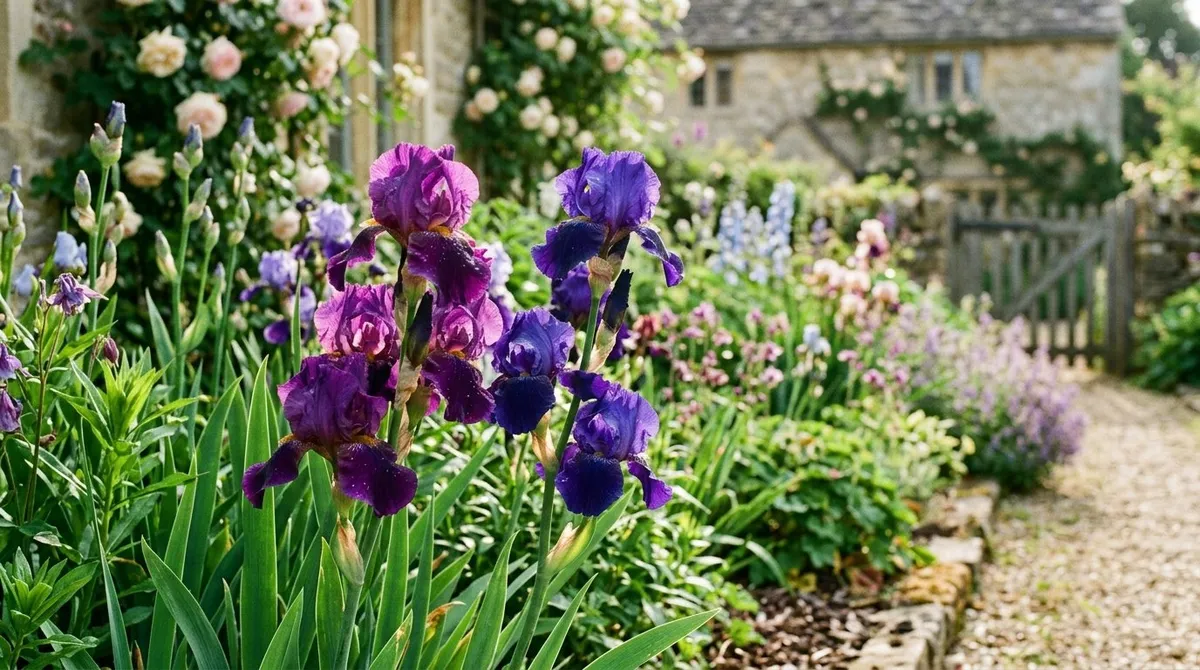
Iris bulbs are among the easiest spring-flowering bulbs to grow in UK gardens, producing jewel-like blooms from February right through to July depending on the type. They are entirely different plants from the tall bearded iris that grow from rhizomes. Bulbous iris are smaller, earlier, and demand different care, mainly sharp drainage and a distinct dry dormancy after flowering.
This guide covers the four groups of bulbous iris grown in UK gardens: Reticulata, Dutch, English, and Juno. For rhizomatous types including bearded and Siberian iris, see our separate iris growing guide. If you are planning a succession of spring bulbs, our spring bulb planting guide covers timing for every major type.
Reticulata iris bloom from February at just 10-15cm tall, making them well suited to pots, rockeries, and front-of-border planting.
What are the main types of iris bulbs?
Four distinct groups of bulbous iris grow successfully in UK gardens, each with different heights, flowering times, and soil preferences. Understanding which group you are growing is critical because their care requirements differ significantly.
When and how to plant iris bulbs
Plant all iris bulbs in autumn, from September to November, before the first hard frost. Reticulata iris benefit from early planting in September. Dutch and English iris can go in any time through November. The earlier you plant, the stronger the root system before winter.
Soil preparation: Reticulata and Dutch iris demand free-draining soil. On heavy clay, either plant in raised beds with added grit or grow in containers. English iris tolerate heavier, moister soil, they are the only bulbous iris that cope with typical UK clay without amendment.
Plant in groups of 10-15 for visual impact. Single bulbs are lost in a border. Drifts of the same variety create a stronger effect than mixed colours. For a layered display, combine iris bulbs with other spring types using the bulb lasagne technique.
Best iris bulb varieties by colour
Choosing varieties by colour helps you plan borders that peak at the right time with complementary tones. The colour range of bulbous iris runs from near-black purples through blues, whites, and clear yellows. Bicolours add another dimension.
Blues and purples
- ‘Harmony’ (Reticulata), Royal blue with yellow markings, 12cm, February. The most widely sold Reticulata and reliably perennial.
- ‘George’ (Reticulata), Rich red-purple with a white tongue, 12cm, February-March. Darker and more dramatic than ‘Harmony’.
- ‘Professor Blaauw’ (Dutch), Intense violet-blue, 55cm, May-June. The best deep blue Dutch iris for cut flowers.
- ‘Blue Magic’ (Dutch), Mid-blue with yellow signal, 50cm, May. Vigorous and prolific.
Whites and yellows
- ‘White Excelsior’ (Dutch), Pure white with a small yellow blotch, 55cm, May-June. Clean and elegant in the vase.
- ‘Katharine Hodgkin’ (Reticulata), Pale blue-grey with yellow and green markings, 12cm, February. Unusually vigorous; increases well.
- ‘Danfordiae’ (Reticulata), Bright yellow, 10cm, February. Often flowers once then splits into non-flowering bulblets. Plant deep (12cm) to discourage splitting.
- ‘Golden Harvest’ (Dutch), Deep yellow, 50cm, May. Strong-stemmed and reliable.
Bicolours
- ‘Eye of the Tiger’ (Dutch), Bronze-purple standards with yellow falls, 55cm, June. Unusual and striking.
- ‘Apollo’ (Dutch), Soft blue and white bicolour, 50cm, May-June. Gentle colour combination that works with anything.
Growing iris bulbs as cut flowers
Dutch iris are among the best bulbs for cutting, producing elegant stems with a 7-10 day vase life. They are cheap to buy in bulk, quick to flower (planted October, cut May), and prolific enough to give generous bunches without stripping the border.
Cut stems when the first bud shows colour but has not yet fully opened. Cut in early morning with sharp, clean secateurs. Strip lower leaves that would sit below the waterline. Place immediately in deep, cool water with flower food.
For a dedicated cutting row, plant Dutch iris bulbs 10cm apart in rows 30cm apart. This gives access for cutting without disturbing neighbouring plants. A 2m row of 20 bulbs produces enough stems for 4-5 generous vases.
Reticulata iris are too short for cutting (10-15cm) but make charming miniature arrangements in small vases and egg cups. Their intense colour compensates for the tiny scale.
For more cut flower options, see our cut flower growing guide and our advice on conditioning stems for longer vase life.
Dutch iris make outstanding cut flowers, cheap, prolific, and long-lasting in the vase at 7-10 days per stem.
How to force iris bulbs indoors
Reticulata iris force easily and reliably for indoor winter blooms from January onwards. They need less cold treatment than most spring bulbs and produce compact, fragrant flowers that do not flop in a warm room.
Pot bulbs in early October. Use shallow terracotta pans or bulb bowls with drainage holes. Fill with a 50:50 mix of multipurpose compost and perlite. Set bulbs 2-3cm apart, just covered with compost. Water lightly.
Place pots in a cold, dark location, an unheated garage, cold frame, or north-facing shed. The temperature must stay between 5-9C for 10-12 weeks. Check monthly and water sparingly if the compost dries out completely.
After 10-12 weeks (early January), move pots to a cool, bright windowsill (10-15C). Avoid placing directly above a radiator. Shoots should already be emerging. Expect flowers within 3-4 weeks in a cool room, faster in warmth.
After flowering, continue watering until foliage yellows naturally. Then dry off and store bulbs for replanting outdoors in September. Forced bulbs rarely perform well a second time indoors but often recover and flower outdoors after a year’s rest. For more techniques, see our bulb forcing guide.
Naturalising iris bulbs in the garden
English iris are the best choice for naturalising in UK conditions because they tolerate the heavier, moister soils typical of British gardens. Dutch and Reticulata iris naturalise only in well-drained, sunny spots that stay dry in summer.
English iris spread slowly by offsets and seed in damp borders, light woodland edges, and north-facing beds. They tolerate partial shade and clay soil. Plant in drifts of 20-30 bulbs for a natural look. Leave foliage to die back naturally after flowering, this feeds the bulb for next year’s flowers.
Reticulata iris naturalise well at the base of south-facing walls, in rockeries, in raised beds, and in gravel gardens. The key is summer dryness. ‘Katharine Hodgkin’ is the most vigorous naturaliser, increasing steadily year on year. ‘Harmony’ is also reliable. ‘Danfordiae’ tends to split into non-flowering bulblets after the first year unless planted extra deep (12cm).
Dutch iris naturalise best in sandy or chalky soils. In clay, they often decline after 2-3 years as the bulbs rot during wet winters. Treat them as affordable, short-lived perennials in heavy soil, replant fresh bulbs every 2-3 years at 30-50p each.
Reticulata iris are some of the first flowers of the year, appearing alongside snowdrops and winter aconites. See our guide to early spring flowers for more options to extend the season.
Iris bulbs in pots and containers
Container growing is the most reliable method for Reticulata and Dutch iris in areas with heavy clay soil. You control the drainage completely, and pots can be moved into view when in flower then hidden away while foliage ripens.
For Reticulata iris, use shallow terracotta pans (15-20cm diameter, 10-12cm deep). Plant 7-9 bulbs per pan, 2-3cm apart, covered with 5cm of gritty compost. These dense plantings create a miniature carpet of colour. Stand pots on feet to ensure free drainage.
For Dutch iris, use deeper pots (at least 20cm). Plant 5-7 bulbs per 25cm pot, 10cm deep, in John Innes No. 2 mixed with 25% perlite. Stake with twiggy sticks if stems lean in windy positions.
After flowering, keep watering until foliage yellows naturally (usually by July). Then stop watering and store pots on their sides in a dry, sheltered spot. The dry summer dormancy is essential, this mimics the Mediterranean conditions these bulbs experience in the wild.
Repot every 2-3 years in September, separating any offsets and refreshing the compost. Discard soft or damaged bulbs.
English iris tolerate shade and damp soil, naturalising in conditions where Dutch and Reticulata iris would rot.
Common problems with iris bulbs
Bulb rot from waterlogged soil is the primary killer of iris bulbs in UK gardens. Good drainage prevents the majority of failures. Beyond rot, a few other issues can affect performance.
Ink spot disease: Dark patches appear on leaves and bulbs, caused by the fungus Drechslera iridis. Most common in Reticulata iris. Remove and destroy affected bulbs, do not compost them. Avoid replanting iris in the same spot for 3 years.
Blind bulbs (foliage only, no flowers): Usually caused by planting too shallow, too much shade, or over-fertile soil. Also occurs when bulbs are lifted too early before foliage has died back naturally. Feed with high-potash fertiliser (tomato food) after flowering, not nitrogen.
Slugs and snails: These pests target emerging shoots in late winter and early spring. Protect Reticulata iris with a ring of grit or copper tape around pots. Nematode biological controls applied in autumn help in borders.
Virus (iris mosaic): Shows as yellow streaking or mottling on foliage. Spread by aphids. There is no cure, remove and destroy infected plants. Buy bulbs from reputable suppliers to minimise risk.
Iris bulbs month-by-month calendar
A simple month-by-month guide ensures you never miss a key task. Bulbous iris need attention mainly at planting time and after flowering. Mid-year is hands-off.
| Month | Task |
|---|---|
| September | Plant Reticulata iris. Pot bulbs for forcing. |
| October | Plant Dutch and English iris. Start cold treatment for forced bulbs. |
| November | Last chance to plant. Mulch pots with grit. |
| December-January | Monitor forced bulbs. Check drainage on outdoor plantings. |
| February-March | Reticulata iris flower. Move forced pots to bright windowsill. |
| April-May | Dutch iris emerge. Feed with high-potash fertiliser as buds form. |
| May-June | Dutch iris flower. Cut for vases. English iris buds form. |
| June-July | English iris flower. Allow all foliage to die back naturally. |
| August | Dry dormancy. Leave bulbs undisturbed. Lift congested clumps if needed. |
Frequently asked questions
When should I plant iris bulbs in the UK?
Plant iris bulbs from September to November. Reticulata types go in first in September for February flowers. Dutch and English iris can be planted through November. Plant before the first hard frost so roots establish before cold weather arrives. Earlier planting gives stronger spring performance.
How deep do you plant iris bulbs?
Plant iris bulbs 8-10cm deep from the base of the bulb. Space Reticulata iris 5-7cm apart and Dutch iris 10cm apart. On heavy clay, plant on a 2cm layer of sharp grit to stop water pooling around the base. Always plant pointed end facing upwards.
Can you force iris bulbs indoors?
Reticulata iris force well for indoor winter flowers. Pot in October, keep at 5-9C for 10-12 weeks, then move to a cool bright windowsill. Expect blooms within 3-4 weeks. Dutch iris can also be forced but need 13-15 weeks of cold and produce taller stems that may need support indoors.
What is the difference between bulbous and rhizomatous iris?
Bulbous iris grow from true bulbs and include Dutch, Reticulata, and English types. Rhizomatous iris grow from thick horizontal stems and include bearded, Siberian, and Japanese types. Bulbous iris are generally smaller, bloom earlier, and need sharper drainage. Our iris growing guide covers the rhizomatous types in detail.
Do iris bulbs come back every year?
Reticulata iris reliably perennialise for 5-10 years in well-drained soil. Dutch iris are less permanent, often declining after 2-3 years in heavy ground but persisting longer in sandy or chalky soil. English iris are the most persistent, naturalising in damp borders and light woodland edges.
Why have my iris bulbs stopped flowering?
Iris bulbs stop flowering when planted too shallow, in too much shade, or in waterlogged ground. Congested clumps also decline. Feed with high-potash fertiliser (tomato food) after flowering and ensure sharp drainage. If bulbs have been in the same spot 4-5 years, lift and separate in late summer.
Can I grow iris bulbs in pots?
Iris bulbs thrive in containers with gritty, well-drained compost. Reticulata iris suit shallow pans planted densely (2-3cm apart). Dutch iris need deeper pots (20cm minimum). Keep pots outdoors over winter for natural cold treatment. After foliage dies back, store pots dry on their sides until replanting in September.
Our team produces practical UK gardening guidance from source research, contributor records and established horticultural practice. Editorial standards are overseen by Matt W.