Key takeaways
- Mangetout are flat pods picked young; sugar snaps are plump pods eaten whole at maturity
- Sow direct outdoors from March to June, with succession sowings every 3-4 weeks
- Support all varieties with pea sticks, netting, or wigwams from the moment tendrils appear
- Oregon Sugar Pod is the most reliable mangetout at 1 metre, Sugar Ann the best dwarf sugar snap at 60cm
- Pick every 2 days once pods form or plants stop producing new flowers
- Avoid pea moth by sowing before mid-March or after mid-May to miss June egg-laying
There is no better sound in a kitchen garden than the snap of a fresh sugar snap pea straight from the vine. And no vegetable loses more flavour between field and supermarket shelf. Shop-bought mangetout and sugar snaps are limp, tasteless shadows of the real thing. Grow your own and you will understand why gardeners who try them once never stop.
Mangetout and sugar snap peas are edible-pod varieties of the common garden pea (Pisum sativum). You eat the entire pod, not just the peas inside. This means less shelling, less waste, and far more eating per plant than traditional garden peas. Which?’s named choices sit alongside shelling crops in our pea variety comparison.
What is the difference between mangetout and sugar snap peas?
This is the question everyone asks first, and the answer is simple once you know it.
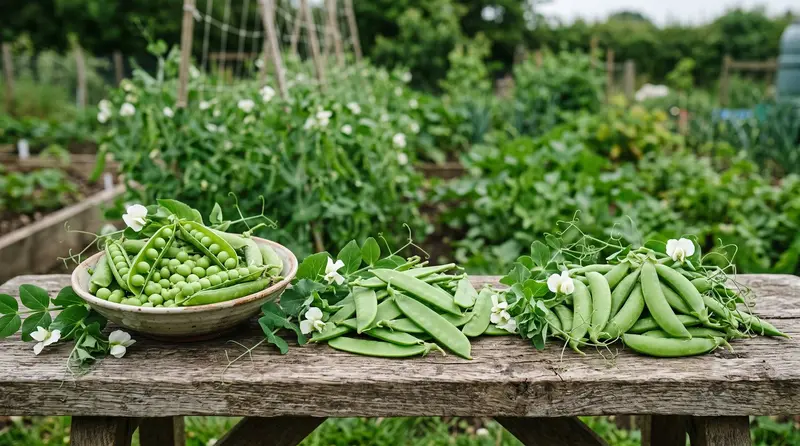
Mangetout (French for “eat all”) are flat-podded peas picked before the peas inside develop. The pods are thin, crisp, and delicate. They snap cleanly and have a mild, sweet flavour. In supermarkets, they are sometimes labelled snow peas. Pick them young when the pod is flat and translucent. If you leave them too long and the peas swell, the pod becomes tough and stringy.
Sugar snap peas are plump, rounded pods eaten whole when the peas inside are fully formed. The pod wall is thick and sweet. You get the crunch of a mangetout pod combined with the sweetness of a fresh garden pea. They are the more filling of the two and the one children tend to prefer. Pick when the pods are fat, round, and tightly packed.
Both types climb. Both need supports. Both grow in the same soil and weather. The only meaningful difference is the harvest stage: flat and young for mangetout, plump and mature for sugar snaps. Many gardeners grow both side by side for variety.
Best mangetout and sugar snap varieties for UK gardens
Six varieties cover every situation, from small containers to full-sized allotment rows. Here is how they compare.
Oregon Sugar Pod is the standard mangetout for UK gardens. Grows to 1 metre. Produces heavy crops of wide, flat, bright green pods. Reliable and widely available. Tolerates cool conditions well and produces over a long period. The best all-round choice for beginners.
Shiraz is a striking purple mangetout. Pods are deep violet and turn green when cooked. Grows to 1.5 metres and needs tall supports. The colour makes them easy to spot among the foliage at harvest time. Flavour is identical to green mangetout. A novelty that earns its place on taste as well as looks.
Carouby de Maussane is a French heirloom mangetout with very large, broad pods up to 12cm long. Grows to 1.5 metres. The biggest-podded variety available. Impressive in the kitchen but needs picking promptly before pods toughen.
Sugar Ann is the best dwarf sugar snap at just 60cm tall. Needs minimal support. Pods are sweet, crunchy, and stringless. Ideal for containers, small gardens, and raised beds. Matures in 10-12 weeks. The easiest sugar snap for beginners.
Delikett is widely rated as the sweetest sugar snap pea available in the UK. Grows to 1.5 metres on vigorous vines. Thick-walled, stringless pods with an intensely sweet flavour when eaten raw. Needs tall netting or cane supports. The gourmet choice.
Sugar Bon sits between Sugar Ann and Delikett. Semi-dwarf at 75cm. Good sweetness. Moderate support needs. A reliable middle option for gardeners who want sugar snaps without building tall structures.
| Variety | Type | Height | Pod Size | Sweetness | Support Needs |
|---|---|---|---|---|---|
| Oregon Sugar Pod | Mangetout | 1m | Medium, flat | Mild | Short sticks or net |
| Shiraz | Mangetout | 1.5m | Medium, purple | Mild | Tall net or canes |
| Carouby de Maussane | Mangetout | 1.5m | Very large, flat | Mild | Tall net or canes |
| Sugar Ann | Sugar snap | 60cm | Small, round | Sweet | Short sticks |
| Delikett | Sugar snap | 1.5m | Medium, round | Very sweet | Tall net or canes |
| Sugar Bon | Sugar snap | 75cm | Medium, round | Sweet | Medium sticks |
When to sow mangetout and sugar snap peas
The sowing window runs from March to June, with the best results from two or three successional sowings rather than one big batch.
Early March sowings under cloches or fleece get plants off to a fast start in mild areas. Soil temperature needs to reach 10C for reliable germination. Peas tolerate cold better than most vegetables and seedlings shrug off light frost. Early sowings produce the first pods in June.
April is the prime sowing month across most of the UK. The soil is warming, days are lengthening, and conditions are ideal for rapid germination and growth. This sowing produces the heaviest crop.
Late May to mid-June sowings extend the harvest into September. Use quick-maturing varieties like Sugar Ann. Late sowings miss the pea moth egg-laying window in June, which means cleaner pods without the need for netting.
Sow direct where plants are to grow. Peas dislike root disturbance and transplant poorly. Draw a flat-bottomed drill 4-5cm deep and 15cm wide. Space seeds 5-7cm apart in two staggered rows within the drill. Cover with soil and water well. Seeds germinate in 7-14 days depending on temperature.
How to support mangetout and sugar snap peas
Every variety needs support. Even the shortest dwarf types flop without something to grip. Install supports at sowing time, not after plants start sprawling.
Hazel twigs and pea sticks are the traditional method and still the best. Push branching twigs firmly into the soil along both sides of the row. The mass of thin branches gives tendrils hundreds of grip points. Pea sticks are reusable for 2-3 seasons if stored dry over winter.
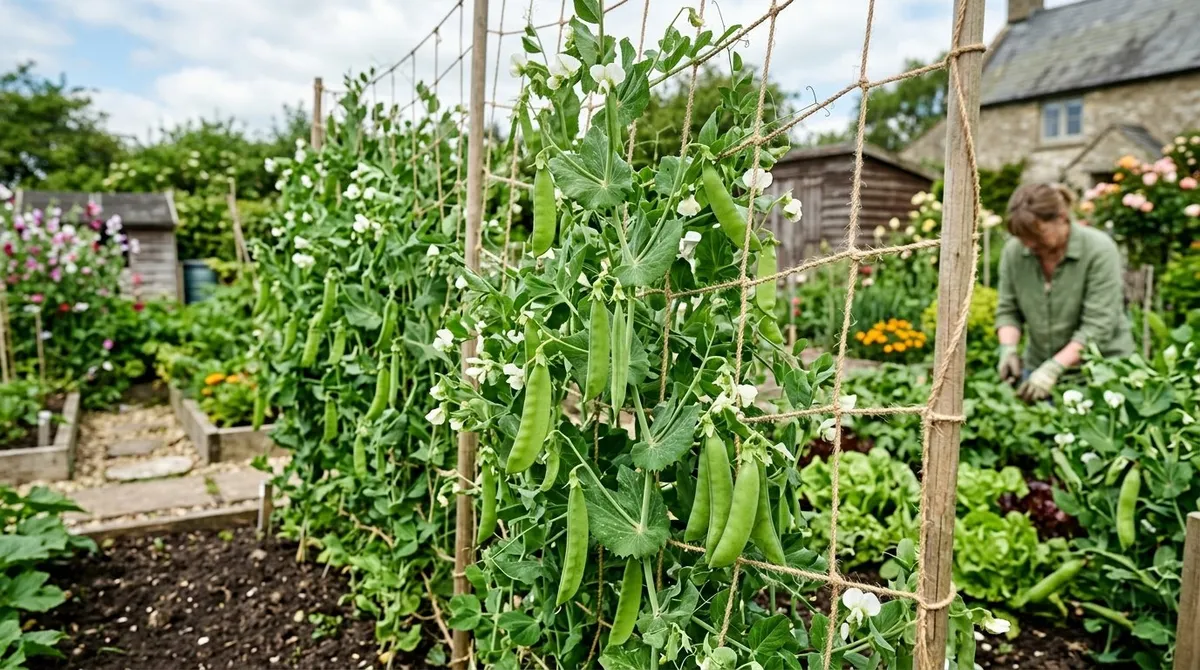
Netting stretched between posts works for tall varieties. Use pea and bean netting with 10cm mesh. Fix at 1.5-2 metres high for Shiraz and Delikett. Ensure the bottom edge reaches the soil so young plants find it immediately.
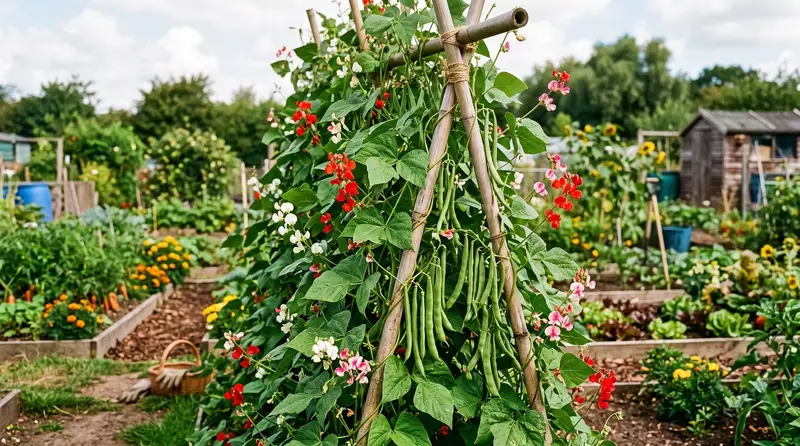
Wigwams of bamboo canes work for sugar snaps in a circular planting. Push 6-8 canes in a circle and tie at the top. Sow 2-3 seeds at the base of each cane. This saves space and looks attractive in ornamental kitchen gardens.
Wire mesh panels fixed to walls or fences suit small gardens where space is tight. Peas grown against a south-facing wall benefit from extra warmth and produce earlier crops.
Growing mangetout and sugar snap peas through the season
Once sown and supported, mangetout and sugar snaps need only basic care.
Watering
Water well at sowing time and keep soil moist until germination. Once plants establish, they need watering mainly during flowering and pod development. Drought at flowering causes poor pod set and reduces yields. A thorough soaking twice a week in dry weather is better than daily sprinkling. Mulching around the base of plants conserves moisture and keeps roots cool.
Feeding
Peas fix their own nitrogen, so they need no nitrogen fertiliser. The bacteria in their root nodules convert atmospheric nitrogen into plant-available form. A single application of potassium-rich tomato feed when flowering begins can increase pod numbers but is not essential.
Weeding
Keep the base of plants weed-free. Young pea plants compete poorly with weeds. Hand-weed carefully to avoid disturbing shallow roots. Once the pea canopy closes over, weed growth slows dramatically.
How to avoid pea moth damage
Pea moth (Cydia nigricana) is the most frustrating pest for pea growers. The adult moth lays eggs on flowering plants during June and July. The larvae burrow into developing pods and feed on the peas inside, leaving behind small maggots and frass.
The timing trick is the single most effective control. Sow before mid-March so that plants finish flowering before the moth becomes active in June. Or sow after mid-May so that flowering does not begin until July, when moth activity is declining. Either window avoids the peak egg-laying period. The RHS confirms that sowing date management is the most reliable non-chemical control.
If your sowing coincides with June flowering, cover plants with fine mesh netting (Enviromesh) during the flowering period. This stops adult moths reaching the plants. Remove the netting once flowering finishes.
Mangetout are less affected than sugar snaps and shelling peas because you harvest the pods before the larvae have time to develop inside. Sugar snaps, picked at a later stage, are more vulnerable. Our guide to growing peas covers pea moth in more detail.
How to harvest for the longest cropping season
The frequency of picking determines total yield more than any other factor. This is the single rule that separates productive plants from disappointing ones.
Pick mangetout when pods are flat and translucent. You should be able to see the faint outline of tiny, undeveloped peas through the pod wall. Pods at this stage are 6-8cm long, thin, and snap crisply. If you can see or feel swelling peas inside, you have left them too long. Overgrown mangetout are tough and stringy.
Pick sugar snaps when pods are plump, round, and tightly packed. The pod should feel firm when squeezed gently. A good sugar snap pod snaps cleanly and is sweet enough to eat raw standing in the garden. If the pod has started to fade to a lighter green and the surface looks bumpy, the peas inside are past their best.
Pick every 2 days. This is not optional. Leaving mature pods on the plant signals that seed production is complete and the plant stops producing flowers. Regular picking extends the harvest from 4 weeks to 6-8 weeks. Use both hands when harvesting: hold the stem with one hand and snap the pod free with the other. Pulling carelessly damages the vine and breaks off future flower buds.
Fresh pods keep for 3-4 days in the fridge but are best eaten within hours. They freeze well: blanch for 1 minute, plunge into iced water, drain, and freeze flat on a tray before bagging. Sugar snaps freeze better than mangetout because their thicker pod walls retain more crunch after thawing.
What to do with pea plants after harvest
When plants stop producing, cut the stems at ground level but leave the roots in the soil. The nitrogen-fixing nodules on pea roots release their stored nitrogen as they decompose, feeding whatever crop follows. This makes peas an excellent predecessor for nitrogen-hungry crops like brassicas, lettuce, and sweetcorn.
Add the cut stems to the compost heap. Pea foliage is soft and nitrogen-rich. It breaks down quickly and makes excellent compost material when mixed with brown, carbon-rich waste like cardboard and dry leaves.
If space allows, sow a follow-on crop of quick-growing salad leaves, spring onions, or radishes in the same bed. The leftover nitrogen in the soil gives these follow-on crops a boost without additional feeding.
Frequently asked questions
What is the difference between mangetout and sugar snap peas?
Mangetout are flat pods picked before the peas inside develop. Sugar snap peas are plump, rounded pods eaten whole when the peas inside are fully formed. Mangetout have a delicate crunch and mild sweetness. Sugar snaps are sweeter and more filling, with a satisfying pop when you bite through the pod. Both belong to the same species, Pisum sativum.
When should I sow mangetout and sugar snap peas?
Sow outdoors from March to June when soil temperature reaches 10C. Early March sowings under cloches in mild areas produce the first pods in June. Succession sow every 3-4 weeks for harvests right through to September. Late June sowings are the last safe window before shortening days reduce flower production.
Do mangetout and sugar snaps need support?
Yes, all varieties need some form of support. Dwarf types like Sugar Ann (60cm) need short pea sticks or a low net. Taller varieties like Shiraz (1.5m) and Delikett (1.5m) need full-height netting or bamboo structures. Install supports at sowing time so tendrils grip immediately as plants grow.
How often should I pick mangetout pods?
Pick every 2 days once pods start forming. Leaving mature pods on the plant signals the end of flowering and halts production. Regular picking extends the harvest period from 4 weeks to 6-8 weeks. Use both hands: one to hold the stem, one to snap off the pod. Pulling carelessly damages the vine.
Why are there maggots inside my sugar snap pea pods?
The maggots are pea moth larvae (Cydia nigricana). The adult moth lays eggs on flowering pea plants in June and July. Avoid damage by sowing before mid-March or after mid-May so flowering does not overlap with the moth’s egg-laying period. Fine mesh netting over plants during June also helps.
Can I grow mangetout in containers?
Yes, dwarf varieties grow well in large containers. Sugar Ann (60cm) and Oregon Sugar Pod (1m) both produce in pots at least 30cm deep and 40cm wide. Fill with multipurpose compost, sow 5cm apart and 4cm deep, and provide support. Water regularly because containers dry out faster than open ground.
What is the sweetest sugar snap pea variety?
Delikett is widely rated as the sweetest sugar snap pea for UK gardens. The pods are thick-walled, stringless, and intensely sweet when eaten raw straight from the plant. It grows to 1.5m and needs tall supports. Sugar Ann is nearly as sweet but at just 60cm tall, it suits smaller spaces and containers.
Our team produces practical UK gardening guidance from source research, contributor records and established horticultural practice. Editorial standards are overseen by Matt W.