Key takeaways
- Harvest baby mustard leaves just 21 days after sowing, or full-size leaves in 45 days
- Sow every 2-3 weeks from March to September for continuous pickings
- Red Giant has deep purple leaves with an intense wasabi-like heat
- Green in Snow survives to minus 10C and extends the harvest into winter
- Fine mesh netting is essential from sowing day to prevent flea beetle damage
- Microgreens from mustard seed are ready in just 7-10 days on a kitchen windowsill
Mustard greens are the impatient gardener’s best friend. Sow a pinch of seed today and you will be cutting spicy baby leaves in three weeks. No other salad crop matches that speed. No other brassica comes close. While your cabbages are still in the seedling stage, mustard greens are already on the plate.
Brassica juncea has been cultivated across Asia for thousands of years and grows with the same vigour in a British raised bed as it does in a Chinese market garden. The leaves bring genuine heat to salads and stir-fries. Not a polite peppery warmth like rocket, but a proper wasabi-like punch that clears the sinuses and makes you pay attention. If your salads have become boring, mustard greens fix that problem in three weeks flat.
Which mustard green varieties grow best in the UK?
Five varieties cover every use, from mild baby leaves to fiery winter greens. Each has a distinct character worth knowing before you sow.
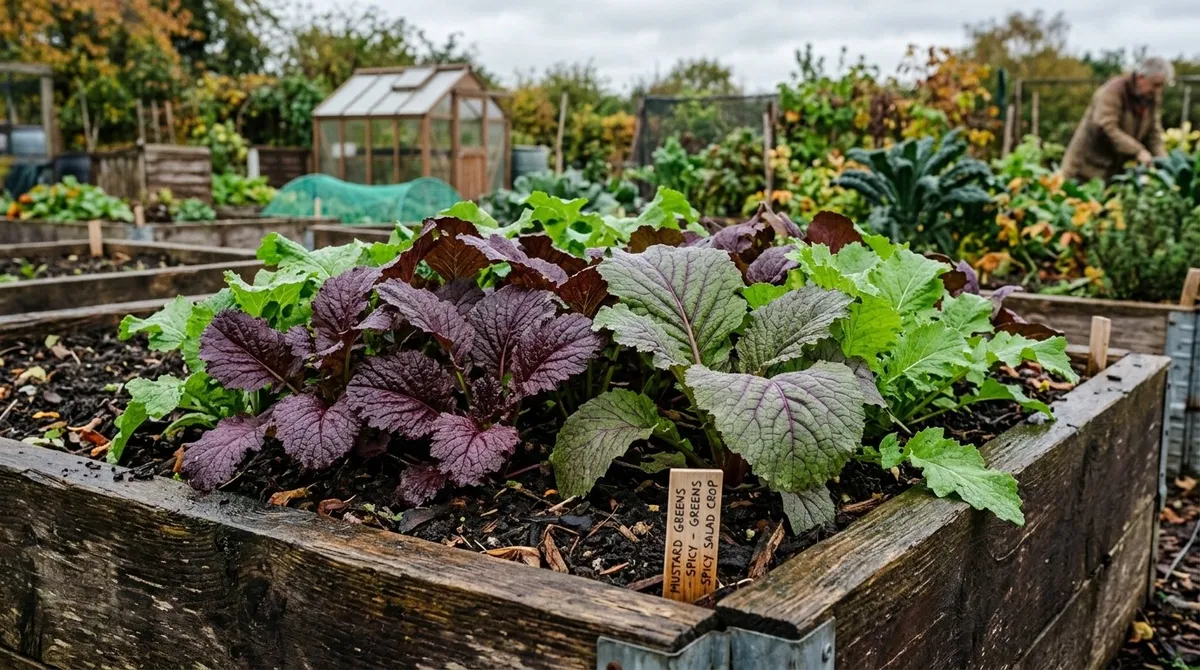
Red Giant is the variety most UK gardeners grow first. Large, broad leaves flushed deep purple-red with green veins. Strong mustard heat that intensifies with age. Grows to 30-40cm tall in 40-50 days. Striking in the garden and on the plate. Bolts readily in summer heat.
Green in Snow (Xue Li Hong) is the cold-weather champion. Narrow, serrated, bright green leaves with a moderate heat. Survives to minus 10C and crops through winter when sown in August or September. The name is accurate. Originally from northern China, this variety shrugs off British winters.
Golden Streaks (also sold as Golden Frills) has finely cut, frilly leaves that look like a feathery green lace. Mild heat at the baby leaf stage, stronger when mature. Slower to bolt than Red Giant. Excellent as a decorative salad garnish. The most visually distinctive variety.
Osaka Purple produces broad, rounded leaves with intense purple colouring on the undersides. Milder than Red Giant with a more rounded, less sharp heat. Popular for baby leaf salads. Grows well in containers and window boxes.
Pizzo is a newer variety bred specifically for baby leaf production. Fine, deeply cut leaves with a mild, pleasant mustard bite. Fast growing and slow to bolt. The best choice for microgreens and cut-and-come-again baby leaves.
| Variety | Leaf Shape | Heat Level | Days to Baby Leaf | Bolt Resistance | Best Use |
|---|---|---|---|---|---|
| Red Giant | Broad, purple | Hot | 21 | Low | Stir-fry, salad |
| Green in Snow | Narrow, serrated | Medium | 25 | High | Winter cropping |
| Golden Streaks | Frilly, fine-cut | Mild-medium | 21 | Medium | Salad garnish |
| Osaka Purple | Broad, rounded | Medium | 21 | Medium | Baby leaf salad |
| Pizzo | Deeply cut | Mild | 18 | High | Microgreens, baby leaf |
When to sow mustard greens for the longest season
Mustard greens grow from March to November in the UK with succession sowing and the right variety choices.
March to May is the prime spring window. Sow every 2-3 weeks for continuous baby leaf harvests. Soil temperatures above 8C give reliable germination in 4-7 days. Early sowings under cloches or fleece from late February extend the season forward by a month.
June to August is tricky because heat triggers bolting. Sow in partial shade and choose bolt-resistant varieties like Golden Streaks or Pizzo. Water daily during dry spells. Treat summer sowings as a microgreens or baby leaf crop only. Harvest at 10-15cm tall before flower buds form.
September sowings of Green in Snow provide winter leaves from November onwards. Sow directly into beds vacated by summer crops. The plants establish before cold weather slows growth and produce pickable leaves through even the hardest frosts. This is the sowing that makes mustard greens a year-round crop.
How to sow and grow mustard greens
Mustard greens are among the simplest crops to grow. The seeds are small, round, and germinate within a week in any reasonable soil.
Direct sowing
Sow seed 1cm deep in rows 20cm apart, or broadcast scatter across a patch and rake in lightly. Thin seedlings to 5cm apart for baby leaf production or 15cm for full-size plants. Mustard germinates at soil temperatures as low as 5C but grows fastest between 10-20C. Water the drill before sowing in dry weather and keep the surface moist until seedlings emerge.
Soil and position
Any garden soil works. Mustard greens are not fussy about fertility, drainage, or pH. They grow in clay, sand, and everything between. Full sun gives the fastest growth in spring and autumn. Partial shade is better in summer to slow bolting. A raised bed with good drainage suits them well, but an open plot is equally fine.
Watering and feeding
Water regularly during dry weather. Drought-stressed plants bolt rapidly and attract heavier flea beetle attacks. A fortnightly liquid feed with diluted seaweed solution pushes faster growth but is not essential for baby leaf crops. Full-size plants benefit from one application of general-purpose fertiliser at the 3-week mark.
How to deal with flea beetle on mustard greens
Flea beetle is the single biggest problem with mustard greens and all brassica crops grown as salad leaves. The tiny beetles chew small round holes through leaves, making them look shot-blasted and unappetising.
Prevention is everything. Cover crops with fine mesh netting from the day you sow. Enviromesh or similar material with holes under 1mm stops adult beetles landing on leaves. Bury or weight the mesh edges because beetles crawl as well as fly. Do not wait until you see damage. By then, the beetles are already established and difficult to remove.
Water consistently. Flea beetles favour dry, stressed plants. Well-watered mustard greens growing in moist soil suffer far less damage than dry, neglected plants. Companion planting with lettuce between rows may help because the non-brassica scent confuses the beetles. The RHS provides useful identification guidance for all flea beetle species found in UK gardens.
If beetles do get through, tolerate light damage on full-size plants. The leaves grow fast enough to outpace moderate nibbling. Baby leaf crops are more vulnerable because the holes represent a larger proportion of each tiny leaf. Sticky yellow traps catch adult beetles but do not eliminate them entirely.
Growing mustard greens as microgreens
Mustard is one of the most popular microgreen crops worldwide, and with good reason. The seeds are cheap, germinate in 2-3 days, and produce vivid, flavourful shoots in 7-10 days.
Scatter seed thickly across a shallow tray of moist compost or kitchen paper. Press gently into the surface but do not cover. Place on a warm windowsill in bright light. Mist with water daily. Cut with scissors when the first true leaves appear, typically at 3-5cm tall.
Mustard microgreens have a clean, sharp heat that works brilliantly in sandwiches, wraps, and as a garnish for soups. They contain higher concentrations of nutrients per gram than mature leaves. A single seed tray produces enough microgreens for a week of meals. Resow every 5-7 days for a continuous indoor supply regardless of the season outside.
Cooking with mustard greens
Baby mustard leaves are superb raw in salads. Mix them with milder leaves like butterhead lettuce to balance the heat. The purple-red colour of Red Giant makes any salad bowl look striking.
Mature leaves are better cooked. The heat softens with cooking and the flavour mellows into something savoury and rich. Stir-fry with garlic, ginger, and soy sauce for 2-3 minutes. The leaves wilt down rapidly. Add to ramen, soups, and curries in the last minute of cooking. The pak choi and Asian greens family shares this versatility in the kitchen. Saute with bacon and onions as a British take on American Southern-style greens.
Mustard greens are a traditional companion to pork in Chinese and Korean cooking. Pickle them with rice vinegar, sugar, and chilli for a condiment that keeps for weeks in the fridge. Or wilt into pasta with olive oil, garlic, and parmesan for a fast weeknight supper.
Companion planting with mustard greens
Mustard greens make useful companions for slower-growing crops in the vegetable garden. Their speed means they fill gaps and cover bare soil before weeds can establish.
Sow mustard between rows of slower brassicas like broccoli or Brussels sprouts. The mustard grows, gets harvested, and is gone before the slower crops need the space. This intercropping technique maximises yield from small beds and follows succession planting principles.
Mustard also works as a fast green manure. Sow thickly on bare soil in autumn, let it grow for 4-6 weeks, then dig the plants into the soil before they flower. The leafy material adds organic matter and the brassica roots may help suppress some soil-borne diseases. This is a traditional practice in regenerative gardening systems. Garden Organic has further guidance on using green manures to improve soil health.
Frequently asked questions
When should I sow mustard greens in the UK?
Sow mustard greens outdoors from March to September. Start indoors on a windowsill from February for the earliest pickings. Succession sow every 2-3 weeks for continuous harvests. Avoid sowing in the hottest weeks of July unless you can provide shade, as heat triggers rapid bolting. Green in Snow can be sown in September for winter harvests.
How fast do mustard greens grow?
Baby mustard leaves are ready to pick just 21 days after sowing. Full-size leaves take 40-50 days. As microgreens on a windowsill, mustard is ready in 7-10 days. This speed makes mustard greens the fastest brassica crop available to UK gardeners, outpacing even rocket.
Do mustard greens survive frost?
Green in Snow is the hardiest variety, surviving to minus 10C. Red Giant and Golden Streaks tolerate light frost to around minus 4C but suffer in prolonged cold. For reliable winter cropping, choose Green in Snow and sow in August or September. A cloche improves leaf quality but is not essential for survival.
Why do my mustard greens bolt so quickly?
Heat, drought, and long days all trigger bolting in mustard greens. Temperatures above 25C and dry soil are the biggest causes. Grow in partial shade from June onwards. Water consistently. Pick leaves frequently to slow flower production. Green in Snow and Golden Streaks bolt more slowly than Red Giant in summer.
Can I eat mustard greens raw?
Yes, baby mustard leaves are excellent in salads. The heat is milder at the baby leaf stage and adds a pleasant peppery kick to mixed salads. Larger, mature leaves are better cooked. Stir-fry for 2-3 minutes with garlic and soy sauce, or wilt into soups and curries. Cooking reduces the heat significantly.
How do I stop flea beetles on mustard greens?
Cover plants with fine mesh netting from sowing day. Enviromesh or similar netting with holes under 1mm stops adult beetles reaching the leaves. Bury or weight mesh edges to prevent beetles crawling underneath. Water regularly, as stressed plants attract heavier attacks. Avoid growing near other brassicas which also draw flea beetles.
What is the best mustard green variety for beginners?
Red Giant is the best starting variety for UK beginners. It grows fast, has a dramatic purple colour, and adds genuine flavour to salads and stir-fries. The visual impact keeps you motivated, and the speed of growth gives results before enthusiasm fades. Sow a short row every three weeks from April.
Our team produces practical UK gardening guidance from source research, contributor records and established horticultural practice. Editorial standards are overseen by Matt W.