Key takeaways
- Lemongrass is hardy only above 10-13C; UK growing is indoor or conservatory
- Start from supermarket stems with intact root base; cuttings root in water in 2-3 weeks
- Grow in 30-40cm pots in peat-free compost with grit for drainage
- Bring indoors September to May; can grow on a sunny windowsill in winter
- Divide established clumps every 2-3 years to maintain vigour
- Mature plants yield 30-60 harvestable stems per year per pot
Lemongrass is the most rewarding tropical herb a UK home grower can attempt. The plant looks dramatic, smells incredible when brushed, and supplies a kitchen with stems for Thai green curry, Vietnamese pho, Indian dal, and lemongrass tea year-round. UK supermarkets sell lemongrass at £1.50-£2.50 for two stems; a home plant produces 30-60 stems per year from a single £1 starter cutting. The economics are exceptional.
This guide covers UK lemongrass realities: the water-rooting technique that works where direct potting fails, the heat requirement that decides UK growing strategy, the overwintering protocol that keeps plants alive, and the division method that turns one plant into four. You will find the supermarket-stem propagation method, the soil mix that prevents root rot, and the harvest technique that gives maximum kitchen yield. Pair this with our how to grow herbs guide and our growing citrus trees guide for the broader heat-loving plant cluster.
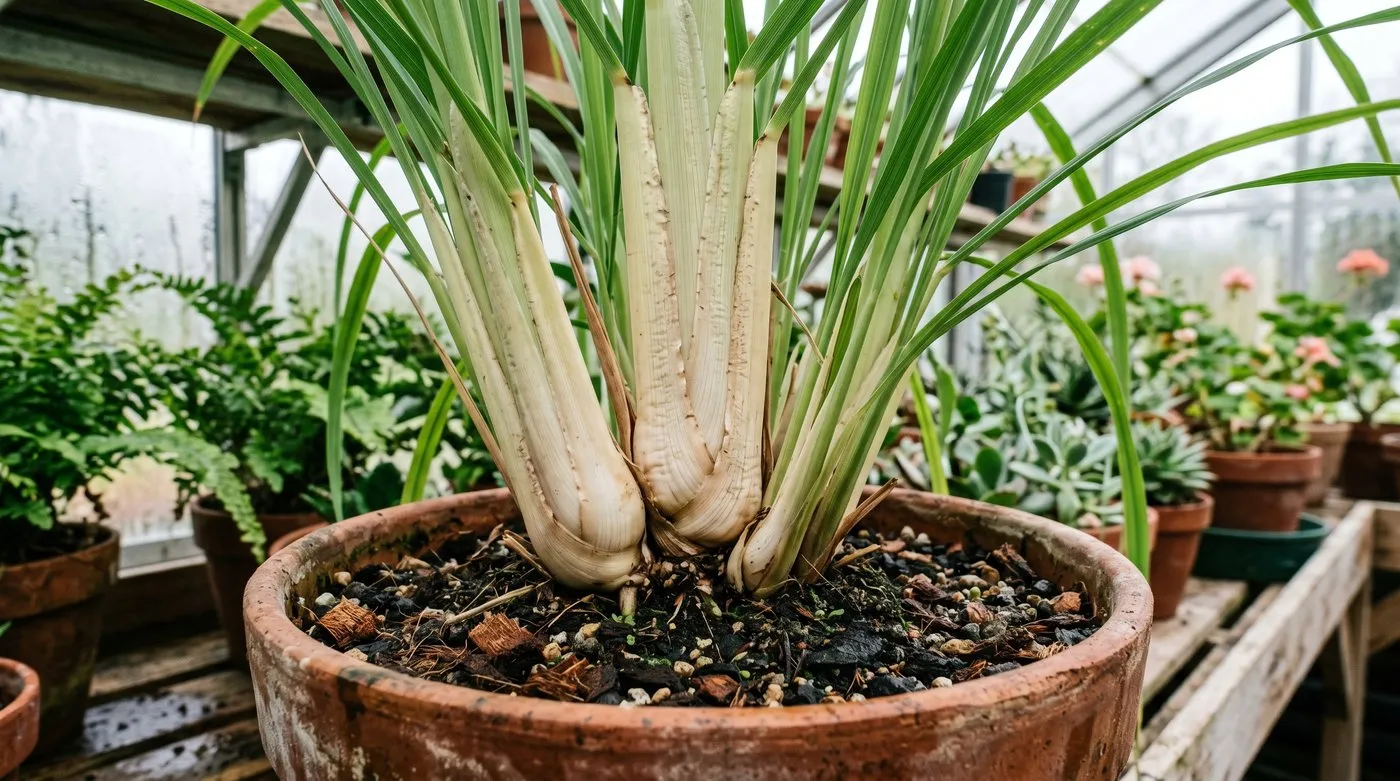 Mature lemongrass stems at harvest. Cut at ground level; the swollen pale lower 10-15cm holds the strongest flavour and is the part used in cooking
What lemongrass is and why UK growing is indoor
Lemongrass (Cymbopogon citratus) is a tropical perennial grass native to South and Southeast Asia. Wild origins are India, Sri Lanka, Indonesia, and Thailand. The plant has been cultivated for thousands of years for culinary, medicinal, and aromatic uses.
Hardiness rating is RHS H1B (cool greenhouse, minimum 5-10C). In practice, plants decline below 10C and die below 5C. UK winters average 1-5C with frequent frost; outdoor growing is impossible.
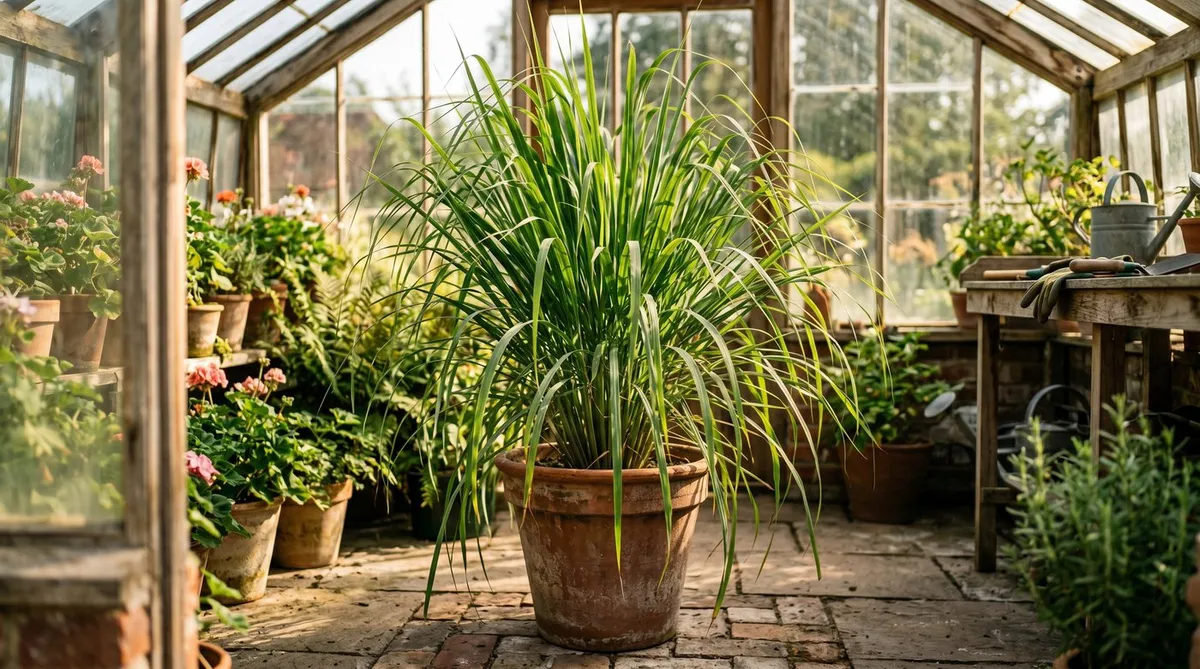
The plant needs sustained warmth, bright light, and free-draining soil. UK conservatories, heated greenhouses, and sunny south-facing windowsills all provide these conditions if temperature is managed.
Lemongrass is a clumping grass, not a single-stem herb. Each clump produces multiple stems over time. The pale swollen base of each stem (the bottom 10-15cm) holds the culinary flavour; the long arching leaves provide much less.
Two main culinary species exist. Cymbopogon citratus (West Indian lemongrass) is the standard culinary type sold in UK supermarkets. Cymbopogon flexuosus (East Indian lemongrass) is taller and used commercially for essential oil. C. citratus is the focus of this guide.
Mature UK conservatory plants reach 1-1.5m tall and 60-80cm across. Tropical commercial plants reach 2m. UK pot-grown plants are smaller because of root restriction and shorter active growing season.
| Lemongrass UK fact | Detail |
|---|---|
| Species | Cymbopogon citratus |
| Hardiness | Above 10-13C only |
| UK position | Conservatory, heated greenhouse, sunny windowsill |
| Pot size | 30-40cm at maturity |
| Maximum height | 1-1.5m in UK pots |
| Annual yield | 30-60 stems per mature pot |
| Productive life | 5-8 years before major decline |
Starting from a supermarket stem: the water-rooting method
A single supermarket lemongrass stem at £1-£1.50 can start a productive pot. Most UK growers begin this way. The trick is to find a stem with an intact root base.
Choose stems with visible ridged dimples or short root nubs at the bottom. These are dormant root primordia. Cut-too-short stems with smooth fibrous bases do not root.
Trim the top of the stem to 15-20cm length. Remove dry outer leaves and the top half of the green blades. This reduces water loss while roots form.
Place stems in a glass jar with 2-3cm of water at the base. Position on a sunny windowsill. Change water every 2-3 days to prevent slime and oxygen depletion.
Roots emerge in 14-21 days. White root nubs appear at the base of the stem, then thin white roots up to 5-10cm long. New green growth from the centre confirms the cutting is alive.
Pot up when roots reach 5cm. Use peat-free compost mixed with 20-30% sharp sand or perlite. A 15cm pot is the starting size; pot up to 25cm by autumn and 30-40cm in year 2.
Water in heavily after potting. Place in the brightest, warmest available position. Mist daily for the first week to reduce transplant shock.
Plants from supermarket stems crop slowly in year 1. Expect 3-8 thin new stems by autumn. Year 2 gives 15-25 stems. Year 3 onwards is full production.
| Cutting stage | Days | Condition | Action |
|---|---|---|---|
| Stem selection | Day 0 | Choose intact base | Trim top, place in water |
| Water rooting | 14-21 | White roots emerge | Change water every 2-3 days |
| First potting | Day 21-28 | Roots 5cm long | 15cm pot, gritty compost |
| Establishment | 4-6 weeks | New shoots emerge | Water lightly, full sun |
| First production | 6-9 months | Stems mature | First harvest cuts |
| Year 2 plant | 14-18 months | Vigorous clump | 25cm pot |
| Mature clump | Year 3+ | Full production | 30-40cm pot, divide year 5 |
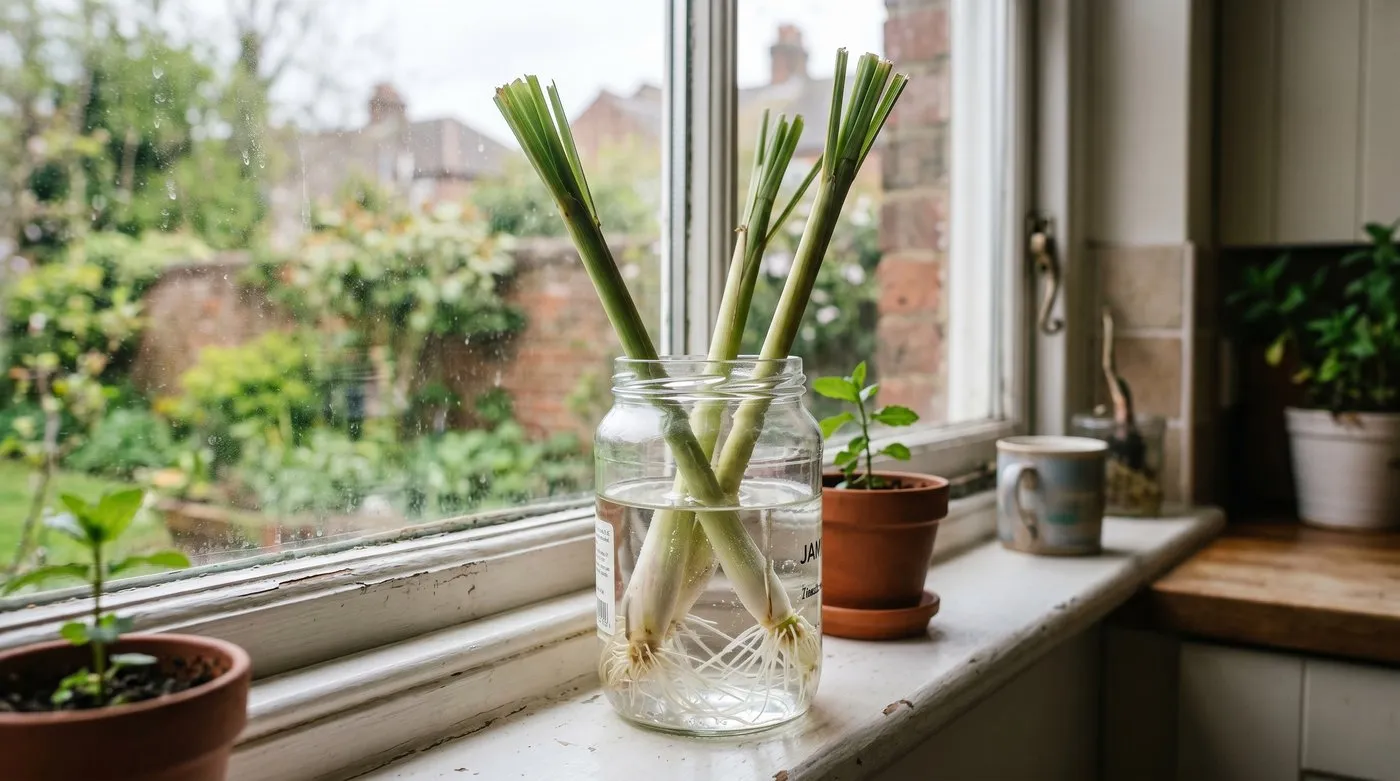 Day 18 of water rooting. Three supermarket stems showing strong root development and new green growth from the centre. Pot up now
Soil, pot size and watering
Peat-free compost with 20-30% sharp sand or perlite is the standard mix. Free drainage prevents root rot, which is the main killer of UK lemongrass.
Pot size scales with plant age:
- Months 1-6: 15cm pot
- Months 6-18: 25cm pot
- Year 2 onwards: 30cm pot
- Year 3 mature plant: 35-40cm pot
- Beyond year 5: divide rather than repot up
Drainage holes are essential. Add a 2-3cm layer of crocks or coarse gravel at the bottom of the pot before compost.
Water generously during active growth (May to September). A 30cm pot needs 500ml-1L every 2-4 days in summer. Top up to keep compost evenly moist, not waterlogged.
Reduce watering significantly from October to April. Allow compost to dry between waterings. Aim for 200-400ml every 7-14 days in winter. Overwatering in winter is the most common cause of plant loss.
Feed weekly with diluted seaweed feed or balanced liquid fertiliser from May to September. Half-strength is plenty. No feeding during winter rest.
Repot or top-dress annually in early May. Mature plants get heavy and dry out fast; replenishing compost keeps growth vigorous.
Heat, light and overwintering
Daytime temperature 18-30C is ideal for active growth. Lemongrass enjoys conservatory heat that would stress other plants.
Minimum temperature 10C overnight in winter. Below this, growth stops and the plant gradually weakens. Below 5C, the plant dies within a few weeks.
Maximum direct sun exposure. South-facing conservatory, south-facing greenhouse, or south-facing windowsill in winter. Insufficient light causes etiolated weak growth and reduced flavour.
Move plants indoors before September equinox. UK overnight temperatures begin dropping below 13C from mid-September; plants moved indoors before then transition smoothly.
Acclimatise gradually moving outdoors in late May. Move pots outside for increasing periods over 7-10 days before leaving permanently. Frost-free nights only; below 8C overnight returns the plant indoors.
Winter on a sunny south or east windowsill if you have no conservatory. A kitchen windowsill above a radiator works well. Reduce watering significantly; mist leaves weekly if indoor air is dry.
Yellow or brown leaves through winter are normal. Trim back dead foliage with sharp scissors. The central crown stays alive; new growth emerges in spring.
Gardener’s tip: A small electric propagator base under the pot in winter keeps the root zone warm even if room air is cool. Cost £15-£25 from garden centres. The 5-8C boost to soil temperature significantly improves winter survival in marginal conditions.
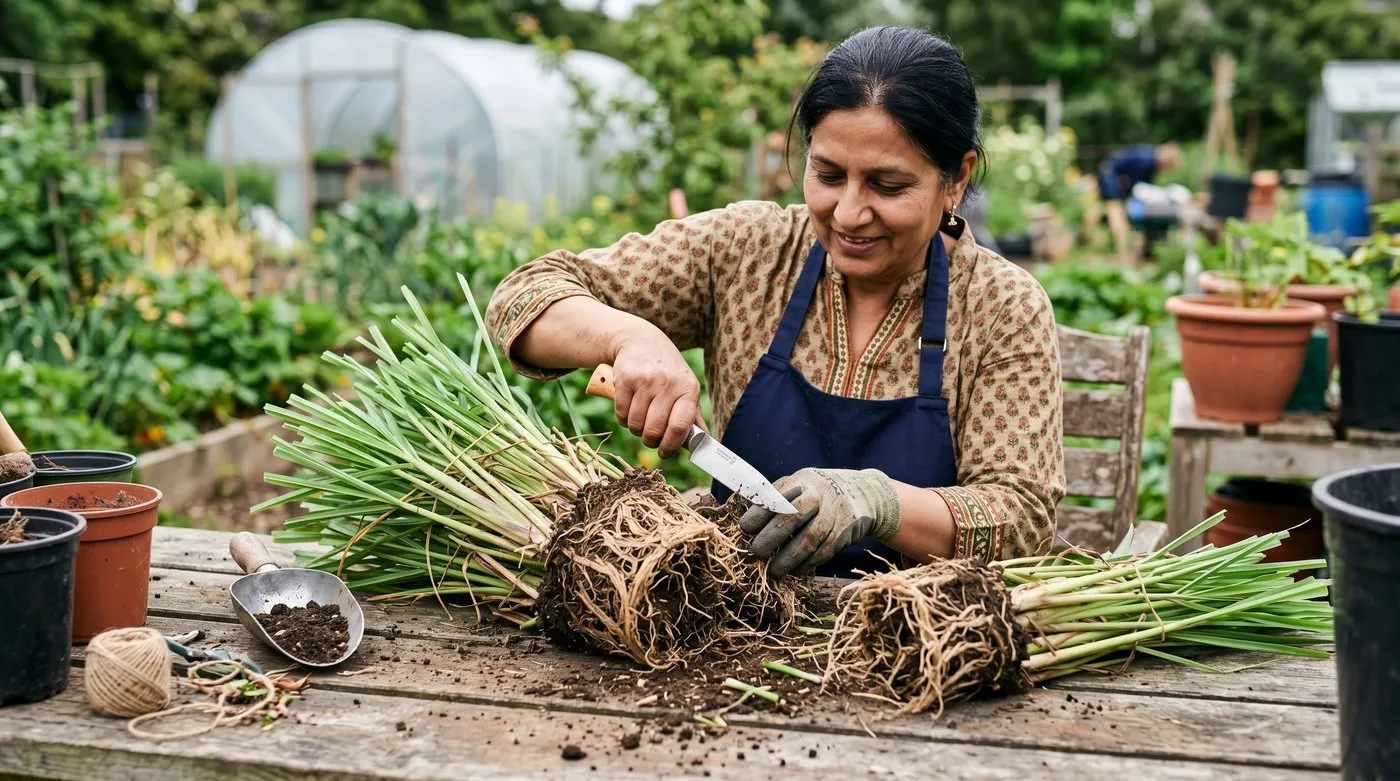 May division of a 3-year-old lemongrass clump. One pot becomes four through a single division operation; spare clumps make popular gifts
Harvest and kitchen use
First harvest is roughly 6-9 months from a starting cutting if growth is steady. Mature plants from year 2 onwards can be harvested year-round.
Cut stems at ground level with a sharp knife. Choose stems that are at least 10mm thick at the base. Smaller stems lack flavour.
Use the bottom 10-15cm of each stem. The pale swollen base holds the volatile oils that give lemongrass its flavour. The upper green leaves are tougher and weaker in flavour but useful for tea infusions.
Leave at least 30% of stems standing per harvest. A plant stripped completely takes 4-6 weeks to recover. Light regular harvesting is better than occasional heavy cuts.
Fresh stems keep 2-3 weeks in the fridge wrapped in paper. Freeze whole stems for up to 12 months; they cut easily while still partly frozen.
Tea from leaf blades: 1-2 long leaf blades chopped, steep in 500ml boiling water for 5-10 minutes. Add ginger or honey to taste.
Thai green curry paste: 2-3 chopped stems blended with garlic, ginger, chilli, lime leaves, coriander, and fish sauce. The home flavour beats any jar.
Vietnamese pho broth: 4-5 bruised stems simmered for 2-3 hours with beef bones, ginger, onion, and star anise.
Lemongrass syrup for cocktails: 4 chopped stems simmered 30 minutes in 250ml water with 250g sugar; cool and strain.
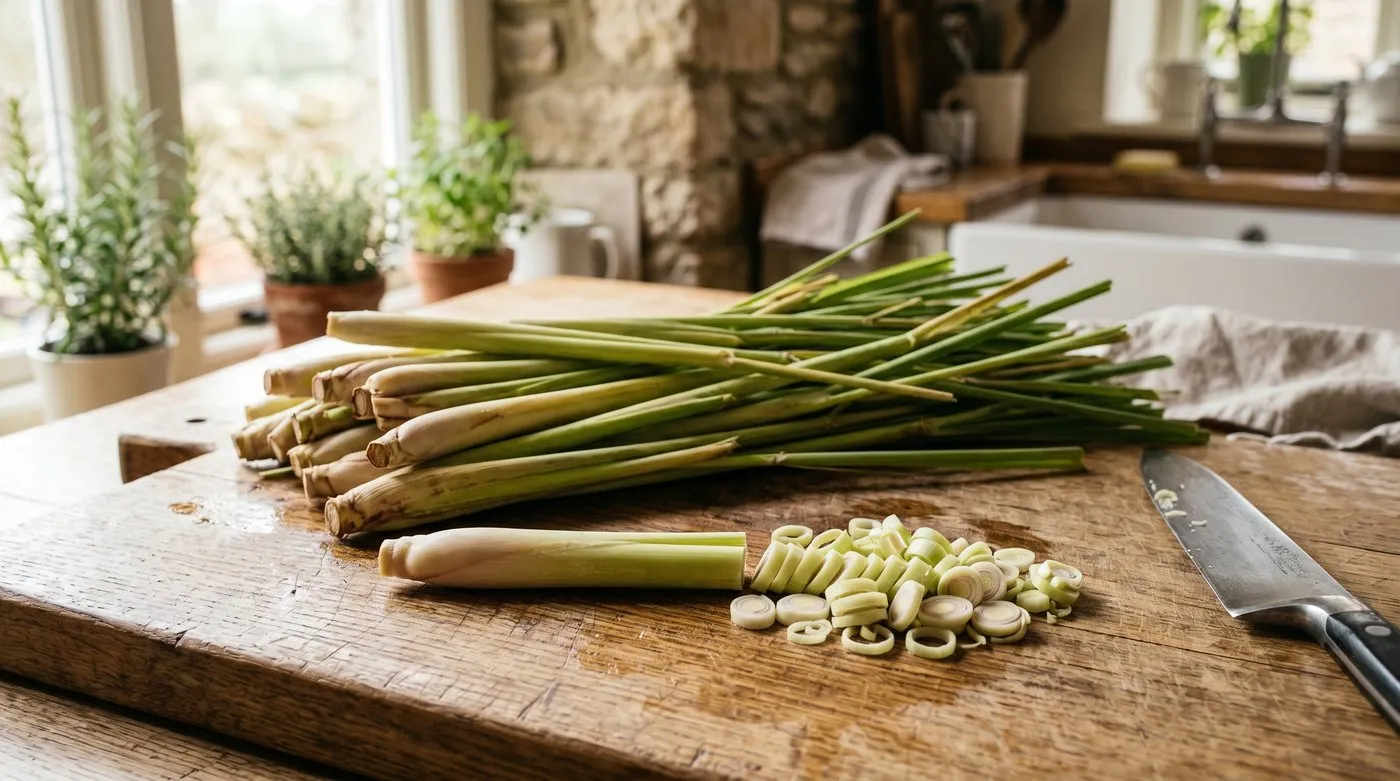 Harvest day cuts. Use the bottom 10-15cm pale swollen base for cooking; upper green leaves for tea and aromatic infusions
Division: turning one plant into four
Established lemongrass clumps need dividing every 2-3 years to maintain vigour. A congested central clump produces fewer harvestable stems and the inner growth becomes weak.
Divide in early May when the plant is actively growing. Late spring divisions establish faster than autumn ones.
Lift the whole pot. Tip out, tease away old compost, expose the root mass.
Split the clump into 3-4 sections with a sharp knife or spade. Each section should have 3-5 stems and a healthy root mass.
Repot each section in fresh peat-free compost with sand. Use 25-30cm pots for divided sections.
Water in heavily. Place in shade for 7-10 days while roots establish, then return to full sun.
Yields from divided plants resume in 4-8 weeks. Spare divisions make excellent gifts; lemongrass is rarely commercial in UK plant shops.
Year 5-8 plants benefit most from division. Yields can double in the season after division.
Pests, diseases and yellow-leaf problems
Lemongrass pest pressure is very low under UK conservatory conditions. Aphids and spider mite are the main threats.
Aphids cluster on new growth in spring. Wipe with damp cloth or hose off with cold water.
Red spider mite thrives in dry hot air. Symptoms: yellow stippling on leaves, fine webbing. Increase humidity by misting daily; introduce predatory mites for severe cases.
Rust occasionally affects outdoor summer plants. Orange spots on leaves. Move indoors and ventilate.
Root rot from overwatering is the main UK killer. Symptoms: yellowing leaves, soft stems at the base, foul smell from compost. Tip out, trim rotten roots, repot in dry fresh compost. Often unrecoverable if caught late.
Yellow lower leaves in winter are normal. Reduce watering, leave the plant alone, new growth emerges in spring.
Brown leaf tips indicate dry air or under-watering. Mist weekly in winter; check pot moisture.
Common mistakes to avoid
Direct potting cut stems without water rooting. Many supermarket stems lack root primordia and fail. Water rooting confirms viability.
Overwatering in winter. Wet cold compost rots the crown. Allow soil to dry between winter waterings.
Position too cool or too dark. Lemongrass needs heat and direct sun. North-facing rooms and unheated greenhouses both fail.
Pot too small or too large. 15cm starter, scaling up in line with plant size. A young cutting in a 40cm pot rots; a mature plant in a 15cm pot stalls.
Harvesting too aggressively. Stripping all stems weakens the plant. Always leave 30% standing.
Skipping division at year 3+. Congested clumps drop yields. Divide and refresh.
Step-by-step: starting a lemongrass pot
Step 1: buy 3-4 supermarket lemongrass stems in March or April. £3-£6 from supermarkets. Choose stems with intact ridged bases.
Step 2: trim each stem to 15-20cm and remove dry outer leaves. Discard the trimmings.
Step 3: place stems in a glass jar with 2-3cm water. Position on a sunny south-facing windowsill.
Step 4: change water every 2-3 days. Watch for white roots emerging from the base.
Step 5: at 14-21 days, pot up rooted stems. Use 15cm pots with peat-free compost plus 20% sand.
Step 6: water in well, place in brightest spot available. Mist daily for the first week.
Step 7: feed weekly with half-strength seaweed feed from week 4 onwards.
Step 8: pot up to 25cm in autumn. Move into conservatory before September equinox.
Step 9: overwinter on a south-facing windowsill or in a heated greenhouse. Reduce watering significantly.
Step 10: return outside or to greenhouse in late May. Acclimatise gradually.
Step 11: first harvest in autumn of year 1. Cut mature stems at ground level.
Step 12: divide in May of year 3. One pot becomes 3-4 new pots.
Frequently asked questions
Can lemongrass grow outdoors in the UK?
No, lemongrass is hardy only above 10-13C and will not survive a UK winter outdoors. Even summer outdoor growing fails on cooler UK sites; plants stall below 15C and rot in wet UK summers. Container growing in a south-facing conservatory, heated greenhouse, or sunny windowsill is the only viable UK approach. Plants can spend June to August outdoors in southern UK in warm summers, but must come back inside well before autumn frost.
How do I grow lemongrass from a supermarket stem?
Choose stems with an intact root base (look for ridged dimples on the bottom). Trim 5-10cm from the top, place the stem in a glass of water on a sunny windowsill, change the water every 2-3 days. Roots emerge in 2-3 weeks. Pot up in peat-free compost with sharp sand for drainage once roots reach 5cm long. First harvest follows 6-9 months later if growth is steady.
How big does lemongrass grow?
Mature lemongrass clumps reach 1-1.5 metres tall and 60-80cm across in UK conservatory conditions. Tropical commercial lemongrass grows to 2m. UK pot-grown plants are smaller because of root restriction. A 30-40cm diameter pot is the working maximum for most UK growers. Divide rather than repot up beyond that size.
When can I start harvesting lemongrass?
First harvest is roughly 6-9 months from starting the cutting if the plant grows steadily through summer. New cuttings rooted in March produce mature stems by autumn. Once established, mature clumps yield 30-60 harvestable stems per year. Cut stems at ground level with a sharp knife; the base contains the most flavour. Leave at least 30% of stems standing per harvest.
How do I overwinter lemongrass in the UK?
Move plants indoors before night temperatures drop below 13C, usually mid to late September. Place on a sunny south-facing windowsill or in a heated greenhouse or conservatory. Reduce watering through winter (allow compost to dry slightly between waterings). Some leaves will brown; the central crown stays alive. Return outside or to the greenhouse in late May after last frost.
Now you have a year-round Thai-cooking herb at home, see our how to grow herbs guide for the wider UK herb cluster and our growing citrus trees guide for another heat-loving conservatory plant. Our turmeric growing guide covers a spice crop that shares the same warmth needs. The Royal Horticultural Society lemongrass guide covers the species profile and indoor cultivation pointers.
Our team produces practical UK gardening guidance from source research, contributor records and established horticultural practice. Editorial standards are overseen by Matt W.