Key takeaways
- Hips form from the pollinated flower base, so stop deadheading roses by late summer
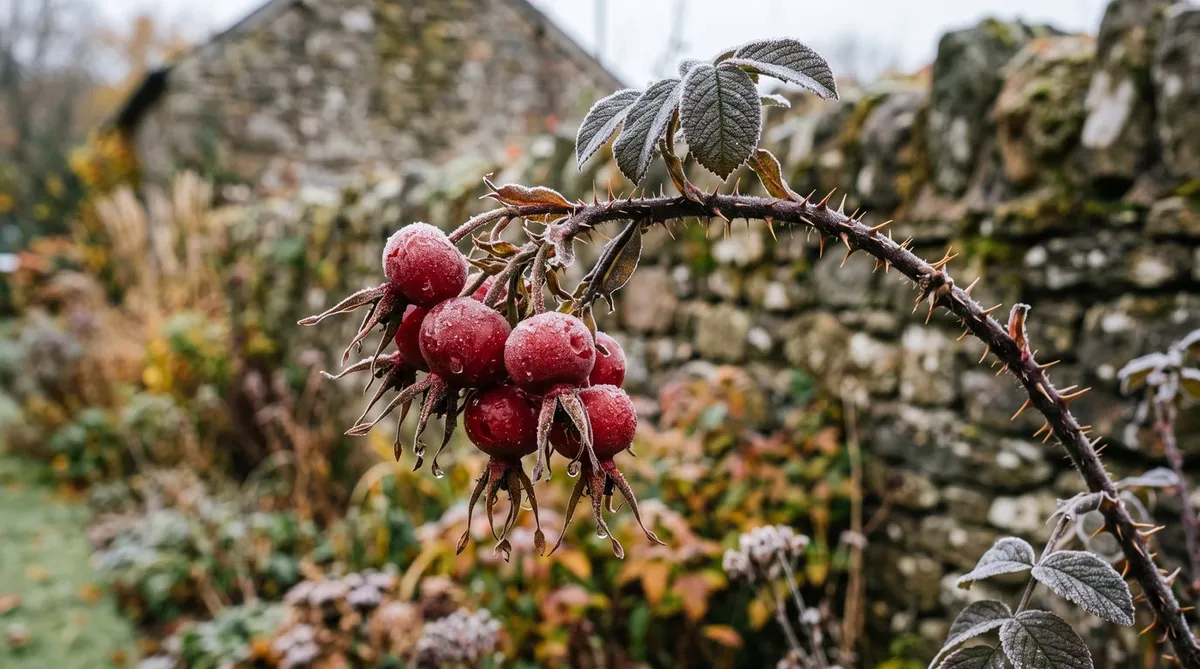
- Pick after the first frost, roughly late October to November, when hips are deep red and just yielding
- Rosa rugosa gives the biggest hips and about 700ml of syrup per kilogram of fruit
- Rose hips hold around 426mg vitamin C per 100g, near eight times an orange
- Seeds are wrapped in fine irritant hairs: strain twice through muslin, never eat them
- Left on the bush, hips feed blackbirds, thrushes, fieldfares, redwings and waxwings all winter
What a rose hip actually is
A rose hip is the seed pod of a rose. When a rose flower is pollinated, the swollen base of the flower, called the hypanthium, thickens and colours up into a fleshy fruit. Inside sit the true seeds, technically achenes, surrounded by a bright, firm flesh.
Not every rose obliges. Many modern repeat-flowering hybrid teas are bred to keep throwing new flowers, and they set few or no hips at all. The reliable hip-bearers are the species roses, the rugosas and the older shrub and rambling roses. Get the variety right and the rest is easy.
When to harvest rose hips in the UK
Frost is not just a calendar marker. It changes the fruit. A hard night burst the cell walls, softens the flesh and pulls the sugars forward, so frosted hips taste noticeably sweeter and press soft between finger and thumb. Green-picked hips stay hard and sharp.
Aim for hips that are deep red or orange, glossy, and just yielding to gentle pressure. Leave any that have gone wrinkled, dull or mushy, as they are past their best and can carry mould. Wear gloves, because most good hip roses are viciously thorny.
If a mild autumn holds the frost off past early November, do not keep waiting. Pick the ripe hips and freeze them overnight. A night in the freezer does the same softening job as a garden frost.
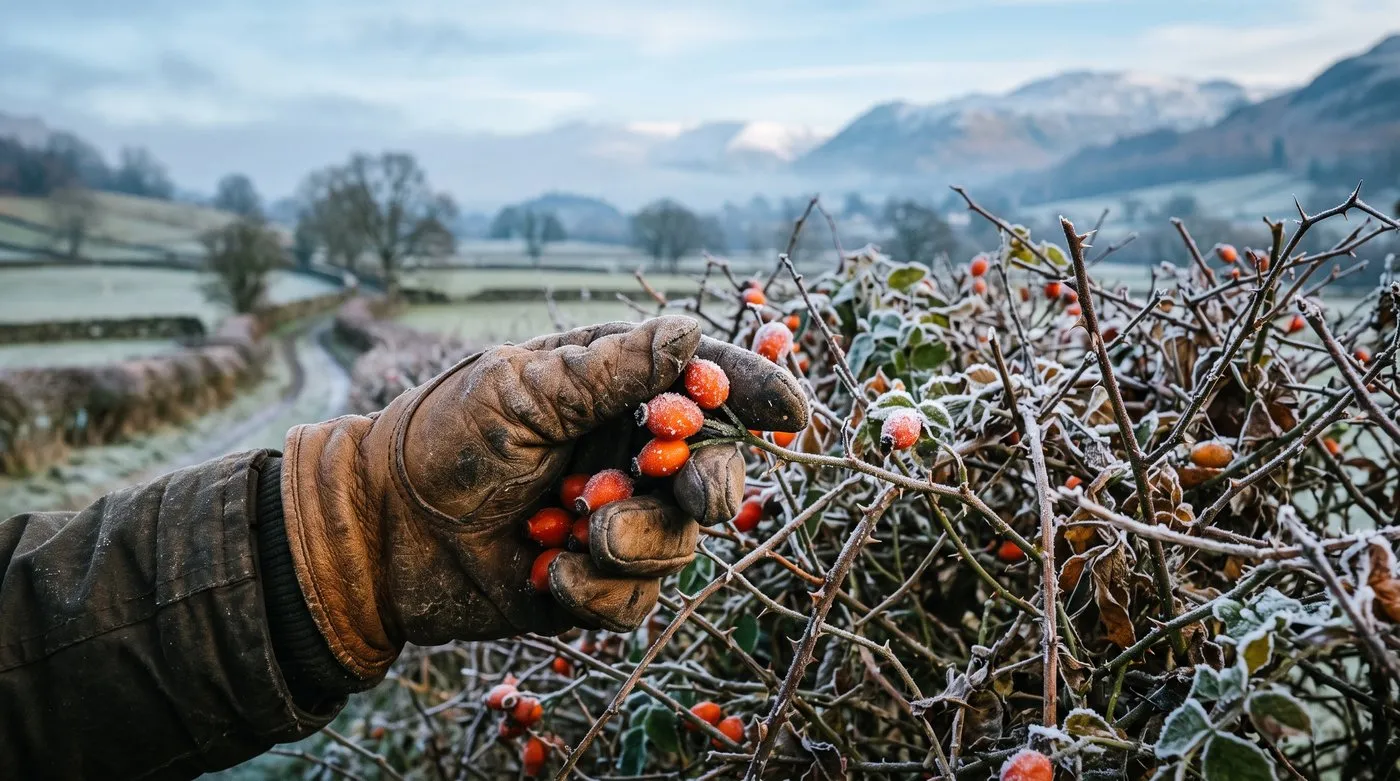 Frost-touched hips crush soft and taste sweeter. Pick five to seven days after the first proper frost for the best flavour.
The best roses for hips, ranked by use
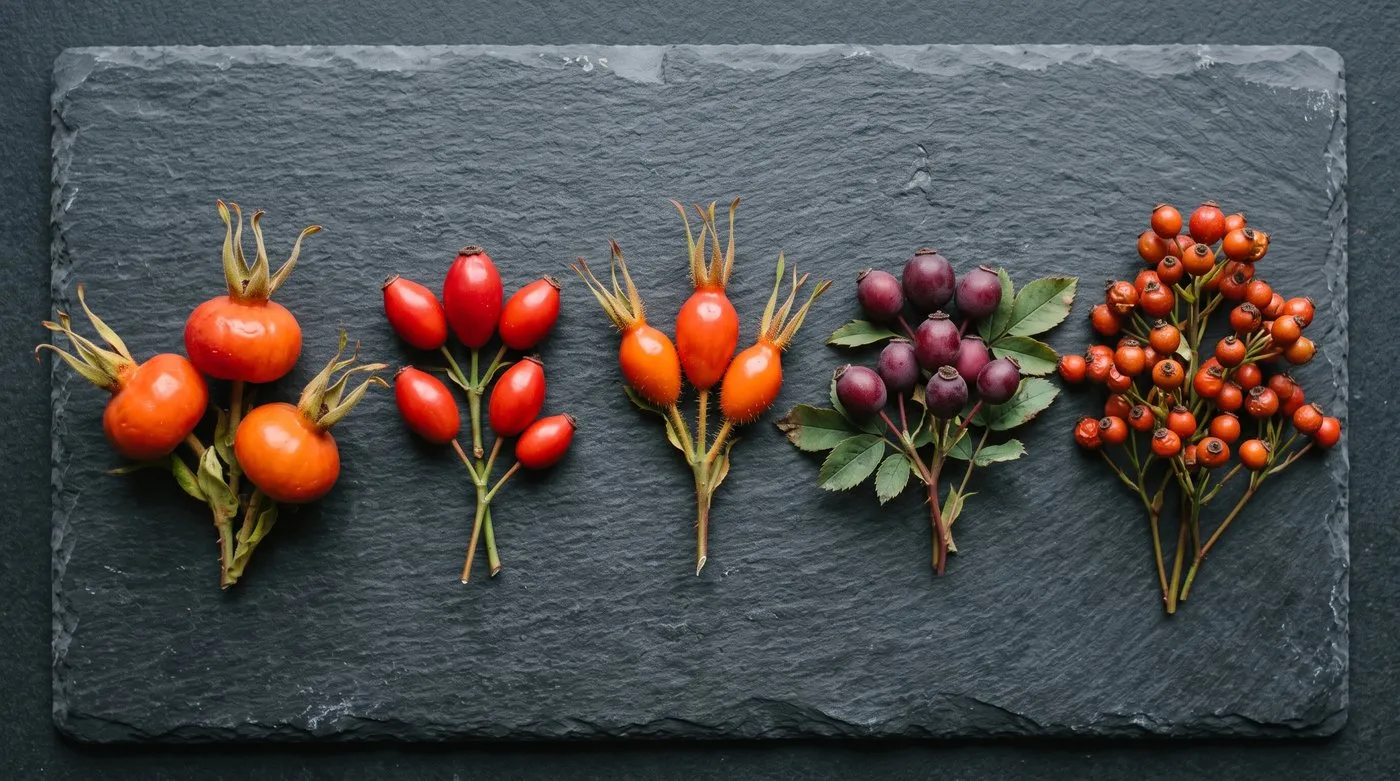 Left to right: the round rugosa hip, the oval dog rose hip and the flask-shaped hip of Rosa moyesii ‘Geranium’. Shape tells you the species at a glance.
The nutrition and the wartime syrup story
Rose hips are one of the richest natural sources of vitamin C in a British garden. Weight for weight they hold around 426mg per 100g, against roughly 53mg per 100g for an orange. That is close to eight times as much, and the rugosa hip sits at the higher end of the scale. They also carry vitamin A, vitamin E and useful antioxidants including lycopene and beta-carotene.
This is exactly why they mattered in wartime. When German blockades cut off citrus imports, Britain turned to the hedgerows. From 1941 the Ministry of Food organised county-wide collection schemes, and schoolchildren and Women’s Institute volunteers gathered tonnes of wild hips each autumn.
The harvest was turned into National Rosehip Syrup and distributed, mainly to babies and young children, to prevent scurvy. A single teaspoon of the syrup carried roughly the vitamin C of a whole orange. The scheme ran on well into the 1950s. The Woodland Trust has a useful record of the wartime rose hip campaigns and hedgerow foraging.
How to make rosehip syrup
Rosehip syrup is the classic use, and it is straightforward if you respect one rule: strain out every hair. Use hips picked after frost, and work in reasonable batches. This method scales cleanly from 500g upward.
- Weigh and rinse. Start with 1kg of frosted, ripe hips. Rinse off any grit and pull away leaves and stalks.
- Top and tail, then chop. Trim off the dry flower remnant and the stalk. Roughly chop or briefly mince the hips to open them up. This releases the flesh and speeds the simmer.
- First simmer. Add the hips to 1.5 litres of water, bring to the boil, then simmer for 15 minutes. Take the pan off the heat and let it stand for 15 minutes more.
- First strain. Pour everything through a scalded jelly bag or double muslin. Let it drip. Do not squeeze hard yet, or you push hairs through.
- Second simmer and strain. Return the pulp to the pan with another 750ml of water, boil, simmer 10 minutes, then strain again through clean muslin. Two strains is the safety step: it removes the fine seed hairs.
- Sweeten and boil. Measure the combined juice. Add about 450g of sugar per 500ml of juice. Bring to the boil and boil for 5 minutes only, no longer, to protect the vitamin C.
- Bottle hot. Pour into sterilised bottles and seal. Unopened, it keeps around 4 months in a cool, dark cupboard. Once opened, keep it in the fridge and use within a week or two, or freeze in ice-cube trays.
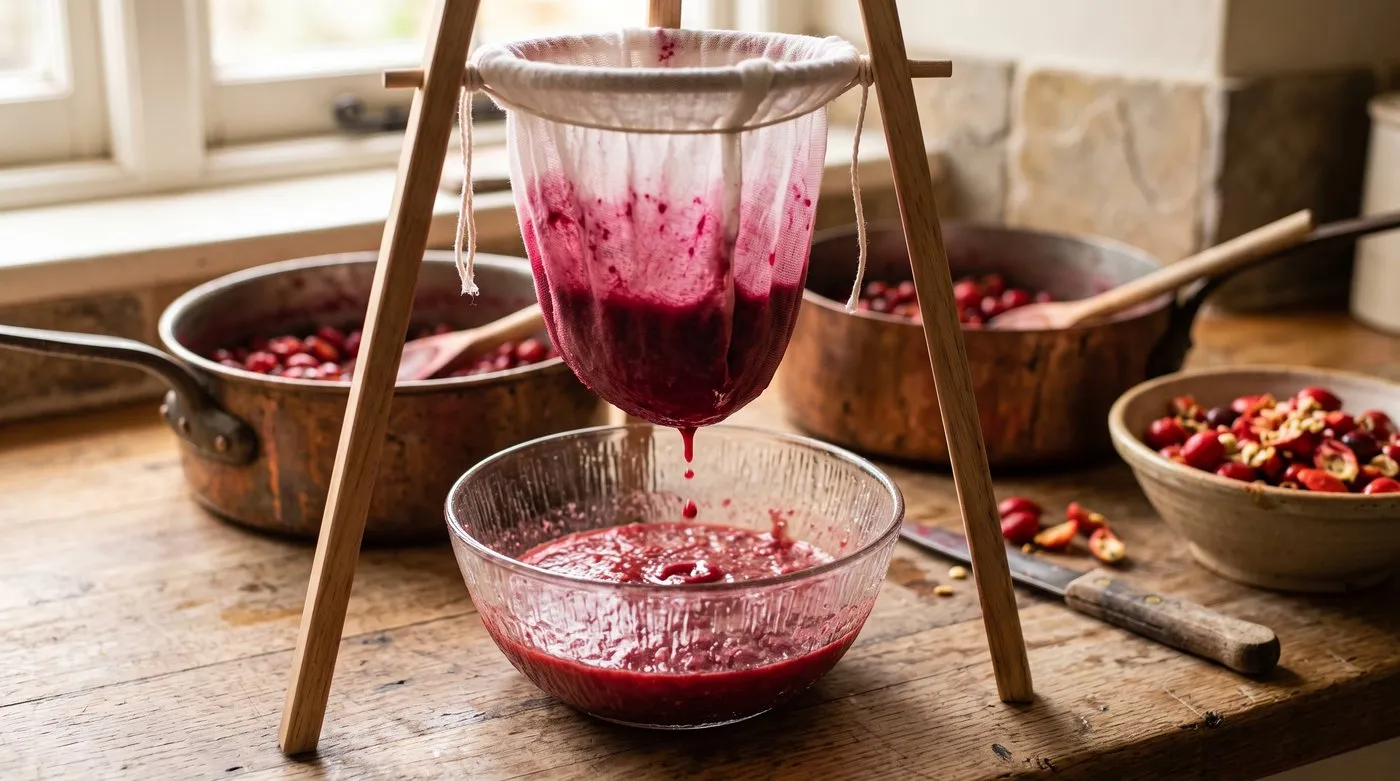 Straining rosehip pulp through a scalded jelly bag. The second strain through clean muslin is the step that removes the irritant seed hairs.
Straining out the seed hairs safely
Inside every rose hip, packed around the seeds, are fine, stiff hairs. These are a real irritant. They were once sold and used as itching powder, which tells you exactly what they do to skin, mouth and gut. This is the one genuine hazard of eating rose hips, and it is easy to manage.
The hairs cause irritation of the mouth and throat if swallowed, and can upset the digestive tract. They do not dissolve in cooking, so heat alone will not deal with them. The only reliable fix is mechanical straining. Pass anything you make through muslin or a jelly bag at least twice, and never scrape the seedy pulp into your food.
Warning: Never eat the seeds or the hairy centre of a rose hip raw or unstrained. The fine hairs around the seeds irritate the mouth, throat and gut. Always split, deseed or double-strain hips, and keep the raw seedy pulp well away from children who might treat it as itching powder.
If you only want to eat the flesh raw as a trailside nibble, split the hip lengthways, scoop out the entire seedy core with a small knife, and eat only the outer wall. It is fiddly, which is why syrup and jelly, both strained, are the sensible options for any quantity.
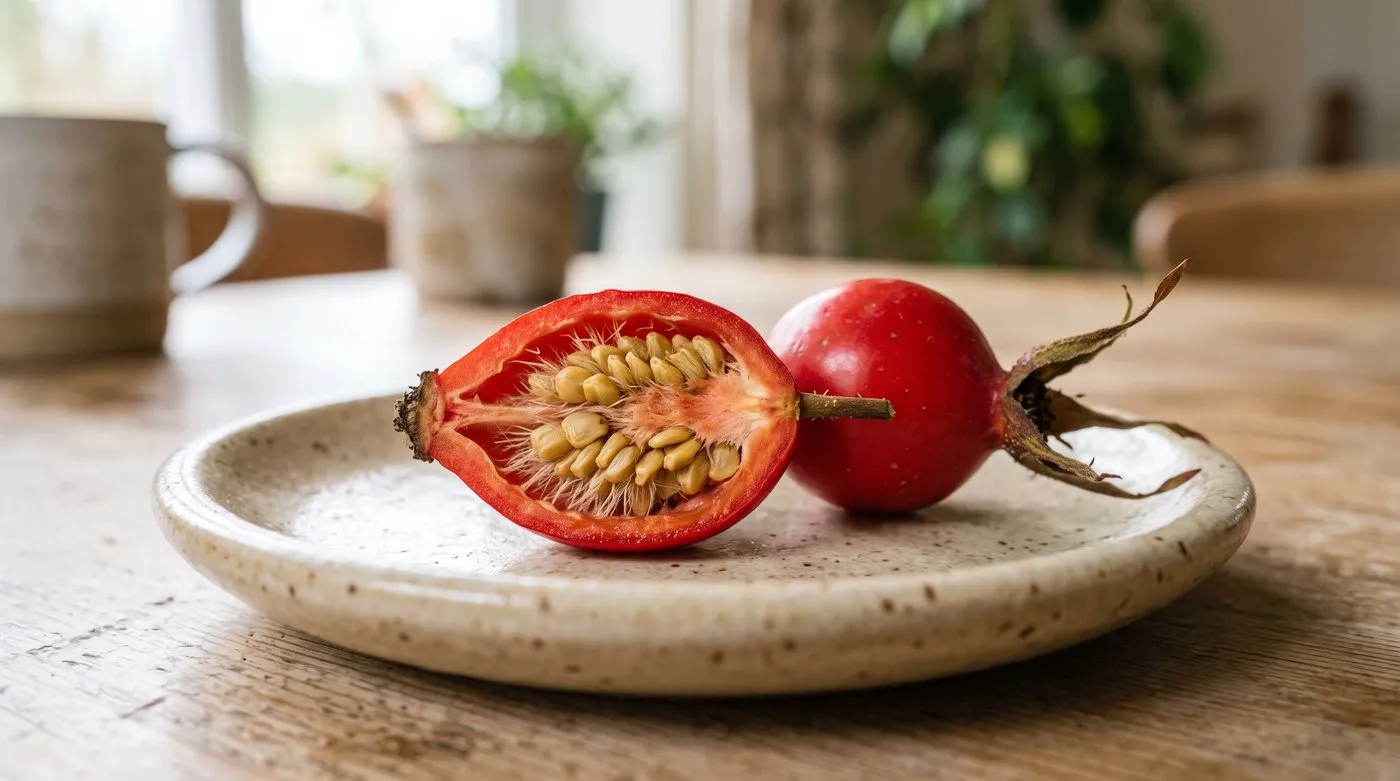 A hip cut in half reveals the seeds and the fine hairs packed around them. These hairs are the part you must strain out completely.
Rosehip jelly, tea and tincture
Syrup is not the only use. Rosehip jelly is a clear, tart preserve that suits cheese and cold meats. Make it like any fruit jelly: simmer the hips, strain the juice through a jelly bag overnight, then boil with sugar and a little lemon juice to reach a set. The double straining removes the hairs at the same time.
Rosehip tea is the simplest use of all. Dry deseeded hips, or use whole hips and strain the brew well through muslin. Steep a heaped teaspoon of dried, chopped hips in just-boiled water for 10 minutes. It gives a mild, tart, rose-red infusion.
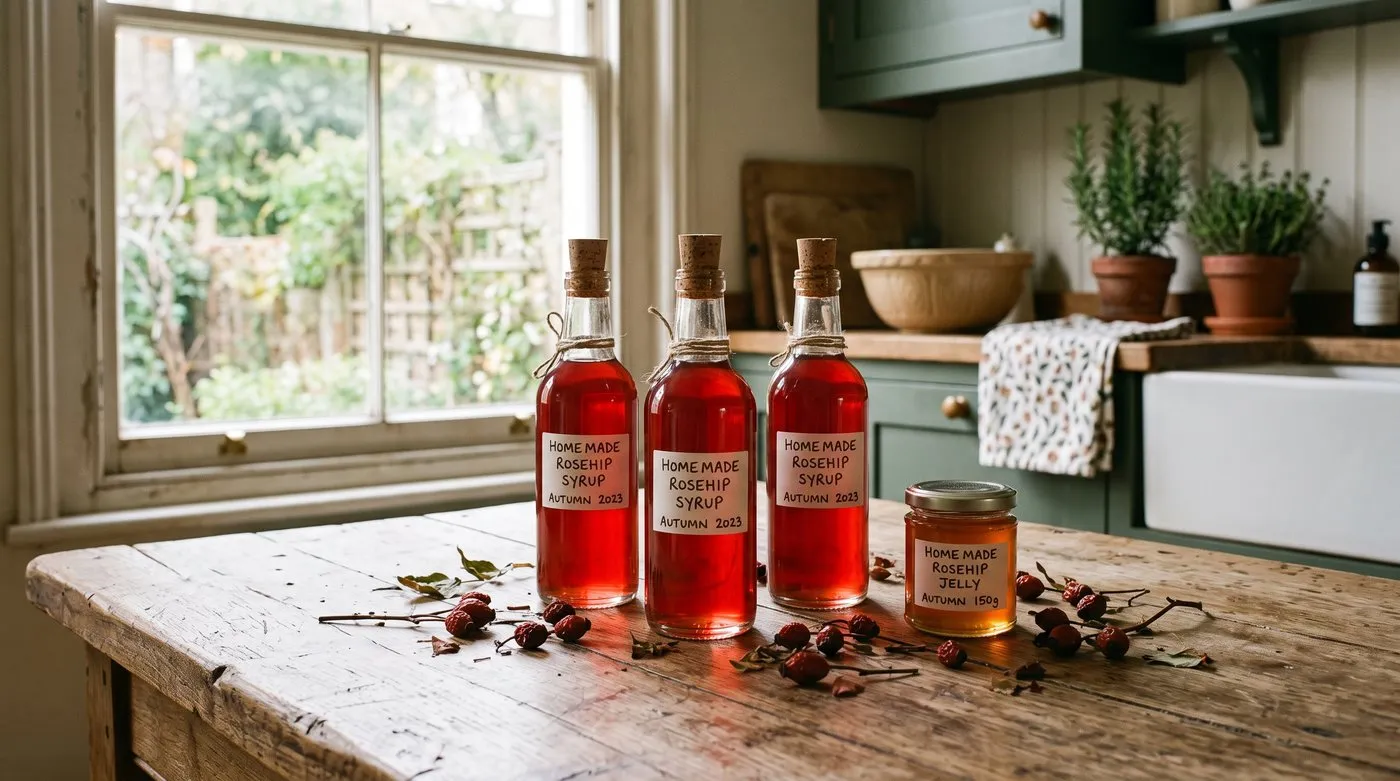 A batch of finished rosehip syrup alongside rosehip jelly and dried hips for tea. One kilogram of rugosa hips fills roughly one and a half of these bottles.
Leaving hips for autumn and winter birds
Rose hips are a serious food source for garden birds through the leanest months. Blackbirds and song thrushes take them from October, and the winter thrushes, fieldfares and redwings, arrive from Scandinavia to strip hedgerows from November. In cold snaps, flocks of waxwings will clear a rugosa hedge in days.
Because a single mature rugosa bush can carry dozens of large, fleshy hips, it is one of the best wildlife roses you can plant. A rambling rose like ‘Kiftsgate’, smothered in tiny hips, feeds birds for weeks. We always leave the back hedge unpicked for exactly this reason.
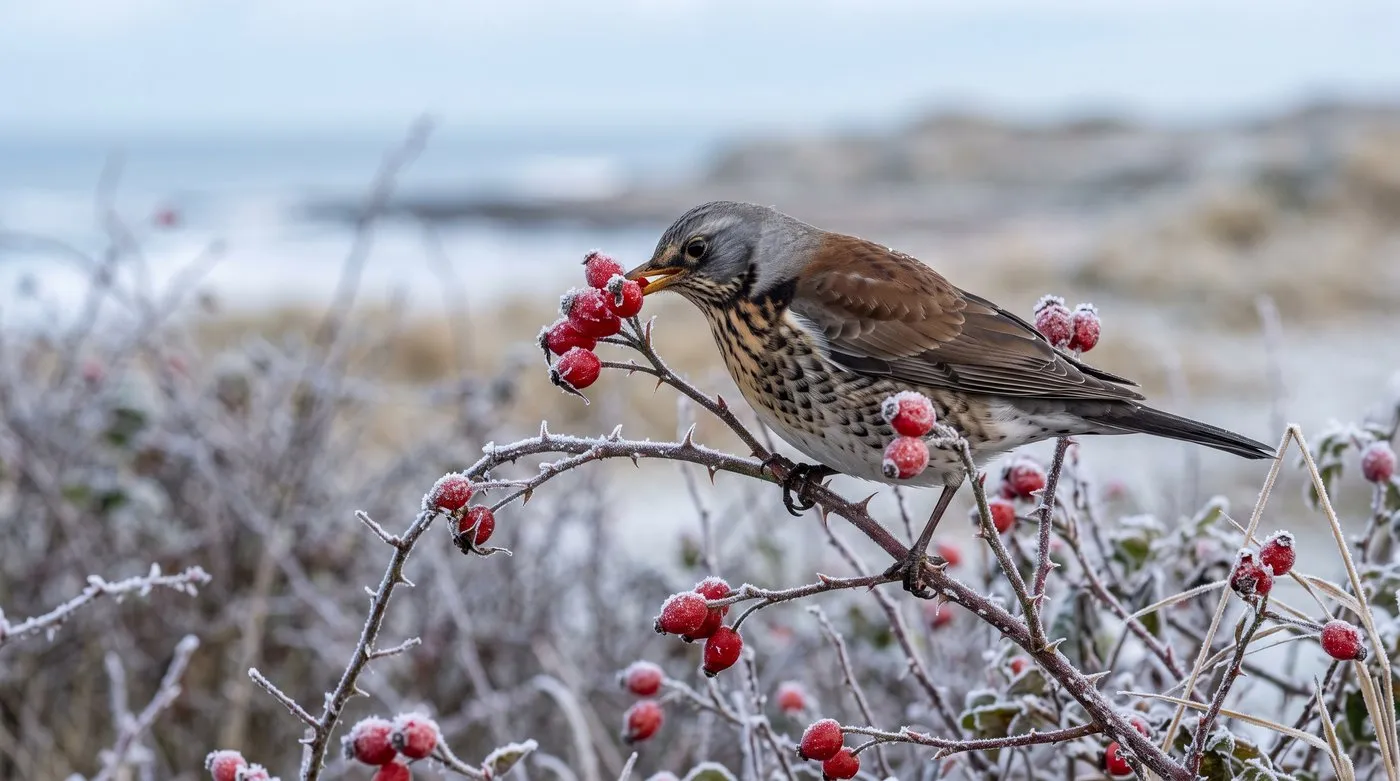 A fieldfare working a rose hedge in January. Leaving some hips unpicked feeds winter thrushes when other food runs out.
Month-by-month rose hip calendar
Timing runs from summer, when you stop deadheading, through the frost harvest and into the birds’ winter feast.
| Month | Task |
|---|---|
| June | Enjoy the flowers. Deadhead freely for now to keep repeat bloomers going. |
| July | Begin winding down deadheading on species and shrub roses you want hips from. |
| August | Stop deadheading completely. Let flowers set and start forming hips. |
| September | Hips swell and begin to colour. Do nothing but watch. |
| October | Hips ripen to deep red or orange. Wait for the first frost before picking. |
| November | Main harvest after frost. Pick ripe hips, leave the rest for birds. |
| December | Make syrup and jelly from stored or frozen hips. Birds start on the hedge. |
| January | Peak bird feeding. Fieldfares and redwings strip unpicked hips. |
| February | Late hips still feed birds. Note which roses cropped best for next year. |
| March | Prune roses now if needed. Hip crop for the year depends on this year’s flowers. |
| April | New growth and buds form. Feed and mulch roses for a strong flowering season. |
| May | First flowers open. The season that sets this autumn’s hips begins. |
Pruning affects the crop, since hips only come from flowers you allow to set. Time it right with our guide on how to prune roses, and browse the wider growing section for more seasonal harvest guides.
Common mistakes when harvesting rose hips
- Deadheading right through autumn. This is the number one reason gardens set no hips. Every spent flower you cut is a hip you lose. Stop deadheading hip roses by early August.
- Picking too early. Green, hard hips are sharp and thin on flesh. They also make weak syrup. Wait for the first frost, or freeze picked hips overnight to soften them.
- Not straining out the hairs. The fine seed hairs irritate the mouth and gut. One quick strain is not enough. Always pass syrup and jelly through muslin at least twice.
- Boiling the syrup too hard or too long. High heat destroys vitamin C, the whole point of the syrup. Boil for 5 minutes only after adding sugar, then bottle straight away.
- Growing the wrong roses. Most modern hybrid teas set few or no hips. If you want a crop, plant a species rose, a rugosa or an old shrub rose, not a bedding hybrid.
Rose hips reward almost no effort. Grow the right rose, stop deadheading in August, wait for frost, and strain carefully. You get free vitamin C, a wartime classic in a bottle, and a winter hedge full of thrushes.
Now you know how to harvest and use rose hips, read our guide to growing roses in the UK for the next step in choosing and caring for hip-bearing varieties.
Frequently asked questions
When should you pick rose hips in the UK?
Pick rose hips after the first frost, usually late October to November. Frost softens the flesh and sweetens it, so the hips crush gently between finger and thumb. Choose deep red or orange hips that are ripe but not yet mushy. If no frost has come by early November, pick anyway and freeze the hips overnight to mimic it.
Which roses have the best hips?
Rosa rugosa has the best hips for eating and syrup. Its large round hips are easy to pick and full of flesh. Rosa canina, the dog rose, gives the classic hedgerow hip, while Rosa moyesii ‘Geranium’ offers flask-shaped ornamental hips. Many modern repeat-flowering hybrid teas set few or no hips at all.
Are rose hips safe to eat?
Yes, the flesh of rose hips is safe and nutritious, but the seeds are not. Each hip holds seeds wrapped in fine hairs that irritate the mouth, throat and gut. These hairs were the original itching powder. Always strain them out twice through muslin or a jelly bag before eating or drinking anything made from hips.
How do you make rosehip syrup?
Top, tail and chop the hips, then simmer them in water for 15 minutes. Strain the pulp through muslin twice to remove every hair, add sugar to the juice, boil briefly and bottle. Use about 450g sugar per 500ml of strained juice. Keep it in sterilised bottles and refrigerate once opened.
Why were rose hips used in World War Two?
Citrus imports stopped during the war, so Britain turned to rose hips for vitamin C. From 1941 the Ministry of Food organised volunteers to gather hedgerow hips. These were made into National Rosehip Syrup and given mainly to children. A single teaspoon delivered as much vitamin C as an orange.
Do rose hips help garden birds?
Yes, rose hips are important autumn and winter food for many birds. Blackbirds, song thrushes, fieldfares, redwings and waxwings all strip hips through the cold months. Leaving some hips unpicked on rugosa and species roses supports birds when other food is scarce, especially in hard weather.
Should you deadhead roses if you want hips?
No, stop deadheading by late summer if you want hips. Hips form from the base of a pollinated flower, so removing spent blooms removes next season’s fruit. Leave the flowers on species and shrub roses from August onward. Deadheading right through autumn is the most common reason gardens set no hips.
Our team produces practical UK gardening guidance from source research, contributor records and established horticultural practice. Editorial standards are overseen by Matt W.