Key takeaways
- Winston, Kestrel and Vales Sovereign are the UK show-class regulars
- Judges score uniformity, shape, eye depth, skin finish, freedom from blemishes
- Sieved fine compost in deep beds gives the best shape
- Single-tuber spacing at 45-60cm produces fewer but bigger uniform tubers
- Most UK shows accept 170-340g tubers; check class card before lifting
- Harvest only on show day - storage damages skin finish
Show potatoes are a specialist branch of UK kitchen gardening - growing not for the kitchen but for the village hall, county show or allotment-society judging table. The varieties, cultivation methods and judging criteria all differ from everyday potato growing. With the right variety, the right bed prep and the right harvest timing, almost any UK allotment grower can place in a village-hall show.
For the broader potato growing methods, see our growing potatoes UK, best potato varieties UK and when to plant potatoes UK guides.
The UK show classes - what you’re competing in
UK potato show classes vary by show but typically include:
| Class | Typical requirement | Common varieties |
|---|---|---|
| Whites (oval) | 6 matched 170-340g | Winston, Vales Sovereign |
| Whites (kidney) | 6 matched 170-280g | Charlotte, Maris Peer |
| Coloured (oval) | 6 matched 170-340g | Kestrel, Picasso, Cara |
| Reds | 6 matched 170-340g | Amour, Desiree, Romano |
| Earlies | 6 matched 140-200g | Pentland Javelin, Charlotte |
| Main crop | 6 matched 200-340g | Maris Piper, King Edward |
| Heaviest tuber | 1 single tuber | Picasso, Cara, Estima |
| Garden table | 5 matched 200-280g | Any |
Always read the schedule for the show you’re entering. Sizes, varieties allowed, and special rules vary. A tuber that wins at one show may be ineligible at another.
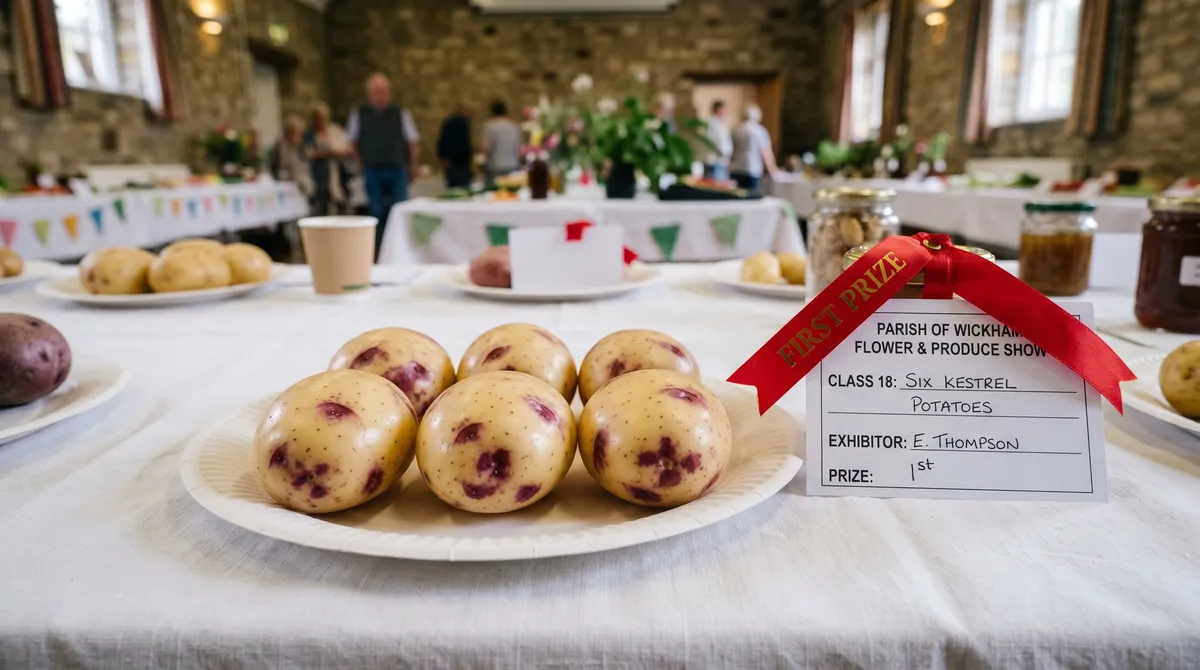
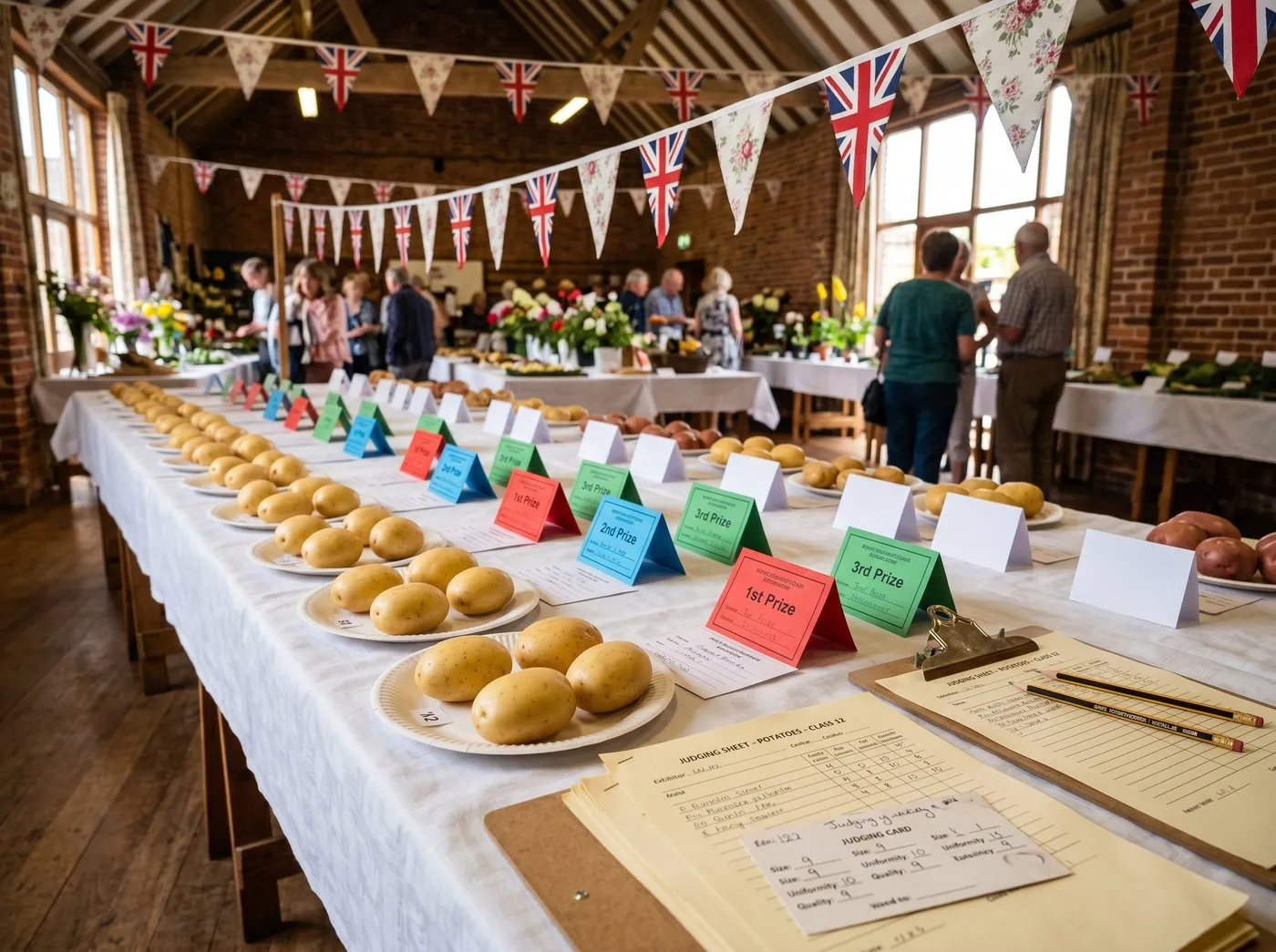 A typical UK village-hall show table - six tubers per plate, prize cards in the corners. Uniformity is the first thing judges look for.
The top UK show varieties
Winston (whites class)
The standout UK show variety for the whites class. Oval, white-skinned with shallow eyes, holds shape well, finishes with a clean smooth skin that judges love.
- Yield: 6-9 tubers per plant
- Size range: 200-340g
- Skin finish: Clean white, very shallow eyes
- Show strengths: Uniformity, perfect oval shape, easy to match a set of 6
- Show weaknesses: Can grow too large (over 340g) in rich soil
- Best UK shows: village hall, county shows
Kestrel (coloured class)
The most-shown coloured-class variety in UK competition. Striking white-and-purple skin pattern, oval shape, shallow eyes, holds size well.
- Yield: 7-10 tubers per plant
- Size range: 170-280g
- Skin finish: Cream with deep purple eyes
- Show strengths: Distinctive look, uniformity, holds in storage
- Show weaknesses: Eye colour intensity varies with growing conditions
- Best UK shows: all coloured classes
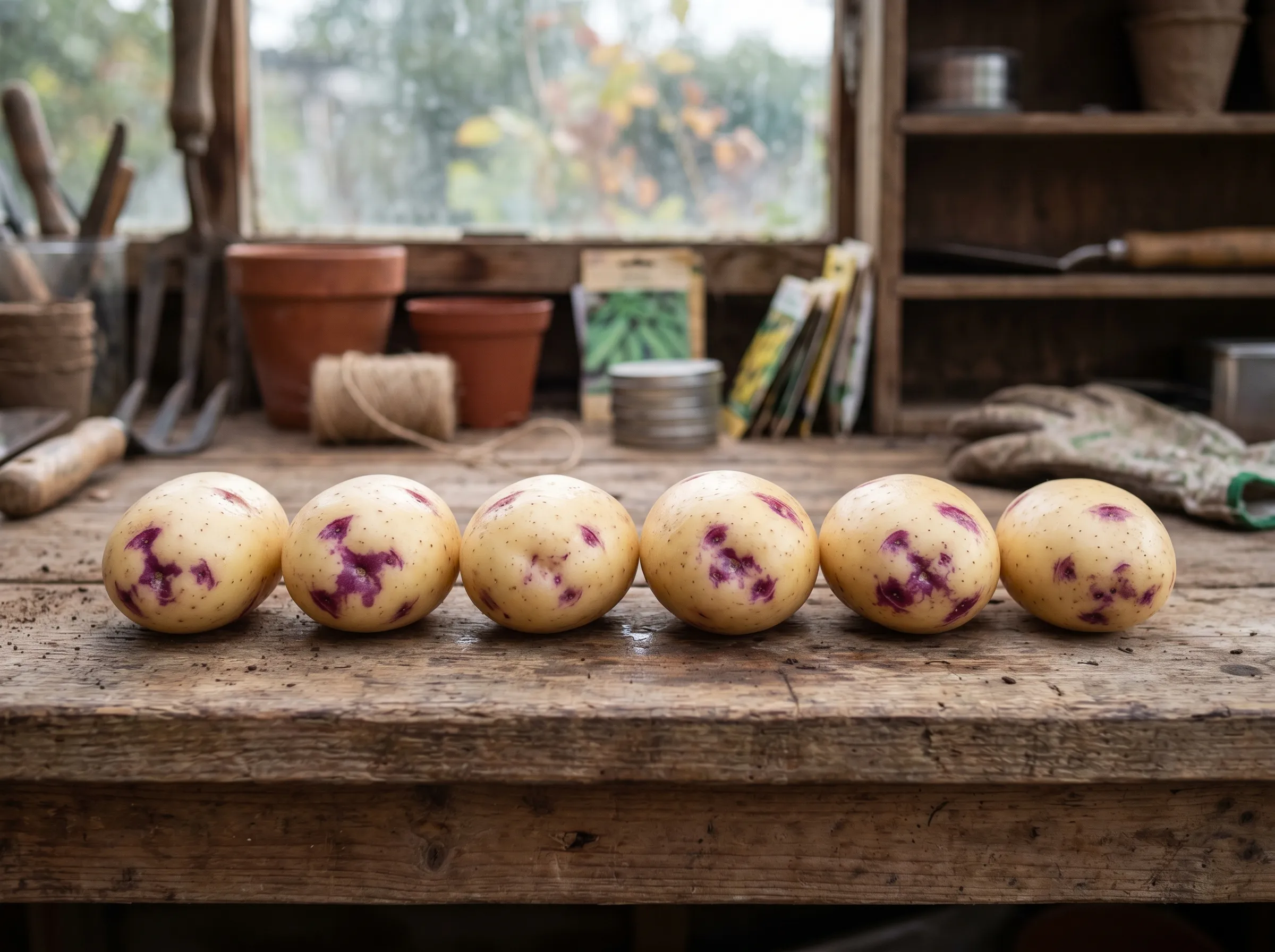 A matched set of six Kestrel - cream skin, purple eyes, all oval and the same size. The look that wins UK coloured-class shows.
Vales Sovereign (all-rounder)
A versatile show variety that works in multiple classes. Oval, white-skinned, shallow-eyed, with a consistent shape across many tubers per plant.
- Yield: 8-12 tubers per plant
- Size range: 170-280g
- Skin finish: Pale cream, smooth
- Show strengths: Consistency, multiple matched sets possible
- Show weaknesses: Less visually striking than Kestrel
- Best UK shows: village hall, all-purpose classes
Amour (reds class)
The current top UK red show variety. Deep red skin, oval shape, shallow eyes.
- Yield: 6-9 tubers per plant
- Size range: 200-280g
- Skin finish: Deep uniform red
- Show strengths: Colour consistency, holds skin in storage
- Show weaknesses: Limited UK seed-potato supply some years
- Best UK shows: county-level reds classes
Charlotte (kidney class)
The classic UK kidney-shaped show salad potato. Yellow-skinned, slightly elongated kidney shape, very shallow eyes.
- Yield: 10-15 tubers per plant
- Size range: 140-200g (perfect for earlies/kidney classes)
- Skin finish: Pale yellow, glossy
- Show strengths: Lots of matched tubers, beautiful shape
- Show weaknesses: Some tubers run too small to qualify
- Best UK shows: earlies, kidney, salad classes
Picasso (red-eyed white)
A specialist variety for the spectacular two-tone look. White skin with vivid red eyes - judges remember it.
- Yield: 6-9 tubers per plant
- Size range: 280-450g (often heaviest-tuber class winner)
- Skin finish: White with strong red eye markings
- Show strengths: Visual impact, big size
- Show weaknesses: Eye colour varies with conditions; can be patchy
- Best UK shows: heaviest-tuber class, special varieties class
Bed preparation - the single biggest factor
The shape and skin finish of a show potato is set in the soil. Deep, fine, stone-free compost gives clean oval tubers. Stoney, lumpy, or shallow soil gives forked, knobbly, or scarred tubers regardless of variety.
The show-bed specification
Build a dedicated bed for show potatoes:
-
Depth: 60cm minimum of worked soil. Dig out heavy clay subsoil if necessary and replace.
-
Width: 60-80cm per row. Multiple rows in a 2m wide bed lift cleanly.
-
Length: enough for 6-12 tubers per variety. At 50cm spacing, that’s 3-6m per variety per row.
-
Mix: 50% sieved mature compost, 30% loam, 20% sharp sand or vermiculite. No stones, no clumps. The sieving is essential.
-
No fresh manure. Burns the skin and causes scab. Use only well-rotted manure or pure compost.
-
pH 5.5-6.5. Slightly acidic suppresses common scab disease. Test and adjust before planting.
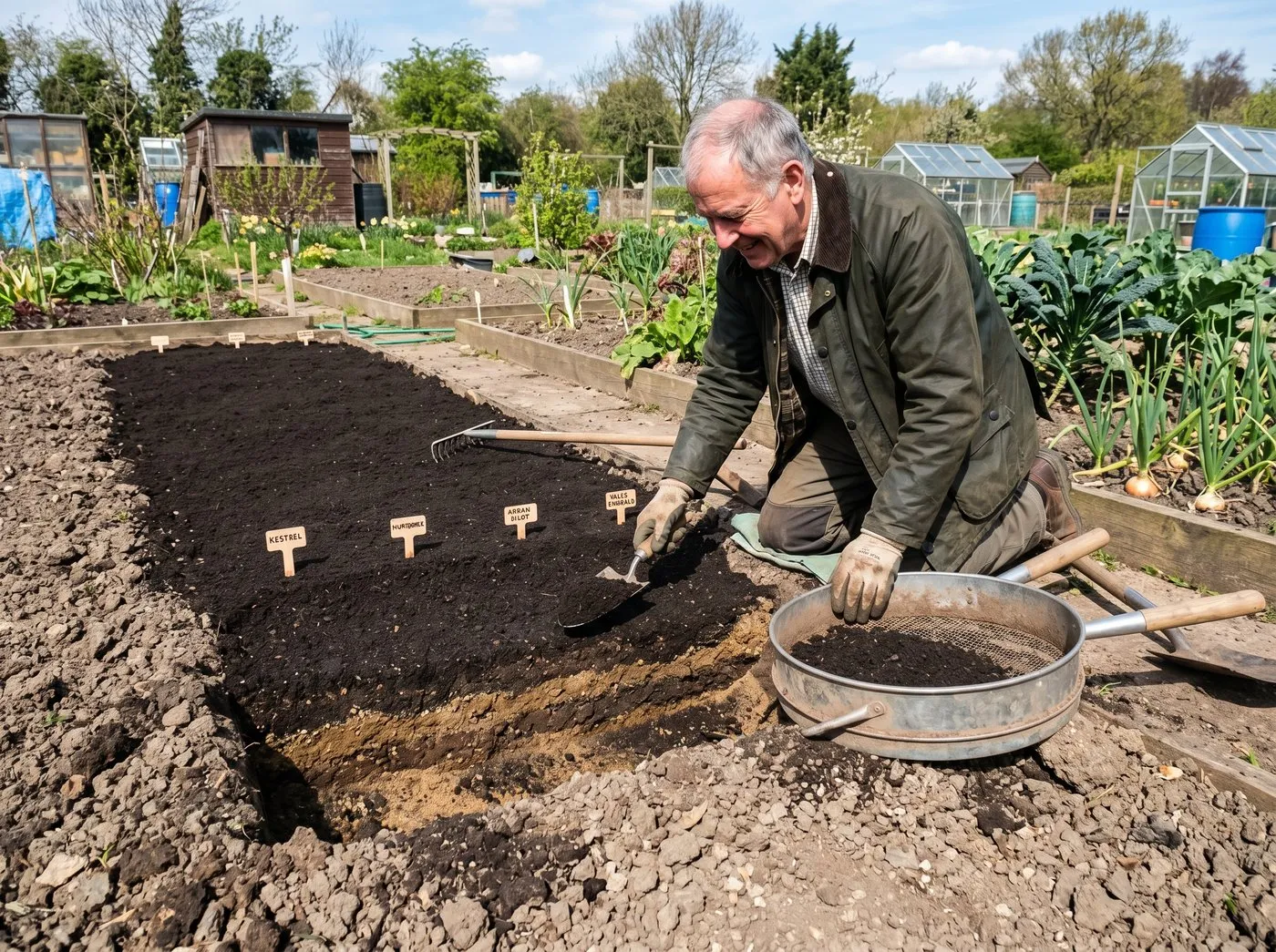 A purpose-built show-potato bed - 60cm deep, sieved compost mix, no stones. This is where show-quality shape comes from.
The sieving routine
Sieve all incoming compost through a 10mm mesh garden riddle. Yes it’s slow. Yes it makes a difference. Stones, twigs and lumps in the bed produce forked or knobbly tubers - the single biggest reason home-grown potatoes fail at shows.
For a 4m² bed expect to sieve 600-800 litres of compost. A weekend’s work, paid back in 5 years of show-quality crops.
Choosing and chitting seed potatoes
Buy certified Scottish-grown seed potatoes from a reliable UK supplier (Pennard, J Parker’s, Thompson & Morgan). Show-grade seed costs more (£8-£15 per kg vs £4-£6 for kitchen-grade) but selects for uniformity.
Chitting routine for show potatoes:
- Arrive in late January, place rose-end up in egg boxes in a cool light room (10-12C).
- Aim for 2-3 short stout green shoots per tuber by planting time.
- Reject any tuber with thin pale shoots, soft spots, or growth abnormalities.
- Plant the most uniform tubers - match size and shoot count across the row.
Show-grade tubers are typically 60-80g at chitting - slightly larger than supermarket seed-size. Larger tubers give more shoot energy and produce fewer but bigger uniform daughter tubers.
Planting and spacing for size and shape
The single biggest cultivation lever on show potato size is plant spacing. Wider spacing means fewer daughter tubers per plant - and each one ends up bigger and more uniform.
| Spacing | Tubers per plant | Average tuber size | Best for |
|---|---|---|---|
| 30cm (kitchen) | 12-18 | 100-180g | Eating |
| 40cm | 8-12 | 150-250g | Salad show classes |
| 50cm (show standard) | 6-10 | 200-340g | Most show classes |
| 60cm (large show) | 5-8 | 280-450g | Heaviest tuber class |
Plant 12-15cm deep with chits pointing up. Cover with a 5cm layer of compost. Earth up gradually as the haulm grows, finishing with a 25-30cm mound at full growth.
Watering and feeding - the show regime
Show potatoes need consistent moisture. Uneven watering causes growth cracks and ring-shaped skin defects.
Watering routine
| Stage | Watering |
|---|---|
| Pre-emergence | None (dry start prevents rot) |
| Emergence to flowering | 15L per m² weekly if dry |
| Flowering to harvest | 20-25L per m² weekly |
| 7 days before show | Maintain steady moisture, do not let dry |
A drip irrigation line (£20-£30) under the haulm is the show-grower’s standard kit. Even moisture, no leaf splash (reduces blight risk), and consistent tuber growth.
Feeding routine
- At planting: A handful of slow-release organic fertiliser (Vitax Q4 or chicken manure pellets) per planting station.
- At emergence: A top dressing of sulphate of potash (15g per m²) to support tuber bulking.
- Flowering: Liquid comfrey feed weekly at 1:10 dilution.
- No high-nitrogen feed. Excess nitrogen produces giant haulm and small uneven tubers.
The 14-day pre-show countdown
The skin finish on a show potato peaks 5-7 days after the haulm dies back. The show schedule determines exactly when to harvest.
Day -14: Cut the haulm down to 5cm above ground level. This stops further tuber growth and starts the skin-setting period.
Day -7: Check moisture - keep beds damp but not waterlogged. The skin is hardening; cracks at this stage cannot be repaired.
Day -3: Plan the lift. Inspect a few tubers from one corner - the skin should be firm and not rub off with thumb pressure.
Day -1 (or morning of show day): Lift carefully with a fork worked in from outside the row. Brush soil off gently with a soft brush. Do NOT wash with water - water damages the skin and shows up under judging lights.
Show day morning: Select 6 matched tubers. Wipe each gently with a soft cloth. Place on the plate eyes-up if the schedule specifies, or alternately following local convention.
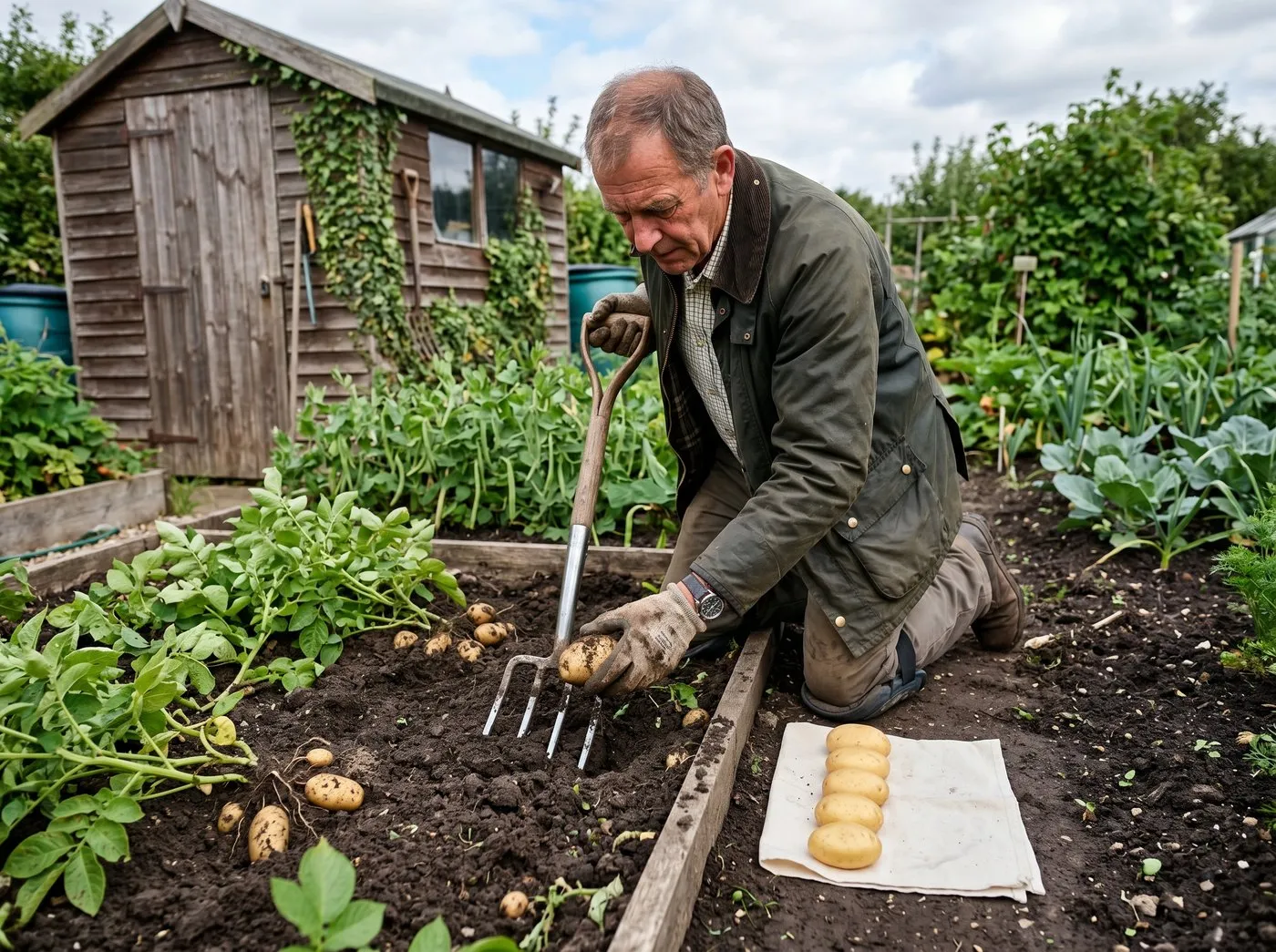 Careful lifting on show-eve - work the fork in from outside the row, lift the whole plant, separate tubers by hand. Never wash with water. Brush soil off with a soft brush only.
Selection and presentation
Judges look at:
- Uniformity (40% of marks) - all 6 tubers the same size and shape
- Shape (20%) - true to variety, no forking or knobbliness
- Eyes (15%) - shallow, evenly spaced
- Skin finish (15%) - clean, smooth, no blemishes
- Freedom from damage (10%) - no scab, slug damage, greening, cuts
Selection process:
- Lay all lifted tubers on a clean cloth.
- Reject any with damage, scab, greening, deep eyes, forking.
- Group remaining tubers by weight - use kitchen scales.
- Pick 6 tubers within 10% of each other (e.g. all between 230-250g for a class targeting 240g).
- Pick 6 from that weight group with the most identical shape.
- The 6 selected should be indistinguishable when arranged on the plate.
A tip from veteran UK show growers: take 8-9 tubers to the show and make the final selection of 6 at the table after seeing the lighting. Lighting changes how skin colour reads.
The presentation plate
Most UK shows provide a paper plate or specify size. Standard arrangement:
- 3 tubers in front row, 3 in back row, all eyes-up or in alternating direction (check show schedule)
- All in a single tight row, touching but not overlapping
- Plate labelled with variety name and class number on a small white card
Some shows allow a small amount of clean sphagnum moss or sand under the tubers to set them. Check the schedule.
Common reasons UK show potatoes fail
Forked or knobbly tubers. Stones in the soil. Sieve compost through 10mm mesh next year.
Scab on skin. Soil pH too high or fresh manure used. Lower pH to 5.5-6.5; only use well-rotted manure.
Cracked skin. Erratic watering. Install drip irrigation; water consistently.
Tubers too small. Spacing too tight, or variety mismatch. Increase spacing to 50cm+ and pick a known show variety.
Tubers too big. Soil too rich or harvest left too late. Cut haulm at the right time pre-show.
Greening on skin. Tubers exposed to light during growing. Earth up properly; mound 25cm+.
Uneven shapes. Variety not suited to showing, or seed potatoes from supermarket-grade stock. Buy show-grade certified seed.
No matched set. Plants too close together produced varied sizes. Wider spacing, single tuber per planting station.
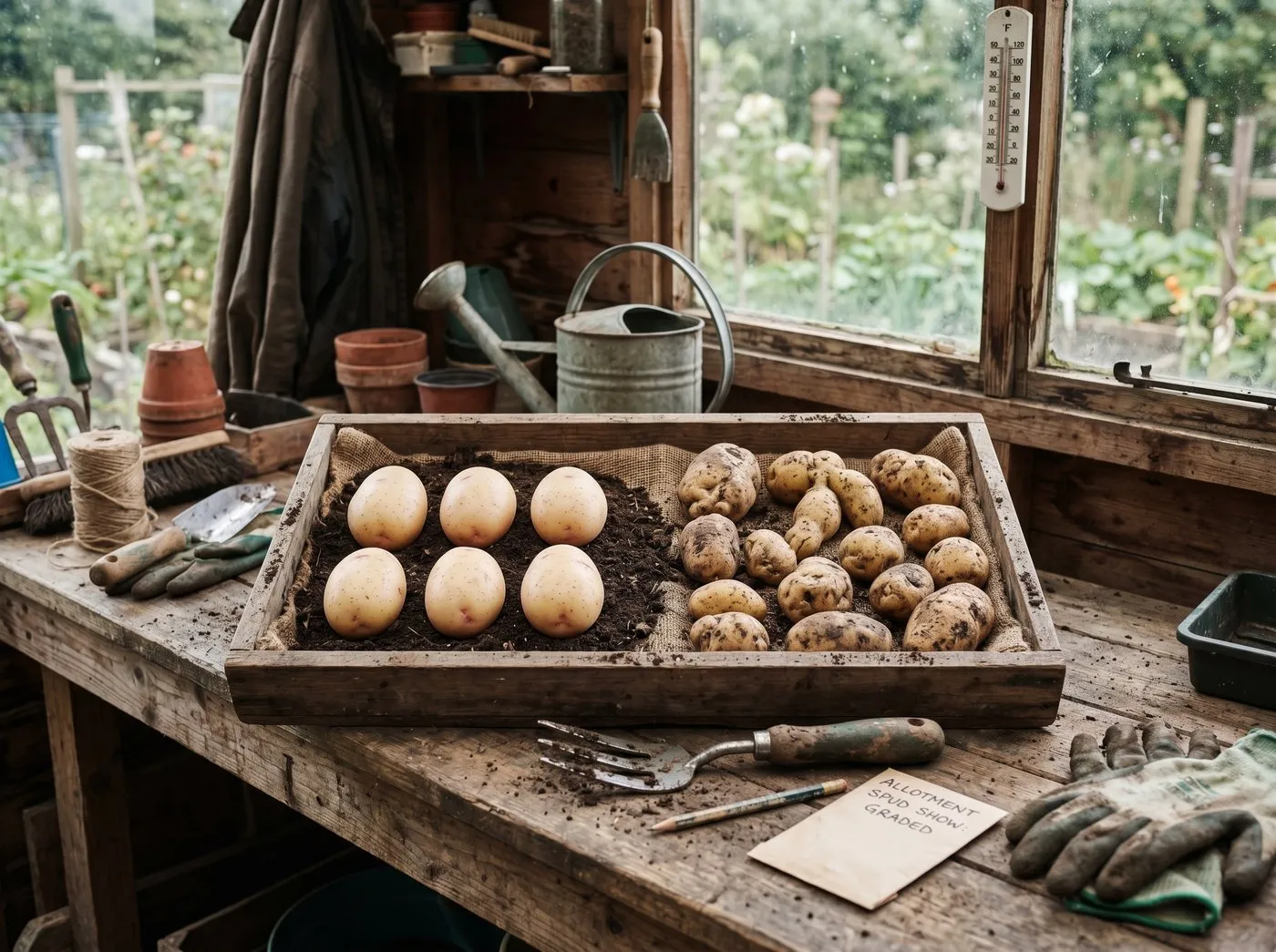 Show-grade vs reject - left side are matched perfect ovals; right side are forked, scabby, or wrong-shaped tubers that judges would mark down. Selection is half the show-prep work.
Field note: The National Vegetable Society UK publishes show schedules, judging standards and grower guidance for UK competitive shows. They run regional and national shows from June through October each year.
Cost vs prize money - the honest reckoning
Show potato growing is not for the money:
| Item | Annual cost |
|---|---|
| Seed potatoes (show grade, 5kg) | £35-£75 |
| Sieved compost top-up | £20-£40 |
| Drip irrigation (one-off £25, amortised) | £5 |
| Slow-release fertiliser | £8 |
| Total | £68-£128 per year |
Typical UK village hall prizes: £5-£20 per class win plus a rosette. County show prizes: £25-£50 per class win plus a trophy.
You will not get rich showing potatoes. You will, however, become a much better grower, learn precision allotment technique, and get a satisfying autumn afternoon at the show table.
The 5-step path to your first show win
-
Read the local show schedule in January or February. Pick one class to focus on.
-
Order show-grade seed by mid-February for the right variety (Winston for whites, Kestrel for coloured, etc.).
-
Prepare a deep bed with sieved compost over March. Plant chitted tubers at 50cm spacing.
-
Follow the watering and feeding routine through summer. Install drip irrigation if possible.
-
Lift carefully on show-eve. Select 6 matched tubers. Present on the plate as the schedule requires.
Five years of doing this and you’ll routinely place. Three years and you’ll consistently make the table. First year - just enter. The learning is faster than the winning.
Now you’ve got the show technique
For the wider potato-growing knowledge that underpins show success, our best potato varieties UK, when to plant potatoes UK, growing potatoes UK and late blight on potatoes and tomatoes UK guides cover the techniques that produce good potatoes for the kitchen as well as the show bench.
Our team produces practical UK gardening guidance from source research, contributor records and established horticultural practice. Editorial standards are overseen by Matt W.