Key takeaways
- Keep every bed 1.2m wide or less, so you reach the middle from both sides and never compact the soil
- Main paths need 45 to 60cm, enough for a wheelbarrow; side paths can drop to 30cm
- Run beds north to south and put tall crops on the north side, so nothing shades the row behind
- Rotate four crop groups each year: legumes, brassicas, roots, then alliums and potatoes
- Square-foot grids lift yield per square metre by around 30 to 40 percent over single rows
Small vegetable garden design is about fitting the most productive growing space into a tight plot without it feeling cramped. A small veg garden layout that works follows a few hard rules: beds you can reach across, paths you can actually walk, and crops arranged so nothing shades its neighbour. Get those right and a 6m by 4m corner can feed two people salad and vegetables all summer.
How wide should a vegetable bed be in a small garden?
The single most important measurement is bed width, and the answer is 1.2m maximum. That figure is not arbitrary. The average adult comfortably reaches around 60cm into a bed. A 1.2m bed lets you work the centre line from either side without ever stepping on the soil. Standing on growing soil compacts it, collapses the air pockets roots depend on, and undoes a season of structure-building.
If a bed sits against a wall or fence, you can only reach it from one side. Cap those at 60cm wide so the back never goes out of reach. Length is flexible. Beds of 2.4m are easy because standard timber comes in that length, but you can run a bed the full length of a fence if you want.
Bed height matters less than width. A bed of 15 to 30cm is plenty for most vegetables. Carrots and parsnips want at least 30cm of loose soil for straight roots. For more on getting started with raised beds, our guide to raised bed gardening for beginners covers timber choice, lining and fill.
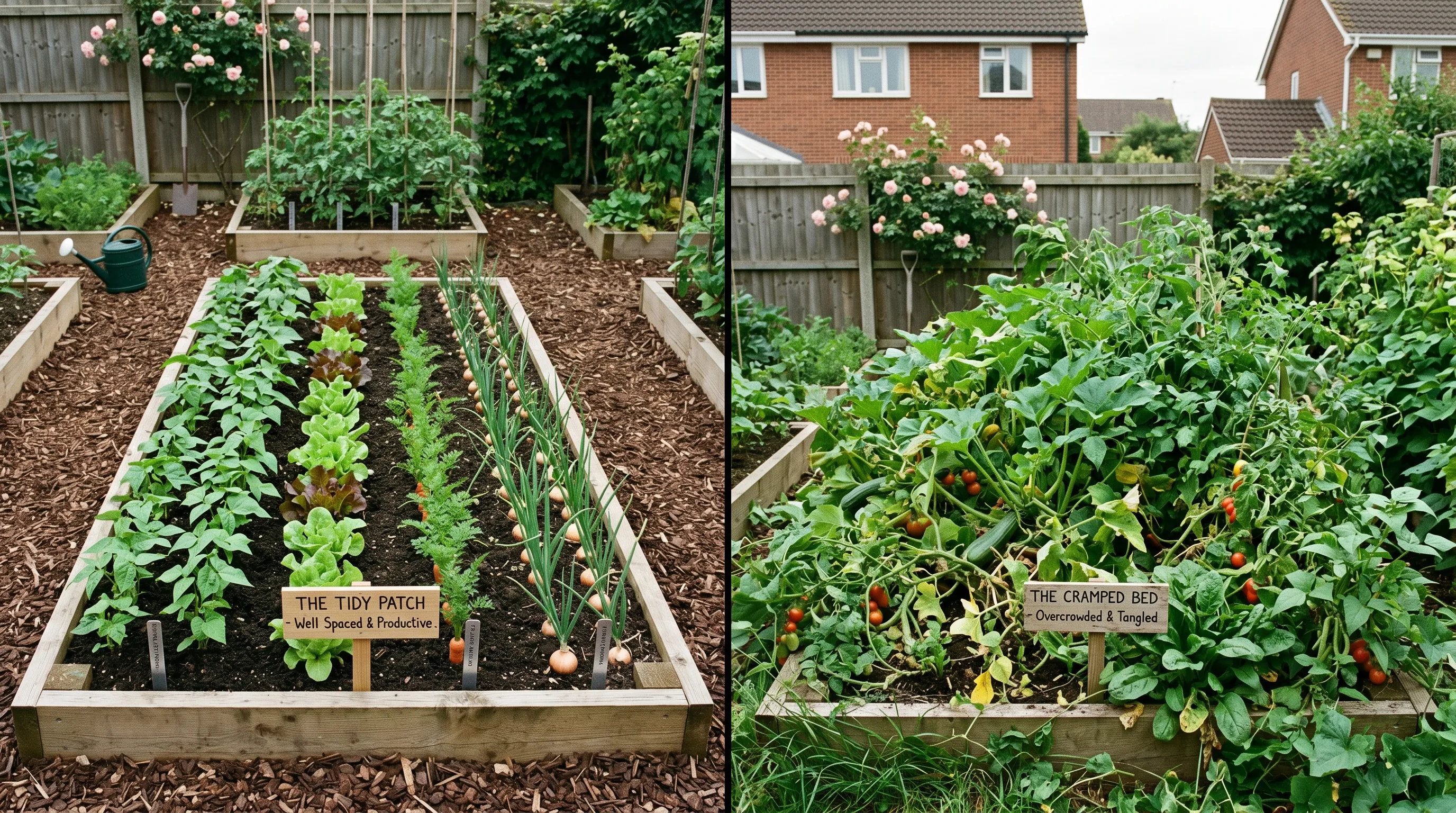 Left, a bed sized for reach with a clear path. Right, the cramped layout that forces you to tread on the soil. The path is never wasted space.
Path widths, sun orientation and bed spacing
Paths are not wasted space, they are what makes the beds usable. Main access paths need 45 to 60cm. That is the width of a standard wheelbarrow plus your boots. Skimp here and you will catch the barrow on bed edges every trip. Secondary paths between two beds you only reach into can drop to 30cm, just enough to stand and work.
Orientation decides how evenly your crops get the sun. Run beds north to south wherever the garden allows. This way the sun tracks along the length of each bed through the day and rows get even light, rather than one row permanently shading the next. Where a garden is wider east to west, running beds that way is fine, but always plant the tallest crops on the north side.
Gardener’s tip: Mark out beds and paths with string and canes before you build anything. Walk the paths with a loaded wheelbarrow and a watering can. It is far cheaper to move a string line than a built bed full of soil.
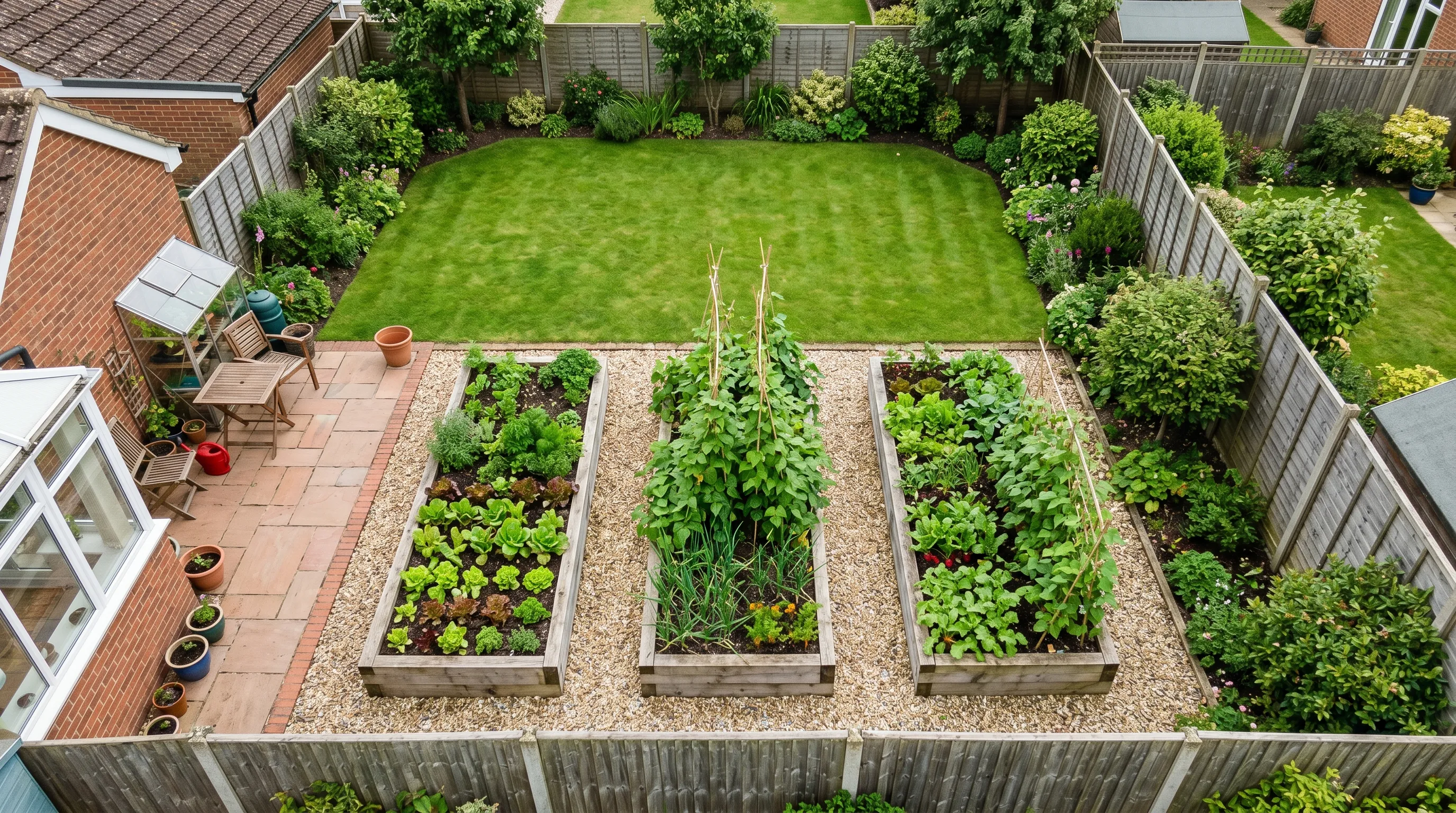 Three 1.2m by 2.4m beds running north to south with 50cm paths. This is the workhorse layout for an average suburban plot.
Raised beds versus growing in the ground
Both approaches grow good vegetables, but they suit different gardens. Raised beds win in most small UK plots. They warm two to three weeks earlier in spring, drain freely on heavy clay, and draw a hard line between growing soil and tread space. That no-tread discipline is what protects soil structure in a tight area where you are working close to the crops.
The trade-off is cost and water. Raised beds need filling, and an average 1.2m by 2.4m bed takes around 0.7 cubic metres of soil and compost, roughly 40 to 60 pounds of bought material. They also dry out faster in July, so factor in a water butt nearby.
| Approach | Spring warm-up | Drainage on clay | Build cost per bed | Best for |
|---|---|---|---|---|
| Raised bed | 2 to 3 weeks earlier | Excellent | 50 to 90 pounds | Heavy or wet soil, defined no-tread space |
| In-ground bed | Standard | Poor on clay | Near zero | Good free-draining soil, deep roots, low budget |
| Container cluster | Fastest | Excellent | 5 to 30 pounds each | Patios, courtyards, renters |
Five small vegetable garden layout plans
This is the core of the guide. Each plan below is sized for a real UK garden and lists what it suits. Pick the one that matches your space and ambition, then scale the bed count up or down.
Plan 1: The single raised-bed starter
One bed of 1.2m by 2.4m (2.88 square metres). This is where most people should begin. It fits beside a patio, against a fence, or on a slab of lawn. Divide it loosely into thirds: salad leaves and radish at the front, beetroot and carrots in the middle, dwarf beans or a couple of courgettes at the back. One bed like this gave us 28 to 34kg across a season when kept in succession. Effort is low, around 20 minutes of work a week.
Plan 2: The four-bed rotation system
Plan 3: The intensive square-foot grid
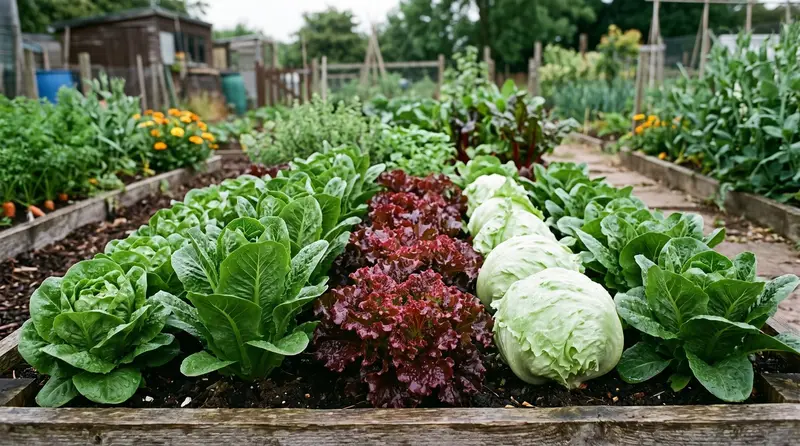
One or two beds divided into a 30cm by 30cm grid with string or thin laths. Each square grows a set number of plants: 1 cabbage, 4 lettuces, 9 beetroot, 16 carrots. The grid forces tight, even spacing and makes succession obvious, because you resow a square the moment it clears. This is the highest-yielding plan per square metre, lifting output by 30 to 40 percent over single rows. Our square-foot gardening UK guide sets out the per-square plant counts in full.
Plan 4: The L-shaped corner plan
Two beds meeting at a right angle along two fences, each around 0.6m by 2.4m because they are reached from one side only. This plan suits an awkward corner or a garden where the centre is kept as lawn or patio. Tall crops like climbing beans and cordon tomatoes go against the fence, using the vertical space, with low salad crops in front. Effort is low and it keeps the veg neatly to the edges.
Plan 5: The potager mixing veg and flowers
A single bed or pair of beds planted with vegetables and flowers together. Marigolds, calendula and nasturtium sit among the lettuce and beans. This looks like a flower border but feeds you, which makes it ideal for a front garden or a plot on show. The flowers pull in pollinators and some deter pests. Yields run a little below a dedicated veg bed because flowers take some space, but the dual purpose earns its keep in a tight garden.
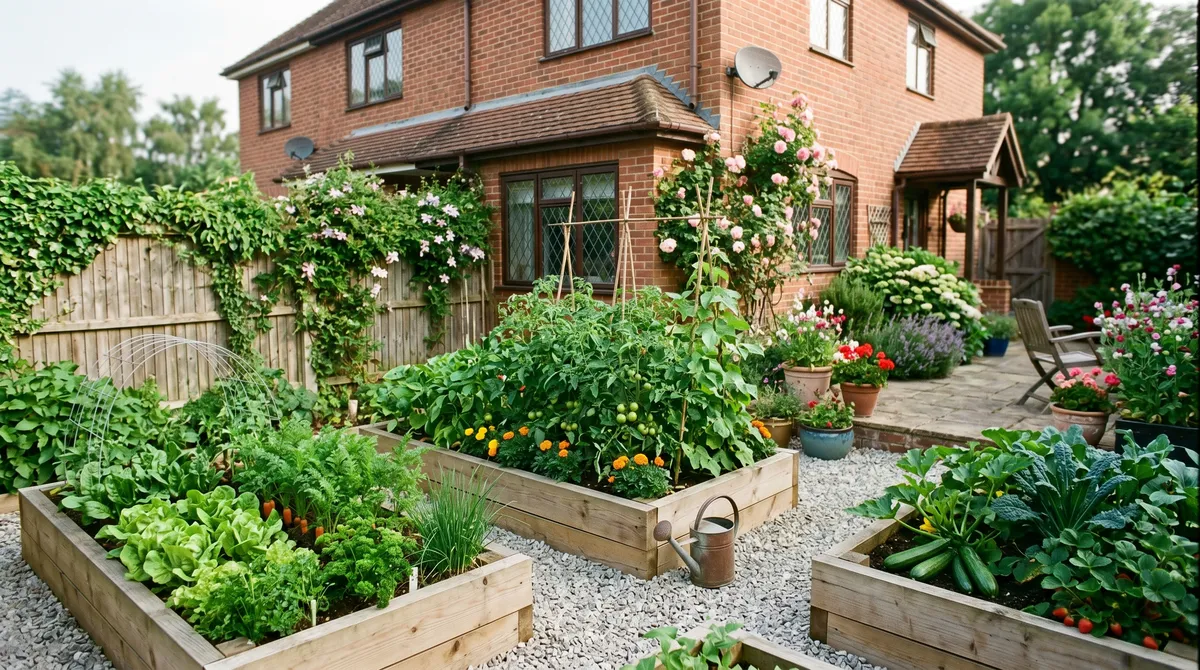
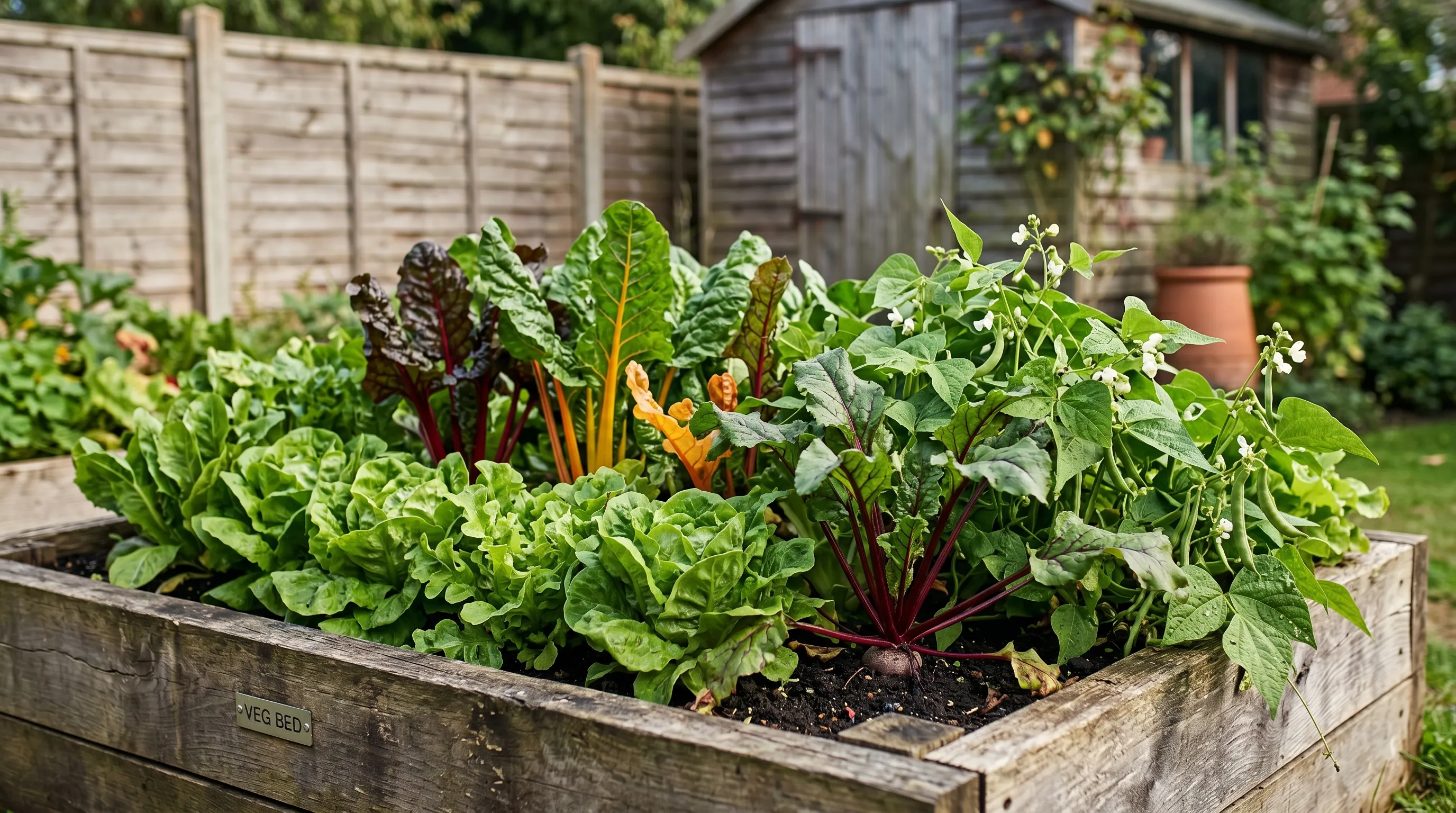 A single 1.2m by 2.4m bed in full summer growth. Tight succession planting keeps every square earning its space.
Crop rotation in a four-group system
Crop rotation moves each crop family to a different bed every year, so soil pests and diseases never settle. It matters as much in a small plot as a large one, because the same few square metres carry the whole burden. The standard UK system uses four groups, and you simply shift each group one bed along annually.
The four groups are:
- Legumes: peas and beans. They fix nitrogen in the soil through their roots, leaving it richer for the next crop.
- Brassicas: cabbage, kale, broccoli, sprouts. They follow legumes to use that added nitrogen for leafy growth.
- Roots: carrots, beetroot, parsnips. They follow brassicas and want soil that has not been freshly manured, which causes forking.
- Alliums and potatoes: onions, garlic, leeks, potatoes. They close the cycle before legumes return.
With four beds the rotation is tidy: one group per bed, rotated yearly, back to the start after four years. With three beds, combine alliums into the root group. The Royal Horticultural Society explains the principles of crop rotation in more depth if you want the science.
Succession sowing and intercropping to fill the space
A small garden lives or dies on never leaving soil bare. Succession sowing means resowing a crop the moment the previous one is harvested, so each square produces two or three crops a year instead of one. Sow a short row of lettuce every two to three weeks rather than all at once, and you get a steady supply instead of a glut followed by nothing.
Intercropping squeezes a fast crop between a slow one. Sow radish between parsnip rows: the radish is pulled in four weeks, long before the slow parsnips need the room. Plant lettuce in the gaps between young brassicas and harvest it before the cabbages spread. This is how a tiny bed out-produces a large, single-crop one.
Catch crops fill the brief windows between main plantings. After early potatoes come out in July, the bed has time for a fast crop of salad leaves or oriental greens before autumn. Treat every empty square as a sowing opportunity. Garden Organic has good free guidance on green manures for filling longer winter gaps. For more vertical tricks, see our container vegetable gardening guide, which pairs well with a small bed system on a patio.
Growing up: making use of vertical space
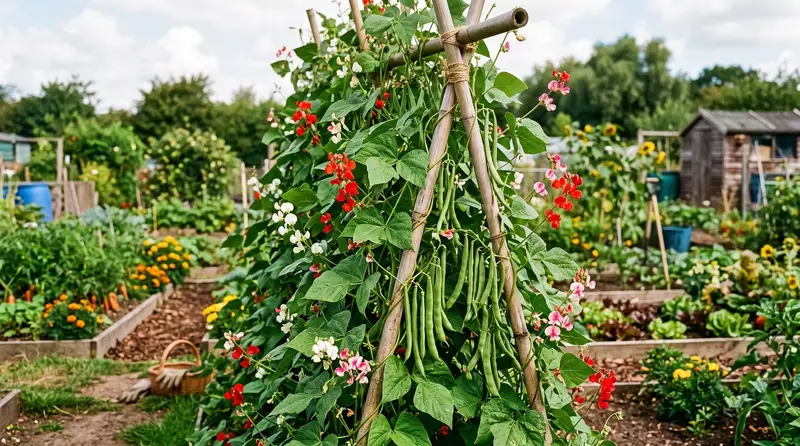
When ground space runs out, grow upward. Vertical growing can double the productive area of a small bed by using the air above it. Climbing French beans and runner beans scramble up a wigwam of canes to 2m, producing far more per square metre of soil than a dwarf variety. Cordon tomatoes trained to a single stem up a cane do the same.
A trellis or netting against a sunny fence carries cucumbers, climbing courgettes and trailing squash trained upward instead of out. This keeps the fruit off the soil, where it is cleaner and less prone to slug damage. Peas climb pea netting or twiggy sticks. Even a hanging basket of tumbling tomatoes or strawberries adds a crop without using any bed space at all.
The rule with vertical crops is placement. Always put them on the north side of a bed, so the tall growth shades nothing behind it. A wigwam of beans on the south side of a bed will throw the whole bed into shadow by midsummer.
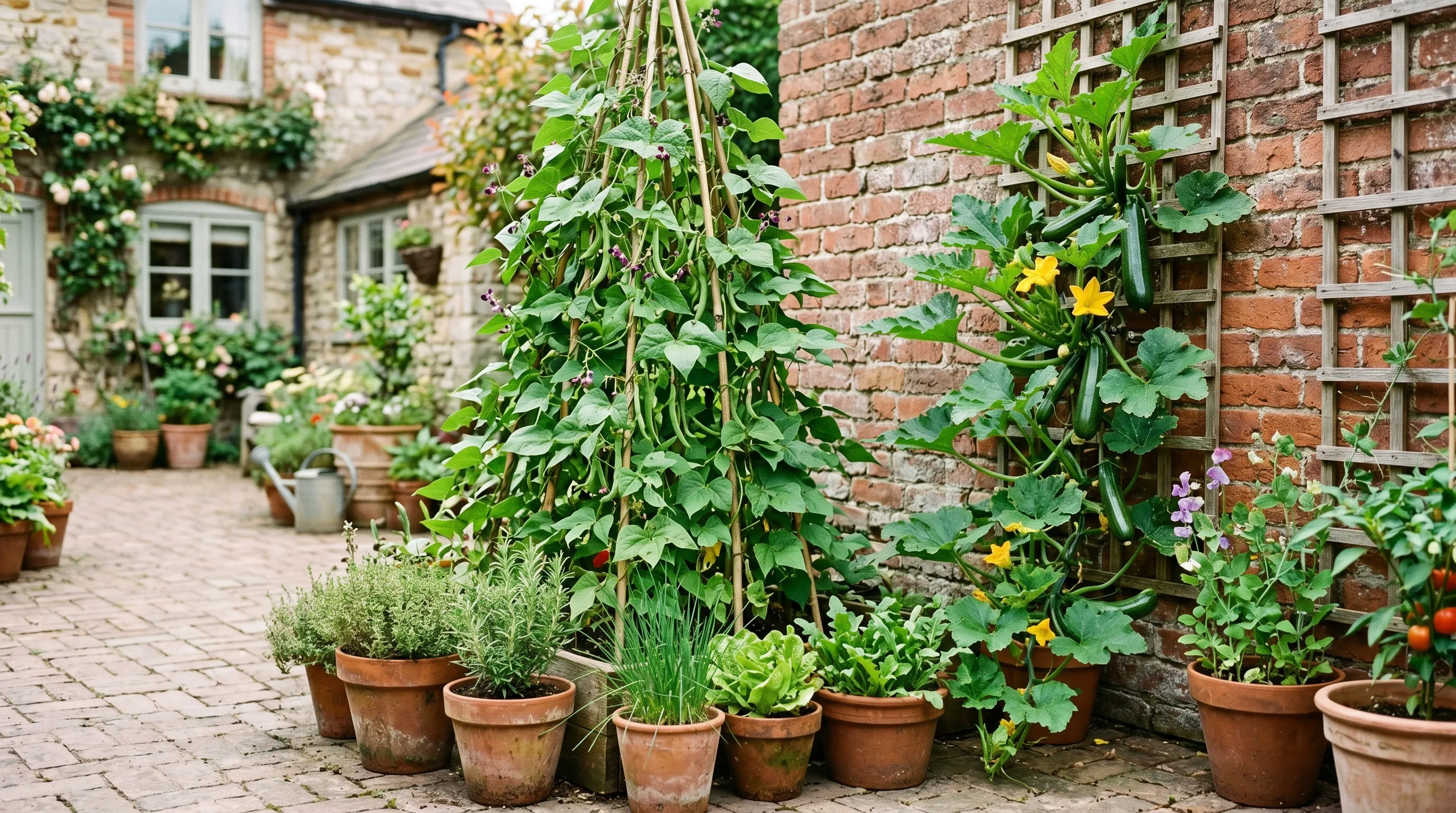 Beans on a cane wigwam and courgettes trained up a trellis. Going vertical doubles what a tiny courtyard bed can grow.
Best vegetables for return per square metre
Not all crops earn their space. In a small garden, choose by return per square metre and speed, not by what you fancy. The crops below give the most food or value from the least ground. Space-hungry, slow crops like maincrop potatoes, pumpkins and Brussels sprouts are usually better bought than grown when space is tight.
| Crop | Days to harvest | Yield per square metre | Return | Best plan |
|---|---|---|---|---|
| Salad leaves (cut and come again) | 30 to 40 | 2 to 3kg over season | Very high | Square-foot grid |
| Dwarf French beans | 60 to 70 | 2 to 3kg | High | Any bed |
| Beetroot | 70 to 90 | 4 to 5kg | High | Square-foot grid |
| Climbing beans | 70 to 90 | 4 to 6kg vertical | Very high | Vertical, L-shaped |
| Courgette | 50 to 60 | 3 to 5kg per plant | High | Single bed, potager |
| Carrots | 70 to 80 | 4 to 5kg | Medium | Deep raised bed |
| Maincrop potatoes | 130 to 160 | 4 to 5kg | Low for space | Avoid in small plots |
Herbs deserve a mention. A square of basil, parsley, coriander and chives costs pennies to grow and replaces shop bunches at 70p to 1 pound each. For value per square metre, cut-and-come-again salad and herbs beat almost everything.
A month-by-month sowing plan by bed
This calendar shows what to sow or plant in a four-bed rotation through a UK season. Adjust by a week or two for your region: the north runs later, the south and city gardens earlier.
| Month | Legume bed | Brassica bed | Root bed | Allium/potato bed |
|---|---|---|---|---|
| March | Sow peas under cloche | Start brassicas indoors | Sow early carrots under fleece | Plant first early potatoes |
| April | Sow broad beans | Plant out hardy brassicas | Sow beetroot, carrots | Plant onion sets, maincrop potatoes |
| May | Sow French and runner beans | Sow kale, sprouting broccoli | Successional carrots, beetroot | Sow spring onions |
| June | Harvest early peas | Plant out summer cabbage | Thin and successional sow roots | Earth up potatoes |
| July | Pick beans regularly | Net against cabbage white | Sow autumn carrots | Lift first early potatoes |
| August | Last bean picking | Plant spring cabbage | Sow winter radish, turnip | Lift maincrop potatoes, dry onions |
| September | Clear and compost haulms | Harvest summer brassicas | Lift beetroot, carrots | Plant autumn garlic |
| October | Sow green manure | Harvest kale, leeks | Lift remaining roots | Plant overwintering onions |
The gaps in this table are where catch crops go. Slot a fast salad sowing into any cleared square through spring and summer to keep the soil working.
Common mistakes in small vegetable garden design
A few predictable errors waste space and effort. Avoid these and a small plot performs far above its size.
Building beds too wide to reach. The most common mistake by far. A bed of 1.5m or wider forces you to step on the soil to reach the middle, compacting it and damaging structure. Cap every two-sided bed at 1.2m and every one-sided bed at 60cm. No exceptions.
Forgetting the paths. Beds drawn edge to edge look efficient on paper but leave nowhere to stand, kneel or run a barrow. Always allow 45 to 60cm for main paths. A garden you cannot move around is a garden you stop tending.
Shading short crops with tall ones. Planting climbing beans or sweetcorn on the south side of a bed throws everything behind into shade by midsummer. Put tall crops on the north side, low crops to the south, so the sun reaches every row.
Ignoring crop rotation. Growing the same family in the same soil year after year lets pests like onion white rot and clubroot build to crippling levels. Rotate four groups across your beds every year, even in the smallest plot.
Leaving soil bare. An empty bed is a missed crop. The day a square clears, resow it. Bare soil grows weeds and loses nutrients to rain; a planted square grows you dinner.
Frequently asked questions
How wide should a small vegetable bed be?
No wider than 1.2m. That lets you reach the centre from either side without stepping on the soil. Standing on a bed compacts it and squeezes out the air roots need. If a bed sits against a wall or fence and you can only reach one side, cap the width at 60cm so the back stays workable.
What can you grow in a small vegetable garden?
Grow high-value, fast crops like salad leaves, beetroot, dwarf beans and herbs. These give the best return per square metre. Avoid space-hungry crops like maincrop potatoes, pumpkins and sweetcorn unless space allows. A 1.2m by 2.4m bed comfortably feeds two people salad and veg through summer if you sow in succession.
How many raised beds fit in a small garden?
A typical UK back garden fits three to four 1.2m by 2.4m beds. Allow 45 to 60cm paths between them. In a plot of around 6m by 4m you can run three beds with a central path and still leave room for a water butt and compost bin. Narrow gardens suit beds running end to end along one fence.
Do you need to rotate crops in a small garden?
Yes, rotation still matters even in a tiny plot. Moving crop groups each year stops soil pests and diseases building up. Use four groups: legumes, brassicas, roots, then alliums and potatoes. With three or four beds you simply shift each group one bed along annually, returning to the start after four years.
Are raised beds better than growing in the ground?
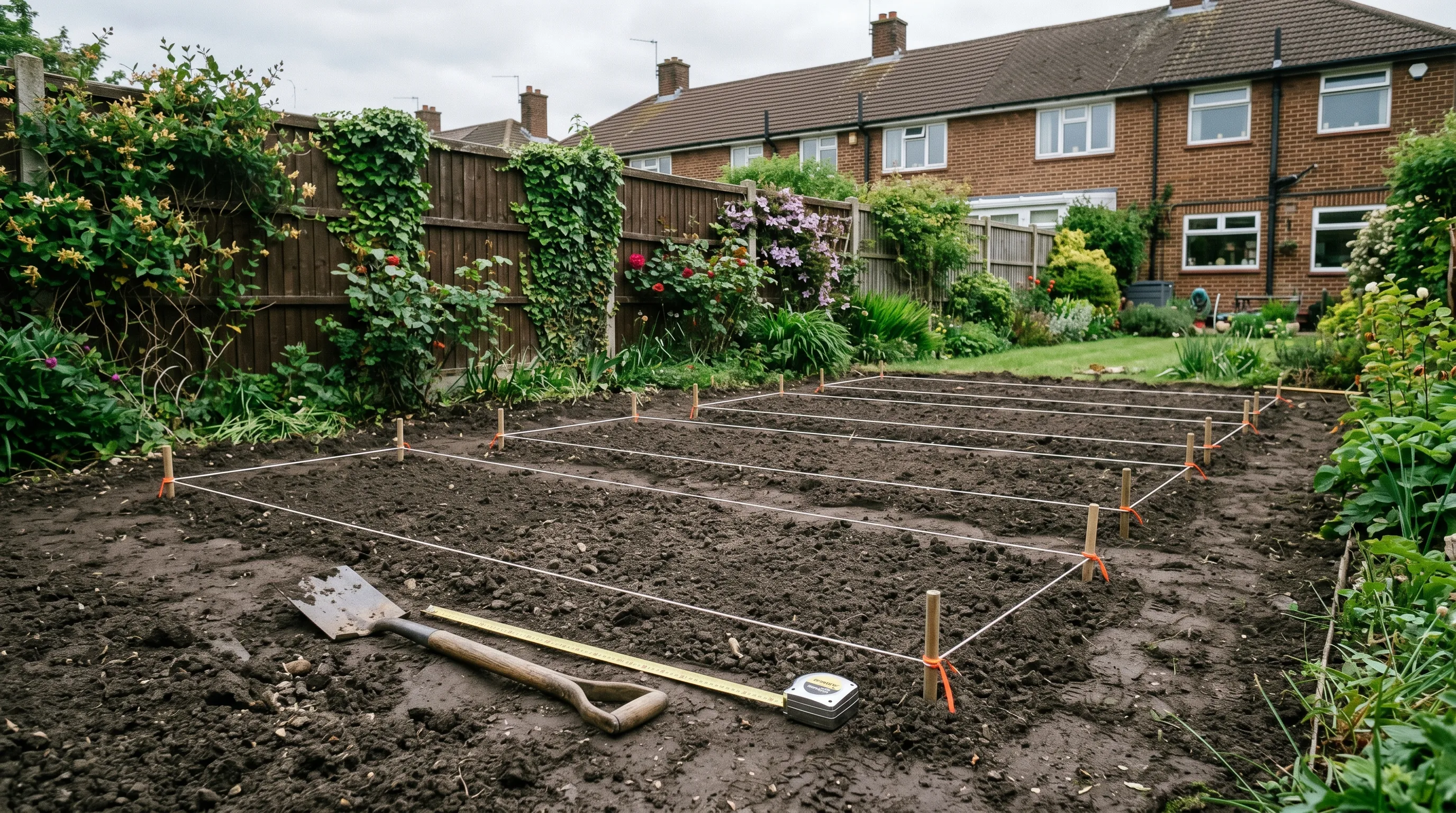 Strings and canes mark a four-bed plan before building. Walk the paths with a barrow first to check the widths work.
Now you have the layout plans and the rotation worked out, build the growing space itself with confidence. Browse all our growing guides for sowing dates, crop-by-crop advice and seasonal jobs to keep your small vegetable garden producing from March to October.
Our team produces practical UK gardening guidance from source research, contributor records and established horticultural practice. Editorial standards are overseen by Matt W.