Key takeaways
- True spinach bolts above 24C and once daylength passes 14 hours, so it is a spring and autumn crop
- Succession sow true spinach every 2 to 3 weeks for a continuous 40 to 50 day harvest
- Bolt-resistant cultivars 'Apollo', 'Missouri' and 'Reddy' run 7 to 14 days longer before flowering
- Cover the June to August gap with perpetual spinach and New Zealand spinach, both heat-tolerant
- Sow hardy 'Giant Winter' or 'Bordeaux' in October under a cloche for a March to April harvest
- Across 12 cultivars over four seasons, our spring sowings bolted 9 to 23 days apart
This is the sequel to our how to grow spinach guide, which covers the basics of a single crop. Here we go further: how to chain sowings, swap species, and keep a bowl of leaves coming every month.
Why true spinach bolts and turns bitter in summer
True spinach bolts because of daylength, not just heat. Spinach is a long-day plant. Once daylight passes roughly 14 hours, a hormonal switch tells the plant to flower. In most of the UK that threshold arrives in mid to late May. From then until late July, any true spinach in the ground races to seed.
Heat compounds the problem. Soil temperatures above 24C speed bolting and turn leaves bitter and tough. The plant stops making sweet, tender foliage and pours energy into a flower spike. Within a week a healthy rosette becomes a 60cm stalk.
This is why a spring sowing succeeds and a June sowing fails. The May sowing matures before the longest days. The June sowing meets the 14-hour trigger as a seedling and bolts at 8cm tall. Understanding this single mechanism changes how you plan the whole year.
Gardener’s tip: Daylength matters more than the calendar. In Aberdeen the 14-hour threshold lands earlier than in Cornwall, so northern gardeners should bring spring sowings forward by 10 to 14 days.
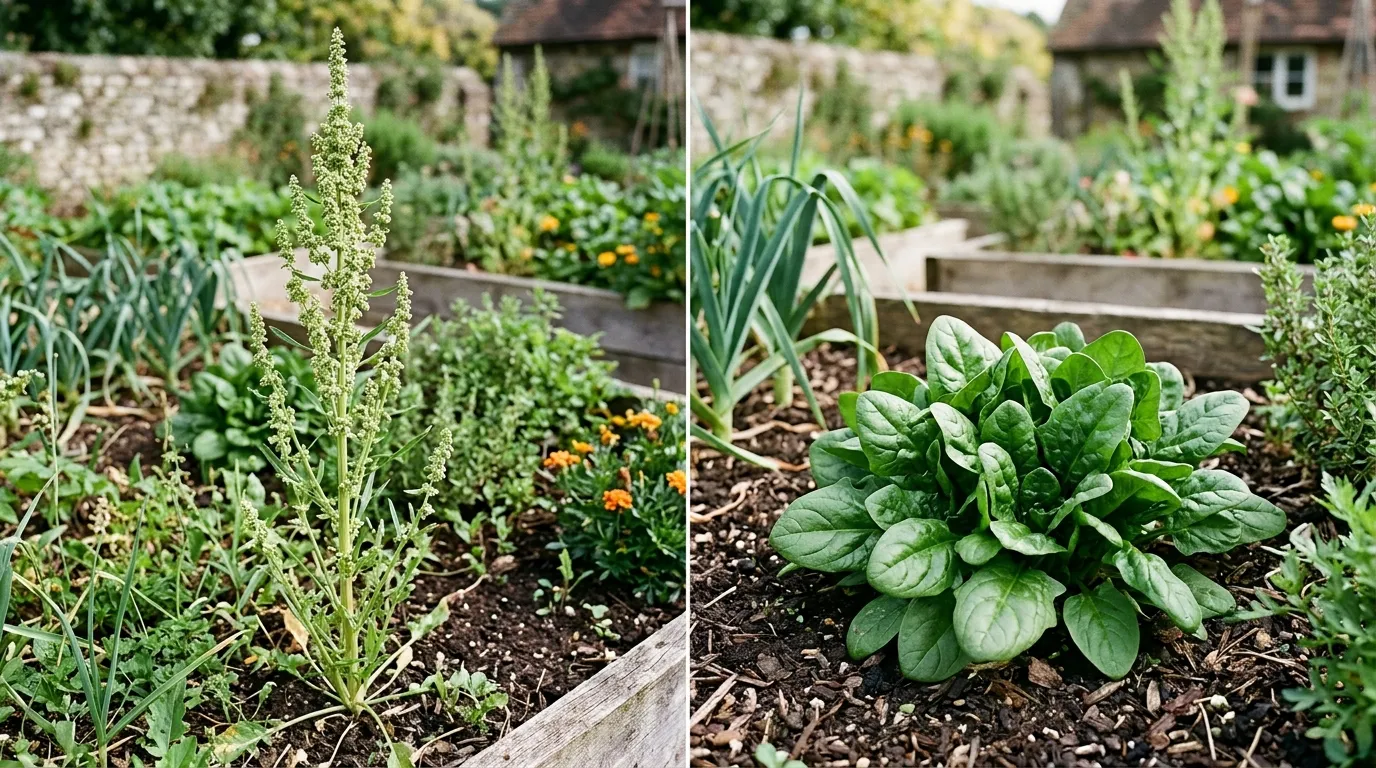 Left: a bolted plant throwing a 50cm flower stalk. Right: a healthy pre-bolt rosette. Once the central stem lengthens, leaf quality drops within days.
Succession sowing true spinach in spring and autumn
True spinach gives its best leaves in the cool shoulders of the year: roughly February to May, then August to October. The way to turn two short windows into a long harvest is succession sowing. Sow a short row every two to three weeks rather than one big batch.
Each sowing gives about three weeks of cut-and-come-again picking before quality fades. Stagger the sowings and a fresh row matures just as the last one tires. A 1.5m row sown every fortnight feeds two people steadily through spring.
Sow true spinach 20mm deep, with seeds 25mm apart in rows 30cm apart. Thin to 75 to 100mm between plants for full-size leaves, or leave them dense for baby-leaf cutting. Germination takes 7 to 14 days at soil temperatures of 7 to 20C. Spinach germinates poorly above 25C, another reason summer sowings struggle.
For autumn, restart outdoor sowings in early August. Cooling soil and shortening days suit the plant again. These sowings crop September to November and the hardiest carry leaves into early winter. This succession rhythm is the backbone of the wider succession planting guide for UK vegetables.
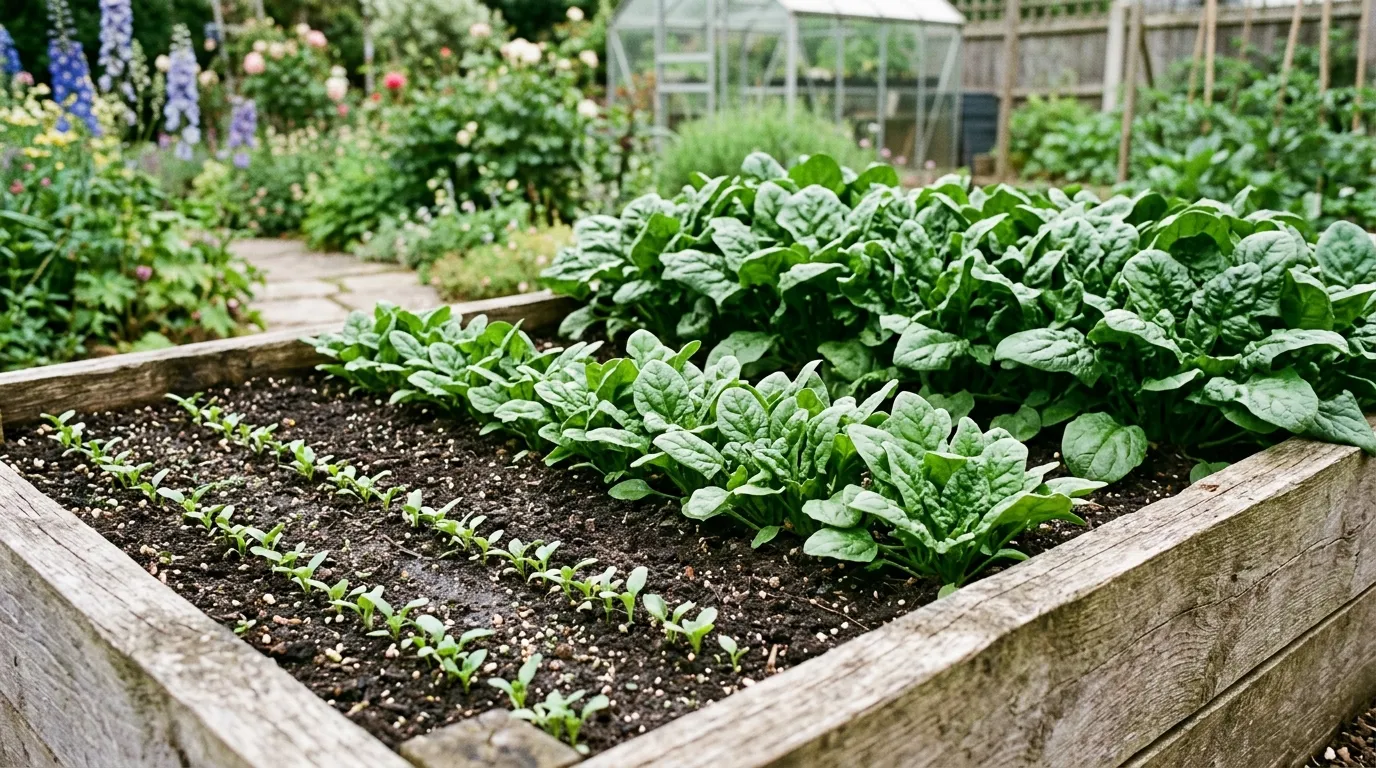 Three sowings two weeks apart in one bed. The right-hand row is ready to cut while the left-hand row is still germinating, the core of succession sowing.
Choosing bolt-resistant spinach cultivars
Cultivar choice buys you time. Bolt-resistant cultivars hold 7 to 14 days longer before running to seed, which can mean an extra fortnight of picking from each late-spring sowing. They do not defeat the long-day trigger, but they push it back.
What the cultivars actually deliver
How heat-tolerant substitutes cover the summer gap
The June to August gap is where most UK spinach plans collapse. The answer is to stop fighting true spinach and grow heat-tolerant substitutes instead. Three plants crop hard through summer when true spinach cannot.
Perpetual spinach (Beta vulgaris), also called spinach beet, is a beet relative grown for its leaves. It tolerates heat, resists bolting, and crops cut-and-come-again for months. The leaves are thicker than true spinach but cook down the same way. One spring sowing crops into the following spring.
Swiss chard sits alongside perpetual spinach as a heat-proof leaf. Our how to grow Swiss chard guide covers the colourful ‘Bright Lights’ types in depth.
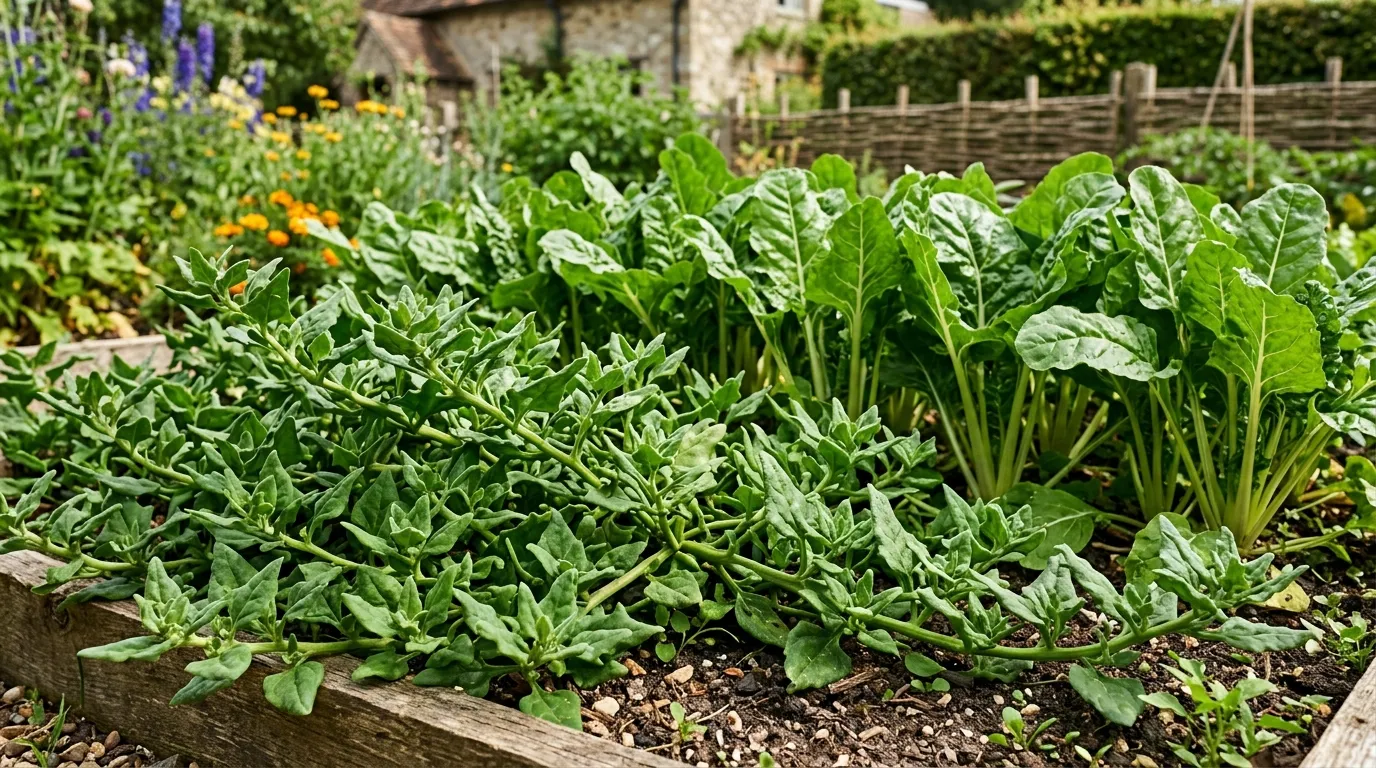 New Zealand spinach (front, fleshy triangular leaves) and perpetual spinach (behind, broad leaves) keep cropping through July heat when true spinach has bolted.
Growing New Zealand spinach from a slow start
New Zealand spinach is the single best summer substitute, but it starts slowly. The hard seed coat delays germination, so soak seeds in water for 24 hours before sowing. Sow indoors in April at 18 to 20C, or direct outdoors from mid-May once frost has passed. Tetragonia is frost-tender and dies at the first autumn frost.
True spinach versus the summer substitutes
The three plants look and grow very differently. Knowing which leaf you are looking at helps you pick the right one for each season and bed.
| Type | Botanical name | Season in UK | Bolt resistance | Days to first harvest | Flavour and leaf | Hardiness |
|---|---|---|---|---|---|---|
| True spinach | Spinacia oleracea | Spring, autumn | Low, bolts over 24C | 40 to 50 | Sweet, smooth or savoy, tender | Half-hardy to hardy by cultivar |
| Bolt-resistant true spinach | S. oleracea ‘Apollo’ | Late spring, autumn | Moderate, plus 7 to 14 days | 45 to 55 | Sweet, dark smooth leaf | Half-hardy |
| Winter spinach | S. oleracea ‘Giant Winter’ | Autumn to spring | High in cold, bolts in spring | 60 to 90 over winter | Mild, large savoy leaf | Hardy to minus 10C |
| Perpetual spinach | Beta vulgaris | Spring to following spring | High, rarely bolts year one | 50 to 60 | Earthy, thick leaf, cooks well | Hardy to minus 8C |
| New Zealand spinach | Tetragonia tetragonoides | Summer | Very high, no bolt in heat | 55 to 70 | Mild, fleshy triangular leaf | Frost-tender |
| Swiss chard | Beta vulgaris subsp. cicla | Spring to winter | High | 50 to 60 | Earthy, glossy leaf, bright stems | Hardy to minus 8C |
The pattern is clear. True spinach gives the best raw-salad leaf but the shortest season. The beet-family greens and Tetragonia trade a slightly coarser leaf for months of reliable cropping. A year-round supply uses all of them in turn.
A month-by-month spinach calendar for the UK
The two switch points matter most. Stop sowing true spinach outdoors in early June and lean on perpetual and New Zealand spinach. Sow hardy winter types in late September or October so they reach pickable size before deep winter slows growth.
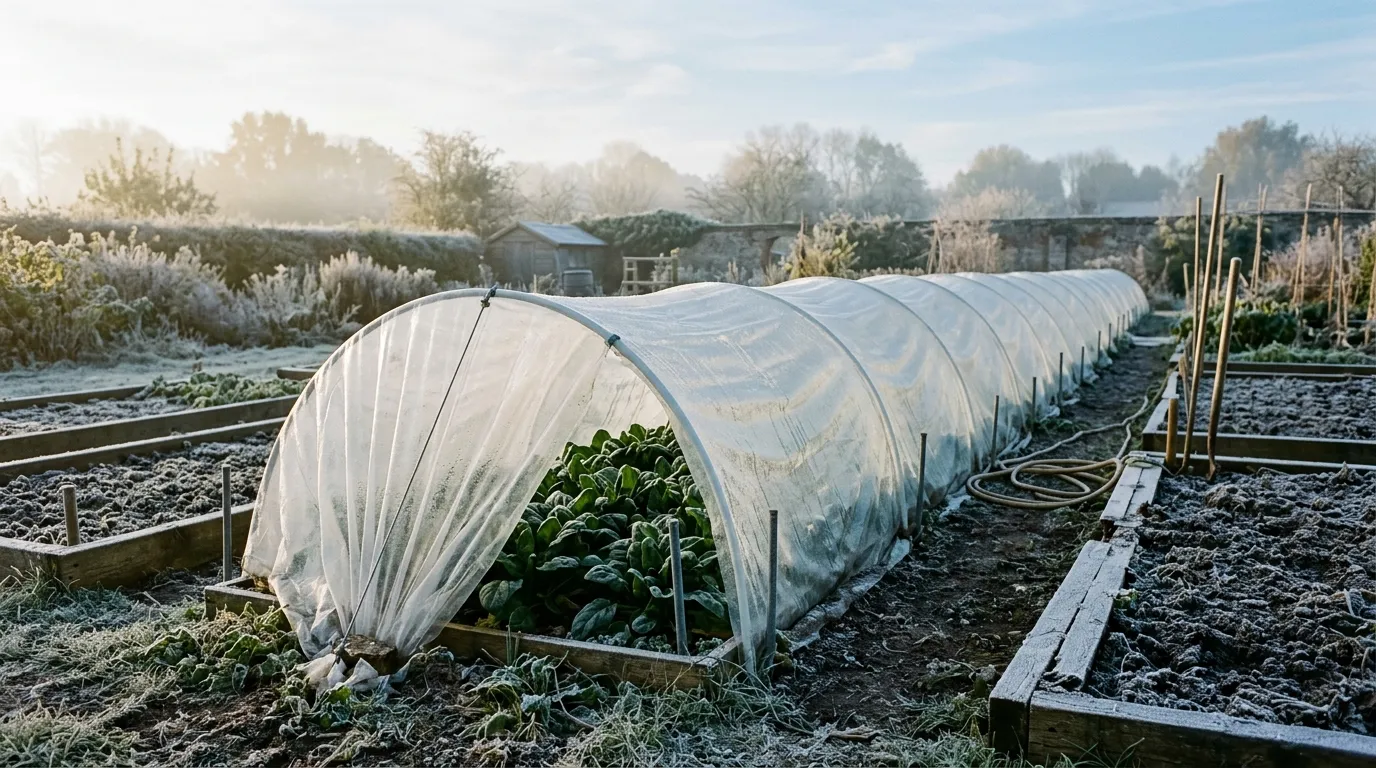 A simple polythene cloche over autumn-sown ‘Giant Winter’. The cover lifts survival rates and keeps leaves pickable through frosts that flatten uncovered plants.
Growing winter spinach under cover for spring leaves
Winter spinach is the least-known part of the year-round plan. Hardy cultivars sown in autumn survive UK winters and crop on mild days, then surge in early spring well before any new sowing. This fills the February to April hungry gap.
Sow ‘Giant Winter’, ‘Bordeaux’ or ‘Medania’ in September or early October. They need to reach a decent rosette before growth stalls below 5C. Plants survive to about minus 10C in open ground, more under cover. Growth nearly stops in deep winter, then accelerates as light returns in February.
Multi-sowing and spacing for steady yields
Spinach responds well to dense growing for baby leaf and to multi-sowing for transplanted clumps. Multi-sowing means raising several seedlings in one module and planting the clump as a unit. It saves time and gives a steady cut-and-come-again supply.
Sow 4 to 6 spinach seeds per module, grow on, and plant each clump 20 to 25cm apart. The plants share the space and you cut across the whole clump. This works best for cut-and-come-again baby leaf rather than full-size plants. Our multi-sowing vegetables guide covers the technique across other crops.
For full-size leaves, single plants at 75 to 100mm spacing give the biggest individual leaves. For baby leaf, broadcast-sow a band 100mm wide and cut at 10cm tall with scissors, leaving 25mm of stem to regrow. Each band gives two or three cuts over a month before sowing fresh.
Common mistakes that break a year-round supply
Most failed year-round attempts come down to four repeated errors. Each is easy to avoid once you know the cause.
Sowing true spinach in midsummer. The single most common mistake. True spinach sown between early June and late July meets the 14-hour daylength trigger as a seedling and bolts at a few centimetres tall. The fix is to leave that window to perpetual and New Zealand spinach.
No summer substitute planned. Gardeners pull bolted spinach in June and have nothing to follow it. Start New Zealand spinach indoors in April so transplants are ready exactly when true spinach quits. Without a substitute, July and August are bare.
No winter cover. Hardy cultivars survive winter, but uncovered rows yield little and leaves get wind-battered and dirty. A cheap cloche raises yield by 40 per cent and keeps leaves clean. Skipping cover wastes the autumn sowing.
One big sowing instead of succession. Sowing a whole packet at once gives a glut for three weeks then nothing. Sow a short row every two to three weeks instead. Little and often beats all-at-once every time.
Sowing too shallow in dry soil. Spinach germinates poorly in warm dry surface soil. Sow 20mm deep, water the drill before sowing in dry spells, and germination rates climb from patchy to reliable.
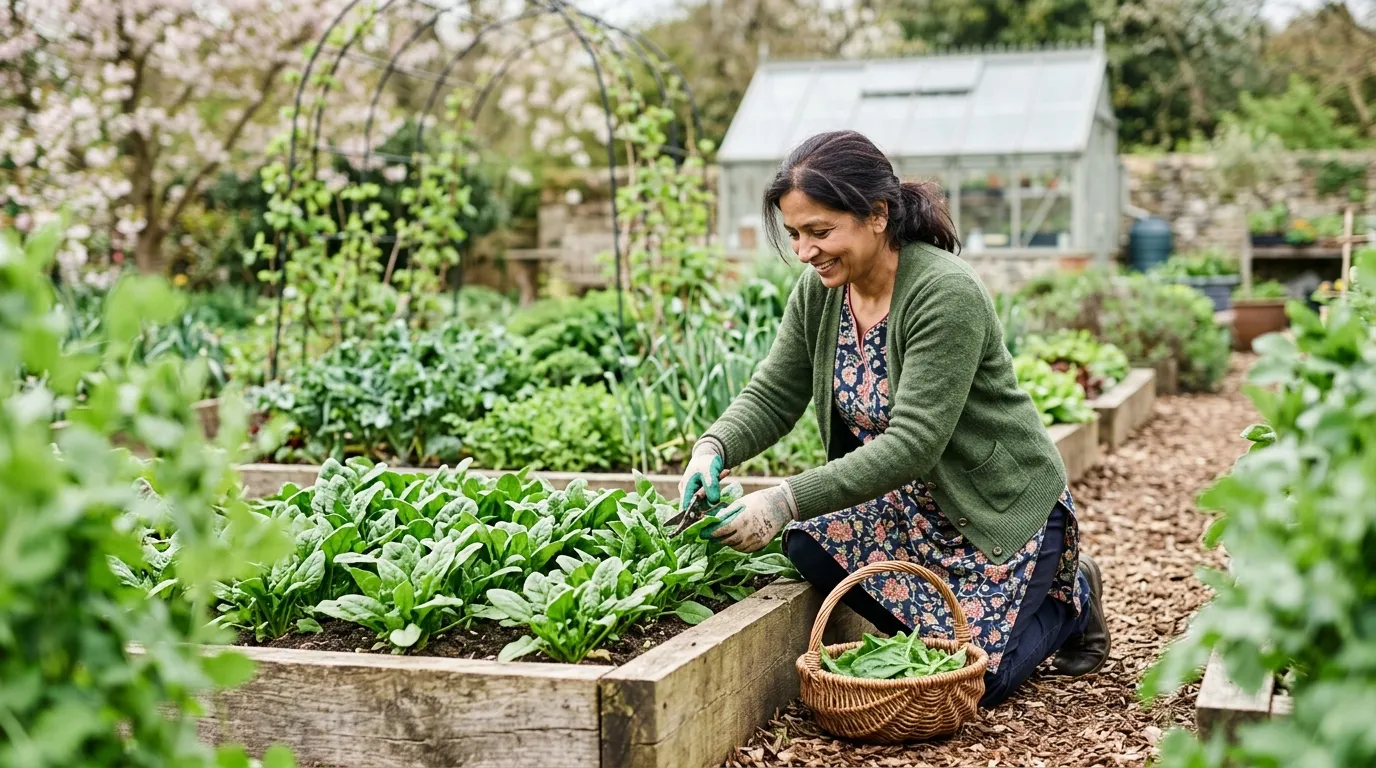 Spring is true spinach at its best. Cutting outer leaves rather than whole plants keeps each row producing for around three weeks before the next sowing matures.
Feeding, watering and avoiding bitter leaves
Spinach is a leafy crop that wants steady moisture and nitrogen. Dry roots and heat both trigger early bolting and bitterness, so consistent watering is part of the year-round plan, not an extra.
Water to keep soil evenly moist, around 10 to 15 litres per square metre per week in dry spells. A mulch of compost holds moisture and keeps roots cool, which delays bolting in early summer. Spinach grown hard and dry turns bitter regardless of cultivar.
Feed with a nitrogen-rich liquid feed every two to three weeks during active growth, or work in well-rotted compost before sowing. Aim for soil pH 6.5 to 7.0; spinach dislikes acidic ground and shows it as stunted, yellowing leaves. A light dressing of garden lime corrects acidic beds. Partial shade in midsummer helps the summer substitutes and any late true spinach hold quality, which links to growing leaves in the best vegetables for shade.
For wider organic-growing principles on feeding leaf crops, Garden Organic is a reliable UK source.
Frequently asked questions
Can you grow spinach all year round in the UK?
Yes, by rotating three plant types across the seasons. True spinach covers spring and autumn. Heat-tolerant perpetual spinach and New Zealand spinach fill the summer gap. Hardy cultivars sown in October crop through winter under a cloche. No single type spans all 12 months on its own, which is why cultivar choice and succession sowing matter.
Why does my spinach bolt so quickly?
True spinach bolts when days pass 14 hours and soil tops 24C. The long-day signal triggers flowering regardless of leaf size. Sowing in late May or June almost guarantees bolting within four to six weeks. Use bolt-resistant cultivars like ‘Apollo’, keep soil moist, and shift to summer substitutes from June onward.
What is the most bolt-resistant spinach for UK summers?
New Zealand spinach resists bolting best in heat. It is not true spinach but Tetragonia tetragonoides, which thrives above 25C. Among true spinach, ‘Apollo’, ‘Missouri’ and ‘Reddy’ hold 7 to 14 days longer than standard cultivars before running to seed. Perpetual spinach also rarely bolts in its first year.
How often should you sow spinach for a continuous supply?
Sow a short row of true spinach every two to three weeks. Each sowing gives roughly three weeks of cut-and-come-again picking before the next is ready. Stop outdoor true-spinach sowings in early June, restart in early August, then sow hardy types in October for winter and spring leaves.
Can spinach survive winter outside in the UK?
Yes, hardy cultivars like ‘Giant Winter’ and ‘Bordeaux’ survive to minus 10C. Sow them in September or October. They grow slowly through winter and surge in March. A cloche or cold frame raises survival rates by around 40 per cent and lets you pick fresh leaves on mild winter days.
Next step
Now you can keep spinach coming every month, read our how to grow Swiss chard guide for the other heat-proof leaf that fills the summer gap and crops right through a UK winter.
Our team produces practical UK gardening guidance from source research, contributor records and established horticultural practice. Editorial standards are overseen by Matt W.