Key takeaways
- Tomato stems root readily because they carry adventitious root initials along the whole stem
- Take healthy sideshoots 8-12cm long from the leaf axils of cordon (indeterminate) plants
- Water rooting on a windowsill produces white roots in 7-10 days at 18-22C, with 90%+ success
- In the UK take cuttings by mid-July, or the clones rarely ripen fruit outdoors before autumn
- A cutting is a genetic clone, so it keeps an F1 hybrid true-to-type unlike saved F1 seed
- One parent plant can give 6-10 free clones per season with zero seed or heat cost
Taking tomato cuttings is the cheapest way to double your crop, and it uses the very shoots you throw away. Every time you pinch a sideshoot out of a cordon tomato, you are binning a plant in the making. Those sideshoots root faster and more reliably than almost any cutting in the garden. Stand one in a jar of water on a windowsill and it grows white roots within ten days.
This guide covers why tomato stems root so readily, which shoots to take, and the two rooting methods that work in a UK summer. It also covers the timing that decides everything. Take cuttings too late and they never ripen. Get the July window right and one parent plant hands you six to ten free clones, each true to type.
Why tomato sideshoots root so easily
Tomato stems are built to root. Look closely at the base of any tomato plant and you will see small bumps along the stem, often with a purplish tinge. These are adventitious root initials, dormant root cells sitting ready in the stem tissue. Give them moisture and darkness and they push out roots within days. No other common vegetable roots this eagerly from a cutting.
This is a survival trait. In the wild, a sprawling tomato stem that touches damp soil roots along its length, anchoring the plant and drawing extra water. The same mechanism is why deep planting works so well for tomato seedlings, and why a snapped-off sideshoot is not a loss but an opportunity. The cells are already there. You just wake them up.
Because the root initials are pre-formed, tomato cuttings need no rooting hormone. The stem supplies everything except water and warmth. This sets tomatoes apart from woody cuttings like gardenia or other shrubs, which must form root tissue from scratch and often need hormone powder and bottom heat. A tomato asks for a jam jar and a sunny sill.
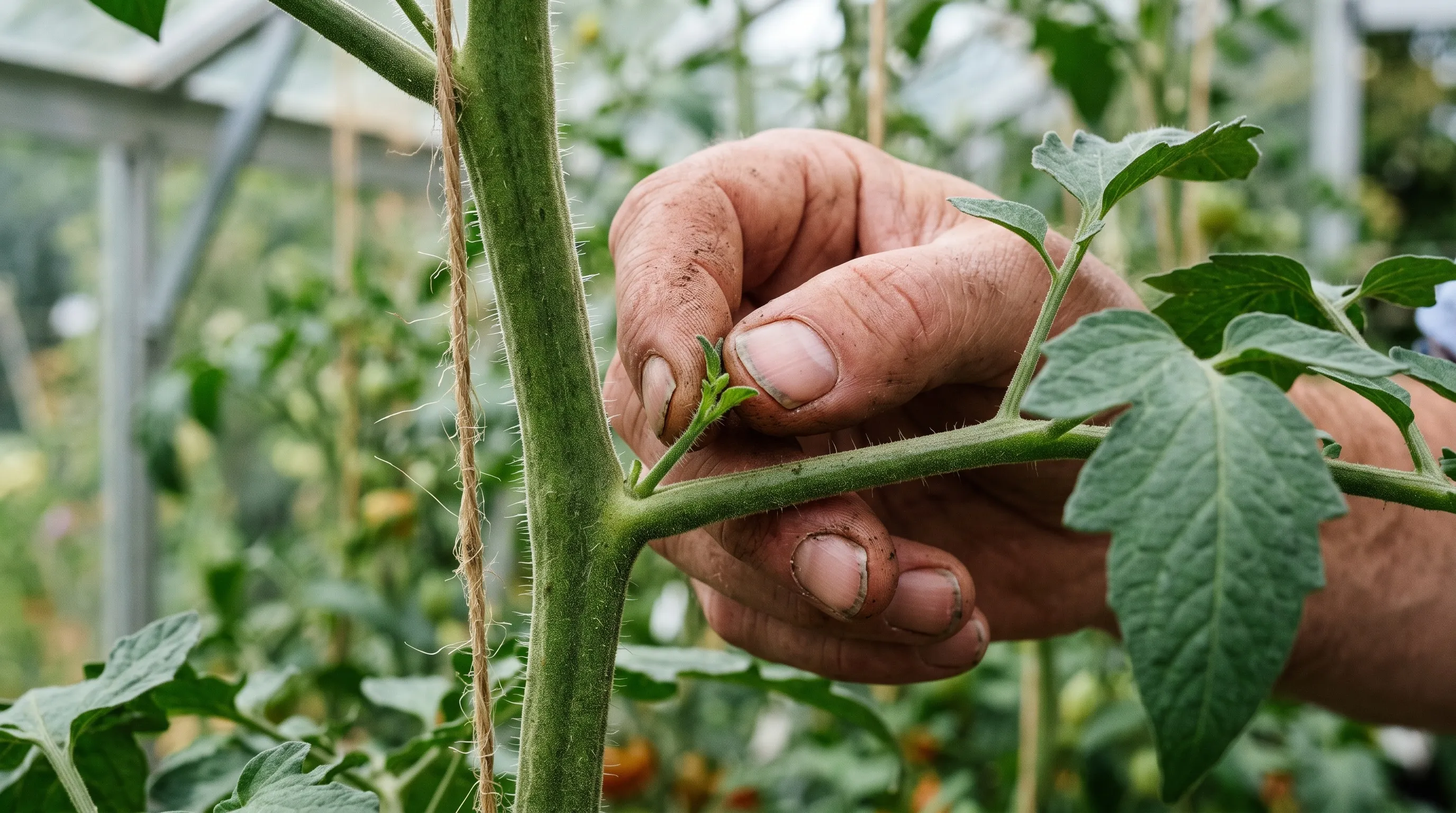 The sideshoots you pinch from the leaf axils are the cuttings. Each one carries dormant root initials ready to grow.
Which sideshoots to take and when to take them
The best cuttings are healthy sideshoots 8-12cm long, taken from the leaf axils of a cordon tomato. A sideshoot is the shoot that grows in the V between the main stem and a leaf. On cordon (indeterminate) varieties you remove these anyway to keep the plant to a single stem, so cutting them for propagation costs the parent nothing.
Choose shoots that are green, soft and actively growing. Avoid three types: thick woody shoots near the base, shoots already carrying flowers, and anything off a plant showing disease. A young, sappy shoot roots in a week. A woody sideshoot may take three weeks or rot before it roots. If you are unsure whether a plant is clean, check it against our guide to common tomato diseases before you take cuttings from it.
Take cuttings in the morning, when the plant is full of water and the shoots are turgid. Snap the sideshoot off cleanly with your fingers, or cut it with a sterilised blade close to the main stem. Drop the cuttings straight into a cup of water if it is a hot day, because a wilted cutting roots slowly. Bush (determinate) tomatoes make poor cutting stock, since they throw few sideshoots and stop growing at a fixed height.
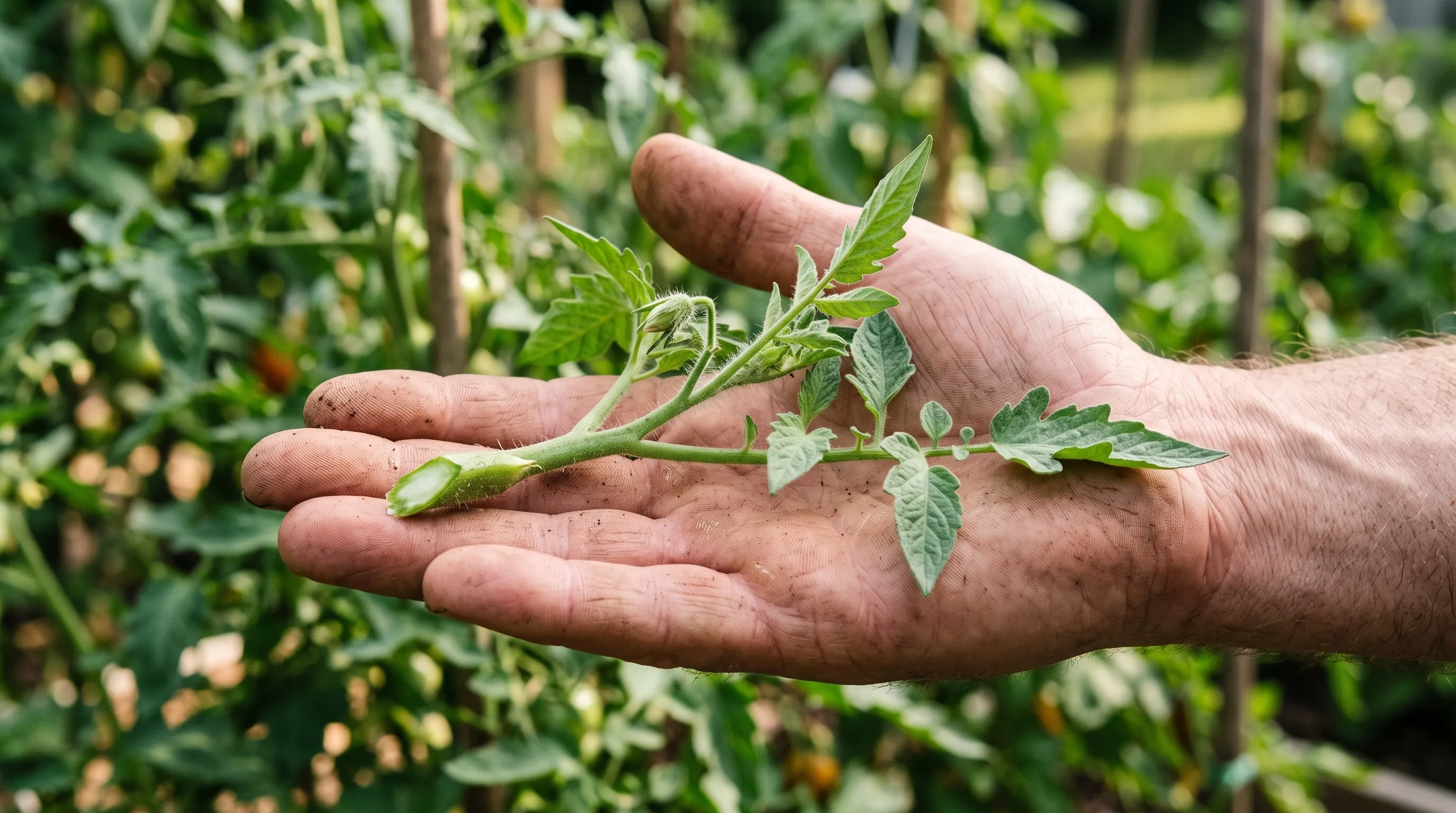 A good cutting is 8-12cm of soft green growth. Take it in the morning and keep it from wilting.
Rooting tomato cuttings in a jar of water
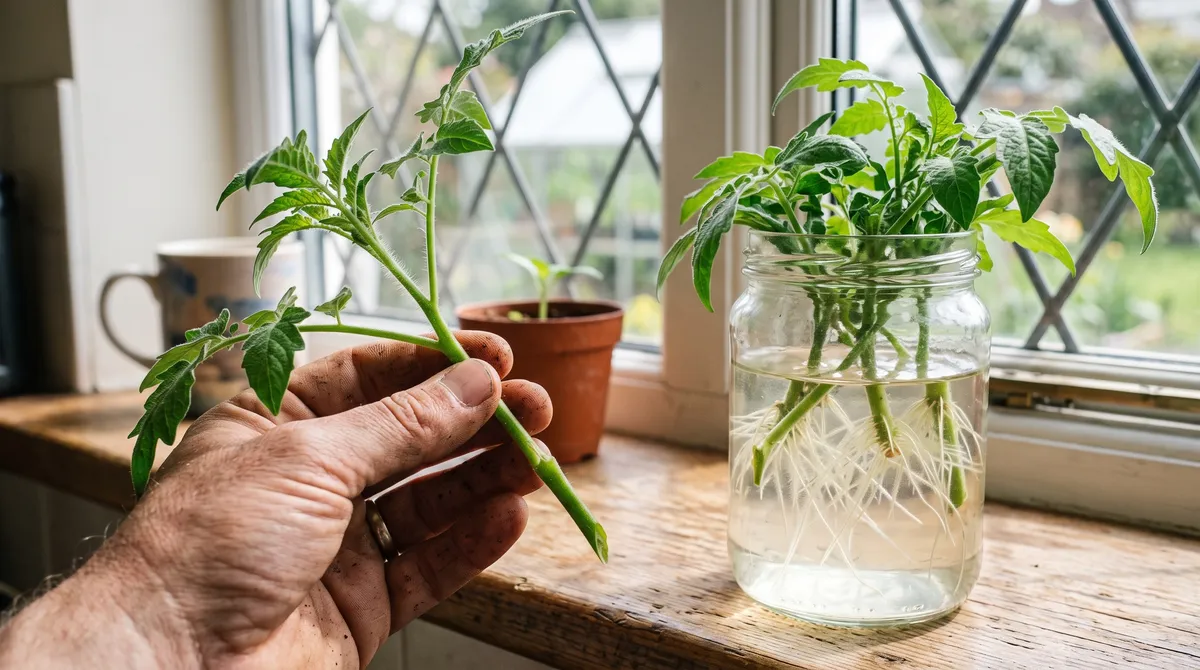
Put the jar on a bright windowsill at 18-22C, out of scorching midday sun that would cook the water and wilt the leaves. An east-facing kitchen sill is ideal. Top the water up daily, because the level drops fast in warm weather and an exposed stem base stalls. Change the water every three or four days if it turns cloudy, to keep oxygen up and rot down.
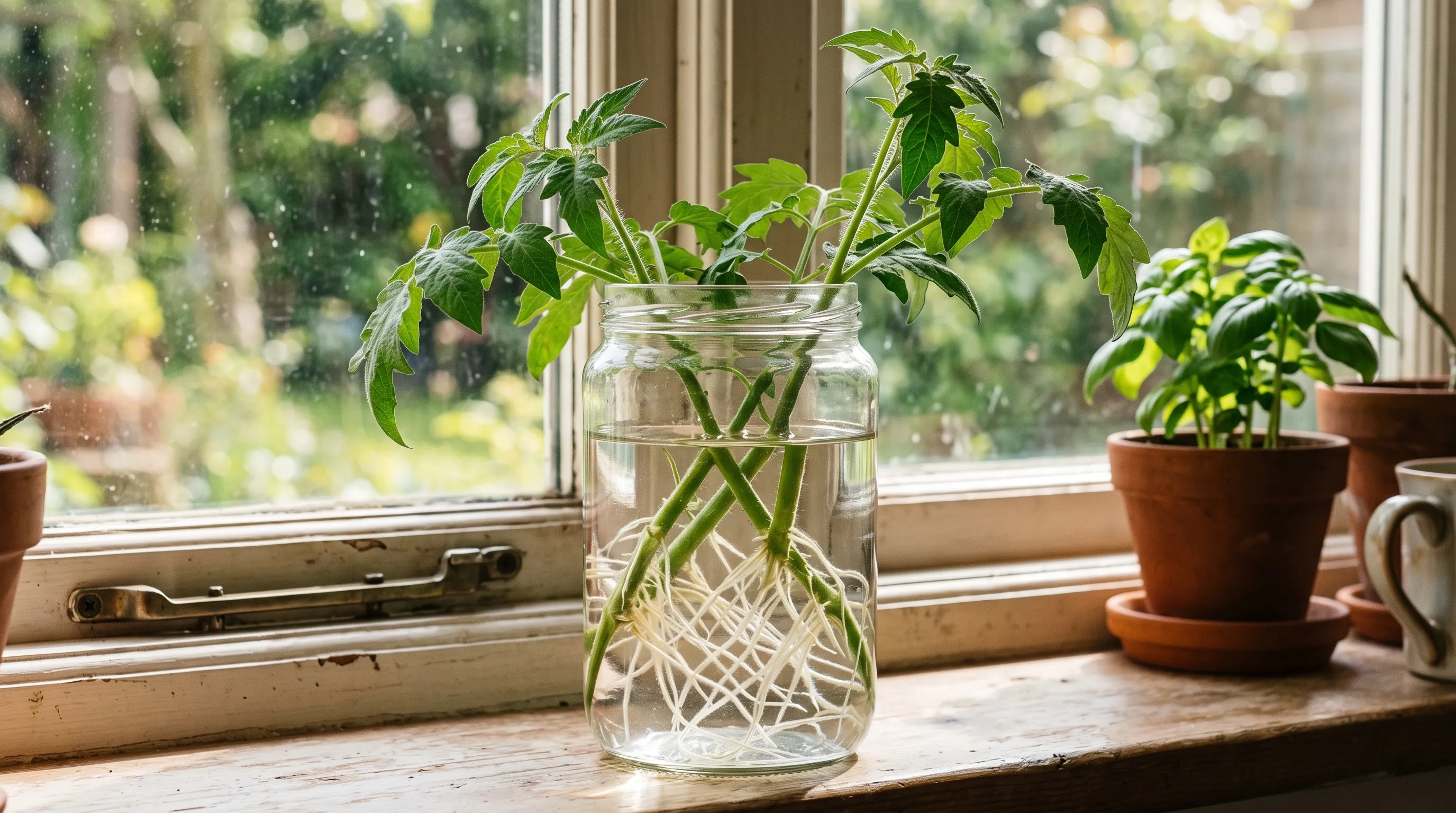 White roots on tomato cuttings in water after nine days. Pot them on once roots reach 20-40mm, before they grow too long and brittle.
Gardener’s tip: Use old jam jars and group three or four cuttings per jar. Keep only the bottom 3-4cm in water. If you submerge half the stem the buried section rots and the whole cutting collapses, which is the single most common water-rooting failure.
Rooting cuttings straight into compost or perlite
The second method skips the water and puts the cutting straight into compost. Fill a 9cm pot with moist multipurpose compost, ideally mixed with 20-30 percent perlite for drainage and air. Strip the lower leaves, dib a hole with a pencil, and push the cutting in so 4cm of bare stem sits below the surface. Firm gently and water in.
Cover the pot with a clear plastic bag or a propagator lid to hold humidity, because a compost cutting cannot draw water through unformed roots and wilts easily in the first few days. Keep it at 18-22C in bright shade, not full sun, and keep the compost evenly moist but never soggy. The cutting may flop for a day or two before it firms up. That is normal.
Compost rooting takes a little longer, usually 10-14 days, because the root initials must grow into compost rather than open water. You cannot see progress, so test with a gentle tug after 12 days. Resistance means roots have formed. The payoff is a stronger, better-branched root system that suffers no transplant check, since the roots grow in their final medium from the start. This method suits gardeners who forget to top up jars.
 Whether rooted in water or compost, pot each cutting into a 9cm pot once the roots are established, then grow it on warm and bright.
Water rooting versus compost rooting compared
Both methods work, and the right choice depends on how closely you want to watch progress and how much handling the roots can take. Water rooting is faster to show results and lets you see exactly when to pot on. Compost rooting is slower but gives a tougher root system with no transplant shock. The table below sets the two side by side.
| Factor | Water rooting | Compost rooting |
|---|---|---|
| Speed to visible roots | 7-10 days | 10-14 days |
| Success rate | 90%+ | 80-85% |
| Kit needed | A glass jar and water | Pot, compost, perlite, cover |
| Progress visible | Yes, watch roots form | No, tug-test to check |
| Transplant check | Slight, brittle roots | None, roots stay put |
| Best for | Speed and certainty | Toughness, low maintenance |
The UK timing that decides whether your cuttings fruit
Timing is everything with tomato cuttings. A cutting is a young plant starting from scratch, and it needs enough warmth and light left in the season to flower, set fruit and ripen. In the UK that means taking cuttings by roughly late June to mid-July. A shoot taken on 10 July roots by day 10, flowers within four to five weeks, and ripens trusses through September and into October.
Push past mid-July and the odds fall away fast outdoors. Light levels and temperatures drop from late August, and a cutting taken in August flowers but rarely ripens before the first frosts. You end up with a healthy green plant covered in fruit that never colours. A heated greenhouse or polytunnel buys two to three extra weeks, stretching the outdoor cut-off to late July or early August, because the covered warmth keeps ripening going later.
This is why cuttings are a July job in the calendar, not an autumn one. The season is short. If you want a real crop rather than a windowsill of green marbles, treat mid-July as your hard deadline outdoors. Under glass, you can gamble a fortnight more. Beyond that, keep the cutting as a plant to overwinter, not to crop.
Warning: Cuttings taken after mid-July rarely ripen fruit outdoors in the UK. If you take late cuttings, grow them under glass or accept a crop of green tomatoes for chutney. The clock, not the technique, is what beats most late attempts.
Potting on, hardening off and growing the young clones
Once a cutting has roots of 20-40mm, pot it into a 9cm pot of multipurpose compost. Bury the stem a little deeper than it sat before, because the buried section grows yet more roots and gives a sturdier plant. Water it in and keep it at 18-22C in bright light for the first week while the roots settle into the compost. Do not feed yet, as fresh compost holds enough nutrients for the first fortnight.
For plants destined outdoors, harden off over 7 days. Stand them outside in a sheltered spot by day and bring them in at night for the first three days, then leave them out longer each day. This gradual acclimatisation stops the soft indoor growth from scorching or checking in wind and cooler air. Plant out or pot up into their final 30cm pot or growbag once they are 20-25cm tall and the roots fill the 9cm pot.
Grow the clones exactly as you would a bought plant. Support cordon types with a cane, pinch out their own sideshoots, and start a weekly high-potash tomato feed once the first truss sets fruit. For variety-specific spacing and support, our guide to the best tomato varieties for UK gardens covers habit and yield. A July clone catches up fast in warm weather.
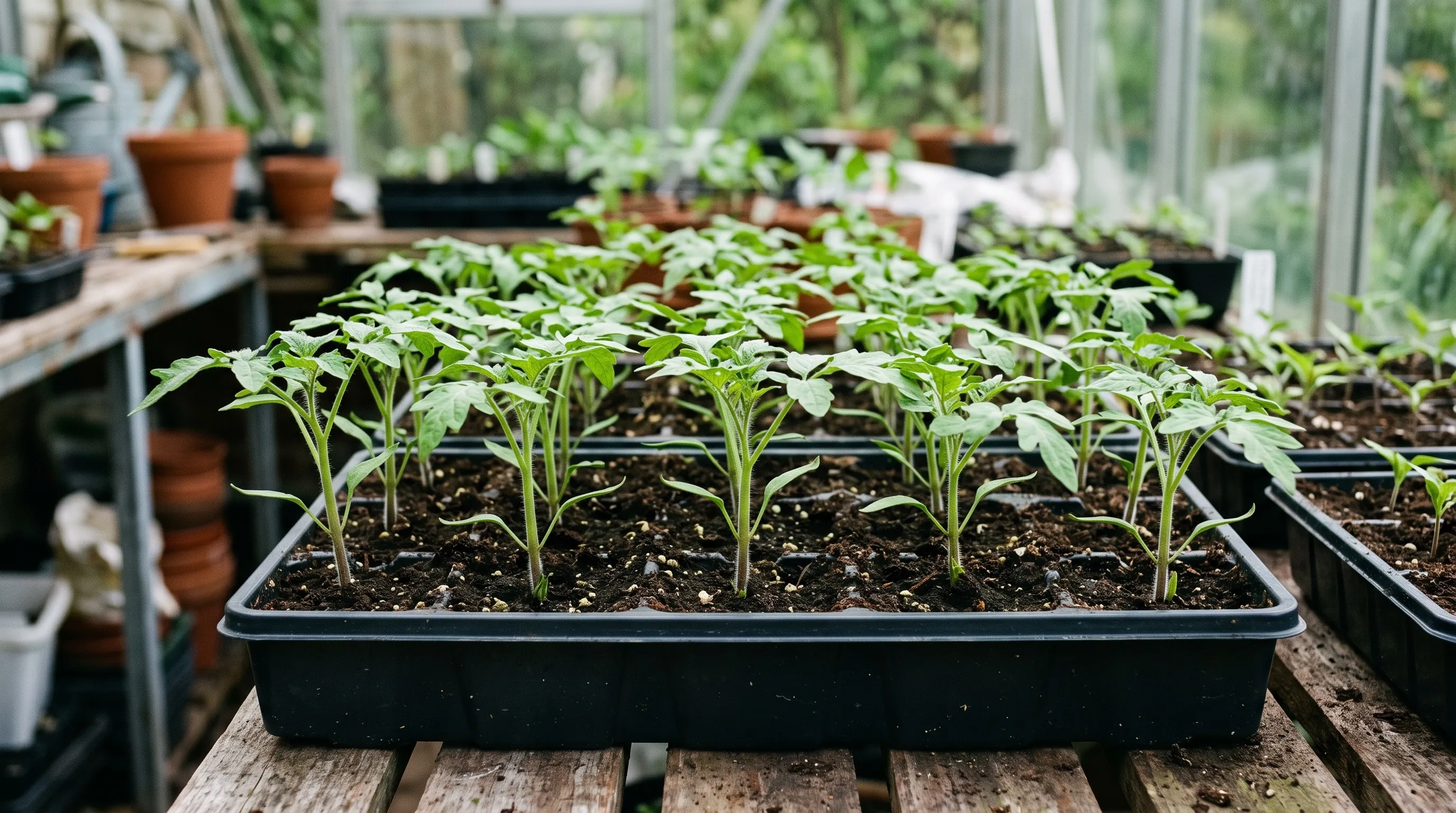 Rooted cuttings potted on and growing away. Harden outdoor clones over seven days before they go out.
The best uses for tomato cuttings
The obvious use is doubling your crop for free. One healthy cordon plant throws a dozen sideshoots over a season, and even six rooted cuttings turn two plants into eight at no cost. That is a serious extra yield from shoots you were binning anyway.
The cleverest use is keeping a favourite F1 hybrid going true-to-type. Seed saved from an F1 tomato does not come true, because the offspring scramble the parent genetics. A cutting is a genetic clone, so it is an exact copy of the plant it came from. Take a cutting from a cracking ‘Sungold’ or ‘Shirley’ and you get the same flavour, size and habit, year after year, with no seed lottery. It is the only way to preserve an F1 without buying fresh seed.
Cuttings also rescue a variety. If a plant is failing but you love it, take cuttings from its healthy top growth before it goes. They serve as a late catch-crop too, filling a gap where an early plant died or bolted. If disease is your worry, take clones from a variety chosen off our list of blight-resistant tomatoes so the free plants carry the same resistance as the parent.
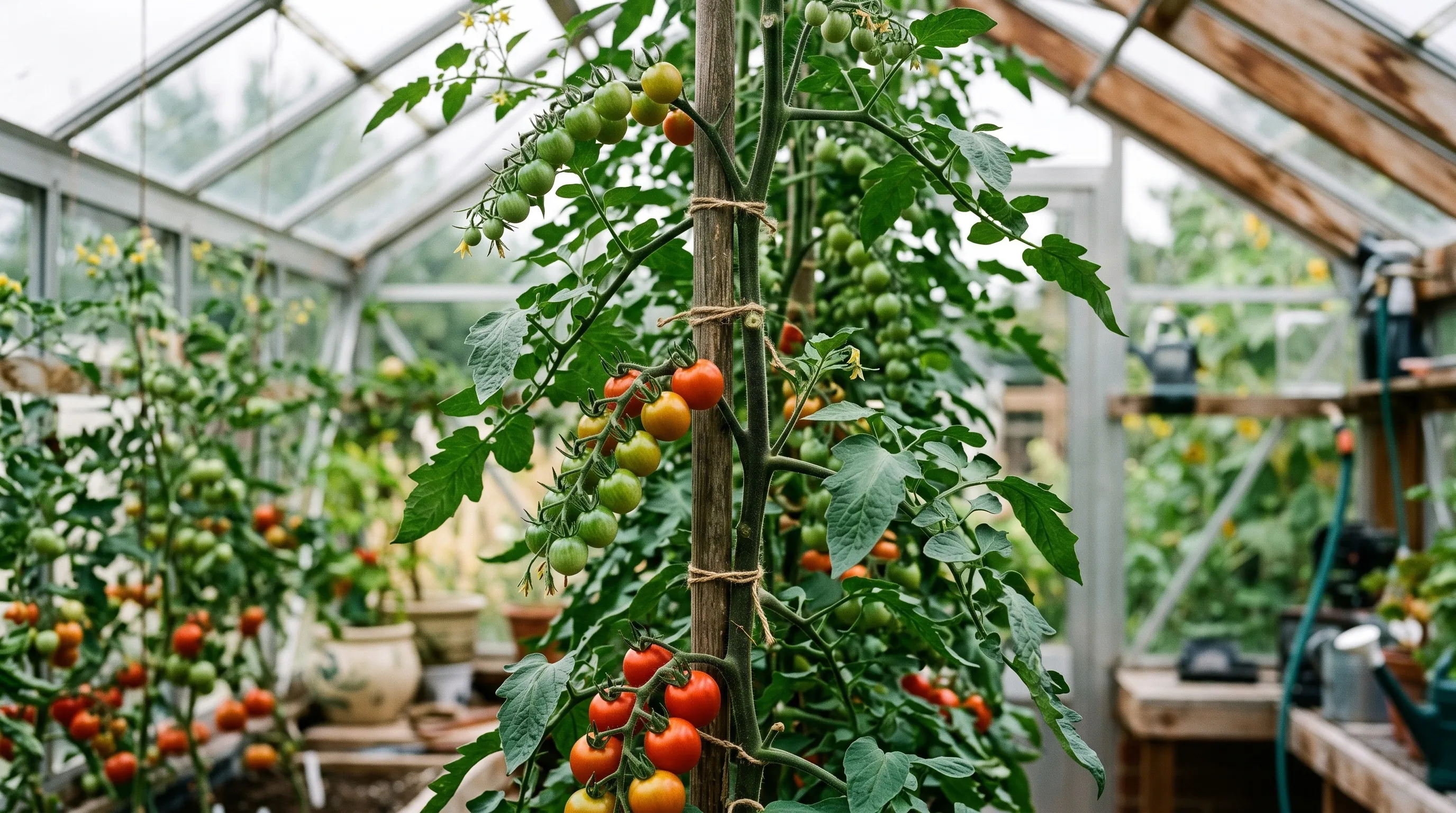 A healthy cordon parent plant supplies both fruit and free cuttings. Take shoots only from clean, vigorous plants.
Month-by-month tomato cutting calendar for the UK
This calendar assumes cordon tomatoes grown in a typical UK garden, with the main cutting window in early summer. Shift dates a week or two later for Scotland and the far north, and earlier for the mild south-west.
| Month | Task |
|---|---|
| April | Sow or buy parent plants. Too early for cuttings, but line up the stock plants now. |
| May | Grow parent plants on. First strong sideshoots appear on early cordons. |
| June | Prime cutting month. Take healthy 8-12cm sideshoots from late June as plants surge. |
| July | Best window. Take all cuttings by mid-July for outdoor fruit. Root in water or compost. |
| August | Outdoor cut-off passed. Take cuttings only for a heated greenhouse or overwintering. |
| September | Grow on rooted clones under glass. Feed weekly. Watch for the light dropping off. |
| October | Ripen final trusses under cover. Bring pots in before the first frost. |
| November | Season over outdoors. Overwintered clones need a heated, bright spot to survive. |
| December | Keep any overwintering plants frost-free and barely watered. No cuttings taken. |
Common tomato cutting mistakes to avoid
Most failures come down to four errors. Avoid these and your success rate climbs above 90 percent.
Taking cuttings too late in the season
This is the big one. A cutting taken in August roots fine but never ripens fruit outdoors before the cold arrives. The plant runs out of warmth and light. Take cuttings by mid-July outdoors, or grow late ones under glass. Timing beats technique every time with tomatoes.
Using shoots that are too woody
Fat, hard, low sideshoots root slowly and often rot first. The soft green tissue in a young 8-12cm shoot carries active root initials, while old woody stems have sealed over. Always pick sappy, actively growing sideshoots from the upper plant, not thick basal wood.
Letting cuttings wilt before they root
A wilted cutting roots slowly or dies, because it cannot draw water without roots. Take cuttings in the morning when the plant is turgid, drop them straight into water, and keep compost cuttings covered and humid. Never leave cut shoots lying on a hot bench.
Submerging too much stem in water
Deep water submersion rots the buried stem and collapses the cutting. Keep only the bottom 3-4cm in water and strip every leaf below the water line. Submerged foliage fouls the water and starves the stem of oxygen, which is the top cause of water-rooting failure.
Frequently asked questions
Can you grow a tomato plant from a cutting?
Yes, tomato sideshoots root easily and grow into full plants. Tomato stems carry dormant root initials along their length, so a pinched-out shoot pushes white roots within 7-10 days in water. The new plant is a genetic clone of the parent. It fruits the same season if taken early enough.
How long do tomato cuttings take to root in water?
Around 7-10 days on a warm windowsill at 18-22C. You will see the first white root nubs by day 5-6 and a usable 20-40mm root system by day 10-12. Compost rooting takes a little longer, roughly 10-14 days, because you cannot watch progress.
When is it too late to take tomato cuttings in the UK?
After mid-July, outdoor clones rarely ripen fruit before autumn. Light and warmth fade fast from September, so late cuttings set fruit that stays green. A heated greenhouse or polytunnel buys two to three extra weeks, pushing the cut-off to late July or early August.
Do tomato cuttings grow true to the parent plant?
Yes, a cutting is a genetic clone and always matches the parent. This matters for F1 hybrids, because seed saved from an F1 does not come true. A cutting sidesteps that problem entirely, keeping the exact flavour, size and habit of a variety like ‘Sungold’.
Should I use rooting hormone on tomato cuttings?
No, tomato cuttings root fine without hormone powder. The stems already carry adventitious root initials, so they need only moisture and warmth. Rooting hormone makes almost no measurable difference and is an unnecessary cost for this plant.
Can I take cuttings from any tomato plant?
Cordon (indeterminate) varieties give the best cuttings from their sideshoots. Bush (determinate) types produce few usable sideshoots and stop growing at a set height, so they are a poor choice. Always take from healthy plants with no sign of blight or virus.
Will a tomato grown from a cutting fruit the same year?
Yes, if you take the cutting by mid-July in the UK. A July cutting roots in 10 days and flowers within four to five weeks. Under glass it then ripens trusses into October. Cuttings taken in August usually run out of season.
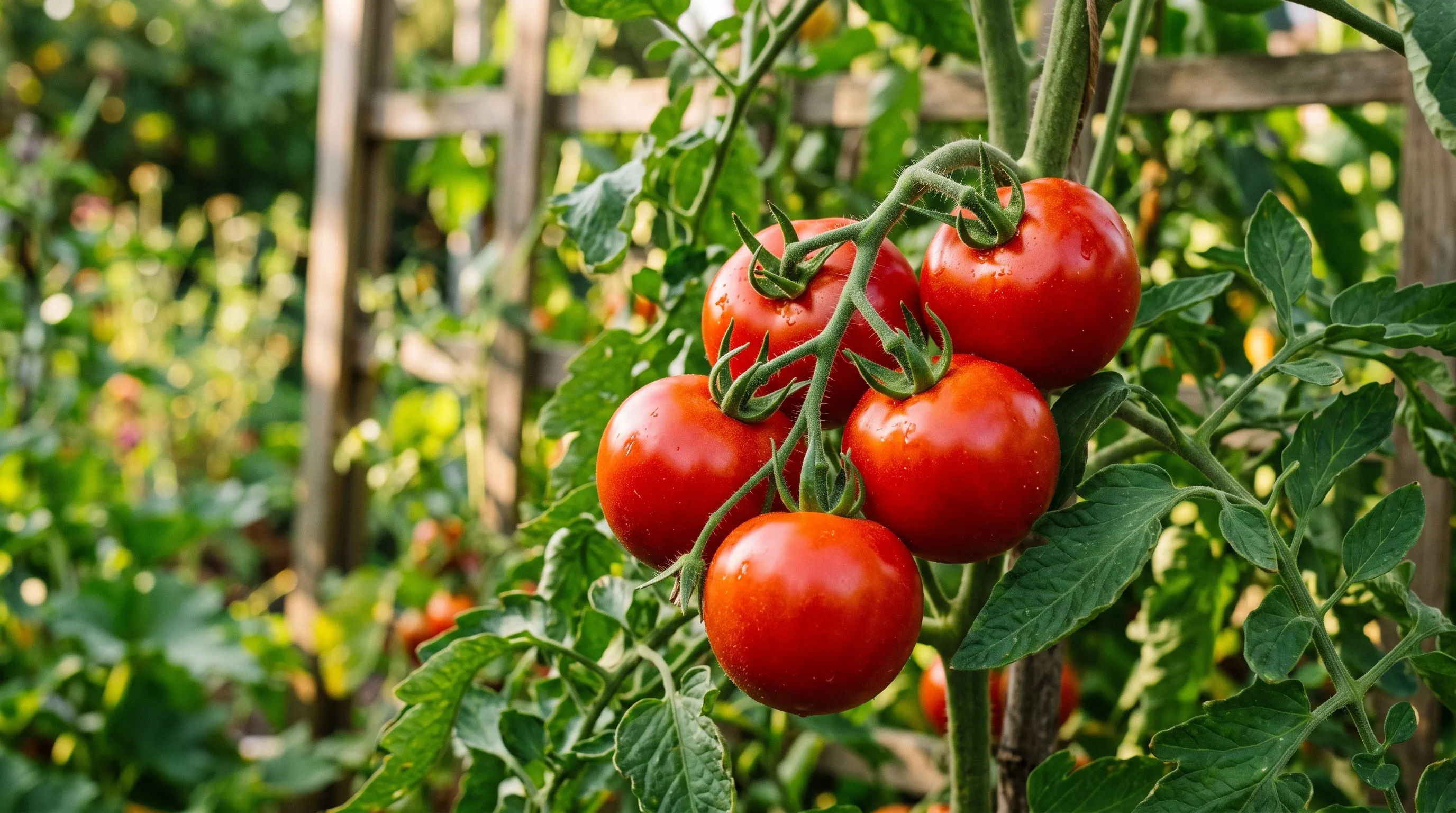 Ripe fruit from a July cutting. Take clones early enough and they crop the same season, true to the parent variety.
Now you can turn every pinched-out sideshoot into a free plant, put those clones to work across the plot. For more ways to raise plants for nothing, read our guide to propagation by cuttings, division and layering, or browse more growing guides for the next crop to multiply.
Our team produces practical UK gardening guidance from source research, contributor records and established horticultural practice. Editorial standards are overseen by Matt W.