Key takeaways
- Use a 30-40L bucket with at least 10 litres of compost per seed potato, 1-2 tubers per bucket
- Drill four to six 12mm drainage holes in the base or roots rot within weeks
- Chit seed potatoes in an egg box on a windowsill for 4-6 weeks before planting
- Start with 10-15cm of compost and earth up as shoots grow until the bucket is full
- Water daily in high summer, never dry-then-flood, or the tubers crack and grow hollow
- First earlies crop in 10-12 weeks at roughly 1-1.5kg per bucket
Growing potatoes in buckets is the easiest way to get a proper crop on a patio, balcony or paved yard. Container potatoes suit small UK gardens because you control the compost, the water and the pests in a way open ground never allows. A single 30-litre bucket can yield 1 to 1.5kg of clean, tasty tubers with no digging and no slug-ravaged rows.
This guide covers the whole method: choosing and drilling the bucket, chitting the seed potatoes, the fill-and-earth-up technique, watering and feeding, and when to harvest. It also gives a variety table and a month-by-month calendar tuned to UK timings. Get the basics right and buckets beat the veg patch for earliness, cleanliness and sheer convenience.
Why the bucket method beats open ground
Container growing removes most of the problems that plague potatoes in a British veg bed. In open ground, slugs tunnel into maincrop tubers, keeled slugs especially, and eelworm builds up in soil cropped year after year. A fresh bucket of compost starts clean every season. You lift the whole crop by tipping the bucket, so no fork ever spears a potato.
The bucket also wins on space and warmth. On a paved patio the black plastic warms fast in spring, so first earlies race ahead of the same variety in cold ground. You can start buckets under cover in late February and move them out after the frosts. That head start matters in the UK, where a wet April often keeps gardeners off heavy soil for weeks.
Control is the real prize. You decide the compost, the drainage and the feed. Watering goes exactly where the roots are, not the weeds. For a small garden or a rented flat with a hard-standing yard, buckets turn a patch of concrete into a potato patch. Our guide to container vegetable gardening in the UK covers the same principles across other crops.
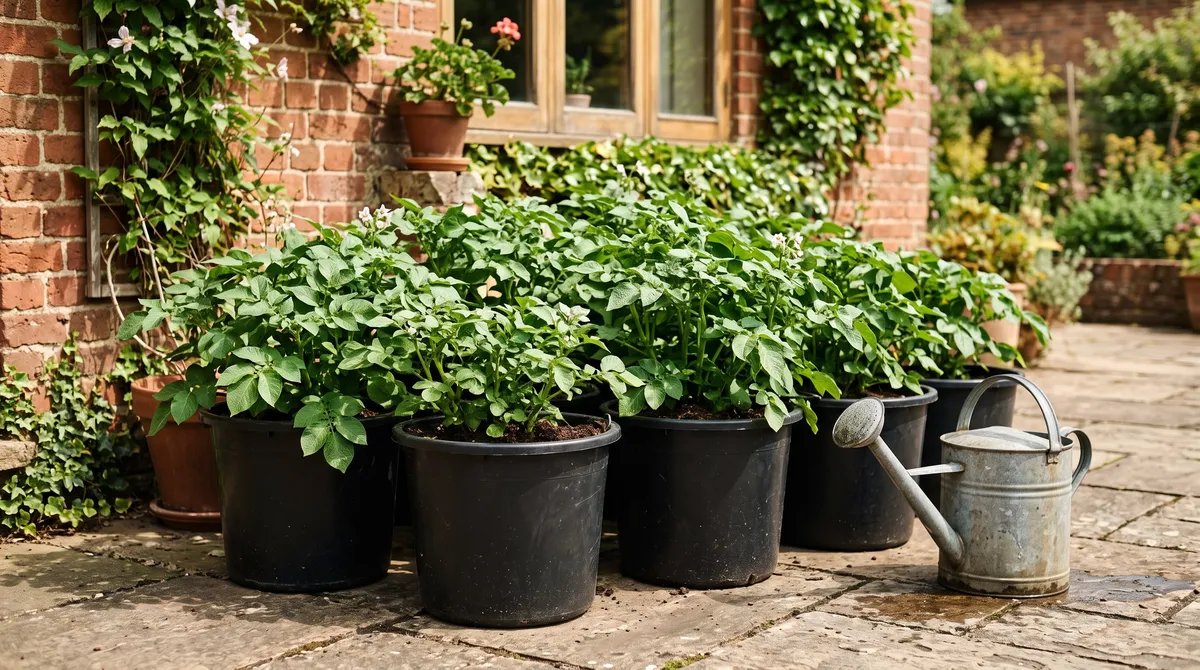
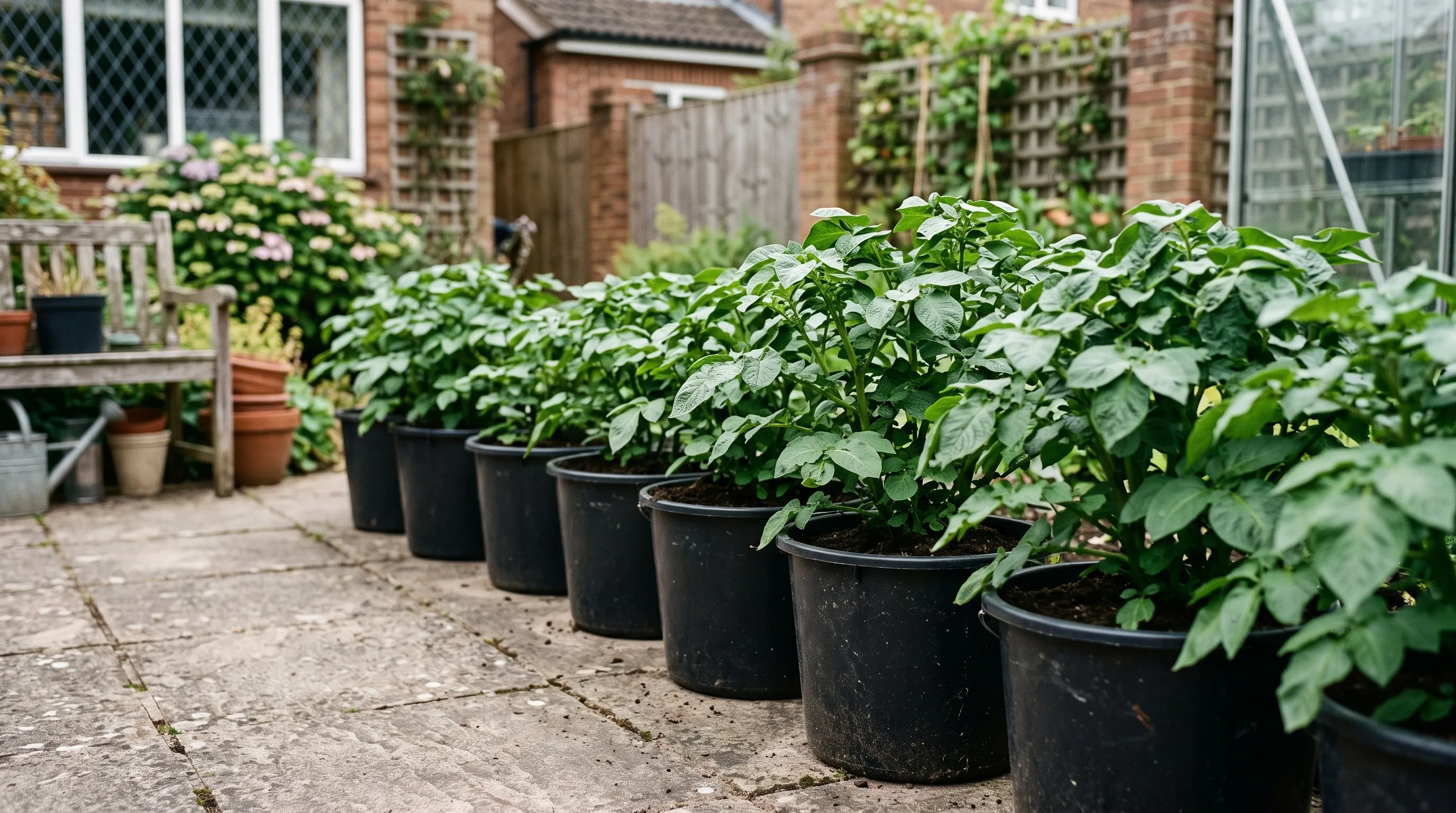 Potato plants thriving in black buckets on a paved patio. The dark plastic warms fast in spring and brings first earlies forward.
Choosing the right bucket and compost volume
Size decides your crop. A 30 to 40 litre bucket is the sweet spot for patio potatoes. Each seed potato needs at least 10 litres of compost to root down and size up its tubers. That means one or two seed potatoes per standard bucket, no more. Cram in three or four and you harvest a heap of marbles instead of a proper meal.
Old builder’s buckets, trugs and 30-litre flower pots all work. So do purpose-made potato planters and grow-bags. Black or dark plastic is best because it warms the compost. Avoid anything under 10 litres for a full plant, though a single first early will scrape by in a 10-litre pot if you water it twice a day.
For compost, ordinary multipurpose compost is fine and cheaper than specialist mixes. A 50-litre bag fills roughly one and a half buckets. Mix a handful of general-purpose fertiliser, such as blood, fish and bone or Growmore, through the compost at the start. Peat-free composts dry out faster, so watch the watering. Do not use garden soil alone, as it compacts, drains poorly and can carry disease.
Gardener’s tip: Buy one extra bag of compost beyond what you think you need. Earthing up over the season swallows far more than most first-timers expect, and a half-filled bucket gives a half-sized crop.
Drilling drainage holes so tubers do not rot
Drainage is the one step people skip, and it kills more container potatoes than any pest. Potatoes sitting in waterlogged compost rot at the roots and the tubers turn to foul-smelling slime. Any bucket you use must have holes in the base before you fill it.
Drill four to six 12mm holes across the bottom of the bucket. A cordless drill and a wood or spade bit does the job in under a minute. If you only have a smaller bit, drill eight to ten holes instead. Turn the bucket upside down, mark the base, and drill on a workbench or an old board so you do not scratch the patio.
Raise the finished bucket on pot feet or two bricks so the holes never sit flat against the ground. Water then drains away freely even in a wet British summer. A 2 to 3cm layer of crocks or coarse gravel in the base helps, though good holes matter far more than drainage material.
Warning: Never grow potatoes in a solid, holeless container. After a week of rain the compost turns to a sour, airless sludge and the whole crop rots. Drainage holes are not optional.
 Drill four to six 12mm holes in the base before filling. Without drainage, container potatoes rot in a wet UK summer.
Chitting seed potatoes on a windowsill
Chitting means sprouting your seed potatoes indoors before planting. It brings first earlies forward by two to three weeks and gives a slightly bigger crop. Start six weeks before you plan to plant, so late January for a late-February planting under cover.
Stand the seed potatoes eyes-up in an egg box or a seed tray on a cool, bright windowsill. Most eyes cluster at one end, the rose end, so sit that end uppermost. Aim for a spot at 7 to 10C with good light but no direct scorching sun. A frost-free porch, spare bedroom or utility windowsill is ideal.
After 4 to 6 weeks the tubers grow short, stubby, dark-green sprouts about 2cm long. Those are what you want. Long, white, spindly shoots mean the room was too warm and dark, so they snap off easily. Rub off all but three or four of the strongest sprouts per tuber for fewer, larger potatoes, or leave them all for a heavier crop of smaller ones. Buy certified seed potatoes, never supermarket spuds, which may carry virus and are often treated to stop sprouting.
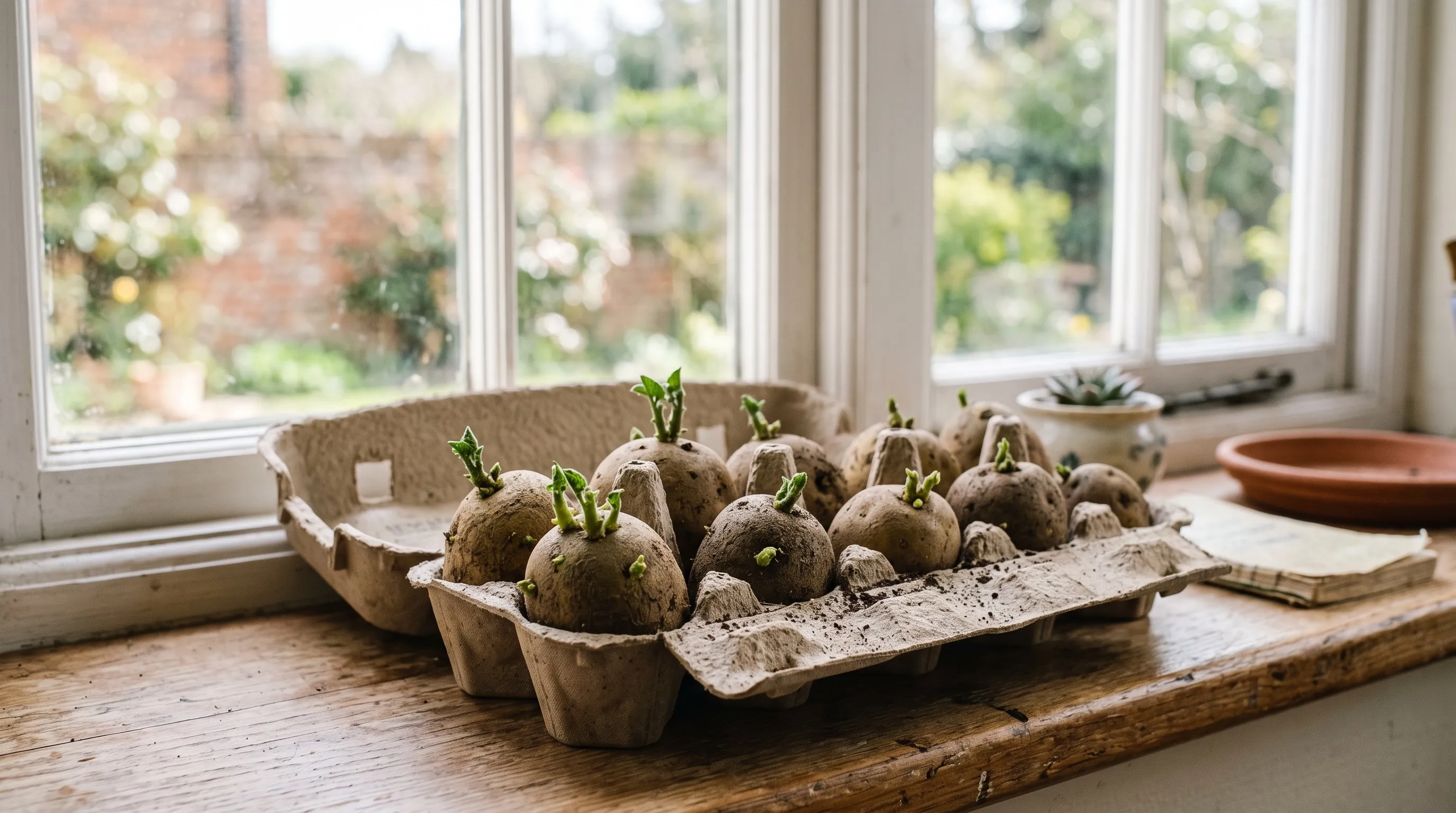 Chit seed potatoes eyes-up in an egg box for 4-6 weeks. Short, dark-green 2cm sprouts are the goal, not long white spindly shoots.
The fill-and-earth-up method step by step
The earthing-up method is what makes buckets productive. Potatoes form their tubers along the buried stem, so the more stem you cover, the more potatoes you get. Rather than filling the bucket at planting, you start low and top up as the plant grows.
Begin with just 10 to 15cm of compost in the base of the drilled bucket. Sit one or two chitted tubers on top, sprouts pointing up, spaced apart if you use two. Cover them with another 10cm of compost and water lightly. Stand the bucket somewhere bright and frost-free.
When the shoots reach about 15cm tall, add more compost to bury the lower two-thirds, leaving the top leaves showing. Repeat this earthing up every couple of weeks as the plant grows, until the compost reaches the rim. A 30-litre bucket usually takes three or four top-ups to fill. Earthing up also stops light reaching the tubers. Any potato exposed to light turns green and produces solanine, which is toxic, so keep them covered.
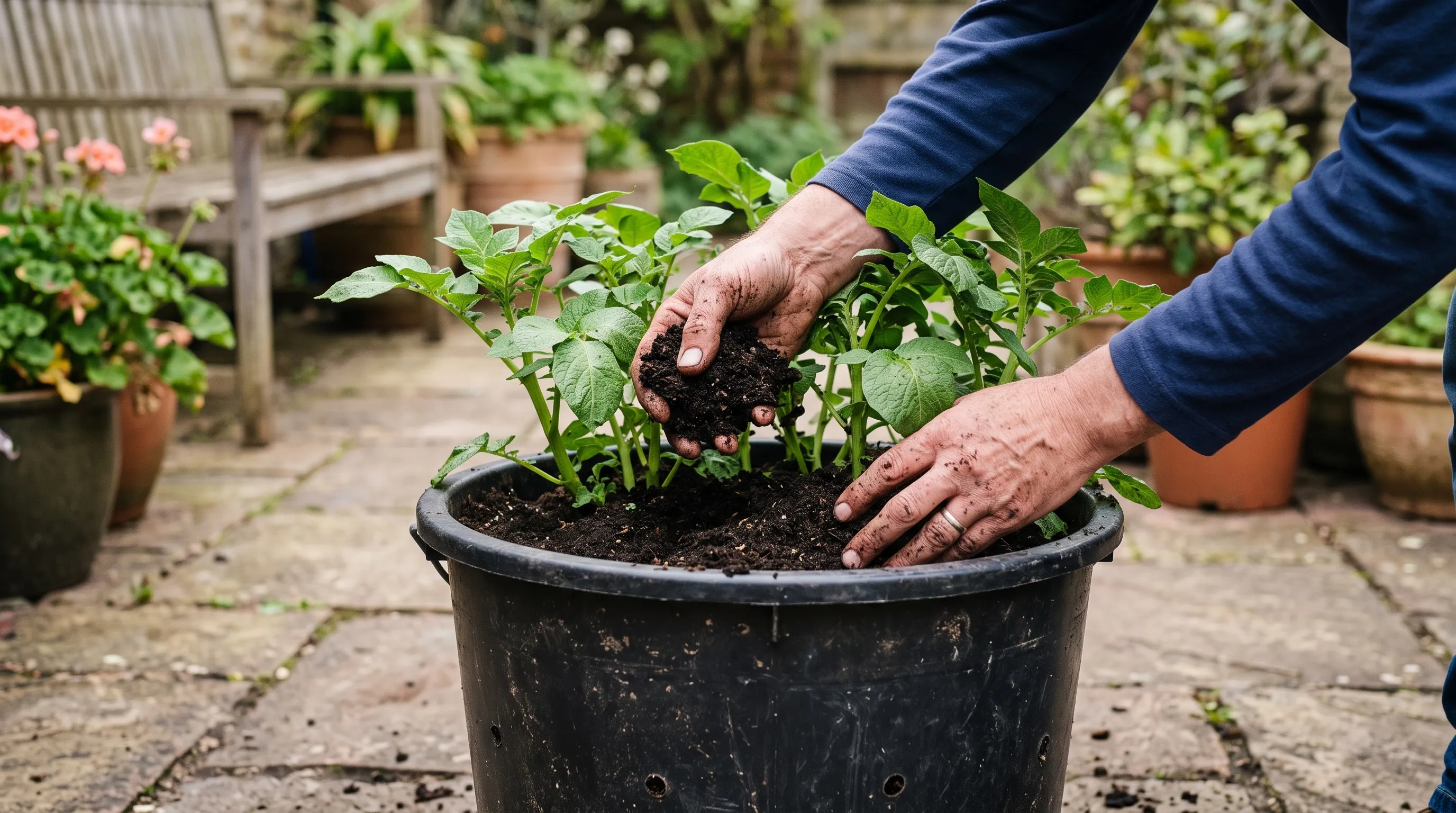 Earth up by burying the lower two-thirds of the shoots each time they reach 15cm. More buried stem means more tubers.
Watering container potatoes without cracking the tubers
Watering is where most bucket crops are won or lost. Potatoes in pots are thirsty, far thirstier than the same plant in open ground, because the limited compost dries fast and the foliage transpires hard in summer. Once the leaves fill the bucket, expect to water daily in high summer. A full 30-litre bucket can drink 2 to 3 litres a day in a July heatwave.
Keep the compost evenly moist at all times. Push a finger in to check, and if the top 3cm is dry, water. Morning or evening is best so less evaporates. In cool, wet spells you may skip a day, but never assume rain has done the job. A leafy canopy sheds rain like an umbrella and the compost underneath stays bone dry.
The cardinal sin is to dry out then flood. When drought-stressed tubers suddenly get a soaking, they grow a fast watery layer that splits the skin or forms a hollow, brown centre. This is why steady watering beats erratic drenching. A saucer under each bucket in peak summer holds a small reserve, but tip it out in wet weather so roots never stand in water.
Feeding for a heavy crop
Potatoes are hungry, and container compost runs out of nutrients within weeks. The base fertiliser you mixed in at planting feeds the early growth. Once the plants are established and start to flower, switch to a high-potash liquid feed to drive tuber formation rather than leaf.
A tomato feed is perfect, as it is high in potassium. Feed weekly from the time flower buds appear until the foliage starts to die back. Dilute to the maker’s rate, usually around 10ml per litre, and apply to moist compost, never dry roots. High-nitrogen feeds like lawn fertiliser are the wrong choice here. They push lush green tops and leave you with few tubers.
If leaves yellow from the bottom up during heavy cropping, that is usually nitrogen being pulled into growth, and a balanced liquid feed corrects it. Do not overfeed. Too much nitrogen delays tubers and softens skins. For a wider look at getting the most from pots, see our guide to the best vegetables for UK container growing.
First earlies, second earlies and maincrop timing
Potatoes split into three groups by how long they take, and the group decides when you plant and harvest. First earlies are the fastest and the best choice for buckets, ready in just 10 to 12 weeks. Plant them late February to March under cover, or March to April outside once hard frosts pass. These are your new potatoes, sweet and thin-skinned.
Second earlies take about 13 to 15 weeks. Plant them in March and April for a July to August harvest. They bridge the gap between new potatoes and maincrop, and many, like Charlotte, hold well in the bucket if you do not lift them all at once.
Maincrop potatoes need 18 to 20 weeks and the most compost, so they suit only the largest buckets. Plant in April for a September harvest. They give the biggest tubers for baking and storing but sit in the bucket longest, so they need the most watering and are most at risk from blight. For buckets, first and second earlies are the reliable choice. Our detailed guide on when to plant potatoes in the UK breaks the timings down region by region.
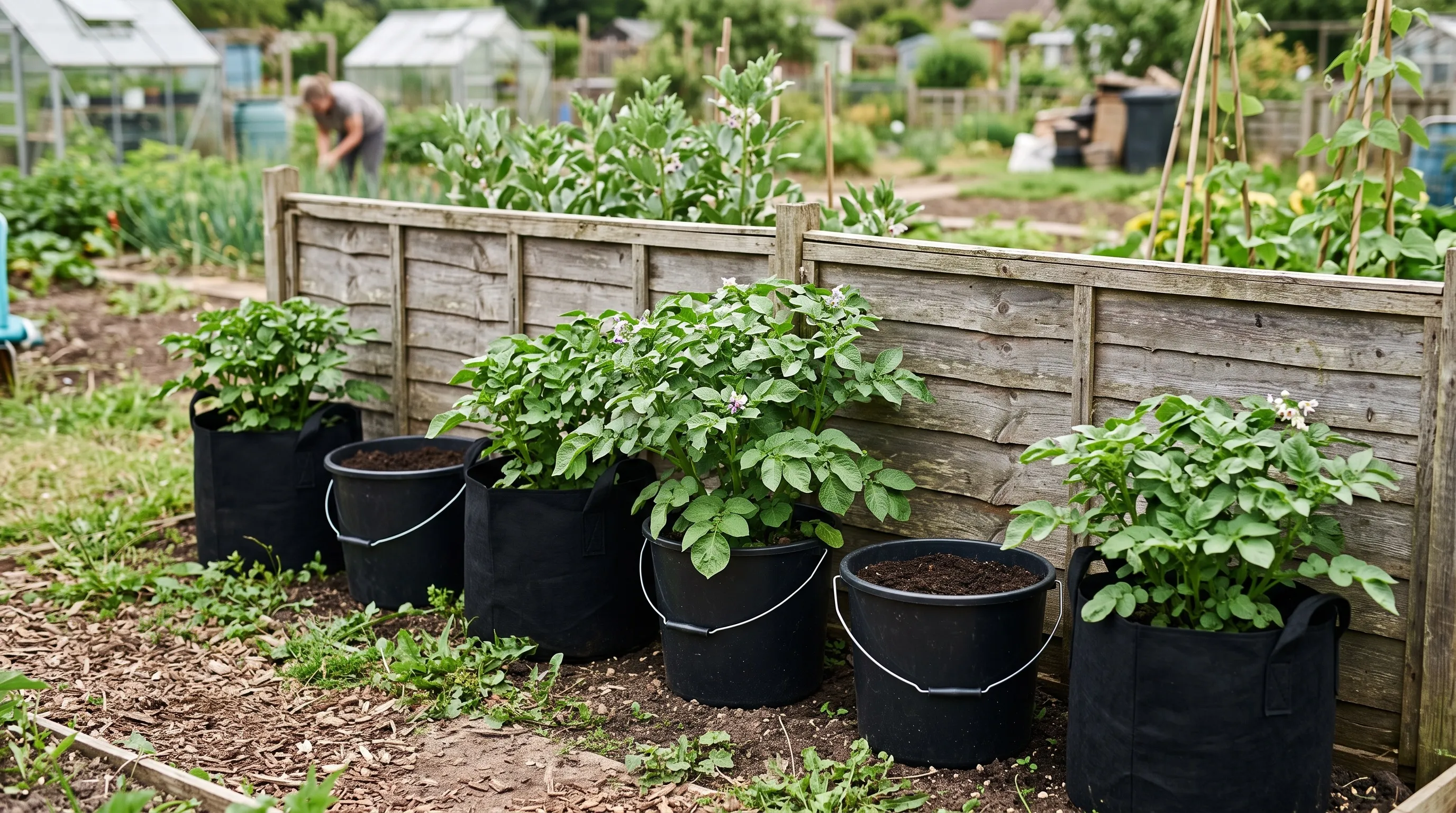 Grow-bags and buckets side by side. Staggering first earlies, second earlies and maincrop spreads the harvest from June to September.
Best potato varieties for containers
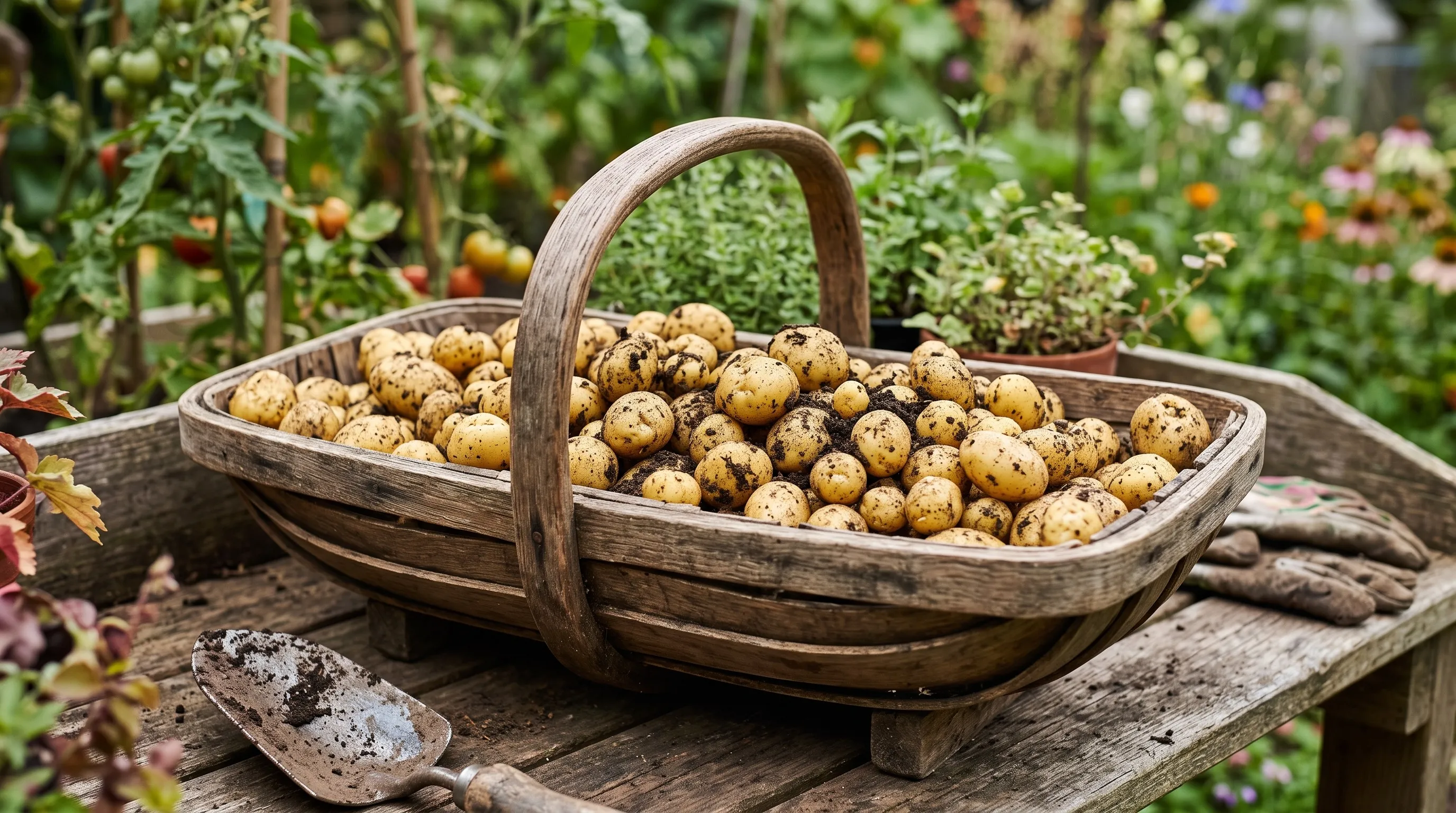 A trug of freshly dug Charlotte. This waxy, blight-tolerant second early is the most reliable variety for UK containers.
Harvesting and realistic yields
Harvesting from a bucket is the best part. For first earlies, wait until the plants flower, usually 10 to 12 weeks after planting, then tip the whole bucket out onto a sheet or barrow. No fork, no digging, no spearing. Rummage through the compost and the potatoes come out clean.
Expect a realistic yield of 1 to 1.5kg per bucket from a single tuber given its full 10 litres of compost. That is roughly a dozen decent-sized potatoes, enough for two or three meals. Two tubers in a 40-litre bucket can push toward 2kg but the individual potatoes run smaller. New potatoes do not store, so eat them within a few days.
For a longer supply, harvest a little at a time. Slide a hand down the side of the bucket and steal a few tubers, leaving the plant to grow on. Second earlies and maincrop can stay in the bucket until the foliage dies back, then be tipped out and dried for a day before storing in paper sacks somewhere cool and dark.
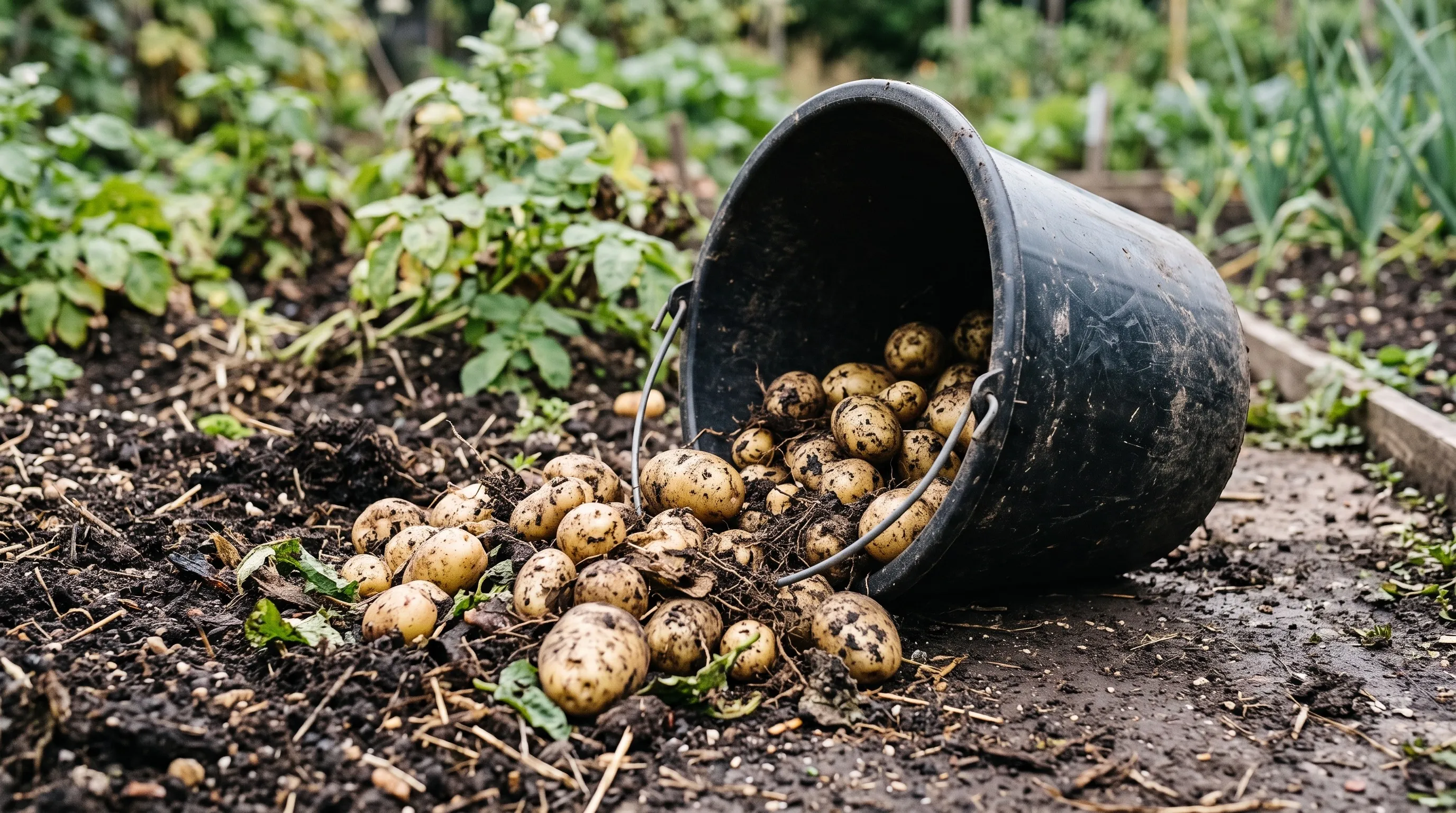 Harvest by tipping the whole bucket out. One tuber in 10 litres of compost gives a realistic 1 to 1.5kg of clean potatoes.
Blight and frost protection
Two threats hit container potatoes: late frost on young foliage and blight on summer crops. Frost blackens emerging shoots in April and May. If a frost is forecast, move buckets under cover, into a porch or greenhouse, or drape them with horticultural fleece overnight. Buckets make this easy, which open ground never allows. Damaged foliage usually recovers, but it sets the plant back a week or two.
Potato blight (Phytophthora infestans) is the bigger risk from July onward in warm, humid UK weather. It shows as brown patches on leaves with a pale fungal ring, spreading fast in muggy spells. First and second earlies often crop before blight strikes, which is another reason they suit buckets. Maincrop is far more exposed.
If you spot blight, cut off and bin all the foliage at once, never compost it. The tubers below usually survive if you lift them within a fortnight, before spores wash down into the compost. Choose blight-tolerant varieties like Charlotte, space buckets for airflow, and water the compost not the leaves. Wet foliage in humid weather is what lets blight take hold.
Month-by-month container potato calendar
This calendar assumes a patio in a typical UK climate. Shift timings a week or two later for Scotland and the north, earlier for the mild south-west.
| Month | Task |
|---|---|
| January | Buy certified seed potatoes. Start chitting first earlies late month on a cool windowsill. |
| February | Chit seed potatoes. Drill and prepare buckets. Plant first earlies under cover late month. |
| March | Plant first and second earlies outside once hard frosts ease. Begin earthing up early buckets. |
| April | Plant maincrop. Keep earthing up. Protect young foliage from late frost with fleece. |
| May | Water regularly as growth speeds up. Start high-potash feed as flowers form on earlies. |
| June | Water daily in warm spells. Feed weekly. Harvest the first earlies once they flower. |
| July | Peak watering, 2-3 litres per bucket daily. Watch for blight. Harvest first and second earlies. |
| August | Continue harvesting second earlies. Lift maincrop foliage if blight appears. Keep watering. |
| September | Harvest maincrop once foliage dies back. Dry tubers a day, then store in paper sacks. |
| October | Clear spent buckets. Empty old compost onto beds. Wash and stack buckets for next year. |
| November | Order next year’s seed potatoes from catalogues while stocks last. |
| December | Plan the coming season. Keep stored maincrop cool, dark and frost-free. |
Common mistakes to avoid
Most bucket-potato failures come down to a few repeat errors. Fix these and you will crop well every year.
Too many tubers per bucket
Cramming three or four seed potatoes into one bucket feels efficient but backfires. Each tuber needs 10 litres of compost, so a 30-litre bucket holds one or two, no more. Overcrowding gives a big tally of tiny, unusable marbles. Give each tuber room and you get proper-sized potatoes.
Letting the compost dry out
Container potatoes are thirsty and dry out fast in summer. A leafy canopy hides bone-dry compost underneath, so gardeners assume rain has watered it. Check with a finger and water daily in warm weather. Dry spells followed by a flood split and hollow the tubers.
Skipping the drainage holes
A bucket with no holes turns to sour sludge after heavy rain and the crop rots. Always drill four to six 12mm holes before filling, and raise the bucket on feet or bricks. This is the single most common killer of container potatoes.
Not earthing up
Filling the bucket to the top at planting wastes half the crop. Tubers form along buried stem, so start with 10-15cm of compost and top up as shoots grow. Earthing up also stops tubers greening in the light.
Frequently asked questions
How many potatoes can you grow in one bucket?
One or two seed potatoes per standard 30-litre bucket. Each tuber needs at least 10 litres of compost to size up properly. Crowd in three or four and you get a bigger tally of tiny, marble-sized potatoes rather than a decent crop. For usable tubers, stick to one or two per bucket.
What size bucket is best for growing potatoes?
A 30-40 litre bucket suits potatoes best. That gives enough compost depth for a tuber to size up and root down. Smaller 10-15 litre pots work for a single first early but dry out fast. Anything over 40 litres is heavy to move and hard to tip out at harvest.
Do you need drainage holes in a potato bucket?
Yes, drainage holes are essential or the roots rot. Drill four to six 12mm holes in the base before you fill it. Potatoes sitting in waterlogged compost rot and the tubers turn to slime. Raise the bucket on pot feet or bricks so water drains away freely.
How often should you water potatoes in containers?
Daily in high summer, less in spring and autumn. Container potatoes dry out fast and are thirsty once foliage fills out. A full bucket can drink 2-3 litres a day in July. Never let them dry then flood, as sudden water after drought splits and hollows the tubers.
How long do potatoes take to grow in a bucket?
First earlies take 10-12 weeks from planting to harvest. Second earlies need about 13-15 weeks and maincrop 18-20 weeks. Plant first earlies late February to March under cover, or March to April outside. Tip a bucket out once the flowers open to check tuber size.
Can you grow potatoes in a bucket without chitting?
Yes, but chitting brings the harvest forward by 2-3 weeks. Chitting means sprouting the seed potatoes indoors for 4-6 weeks first. It gives first earlies a head start and a slightly bigger crop. Maincrop potatoes gain less from chitting and can go straight in.
Why are my container potatoes so small?
Small tubers usually mean too many per bucket or dry compost. Each tuber needs 10 litres of compost and steady water to size up. Overcrowding, letting the bucket dry out, or harvesting too early all give a crop of marbles. Feed high-potash weekly and water daily in summer.
Now you can crop potatoes from any patio, try widening the range on your hard-standing. Browse more vegetable and fruit growing guides for the next crop to grow beside your buckets.
Our team produces practical UK gardening guidance from source research, contributor records and established horticultural practice. Editorial standards are overseen by Matt W.