Nerve Plant
Fittonia albivenis
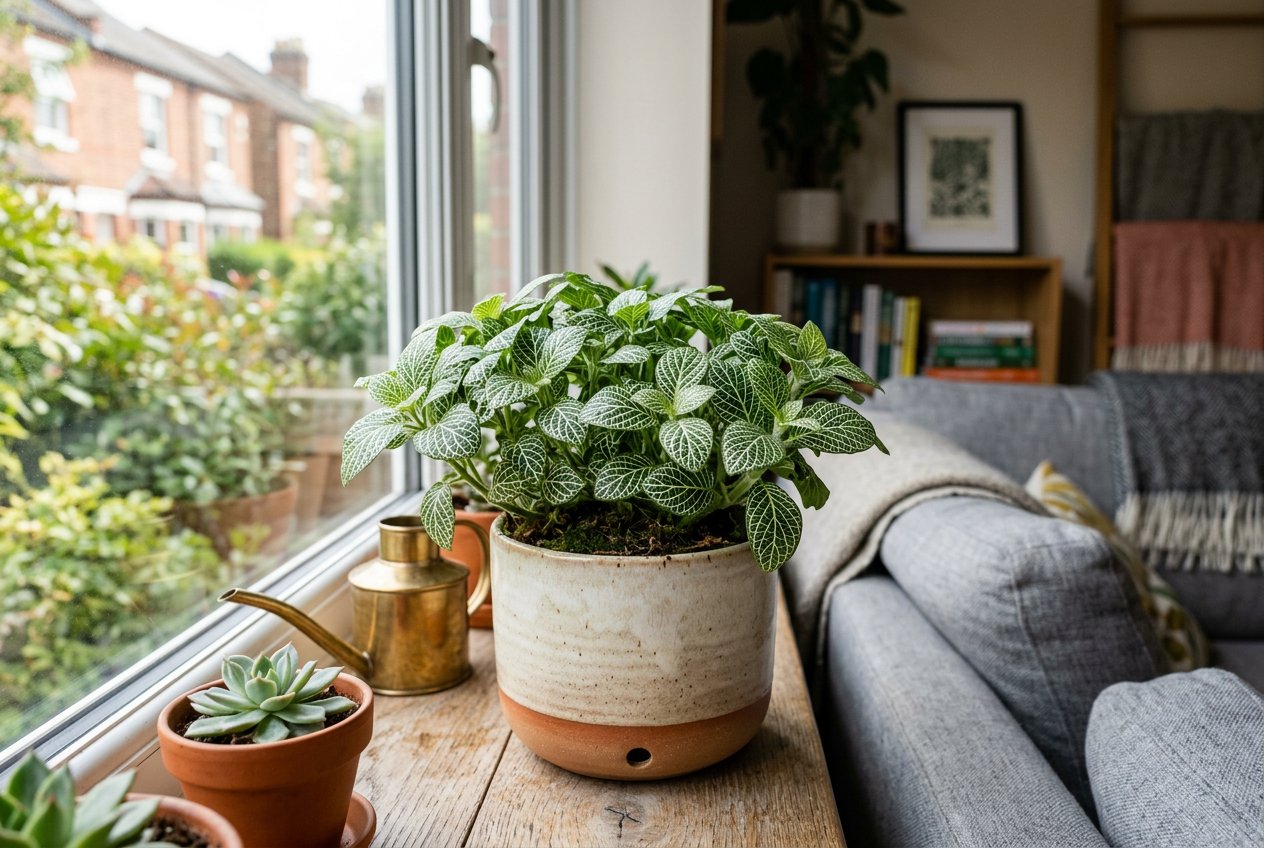
Compact creeping plant with delicate leaves traced with intricate networks of white, pink, or red veins. Dramatically wilts when thirsty, then bounces back within hours of watering. Perfect for terrariums.
Best rooms for nerve plant
Light requirements
Tolerates shade and north-facing windows with limited natural light.
Best near a window with filtered light — avoid harsh direct rays.
How to care for nerve plant
Indirect light or shade — direct sun scorches the delicate leaves. Keep compost evenly moist; the dramatic wilting act is a sign of thirst. High humidity is essential; a terrarium or bathroom is ideal. Pinch stem tips to keep compact. Feed monthly spring-summer. Minimum 15°C.
Watering
Keep the compost consistently moist but not waterlogged. Check every few days.
Propagation
- Stem cuttings in water
- Layering
- Division
Toxicity
This plant is not known to be toxic to cats or dogs.
Common problems
- Dramatic wilting from missed watering (recovers quickly)
- Crispy leaves from dry air
- Leggy growth in low light
Similar houseplants
Related guides
The 70-30 Rule for Better Garden Borders
The 70-30 planting rule explained: 70% structure and foliage, 30% seasonal flowers, measured by area, so your UK border looks full in every month.
Air-Purifying Houseplants: What They Really Do
Do air-purifying houseplants work? The honest answer, the ten easiest plants to grow anyway, which are pet-safe, and what actually freshens indoor air.
Best Half-Hardy Annuals for UK Gardens
The best half-hardy annuals for UK gardens, from cosmos to zinnias, with when to sow indoors, how to harden off and when to plant out.