Key takeaways
- The pot adds no heat; it only slows and spreads the candles' output
- Four tealights make about 120-140 watts, like a dim light bulb
- Real risk one: fire from several unattended naked flames
- Real risk two: carbon monoxide in a sealed greenhouse
- UK fire services warn against tealight pot heaters
- Use a thermostatic electric tube heater instead, from £25
After measuring one on frosty nights, the picture is clear. The pot adds no heat. The real danger is unattended flames and trapped fumes. A cheap electric tube heater beats it on every count.
What a flower pot heater actually is
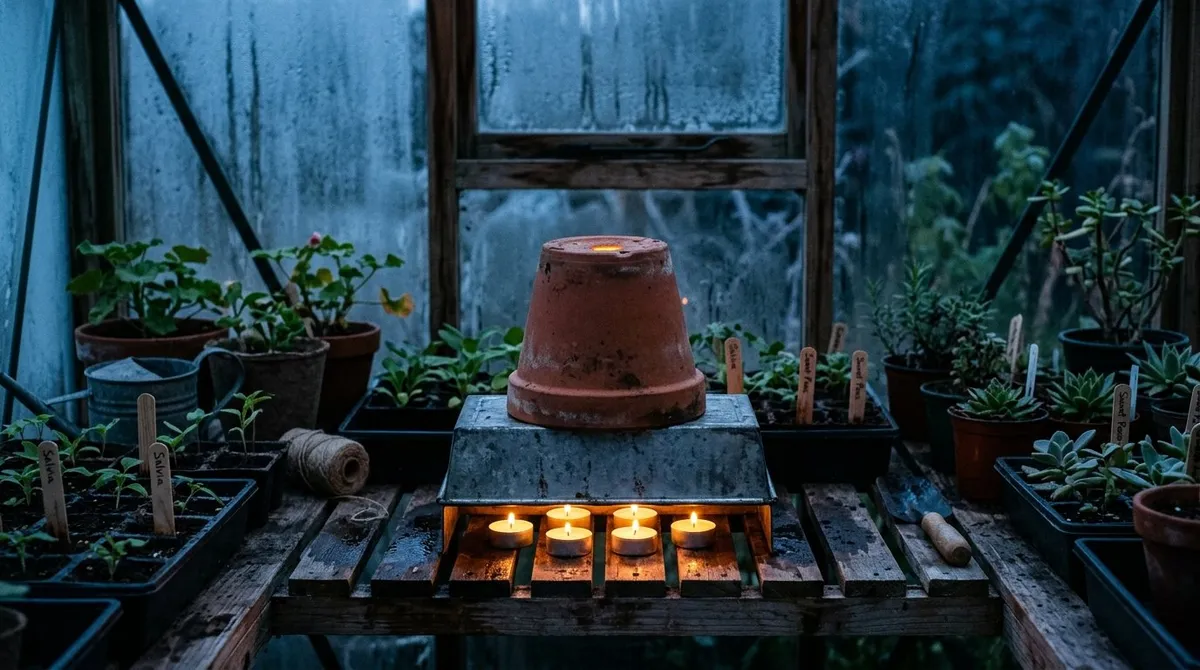
The flower pot heater is a DIY frost-buster, not a product. You stand a few tealights on a metal tray or bread tin, then upturn a terracotta plant pot over them, often two pots nested with the drainage hole left open. The clay heats up and you place this near tender plants in a greenhouse or porch.
The promise is simple. Pennies of candle wax in place of an electric heater. For a single shelf of seedlings on a mild frosty night, it does take the edge off. The problem is what the videos leave out: the numbers and the risks.
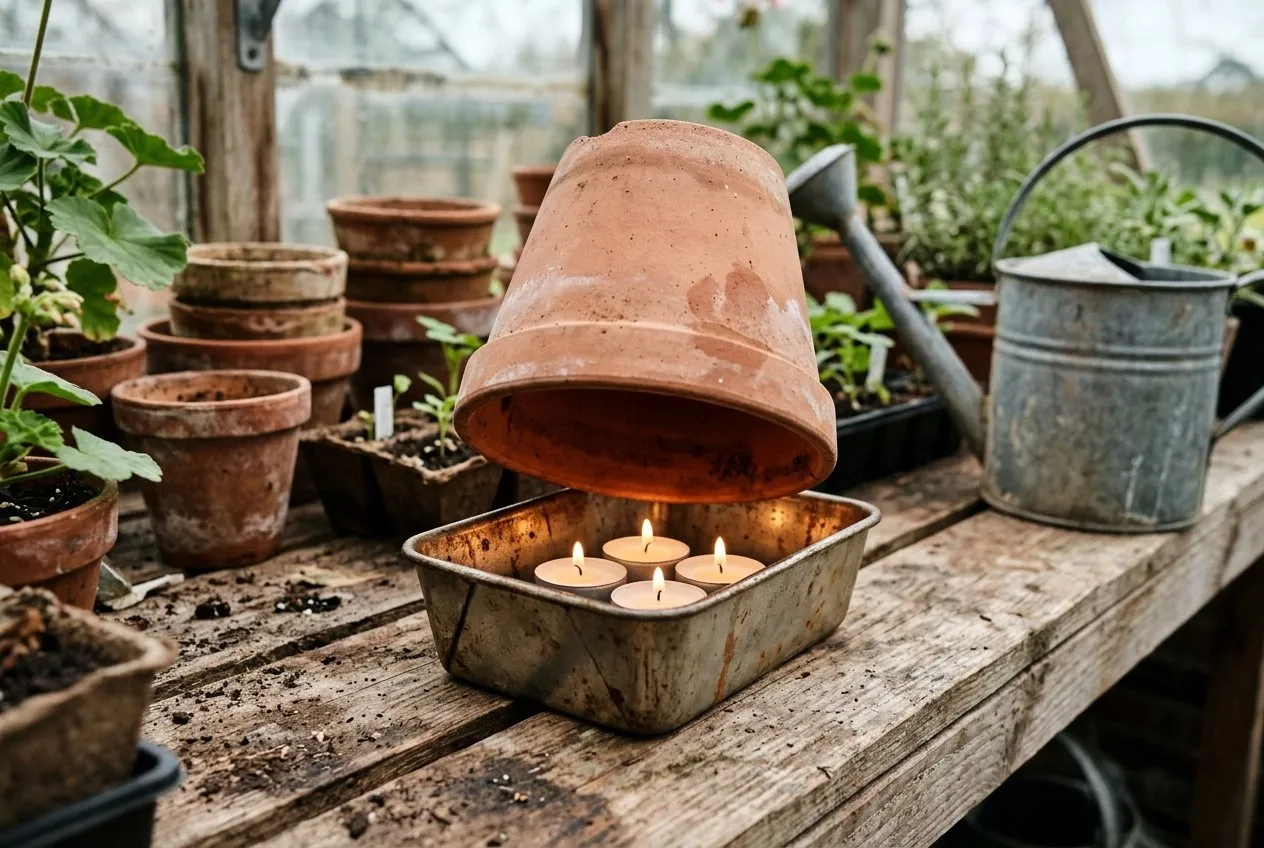 The classic build at Staffordshire: a 14cm terracotta pot over four tealights on a metal tin. The clay warms up and radiates, but it makes no heat of its own.
The physics: a pot cannot create heat
Here is the part the trick gets wrong. A terracotta pot is not a heat source. It is a battery for heat that already exists.
All the warmth comes from the candles. A single tealight burns at roughly 30-35 watts of heat. Four tealights together give about 120-140 watts. That is the same energy whether you cover them with a pot or not. The clay does not multiply it.
What the pot does do is useful but small. It absorbs the candle heat, spreads it over a larger warm surface, and releases it slowly. So instead of a thin column of hot air rising straight up, you get a steadier, gentler warmth radiating outward. The pot stores heat and smooths it out. It does not add to it.
For comparison, 120-140 watts is about the same as an old dim incandescent bulb. In a 6ft by 8ft greenhouse on a -3C night, that is nowhere near enough to hold the whole space above freezing. It might protect plants in the immediate 30cm around the pot, and nothing more.
| Heat source | Typical output | Running cost per night | Fire risk | Carbon monoxide |
|---|---|---|---|---|
| Four-tealight pot heater | 120-140W | About 30p in tealights | High, naked flames | Yes, in sealed space |
| Paraffin greenhouse heater | 1,000-2,000W | 40-80p in paraffin | Moderate, stable wick | Yes, ventilate |
| Electric tube heater (thermostat) | 45-135W on demand | 5-20p, only when needed | Low, no flame | None |
| Electric fan heater (thermostat) | up to 2,000W | 30p-£1 when running | Low, no flame | None |
The table shows the catch. The pot heater is the weakest heat source on the list and one of the most hazardous.
The real fire risk you should not ignore
This is the heart of the safety question. A flower pot heater is several naked flames left burning, often unattended, in a structure full of dry, flammable material.
Think about a typical greenhouse. Wooden staging. Bamboo canes. Seed packets and paper labels. Plastic trays and bubble wrap insulation. Bags of dry compost. Drop or knock a tray of tealights into any of that and you have a fire with no one there to catch it.
Tealights carry their own hazard too. Group several too closely and the combined heat can melt the surrounding wax into a pool, which then flares as one large flame. This is a known cause of tealight fires indoors. The advice from Electrical Safety First on candle and heater fire risk is plain: never leave candles burning unattended, and keep them away from anything that can catch.
UK fire and rescue services have repeatedly warned the public about exactly this viral hack. Their message is consistent. Naked flames left alone overnight in a shed or greenhouse are a fire waiting to happen.
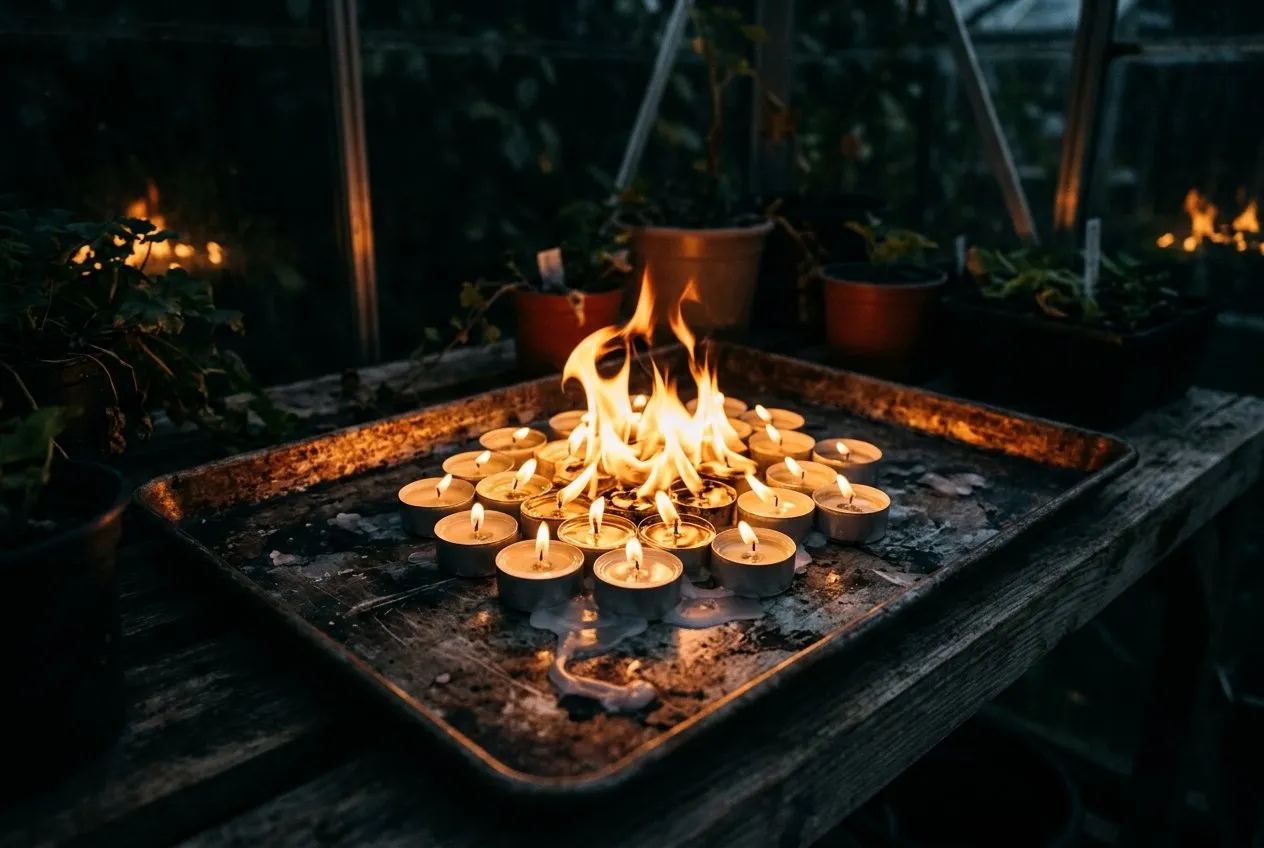 Crowd tealights together and the wax can pool into one large flame. This is a known cause of tealight fires, and it is exactly how the viral pot heaters are stacked.
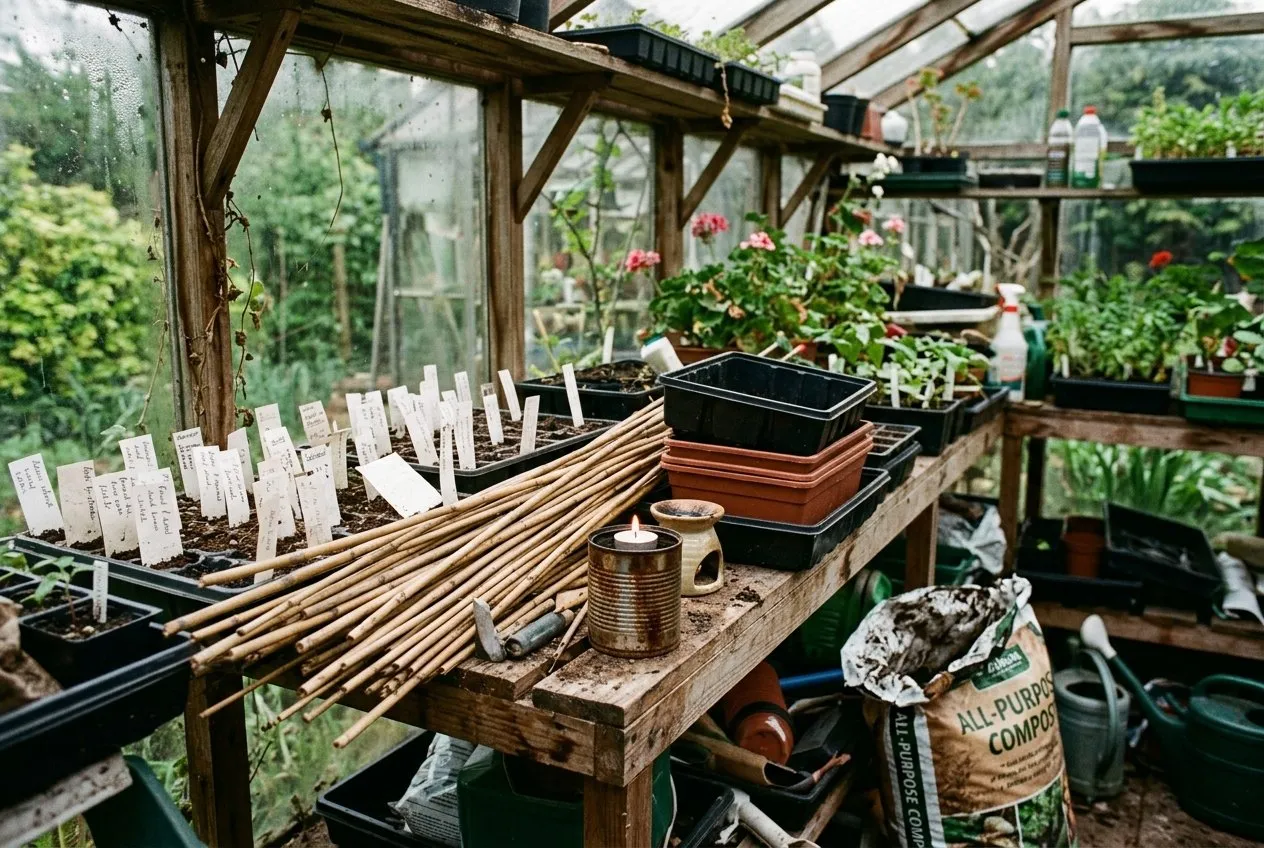 Dry canes, paper labels and wooden staging surround most greenhouse heaters. A knocked tray of tealights has plenty to catch hold of.
Carbon monoxide in an enclosed greenhouse
The second hidden danger is the air. Every burning flame produces carbon monoxide. A candle is a small source, but a small sealed space changes the maths.
People insulate greenhouses against frost with bubble wrap and tape, sealing every gap. Then they light several candles inside. In that closed box, carbon monoxide can build up. The gas is colourless, odourless and tasteless, so there is no warning. It also displaces oxygen, which affects plants too.
In a glasshouse this is mostly a risk to anyone who steps inside to check on the plants. In a shed, porch or conservatory attached to the house, it is far more serious. Never burn a pot heater anywhere people or pets sleep, and never seal the space around any flame. If you must burn candles in an enclosed greenhouse, leave a vent open and follow the RHS greenhouse heating advice on ventilation.
Good insulation does far more for frost protection than any candle, as long as you still leave a vent.
What to use instead
The honest answer is that better options cost very little. A flower pot heater saves a few pounds and brings real risk. The alternatives remove the flame entirely.
If you have no power to the greenhouse, a proper paraffin greenhouse heater is the right tool. It has a stable wick, a fuel reservoir and a design meant for the job, which makes it far safer than loose tealights. It still needs ventilation, but it is a controlled flame, not a scattered one.
Pair any heater with our advice on protecting plants from frost, because heating is only half the answer.
When the pot trick almost makes sense
There is a narrow case where a pot heater is reasonable, and it is worth being fair about it. If you have a tiny unheated space, a single shelf, a porch or a small cold frame, and you can stay nearby and watch it, a couple of tealights under a pot will lift the temperature a degree or two for a few hours.
Use it for a hard frost overnight emergency, never as your normal heating. Keep it to two or three tealights, not eight. Stand the tin on a stable, fireproof surface away from anything dry. Never seal the space. Snuff it out before you go to bed.
A cold frame is often a better answer than candles for a handful of plants. Our guide to cold frame gardening shows how to overwinter tender plants with no heat at all. For very small setups, a mini greenhouse for small gardens holds warmth better than an open shelf.
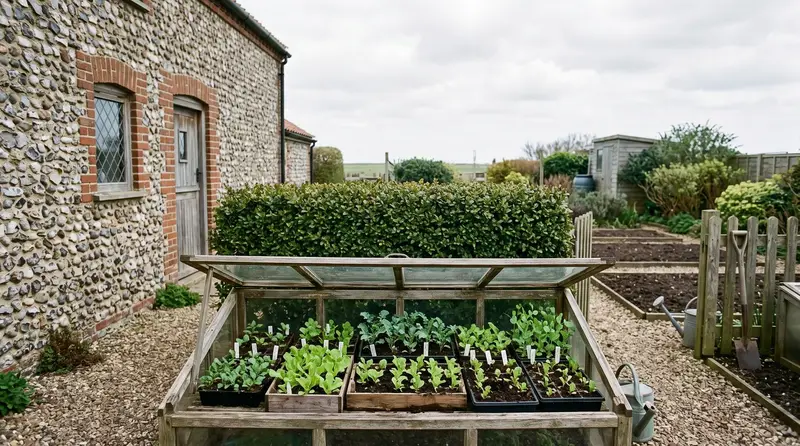
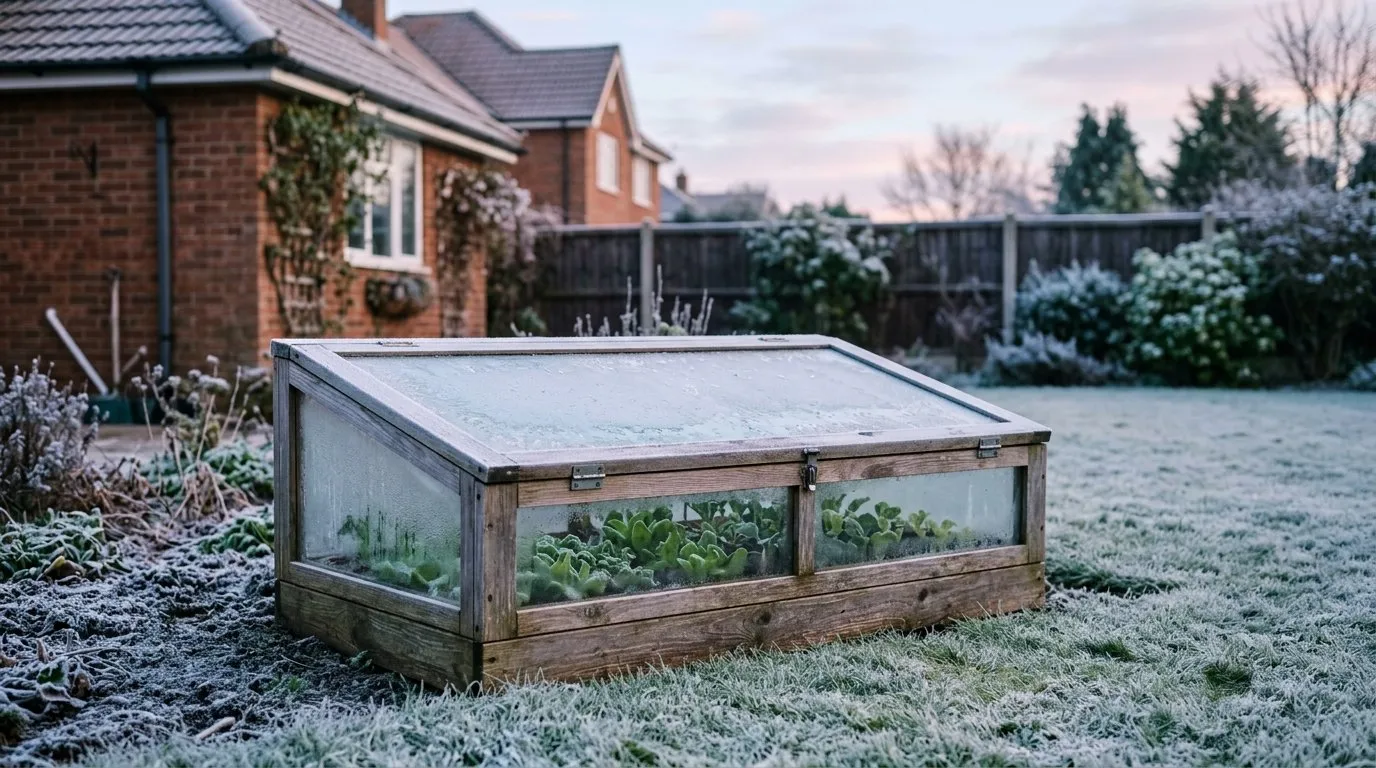 A cold frame at first light in a suburban garden. For a few tender plants, this beats burning candles and carries no fire or fume risk.
For settled cold spells, secure the structure first. High winds do more damage than frost, so read our notes on how to secure a greenhouse in wind before winter sets in.
Frequently asked questions
Do flower pot heaters actually work?
They give a little warmth but create no extra heat. The candles supply the energy whether the pot is there or not. The clay pot just stores the heat and releases it slowly, so the warmth feels steadier. Four tealights produce around 120-140 watts total, enough to take the chill off a tiny enclosed space but not to frost-protect a whole greenhouse.
Are flower pot heaters a fire risk?
Yes, several unattended tealights are a real fire risk. Each flame is a naked ignition source. Tealights can flare or pool molten wax if grouped too closely, and a knocked tray near dry canes, paper or wooden staging can start a fire. UK fire services warn against leaving them burning unattended or overnight.
Can a flower pot heater cause carbon monoxide?
Yes, any burning candle produces carbon monoxide. In a small sealed greenhouse with no ventilation the gas can build to harmful levels. It is colourless and odourless. Always leave a vent open if you ever burn candles in an enclosed space, and never use a pot heater in a shed or room where people or pets sleep.
What can I use instead of a flower pot heater?
A thermostatic electric tube heater is the safer choice, from about £25. It only runs when the temperature drops, costs pennies a night and carries no flame. For greenhouses with no power, a proper paraffin greenhouse heater is designed for the job with a stable wick and is far safer than loose tealights.
How many tealights does a flower pot heater need?
Most viral versions use four to eight tealights, but more flames mean more risk. Four tealights give roughly 120-140 watts. Doubling to eight does not double useful warmth and sharply raises the fire and carbon monoxide danger. If you ever try one, keep it to a few candles, stay in the room, and never seal the space.
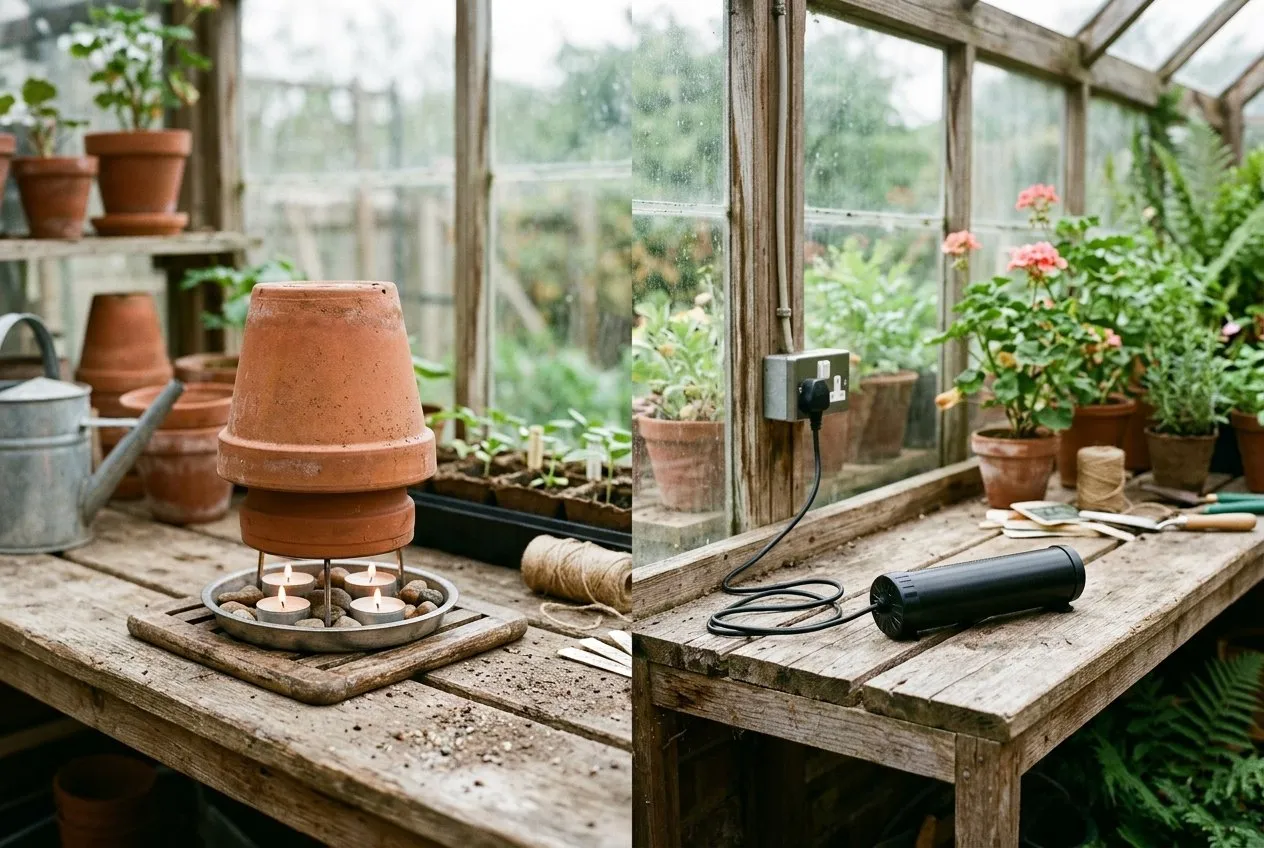 The two options side by side at Staffordshire. The pot trick on the left, a thermostatic tube heater on the right. The heater wins on warmth, cost and safety.
Now plan safer greenhouse heating
The pot heater is a viral idea that does not survive a thermometer. For the full picture, our greenhouse heating guide for UK gardeners covers every option with real running costs. To stop heat escaping in the first place, read how to insulate a greenhouse for winter. And for the wider season ahead, our winter gardening jobs guide sets out what to do month by month so your tender plants come through to spring.
Stay warm, stay safe, and let the thermometer settle the argument.
Our team produces practical UK gardening guidance from source research, contributor records and established horticultural practice. Editorial standards are overseen by Matt W.