Key takeaways
- Fruits at 18-24C with 85-95% humidity, not on a sunny windowsill
- Sawdust block or kit is the easiest UK route; logs take 1-2 years
- White toothed pom-pom forms 10-21 days after opening the block
- Harvest when spines reach 10-15mm, before they turn yellow or pink
- A 2.5kg block gives 300-500g across two flushes
- Generic mushroom guides miss its high-humidity, fresh-air needs
Lion’s mane (Hericium erinaceus) is the white, toothed, pom-pom mushroom that fruits indoors in a few weeks. It is one of the easiest gourmet mushrooms to grow in the UK, but only if you get the humidity right. Most failures come from treating it like a houseplant. This guide covers kits versus sawdust blocks versus hardwood logs, the exact fruiting conditions, harvest timing, and why a generic mushroom guide will not get you a good crop.
If you want a faster, more forgiving first crop, try our guide to growing oyster mushrooms.
What Lion’s Mane Needs to Fruit
Lion’s mane is a temperate woodland fungus. In the wild it grows on dead and dying hardwood, mostly beech and oak. That tells you what it wants at home: cool, damp, shaded conditions with moving air.
The four conditions that matter:
- Temperature: 18-24C for fruiting. Below 15C it stalls. Above 26C the spines deform.
- Humidity: 85-95%. This is the one people get wrong. Dry UK central heating kills it.
- Fresh air: carbon dioxide builds up inside the fruiting chamber. Open it twice a day.
- Light: indirect daylight only. It does not photosynthesise but uses light to orient. No direct sun.
A south-facing windowsill fails on three of these four. The sun raises the temperature, drops the humidity and scorches the young fruiting body. Pick a north-facing kitchen, a utility room or a shaded shelf instead.
Kit vs Sawdust Block vs Hardwood Log
Three routes get you a crop. They differ hugely on speed, yield and effort.
| Method | Speed to first harvest | Typical yield | Difficulty | Best for |
|---|---|---|---|---|
| Grow kit | 10-21 days | 300-500g | Easy | First-timers, indoors |
| Self-poured sawdust block | 14-28 days | 400-700g | Moderate | Repeat growers, value |
| Inoculated hardwood log | 12-24 months | 200-400g per flush, multi-year | Patient | Outdoor, low effort once set |
A self-poured block is cheaper per gram but needs a pressure cooker, grain spawn and clean technique. Contamination is the risk. For the wider beginner approach to growing mushrooms at home, our general guide covers the sterilisation and spawn basics this article assumes.
A hardwood log is the slowest but most natural. You drill beech or oak rounds, hammer in inoculated dowels and wait. It is closer to how lion’s mane lives in the wild.
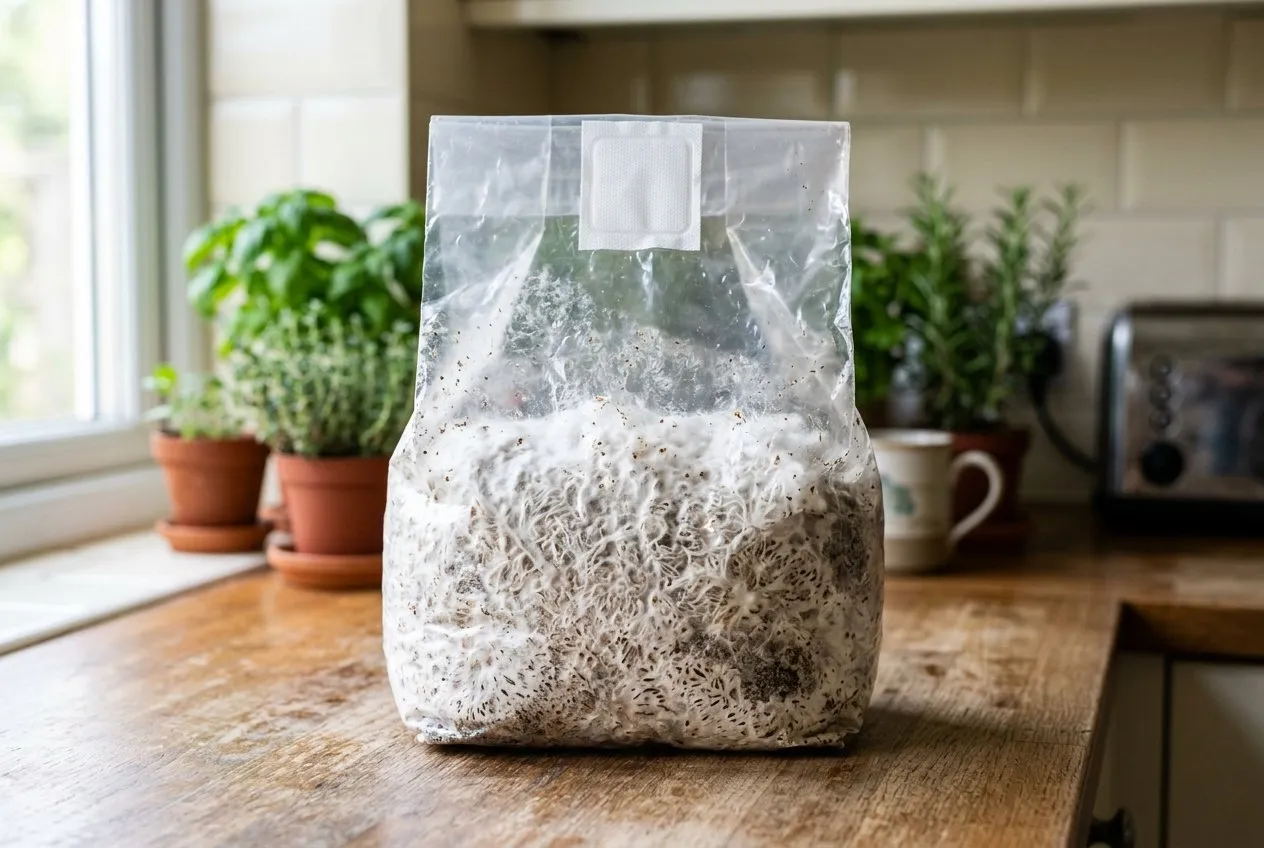 A fully colonised 2.5kg sawdust block at Staffordshire. The white mycelium has run through the whole bag. This is the point to cut it open and start fruiting.
Growing Lion’s Mane From a Kit Step by Step
- Open the block. Cut an X or a 50mm slit in the front of the bag. The mushroom fruits from this cut.
- Set up humidity. Stand the block in a clear plastic box, or drape a misted clear bag loosely over it. Do not seal it airtight.
- Mist twice daily. Spray the inside walls of the box, not the block directly. Aim for visible droplets on the walls.
- Air it twice daily. Lift the lid for two minutes morning and night. This clears carbon dioxide.
- Wait for pins. Small white knobbly pins appear in 5-10 days. The full pom-pom forms a week or so later.
- Keep it cool and shaded. Hold 18-22C. Move it away from radiators and sun.
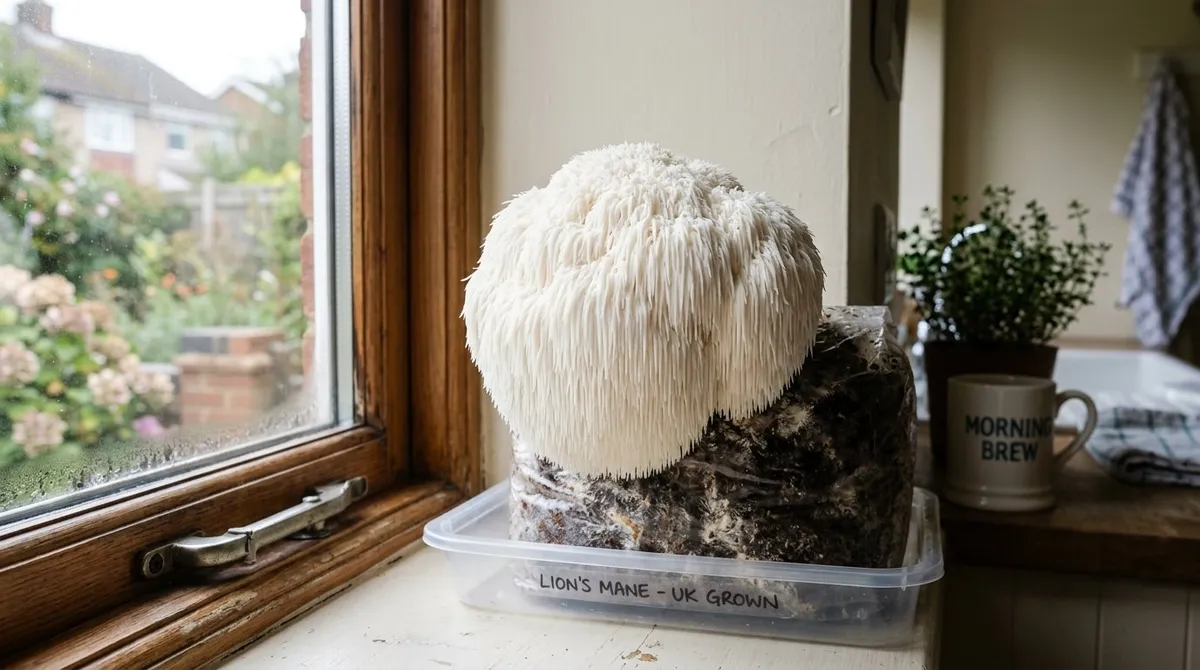
The first sign of success is a tiny white cushion at the cut. Within days it grows the long hanging spines that give lion’s mane its name.
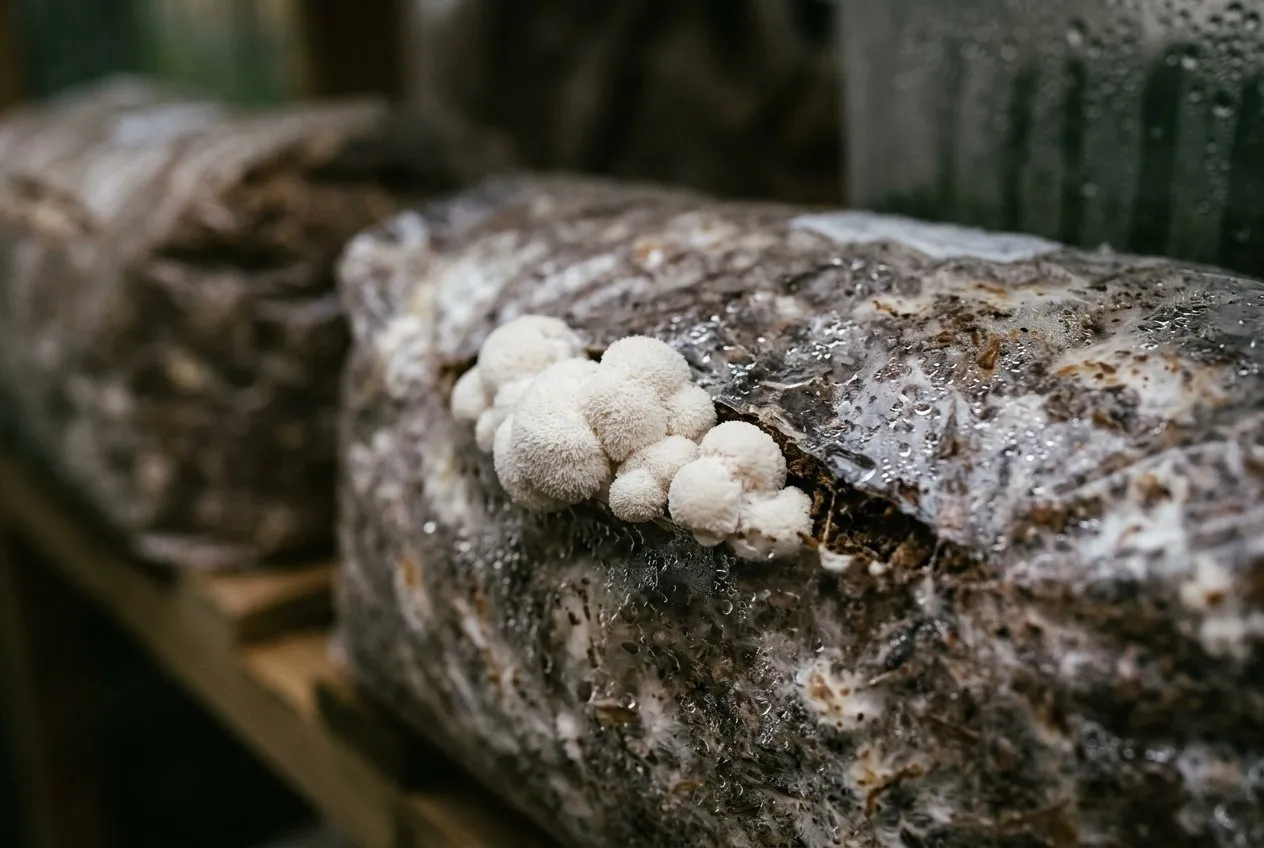 Early pinning on a kit block. The white cushions appear 5-10 days after opening. Within a week these develop the hanging spines. Mist more, not less, at this stage.
Reading the Pom-Pom and Harvesting on Time
The fruiting body is unmistakable. It is a rounded white mass covered in soft hanging spines, like an icicle pom-pom or a sea anemone. No other UK gourmet mushroom looks like it.
Timing the harvest is the skill. Pick too early and you lose yield. Pick too late and it turns bitter.
Harvest when:
- The spines reach 10-15mm long and hang clearly
- The whole mass is still pure white
- It feels firm, not spongy
Do not wait until:
- The spines turn yellow, orange or brown
- The texture goes soft and damp
- The surface starts shedding spore as a white dust
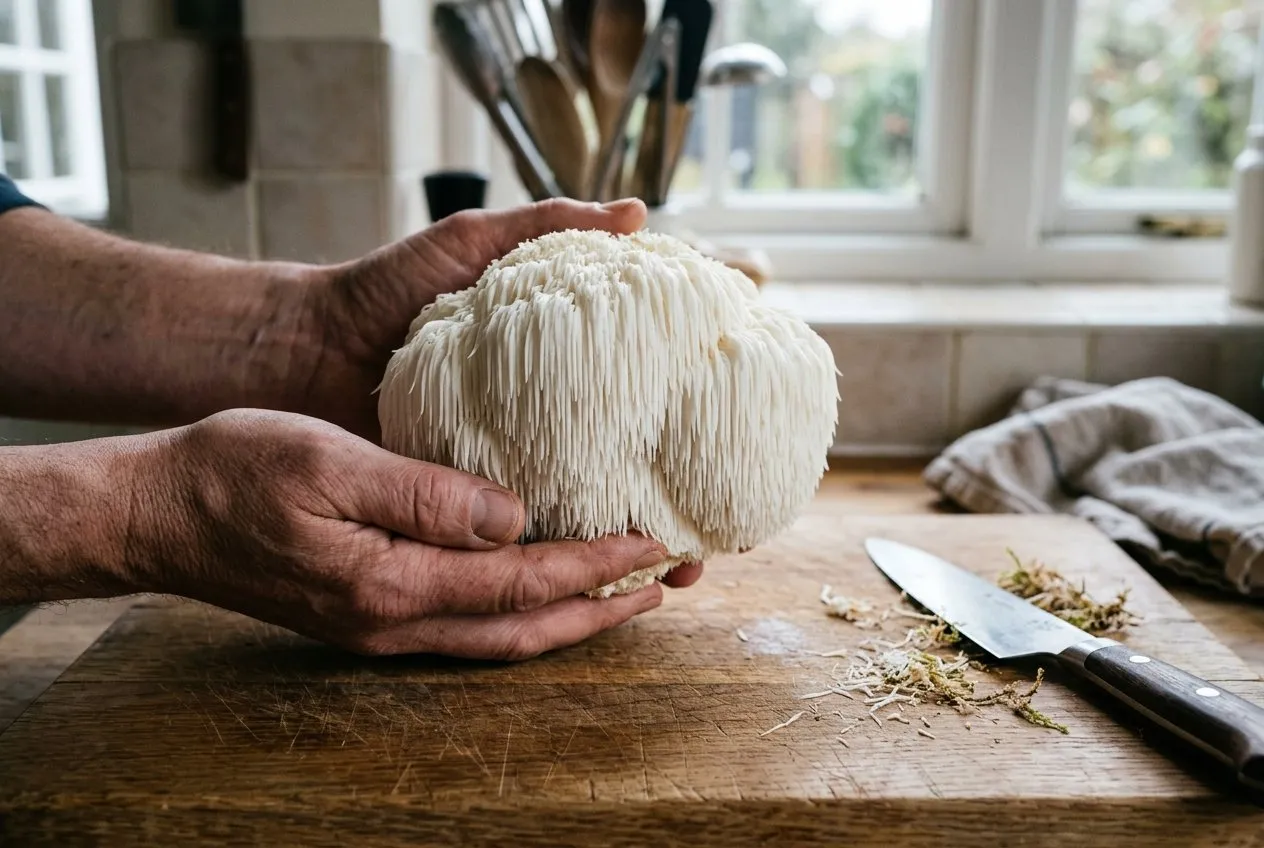 A 410g harvest off a single block at Staffordshire. Spines around 12mm, the whole mass still white. This is the right moment. A day or two later it would start to yellow at the tips.
Getting a Second Flush
One block is not done after the first harvest. Lion’s mane reflushes if you treat it right.
After cutting the first crop, the block looks spent. It is not. Do this:
- Rest the block for 5-7 days, still misted, still aired.
- Some growers soak the block in cool water for 12 hours to rehydrate it.
- Keep humidity at 90% and wait. A second pin set appears in 2-3 weeks.
The second flush is usually smaller, around 60-70% of the first. After two flushes the block is largely exhausted. Break it up and add it to your compost or a leaf mould heap, where the spent mycelium helps the heap rot down.
Growing Lion’s Mane on Hardwood Logs Outdoors
Logs are the long game. They suit anyone who wants a low-effort outdoor crop and does not mind waiting.
The method:
- Cut fresh beech, oak or birch into 1m rounds, 100-200mm thick. Use logs felled within the last 6 weeks.
- Drill 8mm holes in a diamond pattern, 100mm apart.
- Hammer in lion’s mane dowel plugs. Seal each with melted wax.
- Stand or lean the logs in deep shade. A north-facing fence base or under a hedge works.
- Keep them off bare soil and water them in dry spells.
Colonisation takes 12-24 months. The logs then fruit in autumn, usually after a cool damp spell. A well-run log fruits for 3-5 years. This is unusual-crop territory, the kind of thing covered in our round-up of unusual crops worth growing.
The RHS has sound general advice on the principles of cultivating mushrooms at home. See the RHS guide to growing mushrooms for the wider context on spawn and substrates.
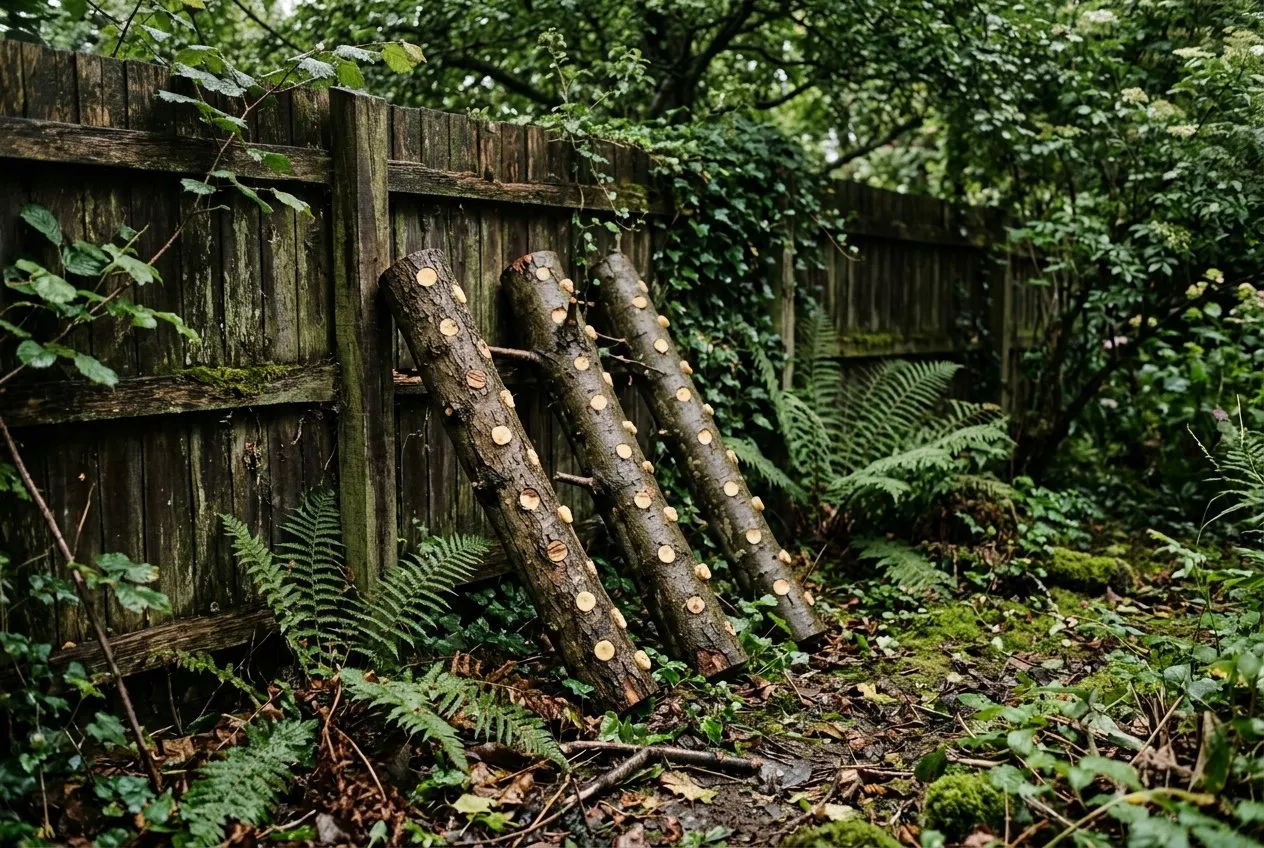 Inoculated beech logs at Staffordshire, wax-sealed and stood in deep shade against a north fence. They take 12-24 months to colonise, then fruit each autumn for several years.
The Nootropic Interest and What We Can Say
Lion’s mane has become popular as a so-called nootropic, sold in capsules and coffees. Searches for it have climbed sharply. That interest is driving a lot of new UK growers.
Common Lion’s Mane Growing Mistakes
Mistake 1: full sun on a windowsill. It dries the block and scorches the fruit. Use shade.
Mistake 2: low humidity. UK central heating drops indoor air to 30-40%. You need 85-95%. Mist and enclose.
Mistake 3: no fresh air. A sealed bag traps carbon dioxide and gives you long spindly antler shapes, not a pom-pom. Air it daily.
Mistake 4: harvesting late. Yellowing spines mean bitter flesh. Pick while pure white.
Mistake 5: spraying the block directly. Soaking the surface invites contamination. Mist the box walls instead.
For a sense of how lion’s mane sits alongside other indoor edibles, our guides on growing vegetables on a windowsill and growing microgreens at home cover the same small-space, indoor approach.
For anyone weighing the routes, the kit wins on speed, the block wins on value, and the log wins on longevity. Pick the kit first.
Lion’s Mane Growing Calendar UK
| Month | Lion’s mane task |
|---|---|
| January | Fruit kits indoors; 18-22C utility room ideal |
| February | Start a fresh kit; mist daily |
| March | Cut and inoculate fresh hardwood logs |
| April | Indoor kits crop well in mild spring air |
| May | Keep logs shaded and watered as it warms |
| June | Indoor fruiting; watch temperatures stay under 24C |
| July | Hardest month indoors; cool the room or pause |
| August | Resume kits as evenings cool |
| September | Outdoor logs may start fruiting after rain |
| October | Peak log fruiting window; harvest while white |
| November | Last outdoor flush; bring kits fully indoors |
| December | Indoor kit fruiting; mist against dry heating |
Frequently asked questions
Can you grow lion’s mane mushrooms in the UK?
Yes, lion’s mane grows well indoors in the UK year-round. It fruits at 18-24C, which most UK kitchens and utility rooms reach. A sawdust block or kit is the easiest route. Outdoor logs also work but take 12-24 months and only fruit in autumn.
How long does lion’s mane take to grow?
A block fruits 10-21 days after you open it. The white spines form fast once humidity is high. A second flush follows 2-3 weeks after the first harvest. Inoculated hardwood logs take 12-24 months before the first fruiting.
Why is my lion’s mane turning yellow or pink?
Yellowing means it is drying out and past its best. Pink or orange tints often mean too little fresh air or contamination. Harvest before the spines discolour. Increase misting and open the box daily to keep the fruiting body white.
Do you need a kit to grow lion’s mane?
No, but a kit is the simplest start. Kits are pre-colonised blocks you open, mist and crop. Experienced growers pour their own sawdust blocks or plug hardwood logs. Kits cost £15-£25 and give 300-500g across two flushes.
Is lion’s mane legal to grow in the UK?
Yes, Hericium erinaceus is a legal edible and culinary mushroom in the UK. It is sold as a food and supplement. It is not a controlled species. Buy spawn or kits from reputable UK suppliers and cook it before eating.
 Home-grown lion’s mane fried in butter at Staffordshire. The texture comes out close to crab or lobster. Cooking is the honest reason to grow it, whatever the supplement marketing claims.
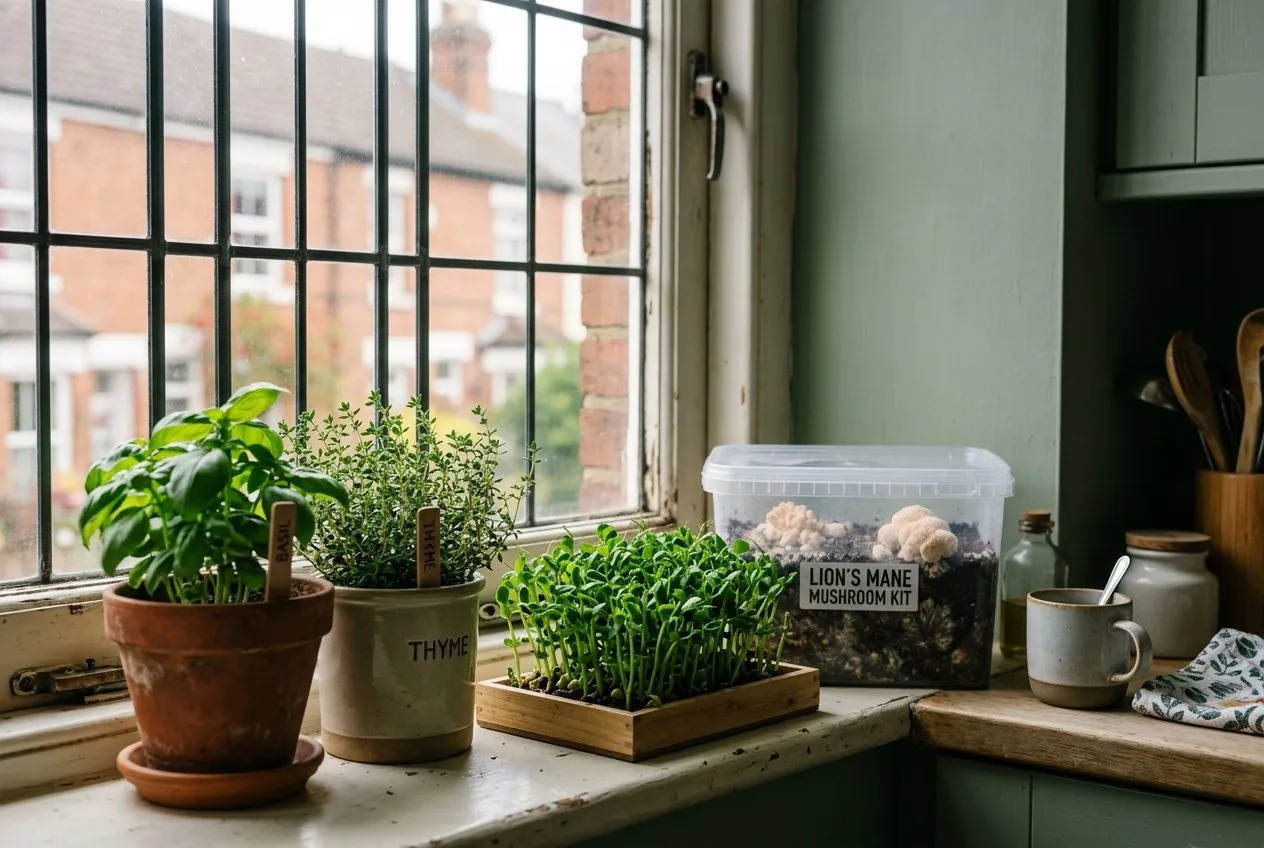 Lion’s mane shares a small indoor setup with herbs and microgreens at Staffordshire. The mushroom sits in shade at the back, away from the bright windowsill the herbs need.
Now plan your wider indoor and unusual growing
Lion’s mane is one crop in a much wider indoor patch. To make the most of a small space indoors, our guide to regrowing food from kitchen scraps pairs well with mushroom blocks on the same shelf. And for the wider productive plot, our grow your own vegetables guide sets out the season month by month.
Our team produces practical UK gardening guidance from source research, contributor records and established horticultural practice. Editorial standards are overseen by Matt W.