Key takeaways
- Warm soapy water and a soft brush cleans nearly everything
- Teak goes silver-grey naturally; oil only if you want honey colour back
- Never jet wash natural rattan or soft teak; it tears fibres
- Treat metal rust with wire brush, rust converter, then metal paint
- Plastic: bicarb paste, then white vinegar for stubborn marks, never bleach
- Wash cushion covers, reproof yearly, store dry over winter
Garden furniture lives outside through everything a UK summer throws at it, then sits damp all winter. A yearly clean keeps it looking right and adds years to its life. The job is simpler than the marketing on fancy cleaners suggests.
What Cleans Almost Any Garden Furniture
Start with the gentlest method and only escalate if it fails.
A bucket of warm water, a squirt of washing-up liquid and a soft-bristle brush cleans teak, painted wood, powder-coated metal, plastic and synthetic rattan. Work in shade so the surface does not dry into streaks before you rinse. Scrub, rinse with a hose on a low setting, then let it dry.
That single method handles 90% of garden furniture cleaning in the UK. The material-specific steps below are for the jobs soapy water cannot finish: grey weathering on teak, rust on iron, stubborn marks on plastic, mould on cushions.
If your patio needs the same treatment underneath the furniture, the method carries straight across. Our guide on how to clean a patio covers the slabs while you have the bucket out.
Teak and Hardwood: Clean, Strip Grey, and the Oil Debate
Teak is the most misunderstood material in the garden. It needs far less than people think.
Wash it with warm soapy water and a soft brush along the grain. That removes dust, pollen and green film. If the teak has weathered to silver-grey, that is not damage. The wood is fine underneath. The grey is a thin surface layer you can strip back with a proprietary teak cleaner if you prefer the honey colour. Brush it on, wait the stated time, scrub and rinse.
Now the oil debate. Teak oil does not protect or preserve teak. Teak makes its own oils and survives outdoors untreated for 20 years or more. Oil only restores the warm colour, and it needs redoing twice a year because UK rain washes it out. Sealers and oils can also trap moisture and feed black mould if applied to damp wood.
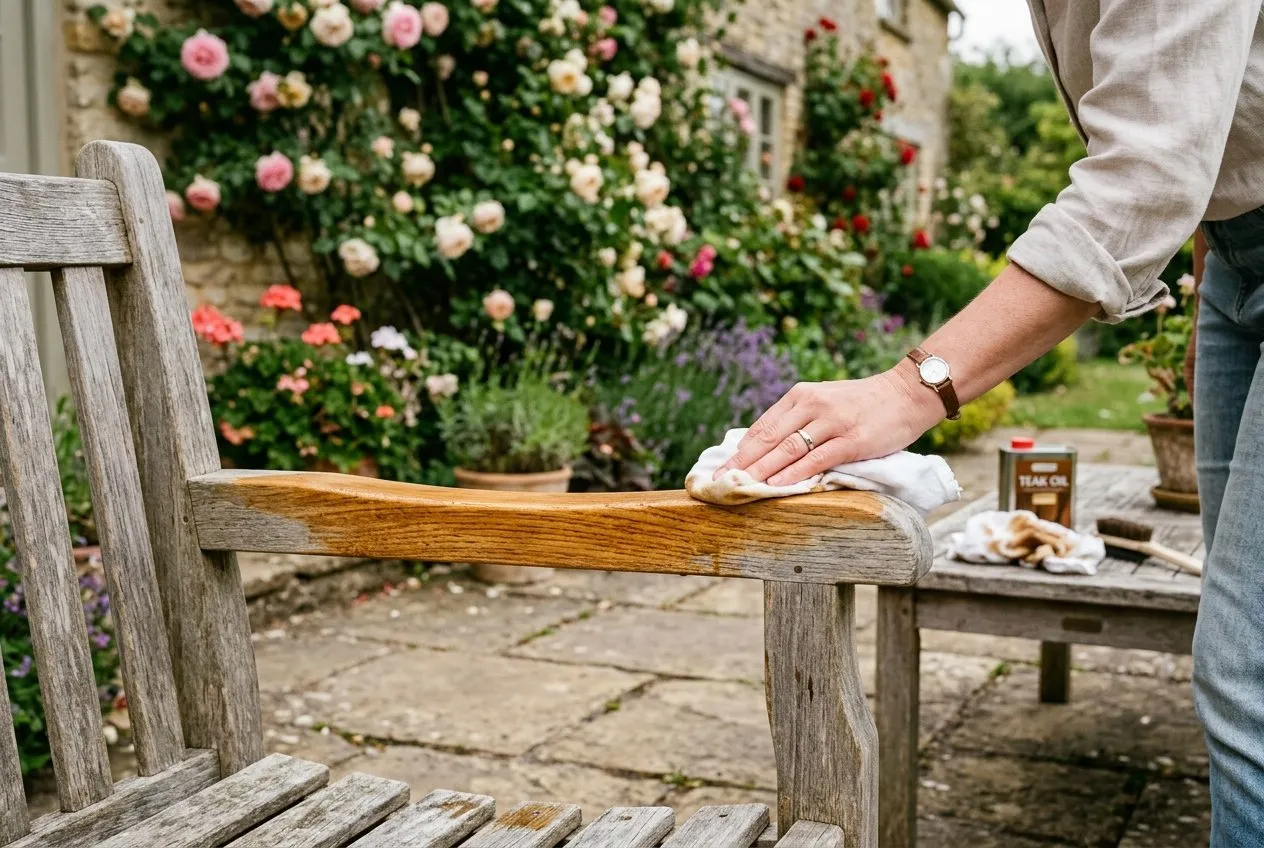 Oiling a teak armrest on a cottage patio. A thin coat, wiped on, buffed off after 15 minutes. This is the colour-restore step, redone twice a year, and entirely optional.
Softwood and Painted Wood Need Real Protection
Unlike teak, softwood furniture rots if you leave it bare.
Pine, larch and other softwood sets, plus painted hardwood, do need a protective coat. Water gets into untreated softwood, freezes, and splits the joints over a couple of winters. Clean it first with soapy water, let it dry fully for 48 hours, then re-treat.
Rattan and Synthetic Wicker
The cleaning method depends entirely on whether the rattan is natural or synthetic.
Most modern “rattan” garden sofas are synthetic, a PE or resin weave over an aluminium frame. They are tough. Wash them with warm soapy water and a soft brush, then poke an old toothbrush into the weave to lift trapped dirt, pollen and cobwebs. Rinse with a hose. Synthetic rattan tolerates a gentle hose but not a jet wash, which can snap the weave fibres.
Natural rattan and cane are far more delicate. Wipe with a barely damp soapy cloth, never soak it, and dry it fast. Soaking natural rattan swells the fibres and they go floppy. Never jet wash natural rattan. Bring natural rattan indoors over winter; it is not built for UK weather.
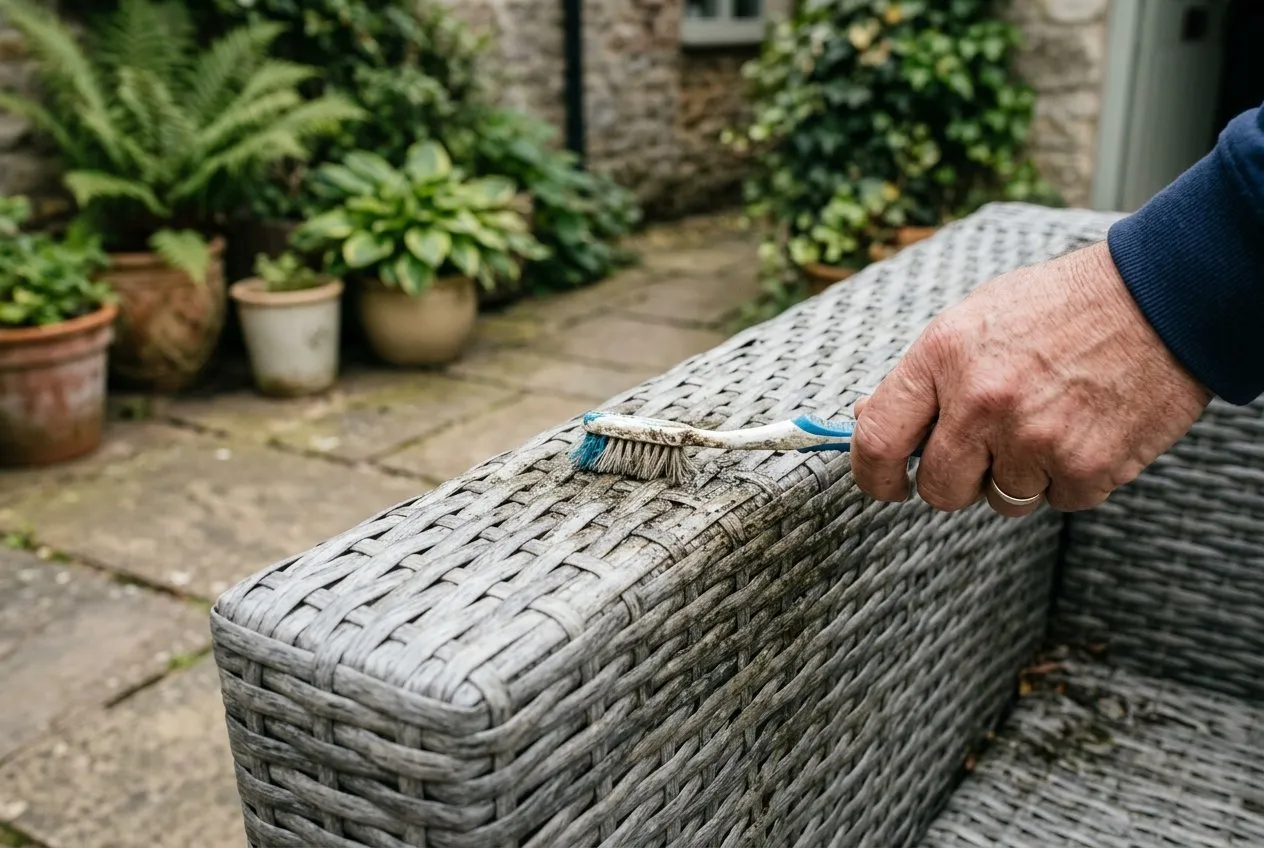 Working a toothbrush into the weave of a synthetic rattan sofa in a town courtyard. The brush reaches the trapped pollen and grime a cloth slides over. Hose rinse after, never a jet wash.
Metal: Aluminium Versus Steel and Iron
The treatment splits hard between rust-proof and rust-prone metals.
Cast aluminium and powder-coated aluminium do not rust. Wash them with soapy water, rinse, dry, and once a year wipe a thin coat of car wax over the powder coat to keep water beading off and protect the finish. That is the whole job.
Steel and cast iron rust the moment the paint chips. Catch it early. Sand or wire-brush the rust back to bare metal, treat any remaining stained metal with a rust converter, prime, then finish with a metal paint such as a Hammerite-type direct-to-rust coating. Touch up chips as they appear rather than waiting for a full re-do. A cast-iron bistro set kept on top of small chips lasts 30 years; left to rust, it is scrap in five.
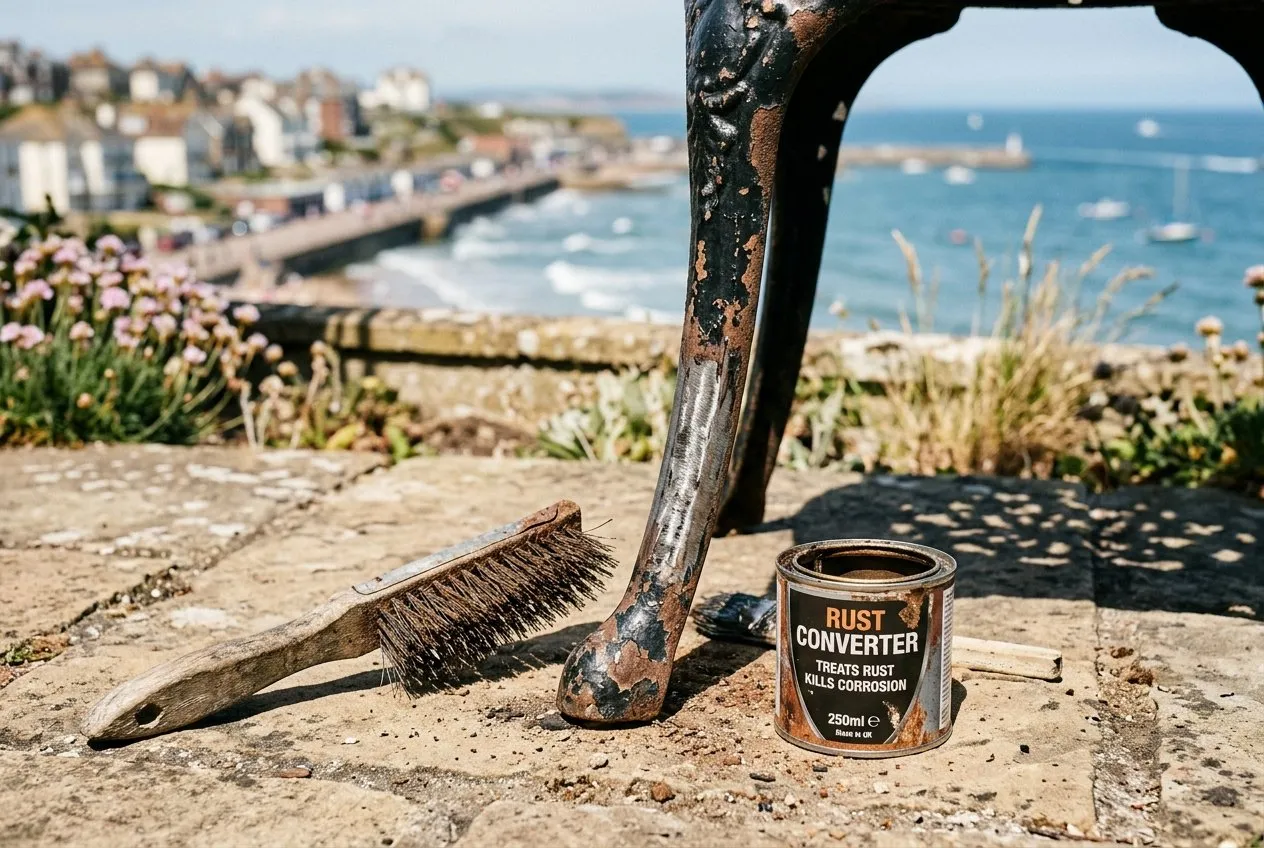 Treating rust on a cast-iron bistro set at a seaside garden, where salt air speeds corrosion. Wire brush back to metal, rust converter, then metal paint. Caught early, it is a 20-minute fix.
Plastic and Resin Without the Yellowing
Plastic furniture cleans easily but stains and yellows if you treat it wrong.
For general grime, soapy water and a sponge are enough. For ingrained marks, make a paste of bicarbonate of soda and water, rub it in with a cloth, leave five minutes, then rinse. For stubborn black spots or stains, white vinegar on a cloth shifts most of them. Never use bleach on white or cream plastic. Bleach reacts with the resin and turns it permanently yellow, which is the opposite of what you want. A car-trim restorer or a wipe of baby oil brings a dull, faded plastic set back to a deeper colour for a season.
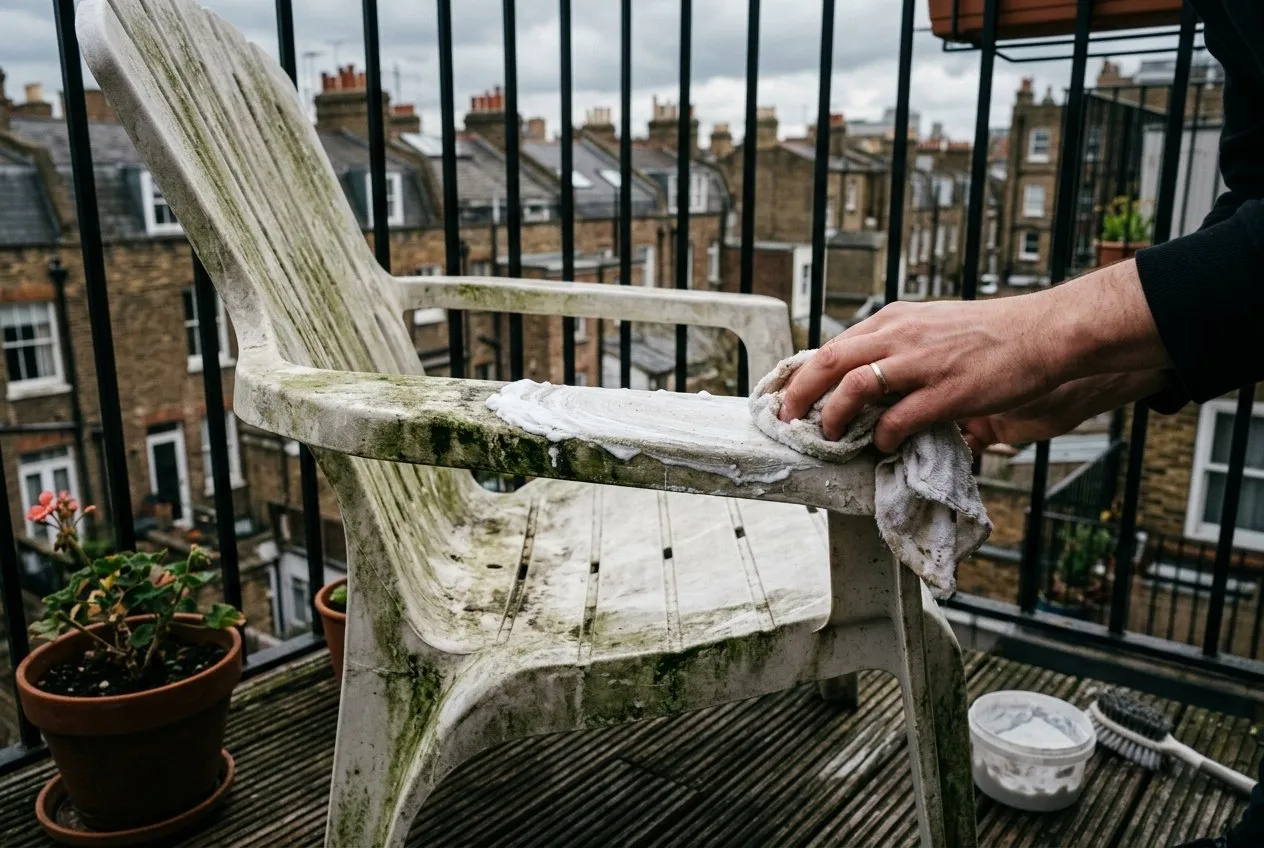 Lifting green algae off white resin chairs on a flat balcony with a bicarb paste. Bicarb and then white vinegar shift almost everything. Bleach is banned here; it yellows the plastic for good.
Cushions, Fabric and Beating Green Mould
Cushions are where most garden furniture lets you down, and they are fixable.
Brush off loose dirt first. For green algae and mould, mix one part white vinegar to four parts water, sponge it on, leave 15 minutes, then scrub and rinse. Most cushion covers unzip and go in the machine at 30 degrees; check the label, wash inside out, and air-dry, never tumble. Once dry, spray a fabric reproofer over the covers to bring back the water-repellence that washing strips out. Reproof every year.
Green algae and black mould on any surface come from trapped damp. Improve airflow, tip furniture so water runs off, and never store cushions wet. The cause is always moisture, not dirty fabric.
Winter: Covers Versus Storage
What you do over winter matters more than how you clean in summer.
| Winter option | Best for | Watch out for |
|---|---|---|
| Dry shed or garage | Everything, especially softwood, natural rattan, cushions | Space; mice in cushions |
| Breathable cover outdoors | Teak, aluminium, synthetic rattan | Condensation if not vented |
| Cheap plastic sheet | Nothing | Traps damp, breeds black mould |
| Left fully exposed | Untreated teak and aluminium only | Slow weathering, green film |
The order of preference is simple. A dry, airy shed beats every cover. If you must cover furniture outdoors, use a breathable cover with vents, not a sealed plastic sheet. A sealed sheet traps condensation against the furniture and grows more mould than leaving it open to the rain. Always store cushions indoors, dry, in a sealed box away from mice.
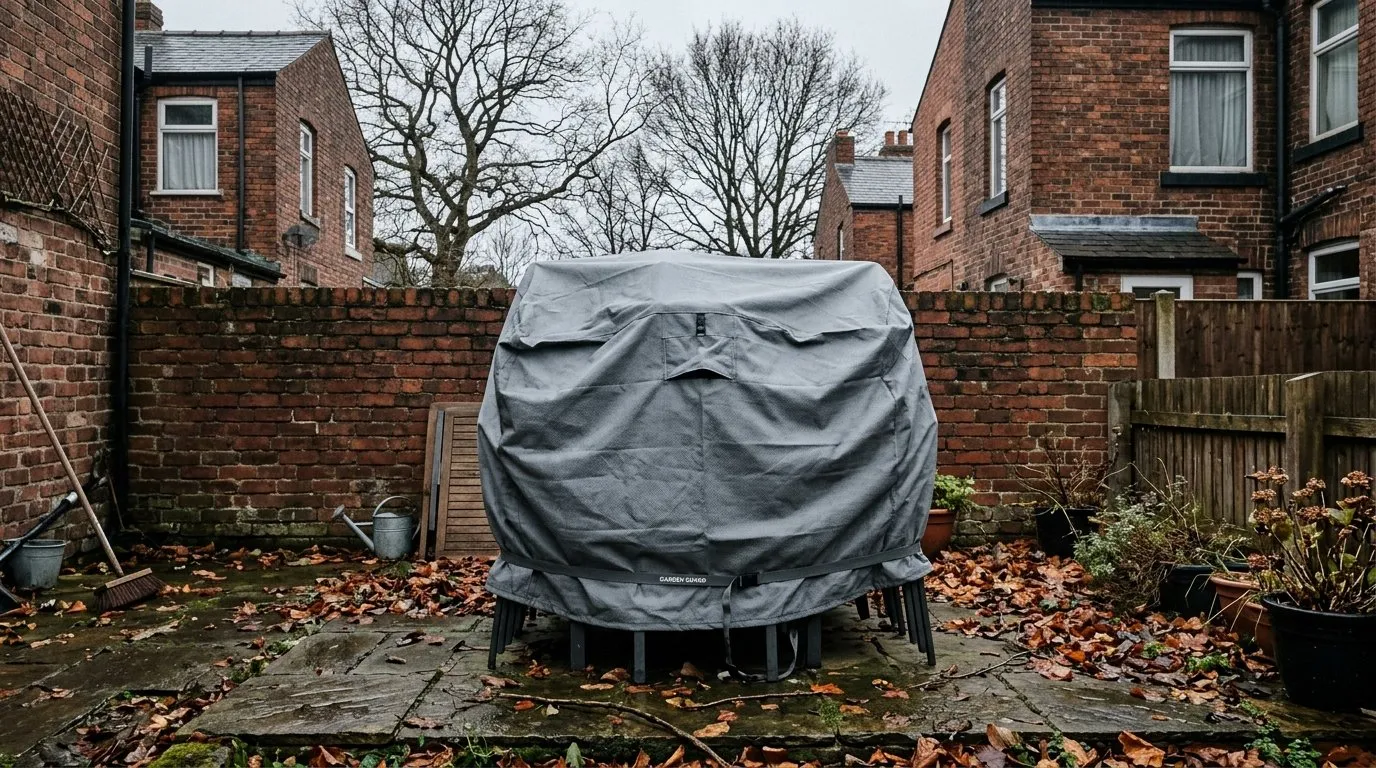 A breathable cover over a stacked set on a terraced patio in November. Vented, not sealed plastic. Cushions are indoors in a box. A dry shed would be better still where space allows.
When to Re-Oil, Re-Seal and Re-Treat
Timing matters as much as method.
- Teak oil (optional): twice a year, late spring and midsummer, only if you want the colour
- Softwood preservative: once a year, late spring, on bone-dry wood
- Painted wood: touch up chips as they appear; full repaint every 3-4 years
- Aluminium wax: once a year in spring
- Metal rust paint: the moment you see a chip, all year round
- Cushion reproofer: once a year after the annual wash
Garden Furniture Care Calendar UK
| Month | Furniture task |
|---|---|
| January | Check covered furniture for condensation; vent if damp |
| February | Order any rust paint or reproofer for spring |
| March | Uncover, inspect for winter damage and mould |
| April | First full soapy clean of the year |
| May | Re-treat softwood; wax aluminium; oil teak if wanted |
| June | Wash cushion covers and reproof before peak use |
| July | Mid-season wash; second teak oil coat if used |
| August | Spot-clean marks; touch up any new metal chips |
| September | Deep clean before storage season |
| October | Wash and fully dry everything before covering |
| November | Move indoors or fit breathable covers; store cushions dry |
| December | Quick mid-winter check for trapped damp |
Frequently asked questions
Can I jet wash my garden furniture?
No, never jet wash teak, natural rattan or soft wood. The high pressure tears out soft early wood between the grain on teak and shreds natural rattan binding. Use warm soapy water and a soft brush instead. A gentle hose rinse is fine on synthetic rattan, aluminium and plastic, but keep the pressure washer for paving.
Do I need to oil teak garden furniture?
No, teak survives 20 years or more without any oil. Teak makes its own protective oils and weathers to a harmless silver-grey. Oiling only restores the honey colour and must be redone twice a year because UK rain washes it out. Oil for looks if you want, but it adds nothing to the wood’s life.
How do I get green mould off garden furniture?
Mix one part white vinegar to four parts water, sponge on, leave 15 minutes, then scrub. This shifts green algae and black mould from wood, plastic and fabric. Rinse with clean water afterwards. The mould comes from trapped damp, so improve airflow and never store furniture or cushions wet.
How do I treat rust on a cast-iron set?
Wire-brush the rust to bare metal, apply rust converter, then metal paint. A direct-to-rust paint such as a Hammerite-type coating seals it. Catch chips the day you see them. A cast-iron set kept on top of small chips lasts 30 years; left to rust it is scrap in five.
Can I machine wash garden cushion covers?
Most covers unzip and machine wash at 30 degrees; check the label first. Wash inside out and air-dry, never tumble. Once dry, spray a fabric reproofer over the covers to restore the water-repellence that washing removes. Reproof every year and always store cushions indoors and dry over winter.
Now plan the rest of the outdoor space
Our team produces practical UK gardening guidance from source research, contributor records and established horticultural practice. Editorial standards are overseen by Matt W.