Key takeaways
- Half-hardy annual: plant out mid to late May after frost
- Never lets it dry out; one dry spell drops all flowers
- Feed weekly with high-potash tomato feed from June
- Self-cleaning, so no deadheading needed all summer
- Full sun to part shade; trails 30-45cm over the rim
- White, blue and pink forms; white is the toughest
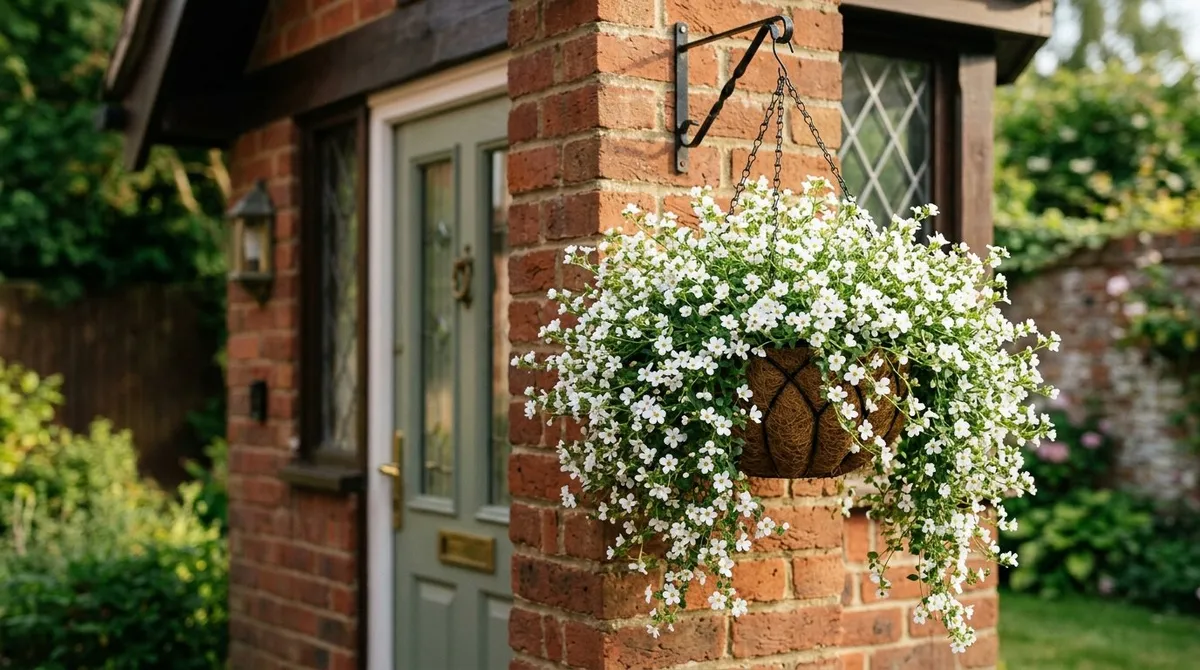
Bacopa is the trailing basket plant most people walk past on the garden centre bench. It sits quietly next to the showy petunias and never sells itself well in a 9cm pot. Give it a season in a basket and it becomes the plant that carries the whole display from June to the first frost.
What Bacopa Actually Is
Bacopa is the garden name for Sutera cordata, now reclassified as Chaenostoma cordatum. It is a low, spreading plant from South Africa with small five-petalled flowers on thin trailing stems.
This is the bedding bacopa. It is not the aquatic Bacopa monnieri sold for fish tanks and sometimes as a herbal supplement. They share a common name and nothing else. The basket plant in this guide is purely ornamental.
The flowers are tiny, barely 10mm across, but a healthy plant carries hundreds at once. Stems trail 30-45cm over a basket rim by late summer. The mat of small leaves stays green and neat underneath.
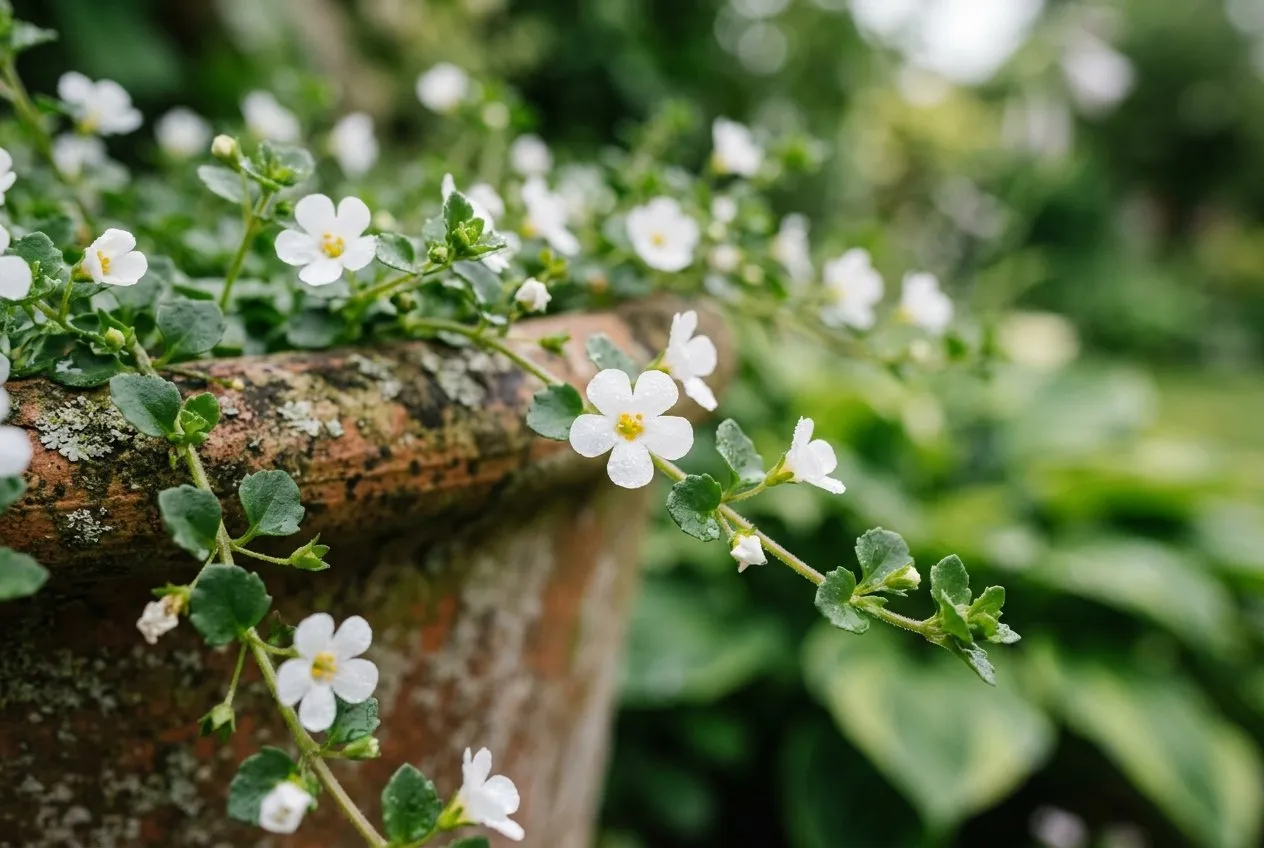 White bacopa in close-up at Staffordshire in July. Each bloom is barely 10mm across, but a settled plant carries hundreds at once over fine trailing stems.
When and How to Plant Bacopa in the UK
Buy it as small plug plants in spring or as larger pot-grown plants from May. Plugs are far cheaper. A strip of 12 plugs costs around £6-8, against £4-5 for a single garden-centre pot.
Pot plugs on into 9cm pots first and grow them on a frost-free windowsill or in a greenhouse. By mid May they are sturdy enough to go straight into baskets.
Planting method:
- Soak the plugs an hour before planting
- Use a peat-free multipurpose compost with added water-retaining gel
- Mix in a slow-release feed at the rate on the pack
- Plant bacopa around the edge of the basket, never the dry centre top
- Set the crown level with the compost, then water in well
Our full guide to planting and maintaining hanging baskets covers the liners, compost and structure that bacopa sits within.
The One Rule: Bacopa Hates Drying Out
This is the single fact that decides success. Bacopa has almost no drought reserve. Let the compost dry out once and the plant drops every open flower and unopened bud within a day.
It then sulks. Recovery takes two to three weeks of consistent watering before new buds form and open. Miss two waterings in a heatwave and you lose a month of display.
Water-retaining gel in the compost buys you a few hours, not days. A self-watering basket with a reservoir is the single best upgrade for anyone who works full time.
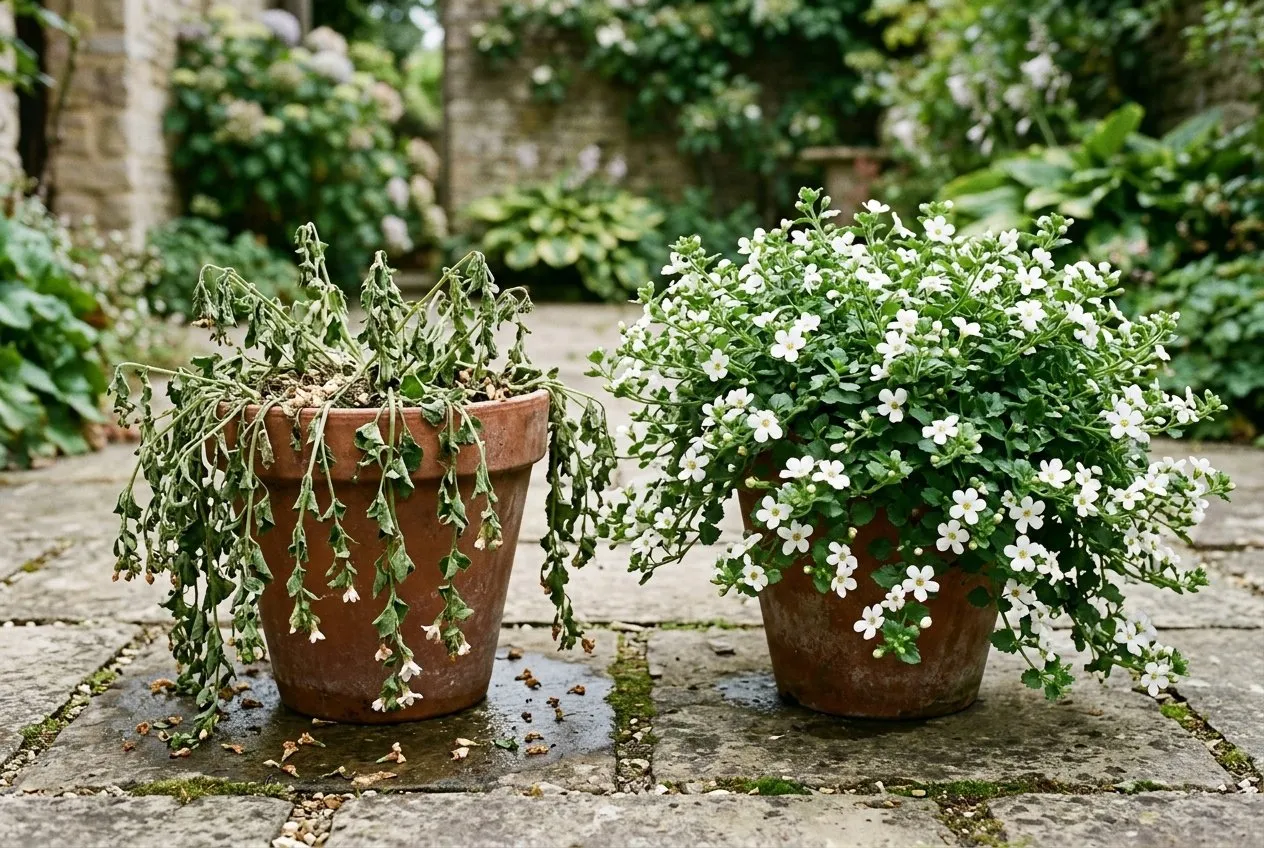 The cost of one dry day at Staffordshire in July. The bacopa on the left dried out once and dropped every flower; the watered plant on the right is solid with bloom.
| Conditions | Watering frequency | Risk if missed |
|---|---|---|
| Mild, overcast (under 18C) | Once a day | Low |
| Warm, sunny (18-24C) | Once or twice a day | Moderate flower drop |
| Hot spell (over 25C) | Twice a day | Total flower drop within 24 hours |
| Windy on any warm day | Add one extra check | Baskets dry far faster in wind |
Feeding Bacopa for Non-Stop Flowers
Bacopa is a hungry plant once it is growing fast. The slow-release feed in the compost runs out by late June. After that it needs a weekly liquid feed.
Skip the feed and the plant keeps growing but flowers thin out. The leaves stay green and the stems trail, but the colour fades away. A fed bacopa is solid with flower; an unfed one is mostly foliage.
A weekly feed and a daily water are the whole job. Bacopa asks for nothing else.
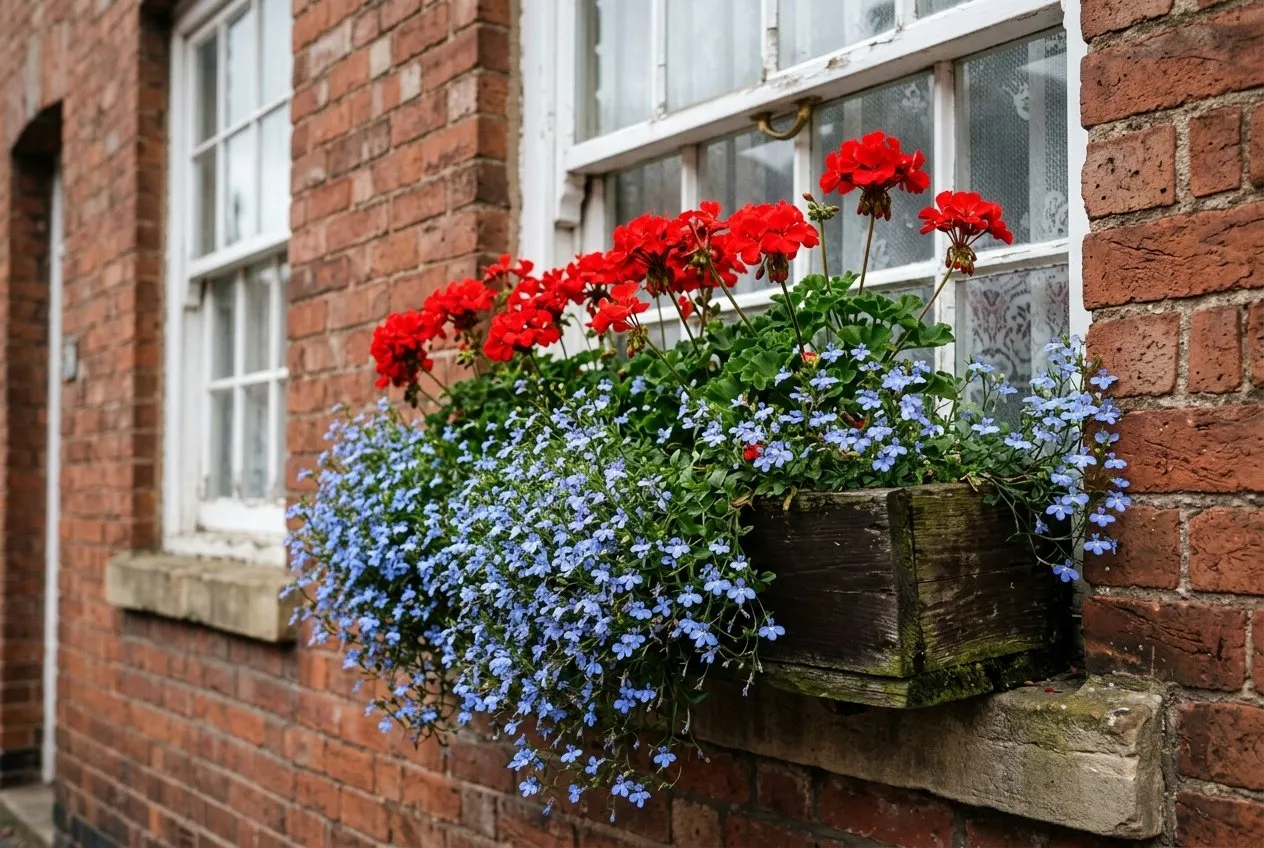 Blue bacopa trailing under geraniums in a window box on a terraced street in the West Midlands. The bacopa softens the hard line of the box and flowers all season with a weekly feed.
Choosing the Right Bacopa Colour Form
White is the toughest and the most floriferous. It recovers from a missed water faster than the colours and flowers hardest. It is also the best mixer, blending with any scheme.
Blue and pink forms are slightly slower and a touch more sensitive to drying out. They are worth growing for the colour but give them the most reliable watering spot.
| Form | Example variety | Vigour | Best use |
|---|---|---|---|
| White | ’Snowtopia’, ‘Snowstorm’ | Strongest | Any basket; mixes with all colours |
| Blue | ’Great Blue Lagoon’ | Moderate | Cool blue and silver schemes |
| Pink | ’Pink Domino’ | Moderate | Pastel baskets with lilac and white |
| Double white | ’Double Snowball’ | Slower | Close-up window boxes and pots |
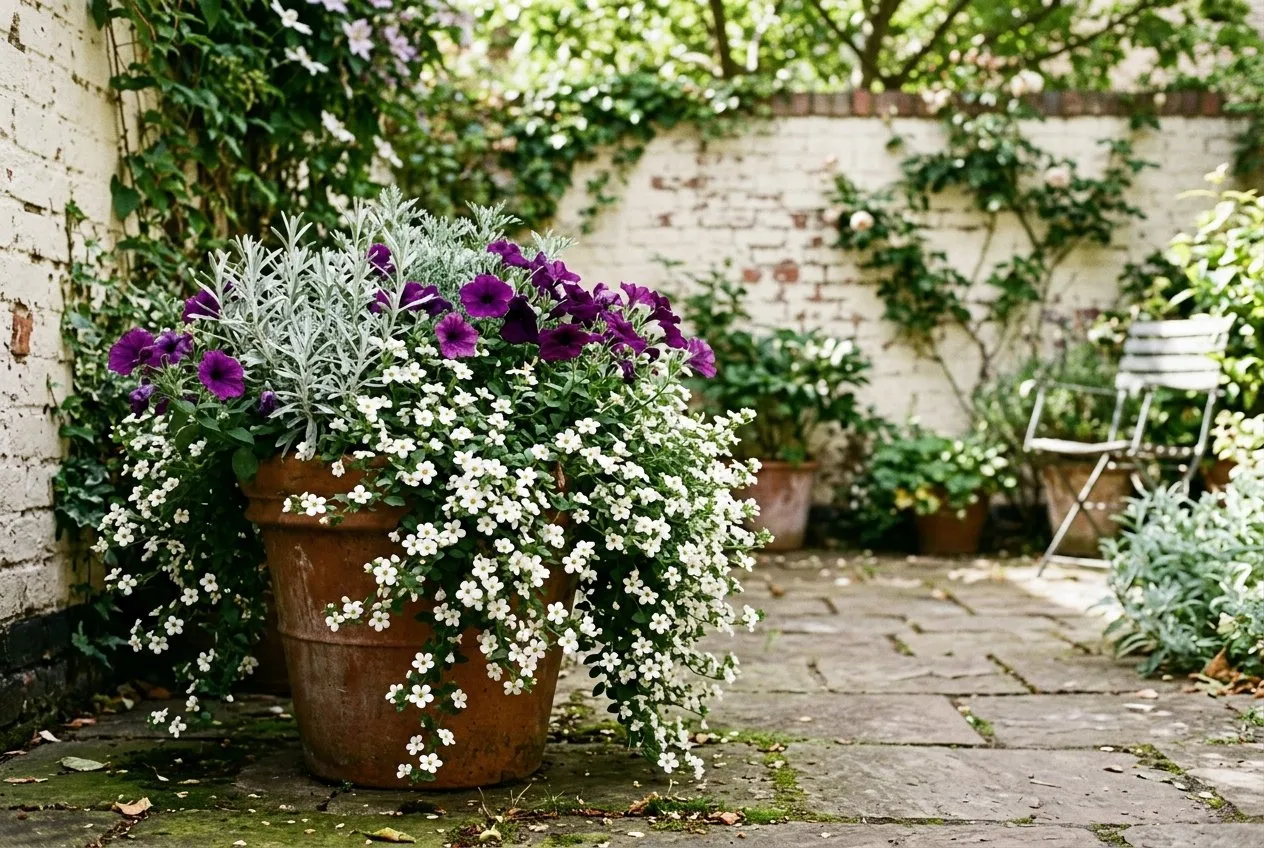 White bacopa with petunias and silver foliage in a city courtyard container. The bacopa fills the gaps between the bigger flowers and trails over the pot edge.
Where to Grow Bacopa: Aspect and Position
Bacopa flowers most freely in full sun, but only if you keep it moist. In a hot, south-facing spot it needs watering twice a day in summer.
The easiest position is sun until early afternoon, then light shade. This gives plenty of flower without the compost cooking dry by lunchtime. Morning sun and afternoon shade is the sweet spot.
It also takes part shade and still flowers well, just a little less heavily. A north-east wall that gets morning light is fine. Deep shade is the one place it will not perform.
Good homes for bacopa:
- Hanging baskets on a porch or pergola
- Window boxes on any aspect except deep shade
- The trailing edge of patio pots and troughs
- Tall containers where the trail can fall freely
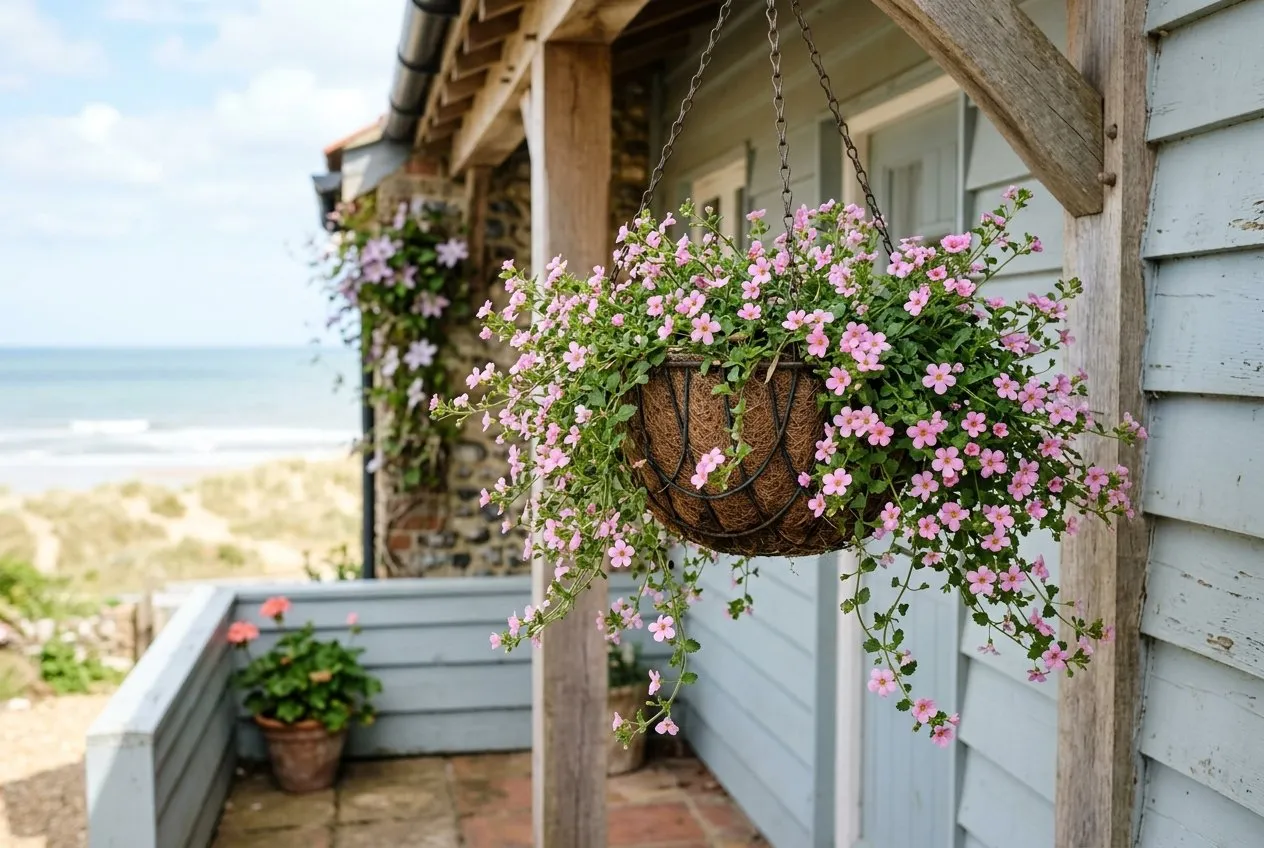 Pink bacopa in a basket on a Norfolk seaside porch. It takes coastal wind well, though wind dries baskets faster, so a daily moisture check matters even more.
Bacopa Care Calendar UK Month by Month
| Month | Bacopa task |
|---|---|
| March | Sow or buy plug plants; grow on frost-free |
| April | Pot plugs into 9cm pots on a windowsill |
| May | Harden off; plant out mid to late May after frost |
| June | Start weekly high-potash feed; water daily |
| July | Water twice daily in heat; never let it dry |
| August | Keep feeding and watering; peak flowering |
| September | Continue feed and water; flowering continues |
| October | Flowers until first frost; then compost the plant |
| November | Overwinter only if frost-free at 7-10C |
| December | No outdoor plants; plan next year’s baskets |
| January | Order plug plants for spring delivery |
| February | Prepare baskets, liners and fresh compost |
For wider seasonal context, our petunia growing guide covers the showy partner that bacopa trails beneath in most summer baskets.
Frequently asked questions
Is bacopa a perennial or an annual in the UK?
It is a half-hardy annual in the UK. Bacopa is technically a tender perennial from South Africa, but it cannot survive a UK winter outdoors. Most gardeners treat it as a one-season annual and buy fresh plug plants each May. You can overwinter it frost-free at 7-10C if you have the space.
Why has my bacopa stopped flowering?
Usually it dried out once and dropped its buds. Bacopa has no drought tolerance and sheds every flower after a single dry spell, then takes two to three weeks to recover. The other common cause is no feeding. Water consistently and give a weekly high-potash feed and it flowers from June to October.
Does bacopa need deadheading?
No. Bacopa is self-cleaning and drops its spent flowers on its own. This is one of its best traits, especially in baskets you cannot easily reach. Just keep it watered and fed and it tidies itself all summer without any picking-over.
How much sun does bacopa need?
Full sun to part shade, ideally morning sun. It flowers most freely in full sun but only if you keep the compost moist. In hot, dry full sun it needs watering twice a day. A spot with sun until early afternoon then light shade is the easiest place to keep it happy.
What plants go well with bacopa in a basket?
Pair it with upright fillers like geraniums, petunias or fuchsias. Bacopa works as the soft trailing edge that softens the rim of a basket or window box. It also blends well with lobelia, verbena and bidens. White bacopa is the classic partner for almost any colour scheme.
For more on bacopa’s South African origins and named cultivars, the RHS bacopa growing advice is a useful reference.
Now plan your wider summer baskets
Bacopa is one piece of a good summer display. Start with our guide to planting and maintaining hanging baskets for the structure, then use the summer hanging basket recipes to plan colour combinations. For the wider choice of one-season colour, our best annual bedding plants guide ranks the most reliable performers. And for the showy upright partner that bacopa trails beneath, our petunia growing guide covers everything from planting to feeding.
Our team produces practical UK gardening guidance from source research, contributor records and established horticultural practice. Editorial standards are overseen by Matt W.