Key takeaways
- Density depends on bulb size and effect: big bulbs fewer per m², small bulbs many more
- Border display rates per m²: tulips 50-60, daffodils 30-50, alliums 10-25, crocus 100-150
- For impact, plant in dense blocks or drifts, never single bulbs spaced out evenly
- Plant at two to three times the spacing between bulbs as the bulb's own width
- In pots, plant almost touching, two to three times border density, for a packed show
- Naturalising in grass uses sparser, random spacing so drifts look natural over time
The single biggest reason a bulb display disappoints is not the wrong variety or bad soil. It is too few bulbs, spaced too far apart. Bulbs make their impact through density, and most people plant far too thinly, then wonder why their border looks sparse while the show gardens look like solid waves of colour.
This guide gives you clear planting densities per square metre for every common bulb, plus the spacing and depth that go with them, and how the numbers change for pots and for naturalising in grass. Work out your area, look up the rate, and buy accordingly. It is the most reliable way to get a display that actually delivers.
The bulb density chart: how many per square metre
These are display rates, planted in clumps and blocks for impact. If you are naturalising or planting for clumps to bulk up over years, plant sparser; see those sections below. Small early bulbs like chionodoxa follow the crocus rate of 100-150 a square metre; our guide to how to grow chionodoxa covers its spacing and depth. Our guide to growing alliums and growing crocus covers each type in more detail.
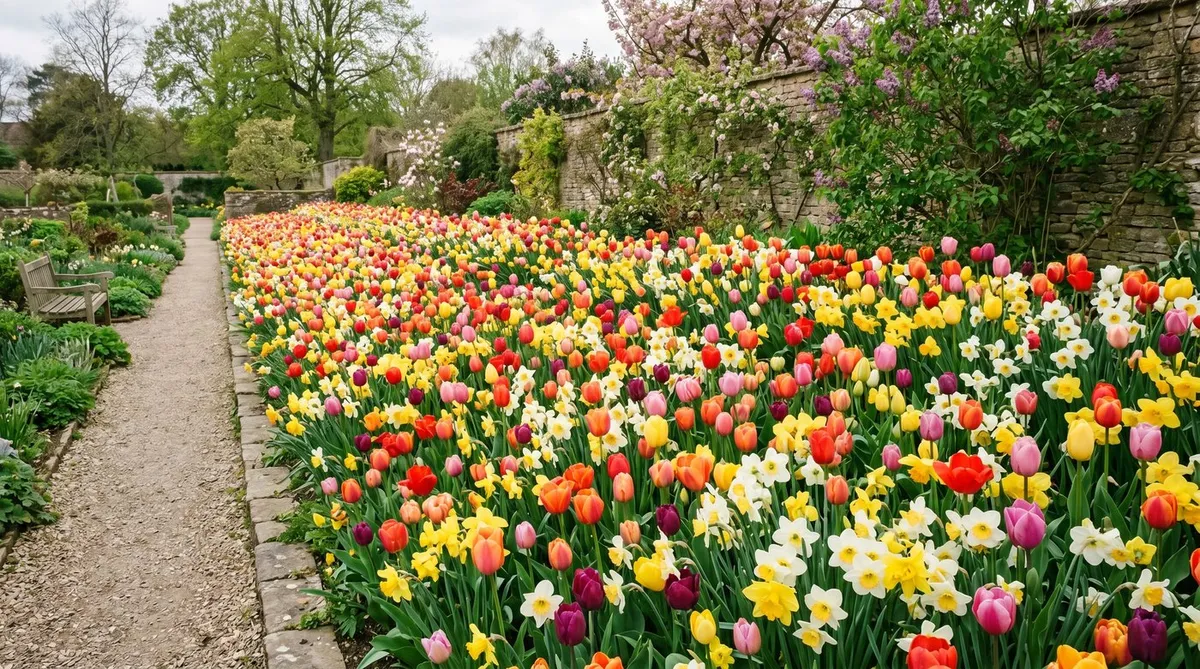
 Tulips at 50-60 a square metre read as a solid wave of colour. The same number spread thinly across three metres would barely register. Density is everything.
The spacing rule that ties it together
If you would rather not memorise a chart, two simple rules give you the same result from any bulb in your hand.
For spacing apart: plant bulbs two to three times their own width from each other. A fat 5cm tulip bulb sits 10-15cm from its neighbours; a 1cm crocus corm sits 3-5cm apart. Lean to the closer end for a fuller display, the wider end if you want clumps to bulk up over several years.
For depth: plant two to three times the bulb’s own height deep, measured to the bottom of the hole. A 5cm tall tulip goes 10-15cm deep; a small crocus 5-7cm. Depth matters more than people think: it protects bulbs from frost, stops them heaving to the surface, and for tulips especially, deeper planting helps them flower again in following years.
 The spacing rule in practice: bulbs set two to three times their own width apart. No chart needed, just measure against the bulb in your hand.
Plant in blocks and drifts, never singles
Density only works if the bulbs are grouped. The same fifty tulips planted as a tight block read as a bold statement; planted as fifty singles dotted evenly across a border, they vanish into the soil.
Two grouping patterns cover almost everything:
- Blocks of a single colour or variety for a strong, formal, high-impact statement, the bedding-display look.
- Drifts, irregular flowing groups of mixed or single types, for a natural, informal effect that suits borders and cottage planting.
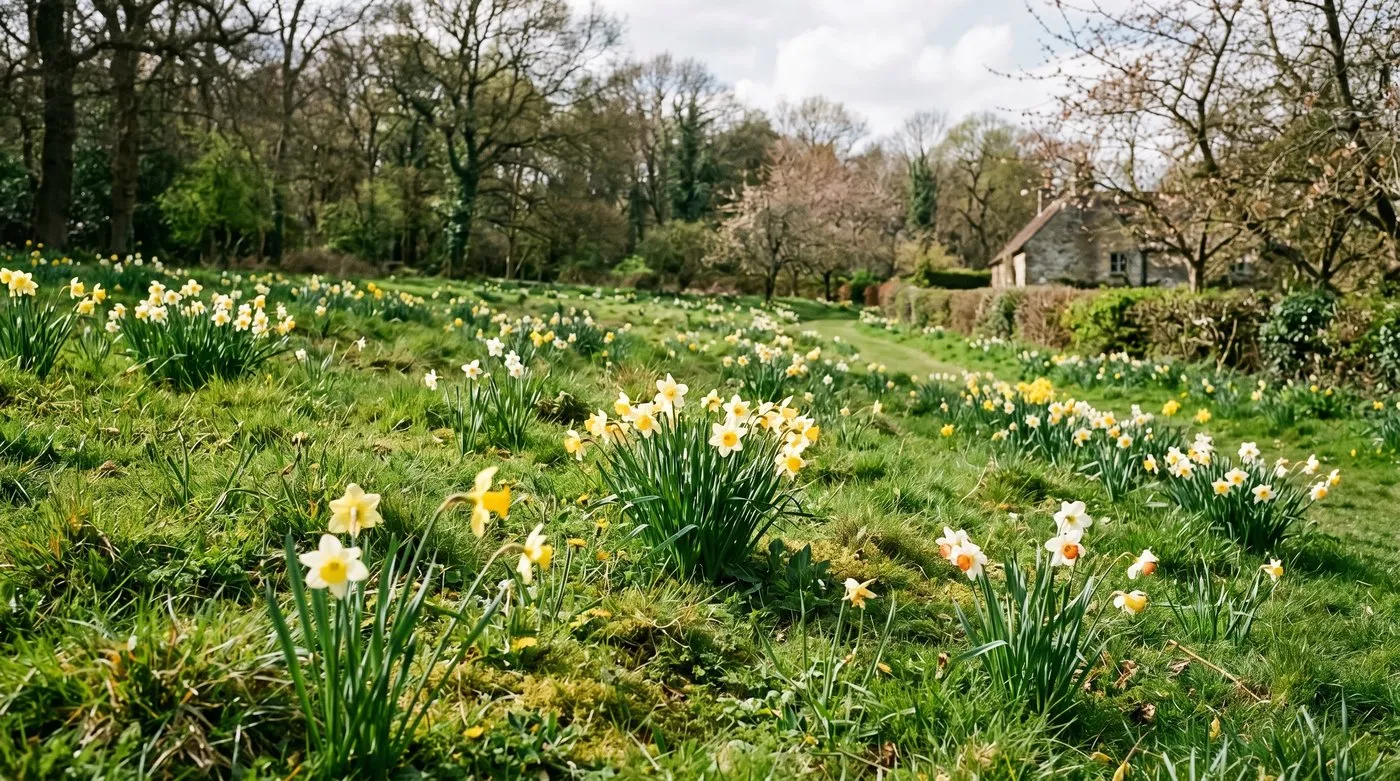 For naturalising in grass, plant sparser and more randomly than a border, around 25-40 daffodils a square metre, so the drift looks natural and fills in over the years.
Pots and containers: pack them in
Container displays use far higher density than borders, because the bulbs only need to last one spectacular season and there is no need to leave room for them to bulk up. Plant pot bulbs almost touching, roughly two to three times border density.
A rough guide for a single layer in a pot:
- 30cm pot: 15-20 tulips, or 30-40 crocus
- 40cm pot: 25-35 tulips, or 50-70 crocus
For a long succession of flower from one container, layer different bulbs at their correct depths in a bulb lasagne: biggest and latest (tulips, daffodils) deepest, medium (hyacinths) in the middle, smallest and earliest (crocus, muscari) near the surface. Each layer comes up through the one below in turn. Our guide to bulb lasagne planting for year-round colour sets out the full method.
 In pots, plant almost touching, two to three times border density. Layer big bulbs deep and small bulbs shallow for a bulb lasagne that flowers in succession.
Naturalising in grass: go sparser and random
Naturalising, planting bulbs to spread and look wild in grass or under trees, flips the density logic. Here you plant sparser and more randomly, because the bulbs will bulk up and spread over the years to fill the space, and the goal is a natural-looking drift, not a solid block.
For daffodils and crocus naturalised in grass, plant around 25-40 large bulbs or 60-100 small bulbs per square metre, scattered by hand and planted where they fall rather than in any pattern. The randomness is the point: evenly spaced bulbs in a lawn look like a planting scheme, while randomly scattered ones look like nature did it. Over five or six years they multiply into the generous sweeps you see naturalised under mature trees.
 Naturalised crocus scattered randomly into grass. Sparse to start, but they multiply over the years into a carpet that looks like nature put it there.
The root cause of thin displays
Almost every disappointing bulb display comes back to the same misjudgement: buying for the budget, not for the area. People buy one bag of bulbs, spread it across whatever space they have, and accept a thin result.
The fix is to work backwards from the area. Measure the patch you want to fill, look up the density for your chosen bulb, and buy that many, even when it feels like a lot. A packed half a square metre delivers far more joy than a thin two square metres. Bulbs are one of the few places in gardening where buying more genuinely buys a better result, because the whole effect depends on density.
A worked example
Say you want to fill a 2m × 1m border (2m²) with a bold tulip display. At 55 tulips per square metre, that is 110 bulbs. Buy 120 to allow for losses. Space them 8-12cm apart in a block, plant 12-15cm deep, and you will get a solid wave of colour.
The same 2m² naturalised with daffodils in grass needs only about 60-70 bulbs, scattered randomly, because they will spread over time. The same area, two completely different bulb counts, because the effect you want changes the density. Decide the effect first, then the number follows.
Frequently asked questions
How many bulbs should I plant per square metre?
It depends on bulb size. As a UK guide per square metre: large bulbs like tulips and daffodils at 30-60, medium bulbs like hyacinths and small alliums at 25-35, and small bulbs like crocus, snowdrops, and muscari at 100-150. Plant denser for a bold border display and sparser for naturalised drifts in grass. In pots, plant almost touching.
How far apart should I space bulbs?
A reliable rule is to space bulbs two to three times their own width apart. So a 5cm tulip bulb sits about 10-15cm from its neighbours, while a 1cm crocus corm sits about 3-5cm apart. Closer spacing gives a fuller display; wider spacing lets clumps bulk up over years. For impact, lean toward the closer end.
How deep should I plant bulbs?
Plant most bulbs at two to three times their own height deep, measured to the base of the planting hole. A 5cm tall tulip bulb goes about 10-15cm deep, a small crocus about 5-7cm. Deeper planting protects from frost and stops bulbs heaving up, and for tulips it helps them return better in following years.
How many bulbs fit in a pot?
Far more than in a border: plant pot bulbs almost touching, roughly two to three times border density. A 30cm pot might take 15-20 tulips or 30-40 crocus in a single layer. For a long, packed display, layer different bulbs at their correct depths in a bulb lasagne, with the biggest deepest and the smallest near the surface.
Should I plant bulbs in clumps or spread out?
Always in clumps, blocks, or drifts, never single bulbs spaced evenly. Bulbs read as a display through density and grouping. A tight block of one colour, or a flowing drift of mixed bulbs, looks intentional and bold. Bulbs dotted singly across a border look sparse and accidental however many you plant in total.
How many daffodil bulbs do I need to naturalise an area?
For naturalising in grass, plant daffodils more sparsely and randomly than in a border, around 25-40 per square metre, scattered and planted where they fall so the drift looks natural. They bulk up and spread over the years, so an initially sparse planting fills in. Aim for natural-looking drifts rather than even rows.
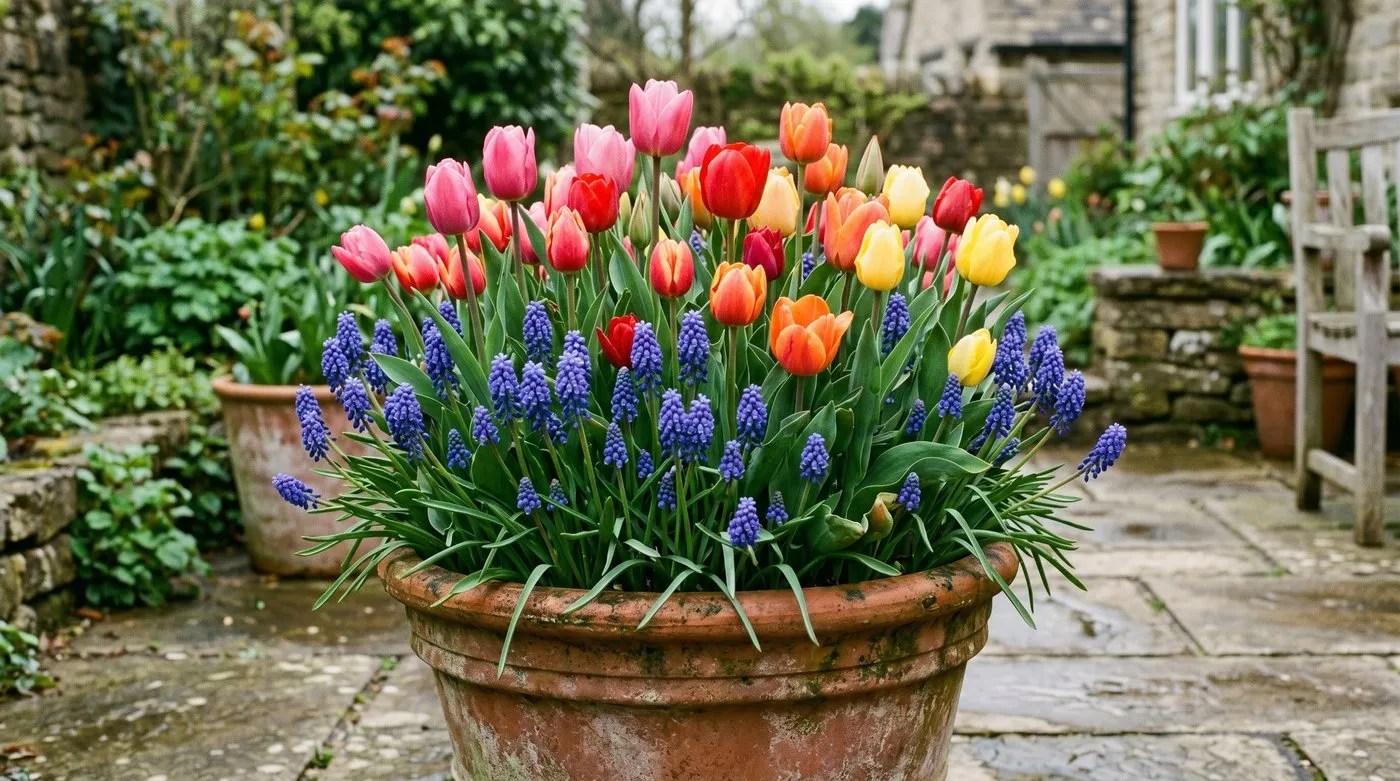 A pot planted at two to three times border density: tulips and muscari packed almost touching for a single season of maximum impact.
Get the numbers right and the rest of bulb growing is easy. For the timings that go with these densities, see our guides to when to plant spring bulbs and when to plant tulip bulbs, and our guide to growing tulips for variety choice. For trusted planting guidance, the Royal Horticultural Society’s advice on planting bulbs is a reliable reference.
Our team produces practical UK gardening guidance from source research, contributor records and established horticultural practice. Editorial standards are overseen by Matt W.