Key takeaways
- A single daisy plant produces up to 60 seeds and spreads by short creeping stems
- Daisies flower in UK lawns from March to October, peaking April to June
- A daisy grubber tool costs £6 to £10 and lifts the whole rosette in seconds
- Raising mowing height to 30mm thickens grass and shades out most daisies
- Selective lawn weedkillers clear heavy infestations in 4 to 6 weeks
- Leaving daisies uncut for two weeks gives bees up to 50 extra flowers per square metre
Daisies (Bellis perennis) flower in a UK lawn from March right through to October, and a single plant can scatter up to 60 seeds. They spread by seed and by short creeping stems, which is why a few rosettes turn into a freckled lawn within two seasons. This guide covers every selective removal method that works, plus the honest case for leaving some daisies where they sit.
What makes daisies so hard to shift?
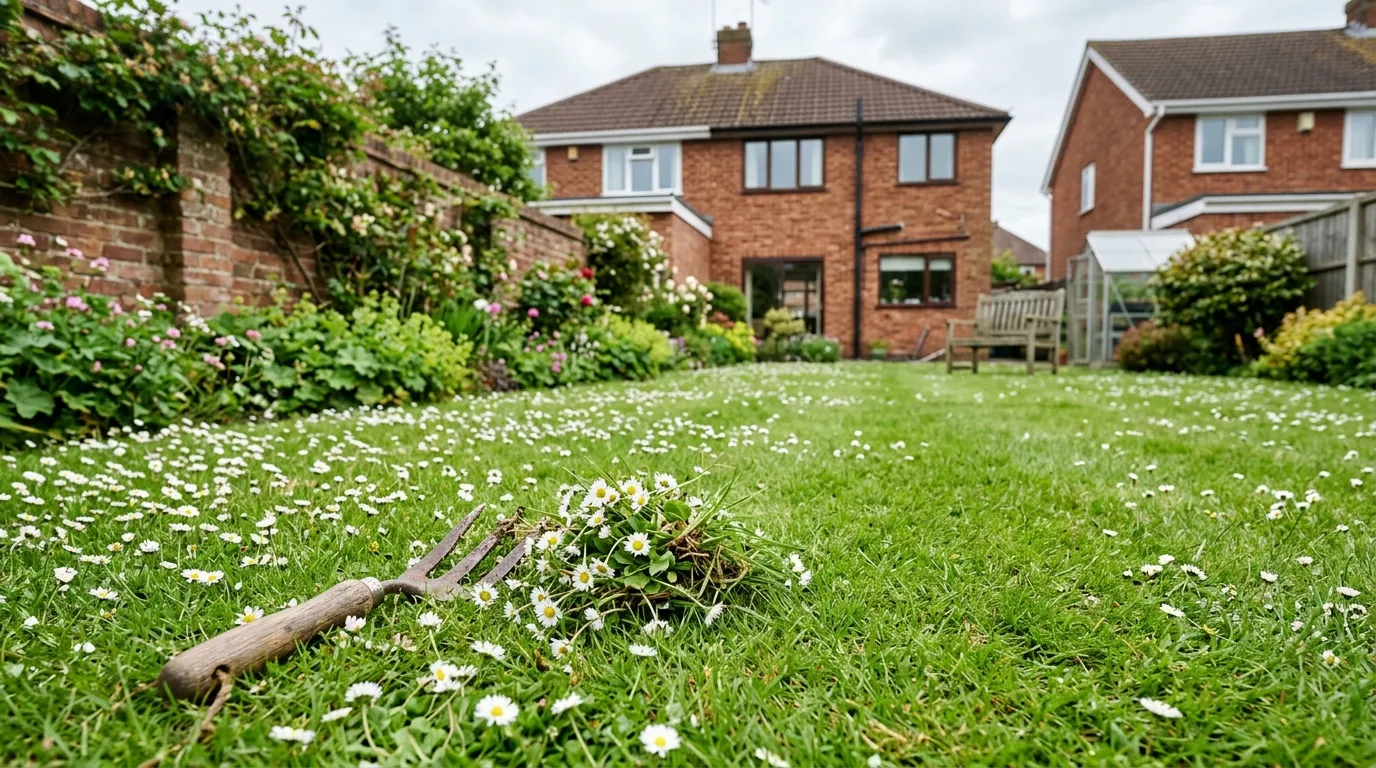
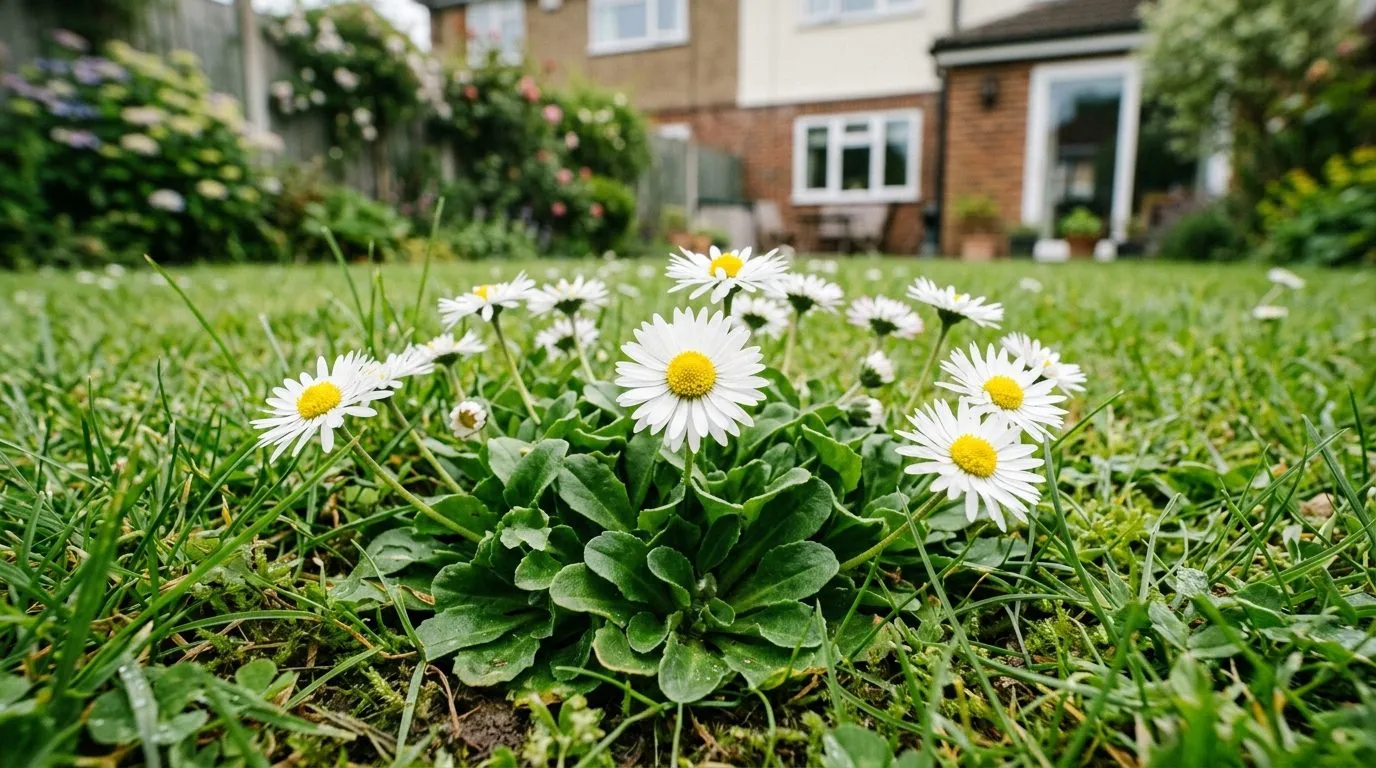
Daisies grow as a flat rosette pressed against the soil, below the height of any mower blade. The leaves splay outwards in a circle, so a passing mower clips the flower stalks but never touches the plant itself. The rosette simply pushes up fresh flowers a few days later.
They also creep. Each plant sends out short stems called stolons that root where they touch soil. One rosette becomes a small colony in a single summer. Add 60 seeds per plant blowing into bare patches, and you can see why daisies win in a neglected lawn.
The plus side: daisies are shallow-rooted and easy to lift whole. Unlike dandelions and other deep tap-rooted weeds, there is no long root snapping off underground to regrow. Get the rosette out cleanly and that plant is gone for good.
How do I get rid of daisies in my lawn by hand?
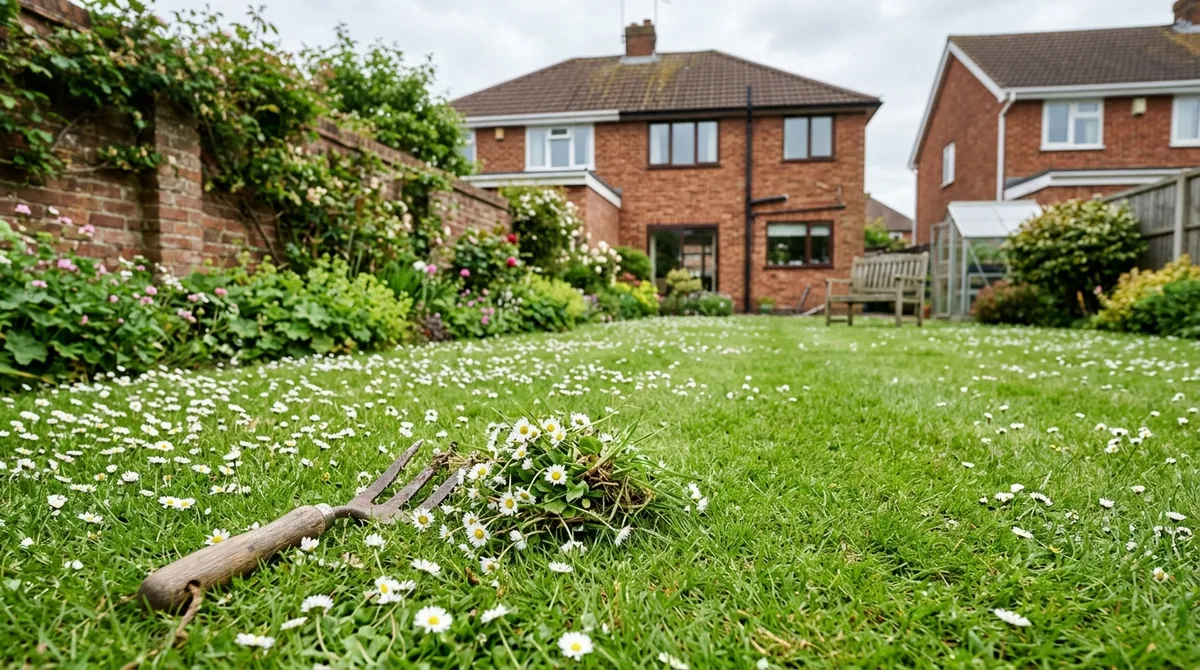
Lift each rosette with a daisy grubber, pushing the blade under the plant and levering the whole thing out with its roots. A grubber is a long, narrow tool with a forked tip. It costs £6 to £10 and lifts a daisy in under five seconds. An old kitchen knife or a hand fork does the same job more slowly.
Work after rain when the soil is soft. Push the tip in beside the rosette, angle it under the centre, and lever upwards. The whole plant pops out with a small plug of soil. Drop it in a bucket, not back on the lawn, where stray pieces can re-root.
Fill the small hole with sieved soil and a pinch of grass seed. This is the step most people skip. Leave bare soil and a new daisy seed germinates in the gap within a fortnight. Reseed every hole and grass fills it first.

Will raising the mowing height help?
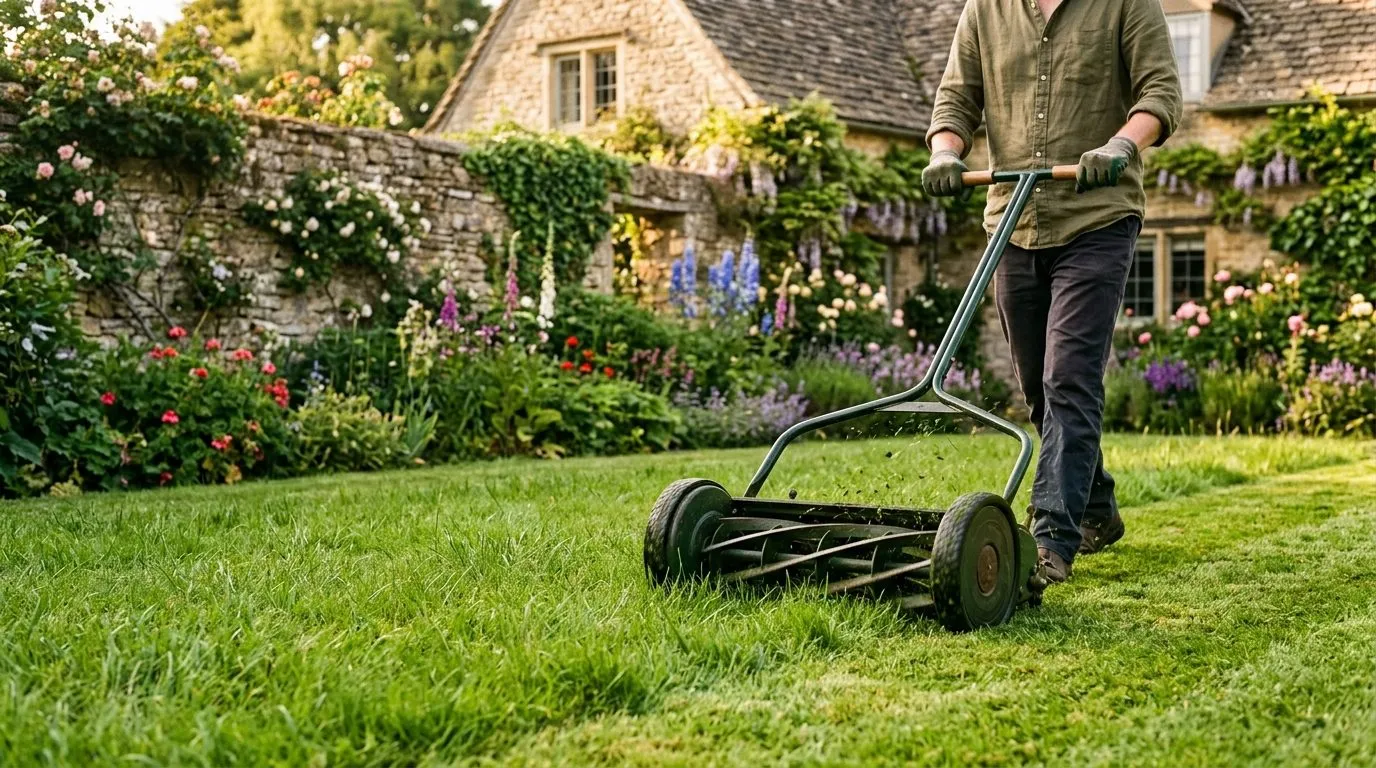
Cutting your lawn at 30mm instead of 15mm thickens the grass and shades out low-growing daisies. Short mowing is the single biggest cause of a daisy-heavy lawn. Scalped grass cannot compete, while flat-growing daisies sit happily below the blades.
Raise your mower to its second-highest or highest setting. Taller grass blades cast more shade at soil level, so fewer daisy seeds germinate. The grass also builds deeper roots, which crowds out the rosettes already there.
Mow regularly but never remove more than a third of the leaf in one cut. Frequent light cuts beat occasional hard ones. A lawn kept at 30mm from March to October looks tidy and gives daisies far less room. For the full year-round routine, follow our UK lawn care calendar.
Does feeding the lawn get rid of daisies?
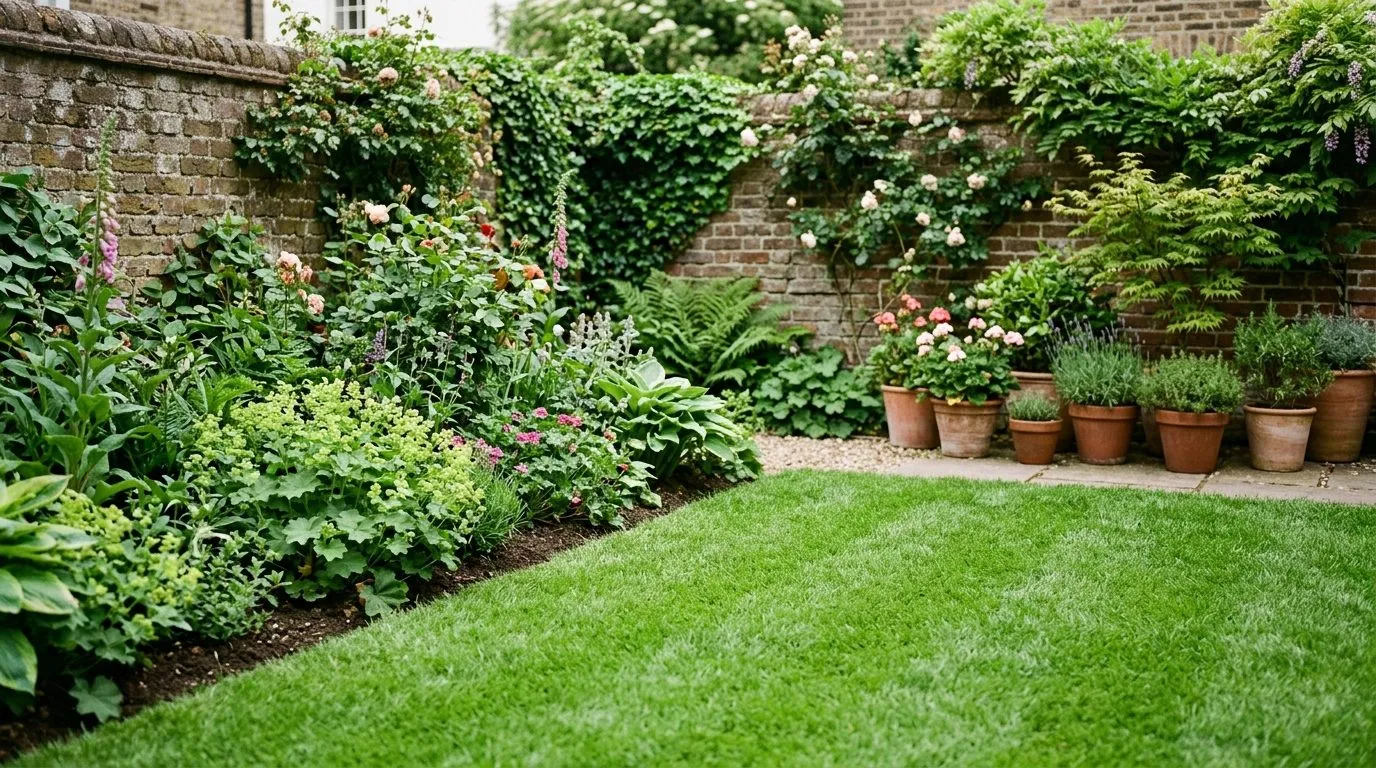
Feeding thickens the grass so it outcompetes daisies for light, water and root space. Daisies thrive where grass is hungry. A dense, well-fed sward is the best long-term defence, because it leaves no bare soil for seeds to settle in.
Apply a spring and summer lawn feed high in nitrogen between April and August. A nitrogen-rich feed pushes leaf growth and helps grass knit together. Follow with an autumn feed high in potassium and phosphorus to strengthen roots before winter. Our guide on how to feed a UK lawn sets out rates and timings.
Overseed thin areas after feeding. Rake out any moss first, then scatter grass seed at 25 to 35 grams per square metre and keep it watered. New grass fills gaps that daisies would otherwise claim. If moss is taking over alongside the daisies, treat the drainage and shade first, because both weeds share the same thin-lawn cause.
A thick, dense lawn is the goal. Once the grass knits together this tightly, there is simply no bare soil for a daisy seed to settle in.
What kills daisies but not grass?
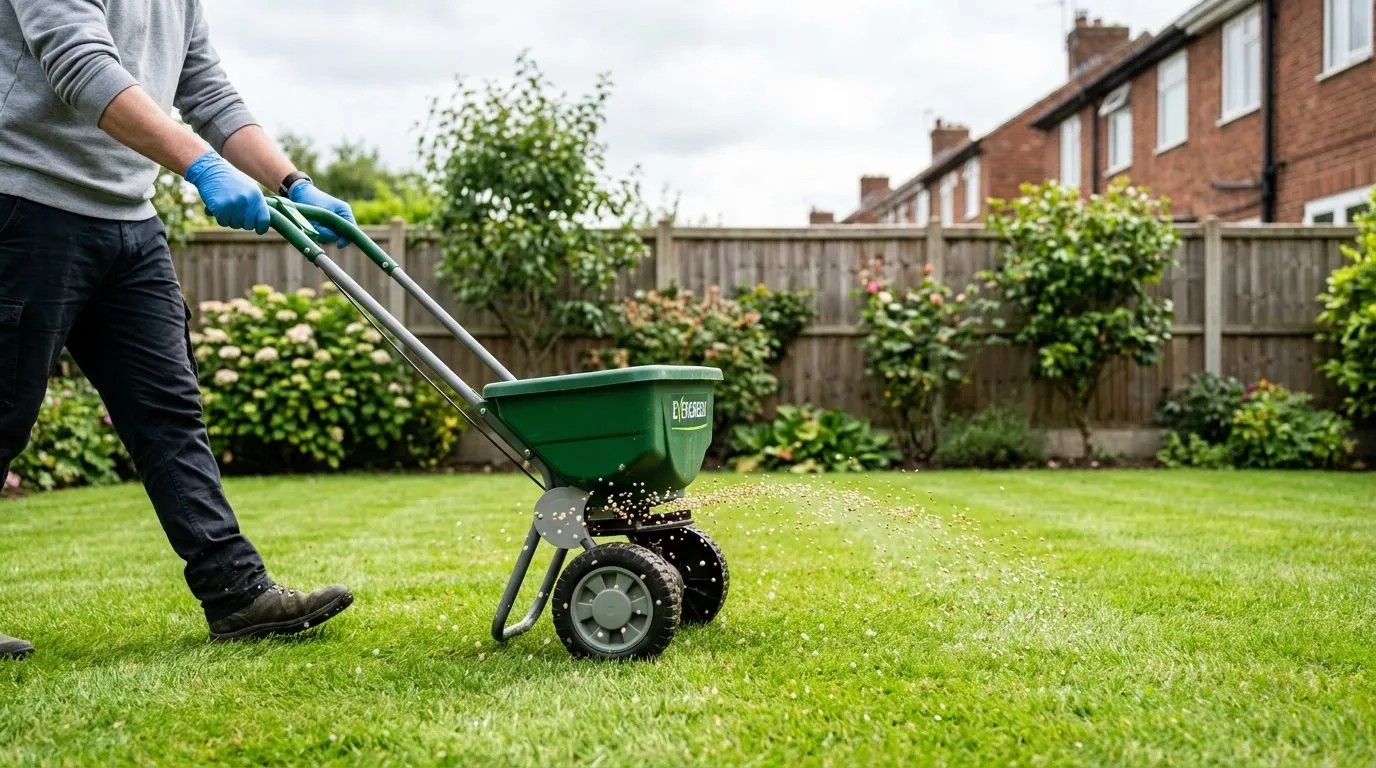
Selective lawn weedkillers kill daisies and other broad-leaved weeds while leaving the grass unharmed. They contain hormone-type herbicides such as 2,4-D, MCPA, mecoprop or clopyralid. These act on broad leaves but not on narrow grass blades, so the lawn stays green.
Apply on a dry, mild day when the grass is growing, ideally in late spring. The daisies must be in active growth to draw the chemical down to the roots. Do not mow for three days before or after treating. Avoid spraying before rain, in drought, or during frost.
Most lawns need one treatment, with a second four to six weeks later for stubborn plants. Liquid concentrates cover large areas cheaply. Ready-to-use sprays suit spot-treating odd patches. A “weed and feed” granule does both jobs in one pass.
If you would rather skip the chemicals, our guides on organic weedkillers for UK gardens and preventing weeds without chemicals cover the non-spray routes in detail. For daisies specifically, hand-weeding plus feeding is the most reliable chemical-free method.
Method comparison: which approach suits your lawn?
This table compares the four selective removal methods so you can match the right one to your lawn and the size of the problem.
| Method | Best for | Cost | Speed | Daisies return? |
|---|---|---|---|---|
| Hand-weeding (grubber) | Small patches, under 50 plants | £6-£10 tool, then free | 15 min per 30 plants | Only if seed left in soil |
| Raised mowing | Prevention, light cover | Free | One season | Rarely, if kept up |
| Feeding and overseeding | Whole-lawn fix, long term | £15-£25 a year | 1-2 seasons | No, if grass stays thick |
| Selective weedkiller | Heavy infestation, fast | £8-£15 per bottle | 4-6 weeks | Yes, if lawn stays thin |
The honest takeaway: weedkiller is fastest but feeding is the only method that stops daisies coming back. Most lawns do best with a one-off selective treatment to clear the worst, then feeding and raised mowing to hold the line.
The case for leaving some daisies
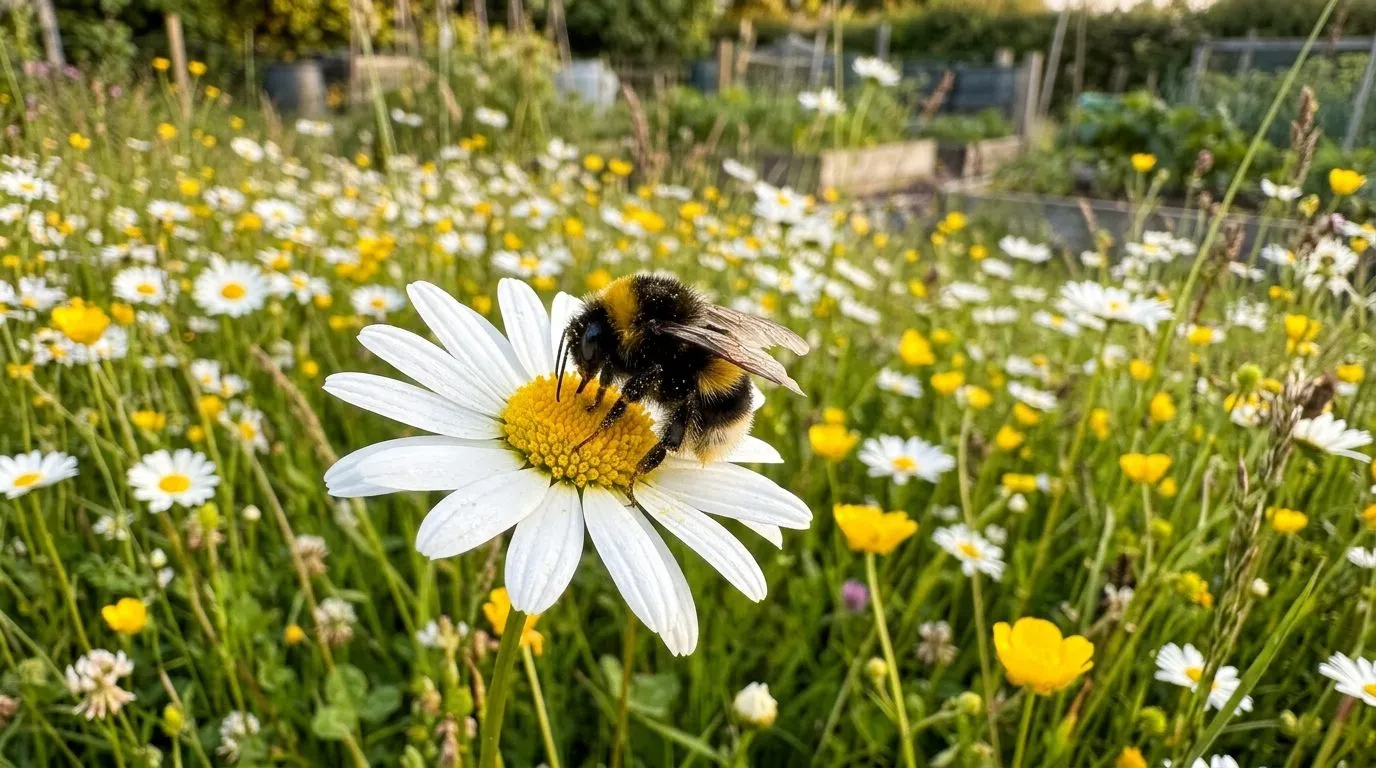
Daisies are a valuable early food source for bees, hoverflies and other pollinators from March to October. Their open flowers give easy access to nectar and pollen, and they bloom when little else does. Stripping every daisy from a lawn removes a free wildlife resource.
A short-mown lawn is one of the least useful surfaces in any garden for insects. Letting daisies flower changes that overnight. The No Mow May movement is built on this idea: leave the mower in the shed for a month and let lawn flowers feed early bumblebees.
According to the RHS, even a small patch of unmown lawn supports a surprising range of insects. The Bumblebee Conservation Trust makes the same point: queen bumblebees emerging from hibernation in March need exactly the kind of low, open flowers daisies provide.
How a “compromise lawn” works
Mow most of the lawn at 30mm for a neat finish. Mark out one or two areas to leave longer, perhaps a sunny corner or an edge along a border. Cut those areas just once every two or three weeks so daisies and clover can flower between cuts.
Year-round daisy control calendar
Timing matters. This month-by-month plan keeps daisies in check while protecting early pollinators.
| Month | Task |
|---|---|
| January-February | Plan. Order a daisy grubber and grass seed. Keep off frosted lawns |
| March | Daisies start flowering. First mow at 30mm. Decide which patch to leave for bees |
| April | Apply spring lawn feed. Hand-weed odd rosettes. Overseed thin areas |
| May | Peak daisy flowering. Leave a strip uncut for bees. Spot-treat heavy patches |
| June | Cut the wild patch by mid-month. Continue regular mowing at 30mm |
| July | Summer feed if the lawn is hungry. Water new seed in dry spells |
| August | Selective weedkiller on stubborn daisies on a mild, dry day |
| September | Autumn feed high in potassium. Overseed bare patches before cold weather |
| October | Last flowers fade. Final cut. Rake leaves off the lawn |
| November-December | Rest the lawn. Avoid walking on frosted or waterlogged grass |
For a broader view of every lawn weed and how to tell them apart, our lawn weeds identification and control guide covers daisies alongside clover, plantain and speedwell.
Common mistakes when removing daisies
Mowing too short to “get rid of them”
Cutting the lawn hard is the most common mistake. Short grass favours flat-growing daisies and weakens the sward. The daisies thrive while the grass suffers. Always mow at 30mm or higher if daisies are a problem.
Leaving bare holes after weeding
Pull a daisy and you leave a small patch of bare soil. Within two weeks a fresh daisy seed germinates in that exact spot. Always refill the hole with soil and grass seed so the grass claims the gap first.
Spraying on the wrong day
Selective weedkiller fails if you apply it in drought, frost, or just before rain. The daisies must be growing actively to draw the chemical down. Spray on a mild, dry day in late spring or early autumn, and do not mow for three days either side.
Treating a hungry lawn and stopping there
Weedkiller clears the daisies you can see but does nothing for the thin grass that let them in. Without feeding and overseeding, the daisies return the next spring. Always pair any treatment with a feed and an overseed.
Removing every last flower
A perfectly weed-free lawn looks smart but feeds no insects. Daisies bloom when bees most need food. Removing the lot strips out an easy early-season nectar source. Leaving even a small patch makes a real difference.
Frequently asked questions
How do I get rid of daisies in my lawn?
Lift small patches by hand with a daisy grubber, then feed the grass. For heavy infestations, use a selective lawn weedkiller in late spring. Raise your mowing height to 30mm so thicker grass shades out new seedlings. A well-fed, dense lawn keeps daisies from returning far better than repeated treatment.
Will mowing get rid of daisies?
No, mowing alone will not get rid of daisies. The plants grow flat against the soil, below the blades. Mowing removes the flowers but leaves the rosette untouched, so it regrows. Raising the cut to 30mm helps the grass compete, but mowing is never a cure on its own.
What kills daisies but not grass?
Selective lawn weedkillers kill daisies but not grass. They contain hormone weedkillers like 2,4-D, MCPA, mecoprop or clopyralid. These target broad-leaved plants while leaving narrow grass blades unharmed. Apply on a dry, growing day in late spring or early autumn for the best result.
Are daisies good for bees?
Yes, daisies are good for bees and other pollinators. Their open flowers give easy access to nectar and pollen from March to October. Bumblebees, honeybees and hoverflies all visit them. Leaving a patch of daisies uncut for a fortnight gives early-season insects a useful food source.
Why does my lawn have so many daisies?
Lawns get daisies when the grass is thin, hungry or cut too short. Bare patches let seeds germinate and short mowing favours flat-growing weeds. Compacted or poorly fed soil weakens grass further. Thickening the sward with feeding and overseeding is the long-term fix for a daisy-heavy lawn.
When is the best time to treat lawn daisies?
Late spring is the best time to treat lawn daisies. The plants grow actively from April to June and take up weedkiller quickly. Early autumn is a good second window. Avoid treating in drought, frost, or just before rain, which all reduce how well the treatment works.
Can you dig daisies out by hand?
Yes, you can dig daisies out by hand with a daisy grubber or old kitchen knife. Push the blade under the rosette and lever the whole plant up with its roots. Fill the hole with soil and grass seed. Hand-weeding suits small patches but is slow on a badly infested lawn.
Do daisies come back after weeding?
Daisies come back if you leave any root or let new seeds germinate. The rootstock regrows from fragments left in the soil. Seeds already in the lawn keep sprouting for a year or two. Feed and overseed bare patches after weeding so grass fills the gap before daisies return.
Our team produces practical UK gardening guidance from source research, contributor records and established horticultural practice. Editorial standards are overseen by Matt W.