Key takeaways
- Hardy annuals are sown direct where they flower, so they need no pots, heat or pricking out
- Sow into a fine, firm, weed-free seedbed from late March to May, once the soil reaches about 7°C
- An autumn sowing in September gives bigger, earlier plants in mild gardens, with some winter risk
- Sow in shallow drills, not scattered, so you can tell seedlings from weeds and hoe between rows
- Thin seedlings in two or three stages to final spacings of 15-30cm depending on the plant
- Sow a fresh batch every three to four weeks to keep flowers coming from June into October
A packet of cornflower seed, a rake and a dry afternoon in April is all it takes to fill a border with flowers by June. Hardy annuals sown direct are the cheapest, simplest colour a UK garden can grow.
Hardy annuals are plants that complete their life in one year and shrug off frost as seedlings. That toughness means you can sow them straight into the soil where they are to flower, skipping pots, heat and pricking out entirely. The trade-off is that you garden on nature’s terms: a fine seedbed, the right timing, and honest thinning. Get those three right and a few pounds of seed gives you months of flowers and cutting material.
What does sowing hardy annuals direct mean?
Direct sowing means putting seed straight into the ground where the plants will grow and flower. There is no module tray, no windowsill and no transplanting. The seed germinates in situ and the seedlings are thinned to their spacing.
It works for hardy annuals because their seedlings tolerate cold and, in many cases, actively dislike root disturbance. Poppies, larkspur and Ammi resent being moved and do far better sown in place. Breadseed poppies are the classic case, sown direct for both flowers and bakeable seed. The same goes for wild carrot ‘Dara’, a plum-coloured umbellifer for the vase; our wild carrot guide covers sowing it direct. Compare that with tender plants raised under glass, like the half-hardy annuals that must wait indoors until the frosts pass.
The method suits anyone without a greenhouse, and anyone short on time. Our wider guide on how to grow annuals from seed covers the indoor route; this one is all about sowing outdoors, in the ground.
When to sow hardy annuals outside in the UK
There are two sowing windows, and they give different results.
- Spring (late March to May) is the main window. Sow once the soil reaches about 7°C and is dry enough to rake. In the north and on cold clay, wait until mid-April.
- Autumn (September) is the connoisseur’s window. Autumn-sown hardy annuals overwinter as small plants and flower earlier and bigger the next year. It works best in mild, well-drained gardens. On heavy, wet soil the plants can rot over winter.
Cornflowers, calendula, larkspur, nigella, Ammi and poppies all take an autumn sowing. The same logic drives autumn-sown sweet peas: more root, earlier flowers. For the full picture of what to sow when, keep the seed sowing calendar to hand.
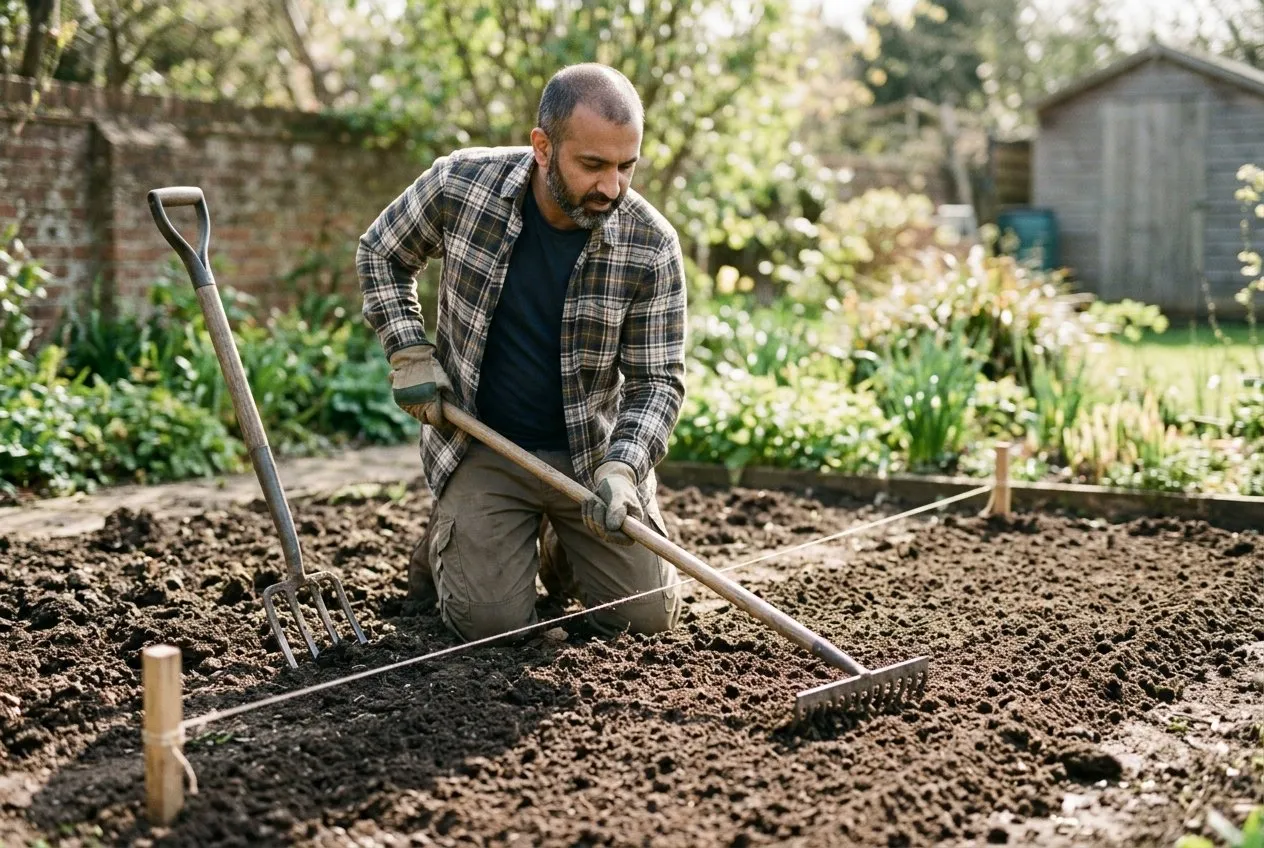 Rake the bed to a fine, firm tilth first. A crumbly, level, weed-free surface is the single biggest factor in good germination.
Preparing the seedbed
A fine seedbed does most of the work. Spend time here and the rest is easy.
- Clear all weeds and remove large stones. Perennial weed roots left in will swamp the seedlings.
- Fork over lightly, then tread the surface to firm it. Seed needs contact with firm soil, not a fluffy layer.
- Rake to a fine tilth. Aim for a crumbly surface with particles no bigger than a pea. This is the seedbed.
- Do not add manure or rich feed. Hardy annuals flower better on lean soil. Rich ground grows leaves at the expense of flowers.
If the soil is cold or wet, wait. Seed sown into cold, claggy ground rots rather than germinates. A week’s patience beats a failed sowing.
How to sow hardy annuals in drifts
Sowing in straight drills, even inside an informal border, is the trick that makes direct sowing reliable.
- Mark out informal drifts with a trickle of dry sand, so each variety has its own patch. This stops the border looking like rows.
- Draw shallow drills within each drift with a cane or the edge of a hoe, 15-20cm apart. Drill depth is roughly twice the seed’s diameter. Fine seed like poppy is barely covered.
- Sow thinly along each drill. Thin sowing saves thinning later and wastes less seed.
- Cover and firm gently with the back of the rake. The RHS guidance on annuals and biennials confirms most fine seed needs only the lightest covering.
- Label and water with a fine rose if the soil is dry. Keep the seedbed just moist until germination, which takes 7-21 days.
Because the seedlings come up in lines, you can tell them from weeds at a glance and hoe between the rows. Once the plants flower and knit together, the rows vanish.
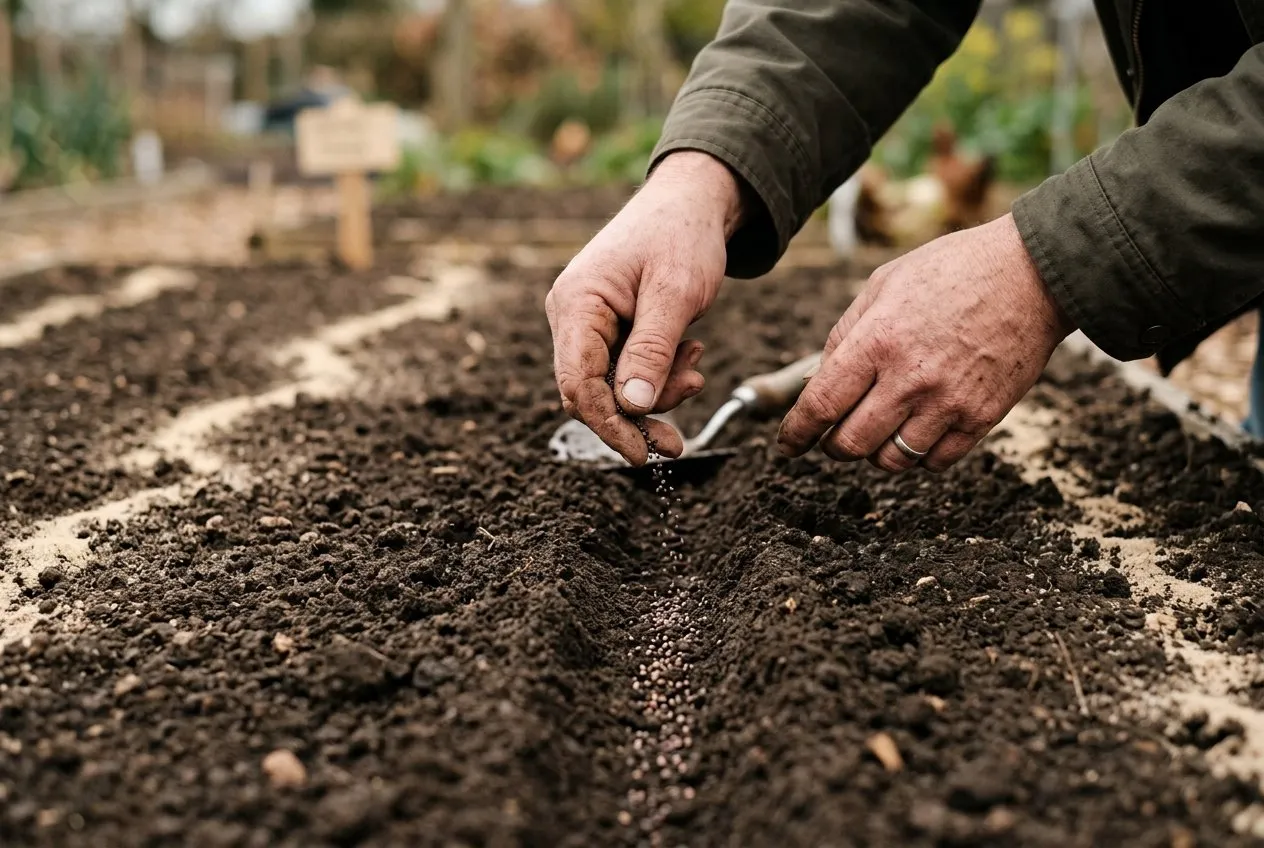 Sow thinly in shallow drills inside sand-marked drifts. Straight rows let you hoe out weeds without losing seedlings.
The best hardy annuals to sow direct
These are the most reliable performers, with their thinning spacings. All are happy sown straight into the ground.
| Plant | Sow | Thin to | Height | Notes |
|---|---|---|---|---|
| Cornflower | Mar-May, Sept | 20cm | 60-90cm | Blue, bee magnet, great cut |
| Calendula | Mar-May, Sept | 20cm | 40-60cm | Orange pot marigold, edible petals |
| Nigella | Mar-May, Sept | 15cm | 40-50cm | Love-in-a-mist, seed pods for drying |
| Larkspur | Mar-Apr, Sept | 25-30cm | 90-120cm | Annual delphinium, sow in situ only |
| Ammi majus | Mar-May, Sept | 25-30cm | 90-120cm | Lacy white, florist’s favourite |
| California poppy | Mar-May | 15cm | 30cm | Eschscholzia, thrives on poor soil |
| Field poppy | Mar-Apr, Sept | 15cm | 60cm | Papaver rhoeas, barely cover seed |
| Cerinthe | Mar-Apr, Sept | 30cm | 45cm | Honeywort, blue-green and purple |
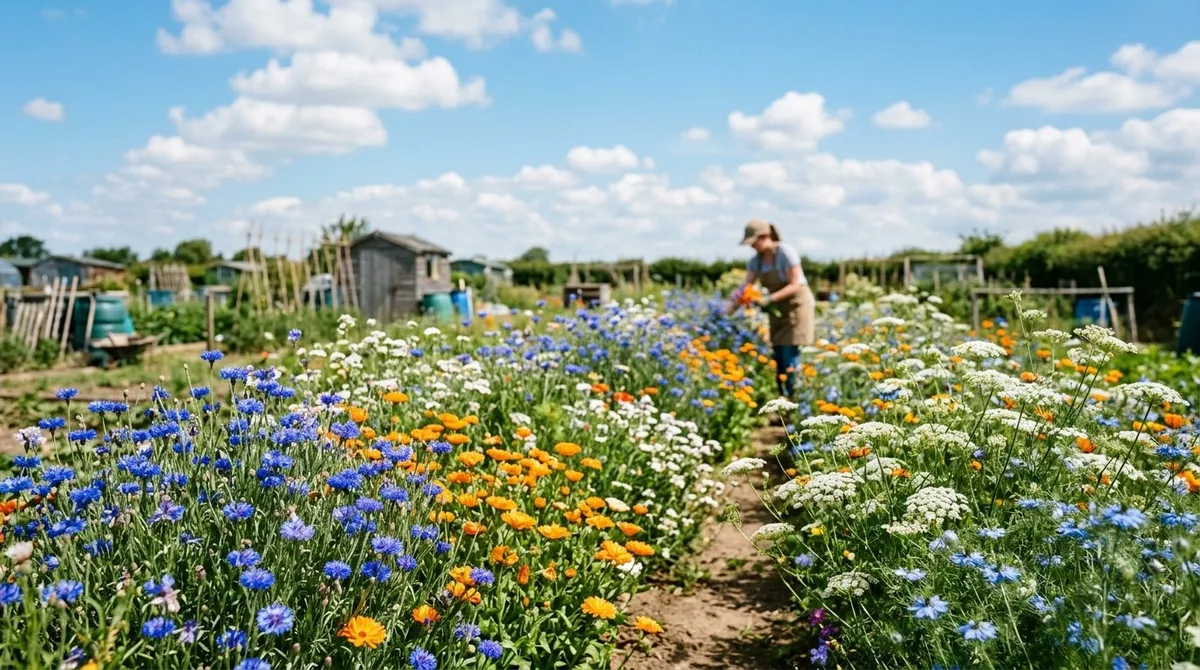
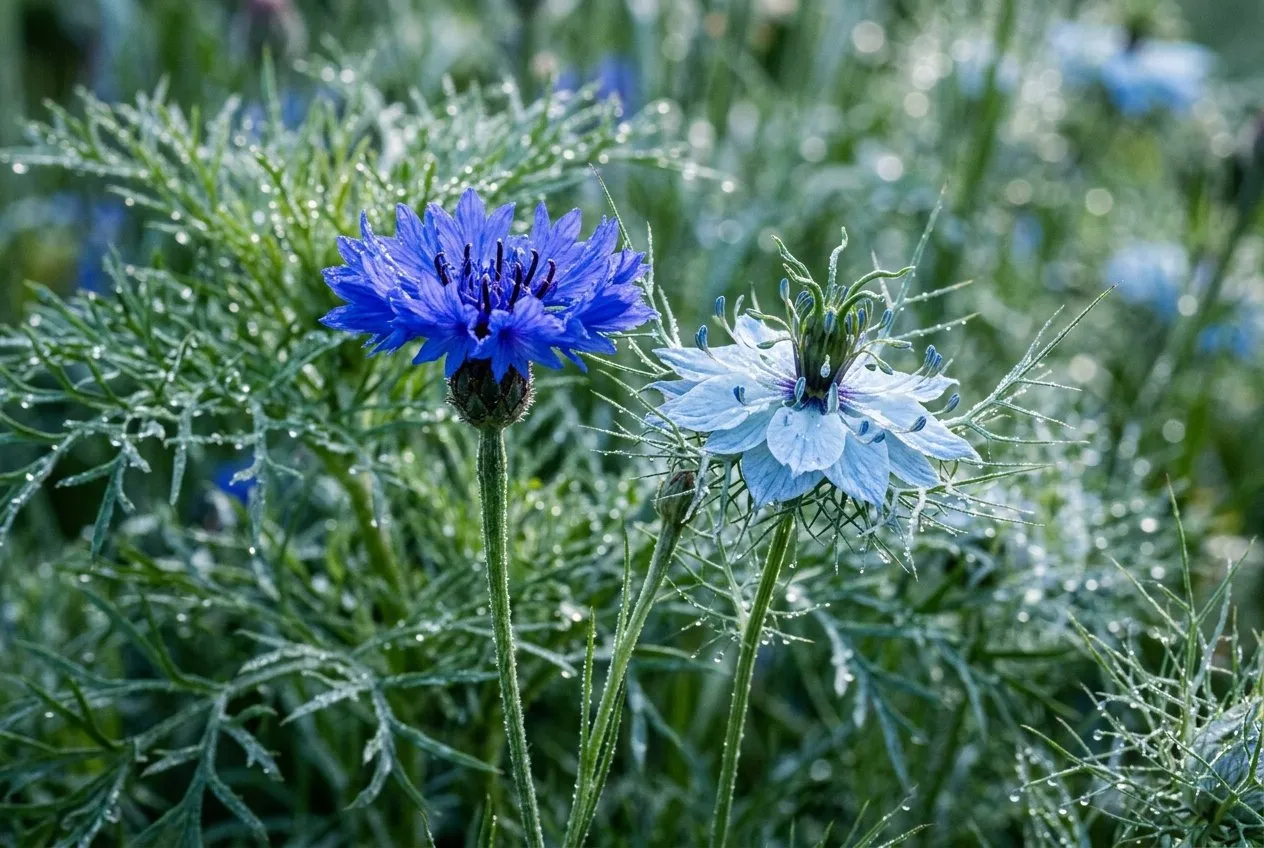 Cornflower and nigella, two of the easiest hardy annuals from a direct sowing, both up and flowering within twelve weeks.
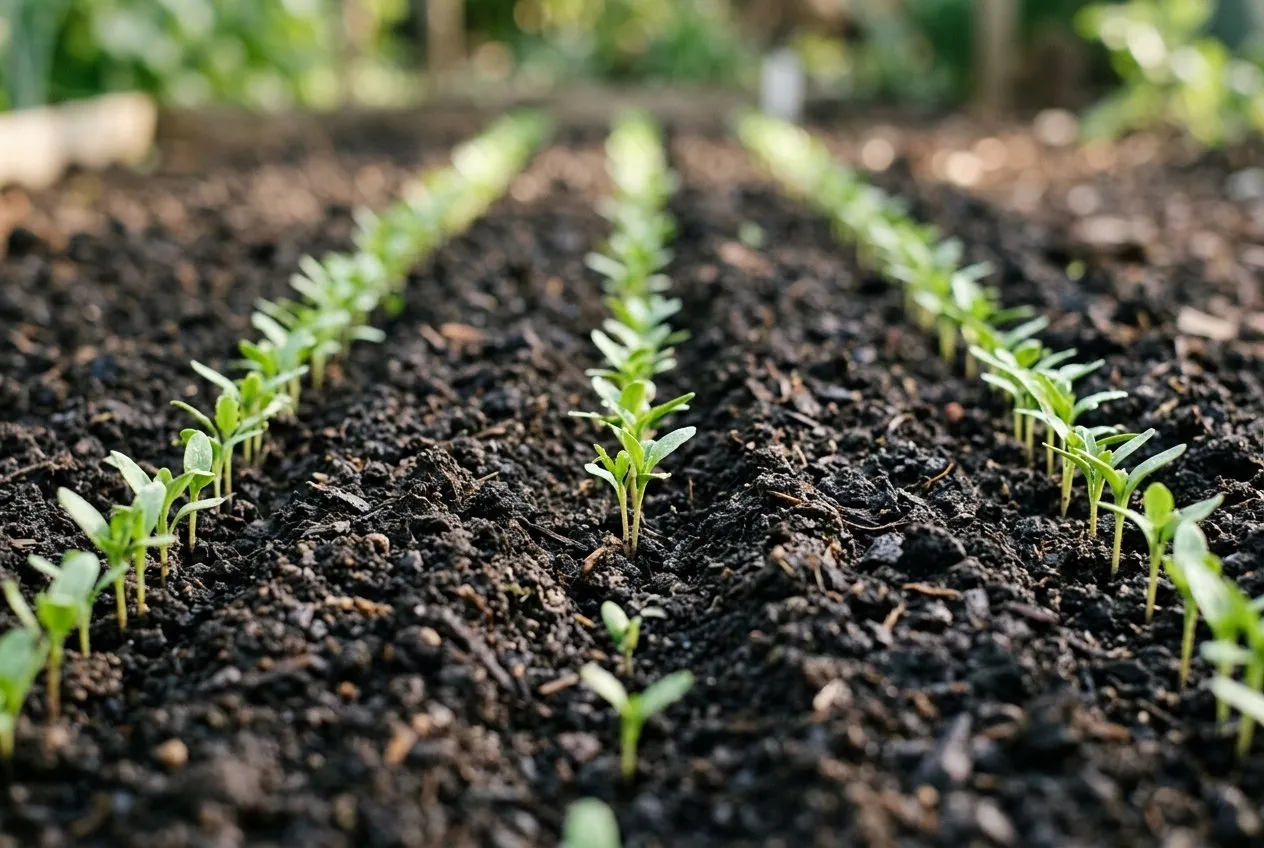 Seedlings in lines are easy to read. Anything not in a row is a weed and can be hoed out without a second thought.
Thinning: the step most people skip
Thinning is what turns a crowded green mat into strong, free-flowering plants. Do it in stages.
- First thin when seedlings have two true leaves and start to touch. Remove the weakest, leaving the rest about 5cm apart.
- Second thin two weeks later to roughly half the final spacing.
- Final thin to the spacing in the table above once plants are growing strongly.
Thinning in stages covers any losses to slugs or birds along the way. Water the row after each thin to settle the survivors. The thinnings of calendula and cornflower can be transplanted while tiny if you want to fill a gap, though most resent the move.
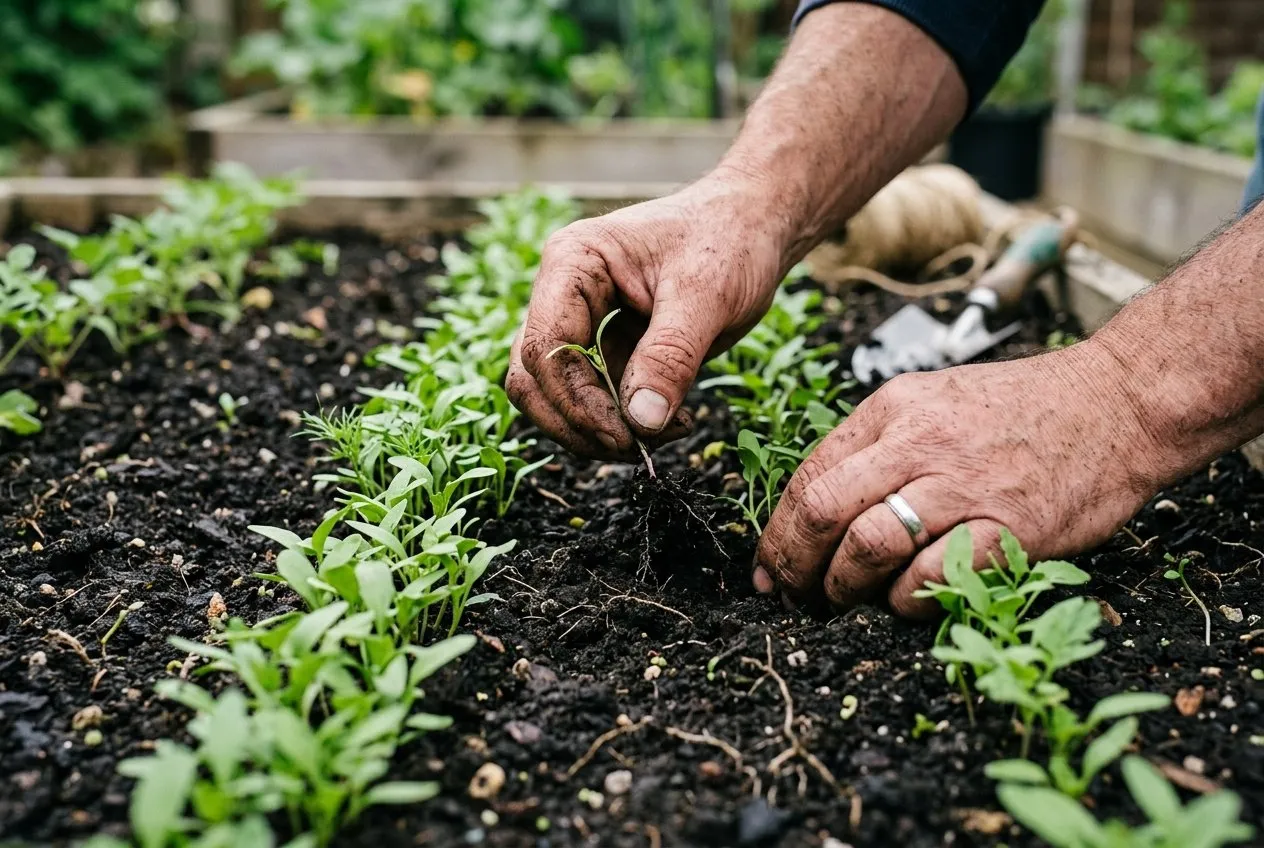 Thin ruthlessly and in stages. Crowded seedlings stay weak and mildew; thinned plants give several times the flowers.
A month-by-month hardy annual calendar
| Month | Job |
|---|---|
| March | First spring sowings of the hardiest annuals once soil hits 7°C |
| April | Main sowing month; rake fresh seedbeds and sow in drifts |
| May | Sow the last spring batch; begin thinning the March and April rows |
| June | Thin and hoe; first flowers open; start a fresh succession sowing |
| July | Keep deadheading and picking; sow a final quick batch of calendula |
| August | Pick and deadhead daily to keep plants flowering |
| September | Sow hardy annuals for overwintering in mild, well-drained gardens |
| Oct to Feb | Protect autumn-sown seedlings from slugs; leave well alone in cold spells |
Common direct-sowing mistakes
Eight seasons of side-by-side rows keep turning up the same five errors.
- Sowing too thickly. A heavy hand wastes seed and makes thinning a chore. Sow as thinly as you can bear.
- Skipping the thinning. Crowded plants stay weak and flop. This is the number one cause of a disappointing stand.
- Sowing into cold, wet soil. Seed rots below about 7°C. Wait for warmth and a dry surface.
- Scattering instead of drilling. Broadcast seed is impossible to weed and germinates unevenly.
- Feeding too richly. Manure and high-nitrogen feed grow leaf, not flower. Keep the soil lean.
Avoid those and a £2 packet turns into a summer of flowers and cutting stems.
 The payoff: a few packets sown direct in spring give a full cutting border by July, for the price of a couple of cups of coffee.
Now you can fill a bed from seed, read our guide to the best hardy annual flowers to choose your favourites, and learn how to grow cut flowers so every sowing earns its keep in the vase.
Our team produces practical UK gardening guidance from source research, contributor records and established horticultural practice. Editorial standards are overseen by Matt W.