Key takeaways
- Community composting lets a group share one system, ideal for flats and small gardens with no room of their own
- A three-bay pallet system, one filling, one cooking, one ready, is the simplest reliable setup
- Balance roughly equal volumes of greens and browns, and keep the heap as damp as a wrung-out sponge
- A hot heap reaching 55-65°C kills weed seeds, roots and pathogens in a few weeks
- Garden-waste schemes often need a free T23 waste exemption; food waste adds Animal By-Products rules
- Agree a site, a volunteer rota and clear signage before you take in a single barrowload
Not everyone has room for a compost heap. A flat, a tiny yard or a paved front garden leaves no space, yet the food scraps and the few weeds still need somewhere to go. Community composting solves that by pooling the effort: one shared system, many contributors, and a heap of free compost at the end.
A community scheme can be three pallet bays on an allotment, a row of tumblers behind a block of flats, or a managed site serving a whole street. The principle is the same. People bring their garden and food waste to one place, a small team keeps it turning, and everyone shares the finished compost. This guide covers how to choose a site and a system, the rules you need to know, and how to keep a shared heap hot, clean and productive.
What is community composting?
Community composting is any scheme where a group composts together rather than alone. It scales from the informal to the organised:
- A shared allotment heap, where plot-holders pool their waste into communal bays.
- An estate or street scheme, where neighbours bring garden and kitchen waste to a managed point.
- A school or community garden, composting on site as part of growing and teaching.
Why start a community scheme?
The case for pooling effort is strong.
- It serves people without space. One shared system composts the waste of a dozen flats that could never compost alone.
- It diverts waste. Garden and food waste are heavy and wet. Composting locally keeps them out of the bin lorry and the landfill.
- It makes better compost. A big, communal heap holds heat far better than a small domestic bin, so it breaks down faster and kills more weed seeds.
- It shares the load. A rota means no single person carries the work, and the finished compost is split between everyone.
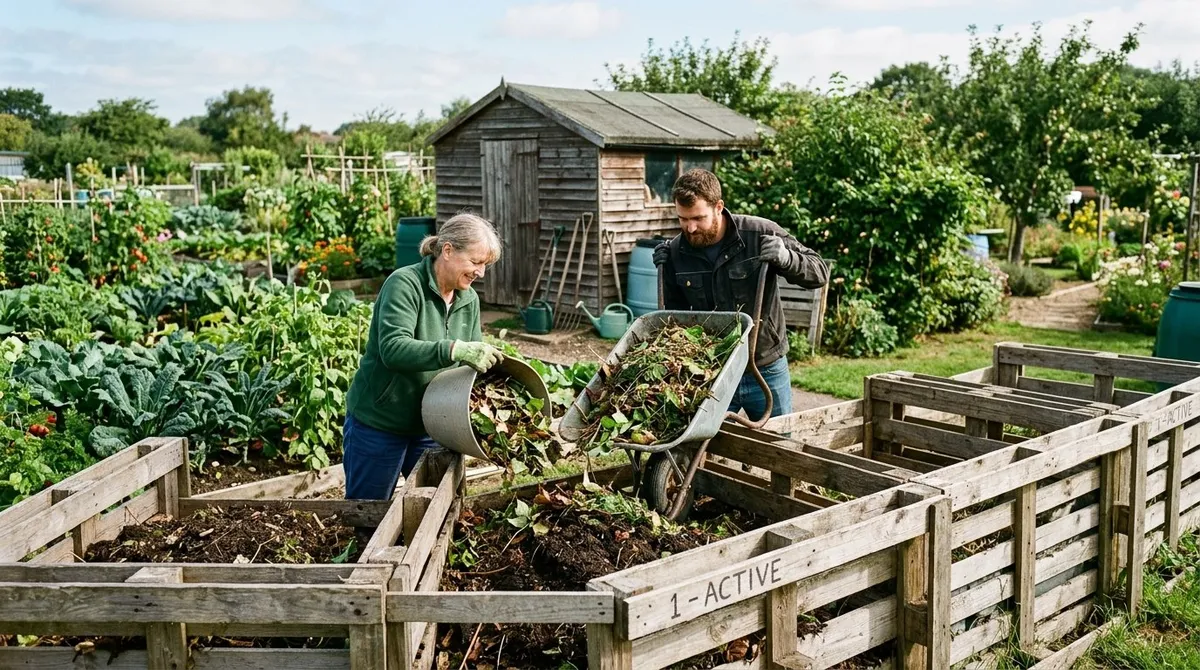
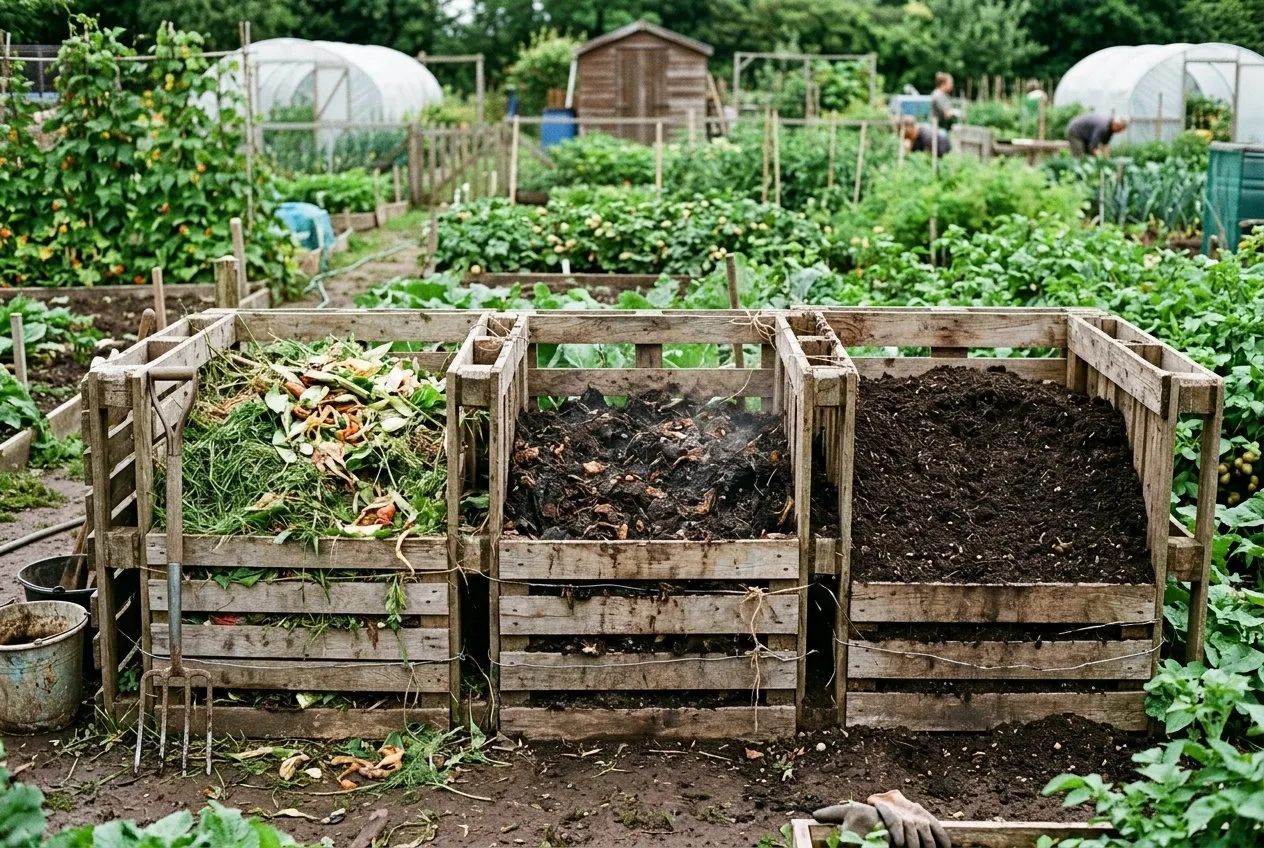 A three-bay pallet system is the backbone of most community schemes: one bay filling, one cooking, one finished and ready to use.
Choosing a site and a system
Two early decisions shape everything: where the scheme lives, and what it composts in.
Finding a site
Picking a system
Match the system to the scale and the inputs.
| System | Best for | Handles food waste? | Rough cost |
|---|---|---|---|
| Three-bay pallet system | Allotments, gardens, garden waste | Not safely | Free to £60 |
| Enclosed hot composter (HotBin type) | Estates, small groups, mixed waste | Yes, enclosed | £150-250 each |
| Ridan or drum tumbler | Schools, food-heavy sites | Yes, rodent-proof | £400-900 |
| Open windrow (long heap) | Large sites, lots of garden waste | Not safely | Site and machinery |
| Wormery banks | Food waste, smaller groups | Yes, food only | £80-150 |
Most schemes start with pallet bays for garden waste and add an enclosed unit later if they want to take food. For the domestic-scale options people might run alongside, the compost bin ideas guide compares the bought bins.
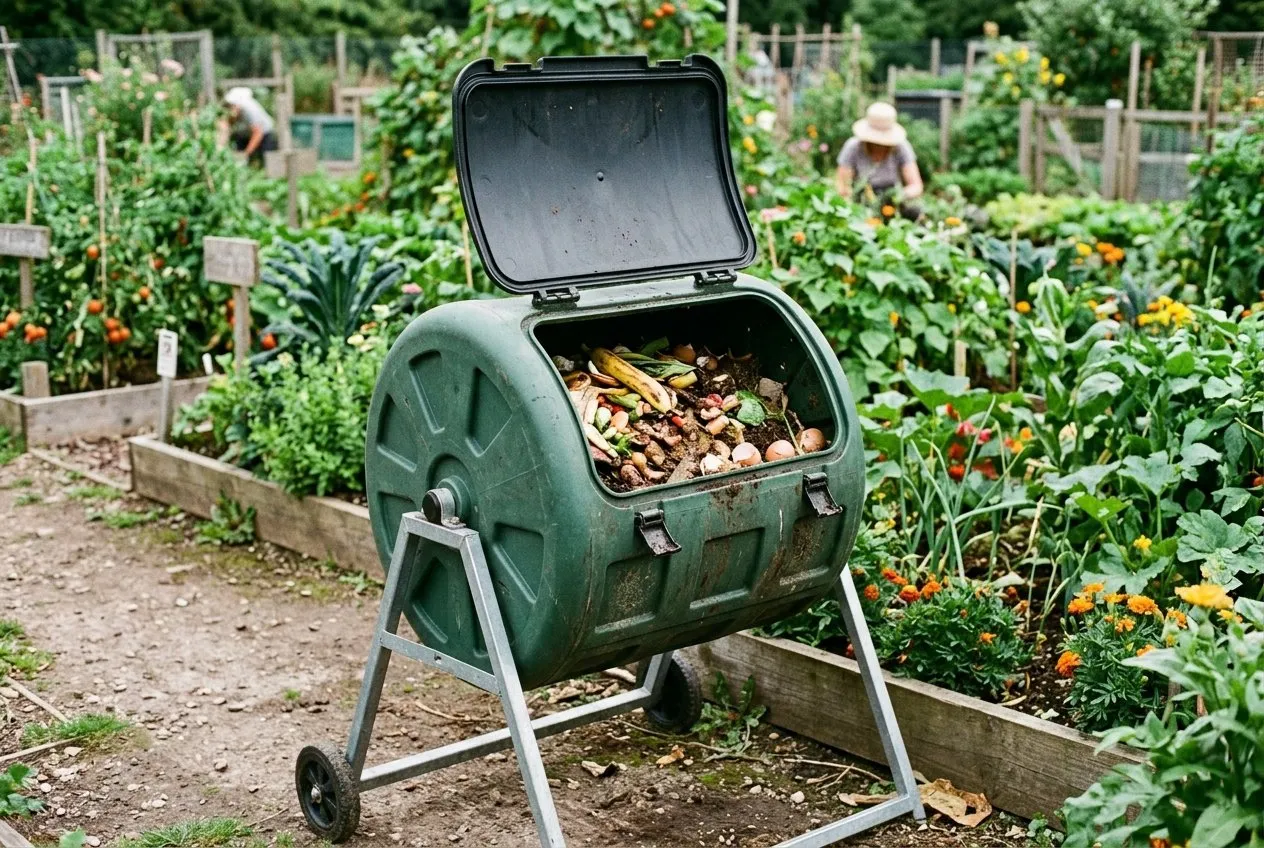 An enclosed drum or hot composter handles food waste safely, keeping rodents out and meeting the rules that open bays cannot.
The rules you need to know
This is the part most guides skip, and it matters. In England, composting your own garden waste needs no permission. The moment a scheme takes in waste from other people, it may need registering.
- The T23 waste exemption. A community scheme composting garden waste usually needs a free T23 exemption, registered with the Environment Agency. It covers aerobic composting up to set tonnages.
- Food and catering waste falls under the Animal By-Products Regulations. Cooked food, meat and kitchen scraps need enclosed, rodent-proof systems and stricter handling. Many schemes avoid this by starting with garden waste only. The kitchen caddies contributors use to collect scraps between drop-offs can draw fruit flies, so point them to our guide on getting rid of fruit flies organically.
- Scotland, Wales and Northern Ireland have their own equivalents through SEPA, Natural Resources Wales and NIEA.
Always check with the Environment Agency and your local council before you open. The rules are not onerous, but running without the right exemption can shut a scheme down. None of this changes the composting itself, only the paperwork around it.
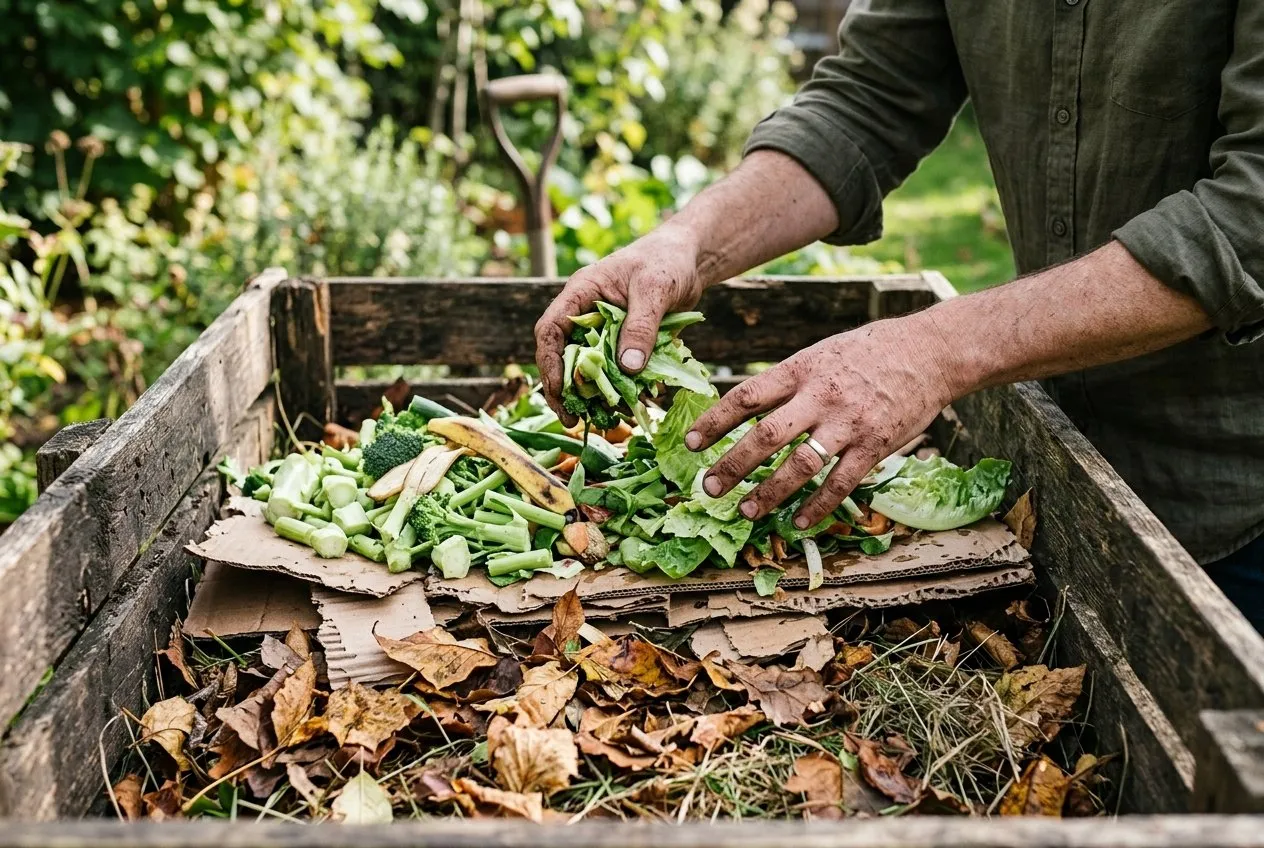 Balance roughly equal volumes of greens and browns. Too many greens turn the heap to slime; too many browns and it never heats up.
Building and running a three-bay system
The three-bay pallet system is the workhorse of community composting. Five pallets stood on end and wired together make three bays side by side. You fill the first, turn it into the second to aerate it, and the third holds finished compost.
To keep it working:
- Balance the mix. Aim for roughly equal volumes of greens (grass, kitchen veg, soft prunings) and browns (cardboard, dry leaves, woody material). This gives the carbon-to-nitrogen ratio of around 25 to 30 to 1 that microbes want.
- Keep it damp. The heap should feel like a wrung-out sponge. Water dry heaps; add browns to soggy ones.
- Turn it. Moving the heap from bay one to bay two every few weeks adds air and reignites the heat.
- Watch the temperature. A compost thermometer should read 55-65°C in an active heap. That heat kills weed seeds, perennial roots and pathogens.
- Screen the finished compost. Sieve out anything not broken down and return it to the active bay.
For the science of hot versus cold heaps, our guide on cold, fast and hot compost methods goes deeper. Garden Organic’s composting advice is the best free UK reference for the detail.
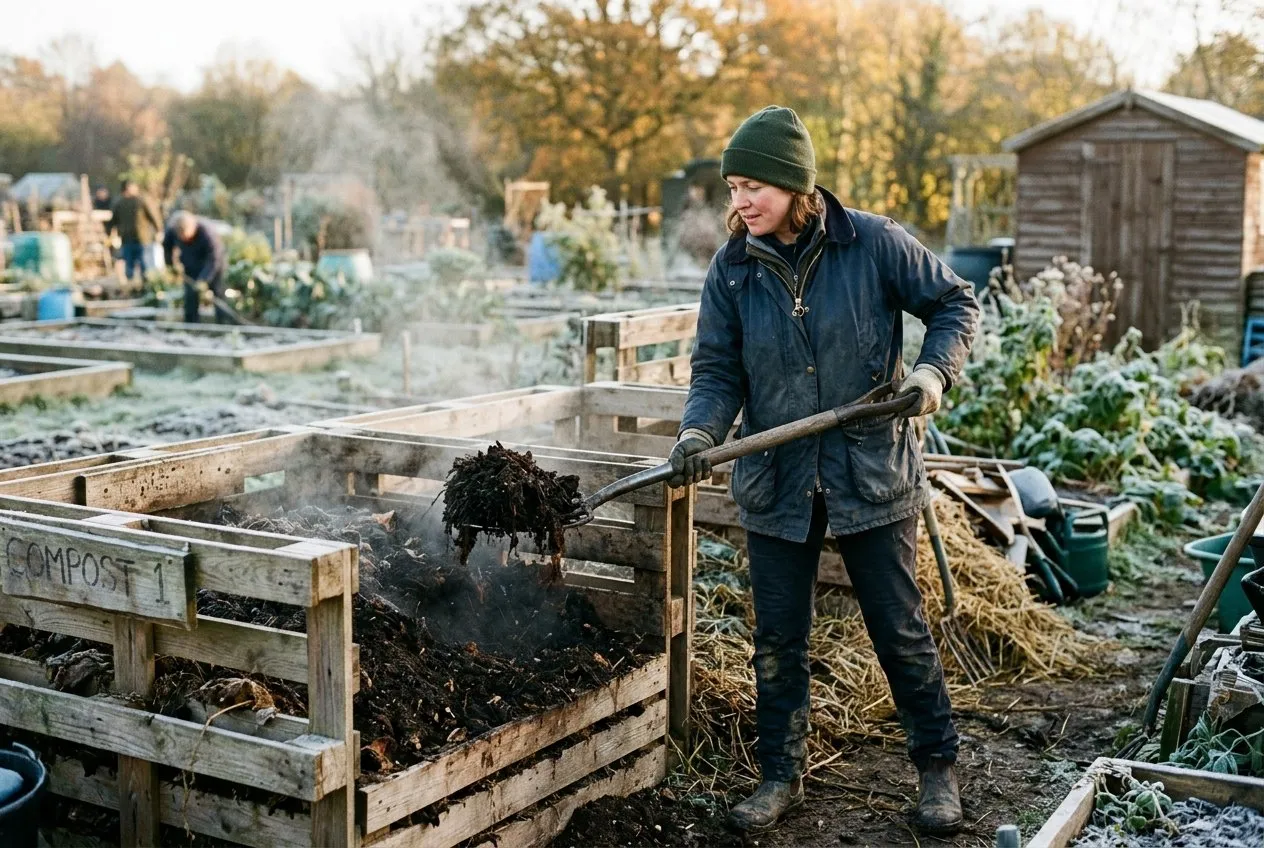 Turning the heap from one bay to the next adds air and reignites the heat. Steam rising on a cold morning means the heap is working.
Keeping people on side
A community heap fails on people, not on timber. Three things keep it running.
- Clear signage. A laminated sign listing what goes in and what stays out is the single best investment. It stops the plastic, turf and perennial weeds that wreck a heap.
- A volunteer rota. Name three or four people to turn the bays on a fortnight rota. Shared, unowned jobs do not get done.
- A welcome. New contributors need showing the ropes once. A short induction prevents most contamination.
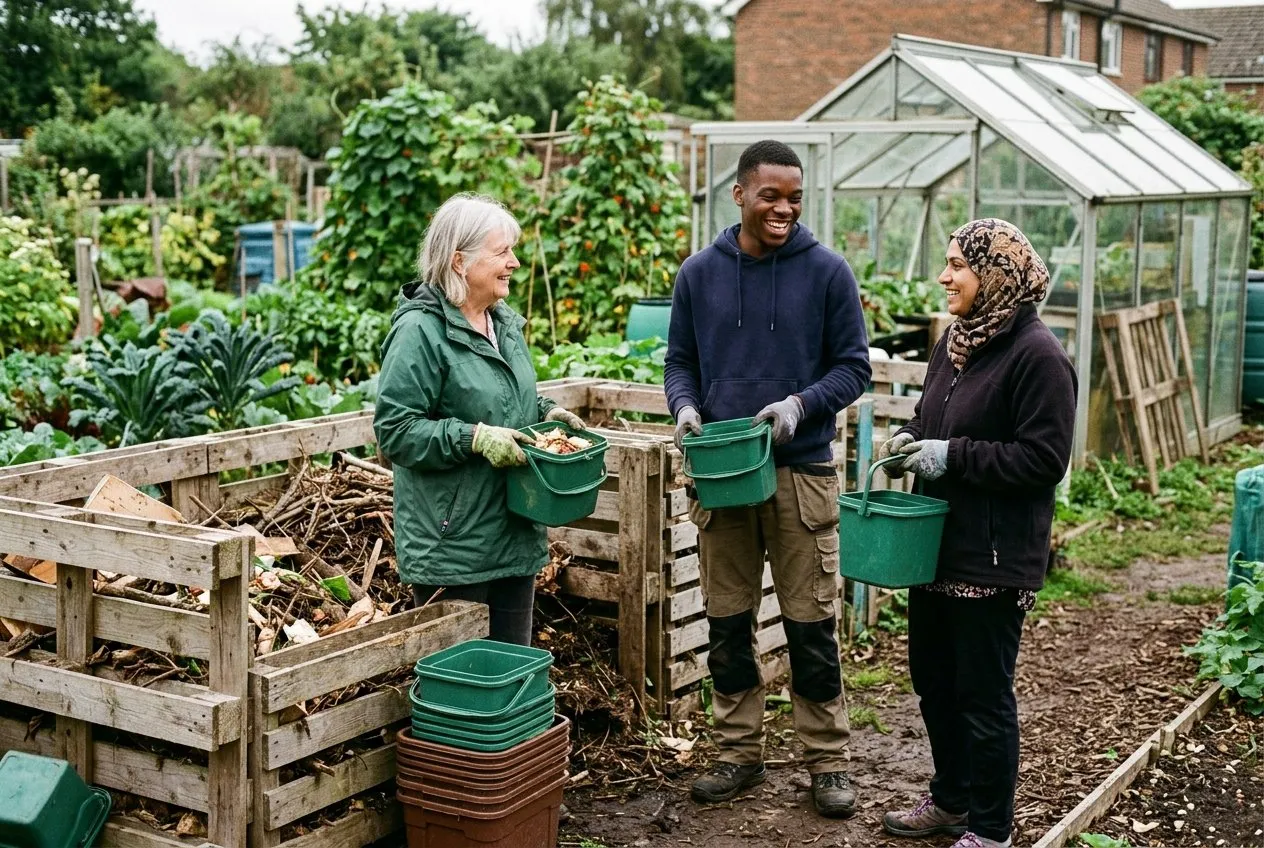 Signage and a volunteer rota matter more than the design. Clear rules cut contamination and keep the heaps hot and productive.
A first-year community composting plan
| Stage | Job |
|---|---|
| Month 1 | Gather a group, find a site, get the landowner’s written permission |
| Month 2 | Register any T23 exemption; decide garden waste only, or food too |
| Month 3 | Build the bays or install the units; make signage and a rota |
| Months 4-6 | Open for garden waste; balance the mix; start turning |
| Months 7-9 | Monitor temperature; screen the first finished compost |
| Months 10-12 | Share the compost; review what worked; consider adding food waste |
What can go wrong, and how to fix it
- The heap stays cold. Too small, too dry, or too many browns. Build it bigger, water it, add greens, and turn it.
- It smells of ammonia or rot. Too many greens and not enough air. Add browns and turn it.
- Vermin appear. Cooked food in open bays. Switch food waste to an enclosed unit and keep open bays to garden waste.
- Contamination. Plastic, turf and weed roots arriving. Tighten the signage and induct contributors.
- Volunteers drift away. No rota or no recognition. Name the jobs, share the compost, and thank people.
Get the site, the system and the people right and a community scheme turns a street’s waste into beds full of free compost, year after year.
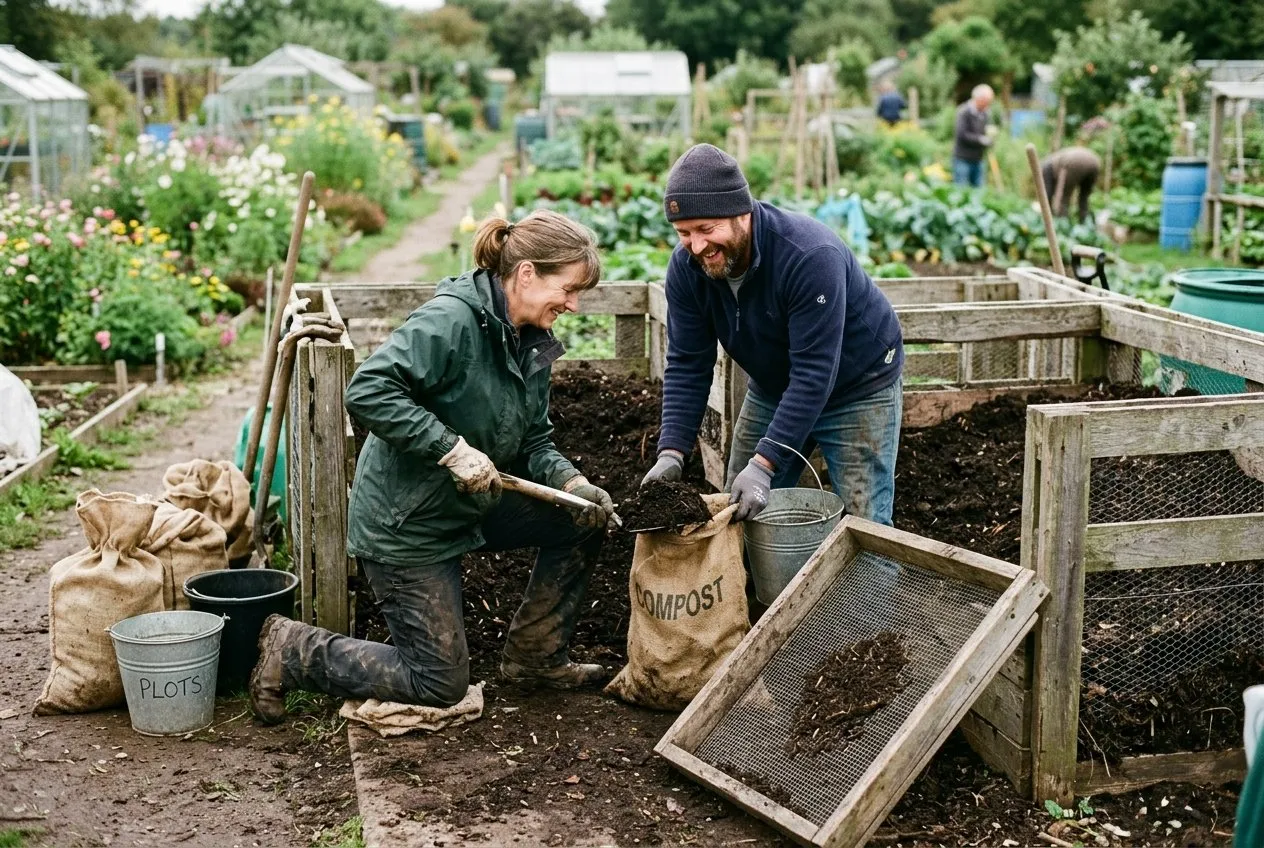 The payoff: dark, crumbly compost shared among everyone who contributed, made from waste that would otherwise have left the site.
Now you have the plan, learn the composting craft itself in our guide to how to make compost, and see how a shared heap can boost local nature in composting for wildlife.
Our team produces practical UK gardening guidance from source research, contributor records and established horticultural practice. Editorial standards are overseen by Matt W.