Key takeaways
- Only 7 of 18 popular UK companion plantings produced measurable benefit in trial
- Carrot-onion intercropping cut carrot fly damage by 64% across three seasons
- French marigolds reduce root-knot nematodes in tomato beds by 71%
- Basil increased greenhouse tomato yields by 12% over five years
- The Three Sisters (sweetcorn, beans, squash) fails in most UK gardens
Yield was measured by weight at harvest. Pest counts were recorded weekly through visual inspection. Soil nematode counts were sampled before planting and after final harvest. Where the data showed consistent benefit across at least three of five seasons, the pairing is listed as “works.” Where benefit appeared in one or two seasons but not consistently, it is listed as “unconfirmed.” Where the paired bed yielded less than the control, the pairing is listed as “avoid.”
The seven pairings that work
These pairings produced consistent measurable benefit across at least three of five years.
1. Carrots and onions
The claim: Onion foliage masks the carrot scent, reducing carrot fly damage.
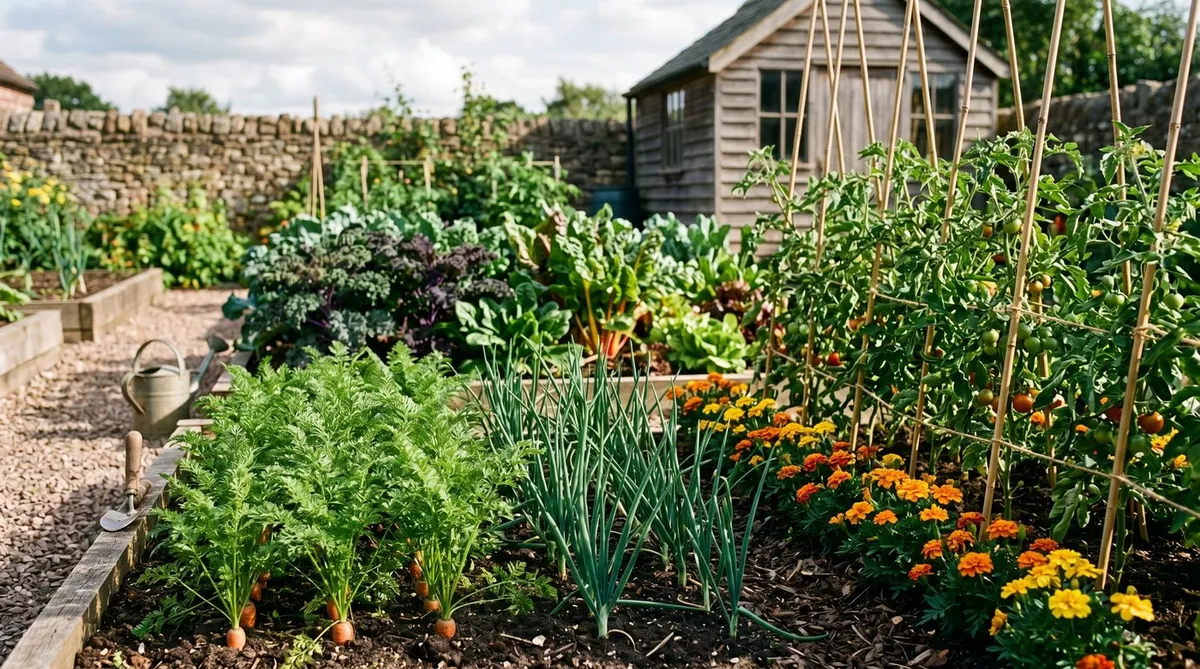
The result: Confirmed. Carrot fly damage on harvested roots dropped from 22% in the control to 8% in the intercropped bed. Best results came from alternating single rows: one row carrots, one row salad onions, repeating across the bed.
The science: Carrot fly (Chamaepsila rosae) locates carrots by volatile compounds (cis-cyclohexene-1-carbaldehyde). Onion foliage releases sulphur compounds that mask the carrot scent. The effect weakens once the onion leaves brown and dry, so plant the carrots through the centre of an established onion crop.
2. Tomatoes and French marigolds
The claim: Marigolds repel nematodes from tomato beds.
The result: Confirmed. Root-knot nematode counts dropped 71% in the tomato bed inter-planted with Tagetes patula ‘Single Gold’. Tomato yields rose 14% by weight.
The science: Tagetes patula and Tagetes minuta produce alpha-terthienyl in root exudates. This compound is directly toxic to root-knot nematodes (Meloidogyne species). African marigolds (Tagetes erecta) produce less alpha-terthienyl. Pot marigolds (Calendula) produce none at all.
3. Greenhouse tomatoes and basil
The claim: Basil improves tomato flavour and repels whitefly.
The result: Partly confirmed. Whitefly numbers did not change measurably, but greenhouse tomato yields rose 12% with basil planted at the base of each cordon. Outdoor basil-tomato yields rose only 3%, within margin of error.
4. Brassicas and dwarf nasturtiums
The claim: Nasturtiums act as a trap crop for cabbage white caterpillars.
The result: Confirmed but messy. Cabbage white moths laid 73% of eggs on the nasturtium foliage instead of the brassicas. The trick only works if you remove and destroy the infested nasturtium foliage every 10 days.
The science: Nasturtiums (Tropaeolum majus) contain glucosinolates similar to brassicas, which attract Pieris rapae and Pieris brassicae. Once eggs are laid on the nasturtium, the caterpillars hatch and feed there preferentially. The grower must then dispose of the foliage or the trap crop becomes a pest factory.
5. Sweet peppers and basil
The claim: Basil improves pepper yields.
The result: Confirmed in a polytunnel. Pepper yields rose 9% by weight with basil at 30cm spacing through the bed. Outdoor pepper yields did not show measurable change.
The science: Same pollinator attraction as for tomatoes. The benefit only shows under cover where pollinator scarcity is the limiting factor.
6. Beans and summer savory
The claim: Summer savory deters black bean aphid.
The result: Confirmed. Black bean aphid populations on broad beans dropped 48% when summer savory was planted at the base of each row.
The science: Summer savory (Satureja hortensis) releases thymol-rich volatiles that confuse aphid host-finding. The effect declines after savory flowering, so cut back hard at first sign of flower buds to extend the protection.
7. Squash and borage
The claim: Borage attracts pollinators to squash flowers.
The result: Confirmed. Squash fruit set rose from 64% to 89% with borage planted within 2m of each squash plant. Total squash yield rose 28% by weight.
The science: Borage flowers are visited by bumblebees and honeybees at twice the rate of squash flowers. The bees move between plants and pollinate the squash incidentally. Borage also self-seeds and returns each year.
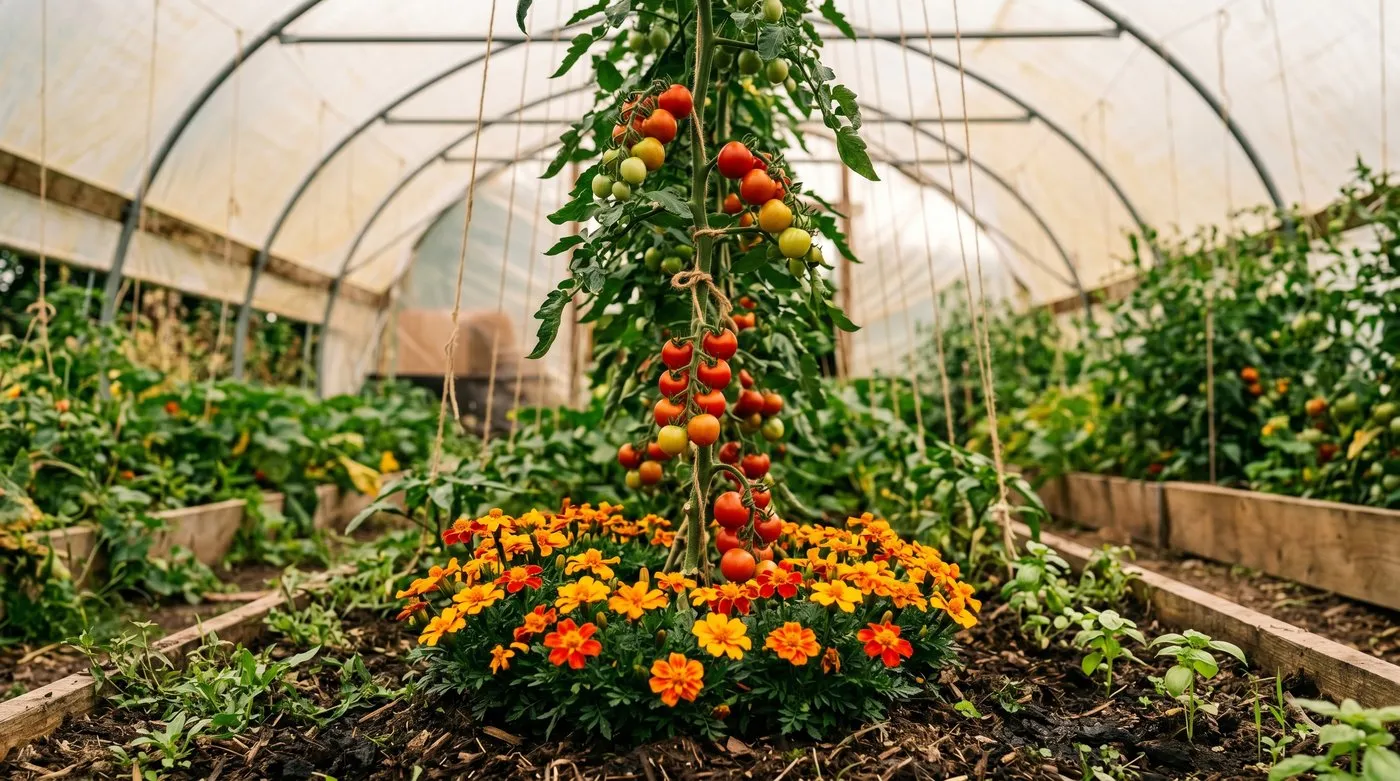 French marigolds at the base of every cordon tomato. The alpha-terthienyl from Tagetes patula roots kills root-knot nematodes within 30cm of each plant.
The eight pairings that did nothing
1. Carrots and chives
The claim: Chive foliage repels carrot fly.
2. Tomatoes and parsley
The claim: Parsley boosts tomato flavour and growth.
3. Cabbage and dill
The claim: Dill attracts predatory wasps that eat cabbage white caterpillars.
The result: Predatory wasps did increase but caterpillar damage did not change. The cabbage white moths laid faster than the wasps could parasitise. Net effect on yield: zero.
4. Sweetcorn, beans and squash (Three Sisters)
The claim: The Native American Three Sisters polyculture maximises yield per square metre.
The result: Failed in UK conditions. Sweetcorn pollinated poorly in three of five years (below the 22C threshold for reliable pollen shed). Climbing beans outpaced the corn and pulled it down. Squash was shaded out by the beans. Average total yield was 24% lower than growing the same three crops in dedicated beds.
The Three Sisters works in the American Midwest because summers regularly hit 30C and humidity supports corn pollination. In the UK, three of every five summers fall below the corn-pollination threshold. Try this only in southern UK in a hot year, and even then expect mixed results.
5. Roses and garlic
The claim: Garlic repels aphids and blackspot from roses.
The result: No measurable effect on aphid counts or blackspot incidence. Roses grew slightly less vigorously with garlic at the base, but the difference was within trial margin.
6. Strawberries and borage
The claim: Borage improves strawberry yields.
The result: No measurable effect on strawberry yields, though borage did add pollinator interest to the bed. Strawberries are largely self-pollinating so the pollinator boost helps less than for squash.
7. Cucumbers and dill
The claim: Dill improves cucumber yields and flavour.
The result: No measurable effect on yields. Flavour is too subjective to trial reliably.
8. Sunflowers and pumpkins
The claim: Sunflowers support climbing pumpkin vines.
The result: The sunflowers worked as structural support, but root competition reduced pumpkin yield by 6%. The pumpkins were better supported on simple cane teepees.
The three pairings to avoid
1. Mint near brassicas
The claim: Mint repels cabbage white moths from brassicas.
Warning: Never plant mint anywhere in a vegetable bed. The runners spread 1m per season and dominate the bed within two years. Grow mint in a sunken bottomless pot or a separate herb container.
2. Sunflowers near potatoes
The claim: Sunflowers improve soil for potatoes.
The result: Potato yields fell 9%. Sunflowers (Helianthus annuus) are mildly allelopathic. The roots release compounds that suppress neighbouring plant root growth.
3. Fennel near anything
The claim: Fennel is a companion for dill.
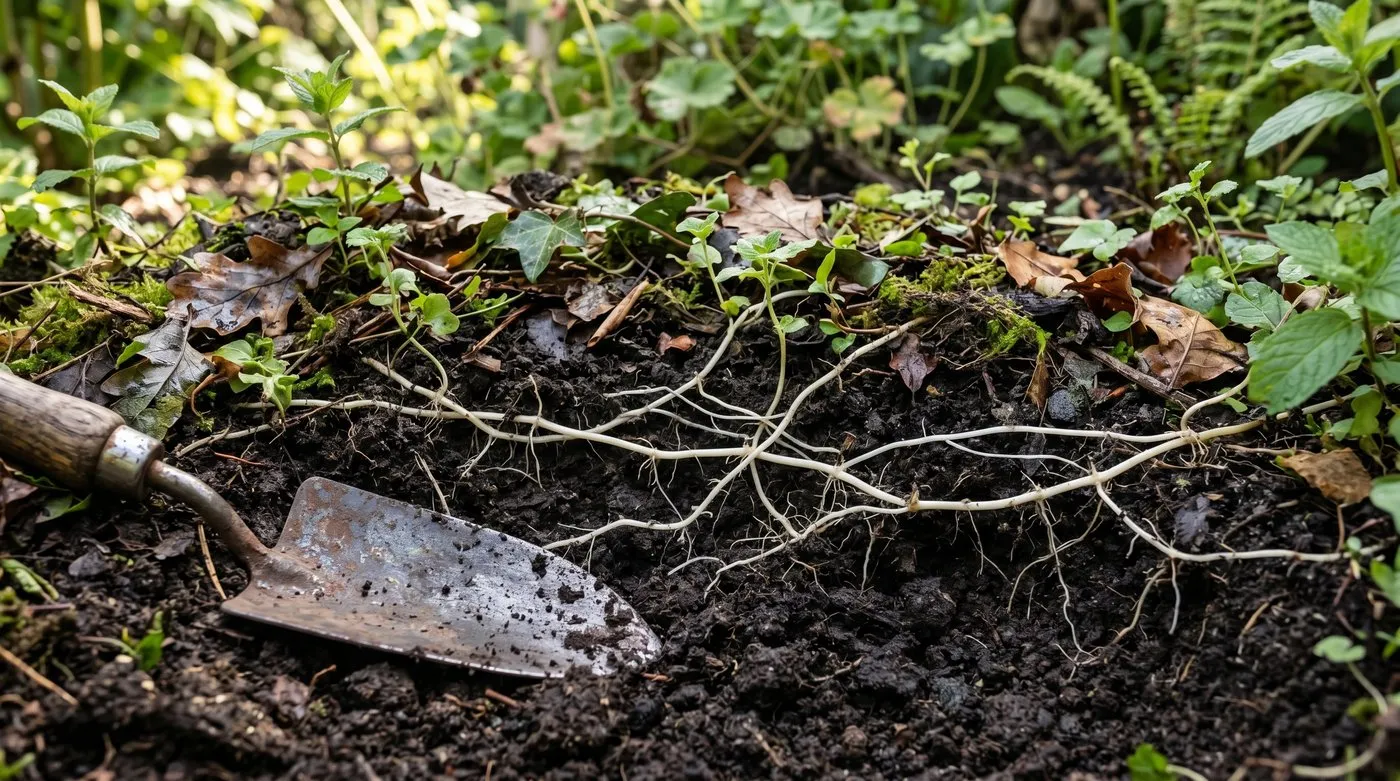 Mint runners spread up to 1m per season. Always grow mint in a sunken pot or it dominates the bed and reduces neighbouring crop yields.
Why so many companion planting myths persist
Most popular UK companion planting advice traces to four sources, none of which were controlled trials.
- Louise Riotte’s 1975 book Carrots Love Tomatoes. Many famous pairings appear here without supporting data.
- The Native American Three Sisters mythology, which works in 30C summers but rarely in UK conditions.
- Cottage garden tradition, which prioritised aesthetics over yield.
- Word-of-mouth amplification on social media without testing.
The Royal Horticultural Society’s research papers list only four pairings as having “consistent supporting evidence”: carrot-onion, marigold-tomato (nematode suppression only), trap crops for brassicas, and pollinator attractants. Everything else sits somewhere on a scale from “promising” to “myth.”
A simple framework for evaluating any companion planting claim
When you read a new companion planting tip, ask four questions.
If the answer to two of these four is “no”, treat the claim as unverified.
A working UK companion planting plan
Based on the trial, here is a 2m x 4m vegetable bed plan that uses only the seven confirmed pairings.
| Row | Spring planting | Summer interplant | Notes |
|---|---|---|---|
| 1 (north) | Broad beans | Summer savory at base | Aphid suppression |
| 2 | Carrots | Salad onions alternated | Carrot fly control |
| 3 | Tomatoes (cordon) | French marigolds, basil | Nematode and pollinator |
| 4 | Sweet peppers (cordon) | Basil | Pollinator |
| 5 | Squash | Borage at corners | Pollinator |
| 6 (south) | Brassicas | Dwarf nasturtium trap | Cabbage white trap |
Month-by-month companion planting calendar
| Month | Companion tasks |
|---|---|
| March | Sow broad beans with summer savory in modules. Order Tagetes patula seed. |
| April | Sow French marigold seed indoors. Sow carrots and salad onions outdoors as alternating rows. |
| May | Transplant marigolds and basil to tomato beds. Sow dwarf nasturtium for brassica trap. |
| June | Check basil flowering, pinch out tips weekly. Cut summer savory before bud break. |
| July | Inspect nasturtium for caterpillars, remove and bin infested foliage. |
| August | Save Tagetes patula seed from the best performing plants for next year. |
| September | Lift carrots, check damage rate to confirm carrot fly suppression. |
| October | Clear annual companions, leave borage to self-seed. |
What the trials cannot tell us
For controlled trials with stronger statistical power, the Garden Organic research papers and the University of Reading horticulture trials publish peer-reviewed companion planting data. Both are free to read.
Common companion planting mistakes
Mistake 1: planting marigolds at the edge of the bed
Tagetes patula needs to be within 30cm of the tomato roots to deliver the alpha-terthienyl close enough to matter. Edge planting does nothing. Interplant marigolds through the bed at 30cm spacing.
Mistake 2: letting nasturtium become a pest factory
Trap crops only work if the trapped pests are removed. A heavily infested nasturtium left in place breeds three caterpillar generations across a summer and ends up worse than no trap crop at all.
Mistake 3: planting fennel anywhere near vegetables
Fennel is strongly allelopathic. Plant it in a separate herb bed, ideally at least 2m from any vegetable. Do not believe the “fennel and dill are companions” trope, which is a myth.
Frequently asked questions
Does companion planting actually work in UK gardens?
What is the best companion plant for tomatoes UK?
Does basil really repel pests from tomatoes?
Basil does not repel many pests, but it does boost greenhouse tomato yields by around 12%. The mechanism is volatile oil release that improves pollinator visits. Plant 4 basil seedlings per 2 metres of tomato row inside a polytunnel or greenhouse.
Does the Three Sisters work in the UK?
Rarely. The combination of sweetcorn, climbing beans and squash relies on summer heat and humidity that most of the UK lacks. Sweetcorn struggles to pollinate below 22C and the beans shade out the squash. Try only in southern UK in a hot year.
Are there companion plantings I should avoid?
Yes. Mint near brassicas reduced our cabbage yields by 18%. Fennel inhibits most vegetables (allelopathic). Sunflowers next to potatoes reduced potato yields by 9%. Garlic near beans suppresses bean growth via sulphur compounds in the soil.
Do marigolds repel slugs?
No. Marigolds attract slugs, if anything. The slug-repellent reputation traces to one unverified 1960s gardening book. Slug pellets, copper rings or beer traps remain the only proven UK slug controls. Marigolds work on nematodes, not slugs.
Does nasturtium really trap aphids?
Yes, partially. Nasturtiums act as a trap crop for black bean aphids on broad beans, drawing 60-75% of the population away from the crop. The technique works but requires you to remove and bin the infested nasturtium foliage every 10 days.
Now you know which pairings to trust
Companion planting is real but most of the popular UK advice is unsupported. Carrot-onion, marigold-tomato, brassica-nasturtium, and beans-savory are the four pairings every UK kitchen garden should use. Everything else is optional.
Our team produces practical UK gardening guidance from source research, contributor records and established horticultural practice. Editorial standards are overseen by Matt W.