Key takeaways
- Pre-chitting on damp paper towel cuts parsnip emergence from 21-28 days to 8-10 days
- Fluid drilling carrots achieves 85-95% germination versus 60-75% from dry-sown rows
- Wallpaper paste without fungicide (Polycell Original) is the cheapest fluid drilling gel at 3-5 pounds for a season's supply
- Seeds need pre-germination at 18-22C for 3-7 days until tiny white radicles appear (2-3mm long)
- Sow within 24 hours of mixing seeds into the gel - longer storage stresses the seedlings
- Soil temperature must reach 6-8C before fluid drilling parsnips or carrots outdoors
Fluid sowing and pre-germination are two linked horticultural techniques that solve one persistent UK problem - the painfully slow and unreliable germination of root vegetables like parsnips and carrots. By pre-sprouting seeds indoors on damp paper towel and then sowing them in a protective gel, the technique cuts emergence time in half and lifts germination rates from the 60-75% typical of dry sowing to 85-95%.
The methods were developed at the National Vegetable Research Station in Wellesbourne, Warwickshire in the 1970s by Don Currah and Ron Gray. Commercial growers in East Anglia have used fluid drilling on carrots and onions since the 1980s. This guide brings the technique to amateur UK kitchen gardens, with the small-scale variations and budget materials that actually work on an allotment.
What is fluid sowing?
Fluid sowing is the umbrella term for any method that suspends seeds in a wet medium during sowing. Two specific techniques fall under this heading.
Pre-chitting is the simpler half. Seeds are placed on damp absorbent paper at 18-22C until the radicle (the embryonic root) emerges. The pre-germinated seeds are then planted by hand with normal sowing techniques, except that the seeds are now living tissue rather than dormant kernels. Pre-chitting alone cuts emergence time by 10-14 days for slow-germinating crops.
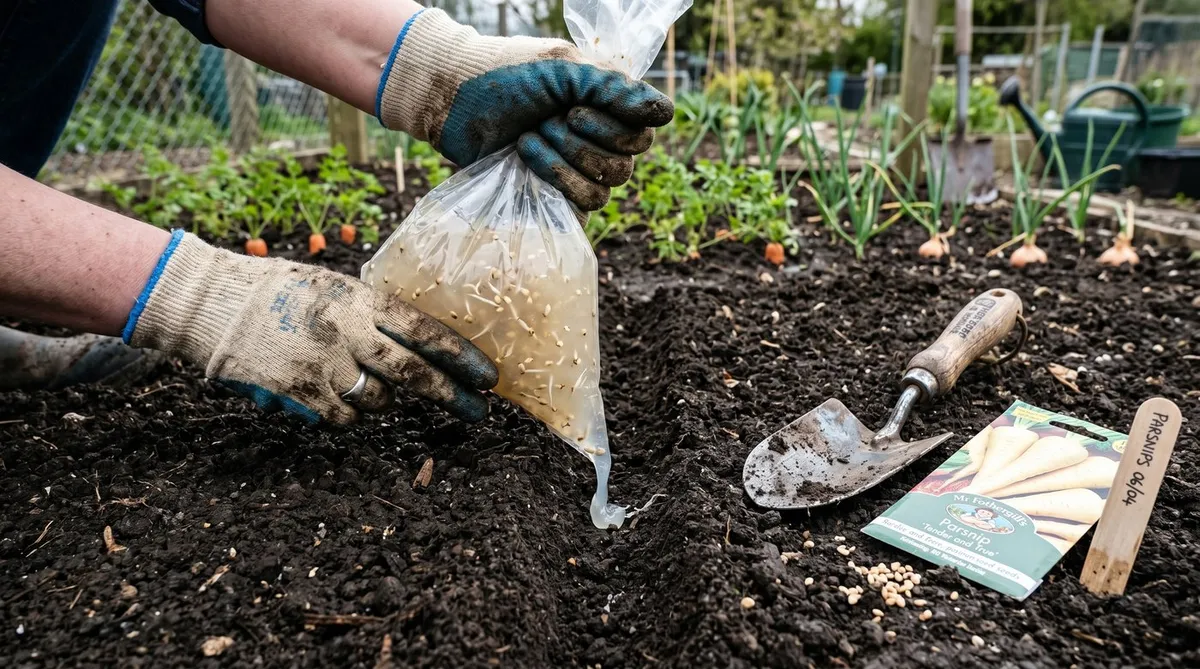
Fluid drilling is the full version. Pre-chitted seeds are mixed into a clear gel made from cellulose wallpaper paste, agar, or sodium alginate. The gel is loaded into a plastic bag with one corner snipped off and squeezed along a freshly drawn drill, like piping royal icing onto a cake. The gel holds each seed at the correct depth and spacing, protects the fragile radicle, and stays moist long enough for the seed to establish.
The two techniques work together. Pre-chitting alone helps. Fluid drilling without pre-chitting is just messy sowing. The combination is what produces the dramatic emergence-rate gains. For flowers and larger seeds, the seed snail method solves a different problem: root space rather than slow germination.
Why slow-germinating seeds need help
Three traits make a crop a fluid-drilling candidate: slow germination, vulnerable seed, and high weed pressure during emergence.
Parsnip is the textbook case. Fresh parsnip seed germinates at 60-70% in optimal conditions; year-old seed drops to 30-40%. Emergence takes 21-28 days from a March sowing in 8-10C UK soil, during which time weeds compete and birds peck open ground. The result is the classic parsnip row: gappy, weed-choked, and badly thinned.
Carrot is the second-biggest case. Fine seed, easily washed out of position by spring rain, and a 14-21 day emergence period. Carrot fly arrives in April-May, so any delay in establishing a strong row increases the damage window. Fluid drilling shortens that window.
Celery and parsley share the same difficulty - small seed, slow germination, light dependency at emergence. Pre-chitted celery seed sown in modules indoors is the standard market-gardener approach.
Onion seed has a narrow viability window and slow uptake of soil moisture. Pre-chitting raises germination rates noticeably; full fluid drilling is overkill for amateur quantities.
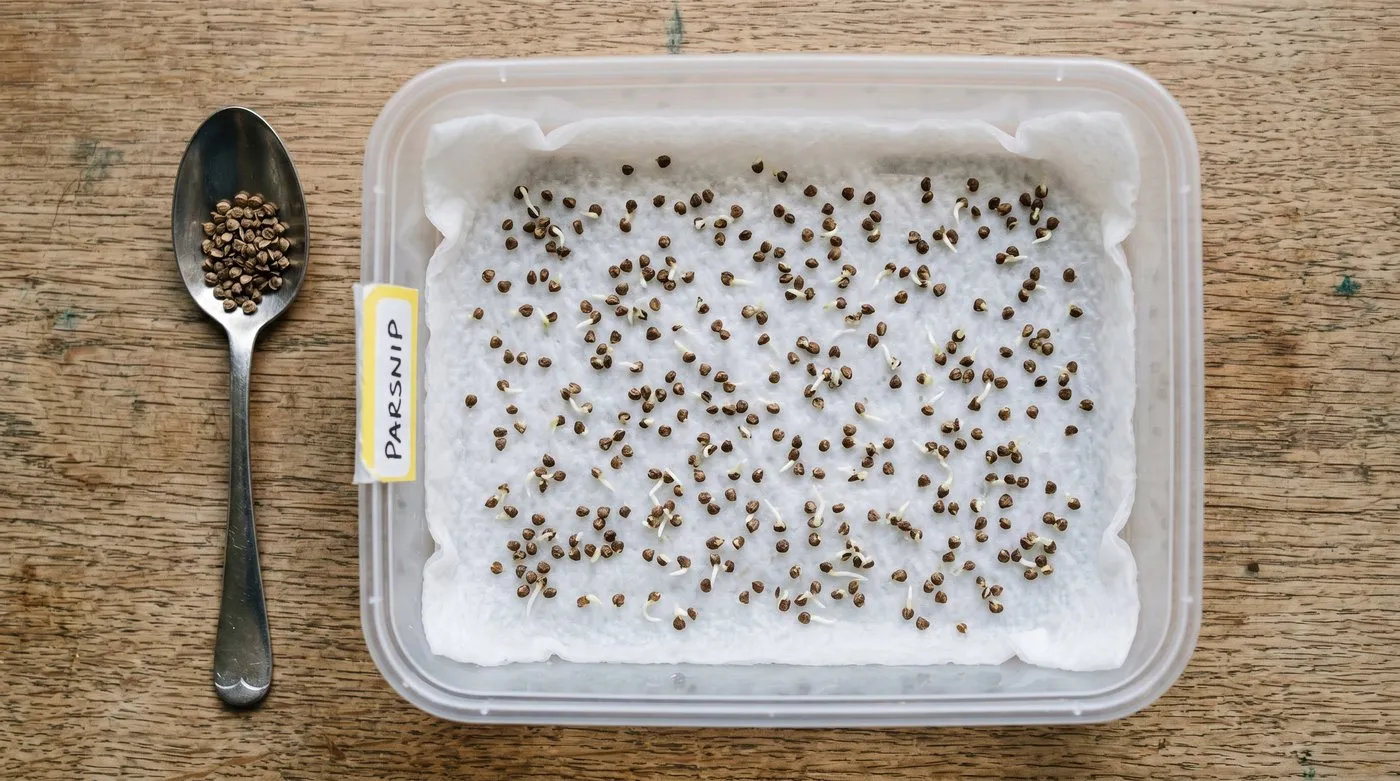 Pre-chitted parsnip seeds on damp kitchen paper. The tiny white radicles (2-3mm) are visible on most seeds - the stage to harvest for fluid drilling.
Step-by-step: pre-chitting seeds
The first stage of fluid sowing is straightforward and works on any kitchen worktop.
Materials:
- Fresh seed (less than 12 months from packet date for parsnip)
- 2-3 sheets of white kitchen paper or unbleached coffee filters
- Shallow plastic container with a clear lid or piece of cling film
- Spray bottle of cool tap water
- Plant label and pencil
Method:
- Fold the kitchen paper into a single layer that fits the container.
- Dampen the paper thoroughly with the spray bottle. Press out excess water - the paper should be wet but not pooling.
- Sprinkle 100-200 seeds evenly across the paper. Avoid clumping.
- Cover with a second damp sheet for moisture-sensitive crops (carrot, parsley, celery). Leave parsnip uncovered.
- Seal the lid or stretch cling film loosely across the top. Air must still circulate.
- Place at 18-22C. An airing cupboard, the top of a fridge, or a heated propagator with the lid open all work.
- Check at 24 hours, then daily. Mist if the paper looks dry.
Timing by crop:
| Crop | Days to first radicle | Sow when |
|---|---|---|
| Lettuce | 1-2 days | 50% show 2mm radicle |
| Onion | 2-3 days | 50% show 2mm radicle |
| Carrot | 3-5 days | 50% show 2mm radicle |
| Parsley | 5-7 days | 50% show 2-3mm radicle |
| Parsnip | 5-7 days | 60-70% show 2-3mm radicle |
| Celery | 7-14 days | 50% show 1mm radicle |
Critical mistake to avoid: Let the radicles grow longer than 3-4mm and they tangle, snap during transfer, or twist into the wrong direction in the gel. The window between visible radicle and “too long” is roughly 24-48 hours. Check twice a day once germination starts.
Step-by-step: fluid drilling
Once seeds are pre-chitted, the actual sowing takes 15 minutes per row.
Materials:
- 1 sachet of cellulose wallpaper paste without fungicide - Polycell Original is the UK standard. Verify the label says “no fungicide” or “for hanging traditional papers”
- 500ml cool tap water
- A clear jug or large glass bowl
- A teaspoon
- Pre-chitted seeds (drained on a soft cloth)
- A sealable plastic sandwich bag
- Scissors
- A garden line, hoe and watering can for the drill itself
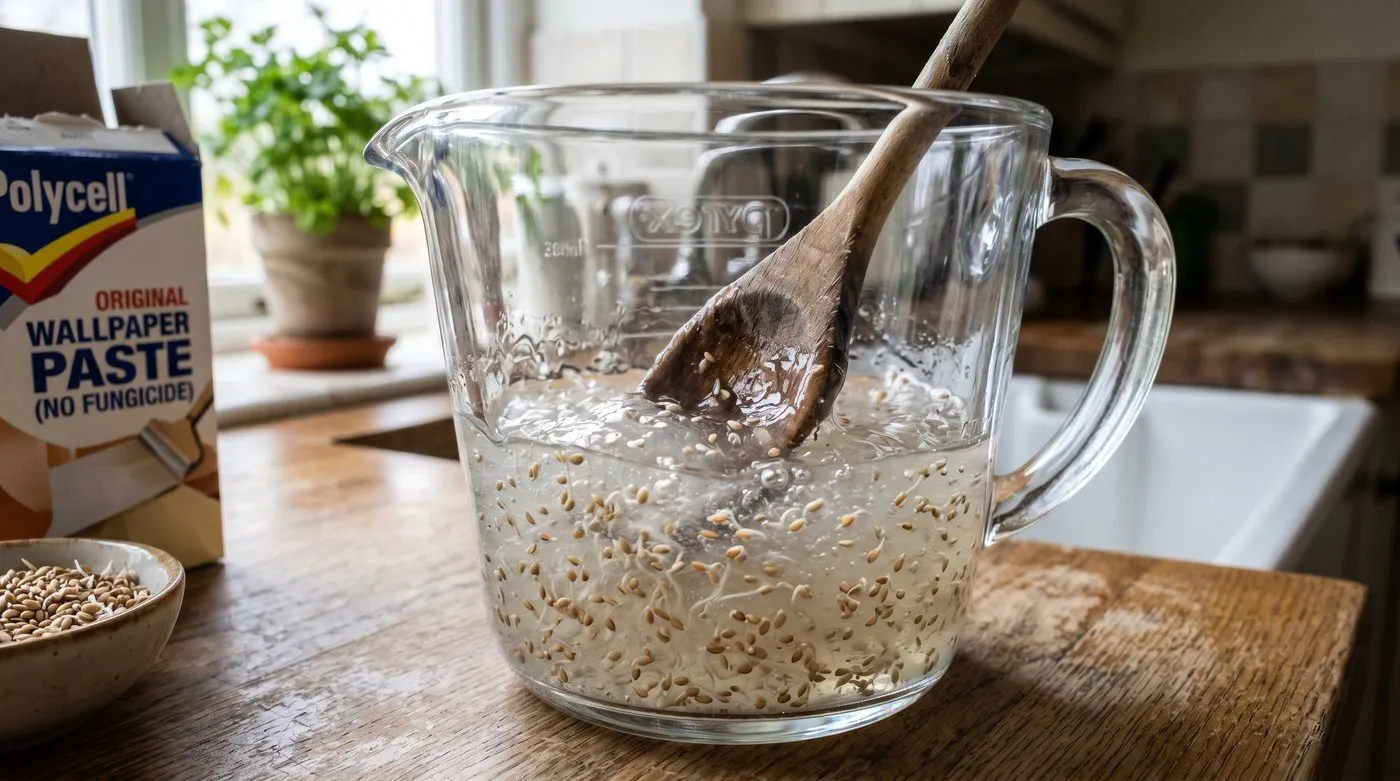 The gel should be thick enough to hold seeds suspended but pourable - the consistency of double cream. Polycell Original wallpaper paste at the standard package mix ratio works perfectly.
Method:
- Mix the wallpaper paste at the package instruction (typically 1 teaspoon to 250ml water). Whisk briskly to remove lumps. Wait 5 minutes for the gel to thicken.
- Check the consistency - it should hold a teaspoon-shaped depression briefly when the spoon is removed, like thick custard.
- Gently fold the drained pre-chitted seeds into the gel with a teaspoon. Do not stir aggressively - the radicles snap easily.
- Pour or scoop the mixture into the sandwich bag. Seal.
- Walk to the prepared bed. Draw a 2cm-deep drill at the correct spacing for the crop with the corner of a hoe or a stick.
- Snip 3-5mm off one bottom corner of the sandwich bag with scissors.
- Squeeze the bag steadily along the drill at the pace of a slow walk. The gel ribbon should land continuously in the bottom of the drill.
- Cover lightly with soil (5-10mm for most crops). Firm with the back of a rake.
- Water in gently with a fine rose. Keep the soil consistently moist for the next 7-10 days.
A standard sandwich bag holds enough gel for a 3-4 metre row of carrots or 2-3 metres of parsnips. Mix more gel as needed.
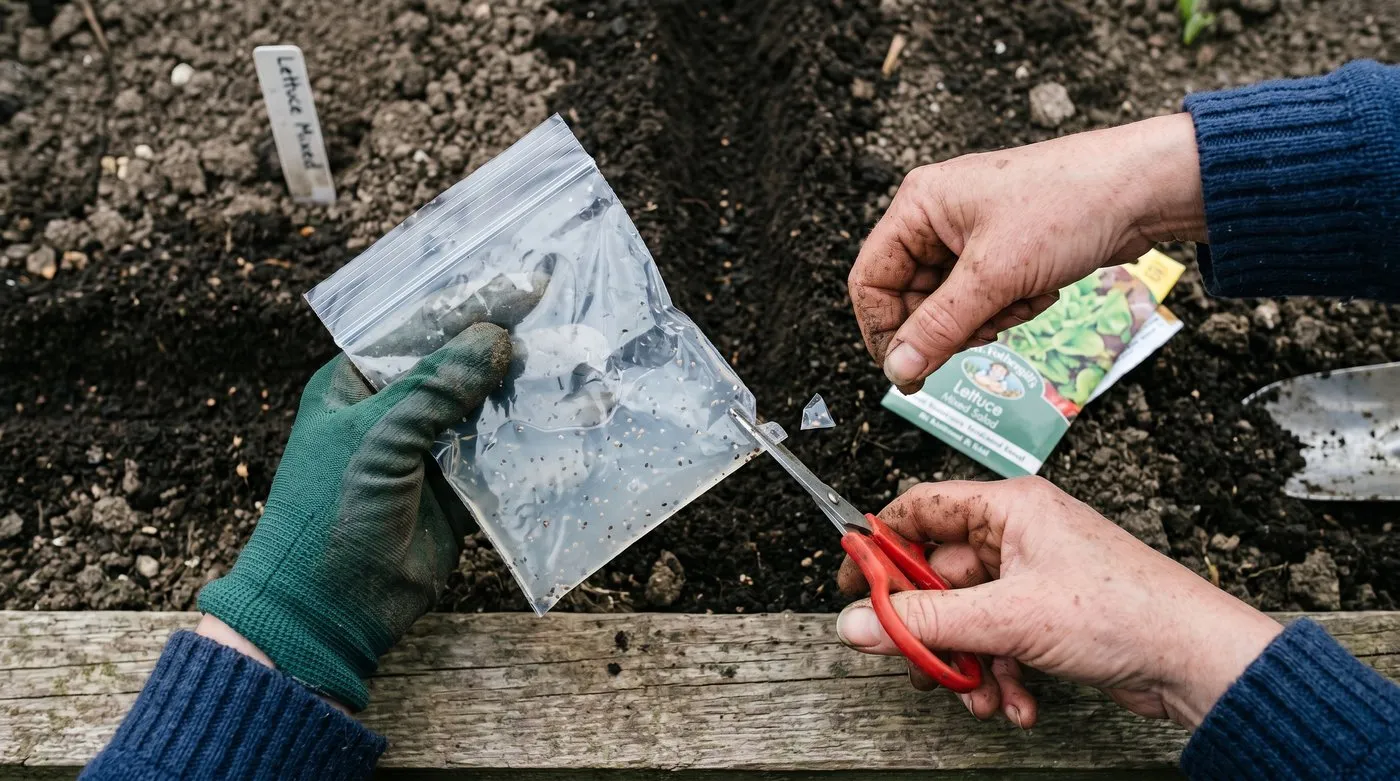 The cut corner controls flow rate. Start at 3mm and increase if the gel is too slow - the aim is a continuous ribbon, not droplets.
Soil temperature: the controlling variable
Pre-chitted seeds carry on growing the moment they hit the soil. If the soil is colder than the chitting environment, the radicles slow down or stop. Three temperature thresholds matter:
| Soil temp | What happens |
|---|---|
| Below 5C | Pre-chitted seed stalls. Many die. |
| 6-8C | Parsnips and onions survive but emerge slowly (12-15 days). |
| 8-12C | Sweet spot for parsnips, carrots and most pre-chitted crops. |
| 12-18C | Lettuce, celery and parsley emerge in 4-6 days. |
| Above 18C | Bolting risk for celery and lettuce. |
A soil thermometer pushed 5cm into the drill is the only reliable check. Air temperature is misleading - bare UK soil in March is often 4-6C colder than the air at midday.
For more on getting soil ready in early spring, see our cold frame gardening guide which covers warming soil with cloches and frames.
Fluid drilling versus conventional sowing - real data
Pre-chitting alone gave 90% of the benefit at 30% of the work for most crops except parsnip, where the full fluid drilling really paid back.
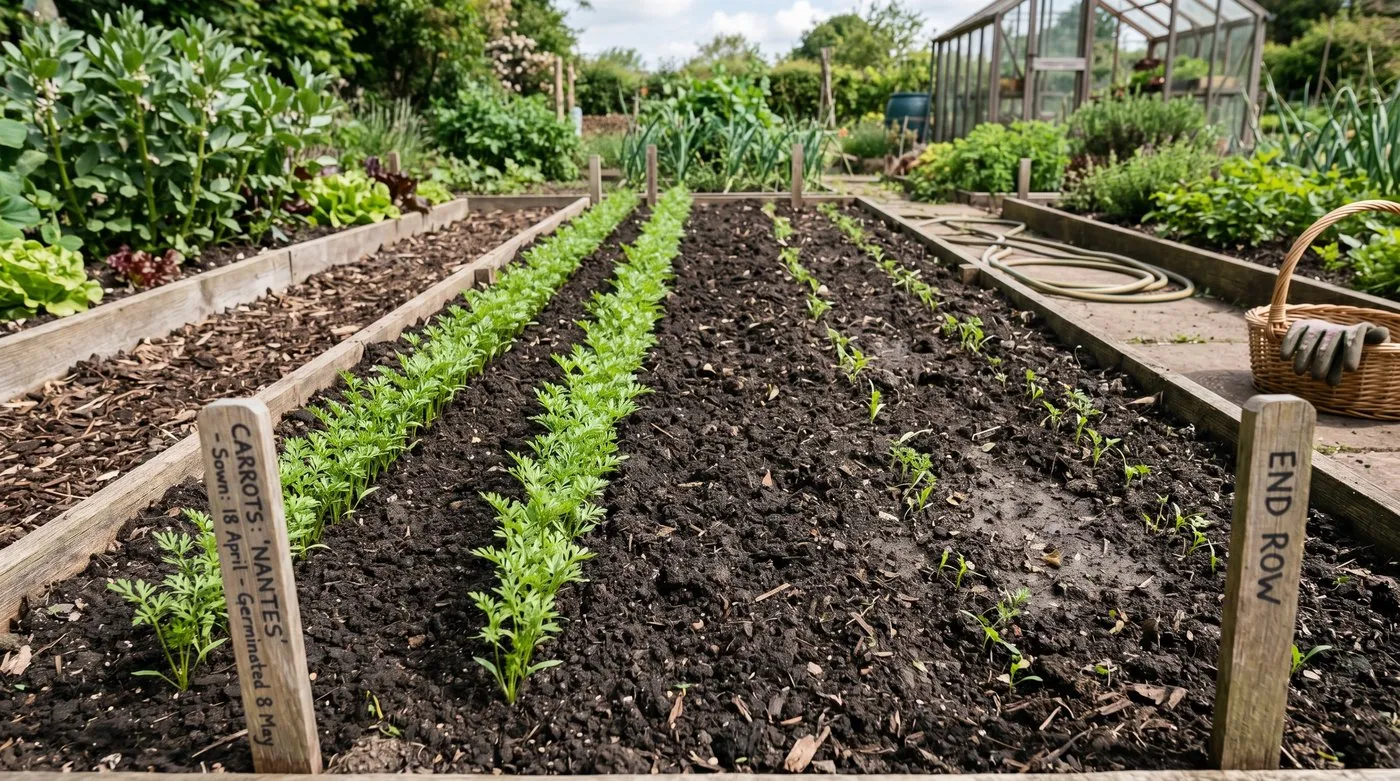 Same variety (‘Nantes 5’), same day sown, same bed. The left row was fluid-drilled with pre-chitted seed; the right was dry-sown from packet. The difference is visible at week three.
Materials cost breakdown
Cost-conscious version of the above:
| Item | Cost | Source |
|---|---|---|
| Polycell Original wallpaper paste (250g) | £3-£4 | DIY chains, mixes 4-5 batches |
| Kitchen paper (1 roll) | £1-£2 | Supermarket, lasts a season |
| Plastic sandwich bags (50) | £1-£2 | Supermarket |
| Plastic food container | Reused free | Existing kitchen |
| Soil thermometer | £6-£12 | Optional but recommended |
| Total season’s worth | £5-£12 | Sows 20-30 rows |
Allotment supply firms and specialist garden retailers sell pre-packaged “fluid drilling kits” at £12-£18 - they contain the same wallpaper paste, repackaged, with a leaflet. Skip them.
Common mistakes
Mistake 1: Using wallpaper paste with fungicide. Modern multi-purpose pastes contain biocides that kill emerging radicles. Read the label. If it mentions “anti-mould”, “biocide” or “for difficult papers”, choose a different brand.
Mistake 2: Letting radicles grow too long before sowing. Past 4mm the radicles tangle, snap, and grow in the wrong direction in the gel. Sow within 24 hours of seeing the first radicles emerge.
Mistake 3: Cold soil at sowing time. Pre-chitted seeds need 6-8C minimum soil temperature outdoors. Sowing into cold March soil wastes the head start.
Mistake 4: Mixing the gel too thin. Watery gel runs out of the bag too fast and the seeds drop into clumps. Thick gel pipes evenly.
Mistake 5: Leaving the mixed gel for hours before sowing. The radicles continue growing inside the gel and start consuming the cellulose. Mix and sow within 30 minutes.
Mistake 6: Storing pre-chitted seeds in the fridge. Cold shocks the seedlings. Once chitted, sow within 24 hours at room temperature.
A traditional alternative - the agar method
Some old gardening books describe using agar instead of wallpaper paste. The agar method is gentler on radicles but more fiddly. Mix 1g of agar powder per 100ml of cool water, dissolve by heating to 90C, then cool to room temperature. The set gel is then loosened by whisking briefly before mixing in the seeds.
Agar is the original 1970s commercial method. For amateur use, wallpaper paste is cheaper, easier, and gives the same emergence results. The agar method survives in pre-school nature classes and university horticulture courses as an instructional curiosity.
Month-by-month UK fluid sowing calendar
| Month | Crops to fluid sow | Notes |
|---|---|---|
| February | Indoors only - parsnip, celery, parsley | Cell trays, not direct |
| March | Parsnip outdoors (south UK), carrot under fleece | Soil 6C+ |
| April | Parsnip, carrot, parsley | Main UK window |
| May | Carrot, lettuce, celery, onion seed | Successional |
| June | Lettuce, late carrot, winter parsnip | Mulch heavily |
| July | Salad onions, winter lettuce | Short days favour pre-chit |
| August | Spring cabbage seed | Test the soil temperature |
| September-October | Cool-greenhouse pre-chit only | Outdoors too cold |
| November-January | Off-season - rest | Plan next year |
When fluid drilling is not worth it
The technique has real limits. Skip fluid drilling for:
- Large seeds (broad bean, runner bean, pea, squash, pumpkin). These germinate reliably from dry sowing and the gel adds no value.
- Brassicas (cabbage, broccoli, cauliflower). Easy from dry seed; the radicles are too thick for fine bag piping.
- Beetroot. Cluster seed structure makes precise placement difficult and the natural germination is reliable.
- Direct-sown radish, rocket, mizuna, leaf turnip. Already fast and reliable from dry sowing.
- Wet seasons. Heavy rain washes the gel out of the drill before the seeds emerge.
The rule of thumb: if a crop typically germinates above 80% from dry seed in under 14 days, fluid drilling is not worth the workflow change.
For broader sowing strategy across crops that suit conventional methods, see our sowing seeds indoors guide and the seedling hardening-off guide.
Field note: Garden Organic’s research over multiple seasons has documented similar fluid-drilling benefits for slow-germinating crops. The Garden Organic site carries technical notes on the method for organic growers.
Storage and seed viability
Pre-chitting only works on viable seed. Dead or marginal seed produces no radicle, no matter how long it sits on damp paper. Parsnip and parsley are the two crops where viability collapses fastest:
- Parsnip: 70% viable at 12 months, 30% at 24 months, 5-10% at 36 months.
- Parsley: 75% at 12 months, 50% at 24 months, 20% at 36 months.
- Carrot: 80% at 12 months, 65% at 24 months, 45% at 36 months.
- Onion: 75% at 12 months, 55% at 24 months, 30% at 36 months.
- Lettuce: 85% at 12 months, 70% at 24 months, 50% at 36 months.
Always buy fresh seed for parsnip and parsley. Store packets in a sealed jar in the fridge at 4C - this slows the viability decline by roughly 30%.
For more on managing seed quality, see our easiest flowers to grow from seed UK guide which covers similar viability principles for ornamentals.
Gardener’s tip: Pre-chit a small test batch of any seed older than 12 months before committing to a full fluid drilling run. Lay 20 seeds on paper. If fewer than 12 show a radicle by day 7-10, buy fresh seed.
Now you’ve mastered fluid sowing
For the next techniques in the precision-sowing toolkit, read our grow lights and indoor seed starting UK guide - the indoor-equivalent of fluid drilling for crops that need head-start warmth before they can go outside.
Our team produces practical UK gardening guidance from source research, contributor records and established horticultural practice. Editorial standards are overseen by Matt W.