Key takeaways
- Soil temperature drives germination - air temperature is misleading
- Most vegetables germinate fastest at 18-21C soil temperature
- Heat-lovers (tomato, pepper, aubergine) need 21-27C - use a propagator
- Cool-season crops (lettuce, peas, brassicas) stall above 25C
- A 5C drop below optimum doubles germination time for most seeds
- A £4 soil thermometer is the most useful kit in any UK propagation setup
Soil temperature is the single biggest factor in UK seed germination success. Air temperature is a misleading proxy - compost in a propagator can sit 5-7C below daytime air temperature, especially overnight. A £4 soil thermometer reveals what your seeds are actually experiencing.
This guide gives the optimum, minimum and maximum germination temperatures for 40+ common UK garden crops, plus a practical UK sowing calendar by month and method.
For the kit and conditions that get your propagator into the right range, see our how to sow seeds indoors guide. For after-sowing techniques on tricky crops, our fluid sowing and pre-germination UK guide covers chitting and fluid drilling.
How temperature drives germination
Seeds germinate when three conditions are met: moisture, oxygen, and the right temperature range. Temperature controls the enzymatic activity inside the seed that mobilises stored starch and protein to fuel the emerging shoot.
Below the minimum, enzymes stop working and the seed stays dormant. Within the optimum range, germination is fast and uniform. Above the maximum, the seed is damaged or stalls.
A practical example - tomato seed:
| Soil temperature | Germination rate | Time to emergence |
|---|---|---|
| 10C | 0% (no germination) | - |
| 13C | 15% (mostly rots) | 21+ days |
| 16C | 50% | 14 days |
| 18C | 80% | 10 days |
| 21C | 95% (optimum) | 7 days |
| 24C | 95% (optimum) | 6 days |
| 27C | 90% | 6 days |
| 30C | 70% | 7 days |
| 33C | 30% (damage starts) | irregular |
A 5C drop from optimum roughly doubles germination time. A 5C drop below minimum stops germination completely.
The reference table
Soil temperatures for the most-grown UK garden crops. Optimum is the fastest, highest-percentage germination band. Minimum is the lowest temperature at which germination still happens (slowly, partially).
Heat-loving vegetables (use heated propagator)
| Crop | Minimum | Optimum | Maximum |
|---|---|---|---|
| Tomato | 16C | 21-27C | 30C |
| Pepper (sweet) | 18C | 24-30C | 33C |
| Pepper (chilli) | 18C | 24-30C | 35C |
| Aubergine | 21C | 24-30C | 32C |
| Cucumber | 16C | 21-29C | 35C |
| Courgette | 16C | 21-29C | 35C |
| Pumpkin/squash | 16C | 21-29C | 35C |
| Sweetcorn | 16C | 21-26C | 35C |
| Melon | 18C | 24-29C | 35C |
| Basil | 18C | 21-26C | 30C |
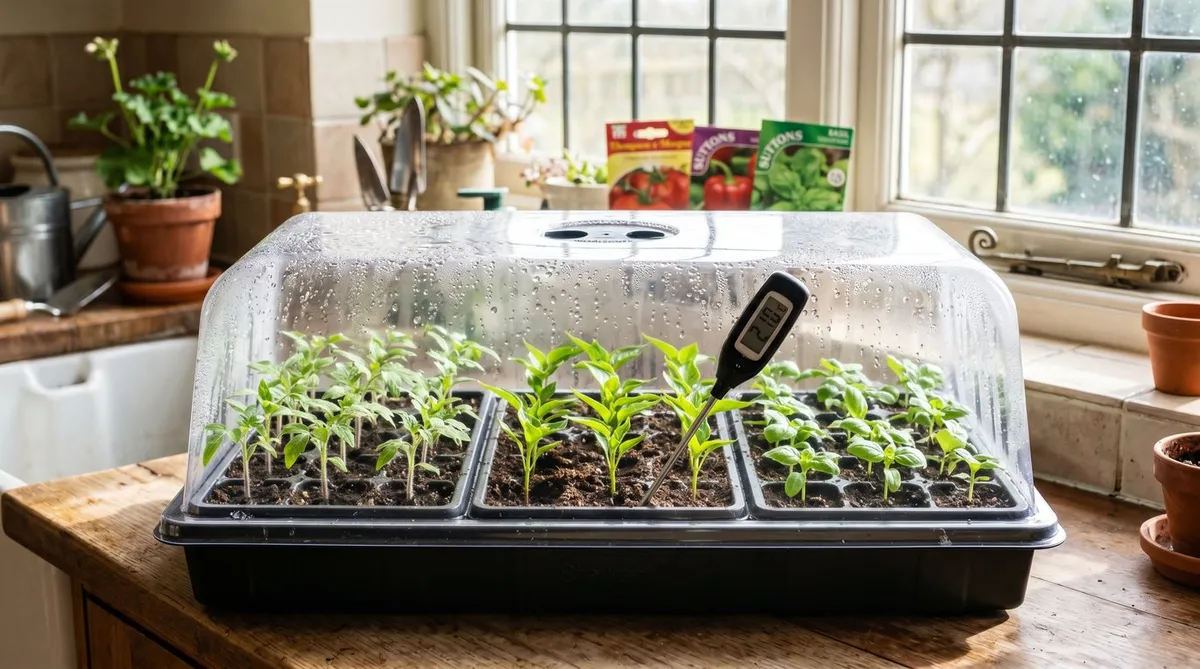
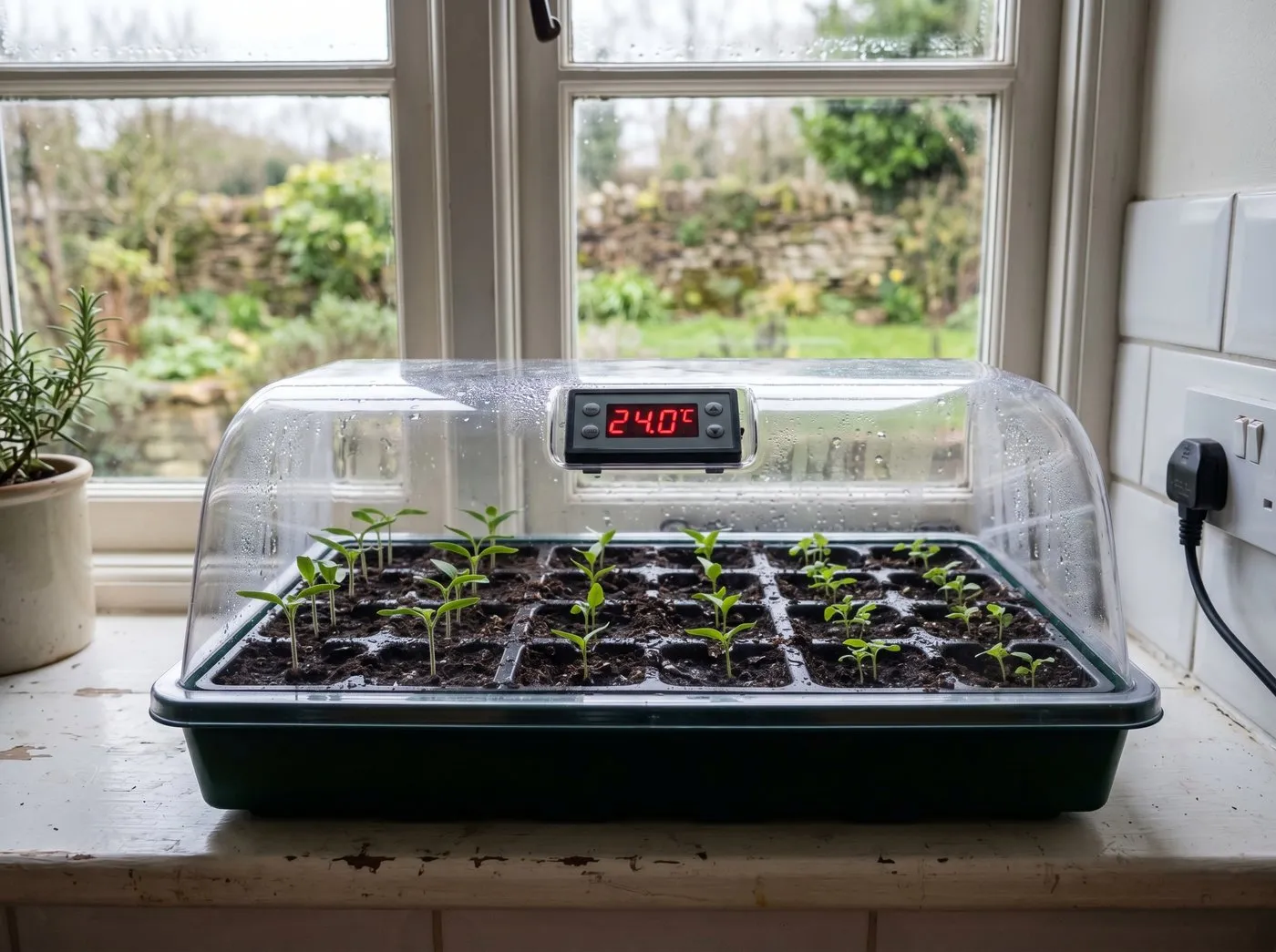 Heated propagator at 24C - the sweet spot for tomato, pepper and basil. Without bottom heat, UK March sowings of these crops germinate poorly or not at all.
Warm-season vegetables (greenhouse or warm windowsill)
| Crop | Minimum | Optimum | Maximum |
|---|---|---|---|
| French bean | 13C | 18-24C | 30C |
| Runner bean | 13C | 18-21C | 30C |
| Beetroot | 10C | 16-24C | 30C |
| Carrot | 7C | 16-24C | 29C |
| Parsnip | 5C | 13-21C | 27C |
| Onion (seed) | 7C | 15-21C | 30C |
| Leek | 7C | 15-21C | 30C |
| Sweet potato | 18C | 21-29C | 35C |
Cool-season vegetables (cold frame or cool greenhouse)
| Crop | Minimum | Optimum | Maximum |
|---|---|---|---|
| Lettuce | 4C | 13-18C | 25C |
| Spinach | 4C | 7-18C | 25C |
| Pea | 4C | 13-21C | 24C |
| Broad bean | 4C | 13-18C | 24C |
| Cabbage | 5C | 13-21C | 30C |
| Broccoli | 5C | 13-21C | 30C |
| Cauliflower | 5C | 13-21C | 27C |
| Brussels sprout | 5C | 13-21C | 30C |
| Kale | 5C | 13-21C | 30C |
| Pak choi | 4C | 13-21C | 27C |
| Rocket | 4C | 13-21C | 25C |
| Radish | 4C | 10-21C | 24C |
Hardy salads (will germinate at near-freezing)
| Crop | Minimum | Optimum | Maximum |
|---|---|---|---|
| Mizuna | 2C | 10-18C | 25C |
| Lamb’s lettuce | 2C | 7-18C | 25C |
| Winter purslane | 2C | 7-18C | 25C |
| Land cress | 2C | 10-18C | 25C |
Common UK flowers
| Crop | Minimum | Optimum | Maximum |
|---|---|---|---|
| Sweet pea | 7C | 13-21C | 24C |
| Cosmos | 16C | 18-24C | 30C |
| Marigold (French) | 16C | 18-24C | 30C |
| Nasturtium | 13C | 18-24C | 30C |
| Sunflower | 13C | 18-29C | 33C |
| Calendula | 10C | 16-21C | 27C |
| Snapdragon | 10C | 18-21C | 24C |
| Foxglove | 13C | 18-21C | 24C |
Common UK herbs
| Crop | Minimum | Optimum | Maximum |
|---|---|---|---|
| Basil | 18C | 21-26C | 30C |
| Parsley | 7C | 18-24C | 30C |
| Coriander | 7C | 13-21C | 27C |
| Dill | 7C | 13-21C | 27C |
| Chives | 7C | 13-21C | 27C |
| Thyme | 13C | 18-21C | 24C |
| Sage | 13C | 18-21C | 27C |
| Oregano | 13C | 18-21C | 27C |
How to actually measure soil temperature
A soil thermometer (£4-£12) is the cheapest useful piece of propagation kit. Two types:
Probe thermometer: narrow metal probe 15-20cm long. Push 5cm into the compost, wait 2-3 minutes, read.
Digital probe: same form factor but reads faster (10-15 seconds). Useful for measuring multiple trays.
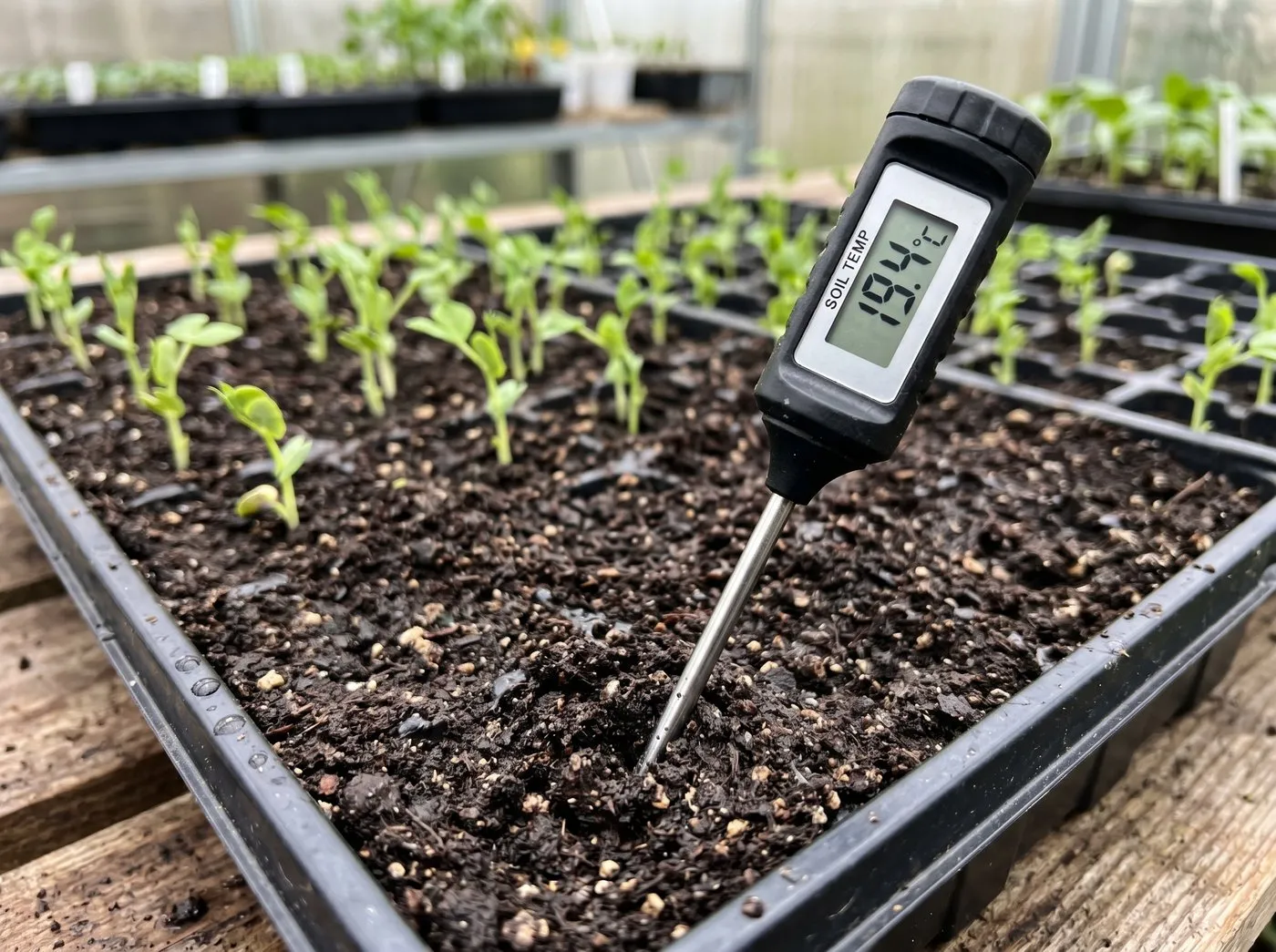 A digital soil thermometer 5cm into damp compost - the only reliable way to know what your seeds are experiencing. About £8 at most UK garden centres.
When to take the reading
Take readings at 9am for an overnight low, or at 3pm for the daily peak. The 9am reading matters most - cold overnight compost is the most common cause of failed germination.
Where to take the reading
- Centre of the compost, 5cm deep (typical seed depth for medium seeds).
- For shallow-sown seeds (lettuce, basil), measure 1cm deep.
- For deeper-sown seeds (peas, beans), measure 3-5cm deep.
A propagator set at 21C on the thermostat is usually 18-19C in the compost - the heat element warms the base, the seed sits 2-3cm up. Always check the actual compost.
The propagator setting cheat sheet
If your propagator has a thermostat dial without a digital display, set it for the target compost temperature plus 3-4C to account for compost-to-element gradient:
| Want compost at | Set thermostat to |
|---|---|
| 18C | 21-22C |
| 21C | 24-25C |
| 24C | 27-28C |
The exact offset depends on the propagator design - a 38W Garland on an unheated greenhouse bench needs +6C offset on a frosty night. A Vitopod on a heated bench needs only +2C.
UK sowing calendar by temperature
When can you sow each crop in different UK settings? This depends on getting soil temperature into the right range.
Heated propagator (21-27C)
- February-March: tomato, pepper, chilli, aubergine, basil
- April: cucumber, courgette, pumpkin, sweetcorn, melon
Unheated greenhouse or warm windowsill (15-21C)
- March-April: cabbage, broccoli, cauliflower, leeks, onions
- April-May: French beans, runner beans, sweet peas, parsley
Cold frame (8-15C)
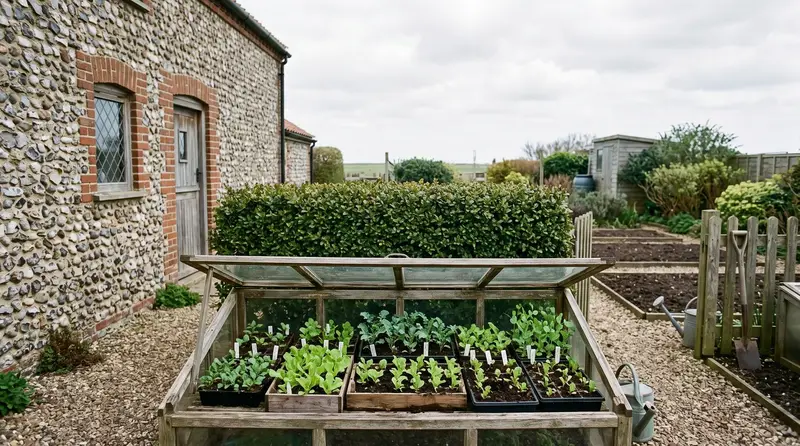
- Late February-March: peas, broad beans, hardy lettuce
- March-April: cabbage, broccoli, kale, rocket, radish
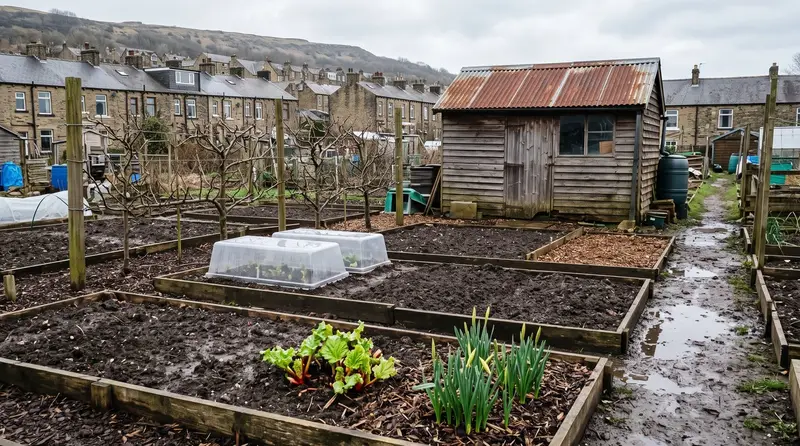
Outdoor seed bed (8C+ soil)
- Mid-April onwards: parsnip, carrot, beetroot, radish
- Late April onwards: peas, broad beans, lettuce
- Mid-May onwards: French beans, runner beans, sweetcorn
The key check: stick the soil thermometer in the bed before sowing direct. A sheltered south-facing bed reaches 8C 2-3 weeks before an exposed north-facing one. Your soil tells you when, not the calendar.
Common temperature failures
Failure 1: Sowing too early on a windowsill. The compost in February-March windowsills often sits 4-6C below room temperature because cold air pools at the glass. Move the tray 30cm away from the window or use a propagator.
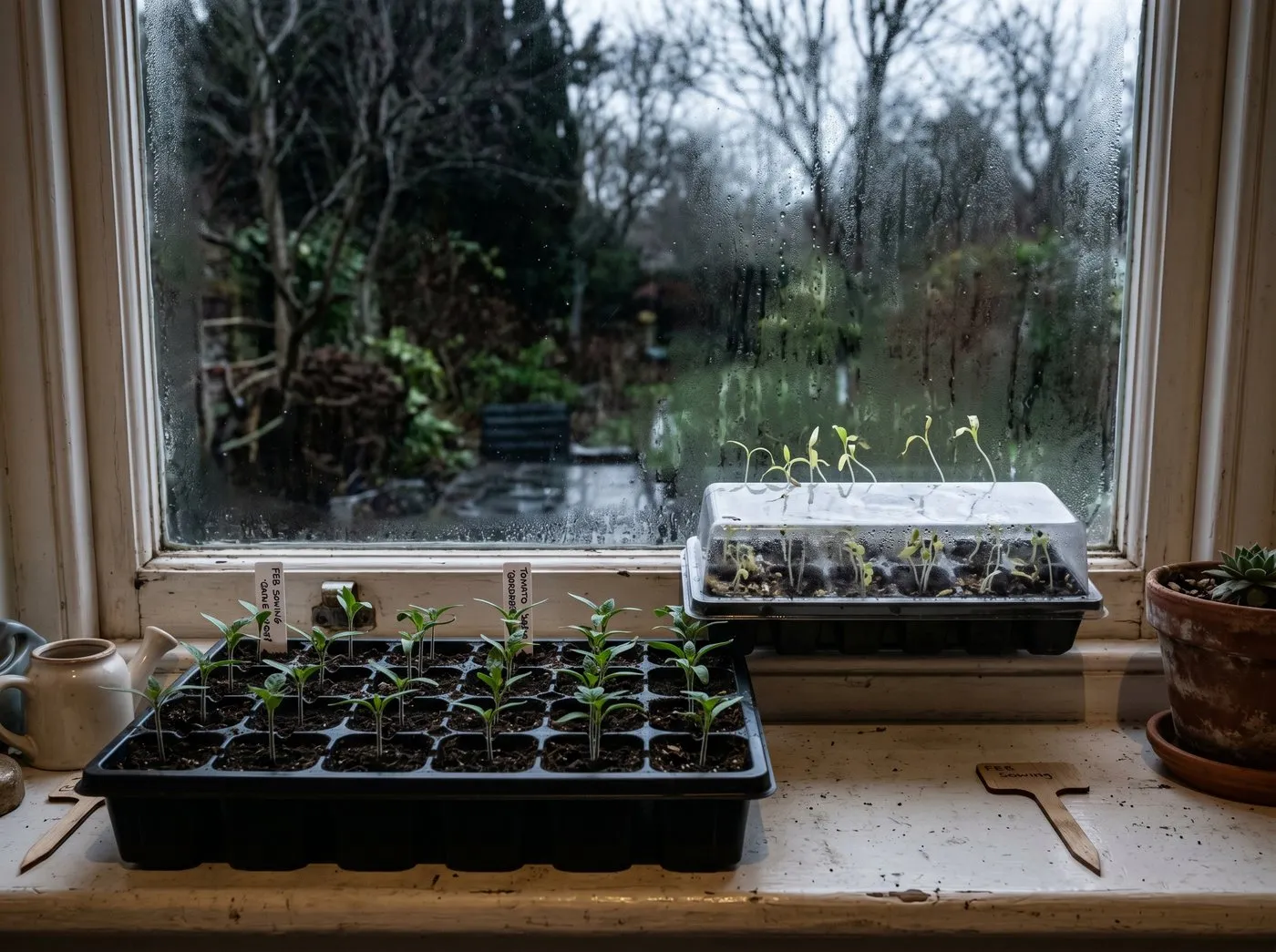 The windowsill cold-trap - February seed trays at the front edge sit 5-6C below room temperature where compost touches cold glass. Move trays 30cm back from the pane.
Failure 2: Greenhouse benches at night. A clear-night greenhouse can drop to outside air temperature within 2 hours of sunset. Compost temperature follows. Use a fleece overnight or a heated bench.
Failure 3: Direct sowing into cold soil. April soil is often still 6-8C in shaded UK gardens. Pea and broad bean seeds rot rather than germinate. Wait for soil to hit 8C minimum (check with thermometer) or use modules indoors.
Failure 4: Overheated propagator for cool-season crops. A propagator at 24C will fail to germinate lettuce reliably - the seeds go into thermo-dormancy above 25C. Use a separate unheated tray for cool-season crops or set the propagator to 16C.
Failure 5: Heat-lovers without bottom heat. Aubergine and pepper seed will sit in 18C compost for 4 weeks without germinating, then mostly rot. Bottom heat at 24C reduces this to 10-14 days with 80%+ success.
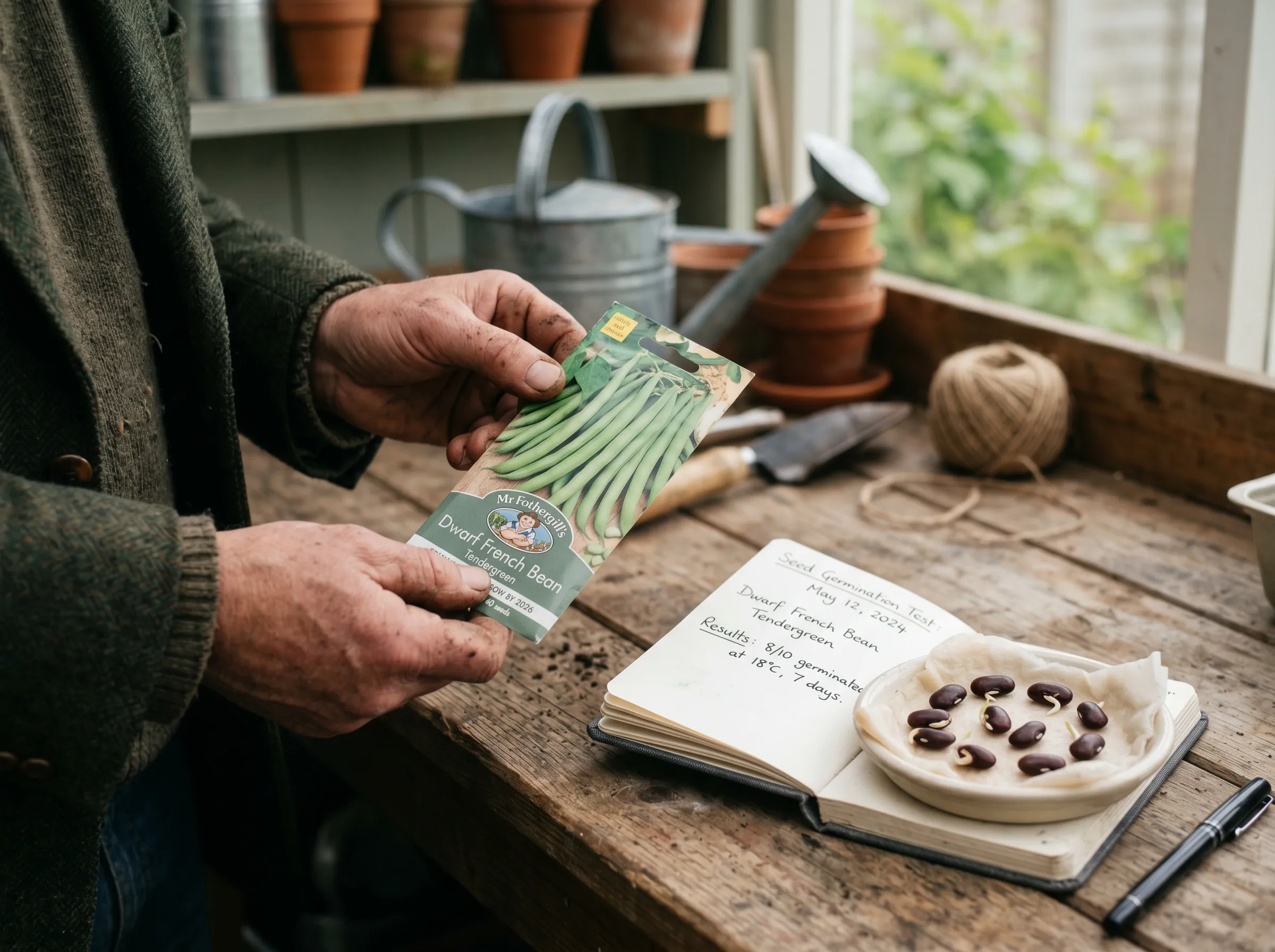 Home viability test - 10 seeds on damp paper at 18C for 7 days. Fresh seed gives 8-10 out of 10; year-three seed often drops to 4-6.
A 5-second daily check
The single highest-value habit during the UK sowing season: stick the soil thermometer into every active propagator first thing each morning. Adjust thermostats based on actual compost reading, not air temperature. Move trays in or out of the propagator as needed.
This 5-second routine adds about 30 days of useful sowing time over a UK spring compared to working from air temperature or guesswork.
Field note: The RHS seed sowing guide covers timing and technique in detail. The Vitavia and Garland propagator datasheets list compost-to-element offsets for their specific models if you need exact figures.
Seed viability and temperature
Old seed and cold compost is the worst combination. Fresh seed in optimum compost gives 90-95% germination. Three-year-old seed in cold compost gives 20-30%. Always:
- Check seed date on the packet (most viable for 1-3 years).
- Sow at optimum temperature for fastest, highest-percentage germination.
- Discard old seed rather than waste compost and time on it.
Now you’ve got the temperature right
For matching seed quality and after-care to your propagator setup, our fluid sowing and pre-germination UK and multi-sowing vegetables UK guide cover the techniques that turn good germination into strong seedlings.
Our team produces practical UK gardening guidance from source research, contributor records and established horticultural practice. Editorial standards are overseen by Matt W.