Key takeaways
- Soft herbs (basil, coriander, parsley) freeze far better than they dry
- Ice cube method preserves chopped herbs in 15ml portions for cooking
- Oil cube method protects flavour compounds in basil and oregano
- Dry pack method works for whole leaves of chives, mint and dill
- Label each batch and use frozen herbs within 6-9 months
- Hard herbs (rosemary, sage, thyme) still dry well but freeze even better
Freezing fresh herbs preserves a glut of soft summer herbs for use through autumn and winter. It often suits basil, coriander and parsley better than drying because their fresh aromas fade quickly. The texture changes immediately on freezing, so use frozen herbs in cooked dishes rather than as garnish.
This guide covers three reliable freezing methods, which herbs suit each method, and how to store portions safely.
For other ways to make the most of a summer harvest, see our freezing vegetables UK and how to dry and store herbs guides.
Why freeze rather than dry
Drying works well for hard herbs with low water content and stable aromatic oils (rosemary, sage, thyme, bay, oregano). It works badly for soft herbs with high water content and volatile aromatic oils (basil, parsley, coriander, chives, dill, tarragon, mint).
The science: dried basil loses about 65% of its volatile aromatic compounds within 4 weeks of drying at 35C. The same compounds, locked in a frozen oil or water matrix at -18C, lose only about 10-15% over 6 months. The freezer keeps the molecules in place.
Texture is the trade-off. Frozen herbs are limp once thawed and unsuitable for garnish or salads. They must be used in cooked dishes - soups, stews, sauces, pesto, dressings, marinades. If you want fresh leaves all year, take cuttings indoors instead. Basil stems root in a glass of water within a fortnight on a bright windowsill.
Method 1: Ice cube method
Best for: chopped soft herbs you’ll add to cooked dishes by the spoonful (parsley, coriander, dill, tarragon, chervil, mint).
How to do it
- Wash herbs under cold water and pat dry thoroughly.
- Chop finely - leaves and tender stems together.
- Pack chopped herbs into ice cube trays, filling each section about three-quarters full.
- Top up with cold water, leaving a small headspace for expansion.
- Freeze overnight, then pop cubes out and store in labelled freezer bags.
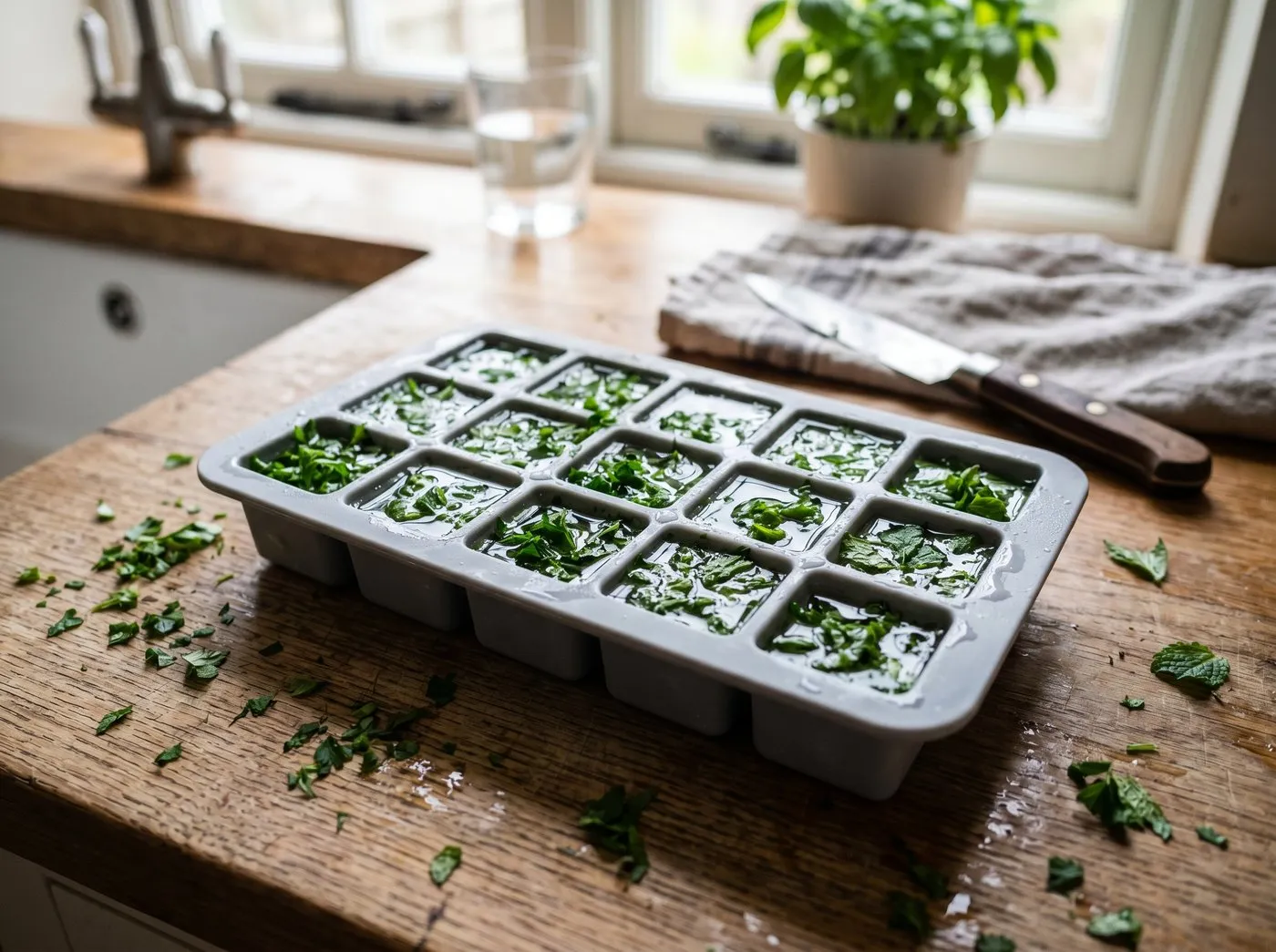 Ice cube method - 1 tablespoon chopped herb plus water per cube, perfect for adding to soups and stews by the spoonful.
Portion size
A standard ice cube section holds about 30ml. Pack with 15ml (1 tablespoon) chopped herb plus 15ml water. One cube replaces 1 tablespoon fresh in any recipe.
Best uses
Drop a cube straight into the pot for soups, stews, risottos, stocks and sauces. The water content is small enough not to dilute the dish. Some cooks freeze in stock instead of water for extra flavour - use chicken or vegetable stock at the same volume.
Method 2: Oil cube method
Best for: herbs with oil-soluble flavour compounds (basil, oregano, rosemary, sage, thyme).
How to do it
- Wash herbs and pat dry thoroughly. Damp herbs cause oil to spit when cooking.
- Chop finely - for hard herbs strip leaves from stems first.
- Pack into ice cube trays, filling about three-quarters full.
- Top up with olive oil (light not extra-virgin for better freezer stability).
- Freeze overnight, then pop cubes out and store in labelled freezer bags.
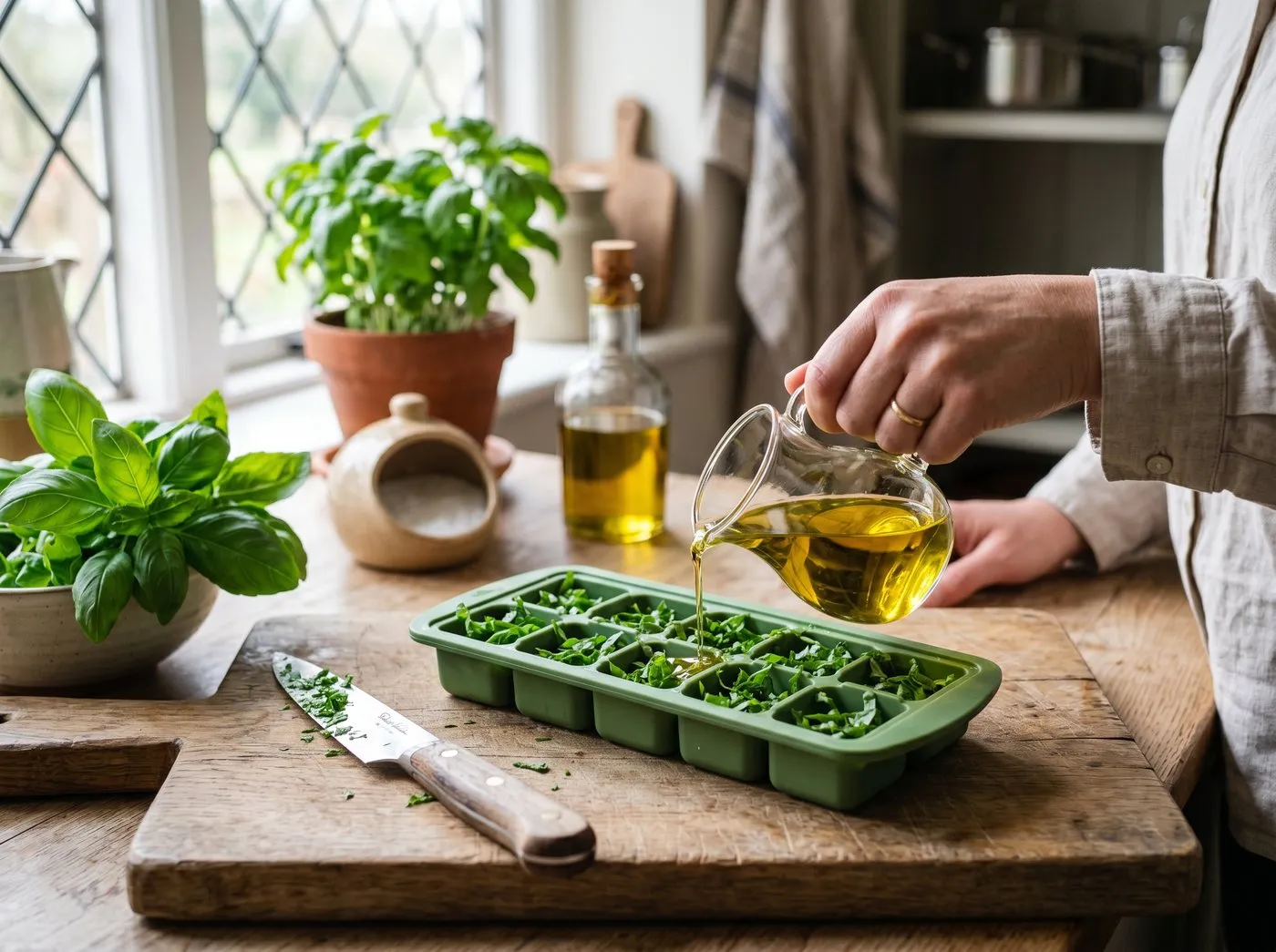 Olive oil cube method for basil - the oil dissolves and protects basil’s volatile flavour compounds for up to 9 months.
Why oil works for basil
Basil’s signature flavour comes from eugenol and linalool - both highly volatile aromatic compounds that escape rapidly in dry heat and water. Both are oil-soluble. The olive oil dissolves them at chopping, then the frozen oil matrix locks them in. Result: thawed basil oil cubes added to pasta in February still taste of pesto, where the same basil dried in August would have lost most of its aroma by October.
Best uses
Drop a cube straight into a hot pan to start sauteing. The oil melts and releases the herb. Excellent for pasta sauces, risottos, stir-fries and homemade pesto base. Not suitable for raw dressings - thawed oil cubes appear cloudy.
Method 3: Dry pack method
Best for: herbs that hold their shape and texture when frozen whole (chives, mint, dill fronds, parsley sprigs).
How to do it
- Wash herbs and pat dry thoroughly.
- For chives: snip into 5mm pieces. For mint and parsley: pick whole leaves. For dill: separate fronds.
- Spread in a single layer on a baking tray lined with parchment.
- Flash-freeze for 2 hours until solid.
- Tip into labelled freezer bags or boxes. Press out air. Return to freezer.
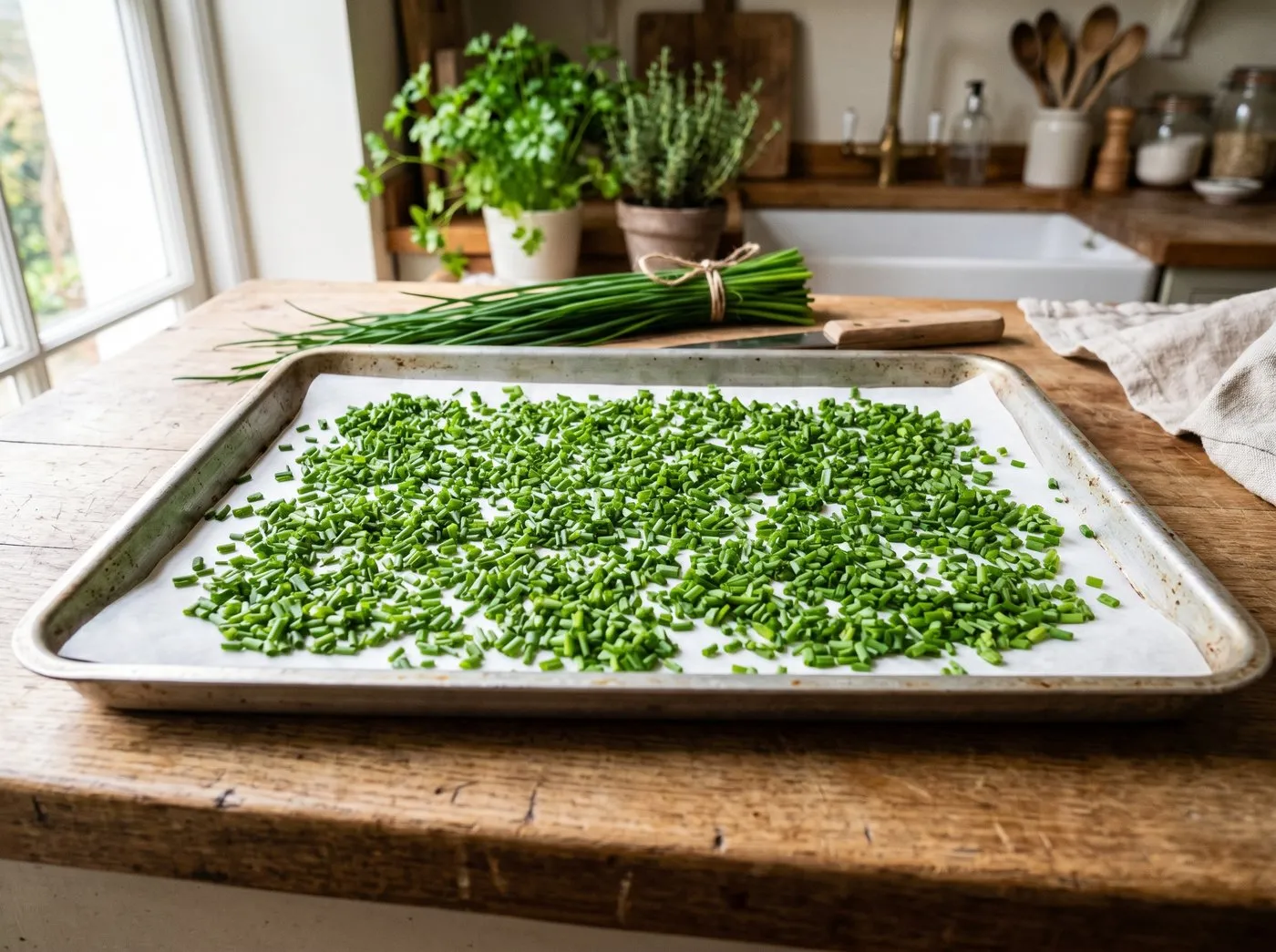 Dry pack method for chives - flash-frozen on a tray, then bagged. Snap off the bag in any quantity, no defrosting needed.
Why flash-freezing first matters
If you pile fresh herbs straight into a bag and freeze, they clump into a solid frozen brick - you’d need to thaw the whole bag to use any. Spreading on a tray means each piece freezes individually, then they stay separate in the bag. Snap off the exact amount you need.
Best uses
Excellent for chives sprinkled on jacket potatoes, mint on roast lamb at the end of cooking, dill in fishcakes. They need to go into the dish at the very end - texture won’t tolerate prolonged heating. Fresh curry leaves also dry-pack well; our curry leaf plant guide covers growing your own supply.
Which method for which herb
| Herb | Best method | Second choice | Avoid drying? |
|---|---|---|---|
| Basil | Oil cube | Ice cube | Yes - dries badly |
| Coriander | Ice cube | Dry pack | Yes - dries badly |
| Parsley | Ice cube | Dry pack | Yes - dries badly |
| Chives | Dry pack | Ice cube | Yes - dries badly |
| Mint | Dry pack | Ice cube | Acceptable dried |
| Dill | Dry pack | Ice cube | Yes - dries badly |
| Tarragon | Ice cube | Oil cube | Yes - dries badly |
| Rosemary | Oil cube | Dry pack | No - dries well |
| Sage | Oil cube | Dry pack | No - dries well |
| Thyme | Oil cube | Dry pack | No - dries well |
| Oregano | Oil cube | Ice cube | No - dries well |
| Bay | Dry whole | Oil cube | No - dries well |
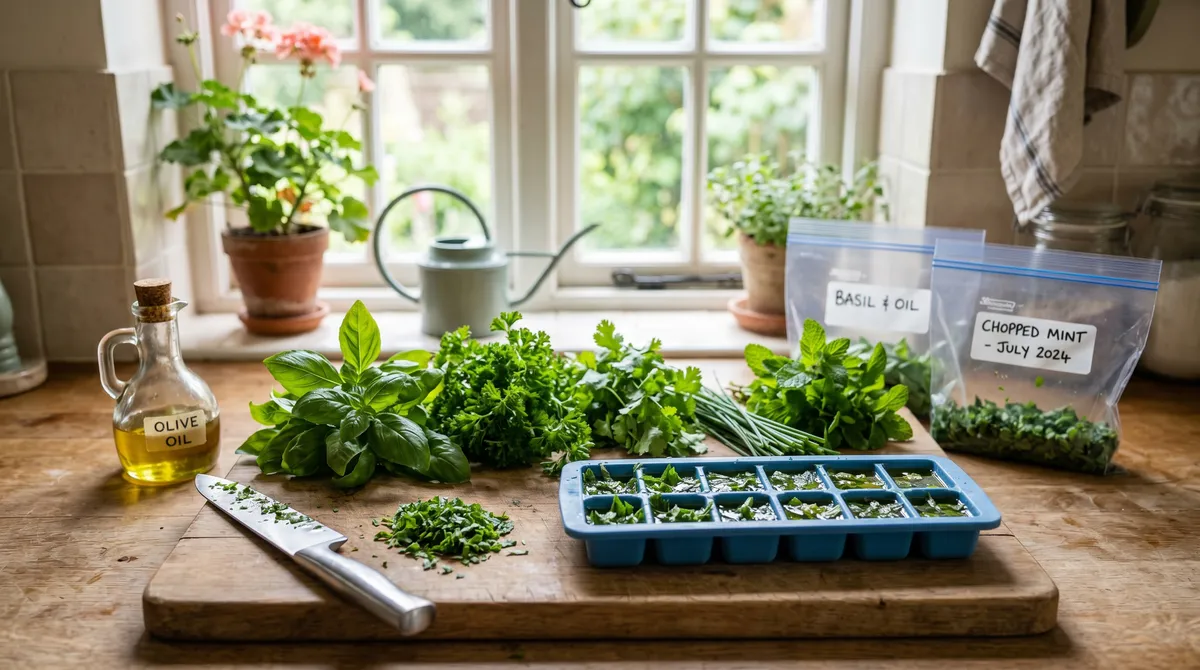
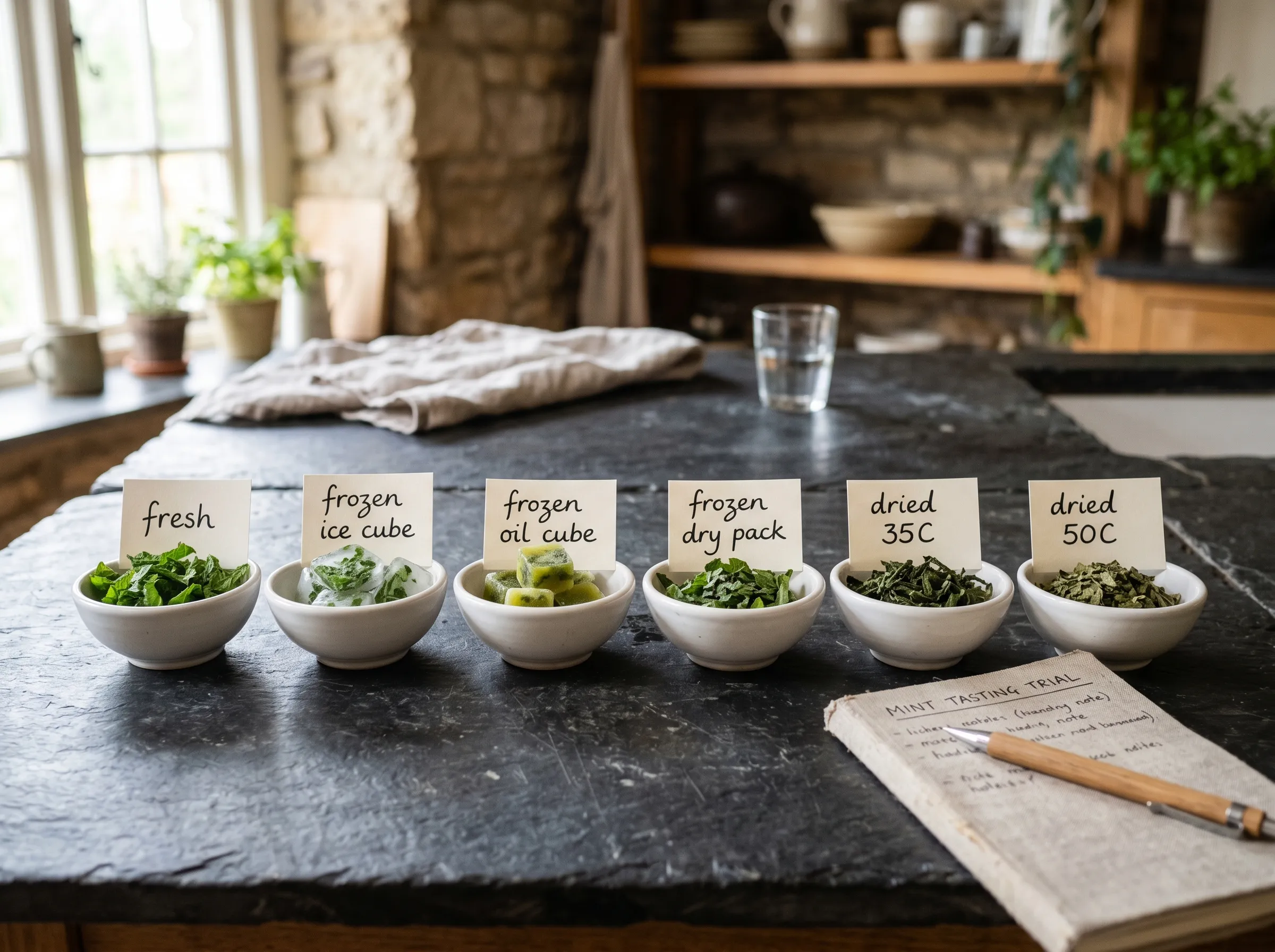 Fresh, frozen and dried preparations illustrate the storage options available for soft herbs.
The pattern is consistent: soft herbs (basil, parsley, coriander, dill, chives) freeze far better than they dry. Hard herbs (rosemary, sage, thyme) freeze a bit better than they dry but the difference is smaller.
Storage and labelling
Always label with herb name and freezing date. Use freezer bags or rigid boxes - not the original ice cube trays (the cubes pick up off-flavours from other freezer contents over time).
Pack in 100ml or 250ml portions for easy use. A reasonable allotment haul of summer herbs typically fills 3-4 medium ice cube trays per herb, equivalent to about 0.4 litres of bagged cubes per type.
Freezer organisation
Group all herb cubes in one labelled shoebox-sized container so you can find them quickly. A chest freezer keeps things at -18C steadier than an upright but is harder to organise.
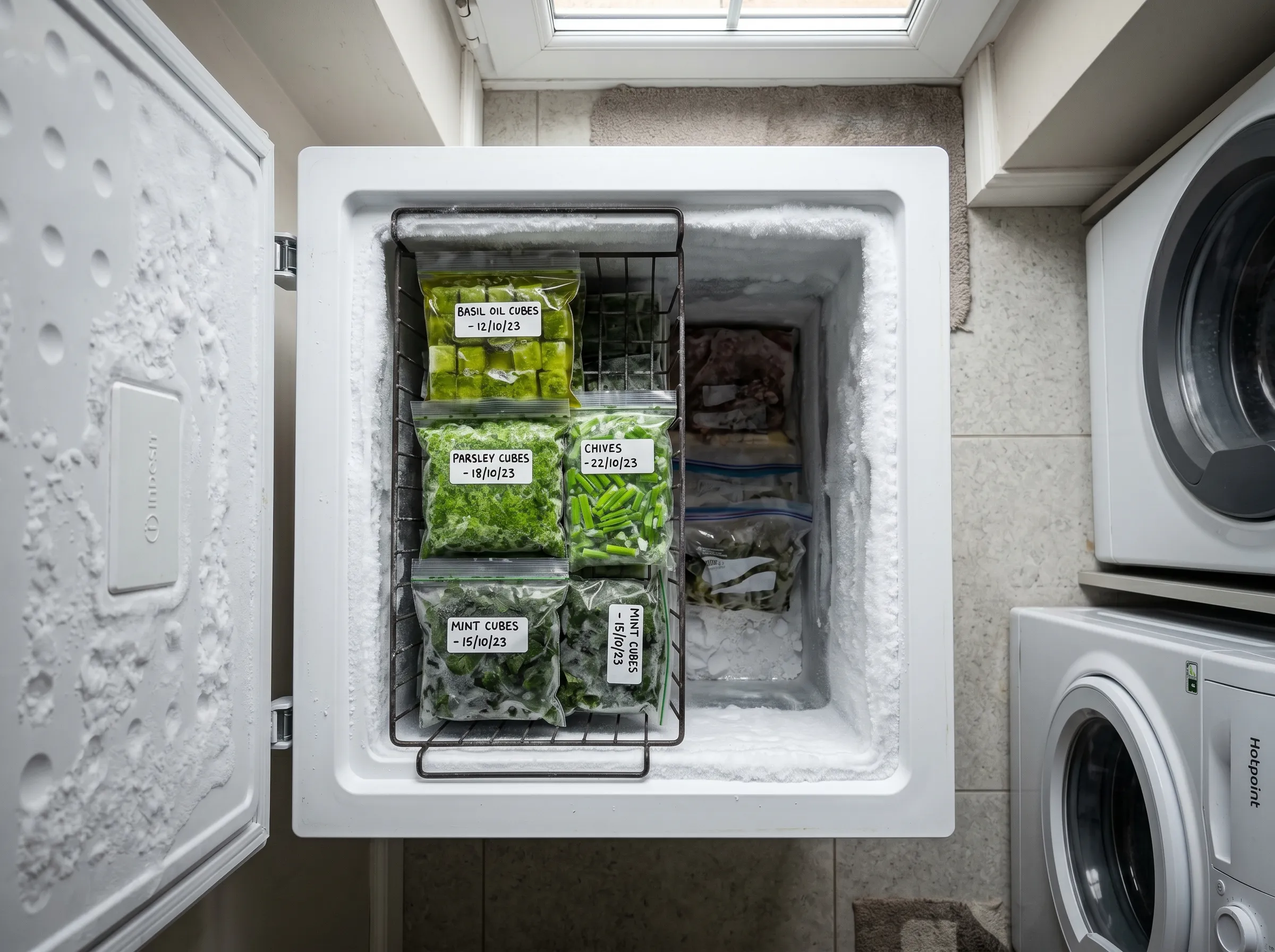 Labelled storage in a chest freezer - keep all herb cubes in one shoebox-sized container so they don’t get lost behind larger items.
Common mistakes
Freezing wet herbs. Water trapped in the leaves makes ice crystals that rupture cell walls. Pat very dry first.
Skipping the chopping step. Whole-leaf herbs in cubes break the ice when you try to scoop them out. Chop finely first.
Using the wrong oil. Extra-virgin olive oil goes cloudy at freezer temperatures and develops off-flavours over months. Use light olive oil or sunflower oil for cubes destined for long storage.
Overfilling the tray. Cubes that touch the edges freeze in a single block. Leave 5mm gap between herbs and the tray rim, top up with water or oil last.
Forgetting to label. Frozen basil and parsley look identical once cubed. Always label with permanent marker.
A free way to extend the summer harvest
Field note: The RHS herb growing guide covers cultivation through to harvest timing. Best harvest window for freezing is just before flowering, when essential oil content peaks in most species.
For more on growing the herbs in the first place, our how to grow herbs UK and how to create a herb garden guides cover the layout and varieties that hold up to UK weather.
Now you’ve preserved the harvest
For the rest of the kitchen-garden preservation kit, read our freezing vegetables UK and how to preserve fruit and vegetables UK guides.
Our team produces practical UK gardening guidance from source research, contributor records and established horticultural practice. Editorial standards are overseen by Matt W.