Key takeaways
- 60% of UK gardeners over 50 report regular gardening-related back pain
- Four causes: repetitive bending, heavy lifting, prolonged static posture, twisting under load
- Raised beds at 60-90cm height remove most of the bending workload
- Long-handled tools cut digging back-strain by 40-60% vs short tools
- 20-minute rule: change posture every 20 minutes to prevent stiffness
- Warm-up matters - 5 minutes of stretching cuts injury risk by 30-50%
Gardener’s back pain is the single biggest health issue affecting UK plot holders over the age of 45. Royal Horticultural Society wellbeing research suggests 60%+ of regular gardeners over 50 experience recurrent back pain, and gardening-related GP visits peak in October-November after the autumn dig and again in March-April after spring bed preparation.
For wider accessibility adaptations including wheelchair-friendly gardening, see our accessible gardening for disabilities guide.
The four causes of gardener’s back pain
Gardening combines four movements that biomechanical research identifies as high-risk for lumbar spine injury:
1. Prolonged forward flexion (bending forward). Digging, weeding, planting, and harvesting low crops all involve sustained forward bending. The lumbar disks are loaded asymmetrically and the spinal muscles work against gravity continuously. A 30-minute weeding session loads the L4-L5 disk roughly equivalent to walking around with a 25kg weight on your shoulders.
2. Heavy lifting from low positions. Compost bags (50-100kg wet), paving slabs (15-25kg each), watering cans (10kg at 10L), wheelbarrows of soil (40-60kg) - all lifted from ground level. Lifting from below the knees with the back doing the work is the single most common cause of acute back injury in UK gardeners.
3. Static postures held too long. Kneeling to plant seedlings, crouching to weed under shrubs, leaning into raised beds. Static load on muscles produces stiffness, ischaemia (reduced blood flow), and progressive weakness over the session. Most “bad back next morning” episodes come from prolonged kneeling rather than acute lifting.
4. Twisting under load. Forking compost into a wheelbarrow, throwing pruning waste into a bin, pulling out a weeded plant and turning to drop it on a heap. The combination of axial rotation plus forward flexion plus load is the classic lumbar disk injury mechanism.
Workload redesign - the biggest single fix
The most effective intervention for gardener’s back pain is changing the gardening so the worst postures and lifts simply do not happen.
Switch to no-dig
The traditional UK autumn dig of incorporating manure into beds is the highest-risk activity in the gardening calendar. Switching to no-dig eliminates it entirely. Apply 50-75mm of well-rotted compost to the surface in autumn and let worms do the soil-mixing over winter.
- Autumn back-injury risk eliminated
- Spring preparation reduced from 2-day dig to a 2-hour compost-spreading session
- Crop yields equivalent or better
- Weed pressure drops 60-70% by year 3 (no soil disturbance = fewer weeds germinating)
For the full no-dig conversion process on heavy clay, see our no-dig heavy clay soil guide. The technique works on any UK soil type.
Build raised beds at working height
A raised bed at 60-90cm above ground level transforms the back load of every gardening task. You weed standing up. You plant standing up (or with one knee on a low stool). You harvest standing up. The bending workload drops to near zero.
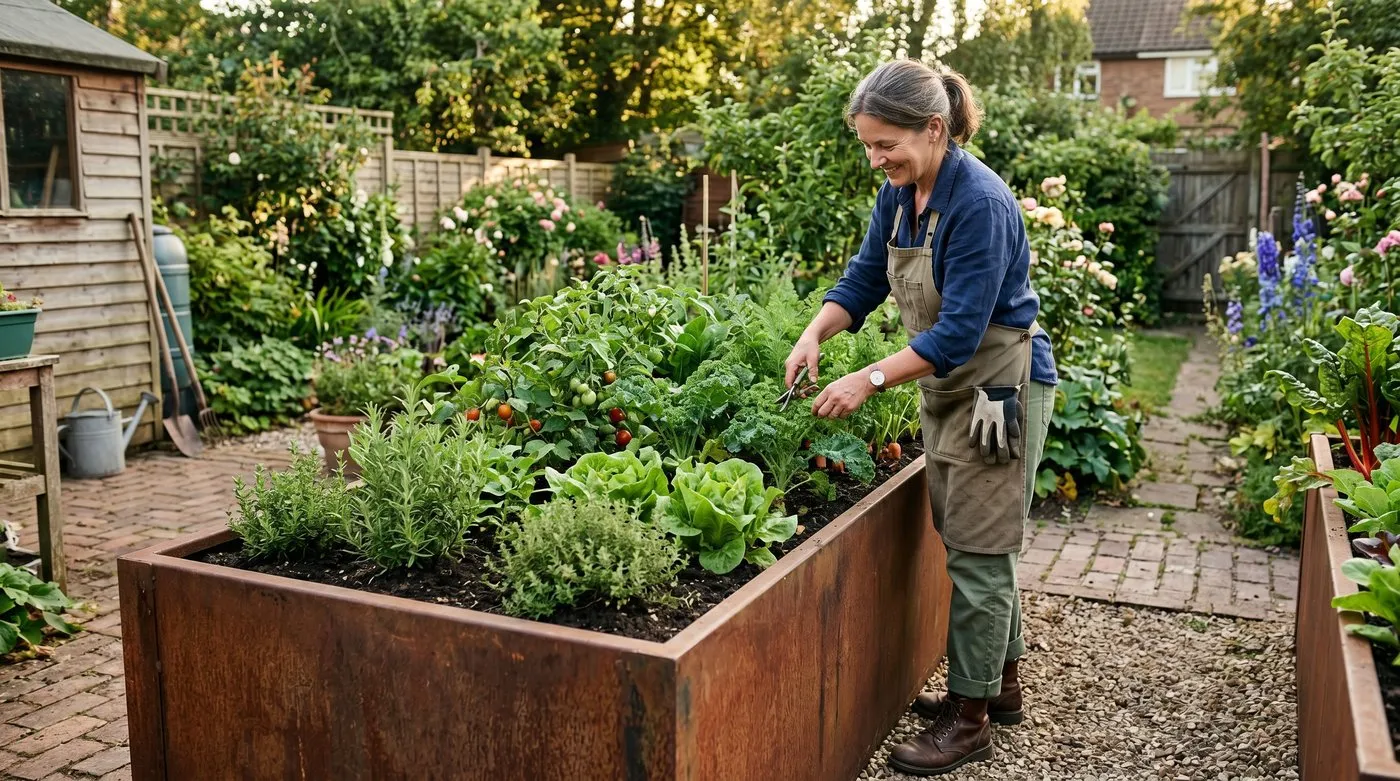 A 90cm-tall raised bed transforms gardening from bent-over labour to standing-height work. Best single investment for back-pain prevention.
Heights ranked by back-friendliness:
| Bed height | Posture required | Back load |
|---|---|---|
| 0-15cm (ground level) | Full bending or kneeling | Maximum |
| 30cm (low raised) | Bending with some support | High |
| 45cm (knee height) | Sitting on bed edge while working | Medium |
| 60cm (mid-thigh) | Slight bend or perching | Low |
| 75cm (waist) | Light bend only | Very low |
| 90cm (chest) | Fully standing | Minimal |
90cm is the wheelchair-accessible standard and works for any UK gardener wanting maximum back-friendliness. 60cm is the practical balance most plots adopt.
Move heavy storage to working height
Stop bending to lift heavy items. Store the compost bag on a slightly-raised pallet so the lift starts from knee height. Stack paving slabs on a wheeled cart rather than on the ground. Put the watering can on a shelf above ground.
The lift-from-knee-height position generates 60% less spinal compression than the lift-from-floor position.
Tool selection - reducing strain at the contact point
The tools you use determine how much of any task transfers strain to your back. Five tool categories worth upgrading:
Long-handled tools
Standard UK garden tool handles are 110-130cm. Long-handled versions are 140-160cm. The extra length means you work with the back upright rather than bent forward.
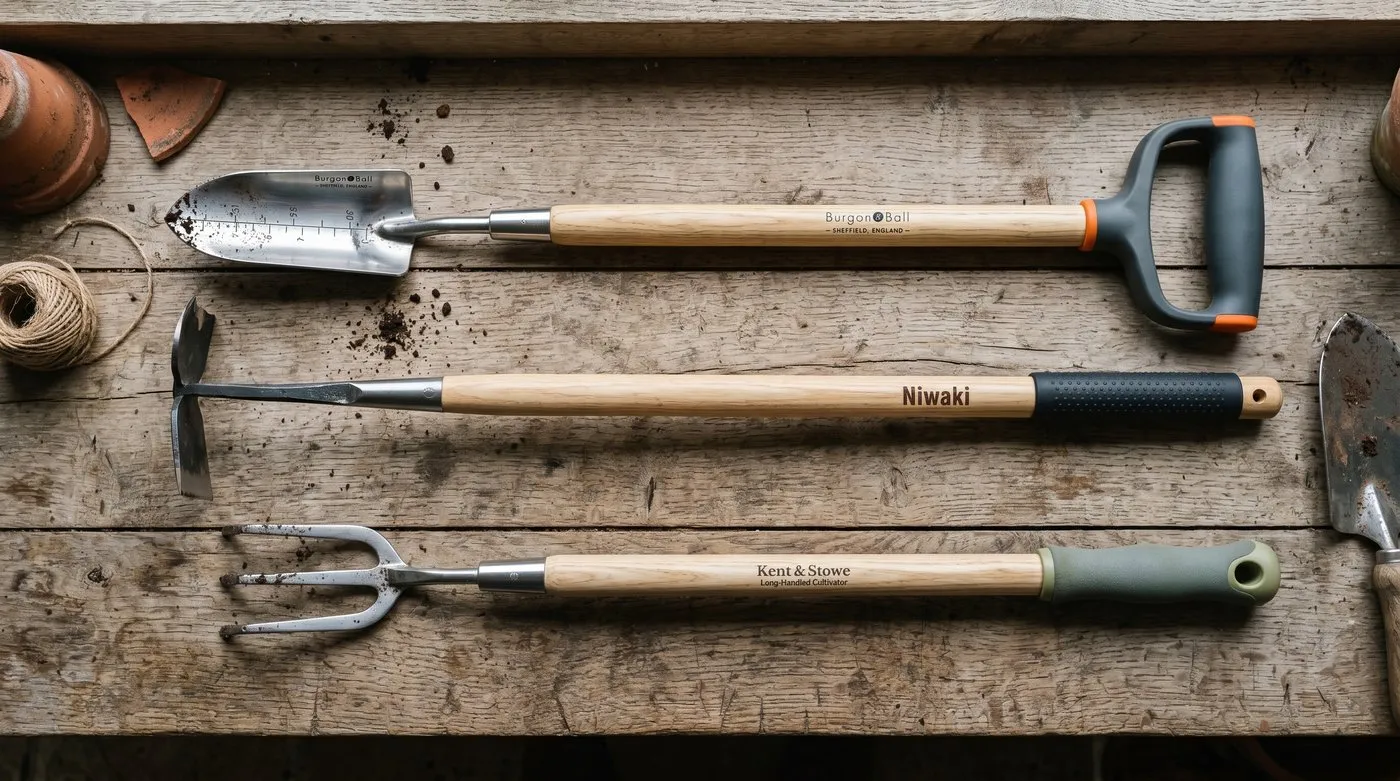 Long-handled tools at chest-to-shoulder height keep the back upright through digging and cultivating tasks.
Best UK long-handled options:
- Sneeboer long-handled border fork (£75-£110) - hand-forged stainless steel, ash handle, weighs 1.4kg
- Wolf-Garten multi-change system (£40-£70 for handle plus heads £20-£40 each) - swap heads on a single long handle
- Burgon and Ball long-handled hoe (£35-£50) - lightweight, comfortable grip
- Spear and Jackson long-handled cultivator (£30-£45) - reliable budget option
Cushioned ergonomic grips
Hand fatigue at the grip transfers to wrist, elbow and shoulder strain. Padded ergonomic grips reduce the gripping force needed by 30-40%. Wrap existing tool handles with self-fusing silicone tape (£8-£15) as a cheaper alternative to buying new ergonomic-grip tools. Looking after the skin on your hands matters just as much over a long season, and our roundup of the best hand creams for gardeners covers the products that repair cracked, dry skin fastest.
Lightweight composite materials
Modern carbon-fibre or fibreglass handle tools weigh 30-50% less than traditional ash-handled equivalents. A 1.0kg trowel is dramatically less tiring than a 1.8kg trowel over a long planting session. The Burgon and Ball “Sophie Conran” range and the Niwaki Japanese tools are the lightweight standards.
Wheelbarrow upgrade
A standard UK wheelbarrow with a single front wheel requires constant balancing torque from the user’s lower back. A two-wheeled garden cart eliminates the balance load - you push, the cart stays upright on its own. The investment pays back the first time you cart 200kg of compost across a plot.
Power tools for the worst jobs
A small mains or battery cultivator (£150-£350) does 4 hours of digging in 30 minutes. A petrol leaf blower (£120-£250) saves 2 hours of raking. Power tools are not a luxury - they are back-injury prevention for the highest-load tasks. Use as needed and don’t apologise for it.
Posture and technique
Even with the best tools and bed layouts, you still need to move correctly through gardening sessions. Five techniques transfer load away from the lower back.
Lifting technique
The proper lift sequence:
- Stand close to the load - heel within 30cm of the object
- Bend the knees, not the back - drop down with the legs
- Tighten the core muscles before lifting - this stabilises the lumbar spine
- Lift with the legs by straightening the knees
- Hold the load close to the body
- Pivot the feet to turn, never twist the spine
- Lower the load using the same knee-bend technique
The single most common mistake is keeping the legs straight and bending the back to pick up something light - the brain does not think it needs the proper technique for a watering can or a small pot. Use the technique on everything heavier than a single pot.
Kneeling rather than crouching
Crouching loads the knees, calves and back simultaneously. Kneeling on a padded mat with one knee down and one knee up loads only the down-leg quad and the back briefly when standing. Two minutes of crouching equals 10 minutes of kneeling for back strain.
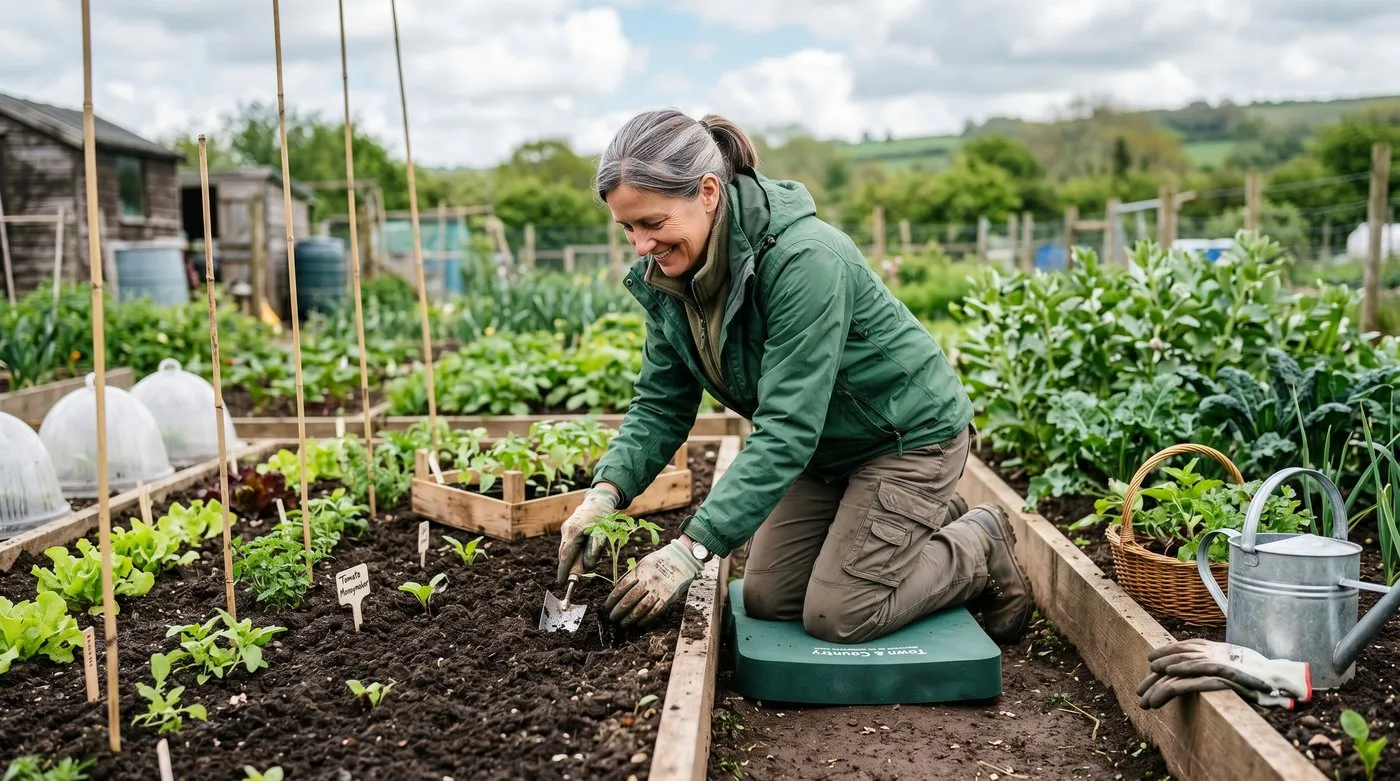 A foam kneeling pad changes back load dramatically. Cheapest single back-pain intervention - £5-£12 at any UK garden centre.
A foam kneeling pad (£5-£12) is the cheapest piece of back-pain prevention kit available. Use it every time you need to be at ground level for more than a minute.
The 20-minute rule
Change posture every 20 minutes. Set a timer if necessary. Stand up, stretch, walk around for 60-90 seconds, then resume in a different posture if possible (kneeling to standing, or moving from one bed to another).
Static muscle load above 20 minutes produces the next morning’s stiffness. Interrupted shorter sessions cause far less injury risk for the same total work done.
Alternate sides
Two-person lifts for anything 25kg+
A 25kg compost bag is at the upper end of what one person should lift safely. Anything heavier (paving slabs, mature shrubs in pots, water butts) needs two people or a sack truck. Don’t be the gardener who slips a disk moving a 50kg pot alone.
Warm-up and stretching routine
Five minutes of warm-up before a serious gardening session reduces injury risk by 30-50% according to occupational health research. Five minutes of stretching afterward reduces next-day stiffness.
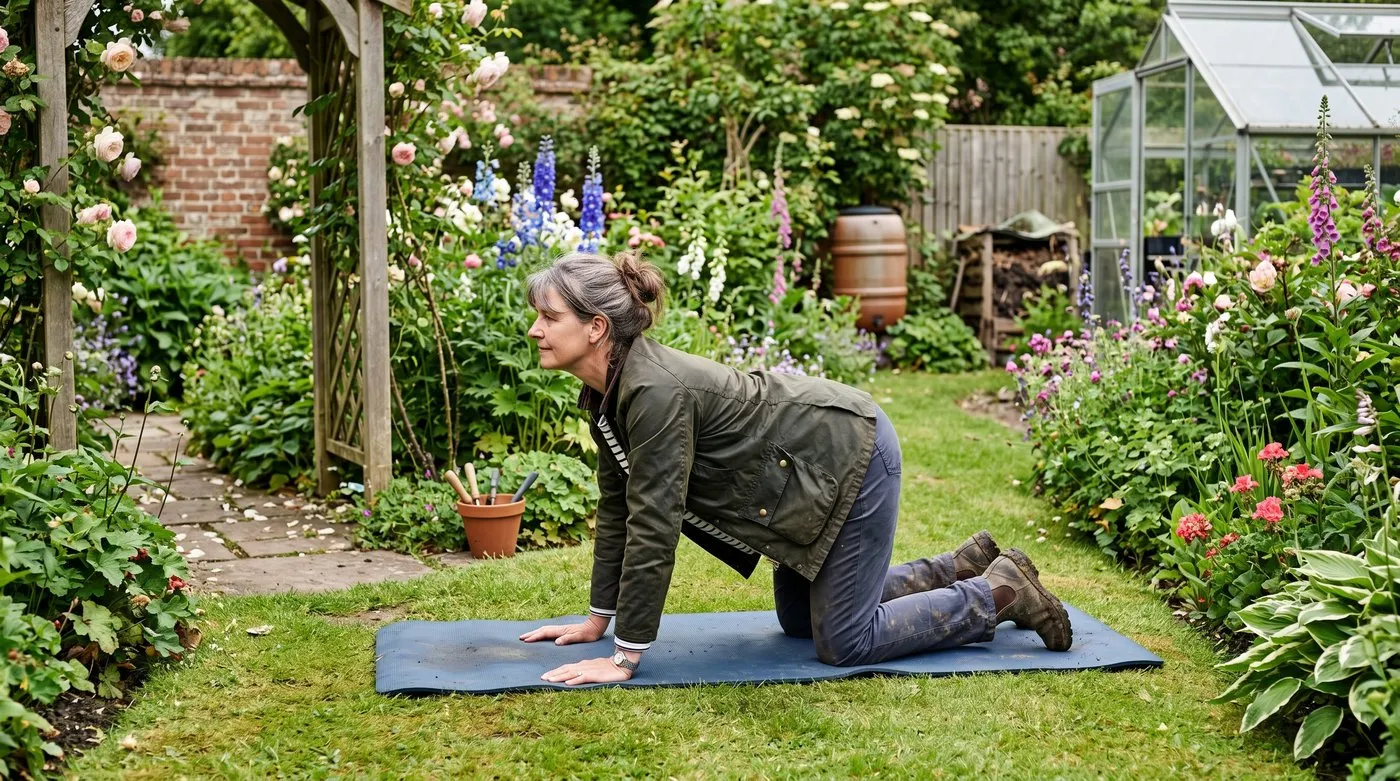 A 5-minute warm-up routine before serious gardening pays back dramatically in reduced injury risk and next-day pain.
Pre-session warm-up (5 minutes)
1. Standing trunk rotations (60 seconds). Feet shoulder-width apart, hands on hips. Rotate the trunk left and right slowly. 10 rotations each side.
2. Cat-cow stretch (60 seconds). On hands and knees on grass or a mat. Arch the back upward (cat), then drop it down with shoulders back (cow). Slow, breathing throughout. 10 cycles.
3. Standing hamstring stretches (60 seconds). Foot on a low step, lean forward gently to feel the hamstring stretch. Hold 20 seconds each side, repeat.
4. Shoulder rolls and arm circles (60 seconds). Loosen the upper body before any tool work.
5. Knee lifts (60 seconds). Bring each knee up to chest height while standing. Activates the hip flexors and warms the lower back.
Post-session stretches (5 minutes)
1. Knees to chest (60 seconds). Lie on your back, pull both knees to chest. Hold 30 seconds, repeat.
2. Spinal twist (60 seconds). Lie on back, drop both knees to one side while keeping shoulders flat. Hold 30 seconds each side.
3. Child’s pose (60 seconds). Kneel and reach forward with arms outstretched. Relaxes the lumbar spine.
4. Standing forward fold (60 seconds). Slow controlled forward bend, hands hanging towards toes. Don’t force the depth - just hang.
5. Hip flexor stretch (60 seconds). Kneel on one knee with the other foot forward, sink the hips gently. 30 seconds each side.
This 10-minute total routine cuts gardening-related back pain incidents dramatically. The hardest part is actually doing it - book a 10-minute alarm into the schedule for any 2-hour-plus session.
Equipment that pays back fastest
If you have a £100-£300 budget for back-pain prevention kit, this is the order to spend it:
| Item | Cost | Pain prevention value |
|---|---|---|
| Foam kneeling pad | £5-£12 | Highest - removes kneeling pain |
| Long-handled border fork | £75-£110 | High - cuts digging back load |
| Wheeled garden cart (replaces wheelbarrow) | £80-£150 | High - removes balance load |
| Adjustable kneeling stool (kneeler/seat hybrid) | £20-£40 | High - alternate sitting and kneeling |
| Long-handled hoe | £30-£50 | Medium - reduces weeding bending |
| Lightweight composite-handle tools | £15-£40 each | Medium - cumulative fatigue reduction |
| Ergonomic grip wrap | £8-£15 per tool | Medium - reduces hand-arm strain |
| Mains or battery cultivator | £150-£350 | High if doing serious digging |
Start with the £5 kneeling pad. Add the long-handled border fork. Build from there based on which tasks cause the most pain in your particular garden.
When to see a GP
Most gardener’s back pain is muscular and resolves within a week with rest, gentle movement and over-the-counter painkillers. See a GP if:
- Pain radiates down a leg (possible sciatic nerve involvement)
- Numbness or pins-and-needles in the leg or foot
- Loss of bladder or bowel control (urgent A&E)
- Pain unchanged or worsening after 7 days of rest
- Inability to bear weight on either leg
- Fever or unexplained weight loss alongside the back pain
The NHS produces clear UK back-pain guidance on the NHS website that is worth bookmarking. Their physio referral pathway is the standard route for serious or persistent gardening-related back pain.
Field note: The RHS publishes a regular wellbeing report on gardening and health. Their data on physical injury patterns among UK gardeners is the standard reference for occupational health in the sector.
Seasonal high-risk periods
Gardener’s back pain is not evenly distributed across the year. Three peaks:
March-April (spring bed preparation). The combination of cold-stiff muscles and the urge to “catch up” after winter produces the most injuries. Warm-up routine is essential.
June-July (active weeding season). Repetitive bending over short timeframes causes cumulative strain. Use long-handled hoes and standing-height beds where possible.
October-November (autumn dig and clear-up). The single highest-risk period if you still dig. Switch to no-dig before tackling this if back history is a problem.
December-February is the low-risk period - gardeners are inside, beds are mulched, the workload is low. Use this period for planning equipment upgrades and bed redesign.
Common UK gardener mistakes
Mistake 2: Lifting a watering can with the back. A full 10L watering can is 10kg of dead weight. Use the lift-with-the-legs technique even for this. Better: use a hose.
Mistake 3: Skipping the kneeler. The £5 foam pad sits in the shed because reaching for it feels like extra hassle. Keep one in every cultivation area so it is always to hand.
Mistake 5: Buying small-handled tools to save money. A £15 trowel that feels too small for your hand is more expensive than a £35 ergonomic version once you add the physio bills. Spend on the tools you use daily.
Decision framework for any UK gardener
Run this check before each gardening session:
The five-minute pre-flight check prevents 80% of preventable gardening back injuries.
Now you’ve learnt the prevention basics
For the wider accessibility-focused adaptations including wheelchair-friendly bed heights and tool modifications for arthritis and limited mobility, read our accessible gardening for disabilities guide.
Our team produces practical UK gardening guidance from source research, contributor records and established horticultural practice. Editorial standards are overseen by Matt W.