Key takeaways
- Watering cans are legal in every UK hosepipe ban, from any water source
- Hosepipes, sprinklers, drip systems on mains and pressure washers are banned
- Water butts, IBC tanks, and grey water are exempt from every TUB
- Maximum fine for breaking a TUB is £1,000 under the Water Industry Act 1991
- A 210-litre water butt fills from 12mm of rain on a 2m x 4m shed roof
- Mulching beds 75mm deep cuts soil evaporation by up to 70%
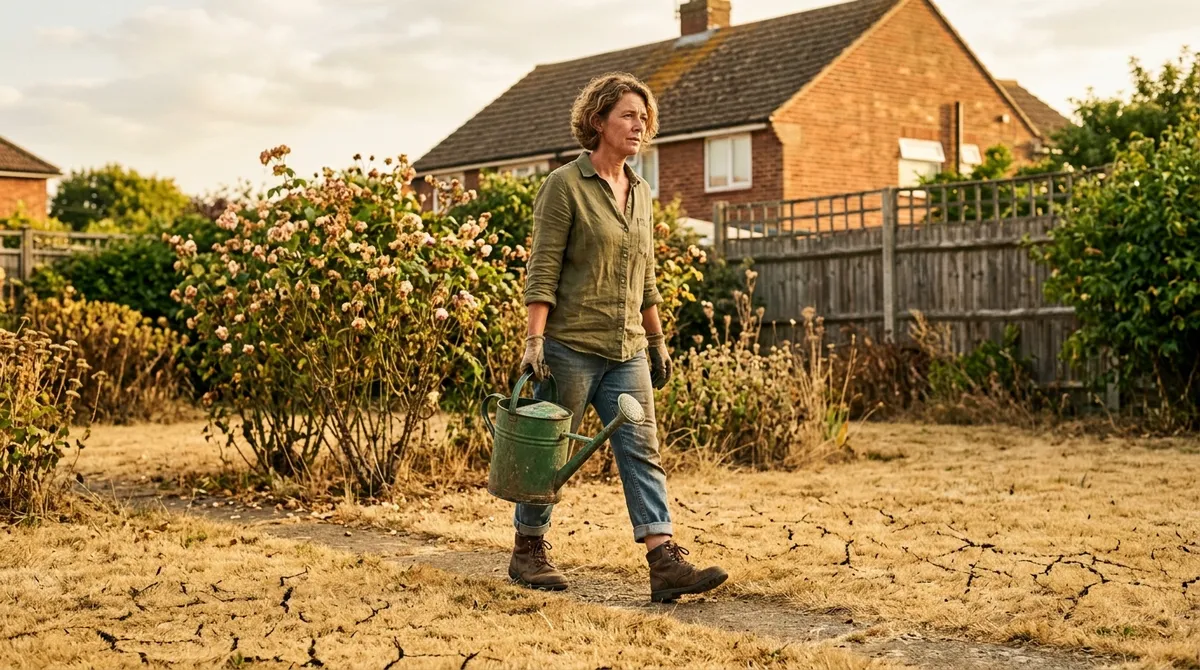
Gardening during a hosepipe ban in the UK is more restricted than most gardeners realise, but the rules are also less draconian than the headlines suggest. A Temporary Use Ban (TUB) bans hosepipes, sprinklers, and pressure washers, but it does not ban watering itself. You can still keep a vegetable plot alive, a young hedge established, and a pot collection looking good if you understand what is allowed and how to make every litre count.
This guide covers the law, the rules across the main water companies, what you can and cannot do, which plants to prioritise, and the water-storage and water-saving systems that turn a six-week drought from a crisis into an inconvenience. The information is drawn from three Staffordshire and West Midlands drought summers in 2018, 2022, and 2025.
What a UK Hosepipe Ban Actually Means
A UK hosepipe ban is a Temporary Use Ban, the official term used in the Water Industry Act 1991 (amended by the Flood and Water Management Act 2010). Each water company has the power to issue its own TUB when reservoir, river, or aquifer levels fall below a defined trigger point.
The ban applies to using mains water through a hosepipe for ten listed purposes. The main domestic ones are: watering a garden, cleaning a car, cleaning windows, filling a paddling pool, filling a pond, filling a hot tub, cleaning patios, and using a sprinkler. The full list lives in section 76 of the Water Industry Act 1991.
What the ban does not do is stop you watering altogether. It restricts the means (no hosepipe) and the source (no mains water through a hose). It says nothing about a watering can, a bucket, or stored rainwater. That distinction is the basis of every legal piece of gardening you can do during a ban.
Hosepipe Ban Allowed Activities UK
The clearest way to think about it: anything that does not involve a connected hosepipe drawing mains water is legal. The full allowed list across every UK water company looks like this.
- Watering by watering can or bucket from any source (mains tap, water butt, grey water).
- Using a water butt of any size, including with a gravity-fed drip line or soaker hose connected directly to the butt.
- Using grey water from a bath, shower, washing-up bowl, or laundry rinse cycle.
- Using an IBC tank (1000-litre intermediate bulk container) or other stored rainwater.
- Watering with a trigger-nozzle hose when fed from a water butt, IBC, or other non-mains source (legal in every TUB issued since 2022).
- Drip irrigation fed from stored rainwater (water butt or IBC), even though mains-fed drip irrigation is banned.
- Watering food crops in a commercial setting, since commercial horticulture is usually exempt.
- Watering newly-planted trees and shrubs (under 12 months) by watering can. Southern Water and Thames Water also allow hand-held hose use for this category but it varies by ban.
The legal test is consistent: if no mains-fed hose is involved, the activity is allowed.
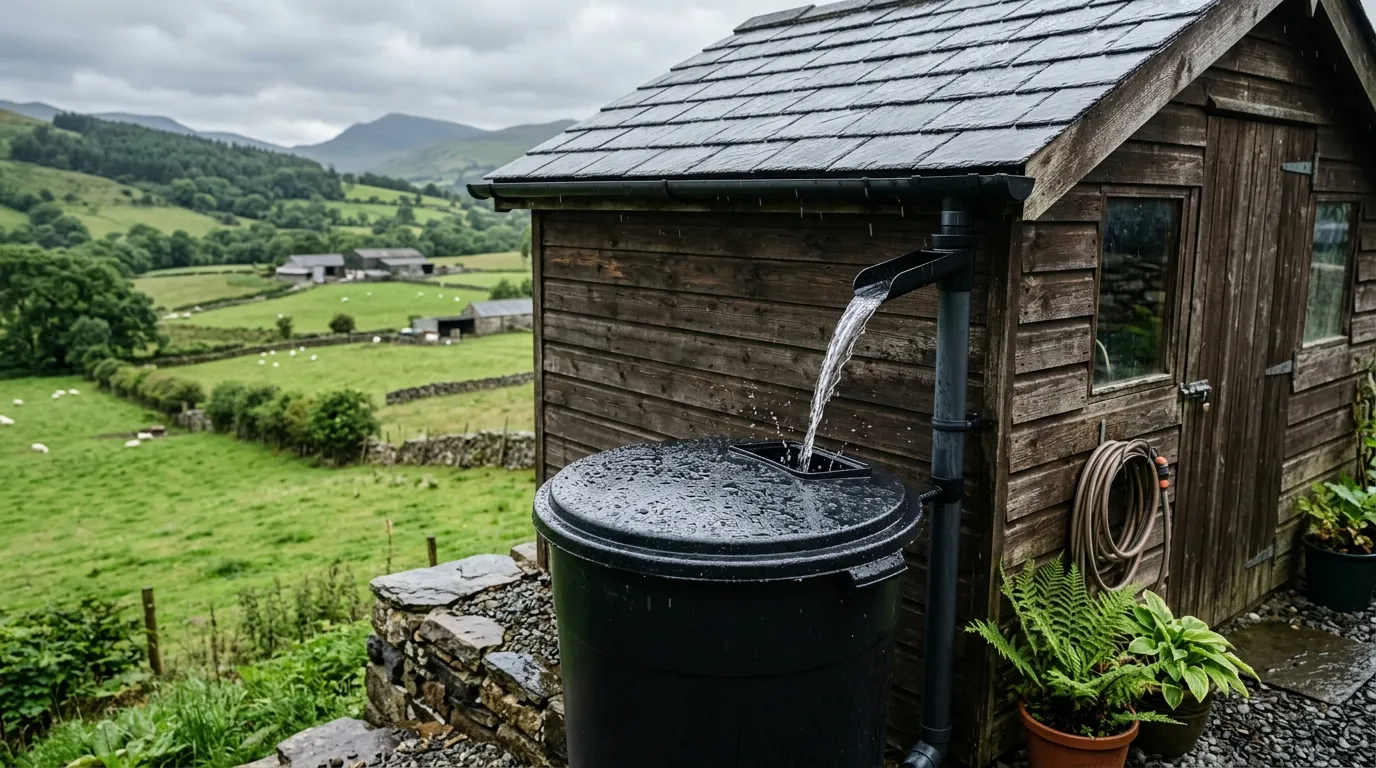 A 210-litre water butt fills from roughly 12mm of rain on a 2m x 4m shed roof. Water butts are exempt from every UK hosepipe ban and become the backbone of garden watering during a TUB.
What You Cannot Do in a UK Hosepipe Ban
The banned activities are equally specific. Breaking any of these triggers the fixed penalty process and, for persistent breaches, a £1,000 maximum fine under the Water Industry Act 1991.
- Watering a garden with a hosepipe connected to the mains.
- Using a sprinkler of any kind, fixed or portable, that draws mains water.
- Filling a paddling pool, hot tub, or swimming pool from a hosepipe.
- Cleaning a patio, drive, or path with a hosepipe or pressure washer.
- Cleaning a car with a hosepipe (bucket and sponge stays legal).
- Cleaning windows of a domestic dwelling with a hosepipe.
- Filling or topping up a domestic pond from a mains hose (fish ponds may have exemptions, see below).
- Watering plants on hard surfaces from a hosepipe (this catches container watering on patios).
- Using a domestic mains-fed drip system even if controlled by a timer.
- Filling a fountain or ornamental water feature from a hosepipe.
The ban is enforced by water company inspectors, who respond to public reports and patrol high-risk areas (allotments, large suburban gardens) at peak times in the evening.
Warning: A hosepipe drinking trough for livestock or pets is allowed under welfare exemptions in most TUBs, including the 2025 Southern Water ban. A hosepipe used for firefighting or sanitation is also exempt. Animal welfare and human health always override the standard ban.
Hosepipe Ban Rules by UK Water Company
The Water Industry Act sets the framework, but each water company writes its own exemptions. The four companies that have issued the most TUBs in the last decade are Southern Water, Thames Water, South East Water, and Yorkshire Water. Their published rules differ on the edges.
| Water company | Most recent TUB | Newly planted plants (under 12 months) | Drip irrigation from water butt | Hand-held hose fed by butt | Maximum fine |
|---|---|---|---|---|---|
| Southern Water | 21 Jul 2025 to 30 Nov 2025 | Allowed by watering can or hand-held hose with trigger | Allowed | Allowed | £1,000 |
| Thames Water | 1 Aug 2022 to 14 Nov 2022 | Allowed by watering can or hand-held hose with trigger | Allowed | Allowed | £1,000 |
| South East Water | 26 Jun 2023 to 18 Sep 2023 | Allowed by watering can only | Allowed | Not specified | £1,000 |
| Yorkshire Water | 26 Aug 2022 to 28 Dec 2022 | Allowed by watering can only | Allowed | Not specified | £1,000 |
| Severn Trent | (No domestic TUB since 1995) | n/a | n/a | n/a | £1,000 |
| United Utilities | 5 Aug 2022 to 16 Aug 2022 (lifted before start) | n/a | n/a | n/a | £1,000 |
Always read the specific ban notice issued by your supplier. It will list named exemptions for blue-badge holders, registered businesses, and people on the priority services register.
Watering Vegetables in a Hosepipe Ban UK
The answer is priority watering and direct-to-root delivery. The list below ranks crop priorities by growth stage, rooting depth and likely damage from drought.
| Plant type | Priority | Watering method allowed | Frequency in 30C heat | Water per plant |
|---|---|---|---|---|
| Tomatoes (fruiting) | 1 | Watering can to base | Every 1-2 days | 2 litres |
| Runner beans (flowering and podding) | 1 | Watering can to base | Every 2 days | 1.5 litres |
| Courgettes and squash | 2 | Watering can to base | Every 2-3 days | 2 litres |
| Newly-planted shrubs and trees (<12 months) | 2 | Watering can or butt-fed hose | Every 3-4 days | 5-10 litres |
| Salad leaves and herbs | 3 | Watering can to base or grey water | Daily in 30C | 0.5 litres |
| Established perennials | 4 | Watering can only if wilting | Weekly | 5 litres |
| Established shrubs (over 2 years) | 4 | Watering can only if wilting | Fortnightly | 10 litres |
| Lawn | 5 | None | n/a | 0 |
The lawn comes last on purpose. UK lawn grasses (mostly Lolium perenne and Festuca species) are deep-rooted enough to survive a six-week drought going brown and dormant, then green up within ten days of the first proper rain. Watering a lawn during a TUB is wasted effort even where it would be legal.
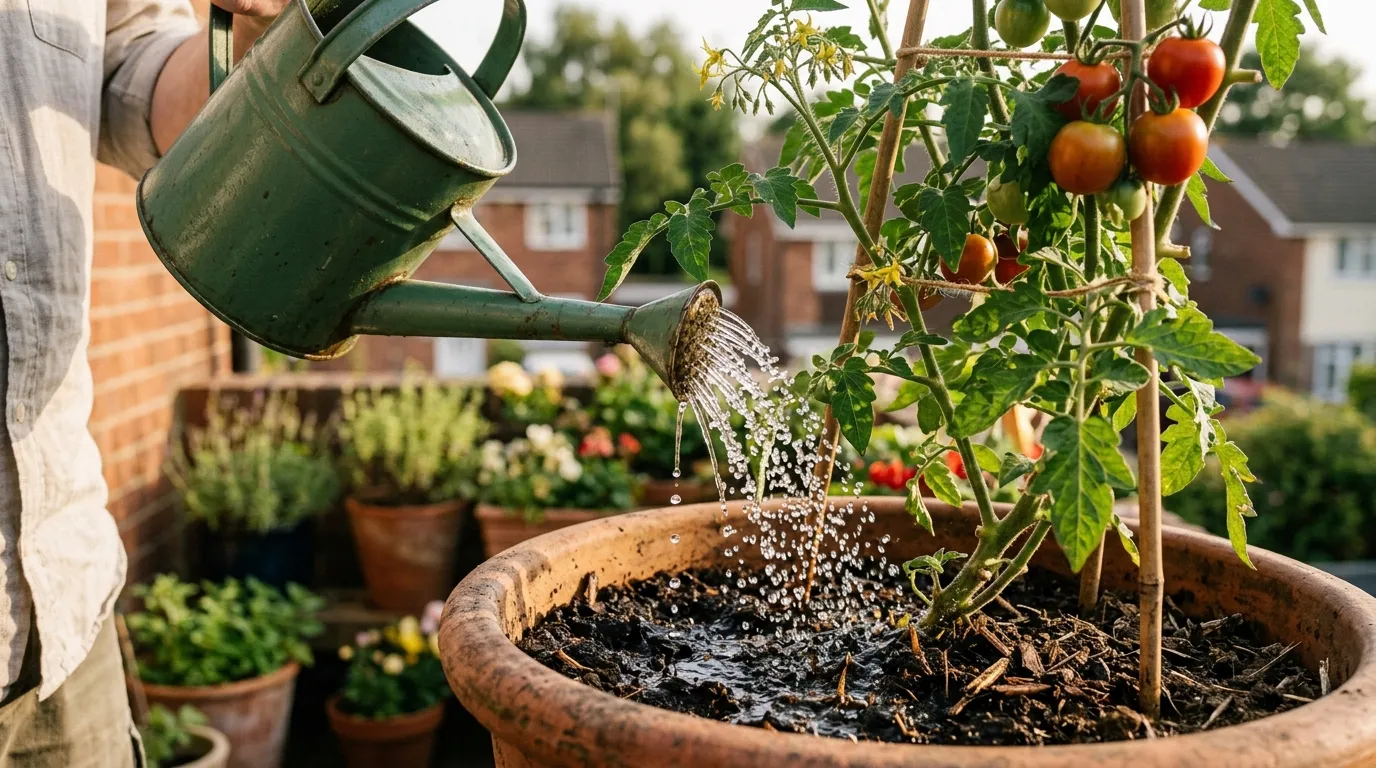 Watering tomatoes at the base, not the foliage. A 2 litre dose every two days at the root zone keeps fruiting tomatoes productive through 30C heat with a fraction of the water a sprinkler would deliver.
Saving Water During a Hosepipe Ban UK
The gardeners who get through a TUB without losing crops are the ones who set up storage before the ban arrives. There are five systems that work in UK gardens, ranked by capacity and cost.
1. Water butts (100 to 300 litres)
The basic unit. A standard 210-litre water butt costs £35-£60, fills from one downpipe, and refills from roughly 12mm of rain falling on a 2m x 4m shed roof (8 square metres collects 96 litres from 12mm of rain at 100% efficiency, around 70 litres at the realistic 70% efficiency once splash, overflow, and evaporation are counted).
A single shed-roof butt is enough for a small patio garden. A pair of linked butts (one on the house downpipe, one on the shed) gives most suburban gardens enough storage to bridge a three-week dry spell.
2. Linked water butt arrays (400 to 800 litres)
Two to four standard butts linked at the base with overflow connectors and fed from multiple downpipes. Total capacity 420 to 840 litres for £140-£240 in kit. The array is the sweet spot for an average UK garden with a 100 square metre lawn and a small vegetable patch.
3. IBC tanks (1000 litres)
The downside is the size (1m x 1m x 1.1m) and the visual. Screening with timber cladding or trellis hides them effectively.
4. Drip irrigation from stored water
A gravity-fed drip line running from a water butt or IBC into a raised vegetable bed delivers water directly to roots with almost zero evaporation. Kit cost £25-£60 for a 25-metre line and 30 emitters. The system runs without electricity and is fully legal under every UK TUB as long as the source is stored rainwater, not the mains.
Flow rate is modest (1-2 litres per hour per emitter at 1m of head height) but a 4-hour evening drip session delivers 4-8 litres per emitter, exactly what fruiting vegetables need.
5. Grey water collection
A 9-litre washing-up bowl of grey water carried out daily from the kitchen sink delivers 63 litres a week. A short bath uses 60-80 litres and a shower 35-45 litres, all of which can be reclaimed with a simple siphon and bucket setup. Avoid grey water from cycles containing bleach, biological detergent, or fabric softener on edible crops. It is safe on lawns, shrubs, ornamentals, and fruiting vegetables (tomatoes, courgettes) as long as it is applied to the soil, not the foliage or fruit.
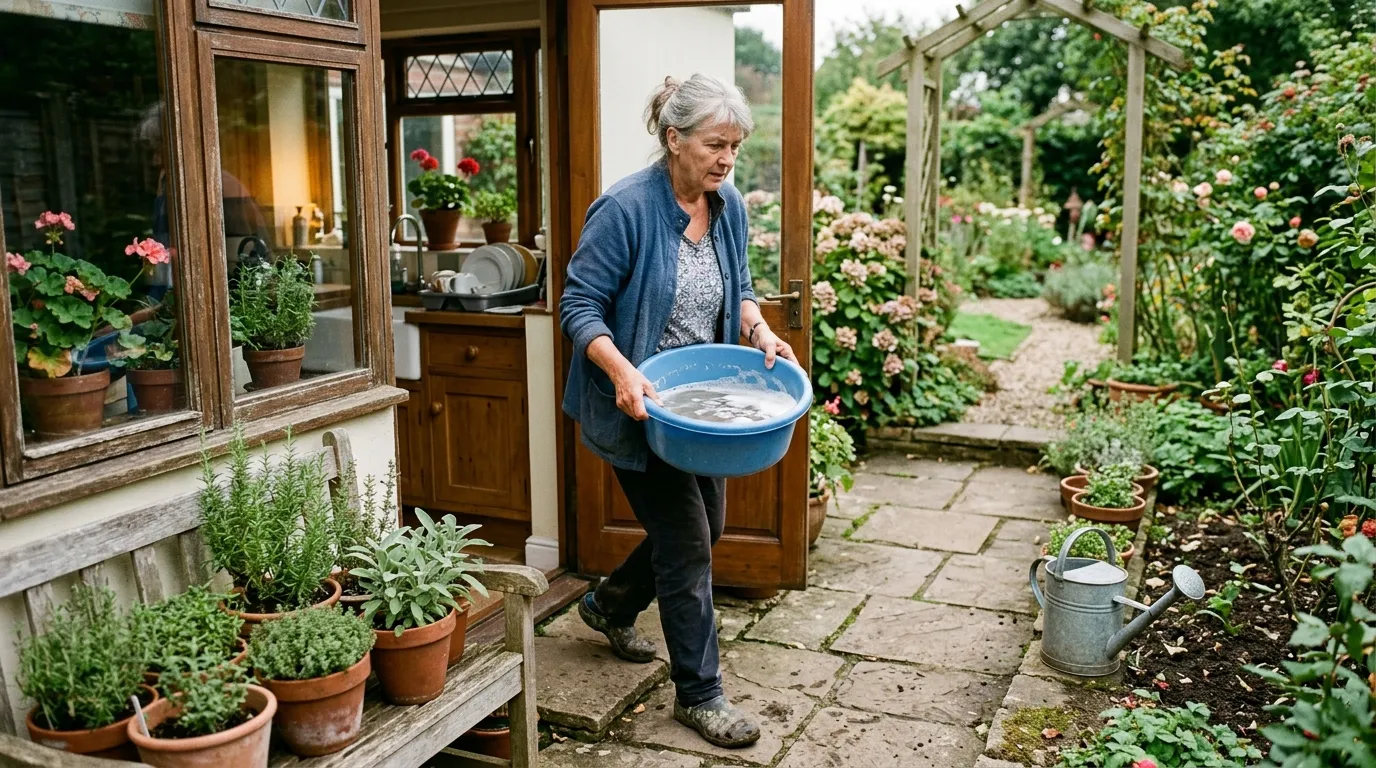 Grey water from the washing-up bowl is fully legal during a TUB. A daily 9-litre bowl delivers 63 litres a week to thirsty pots, shrubs, and ornamentals without touching the mains.
Mulching: the Single Biggest Water Saving in a UK Garden
Mulching beats every other water-saving technique. A 75mm layer of bark, compost, or straw mulch on a planted bed cuts soil-surface evaporation by up to 70% in 30C heat. That is more saving than any irrigation system can deliver.
The science is straightforward. Bare soil loses water through capillary action: warm dry air at the surface pulls moisture up from below and evaporates it. A mulch layer breaks the capillary path. Below the mulch, the soil stays cooler (typically 5-8C cooler at 50mm depth on a 30C day) and the water stays in the root zone where it belongs.
The best mulches for water retention in UK gardens:
- Composted bark (75mm depth). Lasts 18 months, looks tidy, costs £6-£10 per 60-litre bag. Best for ornamental beds.
- Garden compost or leaf mould (50mm depth). Free if you make your own. Feeds the soil as it breaks down. Best for vegetable beds.
- Straw or wood chip (75mm depth). Free or cheap. Ideal for paths and around fruit bushes. Avoid fresh wood chip on annual vegetables (locks up nitrogen).
- Gravel mulch (40mm depth) on drought-tolerant ornamental beds. Lasts indefinitely. Looks Mediterranean.
Apply mulch in late March or early April before soil moisture is lost. Top up in autumn after the first rains have re-wetted the soil. Never mulch dry soil in summer: the mulch holds the dryness in.
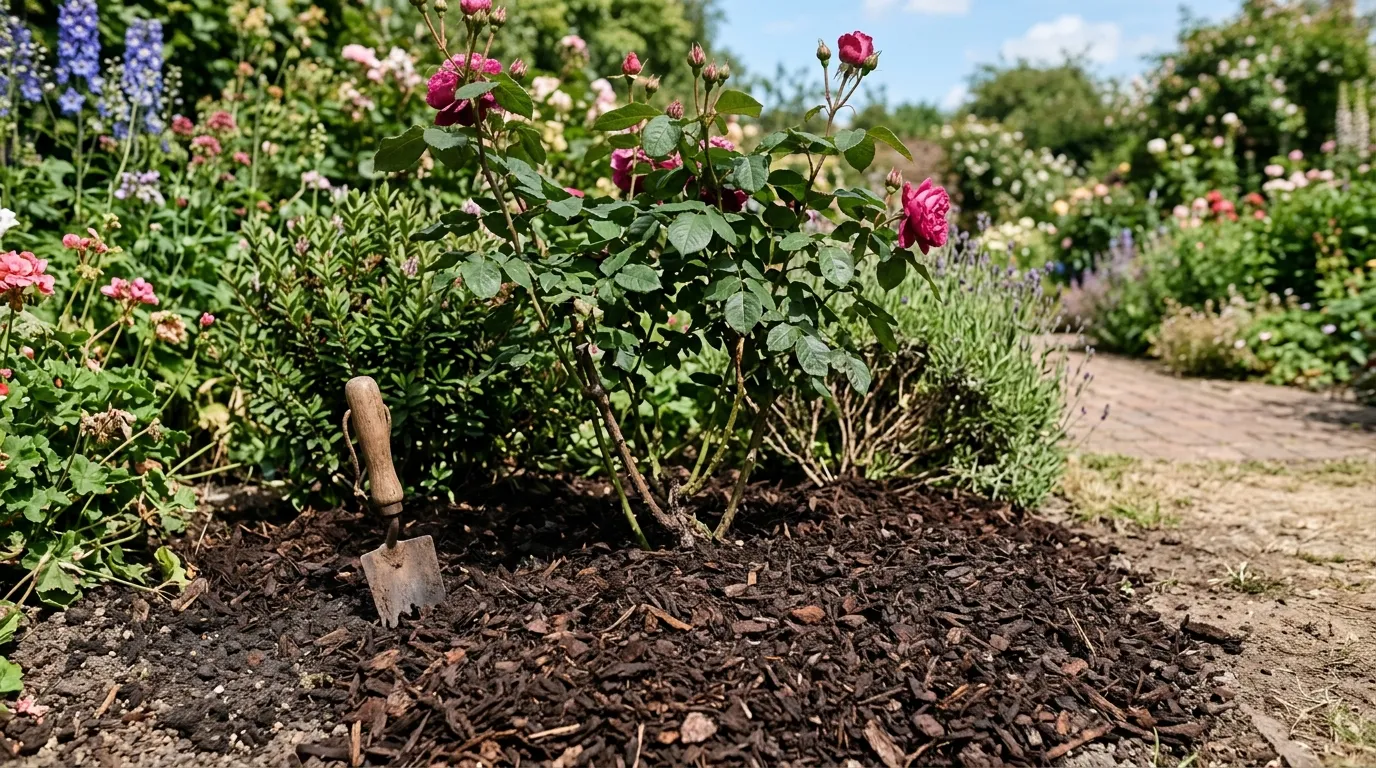 A 75mm bark mulch cuts evaporation by up to 70%. The soil beneath stays 5-8C cooler than bare ground on a 30C day, holding water in the root zone where the plants need it.
Hosepipe Ban Fines and Penalties UK
The maximum penalty for breaking a TUB is £1,000 under section 76 of the Water Industry Act 1991. The fine sits on the criminal record of the person prosecuted, which matters for some professions and visa applications. The path from spotted-with-a-hose to court usually has three stages.
- Verbal warning from a water company inspector or, increasingly, an automated letter following a neighbour report.
- Fixed Penalty Notice between £100 and £200 (varies by company). Pay within 14-28 days to avoid escalation.
- Magistrates court summons for persistent or large-scale breaches. Maximum £1,000 fine, plus court costs.
In practice, prosecutions are rare. Yorkshire Water reported just 4 prosecutions from over 12,000 reports during the 2022 TUB. Southern Water reported 9 prosecutions from over 18,000 reports in 2025. The reputational risk (named on the water company website, local newspaper coverage) is often the bigger deterrent than the cash penalty.
Reporting is online or by phone. Most water companies have an anonymous reporting form during a TUB. Repeat offenders are flagged and revisited.
Why UK Hosepipe Bans Are Getting More Frequent
The pattern of UK TUBs has shifted. Between 2000 and 2010 there were 4 TUBs issued by major water companies. Between 2015 and 2025 there were 14, with three issued in 2022 alone and two more in 2025. The root cause is the combination of three factors.
1. Lower summer rainfall
The Met Office records a 17% drop in summer (June to August) rainfall in the south-east of England between 1991-2020 compared to 1961-1990. Less summer rain means less aquifer and reservoir recharge during peak demand.
2. Higher peak temperatures
The hottest UK day on record (40.3C, Coningsby, 19 July 2022) sat inside a wider trend. The Met Office now records 5x more 30C+ days per decade in southern England than in the 1960s. Hotter days mean higher evapotranspiration in gardens and more domestic demand for sprinklers.
3. Higher per-capita demand
UK household water use averages 142 litres per person per day (Water UK figures). Gardens use a swing of 80-300 litres a day in dry weather. Population growth in the south-east outpaces water company infrastructure investment, so the same reservoir serves more taps.
The forecast from the Environment Agency is that southern England faces a 4 billion litre per day deficit by 2050 without major changes in storage and demand. TUBs are no longer a once-in-a-generation event. Most southern UK gardeners should now expect one ban every 2-3 summers and plan accordingly.
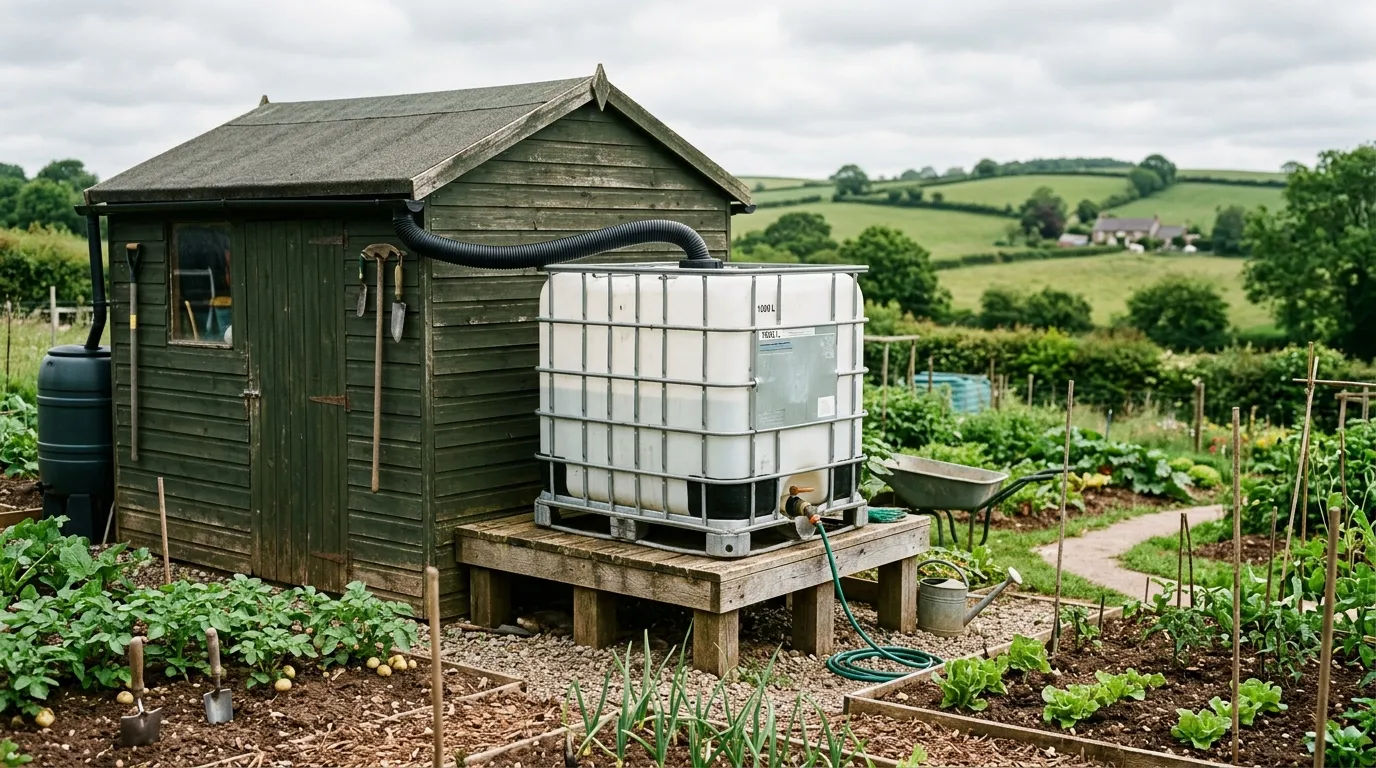 A 1000-litre IBC tank connected to a shed gutter caught 612 litres in a single 18mm rainfall in July 2022. The IBC is the sweet spot for a productive UK vegetable plot during a six-week ban.
Drip Irrigation from a Water Butt (Legal in Every TUB)
A water butt connected to a drip line is the closest thing to a fully automated garden under TUB conditions. The kit is simple, the legal position is clear (no mains involvement), and the labour saving is substantial.
The setup needs:
- A water butt or IBC raised on blocks or a stand to give 0.5-1m of head height.
- A 16mm or 13mm drip pipe (£12-£20 per 25 metres).
- Drip emitters (1 or 2 litre per hour, £4-£8 for 30 emitters).
- A simple gravity timer (£15-£25, optional) or a manual tap turn morning and evening.
- A filter at the butt outlet (£5-£8) to keep debris out of the emitters.
Run the drip line along raised beds, with one emitter per plant for fruiting vegetables and one every 30cm for closer-spaced rows. Flow rate at 1m of head height is around 1-2 litres per hour per emitter. A 4-hour evening session delivers 4-8 litres to each plant, exactly what tomatoes and beans need in a heatwave.
Pair the drip line with mulch and you have a system that runs for 5-7 days on a single 210-litre butt refill and never gets close to breaking the ban.
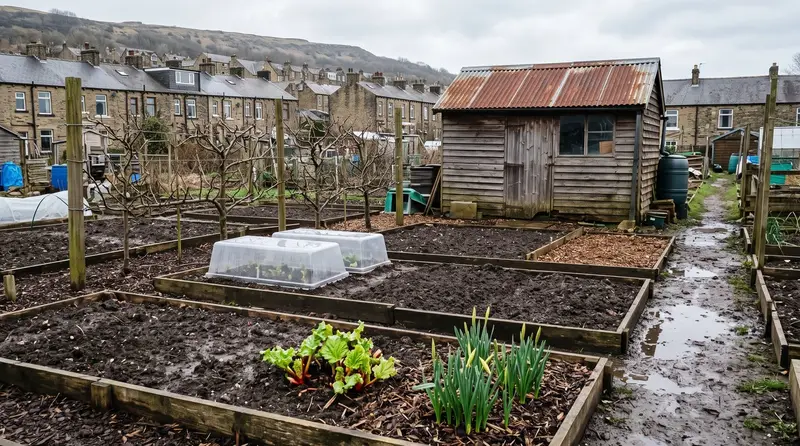
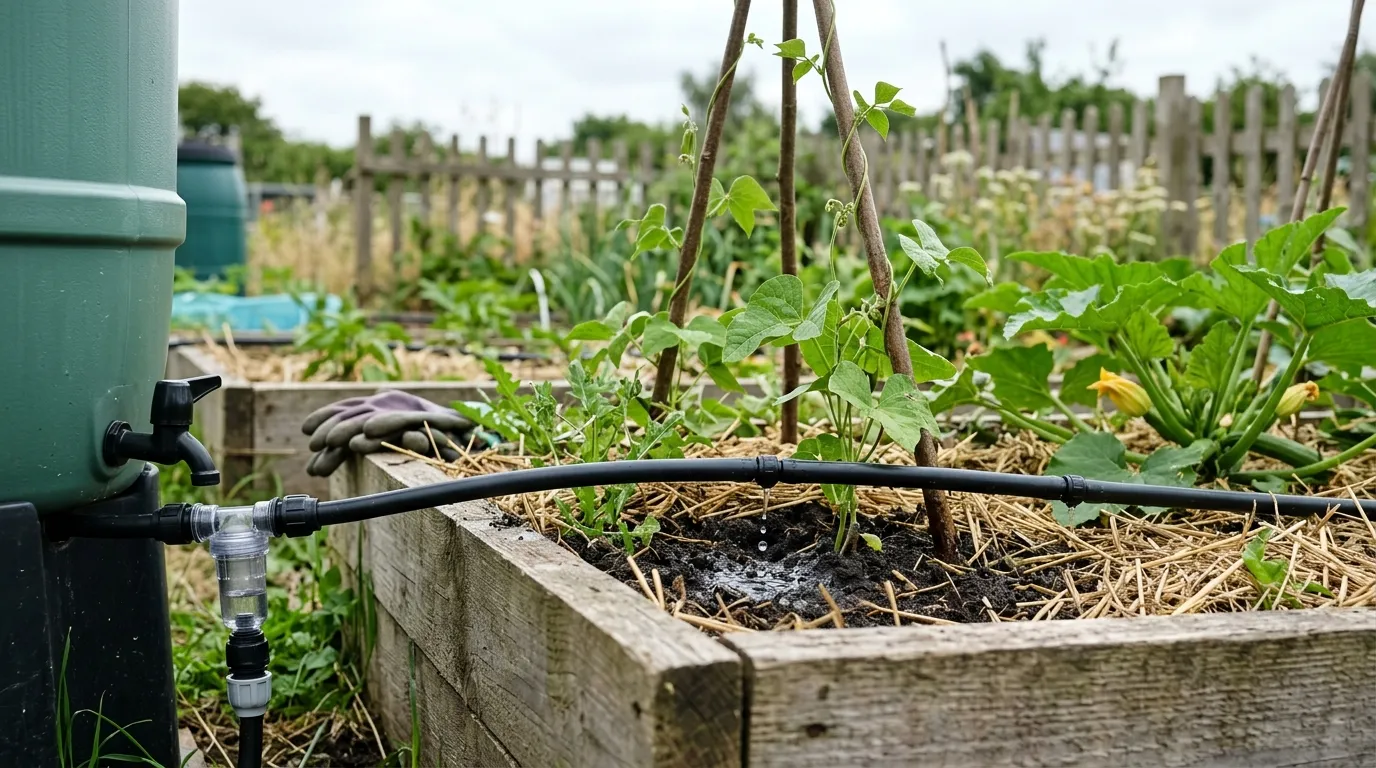 Gravity-fed drip irrigation running from a water butt into a raised bed on a Yorkshire allotment. Stored rainwater plus mulch plus drip emitters keeps runner beans and tomatoes productive through a 6-week TUB.
Common Mistakes During a UK Hosepipe Ban
These are the five mistakes that turn a manageable ban into a garden crisis. All five came up across the 2018, 2022, and 2025 droughts.
Mistake 1: Watering the lawn
A UK lawn does not need watering, ever. The grass species used in UK turf (perennial ryegrass, fescues, browntop bent) are evolved for a temperate climate that includes summer dry spells. They go dormant, turn brown, and recover fully within 7-10 days of decent rain. Watering a lawn during a TUB wastes scarce water on the one part of the garden that does not need it. If the lawn matters aesthetically, raise the mower blades to 60mm in May and leave the clippings on the surface as a moisture-trapping mulch.
Mistake 2: Topping up watering with the hose at night
The classic late-night hose run, on the assumption the inspector is in bed. Every water company runs evening and night patrols during a TUB. Neighbours hear hose taps running. Smart water meters flag spikes in usage. The fixed-penalty letter usually arrives within 7-10 days of the breach. The reputational hit is worse than the £100 fine.
Mistake 3: Watering established plants
An established shrub (over 2 years in the ground) has roots reaching 30-60cm down and rarely needs watering, even in a 30C heatwave. Watering it diverts scarce water from the plants that actually need it (young plants, fruiting vegetables, container plants). Test the soil 100mm down with a trowel: if the soil is moist at that depth, the plant does not need water.
Mistake 4: Watering at midday
Watering in full sun between 11am and 4pm loses up to 30% of the water to evaporation before it reaches the roots. Always water in the early morning (5-8am) or evening (after 7pm) when the temperature is lower and the soil is cooler. This is doubly important during a TUB when every litre carried out by watering can has been earned.
Mistake 5: Ignoring container plants
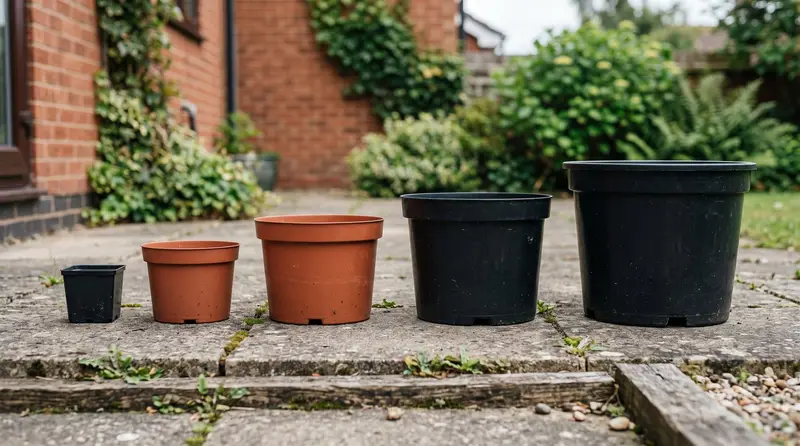
A 30cm terracotta pot can lose 2-3 litres of water to evaporation through the porous walls in a single 30C day. Plastic pots lose less. Pots are the highest-priority watering target during any heatwave. Group pots together (lower individual evaporation), move them into morning sun only if possible, and mulch the surface with bark or gravel to slow surface evaporation.
Annual Water Storage Calendar UK
Setting up storage before the ban arrives is the difference between coping and panicking. The schedule below builds capacity through the winter and uses it through the summer.
| Month | Task |
|---|---|
| October | Install or repair water butts. Empty existing butts and check overflow connectors. Clean out leaf debris. |
| November | Connect downpipes and rain diverters. Set up an IBC if planned. Aim to enter winter with all storage at zero so the autumn rains fill it. |
| December | Storage filling from winter rains. Check for ice damage on full butts. |
| January | Top-up rain butt array from any spare downpipes. |
| February | Apply 75mm mulch top-up to ornamental beds while soil is moist. |
| March | Plant up drip irrigation kit. Test gravity feed from each butt and IBC. |
| April | Mulch vegetable beds 50mm deep with garden compost as plants establish. |
| May | First long dry spells possible. Switch container watering to evening only. |
| June | Hosepipe ban risk window opens. Storage should be at 80%+ capacity. |
| July | Peak demand. Prioritise vegetables and pots. Skip the lawn. |
| August | TUBs most often declared. Grey-water routine starts in earnest. |
| September | First autumn rains begin to refill storage. Mulch top-up before winter. |
Grey Water: What Is Safe, What Is Not
Grey water is the most under-used legal water source during a UK TUB. The rules are simpler than most gardeners assume.
Safe to use on edible crops (applied to soil, not foliage or fruit):
- Washing-up water from a kitchen bowl, as long as the detergent is eco-friendly and biodegradable (Ecover, Bio-D, Method) and not bleach-based.
- Vegetable rinse water from preparing food.
- Cooled cooking water from boiled vegetables, eggs, pasta (without salt).
Safe on lawns, shrubs, ornamentals only (not on edibles):
- Bath and shower water (avoid if anyone has used antibacterial soap).
- Hand-washing water.
- Aquarium water from a partial water change (good source of nitrogen).
Not safe to reuse anywhere:
- Water containing bleach, disinfectant, or strong detergent.
- Water from clothes washing with biological detergent or fabric softener.
- Water containing dye or hair colour residues.
- Water from cleaning meat or raw poultry (bacterial risk).
The simplest collection method is a 9-litre washing-up bowl carried out daily, or a permanent siphon kit on the bath drain feeding into a 50-litre tank in the garden. A family of four can divert 80-150 litres a day of grey water to the garden using just the bath and kitchen sink.
Tip: Apply grey water to the soil around the plant, never to the leaves or fruit. Grey water can carry food residues that attract pests if it lands on foliage. Aim the watering can at the root zone, not over the plant.
How to Survive a 6-Week UK Drought
Three Staffordshire drought summers (2018, 2022, 2025) produced a routine that works. The principles below scale from a small patio to a 200 square metre plot.
- Mulch everything edible with 50-75mm of compost or bark before June.
- Set up storage at 80% of needs by April. A productive vegetable plot needs 1,000-1,500 litres of storage capacity to bridge a 6-week TUB.
- Convert to evening watering only. Cuts evaporation losses by 30%.
- Use a watering can with a fine rose for seedlings, narrow spout for established plants. Direct delivery to the root zone, never overhead.
- Run grey water daily from the kitchen. 9 litres a day is 63 a week.
- Skip the lawn entirely. Save the water for plants that need it.
- Check stored storage levels weekly. Two consecutive dry weeks at the start of August is the trigger to start grey-water collection.
- Mulch any newly-planted shrubs or trees with 100mm depth and water them deeply once a week, not daily.
- 600 litres from a 1000-litre IBC (60% utilised).
- 420 litres from two linked 210-litre water butts.
- 250 litres from grey water (kitchen sink only) over 6 weeks.
- 300 litres saved by mulching at 75mm depth (vs bare soil).
Total budget around 1,570 litres for a 6-week ban, against typical demand of 1,400-1,800 litres. The figures balance with no mains hose use and no breach of the TUB.
What to Do When the Ban Lifts
The end of a TUB is usually announced 7-14 days in advance, tied to forecast autumn rainfall. The hose comes back, but the habits should not entirely revert. Three carry-overs matter.
- Keep the IBC and water butt array running and topped up. Storage costs nothing and pays for itself the next time.
- Maintain the mulched bed system. Mulch saves water in normal summers, not just drought years.
- Carry forward the evening watering habit. It uses less water and produces stronger plants.
The first real rain after a TUB usually arrives in late September or October. Check downpipes, rain diverters, and overflow connectors before the rain comes so every drop ends up in the butts and tanks for the following summer.
Useful External References
The official rules and current ban status sit with each water company and the industry body. Water UK publishes the national drought plan and current TUB status. Individual water company TUB notices, exemption lists, and reporting forms are linked from each supplier’s homepage during an active ban.
Frequently Asked Questions
Can I water my garden during a hosepipe ban UK?
Yes, by watering can from any water source. Hosepipes, sprinklers, and mains-fed drip systems are banned. A watering can filled from the kitchen tap, a water butt, or a stored grey-water container is fully legal under every UK Temporary Use Ban issued so far.
Is a water butt allowed in a hosepipe ban?
Yes, water butts are exempt from every UK hosepipe ban. The water inside is rainwater you have collected privately, not mains water from the supplier. You can use it freely by watering can or by gravity-fed drip system from the butt itself.
Can I use grey water on my garden during a hosepipe ban?
Yes, washing-up water, bath water, and laundry rinse water are all permitted. Avoid water containing bleach, biological detergent, or fabric softener on edible crops. Use grey water on lawns, shrubs, and trees rather than salad leaves.
What is the fine for breaking a hosepipe ban?
Up to £1,000 under section 76 of the Water Industry Act 1991. Most water companies issue warnings first, then fixed penalties between £100 and £200. Persistent breaches go to magistrates court where the £1,000 maximum applies.
Can I fill a paddling pool during a hosepipe ban?
No, filling paddling pools, ornamental ponds, and hot tubs from a mains hosepipe is banned. You can fill a small paddling pool with a watering can or buckets carried from the tap. Most water companies advise against this on welfare grounds during heatwaves.
Can I water new plants and trees during a hosepipe ban?
Yes, using a watering can. Some water companies (Thames Water, Southern Water) allow newly-planted trees and shrubs (under 12 months in the ground) to be hand-watered from a hosepipe with a trigger nozzle, but this varies. Always check the specific TUB notice.
How long do UK hosepipe bans usually last?
Between 6 weeks and 6 months. Bans end when reservoir levels recover, usually after a wet autumn. The 2022 ban in Yorkshire ran from 26 August to 28 December. The 2025 Southern Water ban ran from 21 July to 30 November.
Plan Your Next Step
Our team produces practical UK gardening guidance from source research, contributor records and established horticultural practice. Editorial standards are overseen by Matt W.