Key takeaways
- UK topsoil averages 2 to 5C in January, far below the 7C most seeds need
- Prune apples and pears now, but never plums, cherries or spring-flowering shrubs
- Cut wisteria side shoots back to two or three buds by the end of February
- Bare-root trees cost 30 to 60 percent less than the same plant in a pot
- Forcing rhubarb from mid-January brings a harvest 5 to 8 weeks early
- Chitting seed potatoes in early January is 4 to 6 weeks too soon for most of the UK
Knowing what to do in the garden in January starts with an honest admission: this is the quietest working month of the British year. The soil is cold, wet and unworkable across most of the country, and half the jobs printed in January lists cannot actually be done. What you can do is dormant work, and dormant work in January pays for itself all season. Winter pruning shapes trees for the next twenty years. Bare-root planting saves real money. Sharp tools cut cleanly in March. This guide covers the twelve jobs that genuinely matter, the ones you should refuse to do yet, and the regional timings that stop you starting too early.
Why January soil stops most jobs before they start
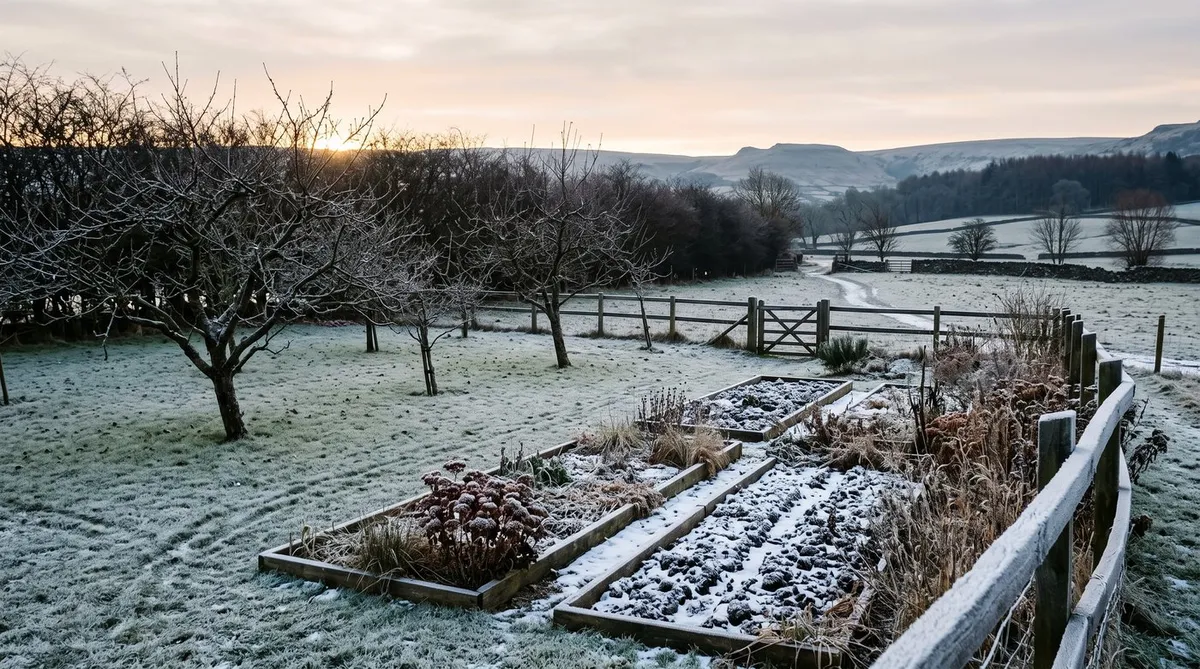
Everything in January hinges on soil temperature and soil moisture. Across the UK, topsoil at 10cm depth averages 2 to 5C through January. Southern coastal gardens run warmest, often 5 to 6C. Northern and upland gardens sit at 1 to 3C, and Scottish beds can stay frozen for a fortnight at a stretch.
That matters because almost nothing germinates below 7C. Broad beans need 5C as an absolute floor. Parsnips need 7C. Carrots want 8C or more. Sowing outdoors in January is not early, it is wasted seed.
Winter pruning apples and pears
Apples and pears are the headline January job, and the best reason to be outside this month. Both are fully dormant from leaf fall until bud burst, which in most of England falls in the first week of March. Pruning in that window means no sap loss and no active disease spores.
Work in three passes. First remove the three Ds: dead, diseased and damaged wood, cutting back to sound tissue. Second, take out crossing and rubbing branches, and anything growing into the centre. Third, thin the remaining crown so light and air reach every branch.
Two numbers keep you out of trouble. Never remove more than 20 percent of the canopy in a single winter, because harder cuts trigger a forest of water shoots the following June. And leave a 1 to 2mm collar at each cut rather than slicing flush, because the branch collar contains the tissue that seals the wound.
Restoration work on a neglected tree spreads over three winters, not one. Take a third of the intended reduction each year. A full guide to establishing and shaping the trees themselves sits in our apple tree growing guide, which covers rootstocks and spacings in detail.
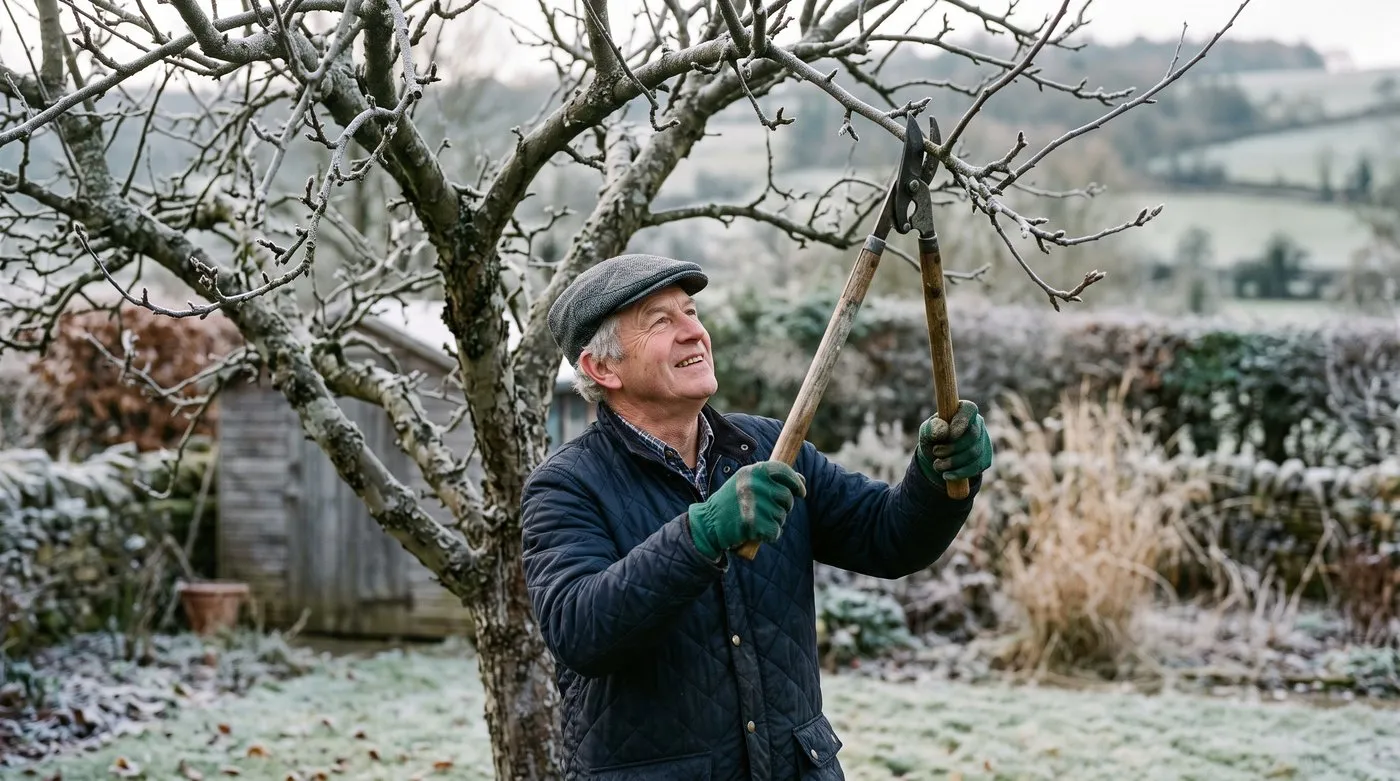 Winter pruning a mature Bramley on a frosty morning. Every cut is made to a bud or a branch collar, and no more than a fifth of the crown comes off in one season.
What you must not prune in January
This is where most January lists let readers down. They tell you to prune, and forget to say what to leave alone. Three groups must not be touched now.
Stone fruit comes first. Plums, cherries, gages, damsons, apricots and peaches should never be pruned between October and February. Open winter wounds are the entry route for silver leaf disease, caused by the fungus Chondrostereum purpureum, whose spores are airborne through the damp winter months. Prune stone fruit in June or July instead, in dry weather, when the tree seals wounds within days.
Spring-flowering shrubs are the second group. Forsythia, ribes, philadelphus, weigela and spring clematis all carry flower buds on wood made last summer. Prune them in January and you cut off the entire display. They get cut immediately after flowering, not before.
Evergreens and tender shrubs finish the list. Cutting hebe, choisya, pittosporum or bay in January exposes soft inner tissue to frost. Wait until April, when regrowth follows quickly enough to harden before the next cold snap. Hydrangea heads also stay on until March, because the dead flowerheads shield next year’s buds from frost.
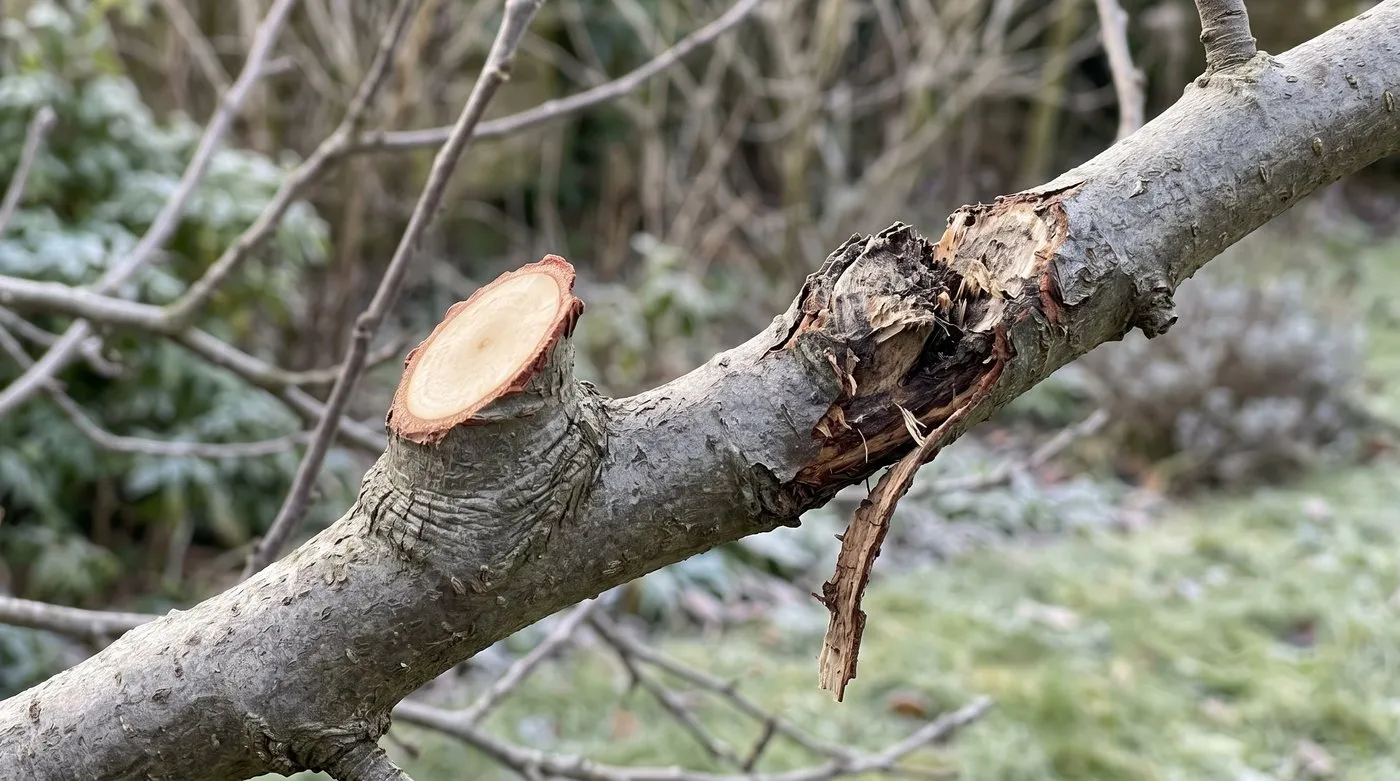 Left, a clean cut just outside the branch collar that will callus over within one season. Right, a flush cut into the trunk that leaves a wound the tree cannot seal.
Wisteria winter pruning back to two or three buds
Wisteria gets its second annual cut in January or February, and it is the single job that decides whether the plant flowers. Winter pruning must be finished by the end of February, before the buds swell.
In July or August you shorten the long whippy summer growth back to about five or six leaves. Now you go shorter still. Cut every one of those side shoots back to two or three fat buds from the permanent framework, leaving stubs of roughly 5 to 8cm.
The reason is visible on the plant. Flower buds are round, plump and slightly furry. Growth buds are narrow, flat and pointed. Cutting to two or three buds removes the leafy growth points and leaves the fat flower buds sitting on short spurs where they get full light. A well-spurred mature wisteria carries 60 to 120 racemes, against perhaps a dozen on an unpruned plant that has been allowed to run.
Do not skip a year. One missed winter cut produces a tangle of 2m whips and a plant that flowers only at the very top. Our step-by-step wisteria pruning guide walks through both cuts with timings.
The bare-root planting window and what it saves you
January sits in the middle of the bare-root season, which runs from November to late March while plants are dormant and lifted with no soil around the roots. This is the cheapest and best way to buy trees, hedging, roses and fruit bushes.
The saving is real. A bare-root hedging whip costs £1.20 to £3 against £8 to £15 for the same plant in a 3-litre pot. A bare-root apple on MM106 rootstock runs £18 to £28, where the potted equivalent is £40 to £55. Across a 30m hawthorn hedge that difference is well over £250.
Plant only when the ground is neither frozen nor standing in water. If a cold snap arrives on delivery day, heel the plants in: lay them in a shallow trench, cover the roots with soil or compost, and leave them there for up to three weeks. Full planting technique, including pit size and staking, is in our bare-root tree planting guide.
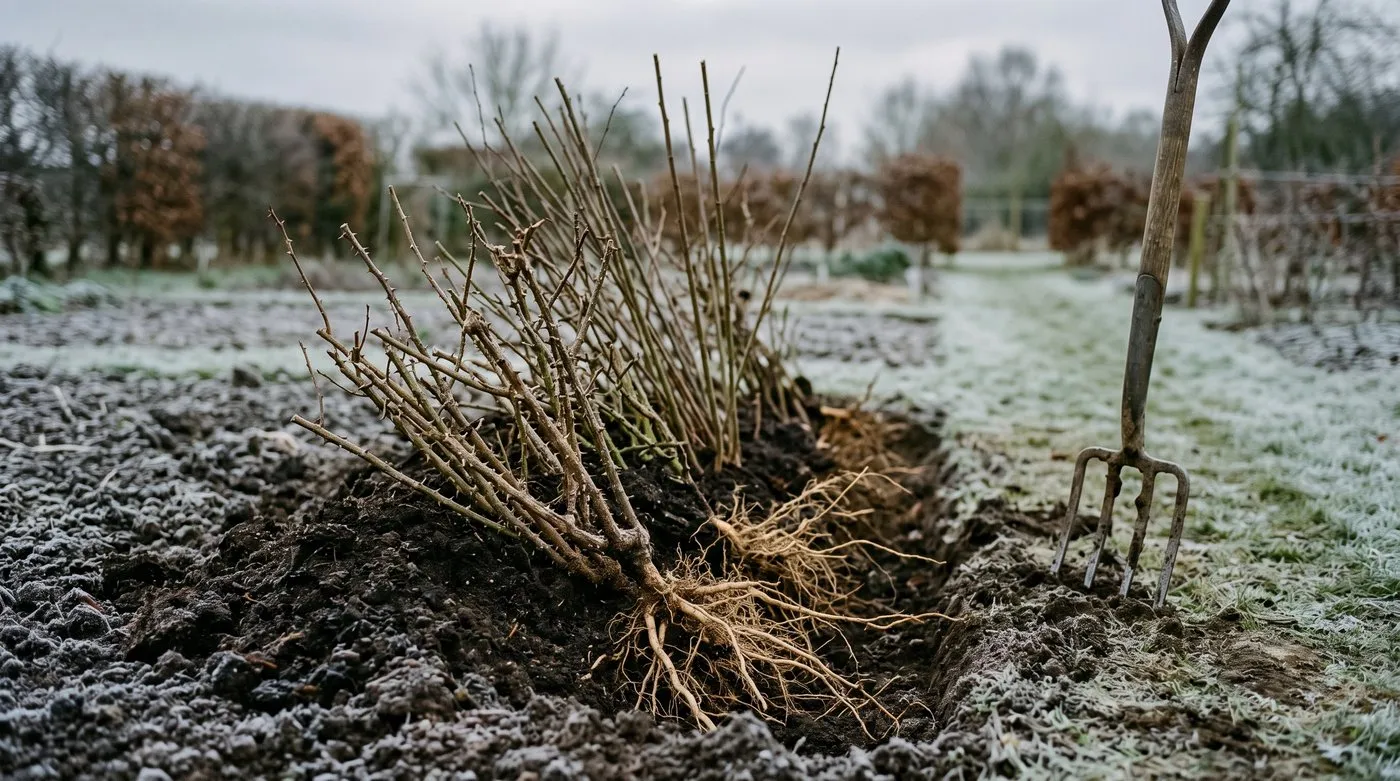 Bare-root stock heeled into a trench on delivery. Roots stay covered and damp for up to three weeks until the ground thaws enough to plant properly.
Rose planting and pruning timing by region
Roses are the job most often done at the wrong moment, because national advice ignores how wide the UK actually is. Bare-root roses can be planted any time from November to March when conditions allow, and January is a good slot.
| Region | Bare-root planting | Main hard prune | Typical last air frost |
|---|---|---|---|
| South West and South Coast | Nov to early Mar | Late Feb | Mid-April |
| South East and Midlands | Nov to Mar | Early Mar | Late April |
| North of England and Wales | Dec to Mar | Mid to late Mar | Mid-May |
| Scotland and upland gardens | Jan to early Apr | Late Mar to Apr | Late May to early June |
The one job to do everywhere in January is a wind-rock trim. Shorten tall stems on hybrid teas and floribundas by roughly a third, to about 60cm. That is not the main prune. It simply stops the plant rocking in gales and opening a funnel around the crown that fills with water and freezes.
Forcing rhubarb for a crop five weeks early
Forcing rhubarb is the most rewarding job available in January, and one of very few that produces food this early. Cover an established crown with a lightproof forcer from mid-January onwards.
Excluding light triggers etiolation. The plant burns stored root reserves reaching for daylight it cannot find, producing long, pale pink, tender stems with almost no oxalic acid bite. Under a forcer, stems reach pulling length in 5 to 8 weeks, against 10 to 14 weeks for an uncovered crown outdoors.
Three conditions matter. The crown must be at least three years old, or forcing will exhaust it. The forcer must be genuinely lightproof, so a terracotta forcer, an upturned dustbin or a bucket weighted with a brick all work. And a forced crown must then rest for two full seasons before being forced again.
‘Timperley Early’ is the variety to force if you are planting new, because it breaks dormancy earliest. ‘Victoria’ and ‘Champagne’ force well too. A purpose-made terracotta forcer costs £45 to £90, while a plastic dustbin does exactly the same job for under £12. Details on crown care and cropping are in our rhubarb growing guide.
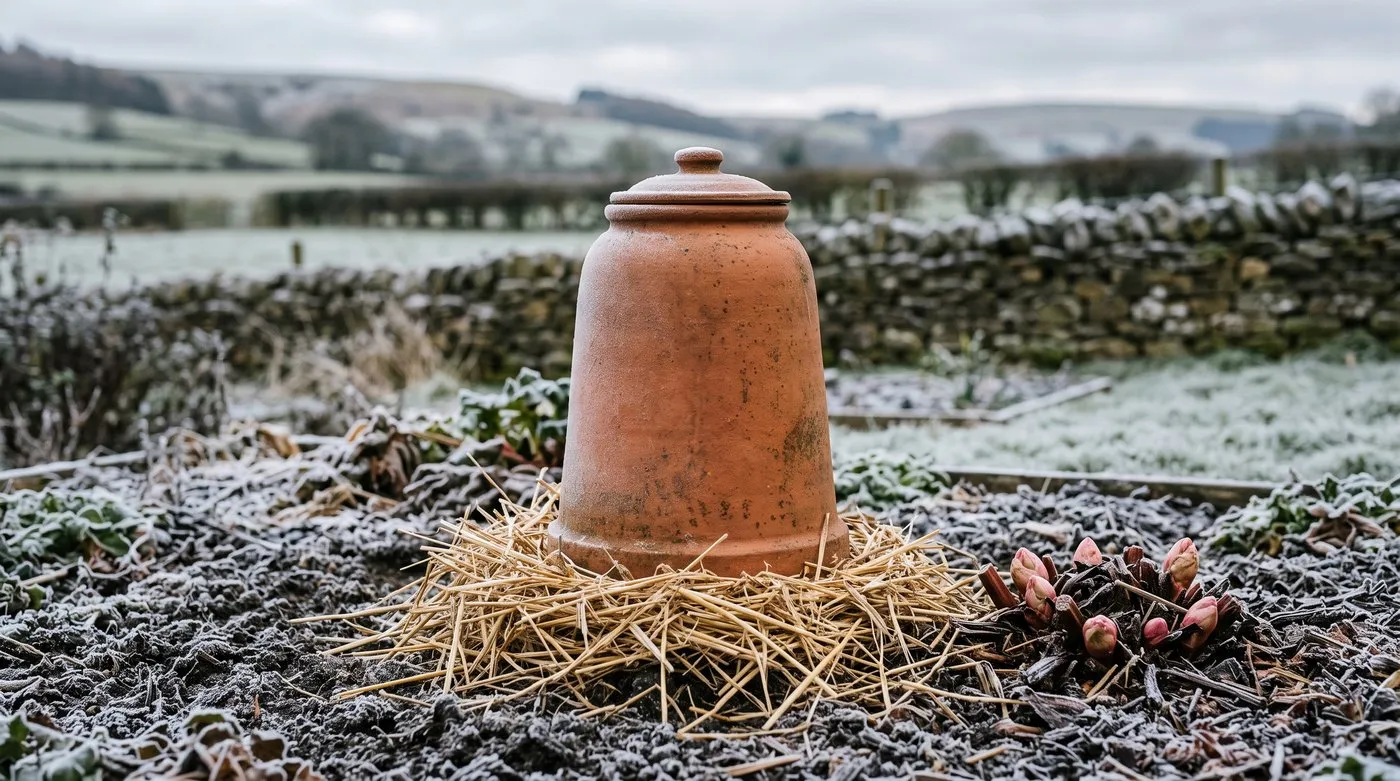 A terracotta forcer placed over a four-year-old Timperley Early crown in mid-January. Straw packed around the base lifts the temperature inside by 2 to 3C.
Why chitting potatoes in early January is too early
Chitting is the job January lists get most consistently wrong. Chitting means standing seed potatoes eyes-up in a cool, bright, frost-free place so they produce short, stubby, dark shoots before planting.
The process takes 4 to 6 weeks at 8 to 12C. Work backwards from your planting date. First earlies go out from mid-March in the South West, late March in the Midlands, and mid-April in Scotland and northern uplands. That puts the correct chitting start at early February in the south and late February further north.
Start on 2 January and by planting time your shoots are 10 to 15cm long, pale, brittle and snapping off in the bag. Every broken shoot is lost yield. The ideal shoot at planting is 1.5 to 2.5cm, dark green or purple, and thick as a pencil.
Light and temperature control everything. Chit in a cool bright room at 8 to 12C, never a dark shed and never an airing cupboard. Warmth without light gives you the long white sprouts you see on forgotten kitchen potatoes, which are useless. The full timing table belongs with your February jobs, not January.
Ordering seeds and building a real sowing plan
January is the month to order seed, and the only month with time to plan properly. Popular varieties sell out by mid-February, and most UK suppliers ship within a week in January against three weeks in March.
Build the plan around sowing dates, not wish lists. Take a sheet, list every crop, and write three columns: sow date, planting-out date, harvest window. Doing that reveals the two mistakes almost everyone makes. The first is sowing everything in one weekend in March. The second is having no succession, so 40 lettuces all mature in the same fortnight in June.
Order quantities honestly. A packet of tomato seed holds 10 to 25 seeds and most households need four plants. A packet of parsnip seed holds 300 and you will use them all, because parsnip seed loses viability within a year. Carrot, leek and onion seed also drop sharply after 12 months. Beans, peas, squash and brassicas keep 3 to 5 years in a cool dry tin.
Budget roughly £40 to £70 for a full season of vegetable seed for a family plot. Add £15 to £25 for seed compost. Buying in January rather than panic-buying in April typically saves 20 percent, because you buy to a plan instead of grabbing what is left on the rack.
The January job hierarchy, ranked by what it actually returns
Winter pruning is the gold standard January job. It is the only task this month whose effect compounds for decades, and it can only be done while the tree is dormant. Everything else has another window later in the year. Pruning does not.
Greenhouse, cold frame and structure checks
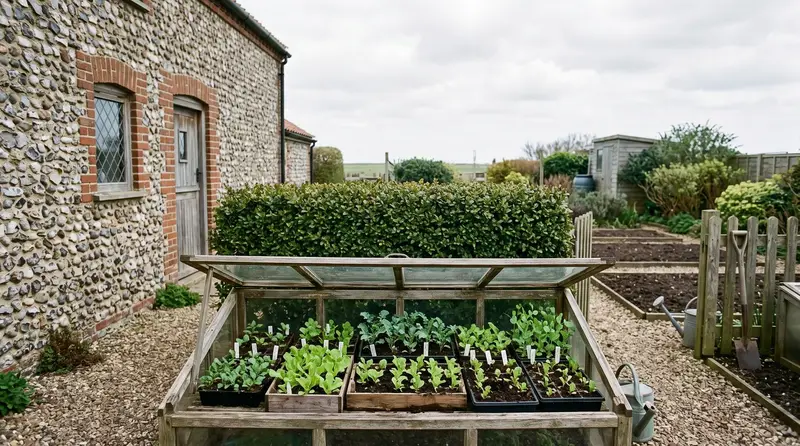
An unheated greenhouse in January runs about 2 to 4C above outside air overnight, and a cold frame with a fleece layer gains a similar amount again. Those few degrees are worth protecting, so January is the month to check the fabric.
Walk the structure and look for four things. Cracked or slipped panes, which lose heat and let in rain. Blocked or split gutters, which dump water against the base. Perished door and vent seals, which let a draught run straight through. And any wind damage to glazing clips, which are the usual failure point in gales.
Ventilate on any day above 7C, even in January. Still, damp, closed air is what causes grey mould, Botrytis cinerea, on overwintering plants. Open a vent for two hours in the middle of a mild day and close it by three o’clock.
Clean the glass now too. Winter light in the UK is scarce, and dirty glass cuts transmission by 10 to 20 percent. Wash both sides with warm water and a drop of detergent, then rinse. Overwintering pelargoniums and fuchsias want the compost kept just barely moist, watered perhaps once every three weeks, because more water at 5C simply rots the roots.
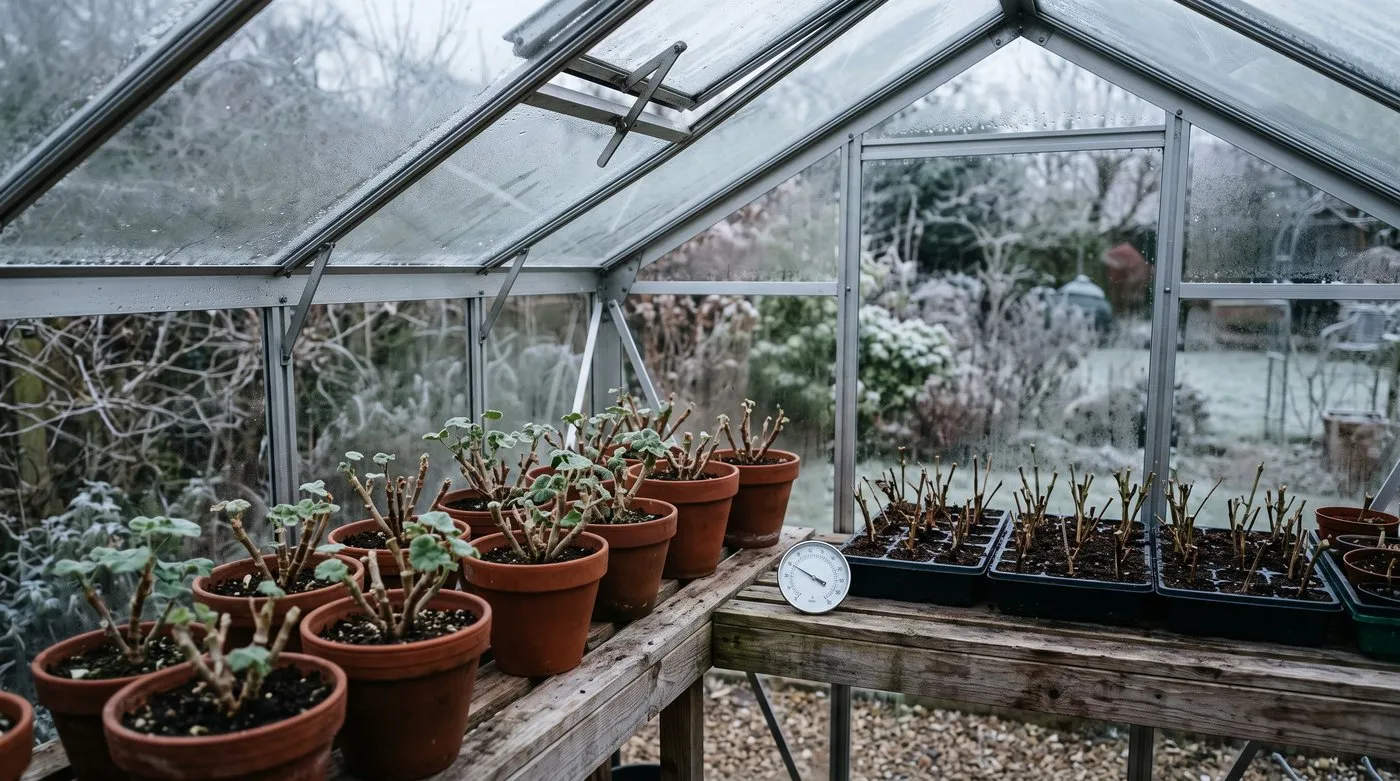 A January greenhouse check. Clean glass, an open vent on a mild afternoon and barely moist compost keep overwintering stock alive without heat.
Cleaning and sharpening tools, and why it pays
Wet January days are for the shed. This job produces no visible garden improvement and quietly improves everything you do for the next eleven months.
Work through each tool in four steps. Scrape off soil and sap, using paraffin or white spirit on secateur blades where sap has hardened. Remove rust with wire wool and a little oil. Sharpen the bevel. Then wipe over with a light machine oil, or linseed oil on wooden handles.
Sharpening angles matter. Secateurs and knives take a 20 to 25 degree bevel on the cutting face only, never the flat back. Spades and hoes take a blunter 30 to 45 degrees, which stands up to soil and stones. A diamond file at £8 to £15 does both.
A decent pair of bypass secateurs costs £25 to £60 and lasts a decade if serviced each January. Replacement blades and springs cost £8 to £20, so the same tool can outlive several sets of parts.
Tree ties, stakes and storm damage after winter gales
January follows the two windiest months of the British year, so this is the month to walk the garden and look up. Named storms typically bring gusts of 60 to 80mph to exposed UK gardens between November and February.
Check every stake and tie. Ties should be firm but not tight, with a spacer between stake and trunk. A tie that has been on for two seasons will often have bitten into the bark, and a girdled trunk eventually snaps at that point. Loosen or replace anything that has cut in.
Look for root rock on newly planted trees. If a shallow crater has opened around the base, water is running straight to the roots and freezing there. Firm the soil back with your heel and re-stake low, at about a third of the tree’s height, so the top can still flex.
Check fence panels, arches and obelisks too. And look hard at heavy climbers on walls. A saturated, snow-loaded climbing rose or ivy can pull trellis clean off masonry in a gale.
Stakes should come off entirely after two to three years. A tree left staked longer never builds the trunk taper it needs, because it has never had to hold itself up.
Protecting containers from frost heave and waterlogging
Containers suffer more than beds in January, and the damage is mechanical rather than simply cold. Frost heave happens when water in the compost freezes and expands by about 9 percent in volume. That expansion shears fine roots and can lift a plant physically out of its pot.
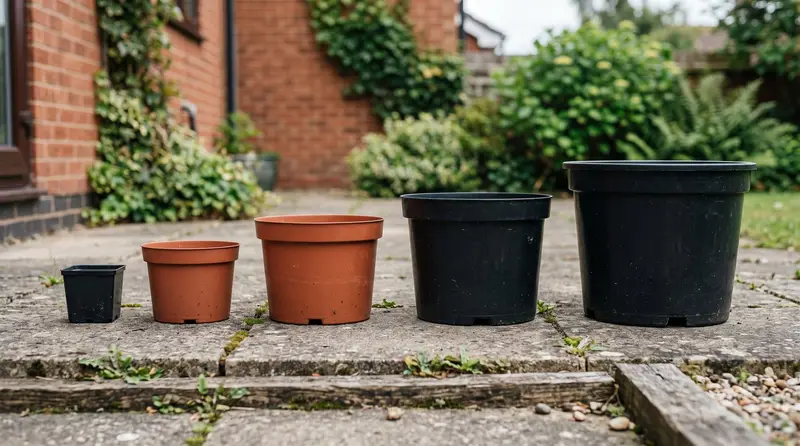
Three defences work. First, raise every pot on feet or bricks so drainage holes stay clear. A pot sitting in a saucer of water is the commonest killer of overwintering shrubs. Second, insulate the sides with bubble wrap, hessian or a fleece jacket, because it is the root ball, not the top growth, that needs protecting. Third, group pots together against a house wall, where the wall radiates stored heat and gives you 1 to 2C.
Terracotta cracks when saturated clay freezes. Frost-proof terracotta is fired to a higher temperature and is worth the £15 to £40 premium on large pots. Glazed and plastic pots survive better but still need raising.
Move genuinely tender specimens, such as citrus, olive in a young pot, or agapanthus in the north, into a frost-free porch or greenhouse. And stop feeding entirely. Feeding in January pushes soft growth that frost then kills.
 Containers raised on pot feet and wrapped in hessian on a Derbyshire patio. Raising the pots clear of standing water matters more than the wrapping.
Feeding wildlife through the hardest month
January is the hardest month of the year for garden birds. Natural seed and berry supplies are exhausted, invertebrates are inactive, and nights run to 14 hours or more. A small bird such as a blue tit can lose 5 to 10 percent of its body weight overnight in cold conditions and must replace it the next day.
Feed high-fat, high-calorie food. Sunflower hearts, fat balls, peanuts in mesh feeders, and dried or live mealworms all work. Avoid whole peanuts in open trays and any loose netting, both of which are genuine hazards. Put food out first thing in the morning and again mid-afternoon, which matches natural feeding peaks.
Water matters as much as food. Birds need drinking and bathing water daily, and clean feathers are what keeps them insulated. Break the ice on baths every morning. Never add salt, glycerine or antifreeze. A ping pong ball floating on the surface slows freezing, and a shallow dish refilled with warm water each morning is the simplest answer.
Hygiene is not optional. Clean feeders weekly with a dilute disinfectant and rinse fully, because dirty feeders spread trichomonosis, which has cut UK greenfinch numbers by more than 60 percent since 2006. The British Trust for Ornithology publishes the current garden bird guidance. Our own seasonal bird feeding guide sets out what to put out month by month.
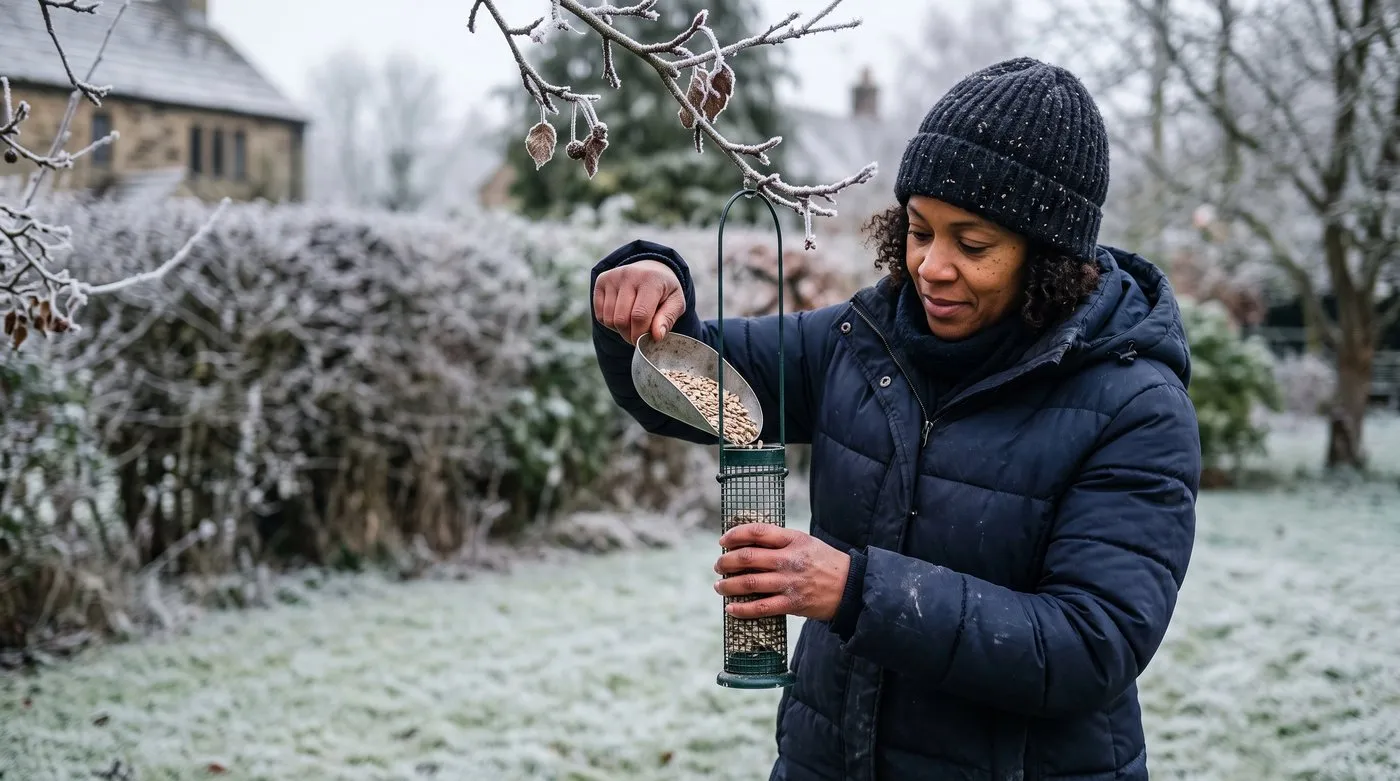 Refilling a feeder with sunflower hearts on a January morning. Feeders need emptying, cleaning and refilling weekly, not simply topping up.
Snow load on hedges, greenhouses and shrubs
Snow is a structural problem, not a cold problem. Wet UK snow weighs roughly 200 to 300kg per cubic metre, so a 10cm layer across a 2m by 1m hedge top puts perhaps 50kg on the plant.
Brush snow off in three places. Conifer and evergreen hedges, where the weight splays the top open into a permanent V that never closes. Greenhouse and cold frame roofs, where load can crack glass and bend aluminium glazing bars. And evergreen shrubs with an upright habit, such as Irish yew or fastigiate box, where branches spring apart and stay apart.
Brush upwards from underneath with a soft broom, not downwards. Downward strokes snap frozen, brittle branches. Do it while the snow is fresh and light, before it partly thaws and refreezes into a solid mass.
Leave snow on the ground, though. A snow layer insulates soil and often keeps root zones warmer than bare frozen ground. It also protects low alpines and overwintering greens from wind chill. Never use salt near beds or lawns, because sodium destroys soil structure and scorches roots at the edges.
Why January gardens go wrong before spring even starts
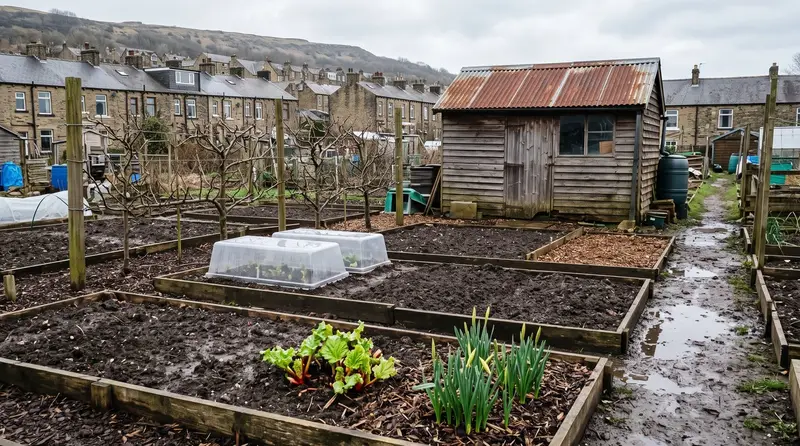
The root cause of most January garden damage is not frost. It is working wet soil, and it is missed because the damage does not appear until months later.
Soil structure depends on crumbs held together by fungal threads, root exudates and air spaces. In January those spaces are full of water. Pressure from a boot or a fork squeezes the water out and collapses the crumb into a solid mass. Bulk density rises, air-filled porosity falls below the 10 percent that most roots need, and the bed drains poorly for the rest of the year.
By the time you notice, in a dry June, the connection is invisible. The bed simply looks tired and everything in it looks stunted. Gardeners then blame the compost or the season.
January week by week
| Week | Focus | Specific jobs |
|---|---|---|
| Week 1 | Assess and plan | Log soil temperature, order seed catalogues, list every crop with a sow date |
| Week 2 | Prune | Start apples and pears, begin the wisteria winter cut, wind-rock trim on tall roses |
| Week 3 | Plant and force | Plant bare-root stock if unfrozen, place rhubarb forcers, heel in any delayed deliveries |
| Week 4 | Structure and prep | Greenhouse clean and vent check, tool sharpening, tree ties and stakes, order seed potatoes |
| All month | Wildlife | Daily high-fat feed, break ice on water, weekly feeder clean |
| All month | Avoid | No digging wet soil, no outdoor sowing, no stone fruit pruning, no chitting yet |
Common January gardening mistakes
- Digging or forking wet ground. It feels productive on a rare dry day in January, but the soil beneath is still saturated. The result is compaction that takes two seasons to reverse. Wait until a handful crumbles instead of smearing.
- Pruning plums and cherries with the apples. Both are fruit trees, so people do them on the same afternoon. Stone fruit pruned in winter is wide open to silver leaf spores. Prune those in June or July on a dry day.
- Chitting seed potatoes on New Year’s Day. Enthusiasm outruns the calendar. Six weeks too early gives brittle 12cm shoots that snap on planting. Start in February, and later in the north.
- Sowing outdoors because a mild week arrives. A run of 12C days in January feels like spring, but soil at 10cm is still 3 to 4C and lags air temperature by weeks. Seed sits, absorbs water and rots.
- Leaving pots standing in saucers. Saucers are useful in July and lethal in January. Water collects, freezes and shears the roots. Empty them, and lift every container onto feet.
What January actually costs
January is a cheap month if you plan and an expensive one if you do not. Realistic UK figures for a typical family garden are below.
Seed and seed potatoes come to £40 to £70 for a full season, plus £8 to £15 for a few kilos of seed potatoes. Bare-root stock is where the money goes and where the savings are: hedging whips at £1.20 to £3 each, a fruit tree at £18 to £28, a bare-root rose at £12 to £20.
The hidden costs are the ones people forget. Horticultural fleece runs £6 to £15 a roll and needs replacing every two or three seasons. Bird food is genuinely ongoing, at roughly £20 to £35 a month if you feed properly through a hard winter. Replacement tree ties, stakes and pot feet add another £15 to £30. A diamond sharpening file is £8 to £15 and lasts years.
Set against that, doing the January work properly avoids costs later. A tree lost to a girdling tie costs £25 to replace and four years to catch up. A collapsed clay bed costs two seasons of poor cropping. Neither shows on a January receipt.
Frequently asked questions
What should I do in the garden in January in the UK?
Prune apples and pears, plant bare-root stock, force rhubarb and service tools. January soil sits at 2 to 5C, so nothing sown outdoors will germinate. The productive work is dormant pruning, planting fully dormant plants, and getting equipment and seed orders ready for March.
Is it too cold to dig the garden in January?
Yes, in most of the UK January soil is too cold and too wet to dig. Clay soils hold 35 to 45 percent water by volume in midwinter. Walking or forking that destroys crumb structure and creates a pan that takes two seasons to repair.
Can I prune fruit trees in January?
Yes, prune apples and pears in January while they are fully dormant. Aim to finish before bud burst in early March. Never prune plums, cherries, gages or apricots now, because open winter wounds invite silver leaf disease.
Should I chit potatoes in January?
No, early January is too soon for most of the UK. Chitting takes 4 to 6 weeks, and first earlies go out from mid-March in the south. Start chitting in early February in southern England and late February further north.
When should I prune wisteria in winter?
Prune wisteria between December and the end of February. Cut the shortened summer side shoots back to two or three fat buds from the main framework. That concentrates the plant’s energy into flower buds rather than leafy whip growth.
Is January a good time to plant bare-root roses and trees?
Yes, provided the ground is neither frozen nor waterlogged. Bare-root stock is fully dormant from November to March. It costs 30 to 60 percent less than container-grown plants and establishes faster because the roots grow straight into native soil.
What should I feed birds in January?
High-fat foods: sunflower hearts, fat balls, peanuts and mealworms. January is the hardest month for garden birds, with natural food gone and nights of 14 hours or more. Fresh unfrozen water matters as much as food, so break ice daily.
Now you know which January jobs are worth your time, check what can actually go in the ground with our guide to what to plant in January, or work through more seasonal tasks in our how-to guides.
Our team produces practical UK gardening guidance from source research, contributor records and established horticultural practice. Editorial standards are overseen by Matt W.