Key takeaways
- UK soil at 10cm rises from about 4C to 7C across February, the sowing threshold
- Chit seed potatoes from early February in the south, late February in the north
- Chillies need 25 to 30C to germinate, aubergines 24 to 28C, onions just 15 to 20C
- A cloche gains 2 to 4C of soil warmth, fleece gains 2 to 3C of air protection
- Sowing tomatoes in February wastes six weeks unless you have heat and grow lights
- Cut grasses and prune group 3 clematis before growth restarts, not after
Working out what to do in the garden in February means learning when to start, and more importantly when not to. February is the pivot month of the British gardening year. Soil temperature climbs, daylight stretches by nearly two hours, and the urge to sow everything becomes almost impossible to resist. That urge is the single biggest February mistake. Seedlings started too early in weak northern light stretch, weaken and get overtaken by plants sown six weeks later. This guide covers the thirteen jobs that genuinely pay off in February, the germination temperatures that decide success, and the honest regional timings for chitting, sowing and soil warming.
The February temperature numbers that decide everything
February soil is on the move. Across the UK, topsoil at 10cm depth typically starts the month at 4 to 5C and ends it at 6 to 8C. Southern coastal gardens can reach 9C by the last week. Northern and upland beds often sit at 3 to 5C right through.
7C is the working threshold. Below it, most seeds absorb water and rot rather than germinate. Above it, hardy crops such as broad beans, early peas, spinach and radish will start.
Daylight is the other number, and it is the one gardeners forget. On 1 February, London gets 9 hours 5 minutes of daylight and Edinburgh gets 8 hours 30 minutes. By 28 February that has risen to about 11 hours. Intensity matters more than duration though, and February light on a windowsill delivers a fraction of what a March greenhouse gives.
That combination explains why February works for some crops and fails badly for others. Slow, heat-loving crops with a long lead time genuinely need starting now. Fast crops with short lead times do not, and starting them early actively harms them.
Measure rather than guess. A soil thermometer costs £8 to £20 and settles every February argument in your own garden.
Chitting seed potatoes properly, and when to start
Chitting means standing seed potatoes with the blunt eye end uppermost in a cool, bright, frost-free place so they grow short sturdy shoots before planting. It brings the harvest forward by roughly two to three weeks and lifts first-early yields by around 10 to 15 percent in our own side-by-side trials.
Get three variables right. Temperature should be 8 to 12C. Warmer than 15C and the shoots come long, pale and weak. Colder than 5C and nothing happens. Light must be good but indirect, because it is light that keeps shoots short and dark. Time is 4 to 6 weeks.
Start dates depend entirely on where you garden. In the South West and South Coast, chit from the first week of February for a mid-March planting. In the Midlands and South East, chit from mid-February for late March. In the north of England, Wales and Scotland, start in the last week of February for an April planting.
The target at planting is a shoot 1.5 to 2.5cm long, thick, dark green or purple. Anything over 4cm is too long and snaps in the bag. Egg boxes, seed trays and old apple crates all work. Give each tuber its own space so shoots do not tangle. Our guide to when to plant potatoes in the UK sets out the full regional planting calendar.
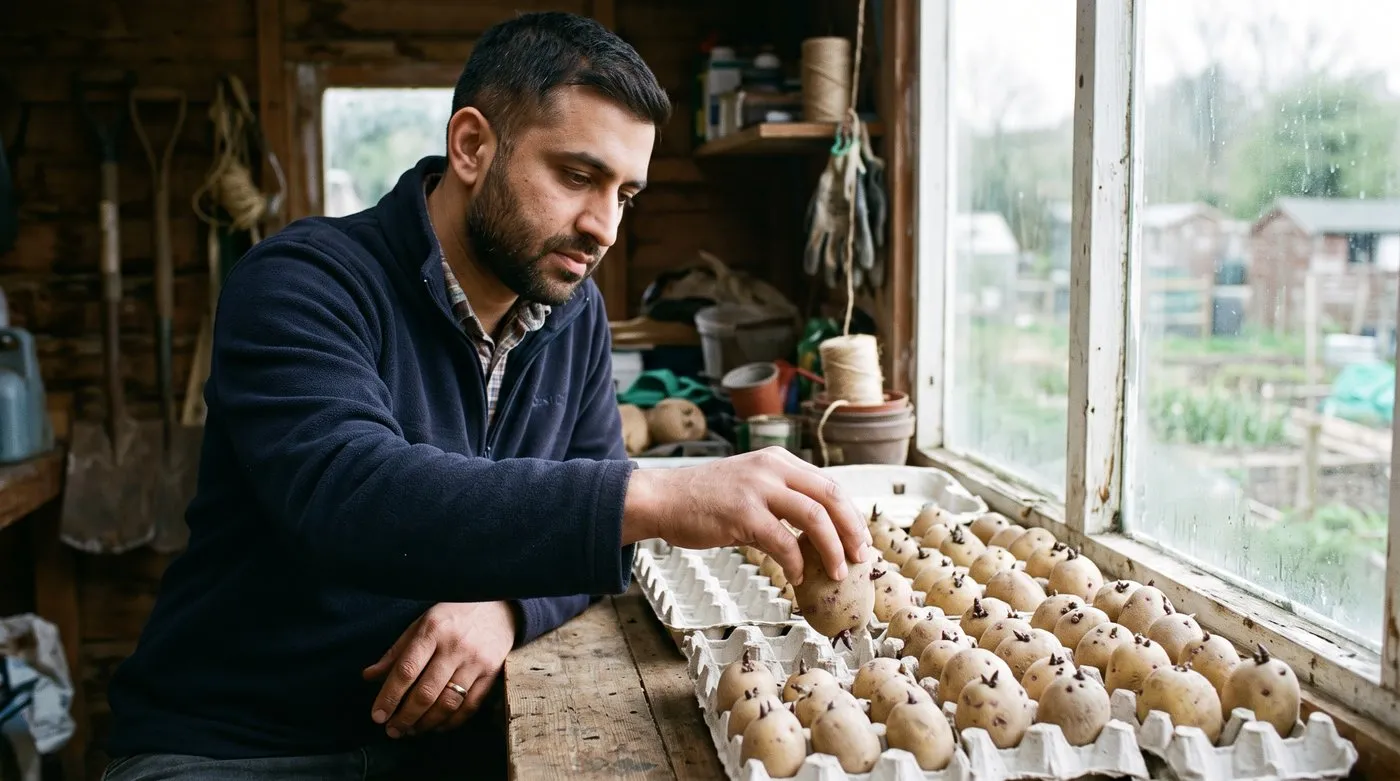 Setting seed potatoes to chit on a bright, cool windowsill in a Sheffield allotment shed. Each tuber stands eyes-up with space around it so shoots stay short and thick.
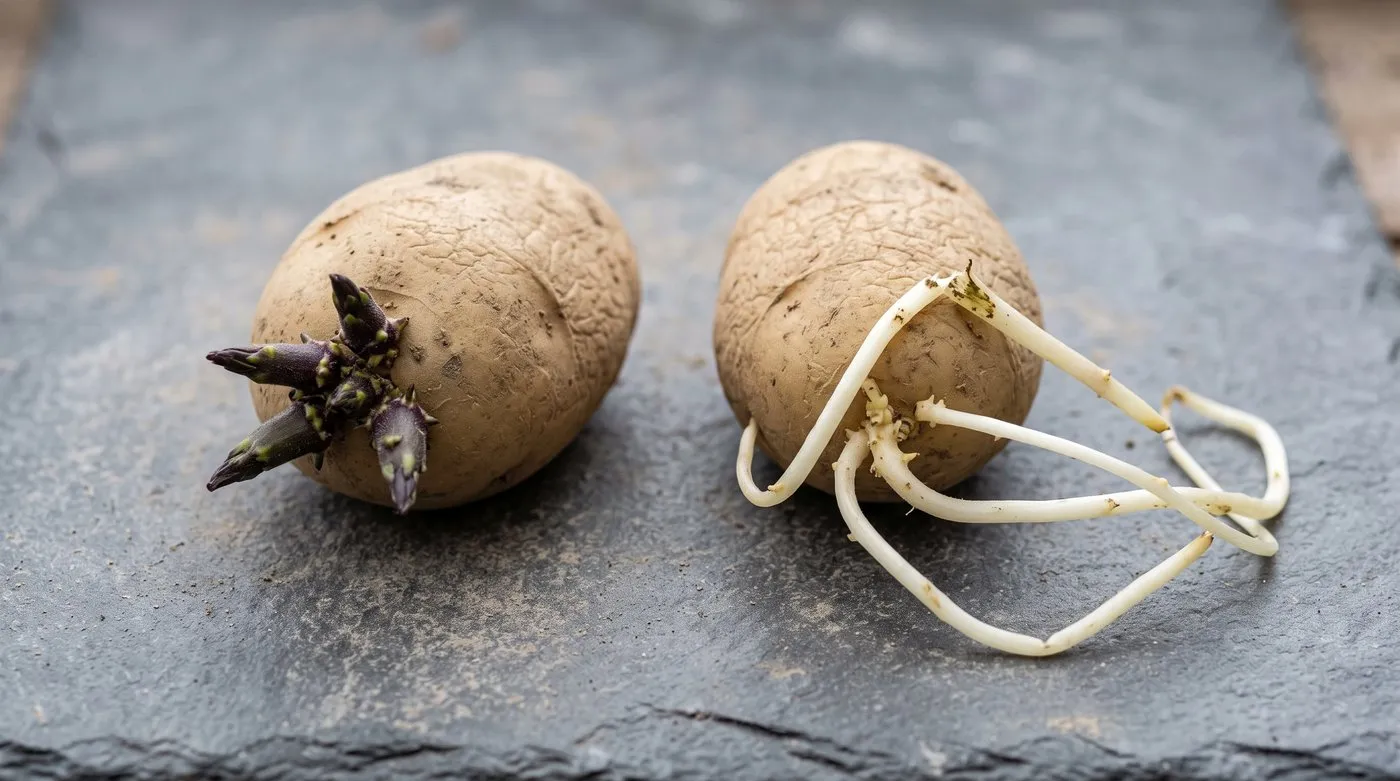 Left, a correctly chitted tuber with dark stubby shoots of about 2cm. Right, the result of starting six weeks too early in a warm dark cupboard: long white sprouts that snap on planting.
Sowing under cover with heat: exact germination temperatures
The crops worth starting in February all share one trait: a long season from sowing to harvest. Chillies, sweet peppers, aubergines and onions from seed need 6 to 9 months, so February is genuinely the right moment.
Every one of them needs bottom heat. Germination temperature is not the same as growing temperature, and this is where most February sowings fail.
| Crop | Germination temp | Days to germinate | Sow date | Notes |
|---|---|---|---|---|
| Chilli peppers | 25 to 30C | 7 to 21 | Early to mid Feb | Habanero types need the top of the range |
| Sweet peppers | 22 to 28C | 8 to 14 | Mid Feb | Slightly faster than chillies |
| Aubergines | 24 to 28C | 8 to 16 | Early to mid Feb | Very poor below 20C |
| Onions from seed | 15 to 20C | 7 to 12 | Mid to late Feb | Does not want high heat |
| Leeks | 15 to 20C | 10 to 14 | Late Feb | Sow in modules, plant out May |
| Sweet peas | 12 to 18C | 10 to 21 | Feb, in root trainers | Cool germination, hates heat |
| Broad beans | 5 to 15C | 10 to 20 | Late Feb under cloches | Will start in cold soil |
A heated propagator costs £25 to £70 and a bare heat mat with a thermostat runs £20 to £45. Both pay for themselves in a single season of chillies.
The critical move is taking seedlings off the heat the moment they emerge. Heat drives germination. After that, warmth without light causes stretching. Move them to the brightest windowsill or greenhouse bench you have, at 15 to 18C. Full crop-by-crop figures are in our seed germination temperature table.
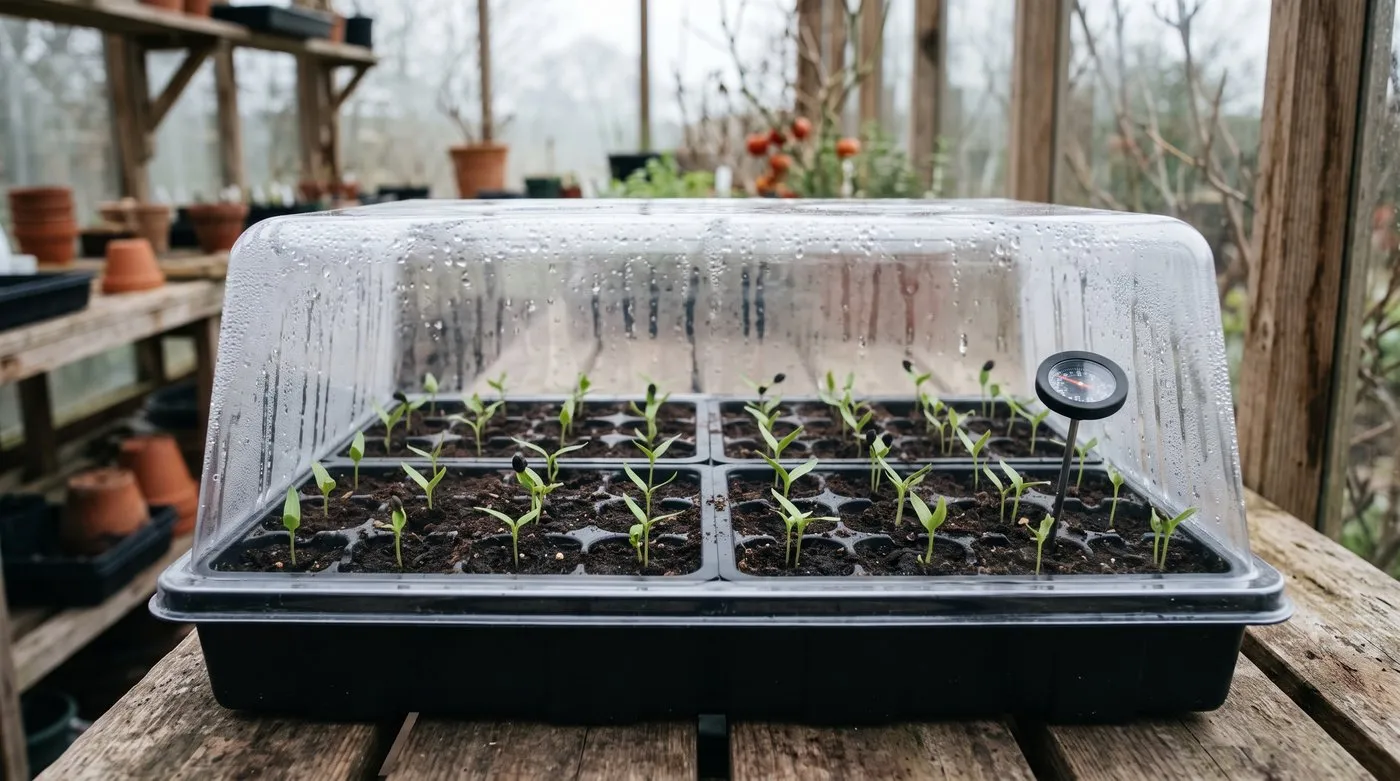 Chilli seedlings on a thermostatic propagator in late February. Once the paired oval seed leaves open, the trays come off the heat and go straight to the brightest bench.
Why sowing tomatoes in February usually backfires
Tomatoes are the classic February mistake, and the reason is light rather than temperature. Tomato seed germinates happily at 18 to 24C, which any windowsill propagator provides. The problem starts three days later.
A tomato seedling needs roughly 12 to 16 hours of bright light to build short internodes and thick stems. A north Midlands windowsill in mid-February delivers perhaps 9 hours of weak, diffuse light through glass, and the plant responds by etiolating: stretching towards the strongest source, producing pale, thin, floppy stems.
You can then either plant that leggy seedling deep and hope, or nurse it for six weeks in a space it will outgrow. Neither beats simply waiting. Tomatoes go from sowing to first ripe fruit in 16 to 20 weeks, so a mid-March sowing still fruits from late July.
February tomato sowing only works with real supplementary lighting. A full-spectrum LED bar of 30 to 60W run for 14 hours a day costs £35 to £90 to buy and about £4 to £7 a month to run. With that, February sowing genuinely gains three weeks. Without it, you lose ground.
Warning: Do not confuse a heated propagator with a grow light. A propagator supplies heat only, and heat in low light is exactly what produces leggy seedlings. If your February seedlings are pale and stretching by day five, move them somewhere brighter and cooler immediately rather than warmer.
Cutting back grasses and perennials before growth restarts
Late February is the last clean window to cut back last year’s dead top growth, and the timing is tight. Do it too early in December and you lose the winter structure and the frost protection those stems give the crown. Do it in late March and you shear off the new shoots.
Deciduous grasses get cut hard. Miscanthus, Calamagrostis, Panicum and Molinia all come down to 5 to 10cm above the crown with shears or a hedge trimmer. Gather the stems into a bundle with twine first, then cut below the tie, and the whole lot lifts out in one piece.
Herbaceous perennials such as sedum, rudbeckia, echinacea, phlox and achillea come down to the crown now. Leave the cut stems in a loose pile at the back of the border for a fortnight so overwintering ladybirds and lacewings can move out.
Look at the base before you cut. If you can already see pale new shoots pushing at the crown, cut carefully by hand rather than reaching for shears.
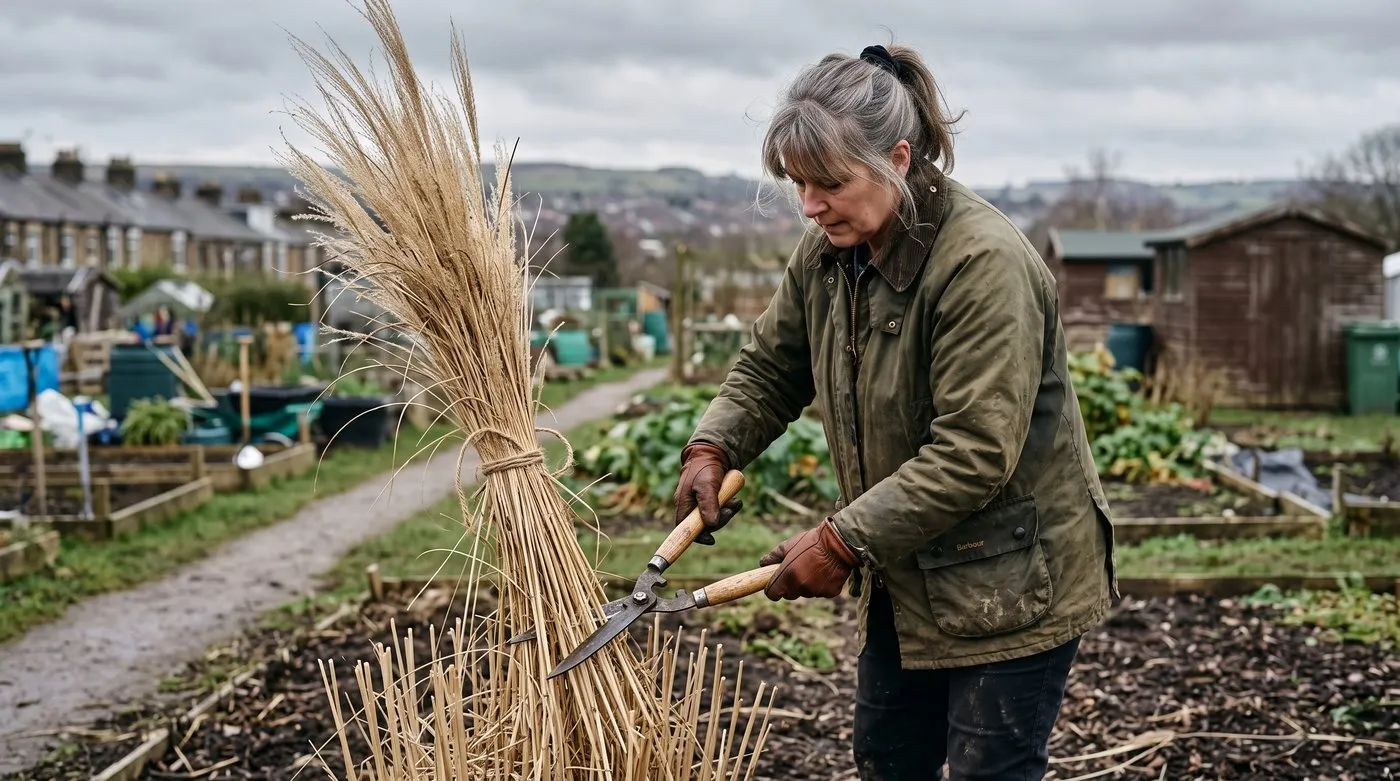 Cutting deciduous Miscanthus down to 8cm in late February. Tying the stems into a bundle before cutting means the whole clump lifts away in one armful.
Pruning group 3 clematis, dogwoods and willows
February is the month for hard pruning anything that flowers or colours on wood it has not grown yet. Three groups matter.
Group 3 clematis flower from midsummer on the current season’s growth. That covers Clematis viticella, C. texensis, ‘Jackmanii’, ‘Ville de Lyon’ and ‘Polish Spirit’. Cut the whole plant down to a strong pair of buds 20 to 30cm from the ground in February. It looks brutal and it is correct. Group 1 and group 2 clematis are pruned quite differently, and our guide to pruning clematis by group explains how to tell which you have.
Dogwoods grown for winter stem colour need coppicing now. Cornus alba ‘Sibirica’, C. sanguinea ‘Midwinter Fire’ and C. sericea ‘Flaviramea’ all produce their brightest bark on one-year-old wood. Cut every stem back to a low framework 15 to 30cm from the ground once the display fades in late February. Colour intensity drops by more than half on three-year-old stems, which is why unpruned dogwoods look dull. Establishment and variety detail is in our dogwood growing guide.
Willows grown for coloured stems, such as Salix alba var. vitellina ‘Britzensis’, get the same treatment. Coppice hard to a stool, or pollard at 1.5m if you want height.
Feed and mulch after any hard cut. A hard-pruned dogwood has to rebuild 1.5m of growth in one season, and it cannot do that on empty soil.
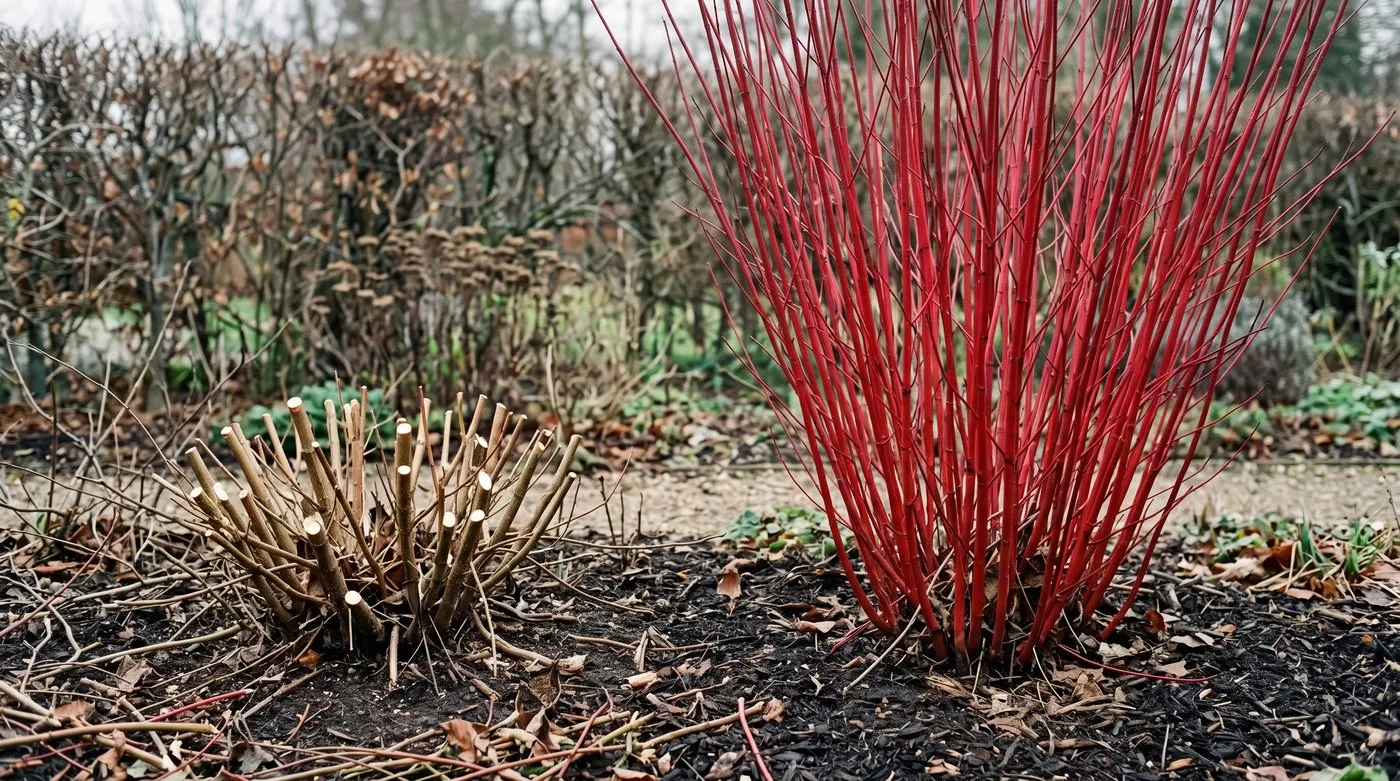 Cornus alba cut back to a 20cm framework in late February, beside an uncut clump. The new growth that follows carries next winter’s brightest colour.
Summer versus autumn raspberry pruning
Raspberry pruning is the job most often done to the wrong plant at the wrong time, and getting it wrong costs a whole year of fruit. The rule depends entirely on which type you have.
Autumn-fruiting raspberries such as ‘Autumn Bliss’, ‘Polka’ and ‘All Gold’ fruit on primocanes, the canes grown in the current season. In February, cut every single cane to ground level. There is nothing to save. New canes rise in spring and fruit from August to October.
Summer-fruiting raspberries such as ‘Glen Ample’, ‘Malling Jewel’ and ‘Tulameen’ fruit on floricanes, the canes grown last year. Cutting those to the ground in February removes the entire crop. Those are pruned straight after harvest in August, when you cut out the fruited canes and tie in the new ones.
If you do not know which you have, look at the canes now. Autumn types show a clear band of dead, brittle fruited tips from last year’s crop over most of the cane. Summer types have clean, healthy, brown one-year canes with no fruited tips.
February is also the moment to thin. Leave 6 to 8 strong canes per metre of row and cut the rest out at the base. Crowded rows produce small fruit and hold humidity, which invites cane spot and botrytis. Full training and support detail sits in our raspberry growing guide.
What warming the soil with cloches and fleece actually gains
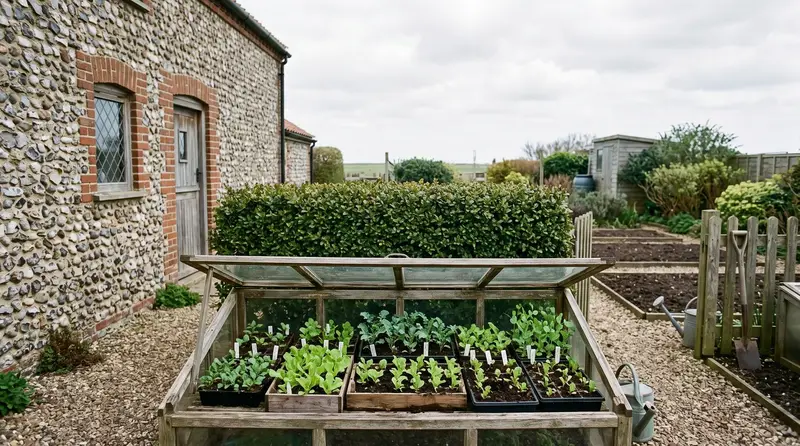
The rigid cloche is the gold standard February tool, because it does both jobs. Black polythene warms soil faster but gives no frost protection and must be lifted before sowing. Fleece is widely misunderstood: at 30gsm it holds air warmth around foliage but barely touches soil temperature.
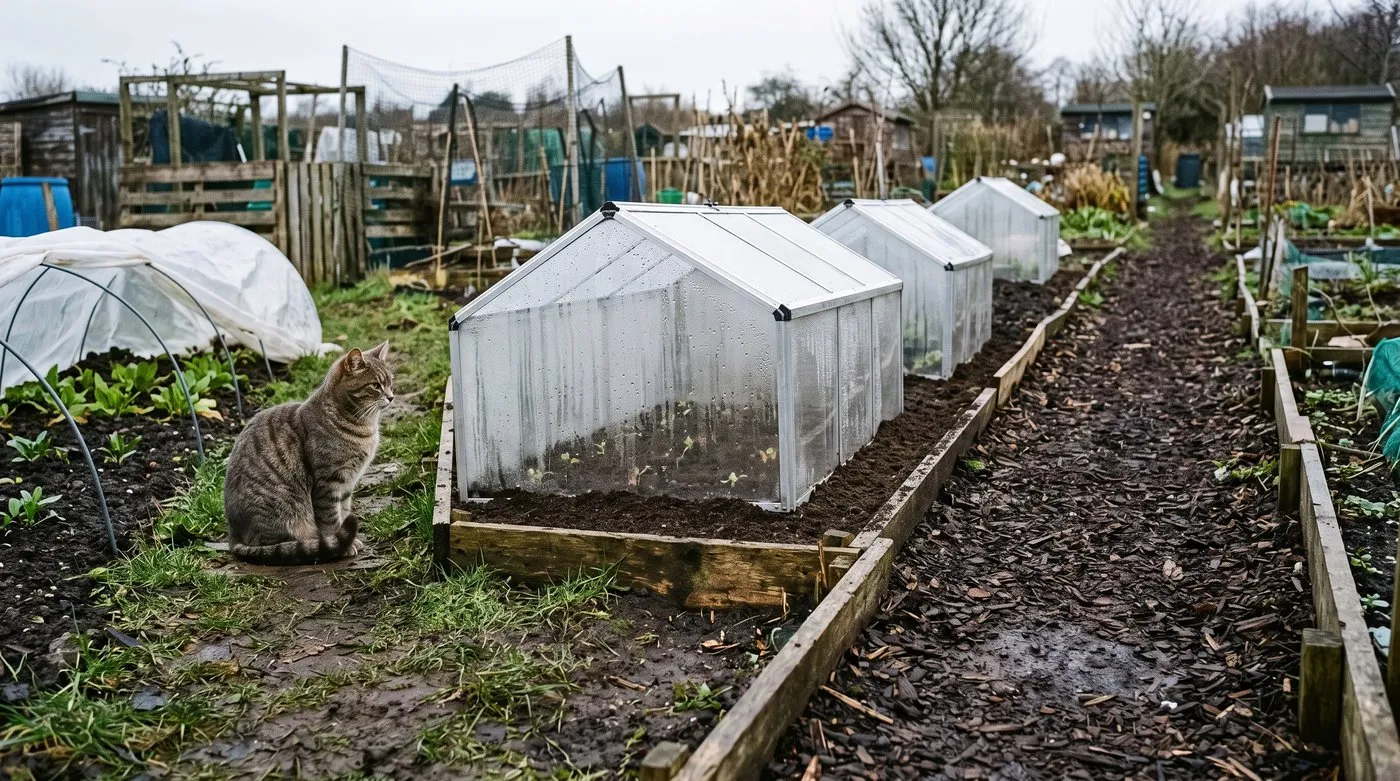 Cloches placed over prepared beds three weeks before the first sowing. A tabby allotment cat has claimed the warm end. The covered soil reads 3C above the open bed alongside.
Manure, mulch and feeding the soil before spring
February is the best mulching month of the year. The soil is bare, weeds have not started, and there is time for worms to pull material down before planting.
Spread 5cm of well-rotted manure or garden compost across the surface of every bed. Do not dig it in. Surface mulching keeps soil structure intact, feeds the fungal and bacterial life in the top layer, and lets earthworms do the incorporation. A 5cm layer over a 10 square metre bed takes roughly 500 litres, or about eight standard builders’ bags of compost.
Manure must be genuinely well rotted, meaning at least 12 months old, dark, crumbly and with no ammonia smell. Fresh manure scorches roots and causes forking in carrots and parsnips. There is a second risk worth knowing about: aminopyralid contamination, a persistent herbicide used on grassland that survives composting and destroys tomatoes, potatoes and beans at tiny concentrations. Garden Organic publishes the current guidance on testing suspect manure before it goes anywhere near a bed.
Feed hungry permanent plants now too. Fruit trees, bushes and roses take a general fertiliser at 70g per square metre in late February, spread over the root zone and lightly hoed in. Follow it with mulch, keeping the material 5cm clear of trunks and stems.
Gardener’s tip: Test a suspect batch of manure before you spread it. Sow six broad bean seeds in a pot of the manure and six in ordinary compost. If the manure-grown seedlings emerge with cupped, fern-like, twisted leaves within three weeks, the batch is contaminated. That £0 test has saved us an entire season twice.
Dividing snowdrops in the green and other February bulb work
Snowdrops are the one bulb that should be moved while in leaf, and February is the window. In the green means lifting and splitting clumps just after flowering while the foliage is still growing, typically between mid-February and mid-March.
Dry snowdrop bulbs establish poorly because they lose moisture quickly and often fail to root. Split a clump in the green and you get establishment rates well above 90 percent, against perhaps 50 to 60 percent from dry autumn bulbs.
The method is simple. Lift a congested clump with a fork, keeping the root ball whole. Tease it apart into groups of three to five bulbs, never single ones. Replant immediately at the same depth, roughly 8 to 10cm, spacing the groups 10cm apart. Water them in, even in wet weather, to settle the soil around the roots.
Divide every three to four years. A clump that flowered well for years and has thinned to leaves in the centre is telling you it is congested and starved.
Two other bulb jobs belong to February. Deadhead early daffodils as the flowers fade but leave the leaves alone for six full weeks after flowering. And plant summer bulbs such as lilies and ranunculus into pots under cover, ready to move out in April.
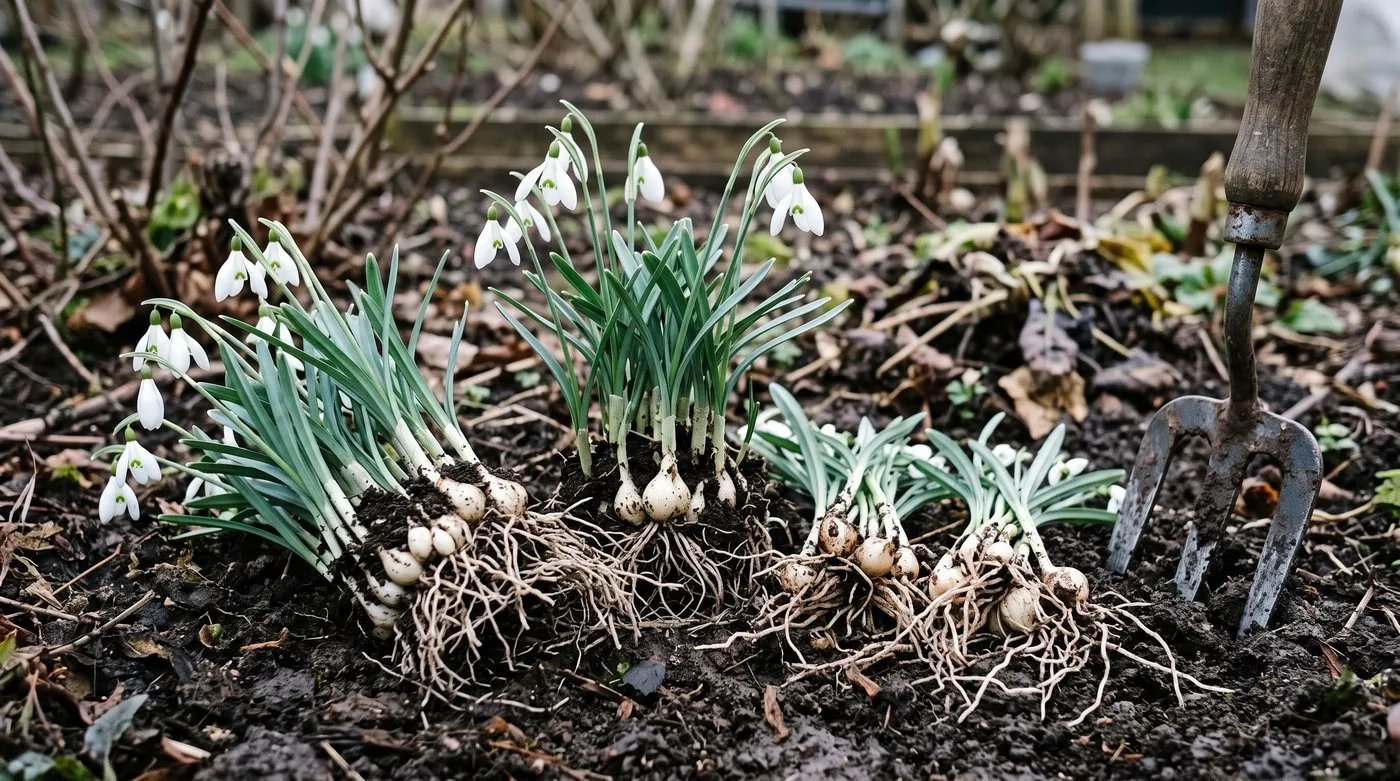 Dividing snowdrops in the green in late February. Clumps split into groups of three to five bulbs, with leaves and roots intact, replant at 8 to 10cm and settle in fast.
Starting weed control before it gets away
Weeding in February feels pointless and is the highest-return job of the month. Annual weeds germinate as soon as soil passes 5 to 6C, which is exactly what is happening now, and they are far ahead of your crops.
The arithmetic is what makes it urgent. A single hairy bittercress plant produces around 600 seeds and can complete its life cycle in five to eight weeks in cool conditions. Groundsel manages up to 1,000 seeds and several generations a year. Every plant you pull in February removes a whole family tree from the season.
Work in the right order. Hoe annual weeds on a dry day, cutting them at soil level and leaving them on the surface to shrivel. Hand-dig perennial weeds now while the ground is soft and the crowns are visible, getting the entire root of dandelion, dock and creeping buttercup. Then mulch to 5cm, which blocks light and stops the next flush germinating.
Do not rotavate. Chopping the roots of bindweed, ground elder or couch grass propagates them, because every fragment above about 2cm regrows into a new plant. That one machine pass can turn a manageable patch into a three-year problem.
The February job hierarchy, ranked by return
| Job | Role | What it returns | When in the month |
|---|---|---|---|
| Chitting seed potatoes | Primary | Harvest 2 to 3 weeks earlier, 10 to 15% more first-early yield | Week 1 south, week 4 north |
| Sowing chillies and aubergines under heat | Primary | The only window long enough to ripen the crop | Weeks 1 to 3 |
| Cutting grasses and perennials | Primary | Clean regrowth, no shorn new shoots | Week 4 |
| Group 3 clematis and dogwood pruning | Primary | Full flowering, brightest new stems next winter | Weeks 3 to 4 |
| Warming soil with cloches | Preparation | 2 to 4C of soil gain, brings March sowing forward | Weeks 2 to 3 |
| Mulching and feeding | Maintenance | Soil structure, moisture, slow nutrient release | Any dry day |
| Early weeding | Maintenance | Removes hundreds of seeds per plant pulled | Any dry day |
| Sowing tomatoes without lights | Avoid | Weak stretched plants that crop less | Never |
Chitting and heat sowing are the two jobs that cannot be moved. Everything else in February has a workable window in March. Those two do not, because the crops involved simply run out of season.
Why February gardens fail before a single seed goes in
The underlying cause of most February disappointment is a mismatch between heat and light, and almost nobody names it.
Gardeners think in temperature, because temperature is what a propagator dial shows. Plants build their tissue from light. Germination is a heat-driven process, so a warm propagator delivers a tray of seedlings and a strong sense of progress. Growth after germination is a light-driven process, and in February the UK simply cannot supply the light.
The result is etiolation. Cells elongate, chlorophyll production falls, stem walls stay thin, and the plant reaches for a light source that is not there. That seedling never fully recovers. Its internodes stay long and its stem stays weak, which is why an early-sown tomato often out-grows but under-crops a later one.
The permanent fix is to match sowing dates to available light rather than to available heat. Start only long-season crops in February. Delay everything else until daylight passes 11 to 12 hours, which happens in the second week of March across most of England. If you want a genuine February advantage, buy light rather than heat. A 45W full-spectrum LED bar over a single tray does more for seedling quality than any propagator will.
February week by week
| Week | Focus | Specific jobs |
|---|---|---|
| Week 1 | Start the slow crops | Sow chillies and aubergines at 25 to 28C, chit potatoes in the south, order seed potatoes if not yet bought |
| Week 2 | Prepare the ground | Cover first beds with cloches or black plastic, spread 5cm of mulch, hand-weed perennial roots |
| Week 3 | Prune and sow | Sow onions and leeks at 15 to 20C, prune group 3 clematis, coppice dogwoods and willows, prune autumn raspberries |
| Week 4 | Cut back and divide | Shear deciduous grasses to 5 to 10cm, cut perennials to the crown, divide snowdrops in the green, chit potatoes in the north |
| All month | Under cover | Ventilate the greenhouse on days above 7C, water sparingly, check for aphids and grey mould |
| All month | Avoid | No tomato sowing without lights, no rotavating, no cutting evergreen grasses hard |
Common February gardening mistakes
- Sowing everything at once because the sun came out. A mild late-February week feels like spring. Soil at 10cm still lags air temperature by two to three weeks. Sow only long-season crops under heat and cover the beds you plan to sow in March.
- Chitting in a warm dark cupboard. Warmth without light produces long white sprouts that snap off. Chit at 8 to 12C in good indirect light, which usually means a cool spare room rather than an airing cupboard or a shed.
- Cutting evergreen grasses to the ground. Stipa and Festuca get treated like Miscanthus and often die. Learn which of your grasses are deciduous. Evergreens are combed by hand, never sheared.
- Pruning summer-fruiting raspberries in February. Both types look identical in winter, so people cut them all down. Cutting summer varieties now removes the whole year’s crop. Check for last year’s dead fruited tips before cutting anything.
- Spreading fresh manure straight onto beds. It is available and cheap in February, so it goes on. Fresh manure scorches roots and forks root vegetables. Use only material at least 12 months old, and test suspect batches with broad beans first.
What February actually costs
February is the biggest spending month of the gardening year, and knowing where the money goes stops it running away.
Seed potatoes cost £4 to £8 per kilo, and a family plot needs 3 to 5kg, so budget £15 to £35. Chilli, aubergine and onion seed adds £10 to £20. Peat-free seed compost runs £8 to £14 for 40 litres and you will want two bags.
Equipment is where February bites. A heated propagator is £25 to £70, a heat mat with a thermostat £20 to £45, and a set of rigid cloches £20 to £60. A grow light bar, if you want to sow genuinely early, is £35 to £90 plus £4 to £7 a month to run.
The hidden costs catch people out. Well-rotted manure delivered by the bulk bag is £45 to £90 including delivery, against £6 a bag at a garden centre, which works out far dearer for any real quantity. Modules and trays need replacing every few seasons at £10 to £25. And a heated propagator run continuously through February costs roughly £3 to £6 in electricity, which is genuinely cheap for what it does.
A realistic all-in February figure for a productive family plot is £85 to £160 in the first year, dropping to £40 to £70 once the equipment is bought.
Frequently asked questions
What should I do in the garden in February in the UK?
Chit potatoes, sow under cover with heat, cut back grasses and prune group 3 clematis. February soil climbs from about 4C to 7C. That makes cloches and fleece worthwhile, but outdoor sowing still fails in most of the country until March.
When should I start chitting seed potatoes?
Early February in southern England, late February in the north and Scotland. Chitting takes four to six weeks at 8 to 12C in good light. Work backwards from your planting date and aim for shoots of 1.5 to 2.5cm at planting.
Can I sow tomatoes in February in the UK?
Only with a heated greenhouse and grow lights, otherwise February is too early. Daylight in February runs 9 to 10 hours at low intensity. Seedlings germinate then stretch into weak, pale plants. Sow in mid to late March instead.
What temperature do chilli seeds need to germinate?
Chilli seeds need 25 to 30C for reliable germination. Below 20C germination is slow, patchy and often fails completely. A heated propagator or a mat set to 27C gives even results in 7 to 14 days depending on variety.
When should I cut back ornamental grasses?
Cut deciduous grasses back in late February, before new growth starts. Take them to 5 to 10cm above the crown with shears. Evergreen grasses such as Stipa tenuissima should be combed through by hand instead, never cut hard.
Does covering soil with a cloche in February actually help?
Yes, a cloche lifts soil temperature by roughly 2 to 4C at 10cm depth. Put cloches or black plastic in place two to three weeks before sowing. That is often enough to bring a bed from 5C to the 7 to 8C threshold that seeds need.
Should I prune raspberries in February?
Prune autumn-fruiting raspberries now, but not summer-fruiting ones. Cut every autumn cane to ground level in February, because they fruit on new wood. Summer varieties fruit on last year’s canes and are pruned after harvest in August.
Now you know which February jobs are worth doing, work out exactly what can go in the ground with our guide to what to plant in February, or browse the rest of our how-to guides for the season ahead.
Our team produces practical UK gardening guidance from source research, contributor records and established horticultural practice. Editorial standards are overseen by Matt W.