Key takeaways
- A UK half plot is 5 rods (about 125 square metres) - half the size of a traditional 10-rod full plot
- Most councils now offer half plots to clear waiting lists faster
- Formal plot shares need committee approval and a written agreement between sharers
- Informal sharing is usually fine but the named tenant remains legally responsible
- Sub-letting a council allotment without permission can lose you the tenancy
- Two committed sharers usually outperform one stretched solo tenant on a full plot
What is a UK half plot?
A half plot is exactly what the name suggests - half of a traditional 10-rod full plot. The dimensions:
| Plot type | Rods | Square metres | Productivity |
|---|---|---|---|
| Full plot | 10 | 250 | Feeds family of 4 with surplus |
| Half plot | 5 | 125 | Feeds 2 adults, modest surplus |
| Quarter plot | 2.5 | 62.5 | Salads and herbs, occasional crop |
The 10-rod full plot was historically calibrated to feed a family for the year. The half plot fits modern lifestyles where most tenants want a plot to supplement supermarket shopping, not replace it. A 5-rod half plot can produce 80-150kg of vegetables in a good year - enough to keep a couple in fresh produce from June to October.
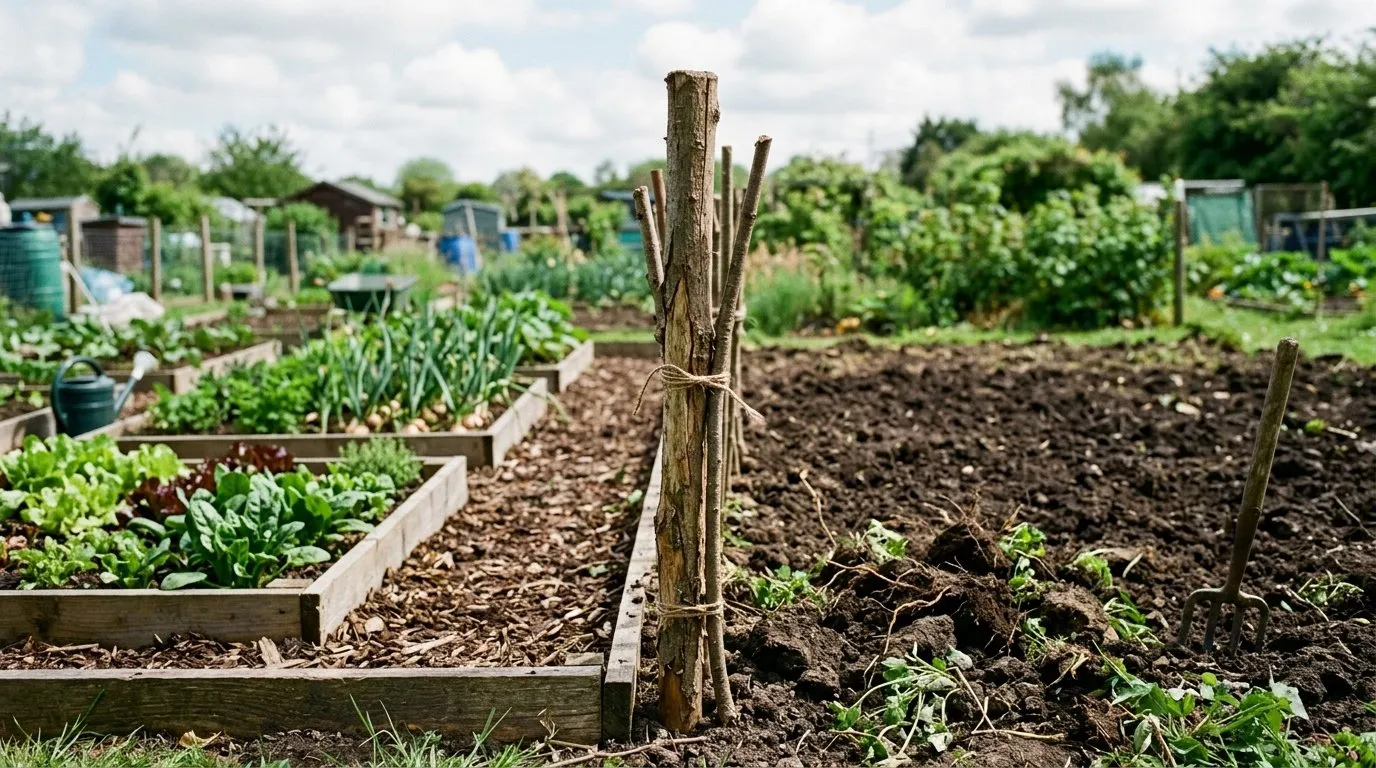 A hazel-stick boundary marker between two halves of a single allotment plot. Most councils require a clear visible divider so both sides can be inspected separately.
Three forms of sharing on a UK allotment
Each form has different rules and different consequences if it goes wrong.
1. Council-issued half plot
The simplest form. The council issues you half a traditional plot as your own tenancy. You hold the agreement, you pay the rent, you have the rights and the responsibilities. The other half is held by a different tenant who is not your business.
Pros: simple, your plot is yours, you can cultivate exactly as you wish. Cons: smaller area, you still have to manage on your own.
2. Formal shared tenancy
Two (occasionally three) people are named as joint tenants on a single full plot agreement. Both pay rent jointly, both have equal rights, and both are equally responsible for the plot’s cultivation. Usually requires committee approval and a written sharing agreement.
Pros: full plot capacity, shared workload, shared cost, shared ideas. Cons: needs paperwork, joint liability, harder to dissolve cleanly if one person leaves.
3. Informal sharing arrangement
The named tenant brings in a friend or family member to help work the plot. The agreement is a handshake or a private email, the council does not know or care, and the named tenant remains legally responsible for everything that happens on the plot. Most UK councils explicitly allow this so long as no money changes hands and the helper is known to the tenant.
Pros: no paperwork, easy to start, easy to end. Cons: legal responsibility stays with the named tenant; if the helper does something the council objects to, the tenant pays the price.
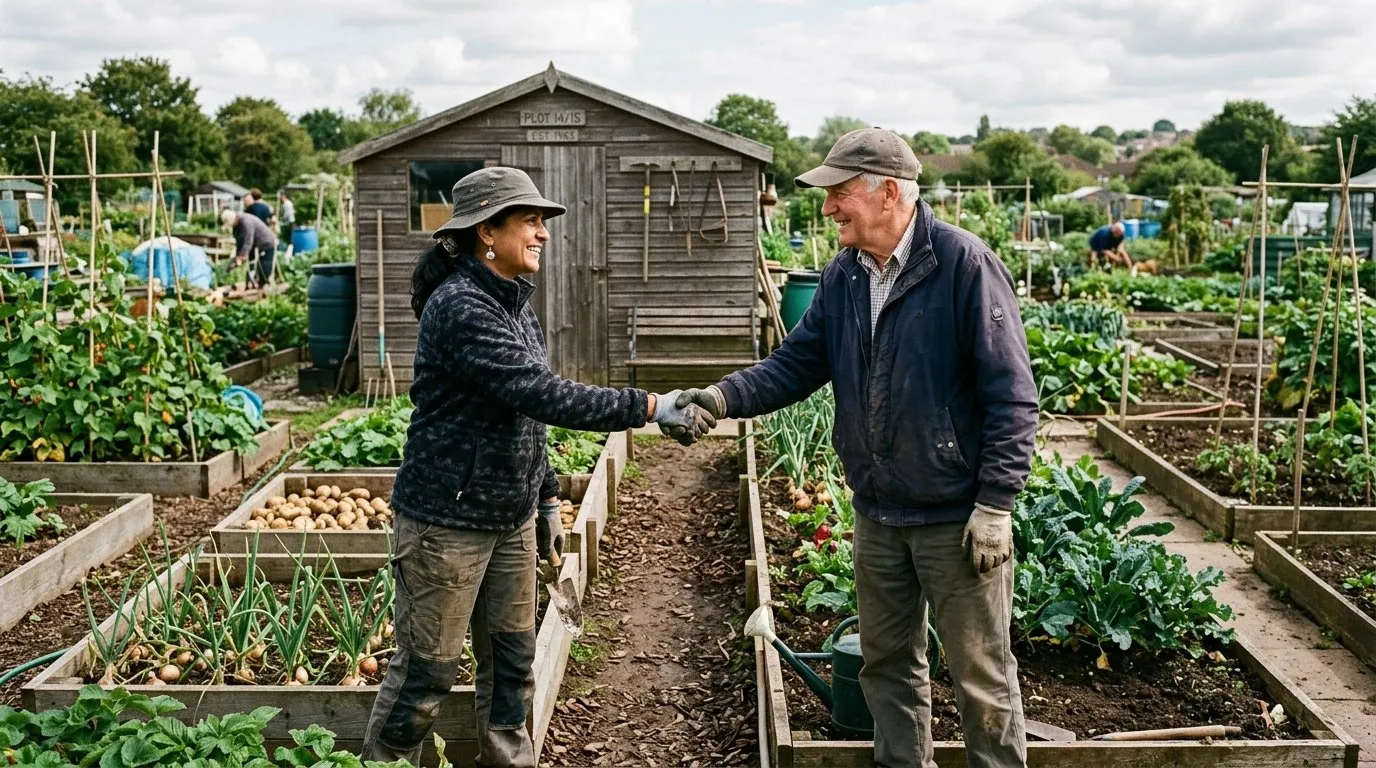 Two allotment holders agreeing to formally share a 10-rod plot. Most UK sites require committee approval and a written agreement before this becomes official.
When sharing makes sense
Plot sharing works in five clear scenarios:
- Two people on a long waiting list. Combine your applications and ask for one full plot to share. Some sites move shared applications up the queue because two committed tenants is more reliable than one solo applicant.
- Couple or family taking over a full plot. One tenancy, two cultivators. Often the simplest setup.
- Older gardener who wants company and physical help. A formal share with a younger neighbour brings energy to the plot without losing the older tenant’s experience and seniority.
- Workmate or neighbour wants a plot but cannot get one. Informal sharing of your plot keeps them gardening while they wait for their own.
- You have a 10-rod plot but only want a 5-rod commitment. Find someone to take the other half formally.
The fifth case is becoming common. Many UK allotment sites are quietly converting full plots to formal half-plot pairs where the original tenant wants to scale down. Talk to your site secretary if this fits.
Writing a sharing agreement
Whether the share is formal (committee-approved) or informal (handshake), put it in writing. A one-page document covers:
- Who pays the rent and water charge. Joint, split equally, or one party covers it?
- Who cultivates which area. Half each, by crop type, or shared everywhere?
- Decision rules. Major changes (planting trees, building structures) need both to agree.
- Workload expectations. How many hours per week each, what counts as “doing your share”?
- Dispute resolution. What happens if there is a disagreement that you cannot resolve?
- Exit clause. What happens if one of you wants to leave the share? Notice period, who keeps what.
A one-page agreement signed by both parties prevents 90% of plot-sharing falling-outs. The 10% that still go wrong usually involve money or aesthetics (someone wanting to plant something the other strongly dislikes).
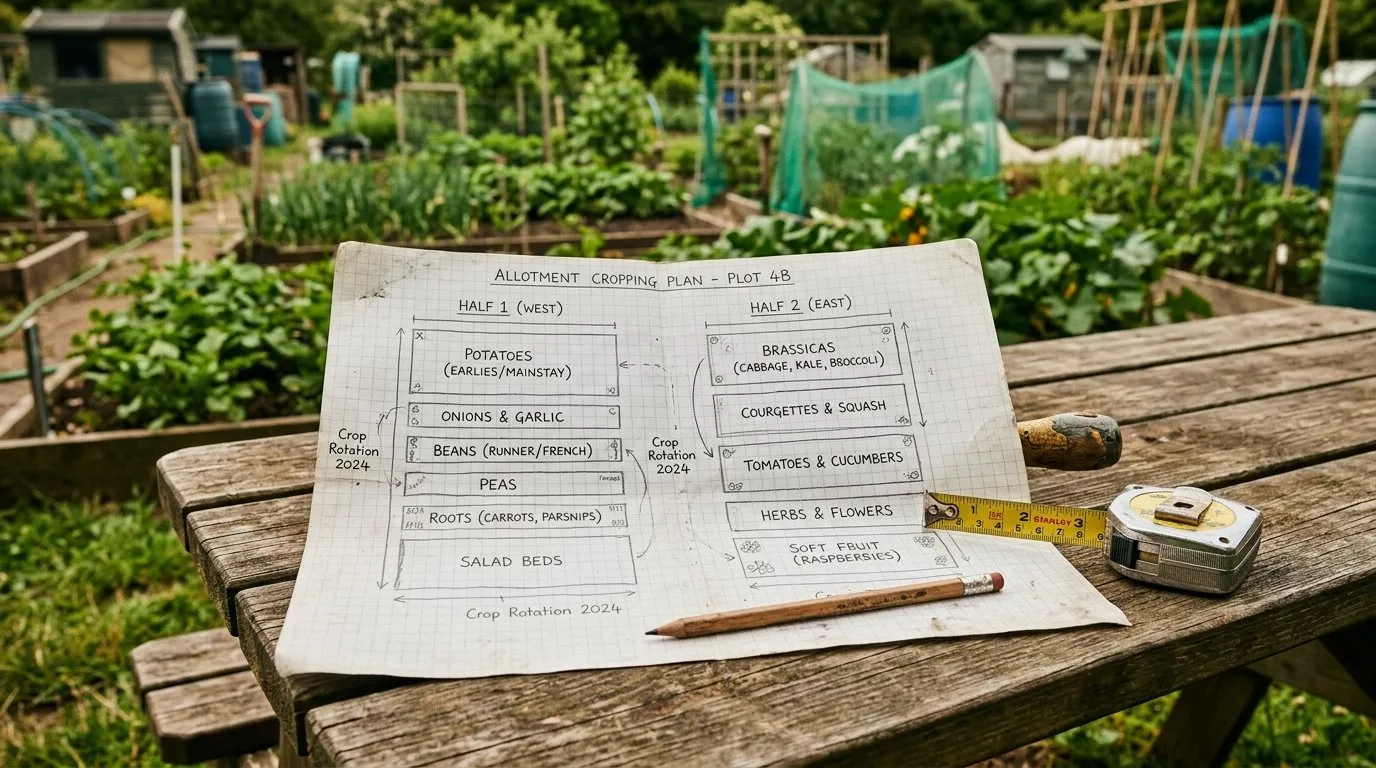 A simple cropping plan dividing a 10-rod plot into two halves with different rotation cycles. This single sheet prevents most plot-share disputes.
What councils ban (and why)
Three things are universally banned across UK council allotments:
-
Commercial cultivation. Allotments are for personal/family use, not commercial farming. Selling produce in volume is banned. Small surplus sales (jam, eggs, plants) at the site gate are usually tolerated; running a market garden business is not.
-
Unapproved structures. Sheds, polytunnels, fruit cages and water butts usually need committee approval. Adding these without permission can mean removal at your cost.
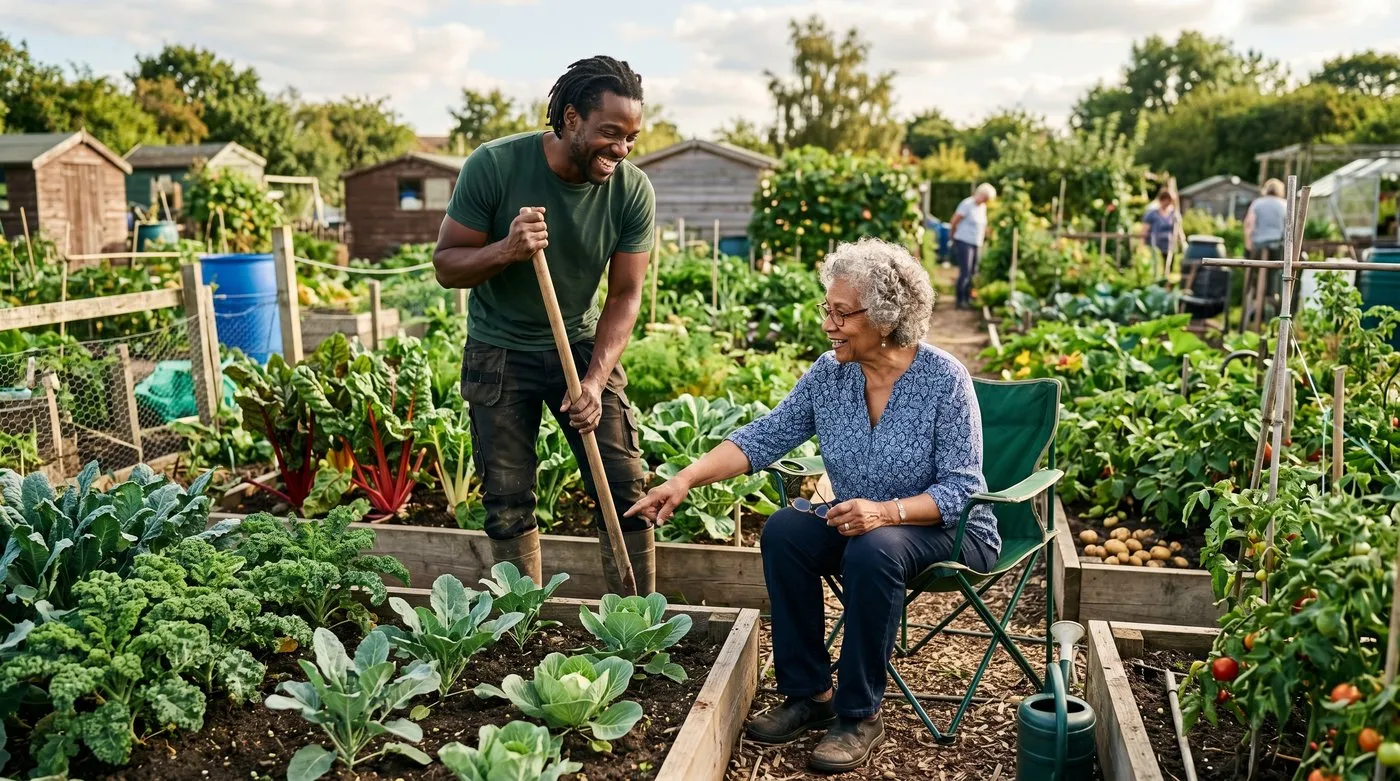 Intergenerational plot sharing in midsummer. Many UK sites now recognise grandparent-grandchild sharing arrangements as one of the strongest setups, where senior knowledge meets younger labour
Using a half plot productively
A 5-rod half plot needs a different cropping strategy than a 10-rod full plot.
- Skip the bulk crops. Maincrop potatoes, swedes and parsnips eat space without paying their rent in flavour terms. Save the space for high-value crops.
- High-value salads year-round. Salad leaves, rocket, mizuna, oriental greens. £25-£40 of supermarket value per square metre per year.
- Dwarf and patio varieties. Modern dwarf cultivars of tomato, pepper, courgette and bean let you grow more crops per square metre than traditional full-size varieties.
- Cordon trained fruit. Cordon apple and pear trees take up 60cm of width. A ten-tree cordon row gives you proper apple and pear production in 6 metres of run.
- Year-round herbs. Hardy perennial herbs (sage, thyme, chives, mint, oregano, rosemary) give you fresh kitchen produce 12 months of the year from a 2-metre run.
A productive half plot in midsummer
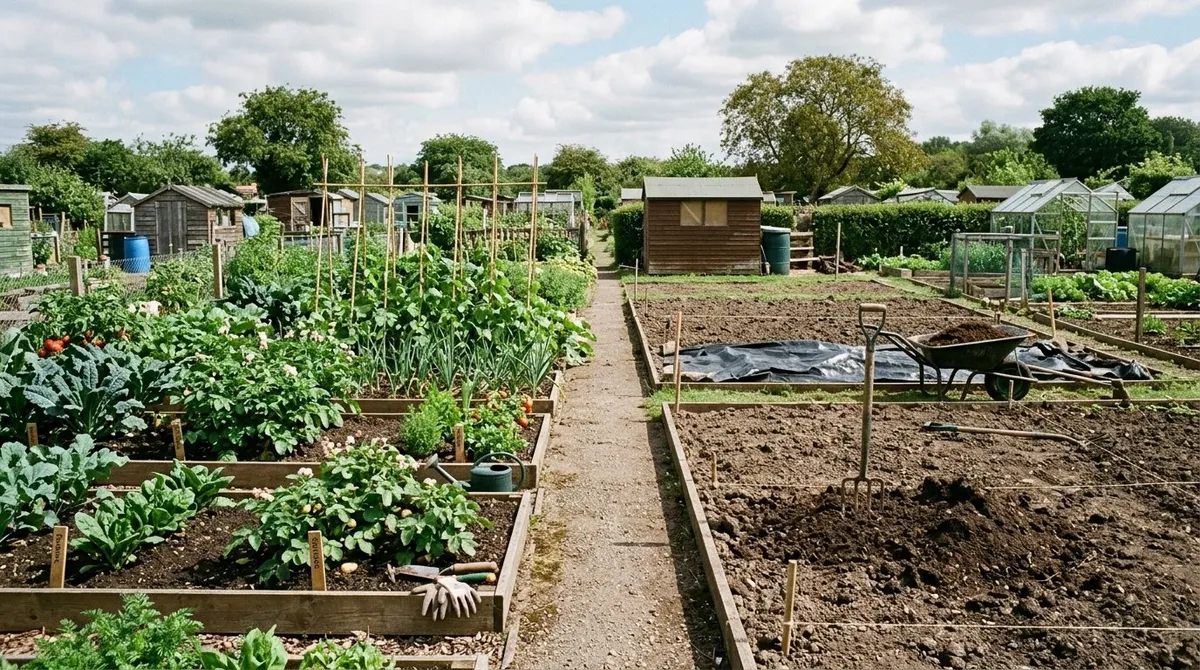
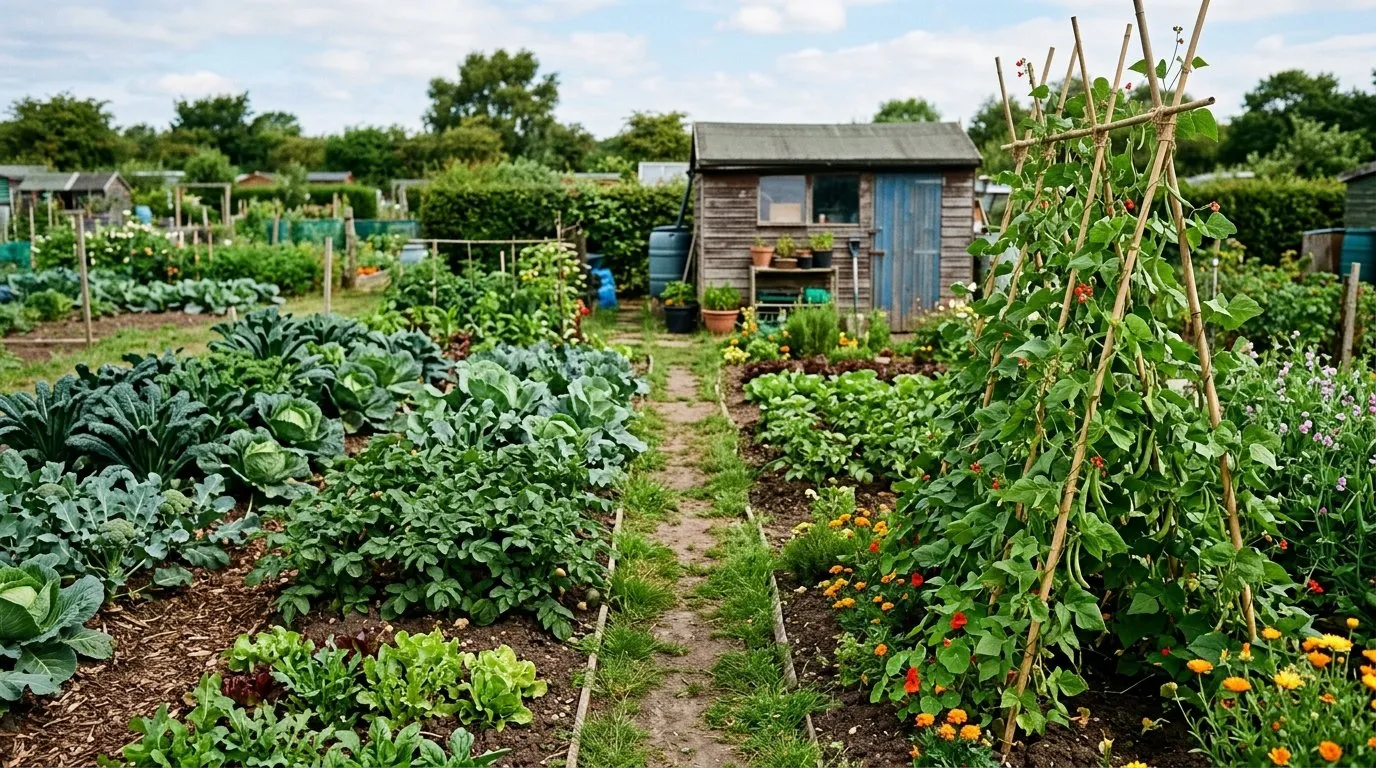 A productive 5-rod half plot in late July. Brassicas (rear), maincrop potatoes (centre right), salad leaves (front right), and a runner-bean wigwam (front left). Around 80kg of crops will come off this plot between June and October.
Closing thoughts on plot-sharing
Two committed sharers usually beat one stretched solo tenant on the same plot. The maths is straightforward - 4 hours per week split between two people is 2 hours each, which most working adults can manage; one person doing 4 hours per week consistently is harder than it sounds.
The arrangements that work best share three traits: clear written agreement up front, regular check-ins (a 10-minute weekly chat at the gate), and tolerance for slightly different gardening philosophies. The arrangements that fail share two traits: no written agreement, and one person quietly resenting the other’s approach.
If you are on a UK allotment waiting list, ask your site secretary about half plots and shared tenancies before you accept a full plot. The shorter waiting list and lower commitment level often beat the prestige of a full 10-rod plot, especially in the first 2-3 years while you learn what you actually want from an allotment.
Our team produces practical UK gardening guidance from source research, contributor records and established horticultural practice. Editorial standards are overseen by Matt W.