Key takeaways
- Petrol rotavators handle full 10-rod plots and heavy clay at 6-8 inch depth - £250-£800
- Electric tillers suit half plots, raised beds and ongoing prep - £150-£350
- Mid-tier petrol (Hyundai HYTH56152, Cobra TV40T) is the sweet spot for most UK plots
- Battery cordless tillers run 30-45 minutes per charge - half a plot in one battery
- Wet clay is a nightmare for any tiller; wait for soil to be friable before starting
- Hire from HSS or local plant hire for £25-£40 per day if a one-off plot reset
Choosing a rotavator for a UK allotment is the kind of decision where the wrong call costs an entire growing season. Buy too small and you watch the tines bounce off the surface of dry clay; buy too big and you struggle to reverse it through the gate. This guide covers the petrol versus electric question that every allotment holder eventually faces, the engine sizes that match plot sizes, the brands that hold up to UK weather, and the rental option that often beats outright purchase.
Petrol versus electric: the honest comparison
The choice between petrol and electric rotavators is rarely a clean either-or decision. Each suits different jobs.
Petrol rotavators
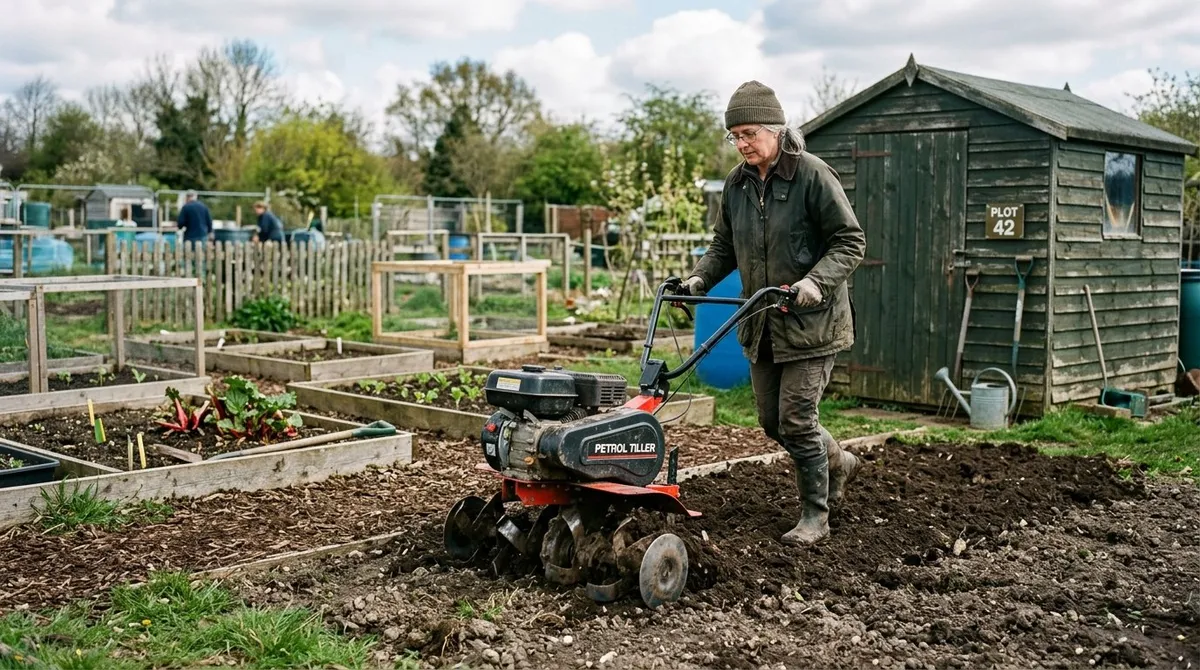
Petrol wins on raw power and run-time. A typical 4-stroke 150cc petrol rotavator delivers 5-7 horsepower at the tines, weighs 25-45kg, tills 6-8 inches deep on its first pass, and runs continuously for 60-90 minutes per tank. This is the right machine for breaking ground on a neglected plot, getting through compacted clay subsoil, and any job over half an acre.
The downsides are real. Petrol machines need annual servicing (spark plug, air filter, oil change), need fuel stored safely (NRMM regs apply on some allotment sites), are noisy enough that some sites restrict use to specific hours, and put out exhaust fumes that linger in still allotment air.
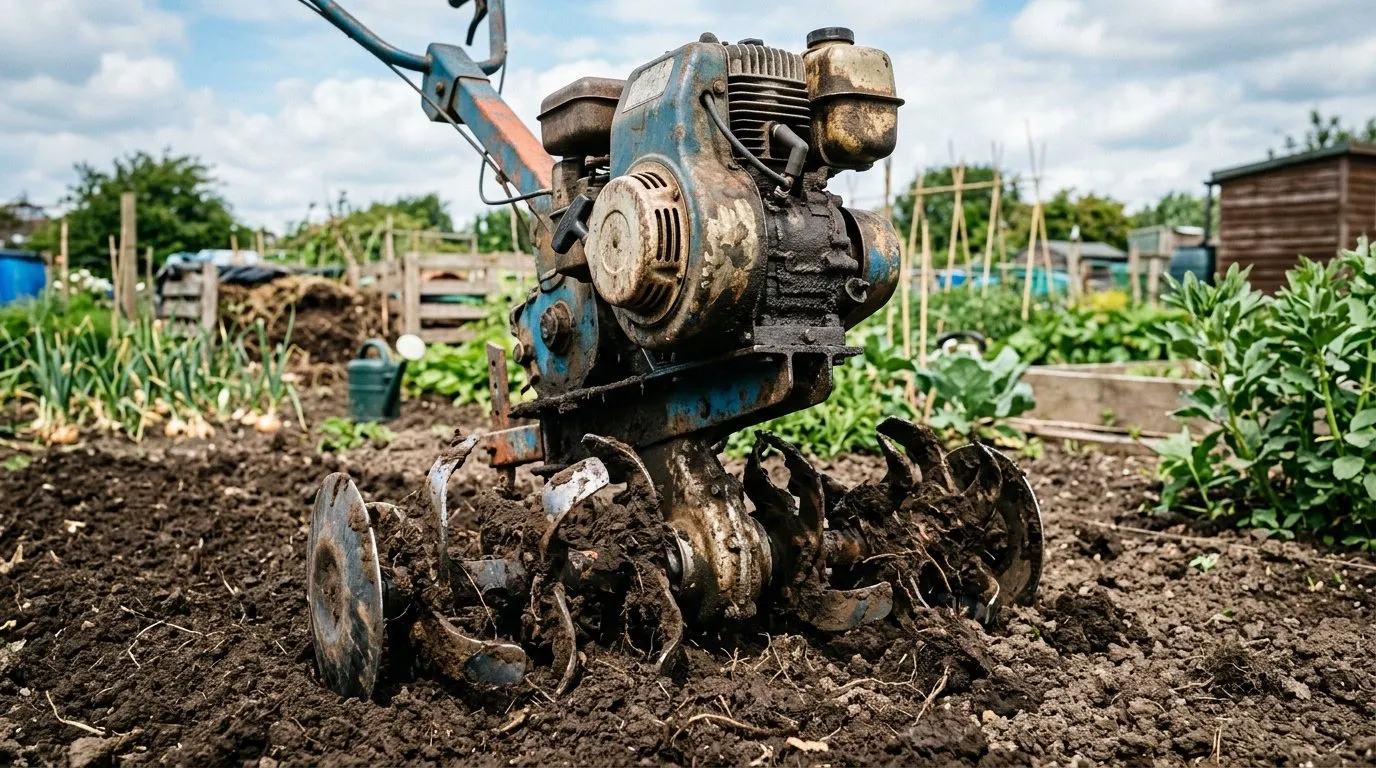 A 150cc petrol rotavator engine head with twin counter-rotating tines. This format handles 6-8 inch depth on a first pass through prepared soil.
Electric tillers
Electric tillers (corded or cordless) are the right tool for ongoing maintenance once a plot is established. Cordless 40V tillers weigh 8-14kg, till 4-6 inches deep, and run 30-45 minutes per battery. The lighter weight matters more than allotment magazines admit - lifting a 35kg petrol rotavator over a raised bed edge once is fine; doing it three times in a session is back-trouble.
The downsides: limited run-time per battery (you need 2-3 batteries for a half plot), reduced depth and power versus petrol, and battery cost (a spare 40V 5Ah battery is £60-£120). Cordless models still cannot handle compacted clay first-pass.
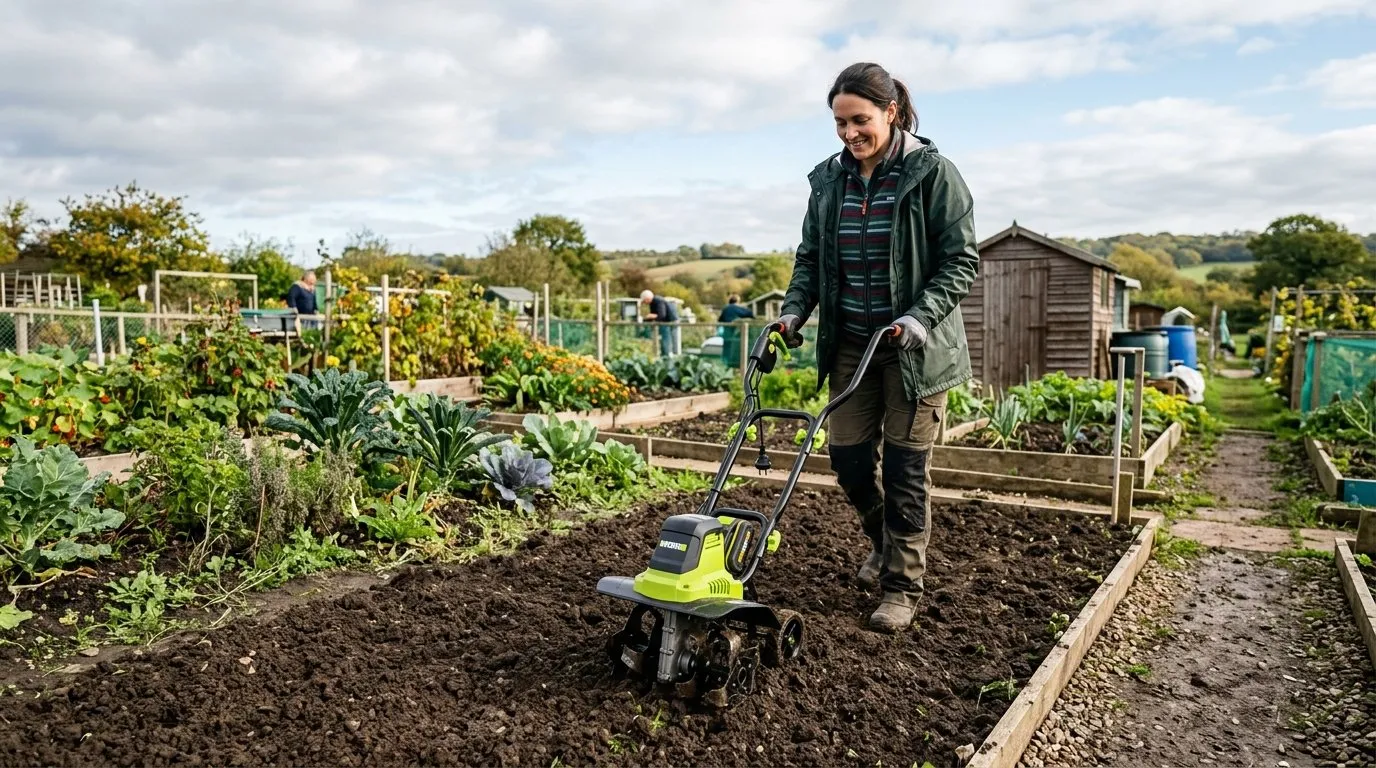 A 40V cordless tiller in a half-plot raised bed. Lighter and quieter than petrol but range and depth are reduced.
Quick comparison
| Feature | Mid-range petrol | Mid-range electric (40V) |
|---|---|---|
| Tilling width | 36-55cm | 22-30cm |
| Tilling depth | 6-8 inches | 4-6 inches |
| Weight | 25-45kg | 8-14kg |
| Run-time | 60-90 min per tank | 30-45 min per battery |
| Noise level | 90-100 dB | 75-85 dB |
| Annual service | Required | Battery health check only |
| Price (new) | £250-£800 | £150-£350 |
| Best for | Plot reset, clay, full plots | Half plots, raised beds, maintenance |
Engine size by plot size
Match the engine to the plot, not the price tag.
- 5-rod half plot: 90-130cc petrol or 40V cordless electric. Total tilling time 30-50 minutes.
- 10-rod full plot: 130-180cc petrol with 50cm width. Total tilling time 60-90 minutes.
- Multiple plots / commercial: 200cc+ two-stroke or 4-stroke with reverse gear. Two operators rotating.
- Raised beds only: 24V cordless mini-tiller (8kg or under). One battery covers 6-8 beds.
The brands worth buying
Electric:
- Mantis Cordless 24V (£269) - the light-duty equivalent of the petrol Mantis Classic. 22cm width, 8kg, two batteries cover a half plot.
- Hyundai HYRT70 (£189) - 1.4kW corded electric. Heavier on the cord management but more power than 24V cordless.
- Spear & Jackson Cordless 40V (£249) - solid budget option, 30cm width, 9kg. Battery is single-platform with the rest of the Spear & Jackson cordless range.
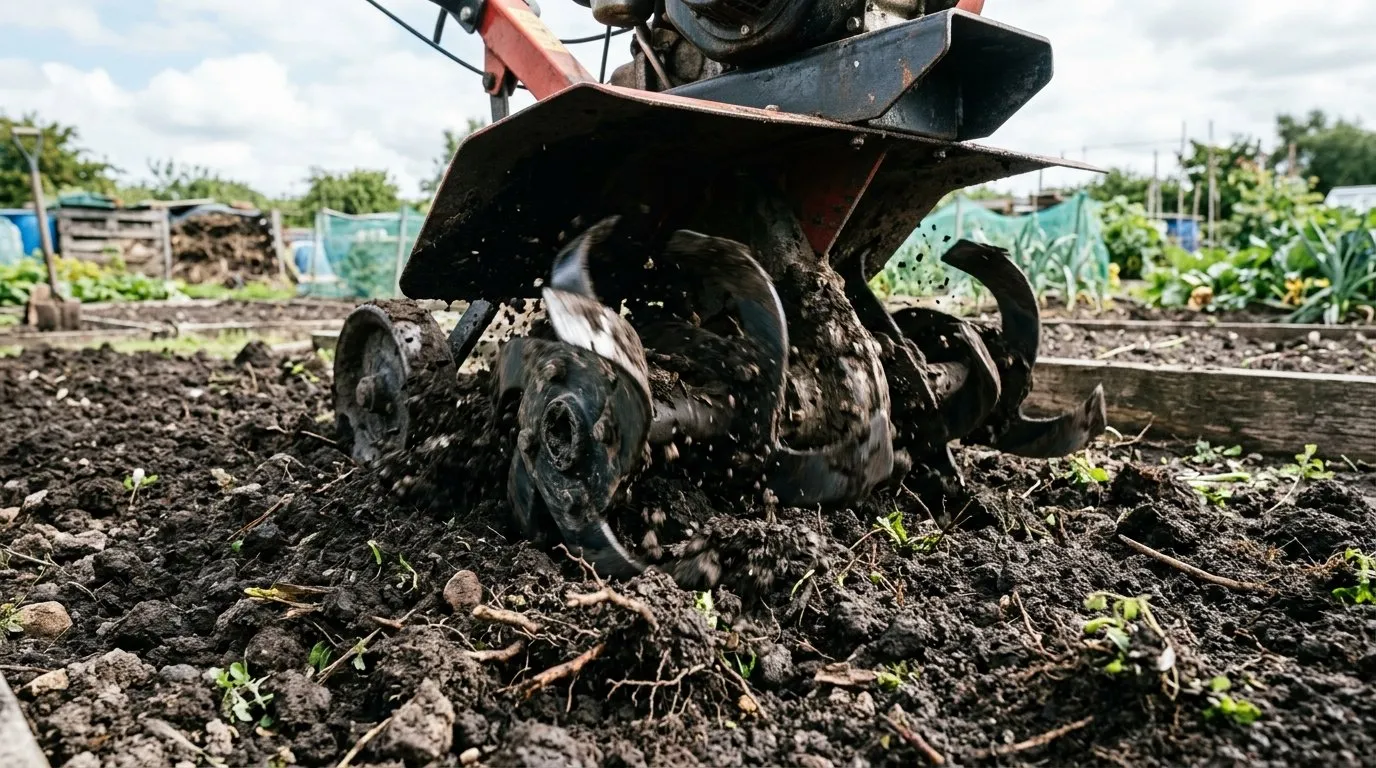 Counter-rotating tines pulling roots and weed mass to the surface. The depth visible here is roughly 6 inches - the upper limit for most 4-stroke domestic machines.
Hire versus buy
Most UK allotment holders should hire for the first-time plot reset and buy a smaller machine for ongoing use. The math:
- Hire heavy petrol rotavator for plot reset: £40-£70 per day, plus £20 fuel and damage waiver. One day = £80 total.
- Buy mid-range petrol for maintenance: £400 once, £30 annual service, lasts 10+ years.
- Buy cordless electric for raised beds: £250 once, no service, lasts 5-7 years before battery needs replacing.
For a 10-year horizon: hire (£80 once-off for reset) + cordless (£250 + £150 battery replacement at year 6) = £480 total. Versus buy heavy petrol outright (£600 + £300 servicing over 10 years) = £900 total.
The hire-plus-cordless route saves around £420 over a decade and gets you a better machine for the day-to-day work. This is the right choice for most UK allotment holders.
When to rotavate
Soil conditions matter more than calendar dates. The rule: a handful of soil squeezed into a ball should crumble when you press it, not stay as a wet clod or fall apart as dust.
- Late February to mid-April: Prime UK rotavating season. Soil warming, drying after winter, weeds breaking dormancy.
- Late September to mid-November: Second window for overwintering prep. Soil still workable, weeds dying back.
- Avoid: Sodden clay (winter or after heavy rain), bone-dry summer clay, frozen ground, compacted subsoil.
Side-by-side on one plot
The comparison most allotment forums avoid: running petrol and electric on the same plot, same day.
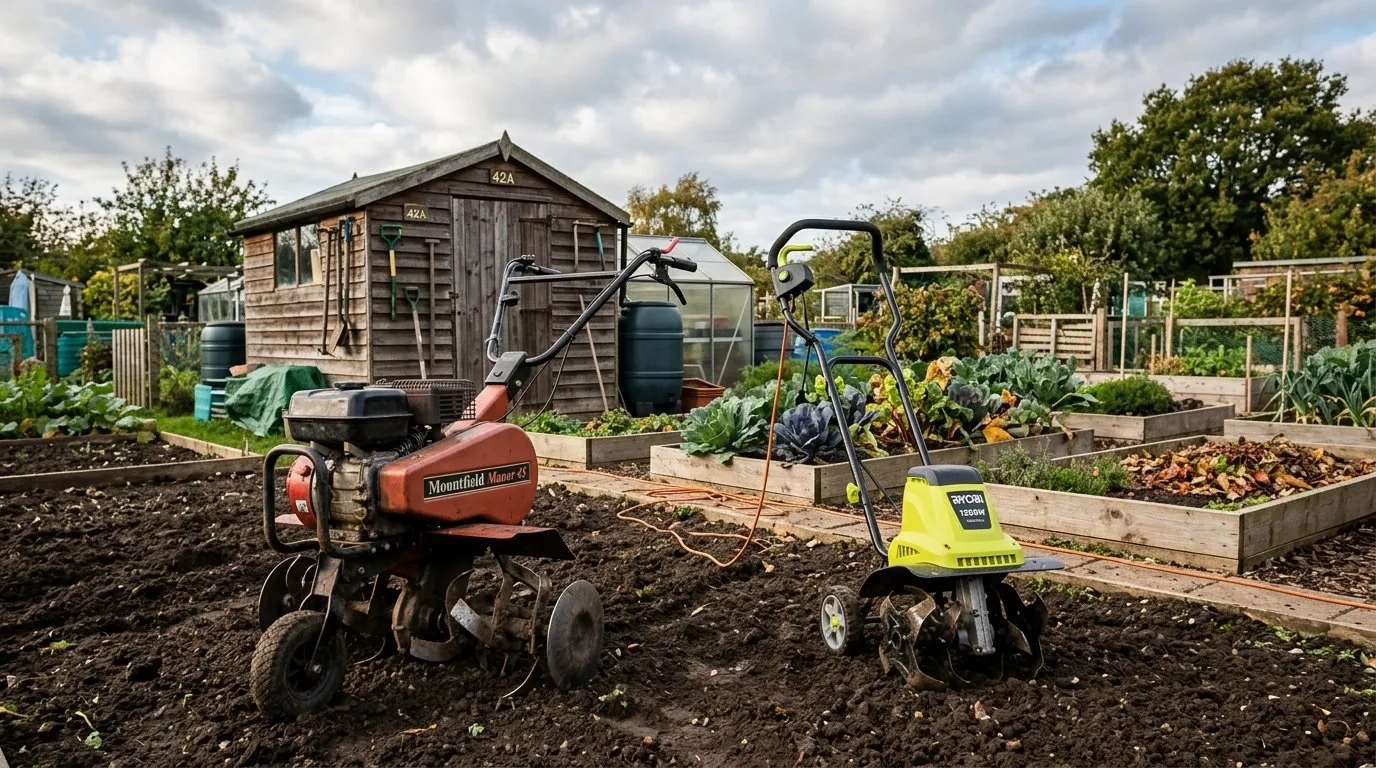 Petrol Mantis Classic and Mantis 24V cordless side by side. Same brand, two different jobs - the petrol breaks the ground, the cordless maintains the beds.
The lesson: petrol is for breaking ground, electric is for maintaining it. Plan your kit around the job you are actually doing today.
Common rotavator mistakes
- Rotavating sodden clay. Destroys soil structure for 2-3 seasons. Wait for the squeeze test to crumble.
- Running too deep on first pass. Brings up subsoil and weed seeds. Two shallow passes (3 then 5 inches) beat one deep pass.
- Skipping the cleanup. Always remove tines and clean off mud after use; baked-on clay is brutal to remove a week later.
- Buying too much machine. A 200cc commercial rotavator is overkill for a 5-rod plot and weighs as much as it costs.
- Ignoring the no-dig question. If you are committing to no-dig, plan to stop rotavating within 12 months of the first heavy mulch.
Our team produces practical UK gardening guidance from source research, contributor records and established horticultural practice. Editorial standards are overseen by Matt W.