Key takeaways
- Feed actively from late March to mid-October, stop completely from November to early March (10C window)
- Foliage plants: balanced NPK around 7-3-7 or Baby Bio 10.6-4.4-1.7 at 5ml per litre fortnightly
- Flowering plants: switch to 5-5-10 high-potash feed when buds form, fortnightly until bloom drops
- Cacti and succulents: half-strength balanced feed, monthly, April to September only
- Stop feeding if compost is dry, the plant is sick, or it has just been repotted (wait 6 weeks)
- Salt crust on compost surface = flush with 3 pot-volumes of plain water and skip next two feeds
Feeding houseplants in the UK is mostly about knowing when to stop, not when to start. Our short growing season means the active feeding window runs from late March to mid-October, with eight or nine months of either gentle activity or full dormancy depending on heat and light. Get the timing wrong, push winter feeds into a 14C living room, or use a flowering-plant NPK on a leafy monstera, and the plant goes backwards.
For the wider context on indoor plant care, our best house plants for beginners UK guide and how to repot houseplants cover the basics.
The UK houseplant feeding calendar
The single most important rule is to follow the daylight, not the calendar. Active feeding starts when daylight reaches 11 hours (mid-March in southern England, late March further north) and stops when it drops below 11 hours again (early to mid-October across most of the UK).
| Period | UK month | Feeding action | Why |
|---|---|---|---|
| Dormant | November to early March | None | Roots cannot absorb at below 12C average; light too low |
| Wake-up | Mid to late March | First feed at half strength | Plant ramping up, prevents shock |
| Active | April to August | Full label rate fortnightly | Peak growth, peak demand |
| Wind-down | September | Drop to monthly | Light dropping fast |
| Final feed | Early October | Last feed at half strength | Lets plant harden before dormancy |
The wake-up and wind-down half-strength feeds are the part most guides skip. Hitting a plant with a full-strength feed in March, when the roots have been idle for four months, scorches the fine root hairs and causes a stress-induced leaf drop within a fortnight. The same applies in reverse in October: full-strength feed in a cooling house leaves unused salts in the compost over winter.
UK homes vary. A south-facing flat with the radiators on through autumn might keep growth going into November. A north-facing bedroom at 16C might stop responding in late September. Watch the plant, not the date.
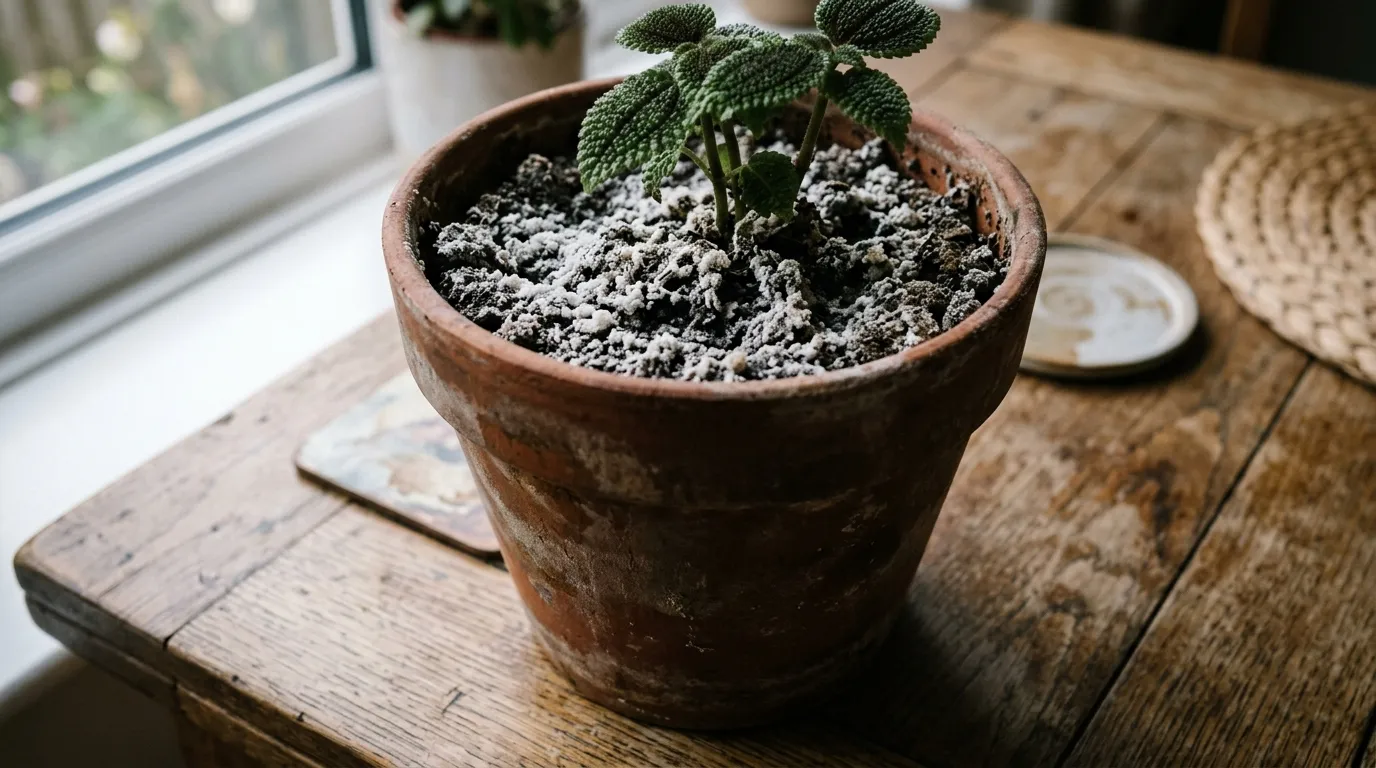 A white salt crust on the compost surface is the clearest sign of over-feeding. Flush with three pot-volumes of plain water and skip the next two feeds
Understanding NPK on the bottle
Every houseplant feed lists three numbers on the front, usually in the format 10.6-4.4-1.7 or 5-5-10. They are the percentage weights of nitrogen (N), phosphorus (P) and potassium (K) in the concentrate. For UK houseplants the working rules are simple.
Nitrogen (N) drives leaf growth. High-N feeds (the first number is the biggest) suit foliage plants like monstera, philodendron, spider plant, calathea and ferns. Baby Bio at 10.6% N is the most concentrated leaf feed sold in the UK supermarket aisle.
Phosphorus (P) drives root growth and the early stages of flower formation. A balanced feed (roughly even numbers) covers both leaves and roots. Peat-free composts release P slowly, so the supplement helps.
Potassium (K) drives flower and fruit production. High-K feeds (the third number is the biggest, often 10) suit flowering plants once buds form: peace lily, African violet, orchid, anthurium, cyclamen, hibiscus. Tomorite (4-3-8) is sold as a tomato food but works on flowering houseplants too. Westland Houseplant Feed at 5-5-10 is purpose-built for the same job.
A balanced NPK like 7-7-7 sits between the two extremes and is the right choice for a mixed collection where you cannot be bothered switching bottles by plant.
Trace elements and the seaweed question
Maxicrop Seaweed Extract is not a fertiliser in the headline-NPK sense. The label reads 0.1-0-1.3, which looks pitifully low. The value sits in the trace elements: iron, manganese, zinc, boron, magnesium, plus around 60 natural plant hormones (cytokinins, auxins, gibberellins) extracted from Norwegian kelp. Used monthly as a foliar spray or root drench it improves disease resistance and root development without pushing soft leaf growth.
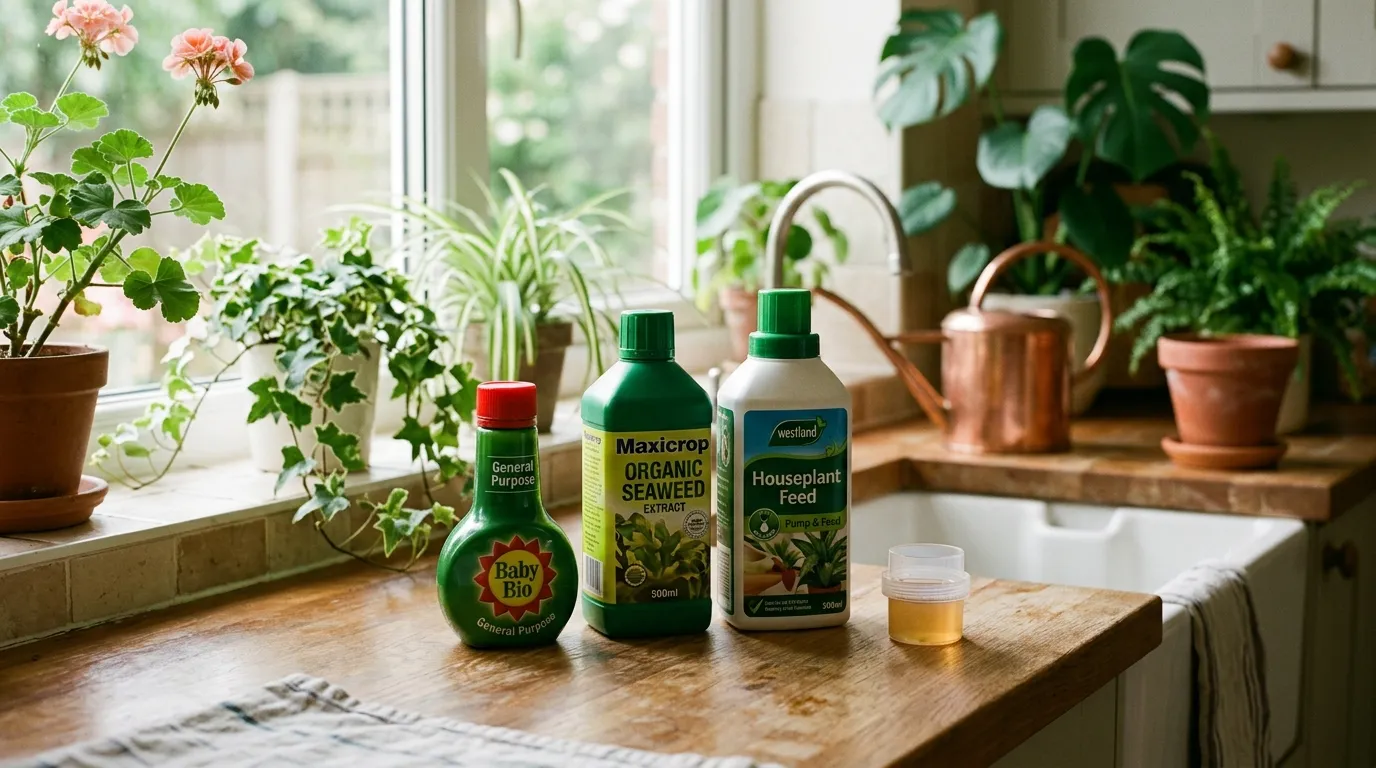 Baby Bio (10.6-4.4-1.7), Maxicrop Seaweed (trace elements) and Westland Houseplant Feed (5-5-10) cover 90% of UK houseplant feeding needs between them
Dilution rates by plant type
The single biggest mistake UK indoor gardeners make is going by eye when mixing feed. The dose on a Baby Bio bottle (5ml per litre) is roughly half a teaspoon per 1-litre watering can, and it is easy to over-pour. Use a 5ml medicine spoon or the cap.
| Plant type | Feed | Dilution | Frequency | Notes |
|---|---|---|---|---|
| Foliage (monstera, philodendron, pothos) | Baby Bio (10.6-4.4-1.7) | 5ml per litre | Fortnightly Mar-Oct | Standard label rate |
| Flowering (peace lily, anthurium, hibiscus) | Westland Houseplant (5-5-10) | 5ml per litre | Fortnightly when in bud | Switch from foliage feed when buds form |
| African violet (Saintpaulia) | African Violet Feed (3-1-5) | 2ml per litre | Weekly Mar-Sep | Lower strength, higher frequency |
| Orchids | Orchid Focus (specific) | 5ml per litre | Weekly Mar-Sep | Use orchid-specific only |
| Cacti and succulents | Balanced 7-7-7 | 2.5ml per litre | Monthly Apr-Sep | Half strength, low frequency |
| Ferns | Baby Bio | 3ml per litre | Fortnightly Apr-Sep | Sensitive to salt build-up |
| Calathea, marantha | Baby Bio | 3ml per litre | Fortnightly Apr-Sep | Use rainwater or filtered, not tap |
| Seaweed top-up (any plant) | Maxicrop | 10ml per litre | Monthly Apr-Sep | In addition to main feed |
The pattern is clear. Foliage plants take the label dose. Anything sensitive (ferns, calatheas, marantas, African violets) takes a lower-strength feed at the same or slightly higher frequency to avoid salt spikes. Succulents take roughly a quarter of the foliage dose, monthly only.
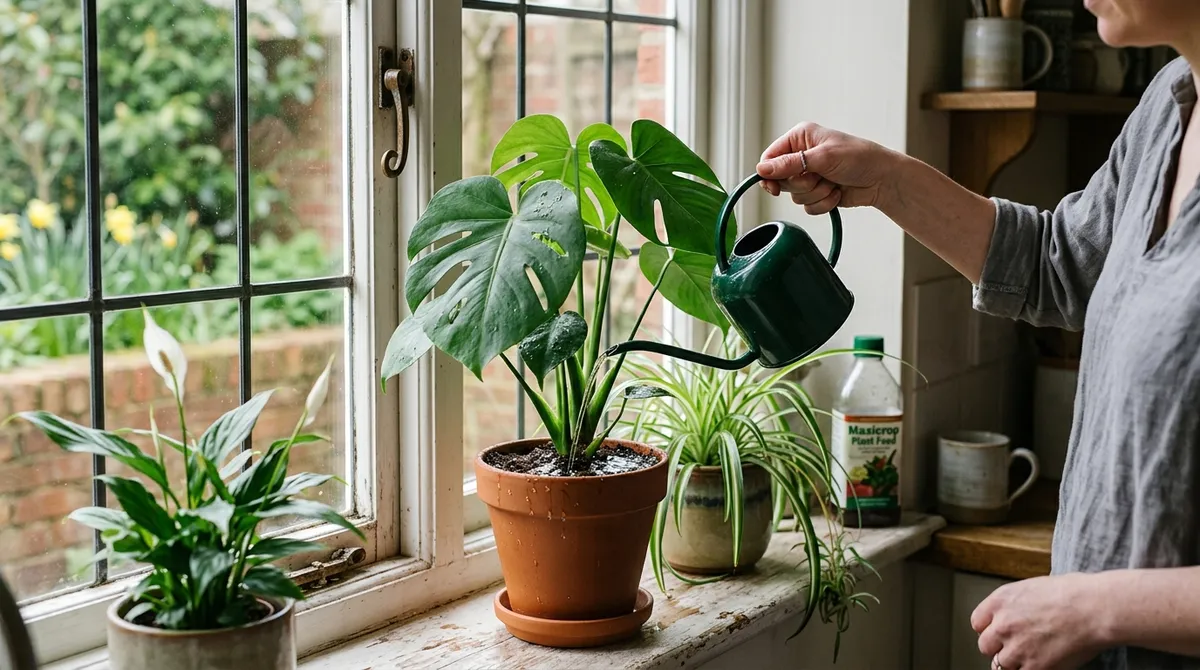
 Fortnightly at label rate is the working dose for most foliage plants. Skip the feed if the compost is bone dry, water first, then feed the next day
How to spot under-feeding vs over-feeding
The symptoms of too little and too much feed are different but easy to confuse. Get the diagnosis wrong and the wrong remedy makes the problem worse.
Under-feeding signs (more common in UK homes):
- Pale yellow-green new leaves rather than the variety’s normal green
- Lower (oldest) leaves yellowing while new growth stays small
- Stunted growth even with adequate light and watering
- Smaller new leaves than the older ones on the same stem
- Reduced or absent flowering on plants that should bloom annually
- General “tired” look, particularly by July or August
Over-feeding signs (more common after a plant move or a keen new owner):
- Brown crispy leaf tips, often on multiple leaves at once
- White or yellow salt crust on the compost surface
- Wilted leaves despite damp compost (root burn)
- Sudden leaf drop within a week of feeding
- Brown spots on leaves, often with a yellow halo
- Stunted growth combined with the salt crust above
The remedy for under-feeding is to start a fortnightly feed at full label rate and watch for fresh green growth within three to four weeks. The remedy for over-feeding is to flush the pot with three pot-volumes of plain tepid water through the drainage holes, skip the next two feeds, and scrape the top 10mm of compost off if there is a heavy crust.
Gardener’s tip: Always water first, then feed the next day. Feeding bone-dry compost concentrates the salts against the root hairs and scorches them. The label says “apply with watering” but in practice a one-day gap saves a lot of plants.
Switching plants from foliage to flowering feed
Many UK houseplants spend most of the year as foliage plants and a few weeks as flowering ones. Peace lilies, anthuriums, African violets, orchids, hibiscus, cyclamen and Christmas cacti all change feed type as they shift between phases.
The trigger is the first visible bud. As soon as a flower bud is forming (the small green or pink swelling at the centre of an African violet, the sheath of a peace lily, the spike of an orchid) switch from a high-N foliage feed to a high-K flowering feed. Continue fortnightly through the bud development, the flowering, and for two weeks after the last bloom drops. Then return to foliage feed.
For more on flowering houseplants see best low-light houseplants UK, which covers peace lilies and ZZ plants in detail.
Month-by-month feeding plan
| Month | Foliage plants | Flowering plants in bud | Cacti and succulents |
|---|---|---|---|
| January | None | Half-strength K feed monthly | None |
| February | None | Half-strength K feed monthly | None |
| March | Half-strength feed mid-month | Switch to K feed | First feed at half strength end of month |
| April | Full feed fortnightly | Full K feed fortnightly | Half-strength balanced monthly |
| May | Full feed fortnightly | Full K feed fortnightly | Half-strength balanced monthly |
| June | Full feed fortnightly | Full K feed fortnightly | Half-strength balanced monthly |
| July | Full feed fortnightly | Full K feed fortnightly | Half-strength balanced monthly |
| August | Full feed fortnightly | Full K feed fortnightly | Half-strength balanced monthly |
| September | Drop to monthly | Drop to monthly | Final feed at half-strength |
| October | Half-strength feed first week, then stop | Half-strength once if still in bloom | None |
| November | None | None | None |
| December | None | Half-strength K feed monthly for Christmas cacti, cyclamen | None |
The pattern repeats annually. Once you have the rhythm written on the kitchen calendar, the year runs itself.
Common feeding mistakes to avoid
-
Feeding through winter. The most common error. UK homes drop below the 12C average needed for nutrient uptake from November to February in most rooms. Feeding in this window builds salt that the plant cannot use, which then scorches roots when growth resumes in March.
-
Going over the label rate. Double-dosing weak-looking plants does not double their growth, it scorches them. A pale plant needs more frequent feeding at correct rate, not stronger feed at the same rate. Switch from monthly to fortnightly before increasing the dose.
-
Feeding a sick or recently repotted plant. Both situations mean the roots are not in a position to absorb. Wait six weeks after repotting and four weeks after any pest or disease treatment before resuming feed.
-
Using outdoor fertiliser indoors. Garden plant feeds (Growmore, Phostrogen Garden, fish blood and bone) are too strong and too smelly for indoor use. Stick to indoor-formulated feeds. The exception is Tomorite, which works fine on flowering houseplants at the standard 5ml per litre.
-
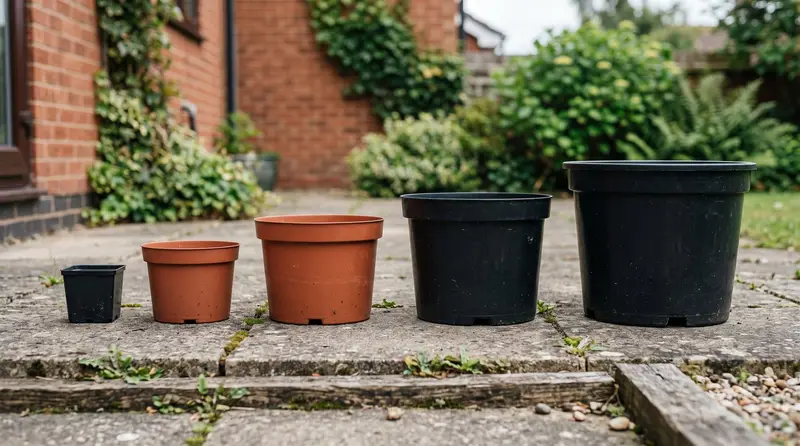
Feeding cuttings and small plants at adult-plant rates. A 7cm pot needs a quarter of the dose of a 25cm pot because the smaller root system cannot process the same volume of nutrient. Halve the strength on anything in a pot smaller than 12cm.
For more on diagnosing yellow leaves and other houseplant problems, our how to get rid of houseplant flies guide covers the related compost-health issues that mimic feeding problems.
For flowering plants the equivalent recommendation is Westland Houseplant Feed at 5-5-10. For trace-element support across both groups, Maxicrop Seaweed Extract as a monthly supplement. The three together cover everything a UK indoor collection needs.
Hard water, soft water and feeding
UK tap water hardness varies wildly by region. Hard water (Kent, Cambridgeshire, much of southern England) contains 200-400 mg/l of dissolved calcium carbonate which the plant cannot use as fertiliser but which adds to the salt build-up. Soft water areas (Cornwall, the Lake District, much of Scotland) have under 100 mg/l and avoid the problem.
In a hard-water area the working fix is to flush the pot quarterly with three pot-volumes of plain water (not feed water) through the drainage holes. This washes accumulated calcium carbonate out before it crusts the compost. Calatheas, marantas, ferns and ctenanthes are the most sensitive and benefit from rainwater or filtered water year-round.
For the wider question of what each plant needs beyond feeding, see how to repot houseplants and how to propagate houseplants.
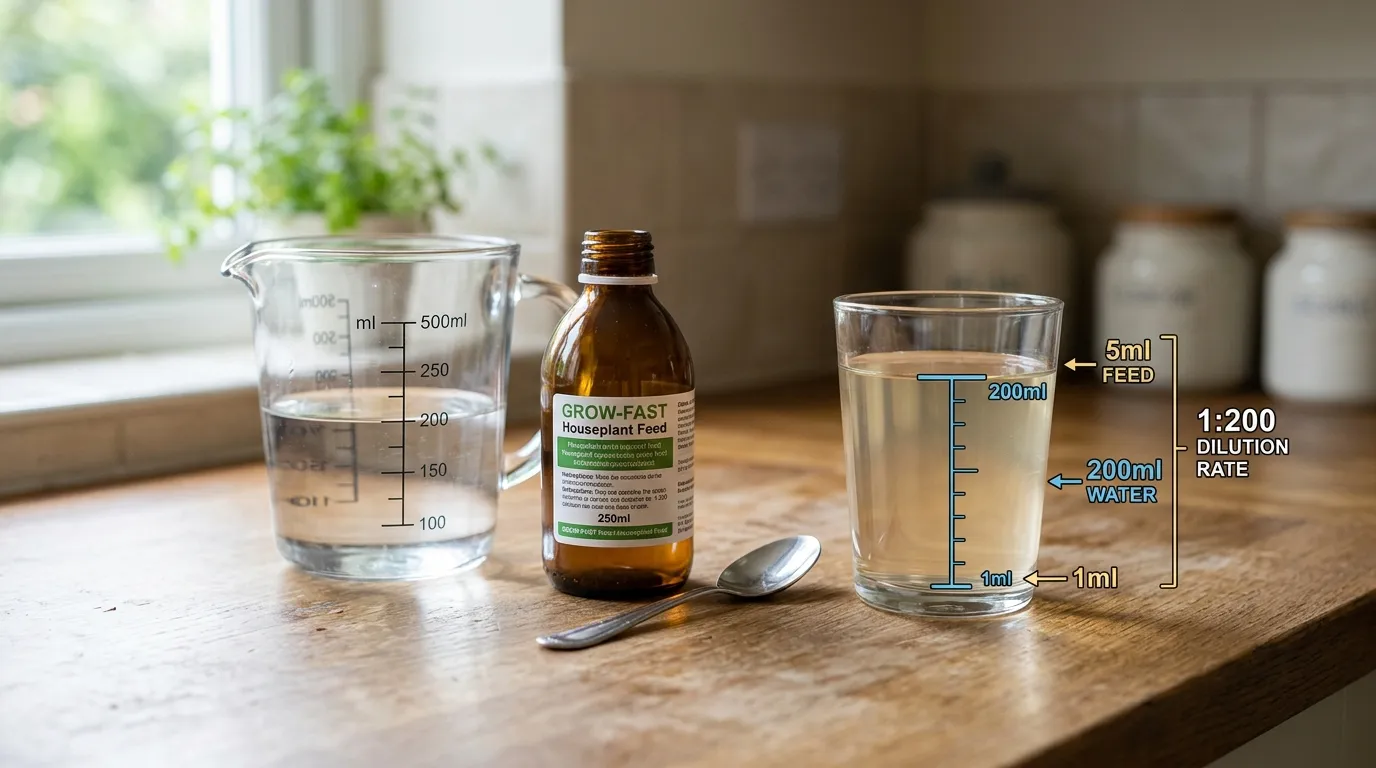 A 5ml medicine spoon is the most reliable way to measure houseplant feed. Half a teaspoon equivalent per litre of water is the standard Baby Bio dose
Overwatering can cause oedema bumps on leaves, a watering fault rather than a feeding one.
Frequently asked questions
How often should I feed houseplants in the UK?
Fortnightly from late March to mid-October, then stop completely until early March. Most UK homes drop below the 12C growth threshold by November and the roots cannot use the nutrients. Feeding through winter builds up salts in the compost and scorches roots. Resume when daylight reaches roughly 11 hours.
What is the best houseplant feed in the UK?
Baby Bio (10.6-4.4-1.7) is the gold standard for foliage plants. For flowering plants switch to Westland Houseplant Feed (5-5-10) or Tomorite once buds form. Maxicrop Seaweed is the best monthly tonic across the board because it adds trace elements and improves root health rather than pushing leaf growth.
Why are the tips of my houseplant leaves turning brown?
Brown crispy tips usually mean salt build-up from over-feeding. Flush the pot with three pot-volumes of plain tepid water through the drainage holes, skip the next two feeds, and check the compost surface for a white crust. If the brown extends down the leaf rather than just the tip, low humidity is the cause instead.
Can I feed houseplants in winter?
No, not in a normal UK home. Growth slows to almost nothing between November and early March because light levels and root temperatures drop below the threshold for nutrient uptake. The exception is winter-flowering plants like cyclamen and Christmas cactus, which take a half-strength potash feed once a month while in active bloom.
Should I feed a houseplant I just repotted?
Wait at least six weeks. Fresh peat-free compost contains roughly six weeks of slow-release nutrients and the disturbed roots need time to recover before they can absorb fertiliser efficiently. Feeding too soon scorches the new fine roots. Water with plain tepid water only for the first six weeks after repotting.
How do I know if my houseplant is underfed?
Pale yellow-green new leaves, slow growth, and small new foliage on a plant that has been in the same pot for over a year. The lower (oldest) leaves yellow first because the plant pulls nitrogen out of them to feed new growth. A pale spider plant beside the same plant fed fortnightly looks washed out and tired by mid-summer.
For the trace-element side of feeding, the Royal Horticultural Society’s guide to fertilisers is the best reference on the wider science.
Next step
Now that you have a feeding plan, the next thing to nail is the watering routine that underpins it. Read our guide on how to repot houseplants to make sure your plants are in the right pot size and compost before you start feeding hard in April.
 The diagnostic difference: a healthy mid-green pothos leaf on the right, brown crispy salt-scorched tip on the left. The brown reaches roughly 8mm into the leaf, the classic over-feeding pattern
In summer, many houseplants thrive outside; see our guide to putting houseplants outdoors.
Our team produces practical UK gardening guidance from source research, contributor records and established horticultural practice. Editorial standards are overseen by Matt W.