How to Grow Kohlrabi in the UK
UK guide to growing kohlrabi from seed. Covers green and purple varieties, sowing times, spacing, pest control, and harvesting crisp bulbs.
Key takeaways
- Sow indoors from February at 15-18C or direct outdoors from April through July
- Harvest at tennis-ball size (6-8cm diameter) for the sweetest, crispest flesh
- Purple varieties tolerate cold better; green varieties mature 7-10 days faster
- Space plants 23cm apart in rows 30cm apart for full-sized bulbs
- Succession sow every 3 weeks from April to July for a 5-month harvest window
- Club root is the biggest threat. Lime acidic soils to pH 6.5-7.0 before planting
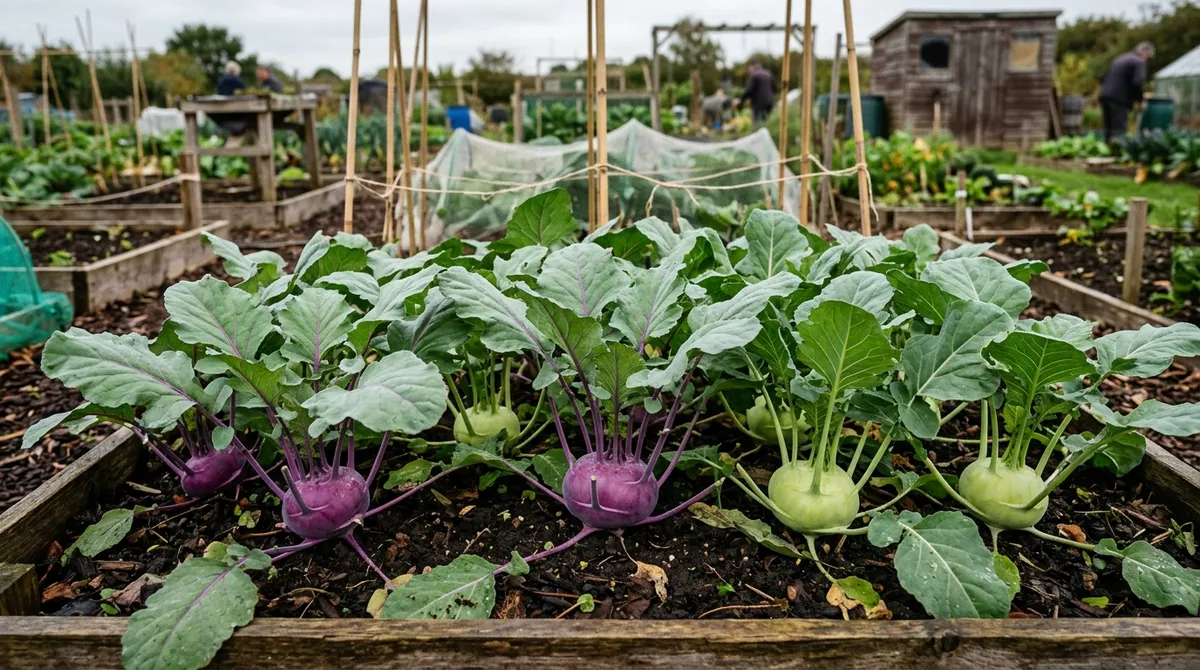
Kohlrabi is one of the fastest and most reliable brassicas you can grow in the UK. The swollen stem bulb is ready in as little as 8 weeks and crops from spring right through to autumn with succession sowing. It tolerates British weather better than most of its brassica relatives.
This member of the cabbage family (Brassica oleracea var. gongylodes) produces a distinctive globe-shaped stem that swells above the soil line. The name translates from German as “cabbage turnip”, which describes both the flavour and the plant’s growth habit. Kohlrabi has been grown in European kitchen gardens since the 1500s but remains underused on British allotments. That is changing as more growers discover how easy and versatile it is.
Which kohlrabi variety should I grow?
Kohlrabi varieties split into two groups: green-skinned and purple-skinned. Both have white flesh inside. The difference is speed, cold tolerance, and how long they hold in the ground before turning woody.
Green varieties mature 7-10 days faster than purple. They crop best from spring and summer sowings when temperatures stay above 12C. ‘Lanro’, ‘Quickstar’, and ‘Logo’ are the most reliable for UK growing. ‘Quickstar’ F1 is particularly fast, reaching harvest size in 8 weeks.
Purple varieties have better cold tolerance and hold their eating quality longer after reaching maturity. ‘Kolibri’ F1 is the standout performer in UK trials. It held at harvestable size for 3 weeks on our Staffordshire test plots without any woodiness. ‘Azur Star’ and ‘Blauer Speck’ are also dependable purple options.
| Feature | Green kohlrabi | Purple kohlrabi |
|---|---|---|
| Skin colour | Pale green | Deep purple-violet |
| Flesh colour | White, crisp | White, crisp |
| Days to harvest | 55-65 days | 65-80 days |
| Best sowing time | April to June | April to July |
| Cold tolerance | Down to -2C | Down to -4C |
| Holding time at maturity | 7-10 days | 14-21 days |
| Top UK variety | ’Quickstar’ F1 | ’Kolibri’ F1 |
| Bolt resistance | Moderate | Good |
| Flavour | Mild, apple-sweet | Slightly more peppery |
| RHS recommended | ’Logo’ (AGM) | ‘Kolibri’ F1 (AGM) |
Why I grow both types: After two seasons trialling green and purple varieties side by side, we found the best approach is sowing green ‘Quickstar’ for early spring crops and switching to purple ‘Kolibri’ from June onwards. The purple types handle cooler autumn temperatures and stay usable in the ground for three weeks, giving you much more flexibility with harvesting.
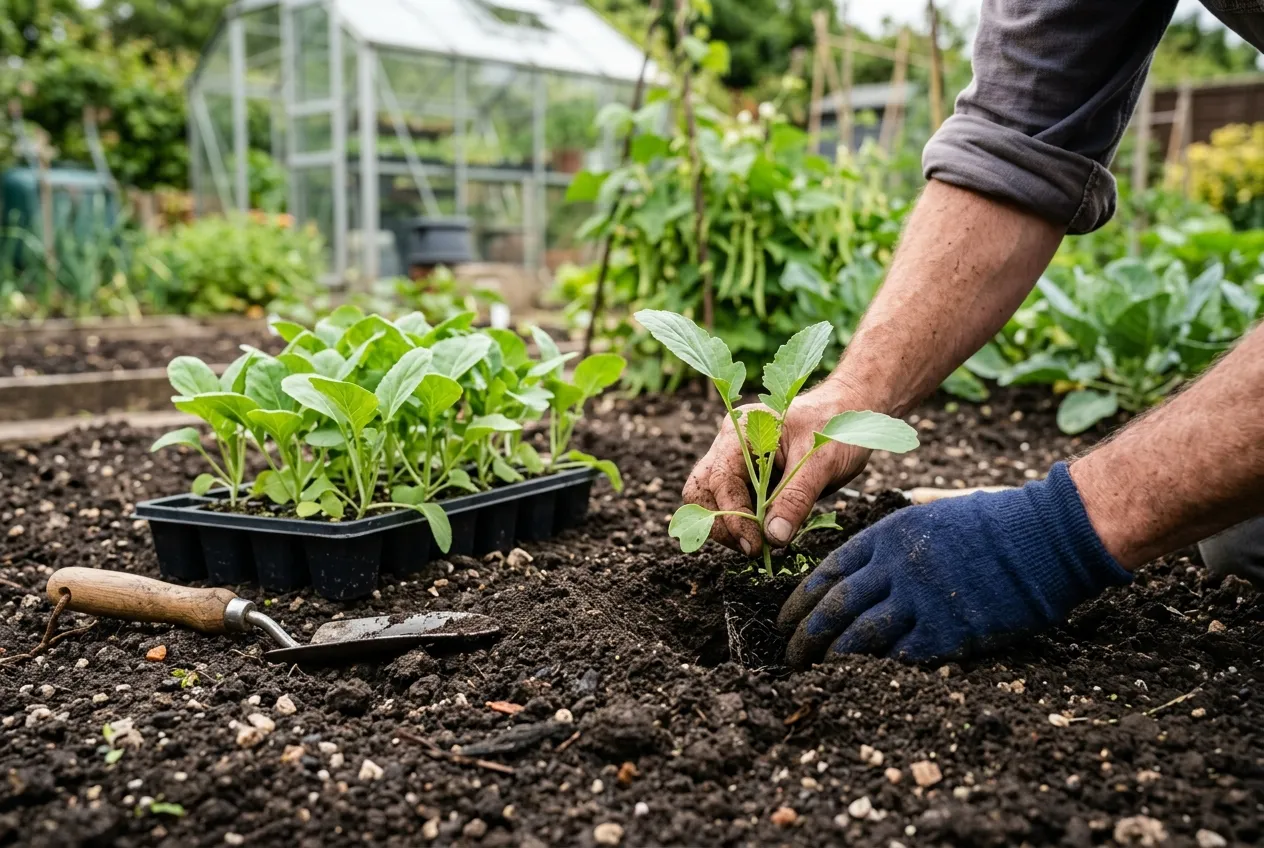 Transplanting kohlrabi seedlings into prepared ground. Plant at the same depth as the module to avoid burying the developing stem.
How do I sow kohlrabi seed?
Kohlrabi seed germinates quickly. At 15-18C, expect shoots within 5-7 days. The seeds are small but easy to handle individually, unlike many brassicas.
Indoor sowing (February to March): Fill module trays with multipurpose seed compost. Sow one seed per cell at 1cm depth. Water gently and place in a propagator or on a warm windowsill at 15-18C. Seedlings emerge in 5-7 days. Grow on in good light to prevent leggy, weak stems. Our guide on sowing seeds indoors covers the technique in detail.
Outdoor sowing (April to July): Draw shallow drills 1cm deep and 30cm apart. Sow thinly along the row. Cover with fine soil and water with a rose. Thin seedlings to 23cm apart when they have 3-4 true leaves. The thinnings are edible in salads.
Transplanting: Harden off indoor-raised seedlings for 7-10 days before planting out. In most of England, this means planting out from mid-April under fleece or from late April without protection. Set plants 23cm apart in rows 30cm apart. Water in well. Firm the soil around each plant but do not bury the stem deeper than the module level. A buried stem swells underground and rots.
Succession sowing is the key to a long kohlrabi season. Sow a short row every 3 weeks from April through July. This gives you fresh bulbs from June to November. Late sowings beyond July rarely mature before winter in northern England and Scotland.
What soil and conditions does kohlrabi need?
Kohlrabi needs fertile, moisture-retentive soil in full sun. It grows in partial shade but the bulbs swell more slowly and stay smaller.
Soil preparation: Dig in well-rotted compost or manure the autumn before planting. Kohlrabi prefers a pH of 6.5-7.0. Test your soil with a simple pH kit and add garden lime to acidic soils at least 4 weeks before sowing. On our trial plots, plants grown at pH 6.5 produced bulbs 15% larger than those at pH 5.8.
Watering: Consistent moisture is critical. Irregular watering causes the bulb to split or develop woody, fibrous flesh. Water deeply twice a week during dry spells. Mulch around plants with grass clippings or well-rotted compost to retain soil moisture and suppress weeds.
Feeding: Apply a balanced granular fertiliser (such as Growmore at 70g per square metre) before planting. Side-dress with nitrogen-rich feed 4 weeks after transplanting if growth stalls. Avoid excessive nitrogen after the bulb starts swelling because this pushes leafy growth at the expense of the stem.
Crop rotation matters for all brassicas including kohlrabi. Never grow kohlrabi in soil that has grown any cabbage family crop in the previous 3 years. This reduces the risk of club root, which persists in soil for up to 20 years. Our crop rotation planner shows how to organise a 4-year rotation for your plot.
How do I protect kohlrabi from pests and diseases?
Cabbage white butterflies are the biggest pest threat. The caterpillars strip leaves within days if left unchecked. Cover plants with fine mesh netting (7mm or smaller) from planting day. Secure edges with soil or pegs to prevent butterflies finding gaps. Read our full guide on cabbage white butterfly control for detailed prevention methods.
Flea beetles create clusters of tiny round holes in leaves. They are worst in warm, dry weather from May to July. Young seedlings are most vulnerable. Fleece or fine mesh provides the best protection. Keep soil moist because flea beetles prefer dry conditions.
Club root (Plasmodiophora brassicae) causes swollen, distorted roots and stunted growth. It thrives in acidic, waterlogged soil. Prevention is the only approach: lime acidic soils to pH 6.5-7.0, improve drainage, and follow a strict brassica rotation. Our guide to brassica diseases covers identification and prevention for every common problem.
Pigeons eat brassica leaves throughout winter. Net autumn crops with bird netting or grow under a cage. Pigeon damage weakens plants and slows bulb development.
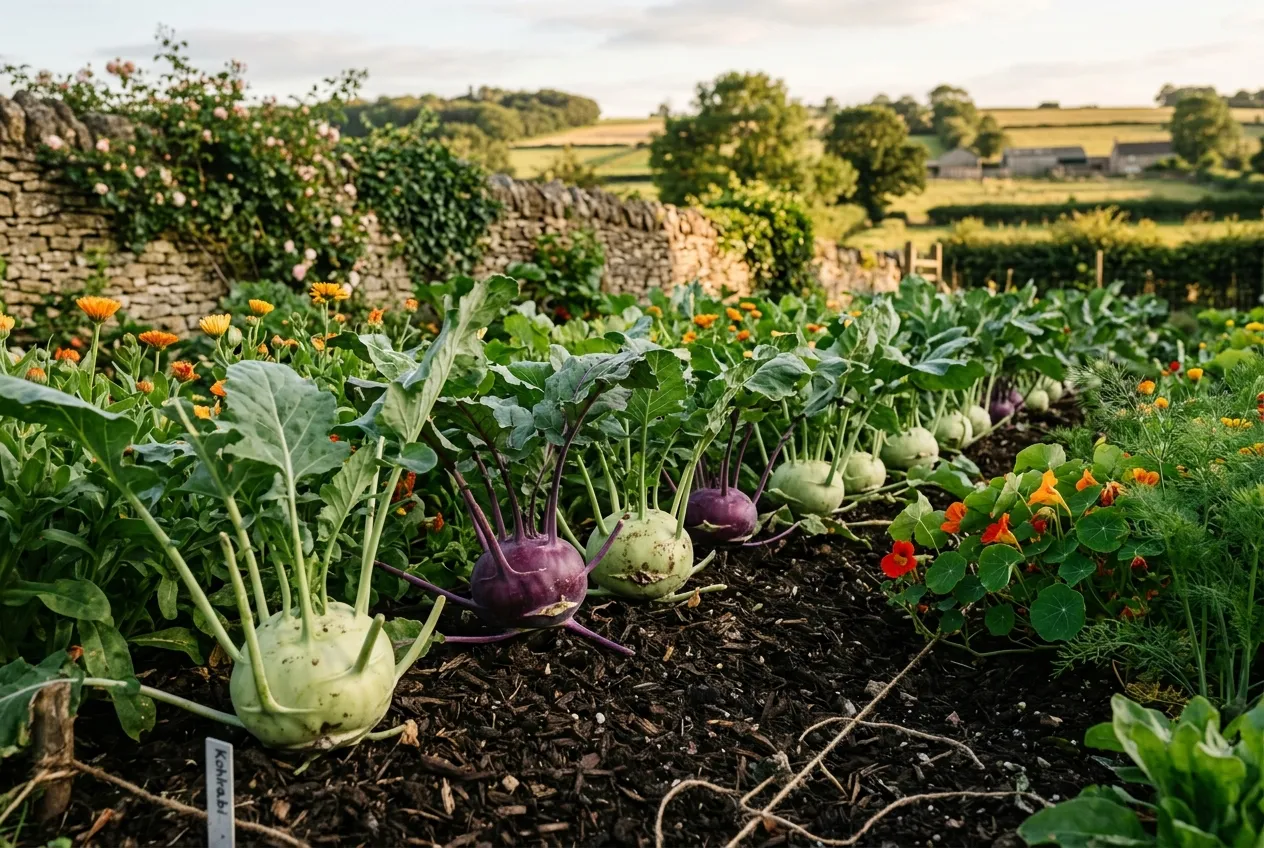 Green and purple kohlrabi growing alongside companion plants. Marigolds and nasturtiums between rows help deter pests.
When and how do I harvest kohlrabi?
Harvest kohlrabi when the bulb reaches 6-8cm diameter. This is roughly tennis-ball size. At this stage the flesh is crisp, juicy, and sweet. Beyond 10cm, the texture turns woody and fibrous.
Harvesting method: Cut the stem at soil level with a sharp knife. Alternatively, pull the entire plant and trim the root. Remove the outer leaves, which can be cooked like kale or added to stir-fries. The bulb keeps in the fridge for 2-3 weeks wrapped in a damp cloth.
Storage: Kohlrabi stores well in a cool, dark place at 1-4C for up to 8 weeks. Cut the leaves off to prevent moisture loss from the bulb. Pack in damp sand in a box in a cold shed or garage. For longer storage, peel and dice the bulb, blanch for 2 minutes, and freeze. Frozen kohlrabi keeps for 10-12 months.
Overwintering in the ground: In mild areas of southern and western England, late-sown purple kohlrabi can stand in the ground through December. Cover with fleece when temperatures drop below -3C. The bulbs tolerate light frost but prolonged hard frost damages the stem tissue.
How do I cook kohlrabi?
Kohlrabi is one of the most versatile vegetables to grow at home. The raw flesh has a crisp, apple-like texture with a mild brassica flavour. The leaves taste similar to collard greens.
Raw: Peel the bulb with a vegetable peeler and slice into thin rounds, matchsticks, or grate into coleslaw. Raw kohlrabi works well in salads with apple, walnut, and a mustard dressing. It holds its crunch for hours, making it ideal for packed lunches and picnic platters.
Roasted: Cut into 2cm wedges, toss with olive oil and salt, and roast at 200C for 25-30 minutes until golden and caramelised. Roasting intensifies the natural sweetness. Season with smoked paprika or cumin for a deeper flavour.
Mashed: Peel, dice, and boil for 15-18 minutes until tender. Mash with butter and a pinch of nutmeg. Kohlrabi mash is lighter than potato and works as a lower-carbohydrate alternative.
Stir-fried: Cut into thin strips and cook in a hot wok for 3-4 minutes. The flesh stays slightly crunchy. Add soy sauce, ginger, and sesame oil for an Asian-style side dish.
Leaves: Steam or sauté young kohlrabi leaves for 3-4 minutes. They wilt down like spinach but have a stronger, earthier flavour. Use them wherever you would use kale or spring greens.
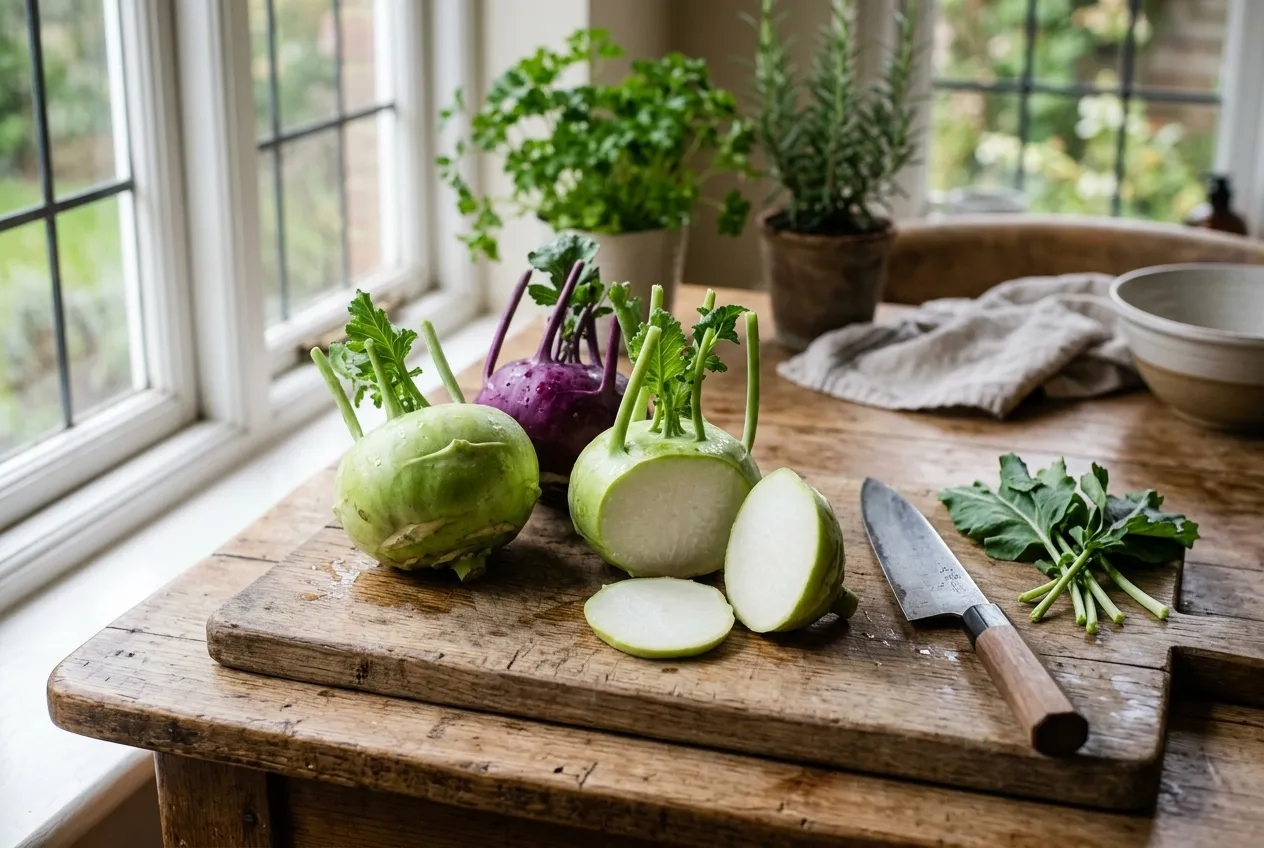 Harvested kohlrabi showing the crisp white flesh inside. Both green and purple varieties have identical white interiors.
Month-by-month kohlrabi growing calendar
| Month | Task |
|---|---|
| January | Order seed. Plan position in crop rotation. Lime acidic beds if needed. |
| February | Sow early varieties indoors at 15-18C. ‘Quickstar’ is best for first sowings. |
| March | Continue indoor sowing. Prepare outdoor beds with compost and fertiliser. |
| April | First outdoor direct sowing. Plant out February-sown seedlings under fleece. |
| May | Remove fleece from established plants. Second succession sowing outdoors. |
| June | Third succession sowing. Begin harvesting earliest indoor-sown plants. |
| July | Final outdoor sowing (by mid-July in the south). Continue harvesting. |
| August | Harvest main crop. Water consistently during dry spells to prevent splitting. |
| September | Harvest late sowings. Cover autumn crops with netting against pigeons. |
| October | Lift remaining bulbs. Store in damp sand at 1-4C or freeze blanched dice. |
| November | Clear spent plants. Add to compost heap. Do not leave roots in brassica beds. |
| December | Review stored bulbs. Plan next year’s rotation and variety choices. |
Kohlrabi companion planting
Kohlrabi benefits from the same companion planting approach as other brassicas. The best companions help deter pests, improve soil, or make efficient use of space.
Good companions: Beetroot, lettuce, onions, dill, and nasturtiums. Lettuce provides living ground cover between kohlrabi plants and is harvested before the kohlrabi needs the space. Nasturtiums act as a trap crop, drawing aphids away from the kohlrabi.
Poor companions: Other brassicas (they compete for the same nutrients and share diseases), strawberries, and climbing beans. Avoid planting near Brussels sprouts or cauliflower because they attract identical pests and strip the same nutrients from the soil.
The RHS vegetable growing guide confirms that kohlrabi performs best when included in a mixed planting scheme with non-brassica crops. Garden Organic also recommends interplanting with aromatic herbs to confuse cabbage white butterflies.
Frequently asked questions
When should I sow kohlrabi in the UK?
Sow kohlrabi indoors from February or direct outdoors from April. Indoor sowings at 15-18C germinate in 5-7 days. Outdoor sowings take 10-14 days depending on soil temperature. For the longest harvest season, succession sow every 3 weeks from April through to mid-July. Late July sowings in southern England still produce harvestable bulbs by October.
How long does kohlrabi take to grow?
Kohlrabi matures in 8-12 weeks from sowing. Fast green varieties like ‘Quickstar’ reach harvest size in 8 weeks. Purple varieties such as ‘Kolibri’ take 10-12 weeks but hold their quality longer. Temperature affects speed. Plants growing in soil above 15C develop 20% faster than those in cooler conditions below 12C.
What does kohlrabi taste like?
Kohlrabi tastes like a mild, sweet cross between cabbage and turnip. The raw flesh is crisp and juicy with a subtle peppery note. Cooked kohlrabi softens to a texture similar to a potato but lighter. The flavour intensifies when roasted at 200C for 25-30 minutes. Young leaves are also edible and taste similar to kale.
Can I grow kohlrabi in pots?
Yes, kohlrabi grows well in containers at least 20cm deep. Use a pot 30cm wide for 2-3 plants or a large trough for a row. Fill with multipurpose compost mixed with 20% perlite for drainage. Water daily in warm weather because containers dry out faster than open ground. Feed with a balanced liquid fertiliser every 2 weeks from 4 weeks after transplanting.
Why is my kohlrabi woody and fibrous?
Woody kohlrabi is caused by harvesting too late. The bulb becomes fibrous once it exceeds 10cm diameter. Irregular watering also causes toughness because the plant produces woody tissue during dry spells then swells rapidly when watered. Water consistently to keep soil evenly moist. Harvest at 6-8cm diameter for the best texture.
Is kohlrabi frost hardy?
Kohlrabi tolerates light frost down to -4C. Purple varieties are hardier than green. Established plants survive short cold snaps but prolonged freezing below -6C damages the swollen stem. In mild UK areas, autumn-sown kohlrabi can stand into December with fleece protection. Spring sowings need protection from late frosts if planted out before mid-May.
What pests attack kohlrabi?
Cabbage white butterflies and flea beetles are the main pests. Cover plants with fine mesh netting (7mm or smaller) from planting day to prevent egg-laying. Flea beetles create small round holes in leaves during warm, dry weather. Water regularly and use fleece to raise humidity around young plants. Club root is the most serious disease affecting all brassicas including kohlrabi.
Now you know how to grow kohlrabi in the UK, explore our guide on how to grow broccoli for another fast-cropping brassica, or try growing celeriac for another unusual vegetable that thrives on UK allotments.
Lawrie has been gardening in the West Midlands for over 30 years. He grows his own veg using no-dig methods, keeps a wildlife-friendly garden, and writes practical advice based on real UK growing conditions.