Key takeaways
- Four main UK species: gooseneck L. clethroides, yellow garden loosestrife L. punctata, creeping jenny L. nummularia, firecracker L. ciliata
- L. punctata spreads up to 1m a year by rhizomes - either plant in a 60-litre sunken container or skip it entirely
- Best in moist soil, full sun to partial shade, pH 5.5-7.0, with pond edges and bog gardens ideal
- Divide clumps in October or November every 3-4 years to refresh vigour
- Hardy across the UK to -20C (RHS H6) with no major pest or disease issues
- L. nummularia 'Aurea' makes a 5cm-tall mat and tolerates dry shade once established
What Lysimachia species are worth growing in UK gardens
Four species cover almost every UK garden use, from pond edge to dry shade groundcover. Each has a distinct habit and a distinct level of spread risk.
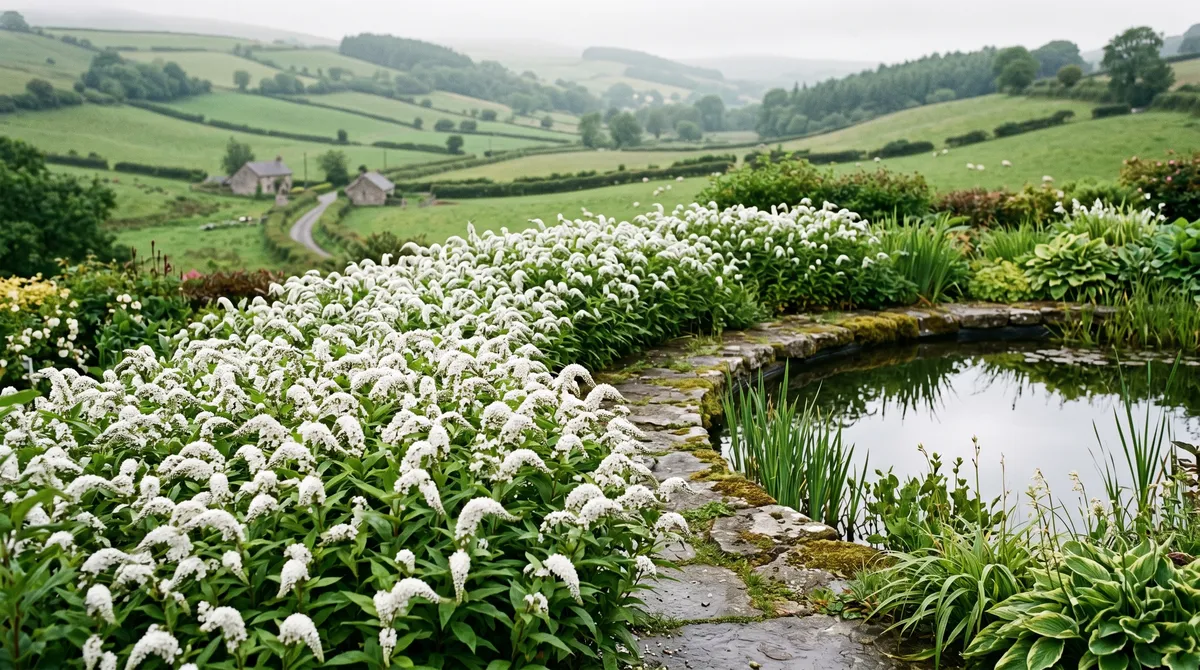
Lysimachia clethroides, the Gooseneck Loosestrife, is the tallest at 80-90cm with arching white flower spikes shaped like a goose’s neck. It spreads at 100-200mm a year by rhizomes - moderate, manageable. Plant in moist soil, full sun to part shade. Flowers July to August. RHS Award of Garden Merit holder.
Lysimachia punctata, the Yellow Garden Loosestrife, reaches 70-90cm with vivid yellow star-shaped flowers in whorls up the stem. Spreads 600-1000mm a year in moist soil - the most aggressive of the group. Tolerates anything from full sun to dry shade. Flowers June to August.
Lysimachia nummularia ‘Aurea’, Golden Creeping Jenny, is a 5-10cm trailing groundcover with chartreuse-yellow rounded leaves and cup-shaped yellow flowers in June. Spreads 300-450mm a year by surface stolons - easy to lift. Good in part shade, pond edges, and over walls.
Lysimachia ciliata ‘Firecracker’, has dark purple-bronze foliage with nodding lemon-yellow flowers. Reaches 70-90cm. Spreads at 300-500mm a year. Best foliage colour in full sun. Award of Garden Merit holder.
For a wider comparison of moisture-loving perennials see our best plants for clay soil UK guide.
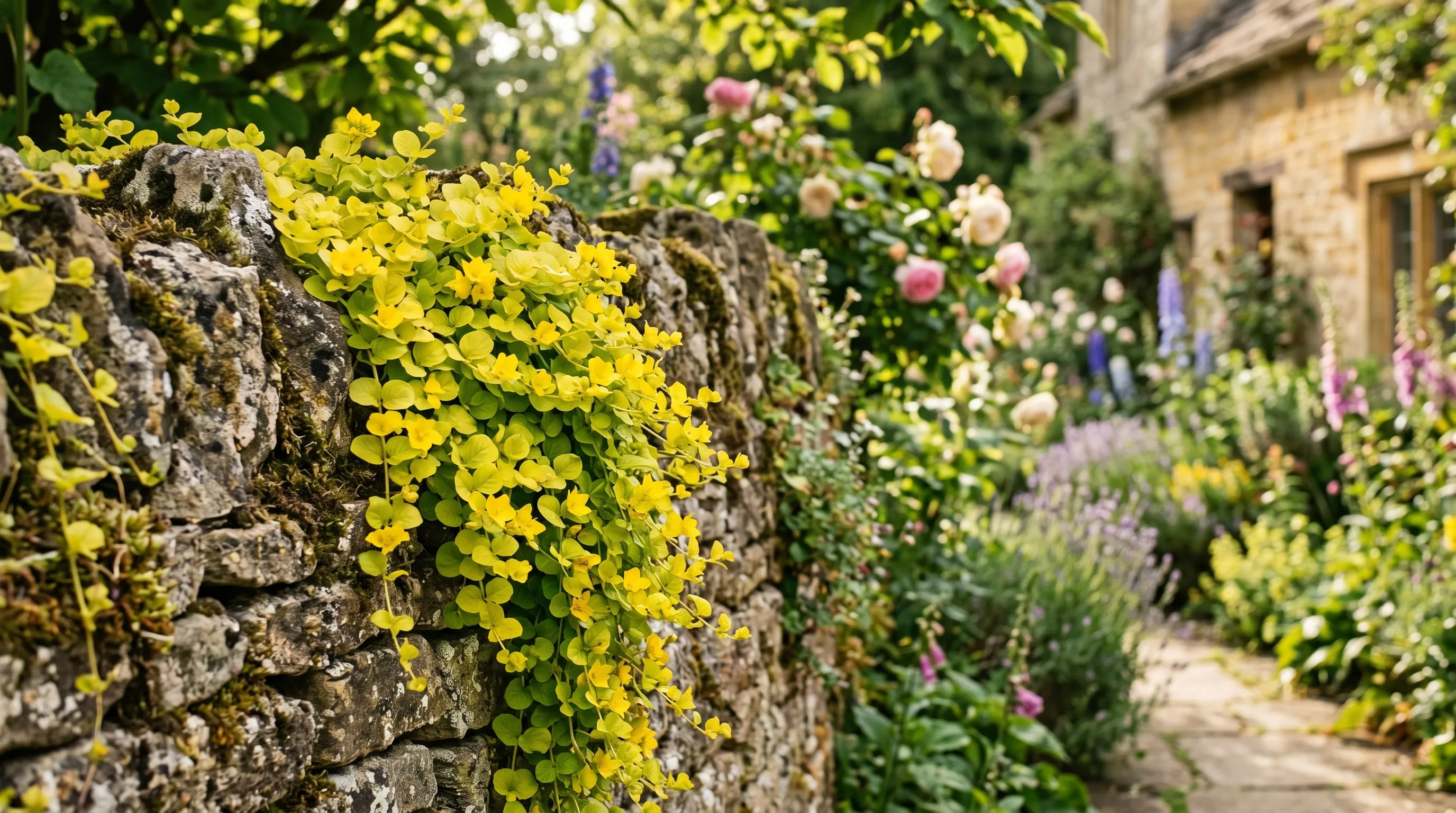 Lysimachia nummularia ‘Aurea’ is the lowest-risk species. The chartreuse-yellow foliage holds best with 3-5 hours of direct sun a day.
Soil, light, and moisture for Lysimachia
Lysimachia thrives in moist soil at pH 5.5 to 7.0. All four UK garden species share this preference, though tolerances vary. The species evolved in damp meadows, woodland margins, and pond edges across Europe, North America, and Asia. UK conditions suit them well, especially in the wetter west and north.
Light tolerance runs from full sun to deep shade by species. L. punctata is the most adaptable, flowering at reduced density even in 90% shade. L. clethroides flowers best with 5-6 hours of direct sun. L. nummularia ‘Aurea’ colours best in part shade because full midday sun bleaches the gold leaves to pale yellow by July. L. ciliata ‘Firecracker’ needs full sun to hold the dark purple foliage colour.
Soil pH sits comfortably in the slightly acidic to neutral range. On chalky soils above pH 7.5, growth slows and leaves yellow between veins (interveinal chlorosis). Add 50mm of garden compost annually to maintain organic matter and buffer the pH.
Gardener’s tip: Mulch Lysimachia with 50mm of leaf mould or bark chip in April. This keeps the soil moist through summer, reduces watering by around 40%, and improves the soil structure each year as the mulch breaks down.
How invasive is Lysimachia really
This is the question worth asking before planting any species except L. nummularia. Three of the four species are classed as invasive in UK gardens, and one of those is genuinely difficult to remove once established.
L. ciliata ‘Firecracker’ spreads at 300-500mm a year. Manageable with annual lifting. The dark foliage makes the plant easy to spot and chase if it wanders.
L. nummularia spreads by surface runners, not underground rhizomes. Lift any wandering stems with a hand fork in two minutes. Lowest risk by a wide margin.
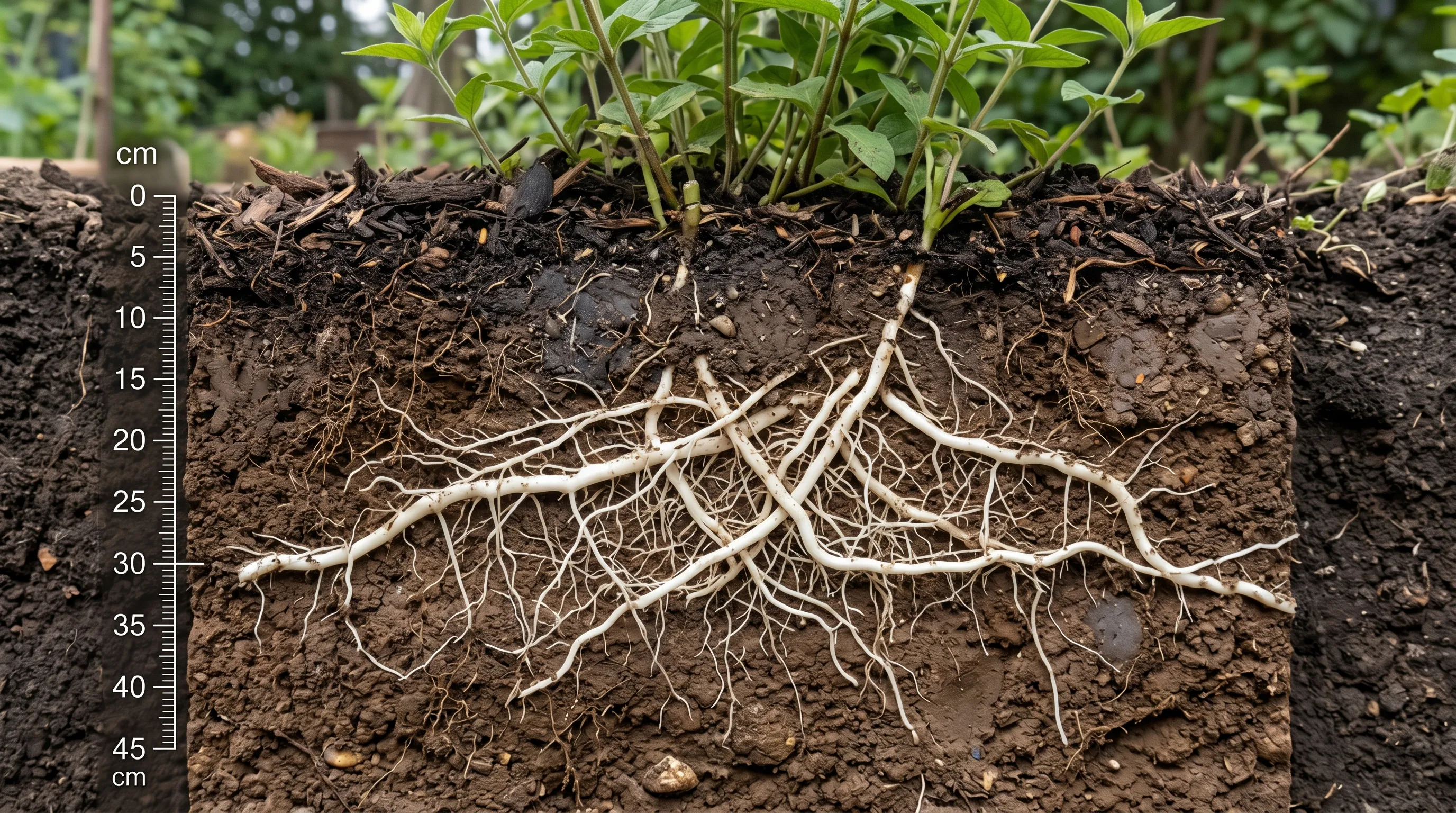 L. punctata sends rhizomes horizontally 100-150mm below the surface. Any fragment over 25mm long will regenerate.
Containment tactics that actually work
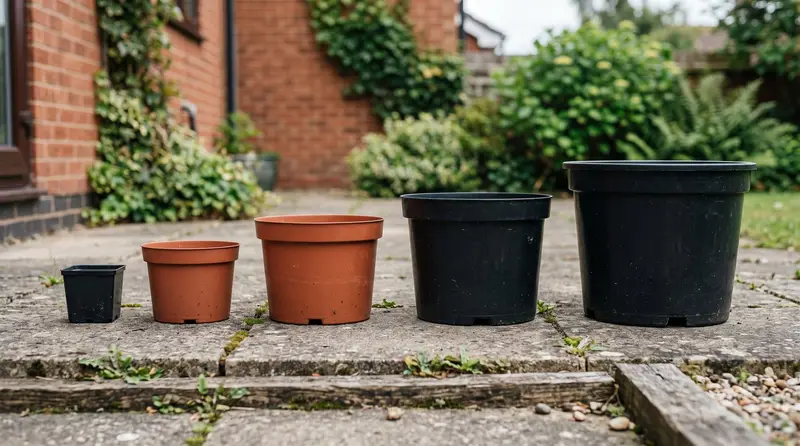
Sunken container. Plant in a 60-litre rigid plastic pot with the rim 25mm above soil level. Drill 8 to 10 drainage holes in the base. Bury the pot leaving the rim proud. This works at 95% effectiveness over six years. The rim above ground stops surface runners. The pot walls stop rhizomes. Cost: around £8 for the pot. Limitation: needs annual top-dressing of compost as the rootball fills the container.
Vertical root barrier. Sink HDPE root barrier (the kind sold for bamboo) 450mm deep around the planting area. Effective at 80% over four years. Some rhizomes find their way over the top edge. Cost: about £25 for a 5m strip.
Annual lifting. Lift the whole clump every March, shake off all soil, and replant only the central crown. Effective at 70%. Misses rhizome fragments left in the surrounding soil. Free, but takes 30-45 minutes per clump.
Our gold standard is the sunken container. If you cannot face that, plant L. clethroides instead and accept the slower spread. The full perennial-management approach is covered in our plant propagation: cuttings, division and layering UK guide.
Best uses for Lysimachia in UK gardens
Each species suits different positions. Match the plant to the spot and most problems disappear.
Damp border. L. clethroides as the back-of-border statement plant, contained in a sunken pot. Underplant with hardy geraniums and ferns. The vertical arching spikes balance horizontal foliage masses well.
Groundcover. L. nummularia ‘Aurea’ is the standard choice. Plant 300mm apart, knits together in one full season. Tolerates dry shade once established. Looks particularly good cascading over a low wall or down a slope.
Container display. L. nummularia ‘Aurea’ as a trailing edge in mixed pots with Heuchera, Coleus, and trailing lobelia. The chartreuse leaves brighten shady spots and accept regular watering well.
Containment showpiece. A sunken pot of L. punctata with a single 90cm bamboo stake. Surrounded by 300mm of bare mulched soil to show off the bright yellow flowers from June to August.
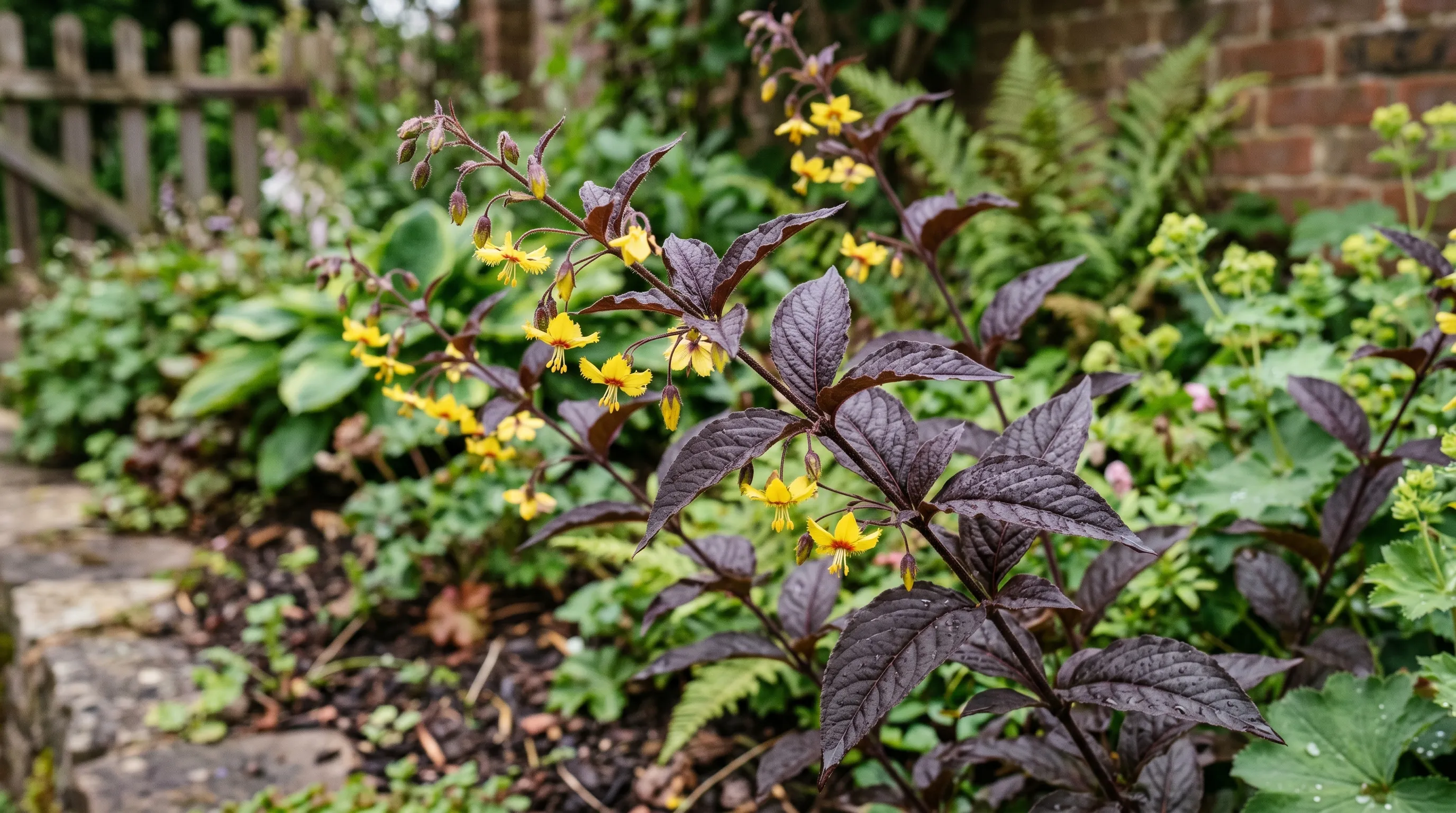 L. ciliata ‘Firecracker’ needs full sun to hold the dark purple leaf colour. In shade the leaves go green by July.
Lysimachia species comparison table
| Species / Cultivar | Common name | Height | Spread per year | Flower colour | Light | Containment needed |
|---|---|---|---|---|---|---|
| L. clethroides | Gooseneck Loosestrife | 80-90cm | 100-200mm | White arching spikes | Sun to part shade | Optional |
| L. punctata | Yellow Garden Loosestrife | 70-90cm | 600-1000mm | Yellow whorls | Sun to deep shade | Essential |
| L. nummularia ‘Aurea’ | Golden Creeping Jenny | 5-10cm | 300-450mm surface | Yellow cups | Part shade | None |
| L. ciliata ‘Firecracker’ | Firecracker Loosestrife | 70-90cm | 300-500mm | Yellow nodding | Full sun | Recommended |
| L. ephemerum | Milky Loosestrife | 90-120cm | Clumping only | White spires | Full sun | None |
| L. atropurpurea ‘Beaujolais’ | Purple Loosestrife (annual) | 60-80cm | None - annual | Burgundy spikes | Full sun | None |
L. ephemerum and the annual L. atropurpurea ‘Beaujolais’ are the two least-known species but the safest. L. ephemerum stays in a tight clump and looks like a refined version of L. clethroides. It is harder to source and slower to establish - worth the patience.
Planting and establishment in the first year
Get the first year right and Lysimachia looks after itself for a decade. Get it wrong and the plant either fails or escapes.
Timing. Plant container-grown stock from March to October. Spring planting in April or May gives the strongest first season growth. Avoid June to August unless you can water every other day for the first three weeks. Bare-root divisions go in best in October or November while soil temperatures are still 8-12C.
Soil prep. Dig a hole twice the width of the rootball and 50mm deeper. Add 50mm of garden compost mixed with the bottom soil. Avoid bonemeal - Lysimachia does not need extra phosphorus and excess can lock out iron on clay soils. Backfill and firm.
Spacing. L. clethroides at 600-750mm apart. L. punctata at 900-1200mm (or 600mm in a sunken pot). L. nummularia at 300mm apart for fast knit. L. ciliata ‘Firecracker’ at 600mm.
Watering. Water deeply at planting with 10 litres per plant. Then 5 litres twice a week for the first three weeks, dropping to once a week for the rest of the first summer. From the second year, only water in drought periods of more than ten days without rain.
First year flowers. Expect 30-50% of normal flowering in year one. Full performance from year two onwards.
Warning: Do not plant Lysimachia next to a pond liner if the soil between is less than 600mm deep. The rhizomes can puncture EPDM liners over a five-year period in our observation. Keep a 600-900mm buffer.
Dividing and propagating Lysimachia
Division is the standard propagation method and refreshes vigour every three to four years.
When to divide. October or November is the gold standard window. The soil is still warm (8-12C), top growth has finished, and the divisions root before winter. Spring division in March is a viable second-best but plants take longer to settle.
How to divide. Lift the entire clump with a fork. Wash the rootball under a hose to expose the rhizome structure. Cut into sections with three to five growth buds each using a sharp spade or old bread knife. Discard the woody centre. Replant the outer sections at the original soil depth.
Cuttings. L. nummularia ‘Aurea’ roots easily from 50mm soft tip cuttings taken May to July. Stick six cuttings round the edge of a 9cm pot of gritty compost. Rooting in 14-21 days at 18-20C.
Seed. L. atropurpurea ‘Beaujolais’ is the only species commonly grown from seed. Sow indoors at 18-20C in March, prick out at the two-true-leaf stage, plant out after the last frost in May. The perennial species rarely come true from seed.
 Wash the rootball before cutting so you can see the rhizome structure. Three to five buds per division.
Companion planting that works with Lysimachia
The best companions either tolerate the same moist conditions or actively help mask any gaps in Lysimachia’s display.
For pond edges and bog gardens: Marsh marigold (Caltha palustris), Astilbe x arendsii, Hosta ‘Halcyon’, Iris ensata (Japanese iris), and Filipendula ulmaria (meadowsweet). All want consistent moisture and a similar pH range.
For damp shady borders: Pulmonaria, Brunnera ‘Jack Frost’, Tiarella ‘Spring Symphony’, and ferns including Dryopteris filix-mas. These cover the gap between Lysimachia foliage emerging and flowering.
For sunny moist borders: Persicaria ‘Firetail’, Lythrum salicaria (purple loosestrife - unrelated despite the name), Sanguisorba ‘Tanna’, and ornamental grasses such as Deschampsia cespitosa.
For golden creeping jenny groundcover: Hardy geraniums (G. ‘Rozanne’), Heuchera ‘Plum Pudding’, and Ajuga ‘Burgundy Glow’. The colour contrasts with purple foliage especially well.
See our companion planting guide UK for more pairings.
Month-by-month Lysimachia calendar
| Month | Task |
|---|---|
| January | No work needed. Foliage dormant below ground. |
| February | Cut back any remaining dead stems to 50mm. Mulch with 50mm of bark or leaf mould. |
| March | Top dress with general fertiliser at 70g per square metre. Sow L. atropurpurea indoors at 18-20C. |
| April | New shoots emerging. Slug-watch L. nummularia ‘Aurea’. Plant out container-grown stock. |
| May | Stake L. clethroides and L. ciliata with 90cm pea sticks before they reach 30cm. Plant new container stock. |
| June | First flowers on L. punctata and L. nummularia. Water deeply twice a week if dry. |
| July | Main flowering month for L. clethroides and L. ciliata. Deadhead L. punctata to stop self-seeding. |
| August | Cut all flower stems to prevent seed set on invasive species. Keep watering. |
| September | Tidy spent foliage. Note any clumps to divide. |
| October | Divide established clumps. Plant new divisions or container stock. |
| November | Final division window. Mulch with 50mm of compost over the crowns. |
| December | Cut back top growth to ground level once frosted. |
Common Mistakes when growing Lysimachia
Planting L. punctata without containment. The most common and expensive mistake. By year three the clump is 2m across, by year five it has reached neighbouring borders, and removal takes two full seasons of glyphosate plus mechanical lifting. Always plant in a sunken 60-litre container, or skip the species.
Letting flowers set seed. Cutting flowers in August prevents 100,000-plus seeds per square metre falling into the surrounding soil. Lysimachia seed remains viable for 4-6 years and germinates in spring. Twenty minutes of deadheading in late July saves five years of seedling removal.
Planting too close to pond liners. The rhizomes can puncture EPDM liners over time. Keep a 600-900mm buffer or use a rigid liner.
Full sun for L. nummularia ‘Aurea’. Bright midday sun bleaches the gold leaves pale by July. Plant in part shade with 3-5 hours of morning sun for the best colour.
Skipping the water in year one. Lysimachia needs 5-10 litres of water per plant per week through the first summer to establish. Plants that dry out in year one rarely recover full vigour.
Pests and diseases on Lysimachia
Lysimachia is largely trouble free in UK gardens, which is part of why it has the reputation as a tough survivor. Eight years of trials produced no major outbreaks.
Slugs and snails occasionally graze L. nummularia ‘Aurea’ in March and April when the new shoots are soft. Nematode-based slug control (Phasmarhabditis hermaphrodita) applied in mid-March works at around 80% effectiveness for six weeks. See our how to get rid of aphids UK guide for general pest principles - the techniques transfer to slug management too.
Powdery mildew sometimes appears on L. punctata foliage in dry summers. White dusty coating on upper leaf surfaces. Improve airflow by thinning the clump in spring. Water at soil level not over the leaves. Cut affected stems out at the base.
Root rot can affect plants in waterlogged anaerobic soils that never drain. Distinguish from healthy bog conditions: bog soil has visible water movement and supports earthworms; rot conditions are stagnant, smell sour, and have no worms. Improve drainage by adding 25mm of horticultural grit to the planting hole.
For more on selecting performing perennials see our best perennial plants UK gardens guide.
External authority
The RHS Plants for Pollinators list includes several Lysimachia species as recognised UK pollinator plants, valued for the long June-to-August nectar season they provide for bumblebees and hoverflies.
Frequently asked questions
Is Lysimachia invasive in UK gardens?
Yes, L. punctata and L. ciliata spread by underground rhizomes and are classed as invasive in UK gardens. They can colonise 1m a year in moist soil. L. clethroides is moderately spreading at 100-200mm a year. L. nummularia spreads by surface runners. Only L. ephemerum stays in a tight clump.
Does Lysimachia like sun or shade?
Lysimachia prefers full sun to partial shade with 4-6 hours of direct light. L. punctata tolerates deeper shade but flowers less. L. nummularia ‘Aurea’ colours best in part shade because full sun bleaches the gold leaves to pale yellow. All species need moist soil, and the more sun they get, the more water they need.
When should I plant Lysimachia in the UK?
Plant container-grown Lysimachia from March to October in moist soil. Spring planting in April or May gives the strongest first-year growth. Avoid planting during summer dry spells unless you can water daily for the first three weeks. Divisions go in best in October or November while the soil is still warm.
How do I stop Lysimachia from spreading?
Plant invasive species in a 60-litre sunken container with the rim 25mm above soil level. Cut the flowers before they set seed in August. Lift and divide every two years to remove rhizome fragments. Mulch with 75mm of bark to slow surface runners. Skip L. punctata altogether if you have free-draining sandy soil and a small border.
Can Lysimachia grow in clay soil?
Will Lysimachia grow in a pond?
Lysimachia is a marginal not an aquatic plant. Plant it in damp soil at the pond edge, not submerged. L. nummularia ‘Aurea’ tolerates being in 25mm of standing water at the pond margin. L. clethroides and L. punctata want consistently damp but not waterlogged soil. Use a planting basket in 50mm of water if you want them right at the pond edge.
Why is my creeping jenny turning green?
Lysimachia nummularia ‘Aurea’ reverts to green when grown in too much shade or in poor soil. Move it to a spot with 3-5 hours of direct sun and feed with a general fertiliser at 70g per square metre in March. Trim any wholly green stems back to where the gold colour resumes - reversion runs through the leaf, not the stem.
What pests attack Lysimachia in the UK?
Next steps
Our team produces practical UK gardening guidance from source research, contributor records and established horticultural practice. Editorial standards are overseen by Matt W.