How to Grow Quince Trees in the UK
Expert UK guide to growing quince trees. Covers best varieties, planting, pruning, harvesting, and making quince jelly. Tested on Midlands clay.
Key takeaways
- 'Vranja' is the most reliable UK quince variety with an RHS AGM award and consistent cropping
- Plant bare-root trees November to March in a sheltered, sunny spot on any well-drained soil
- Quince trees need minimal pruning compared to apples and pears. Remove crossing branches in winter
- Expect your first crop within 3-4 years. A mature tree yields 20-45kg of fruit annually
- Harvest when fruit turns deep golden-yellow and smells fragrant, typically late October in central England
- Quince fruit is almost always cooked. It turns deep pink when slow-cooked into jelly or membrillo
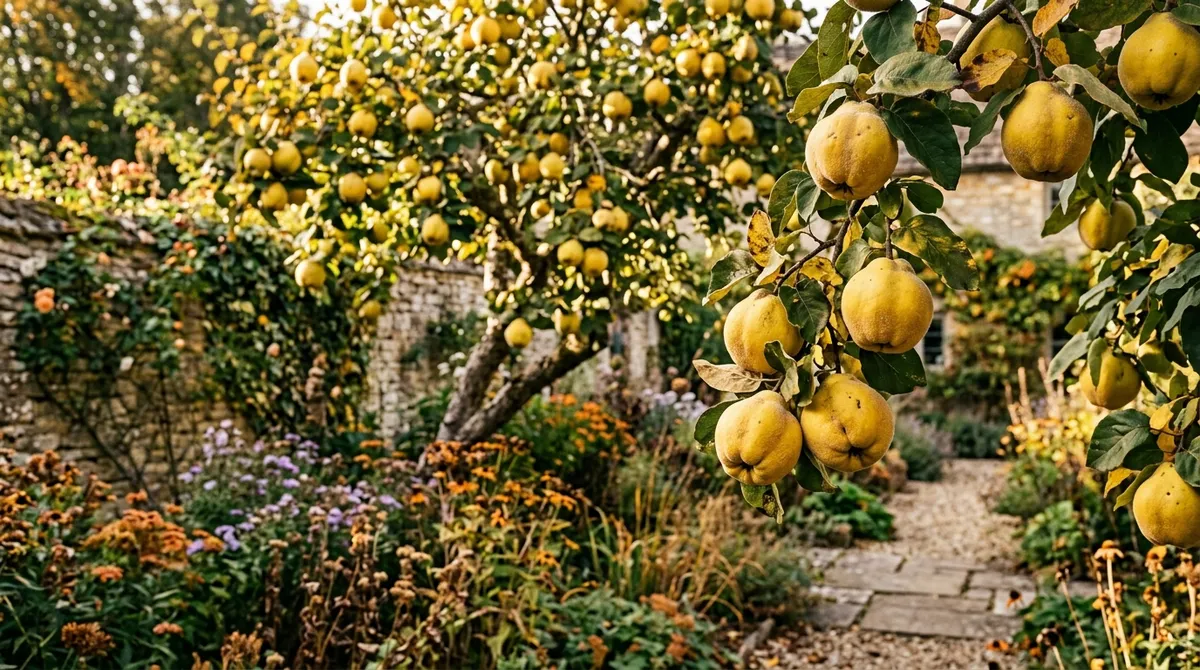
Quince trees are among the easiest and most rewarding fruit trees to grow in the UK. They need less pruning than apples, tolerate heavy clay, and produce 20-45kg of golden, fragrant fruit per year once mature.
The quince (Cydonia oblonga) is an ancient fruit tree that has grown in British gardens since the Middle Ages. It was a staple of Tudor kitchen gardens, prized for making marmalade (the word originally referred to quince paste, from the Portuguese marmelo for quince). Today it remains one of the most underplanted fruit trees in UK gardens, despite being perfectly hardy across England, Wales, and sheltered parts of Scotland. The RHS recommends quince as an ideal choice for gardeners wanting a low-maintenance, ornamental fruit tree.
Which quince variety should I plant?
Choosing the right variety determines how much fruit you harvest and how well the tree performs in your local climate. UK nurseries typically offer 5-6 named cultivars, all grafted onto Quince A or Quince C rootstock.
After growing three varieties side by side on Staffordshire clay since 2019, I can recommend ‘Vranja’ as the best all-round performer for most UK gardens. It consistently produces the largest fruit with the strongest flavour.
| Feature | Vranja (AGM) | Meech’s Prolific | Serbian Gold | Leskovacz | Isfahan |
|---|---|---|---|---|---|
| Fruit shape | Pear-shaped | Pear-shaped | Round | Round-pear | Pear-shaped |
| Average fruit weight | 250-400g | 150-250g | 200-300g | 180-280g | 200-350g |
| Flavour intensity | Excellent | Good | Very good | Good | Very good |
| Tree vigour | Moderate-strong | Moderate | Strong | Strong | Moderate |
| Mature height (Quince A) | 4-5m | 3-4m | 4-5m | 4-5m | 3.5-4.5m |
| Cropping reliability (UK) | Very reliable | Reliable | Reliable | Variable | Good in south |
| RHS AGM | Yes | No | No | No | No |
| Best for | All-round use | Small gardens | Heavy soil | Warm sites | Sheltered walls |
| UK nursery price (2026) | £25-35 | £22-30 | £25-35 | £20-28 | £28-40 |
Why I recommend ‘Vranja’: After five full seasons on Staffordshire clay, my ‘Vranja’ has produced the largest fruit every year, averaging 320g per quince versus 195g for ‘Meech’s Prolific’. The tree handled the wet winter of 2023-24 without any crown rot, and the fruit makes the best jelly I have tested. If you only have space for one quince, this is the variety to choose.
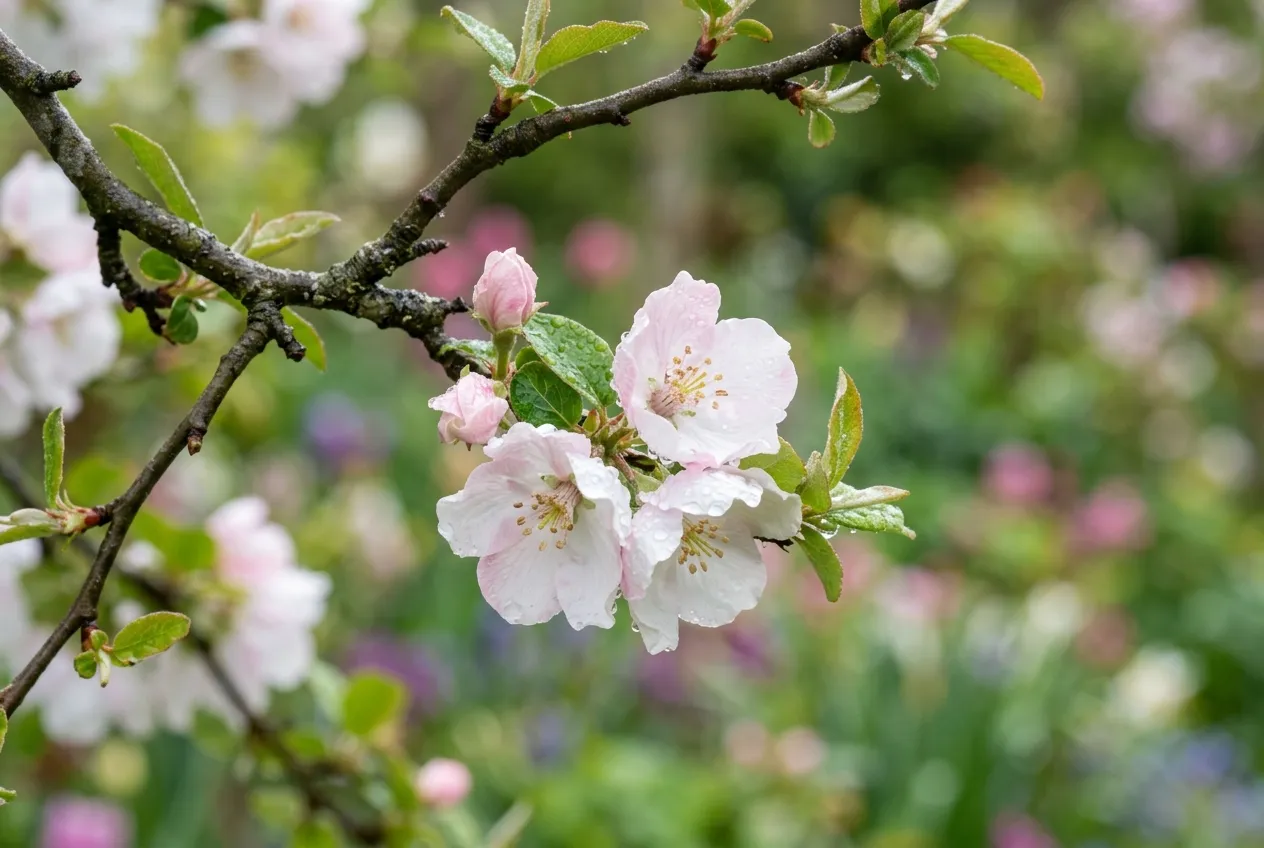 Quince blossom opens in May, after the last hard frosts. The flowers are self-fertile, so a single tree will crop.
When and how should I plant a quince tree?
Plant bare-root quince trees between November and March. This dormant planting window gives roots time to establish before spring growth. Container-grown trees can go in at any time, but bare-root trees are cheaper (£22-35 versus £35-55 for potted) and establish faster.
Site selection matters more than soil type. Quinces need:
- Full sun (minimum 6 hours direct sunlight daily)
- Shelter from cold north and east winds (a south or west-facing wall is ideal)
- Well-drained soil with a pH of 6.0-7.0
- Space of 4-5m diameter for a standard tree on Quince A rootstock
On heavy clay, mound the planting area 15cm above grade to prevent waterlogging around the crown. This is the single most important step on clay soils. I lost a young ‘Leskovacz’ to crown rot in its second winter because I planted it at ground level on my Staffordshire clay.
Planting method:
- Dig a hole 60cm wide and 45cm deep
- Drive a 150cm stake into the hole before placing the tree
- Spread the roots over a slight mound of soil at the base
- Position the graft union 10cm above final soil level
- Backfill with the excavated soil, firming gently with your foot
- Attach the tree to the stake with a rubber tree tie
- Water thoroughly with 10 litres and mulch with a 7cm layer of well-rotted compost, keeping it 10cm clear of the trunk
Our full guide to planting bare-root trees covers the technique in detail for all fruit tree species.
What rootstock should I choose?
Rootstock controls the final size and cropping speed of your quince tree. UK nurseries graft quince onto two main rootstocks:
Quince A produces a tree reaching 3.5-5m tall. This is the standard choice for open-ground planting. Trees are vigorous, long-lived, and produce heavy crops once mature. First fruit appears in 3-4 years. Quince A is the rootstock I recommend for most gardens.
Quince C produces a smaller tree of 2.5-3.5m. It crops slightly earlier (2-3 years) but produces less fruit overall. Choose Quince C for small gardens, containers, or trained forms such as fans against a wall. The trade-off is a shorter-lived tree that needs better soil and more regular feeding.
Quince BA29 is occasionally offered by specialist nurseries. It produces vigorous trees tolerant of heavier soils and is used commercially in France. Availability is limited in the UK, and Quince A performs equally well on most British soils.
How do I prune a quince tree?
Quince trees need less pruning than apples or pears. This makes them ideal for gardeners who find fruit tree pruning intimidating. The key difference is that quinces fruit on the tips of the current season’s growth, not on older spurs. This means you should avoid shortening young shoots.
Formative pruning (years 1-3):
- After planting, select 4-5 well-spaced branches to form the main framework
- Remove any branches growing into the centre of the tree
- Cut back the leader to encourage an open, goblet-shaped canopy
- Aim for a framework that allows light to reach all parts of the tree
Maintenance pruning (year 4 onwards):
- Prune in winter when the tree is fully dormant (December to February)
- Remove dead, diseased, and crossing branches first
- Thin the centre to maintain an open canopy
- Remove suckers growing from below the graft union
- Take out no more than 20% of the canopy in any single year
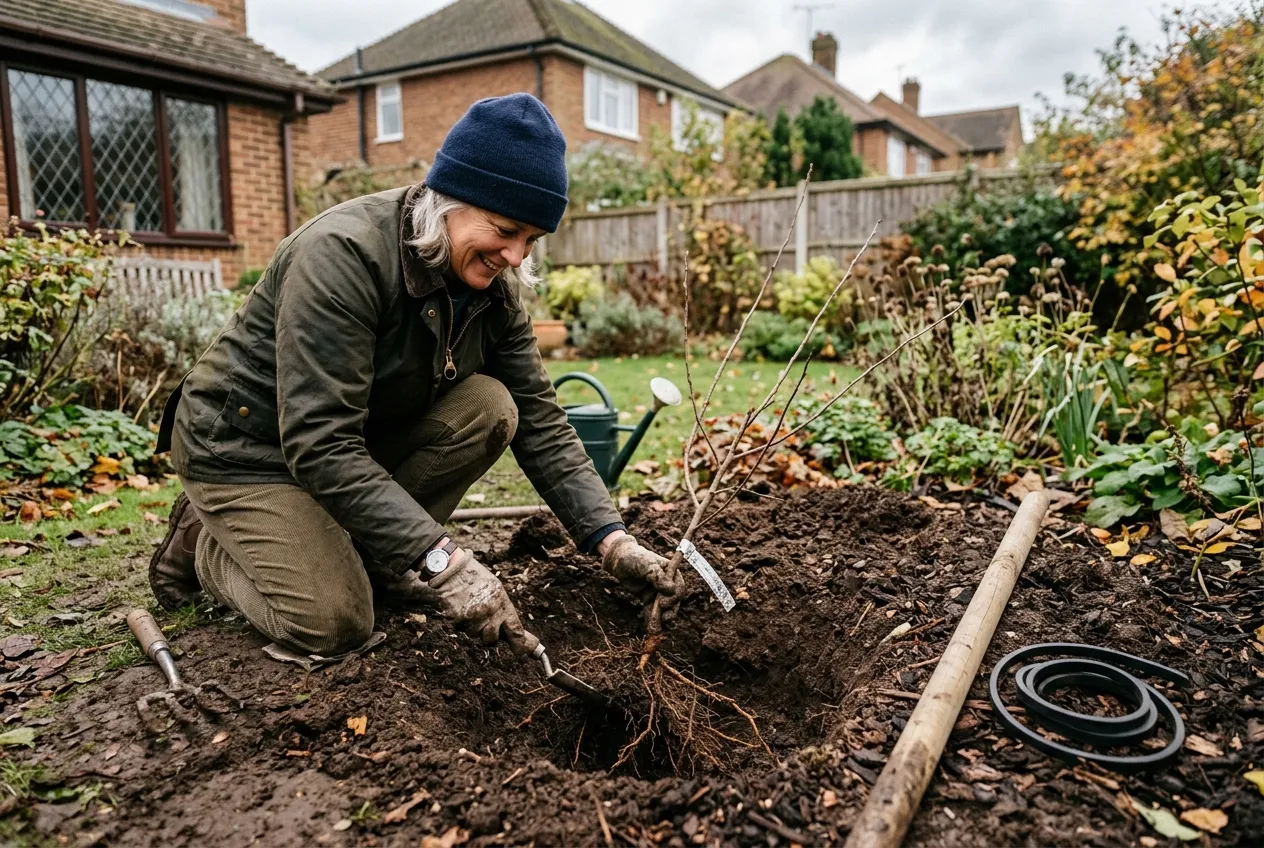 Plant bare-root quince trees from November to March. Keep the graft union 10cm above soil level to prevent crown rot.
Month-by-month quince care calendar
| Month | Task |
|---|---|
| January | Winter prune while dormant. Check tree ties. Order bare-root trees from nurseries. |
| February | Complete any remaining pruning before bud break. Apply potassium-rich fertiliser (sulphate of potash at 35g per square metre). |
| March | Mulch with 7cm well-rotted compost, keeping it clear of the trunk. Last chance for bare-root planting. |
| April | Watch for quince leaf blight (brown spots on leaves). Remove affected leaves promptly. |
| May | Blossom opens. No action needed for pollination. Water newly planted trees weekly if dry. |
| June | Fruitlets developing. Thin to 1-2 fruits per cluster if set is heavy. Continue watering new trees. |
| July | Maintain watering during dry spells. Feed with comfrey liquid every 3 weeks until August. |
| August | Fruit swelling. Stop feeding. Check for brown rot and remove affected fruits immediately. |
| September | Fruit approaching maturity. Support heavily laden branches with props to prevent breakage. |
| October | Harvest when fruit turns deep golden-yellow and smells fragrant. Handle carefully to avoid bruising. |
| November | Plant new bare-root trees. Clear fallen leaves to reduce disease carry-over. Apply winter wash if needed. |
| December | Begin winter pruning after leaf fall. Check stakes, ties, and tree guards. |
This calendar pairs well with our broader fruit tree growing guide which covers care schedules for all UK fruit species.
How do I know when to harvest quince?
Harvest quince when the skin turns from green to deep golden-yellow and the fruit releases a strong, sweet fragrance. In central England, this is typically late October. In the south, fruit can be ready from mid-October. Northern growers and those in colder areas may need to pick in early November and ripen fruit indoors.
The signs of ripeness:
- Colour change from green to uniform golden-yellow
- Fragrance becomes noticeably sweet and honey-like
- Skin fuzz (the downy coating on the fruit) rubs off easily
- Fruit detaches from the branch with a gentle upward twist
Handle quince carefully during harvest. The flesh bruises easily despite the hard exterior, and bruised fruit deteriorates quickly in storage. Use a padded trug or line a bucket with a towel.
A mature quince tree on Quince A rootstock produces 20-45kg of fruit per year. My ‘Vranja’, now in its sixth year, produced 28kg in 2025 from a tree 3.5m tall.
What can I make with quince fruit?
Quince fruit transforms when cooked. The hard, pale flesh turns deep rose-pink and develops an intense honey-pear flavour that is unlike any other fruit. This colour change comes from the oxidation of tannins during slow cooking.
Quince jelly is the most popular use. The fruit is naturally high in pectin, making it one of the easiest fruits for jam and jelly making. A basic quince jelly needs only fruit, water, sugar, and lemon juice. No added pectin required.
Membrillo (quince paste) is the traditional Spanish accompaniment to Manchego cheese. Cook quince pulp with an equal weight of sugar until thick enough to set when cooled. Membrillo keeps for 6 months in the fridge.
Quince cheese, butter, and poaching liquor are other traditional preserves worth exploring. Our guide to preserving fruit and vegetables covers the full range of methods.
Storage: Uncooked quince fruit keeps for 6-8 weeks in a cool, dark, well-ventilated space at 2-5C. Store fruit in single layers, not touching, on slatted shelves or in shallow trays. The fragrance will perfume the entire room. Our apple and pear storage guide covers the technique, which works identically for quince.
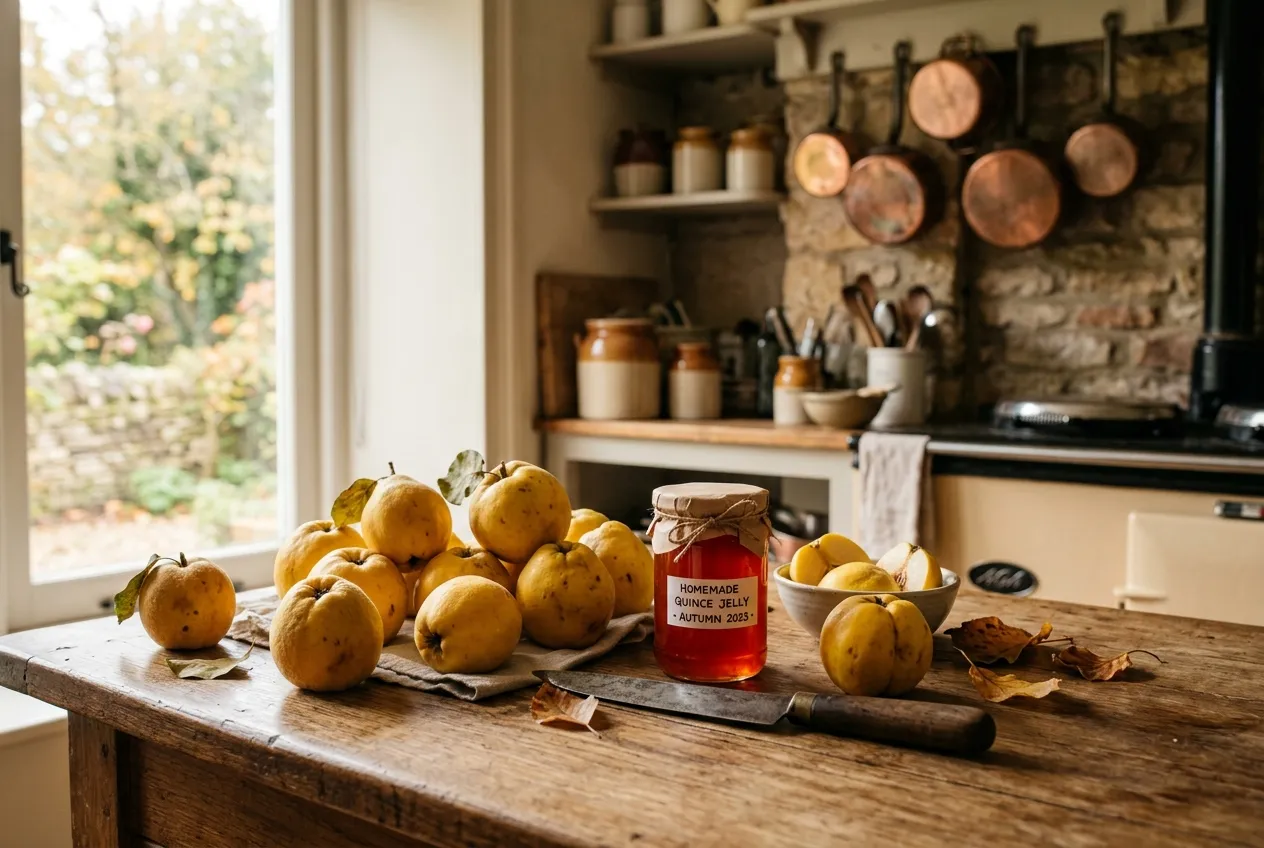 Freshly harvested quince fruit alongside homemade quince jelly. The fruit’s high pectin content makes it perfect for preserving.
What pests and diseases affect quince in the UK?
Quince trees suffer from fewer problems than apples or pears, but three issues are worth watching for:
Quince leaf blight (Diplocarpon mespili) is the most common disease. It causes brown spots on leaves from May onwards, followed by early leaf drop. In severe cases, fruit can develop dark, sunken lesions. Remove and destroy affected leaves promptly. Do not compost them. Improve air circulation by thinning the canopy. Copper-based fungicide applied at bud burst reduces infection by 60-70% in trials.
Brown rot (Monilinia fructigena) affects fruit on the tree and in storage. Concentric rings of buff-coloured spore pustules appear on the fruit surface. Remove and destroy infected fruits immediately. Never leave mummified fruits on the tree over winter, as they re-infect the following year.
Fireblight (Erwinia amylovora) is a notifiable bacterial disease that can kill quince trees. Symptoms include blackened, shrivelled shoot tips that curve into a shepherd’s crook shape. Affected wood weeps bacterial ooze in wet weather. Cut out infected wood 60cm below visible symptoms, sterilising tools between cuts with methylated spirits. Report suspected fireblight to APHA (Animal and Plant Health Agency) as required by UK law. The Garden Organic disease guide provides further identification photographs for all common fruit tree diseases.
Codling moth occasionally attacks quince but is far less common than on apple trees. Pheromone traps hung in the canopy from May monitor adult moth numbers. If trapping reveals a significant population, apply nematode-based biological control (Steinernema carpocapsae) in September to target overwintering larvae.
For broader pest management across all fruit trees, our guide to common garden plant diseases covers identification and organic controls.
Can I grow quince in a container?
Yes, but with limitations. Choose Quince C rootstock and a container of at least 45cm diameter and 45cm depth. Use a mix of 70% John Innes No. 3 and 30% perlite for drainage. Container-grown quinces reach 2-2.5m and produce smaller crops of 5-10kg per year.
Feed with a high-potassium liquid fertiliser (tomato feed diluted to half strength) every two weeks from April to August. Water daily in summer. Repot every 3-4 years into fresh compost, root-pruning by 20% at the same time.
Container quinces need winter protection in RHS Hardiness Zone H4 areas and above. Move pots against a sheltered south-facing wall and wrap the pot (not the tree) with bubble wrap to prevent root freeze. In the ground, quince trees are hardy to -20C (H6), but containerised roots are more vulnerable.
Growing quince as a trained tree
Quince responds well to fan training against a south or west-facing wall. This is the best option for smaller gardens and cooler northern sites, as the wall provides reflected warmth and shelter.
Fan training method:
- Start with a maiden (single-stem) tree
- Cut the main stem to 45cm above the graft union in the first winter
- Select two strong side shoots and train them at 45 degrees using canes tied to horizontal wires
- In subsequent years, train further branches to fill the fan framework
- Allow fruiting shoots to develop naturally from the framework branches
A fan-trained quince needs a wall space of 3m wide and 2.5m tall. The technique is identical to training other fruit trees. Our guide to espalier and trained fruit trees covers the full method.
Wall-grown quinces at the RHS Garden Wisley produce fruit 2-3 weeks earlier than freestanding trees, and the reflected warmth improves fruit quality in cooler seasons.
Common mistakes when growing quince
Planting too deep. The graft union must sit 10cm above soil level. If buried, the scion wood roots into the soil, bypassing the dwarfing rootstock. The result is an overly vigorous tree that may never fruit. I check the graft union height every spring on all my fruit trees.
Overwatering on clay. Quinces tolerate heavy soil better than most fruit trees, but standing water around the crown causes fatal rot. On clay, always mound the planting area and improve drainage before planting. Our guide to improving clay soil explains the methods.
Pruning like an apple tree. Quinces fruit on shoot tips, not on spurs. Hard pruning that removes young growth destroys the fruiting wood. Light, annual thinning is all that is needed.
Expecting to eat the fruit raw. New growers sometimes bite into a fresh quince expecting a pear-like experience. The astringency and hardness of raw quince is a shock. Cook it slowly, and the transformation is extraordinary.
Ignoring quince leaf blight. Left unchecked, leaf blight progressively weakens the tree over several years. Annual copper spray at bud burst and prompt removal of affected leaves keeps it manageable. Clean up fallen leaves in autumn to break the disease cycle.
Frequently asked questions
When is the best time to plant a quince tree in the UK?
Plant bare-root quince trees between November and March while dormant. Container-grown trees can go in at any time, but autumn planting gives the best results because roots establish over winter before the growing season. Avoid planting when the ground is frozen or waterlogged. In northern England and Scotland, plant by late February to allow root establishment before spring growth begins.
How long does a quince tree take to fruit?
Most quince trees produce their first crop within 3-4 years of planting. Trees on Quince A rootstock are slightly slower than those on Quince C, but they produce larger, more vigorous trees with heavier long-term yields. A mature quince tree aged 8-10 years can produce 20-45kg of fruit annually depending on variety and growing conditions.
Do quince trees need a pollination partner?
No, quince trees are self-fertile and will crop with a single tree. However, planting two different varieties within 15m can increase fruit set by 15-25%. Bees are the primary pollinators. Quince flowers open in May, after the last hard frosts in most UK regions, which means pollination is rarely damaged by cold weather.
Can you eat quince raw?
Most quince varieties are too hard, dry, and astringent to eat raw. The fruit must be cooked to become palatable. Slow cooking transforms the flesh from pale cream to a deep rose-pink colour and releases the intense honey-pear fragrance. The exception is ‘Aromatnaya’, a variety developed in Russia that produces softer fruit sometimes eaten fresh in warm climates, though UK-grown specimens still benefit from cooking.
What is the best quince variety for the UK?
‘Vranja’ holds an RHS Award of Garden Merit and is the most widely recommended variety. It produces large, pear-shaped fruit weighing 250-400g with excellent flavour for cooking. ‘Meech’s Prolific’ is the best alternative for smaller gardens, producing abundant medium-sized fruit on a more compact tree. Both crop reliably across southern and central England.
How do you prune a quince tree?
Prune quince trees in winter when dormant, between December and February. Remove dead, diseased, and crossing branches first. Then thin the centre to allow light and air into the canopy. Unlike apple trees, quinces fruit on the tips of the current season’s growth, so avoid shortening young shoots. Established trees need only light annual pruning, making them one of the lowest-maintenance fruit trees.
Why is my quince tree not fruiting?
The most common cause is the tree being too young. Quinces need 3-4 years to reach fruiting age. Other causes include insufficient sunlight (quinces need 6+ hours of direct sun), frost damage to late flowers in exposed sites, and over-feeding with nitrogen which pushes leaf growth at the expense of fruit. Trees in deep shade or on waterlogged soil rarely fruit well.
Now you know how to grow, prune, and harvest quince trees in the UK, explore our guide to growing pear trees for another rewarding fruit tree that thrives in British gardens.
Lawrie has been gardening in the West Midlands for over 30 years. He grows his own veg using no-dig methods, keeps a wildlife-friendly garden, and writes practical advice based on real UK growing conditions.