Quick answer
Plant bare-root roses from November to March, when the ground isn't frozen or waterlogged. Unpack them as soon as they arrive, then soak the roots in water for an hour or two. Dig a hole about 40cm wide, spread the roots over a mound of soil and set the graft union at soil level. Firm in, water well and mulch. If you can't plant straight away, heel them in.
Key points6 at a glance
- Unpack bare-root roses on the day they arrive and check the roots are moist
- Soak the roots in a bucket of water for an hour or two before planting
- Plant from November to March, but never into frozen or waterlogged soil
- Heel roses into a spare patch of soil if you can't plant them within a few days
- Set the knobbly graft union at soil level and firm the soil well
- Plant climbers about 45cm from a wall, leaning back towards it
In this article11 sections
Bare-root roses are planted from November to March, while they’re dormant. Unpack them as soon as they arrive and soak the roots for an hour or two. Plant them in a sunny spot with the knobbly graft union at soil level. Then firm the soil, water and mulch. If the ground is frozen or soggy, heel them in or keep them somewhere cool until conditions improve.
This guide is all about bare-root roses, from the moment the parcel arrives. Still deciding what to buy? Our guide to when to plant roses compares bare-root and potted roses.
What is a bare-root rose?
A bare-root rose is dug up from the nursery field while it’s dormant and sold without any soil. It arrives as a bundle of stems with roots wrapped in damp paper, sawdust or a bag. It may look like a bundle of sticks, but it’s a healthy plant taking a winter rest.
Bare-root roses are usually cheaper than potted ones and come in many more varieties. They also establish quickly, because they go straight into your soil. Specialist nurseries usually send them out from November to March.
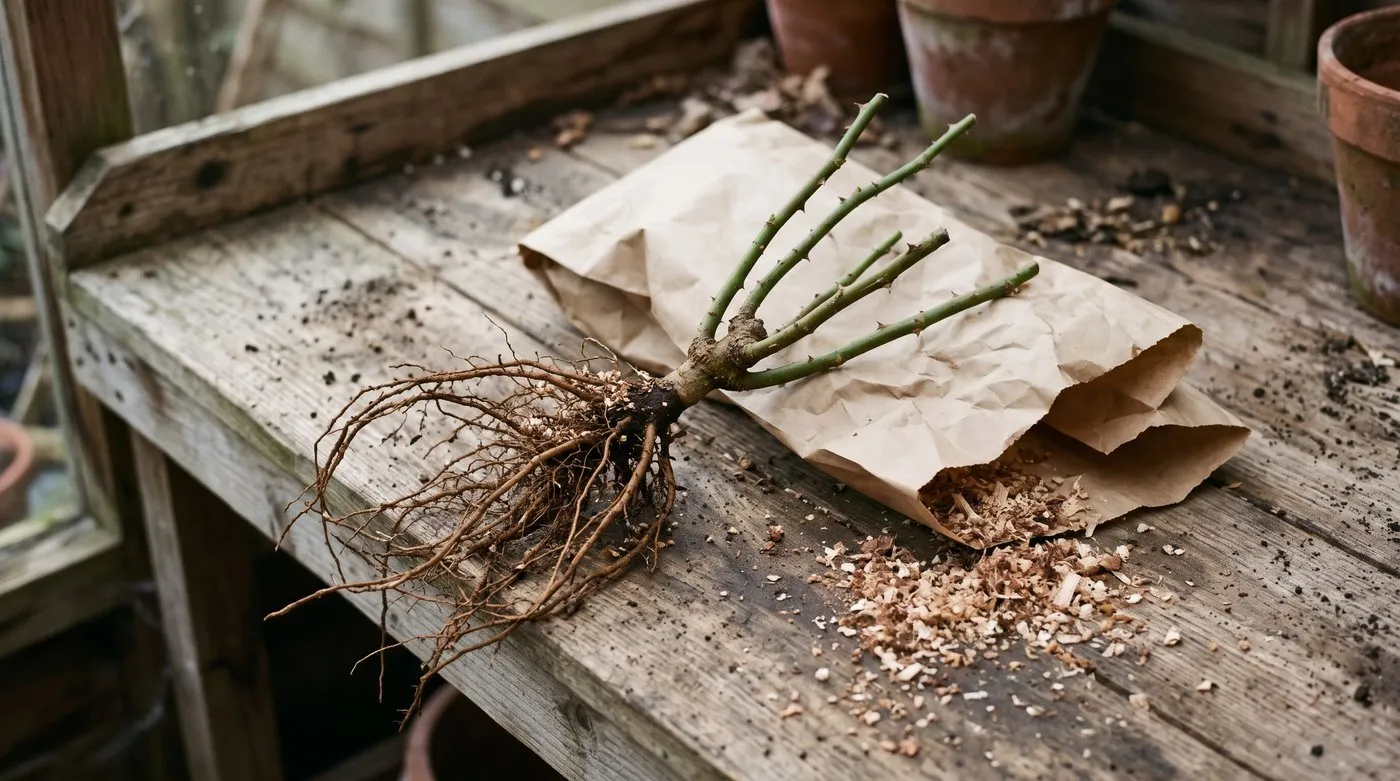
A good bare-root rose has firm green stems and plenty of moist, fibrous roots.
When your roses arrive
Open the parcel on the day it arrives. Don’t leave it in a warm hallway.
Check each rose:
- Stems should be green and firm, with no shrivelling. Most nurseries cut them back to about 20 to 30cm.
- Roots should be moist and plentiful, not dried out or mouldy.
- The graft union, the knobbly lump where the stems join the roots, should be solid.
If a rose looks dried out, soak it overnight. Contact the nursery straight away if anything is broken or mouldy.
Gardener’s tip: Write the variety name on a plant label as you unpack. Bare-root roses all look alike in winter, and the paper labels soon wash off.
If you can’t plant straight away
You don’t need to rush, but the roots must never dry out.
For a few days, keep the roses in their packaging in a cool, frost-free shed or garage. Check the roots are still damp and splash on a little water if needed.
For longer, heel them in. Dig a shallow trench in a spare patch of soil. Lay the roses in it at an angle, cover the roots with soil and firm gently. They’ll be happy there for several weeks until you’re ready to plant.
If the ground is frozen, keep the roses in a frost-free shed. Or heel them into a large tub of damp compost. Plant them once the soil thaws.
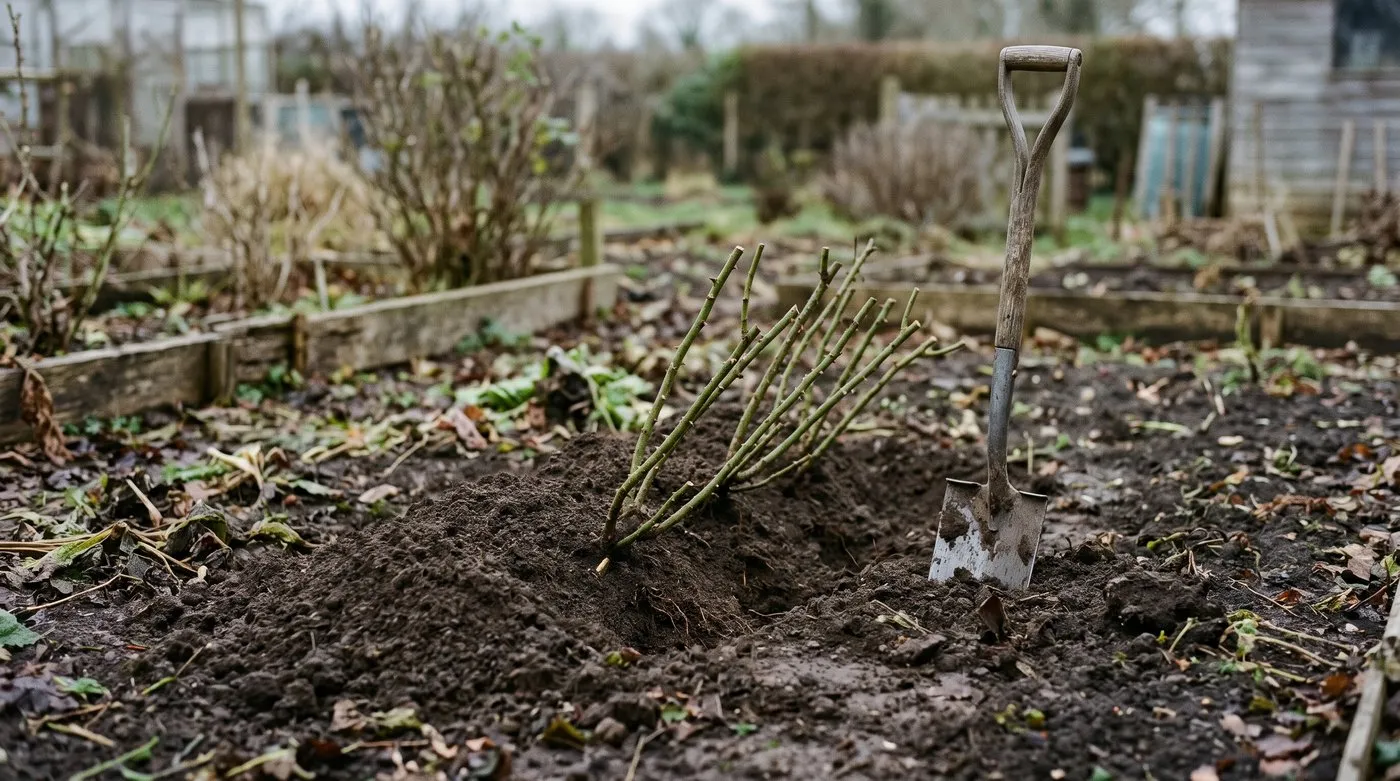
Heeling in keeps bare-root roses safe for weeks. Lay them at an angle and cover the roots with soil.
Choosing the spot
Roses need sun, ideally at least six hours of direct sun a day. They like rich, well-drained soil that holds some moisture in summer. Avoid deep shade, spots right under trees and anywhere that stays waterlogged in winter.
Try not to plant a new rose where an old one grew. Roses often struggle in that soil, a problem called rose replant disease. If you must use the same spot, swap the soil first, as our rose planting guide explains.
How to plant a bare-root rose, step by step
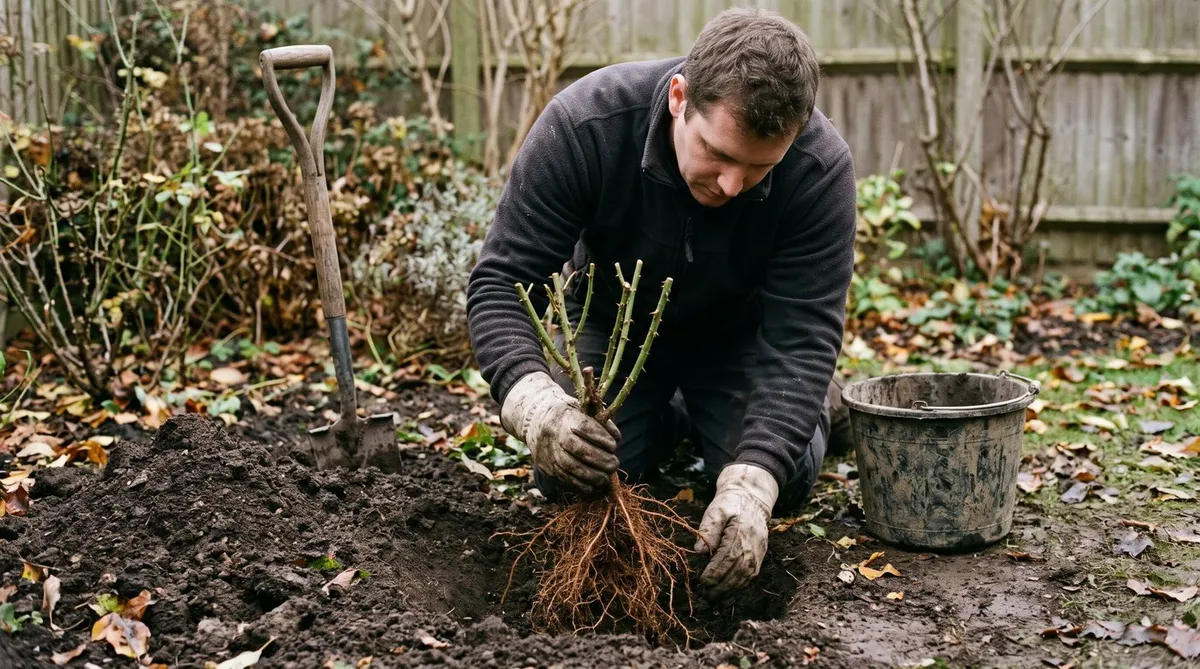
- Soak the roots. Stand the rose in a bucket of water for an hour or two.
- Trim if needed. Snip off any broken, dead or very long roots, and any damaged stems.
- Dig the hole. Make it about 40cm wide and deep enough for the roots. Loosen the bottom with a fork.
- Improve the soil. Mix some well-rotted compost or manure into the soil you dug out. Make a small mound in the middle of the hole.
- Add mycorrhizal fungi if you like. Sprinkle it onto the roots, following the pack.
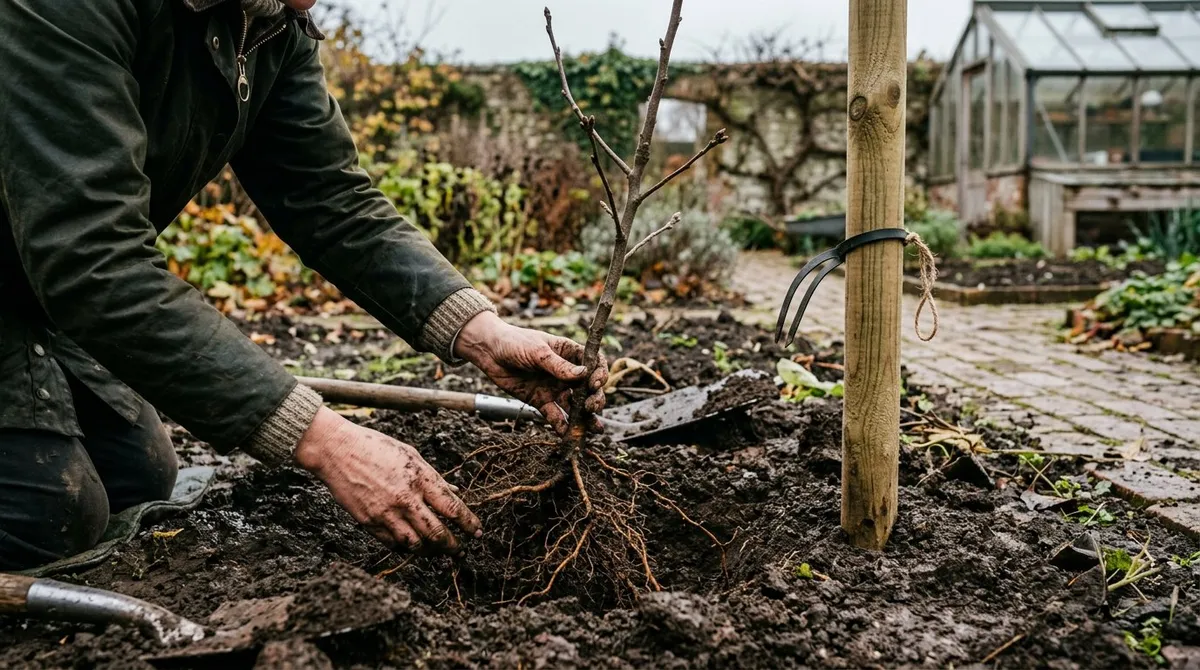
- Set the depth. Spread the roots over the mound. Lay a cane across the hole and check the graft union sits at soil level.
- Backfill and firm. Fill in, giving the rose a gentle shake so soil settles between the roots. Firm with your heel.
- Water and mulch. Water well, even in winter. Then mulch with compost or manure, keeping it clear of the stems.
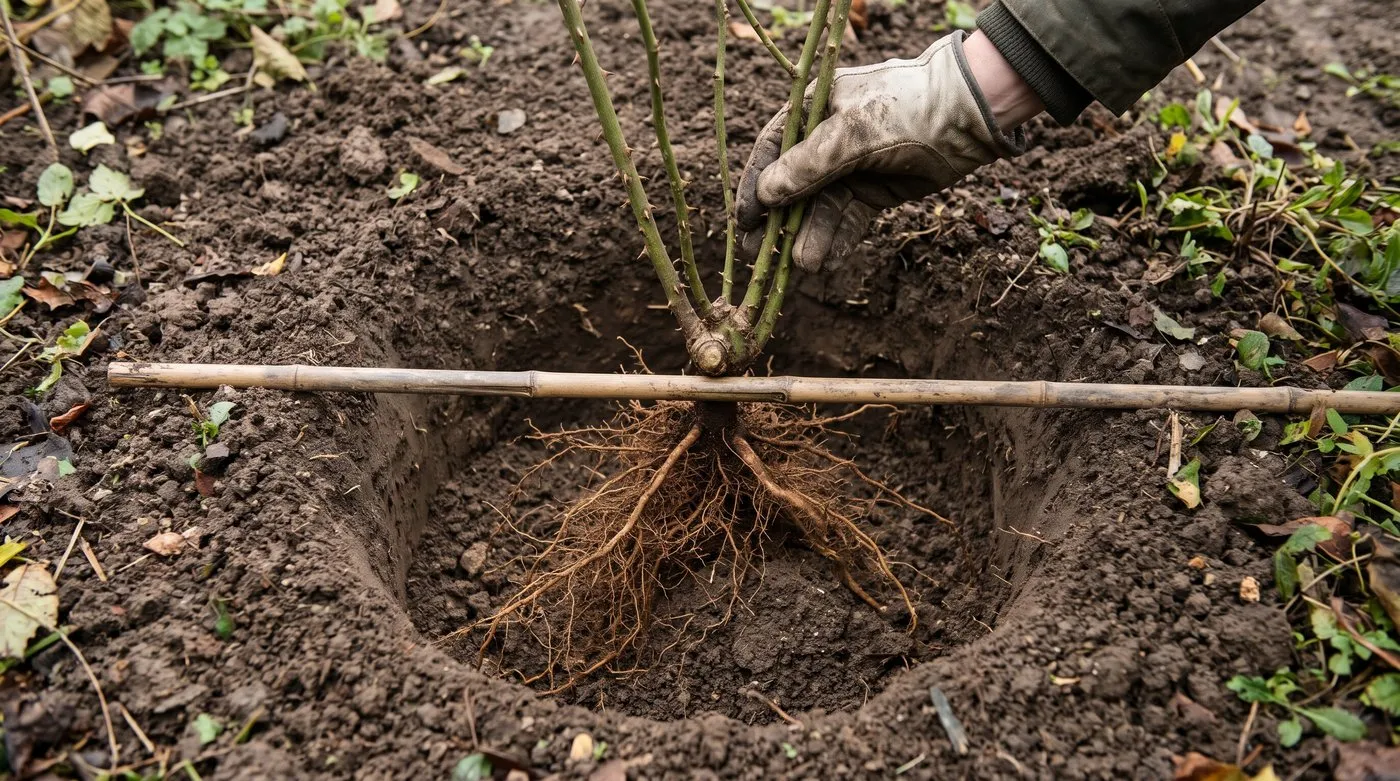
A cane laid across the hole shows you exactly where soil level will be. Line the graft union up with it.
Warning: Rose stems are thorny, even on bare-root plants. Wear thick gardening gloves when you unpack, trim and plant.
Planting climbing and rambling roses
Plant climbers and ramblers about 45cm away from a wall or fence. The soil right next to a wall stays dry, as the wall blocks the rain. Lean the rose back towards the wall at an angle, then tie the stems loosely to wires or a trellis.
Leave the long stems unpruned. Fan them out and tie them in as close to horizontal as you can. This encourages more flowering side shoots. Our guide to the best climbing roses has plenty of ideas.
Planting bare-root roses in pots
Patio and compact shrub roses do well in pots. Choose one at least 40cm wide and deep, with drainage holes. Fill it with a loam-based compost such as John Innes No. 3, which holds water and food well.
Plant at the same depth as in the ground, with the graft union at compost level. Stand the pot in a sheltered, sunny spot. Water whenever the top of the compost feels dry. Our guide to growing roses in containers covers feeding and care.
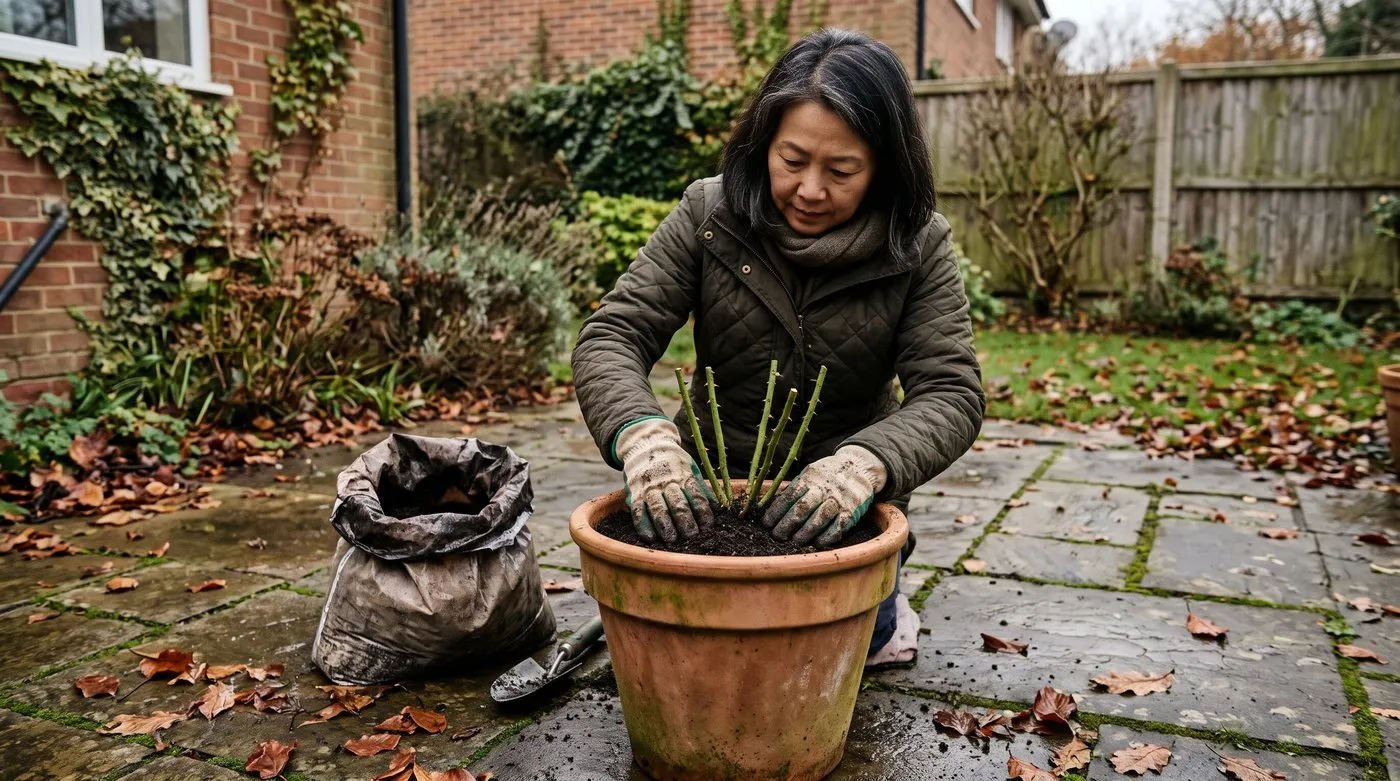
Patio roses grow happily in a big pot. Use loam-based compost and keep it watered.
First spring after planting
New buds usually swell in March or April. Don’t worry if a rose looks lifeless before then. Scratch a stem gently with a fingernail. Green underneath means it’s alive.
In March, cut shrub roses back to a few outward-facing buds if the nursery hasn’t already done it. Leave climbers’ long stems for training. Our guide to pruning roses explains the cuts.
Water weekly in dry spells from spring to late summer, and mulch again each spring. Our full guide to growing roses covers feeding and keeping them healthy.
Bare-root rose calendar
| Month | What to do |
|---|---|
| September to October | Order bare-root roses and prepare the bed |
| November to December | Best time to plant, while the soil is still workable |
| January to February | Plant on mild days when the ground isn’t frozen |
| March | Last chance to plant. Prune shrub roses |
| April to August | Water weekly in dry spells. Mulch in spring |
Common mistakes with bare-root roses
Leaving the parcel unopened for days is a common slip. The roots can dry out or start to rot. Unpack it straight away.
Planting into frozen or waterlogged soil damages the roots. Heel the roses in and wait for better weather.
Burying the graft union too deep, or leaving it high above the soil, can weaken the rose. Use a cane to get the depth right.
Cramming the roots into a small hole makes them circle. Dig wide enough to spread them out.
Forgetting to water in spring catches lots of people out. Winter-planted roses still need a good soak in dry spells.
Frequently asked questions
When should you plant bare-root roses?
Plant them from November to March, while they’re dormant. Avoid days when the ground is frozen or waterlogged. November and December are ideal, as the soil is still workable and the roots settle in over winter.
How long should you soak bare-root roses?
Soak the roots in a bucket of water for one to two hours before planting. If they look dry or shrivelled, leave them overnight, but no longer than a day.
What if I can’t plant my bare-root roses straight away?
Keep them in their packaging in a cool, frost-free shed or garage for a few days, with the roots moist. For longer, heel them into a spare patch of soil until you’re ready to plant.
How deep should you plant a bare-root rose?
Plant it so the graft union, the knobbly join where the stems meet the roots, sits at soil level. Lay a cane across the hole to check the depth before you fill in.
Can you plant bare-root roses in pots?
Yes. Use a pot at least 40cm wide and deep, with drainage holes. Fill it with a loam-based compost such as John Innes No. 3. Plant at the same depth as in the ground and water regularly.
Should you prune bare-root roses after planting?
Most nurseries trim them before they’re sent out. Just snip off any damaged tips. Shrub roses can be cut back a little harder in March, but leave climbers’ long stems to train.
How do you know if a bare-root rose is alive?
Healthy stems are green and firm, not brown and shrivelled. Scratch a stem gently with a fingernail. Green underneath means it’s alive. New buds usually swell in March or April.
Planting trees or hedging too this winter? See our guide to planting bare-root trees. Then pull on your gloves and get those roses in the ground while they’re sleeping.
Our team produces practical UK gardening guidance from source research, contributor records and established horticultural practice. Editorial standards are overseen by Matt W.