Quick answer
A holly hedge is a tough, evergreen and prickly boundary that suits almost any UK garden, in sun or shade. Plant bare-root or cell-grown holly from November to March, about 45cm apart, or three per metre in a staggered double row. Holly grows about 20 to 30cm a year. Trim it once a year in late summer, after birds have finished nesting.
Key points6 at a glance
- Holly makes a dense, evergreen, prickly hedge that grows in sun or shade
- Plant bare-root or cell-grown holly from November to March, when it's cheapest
- Space plants about 45cm apart, or use a staggered double row for a thicker hedge
- Holly grows slowly, about 20 to 30cm a year, so be patient
- Trim once a year in late summer and check for nesting birds first
- For berries, include female plants and at least one male, or a self-fertile variety
In this article11 sections
A holly hedge is one of the toughest, most useful hedges you can plant in the UK. It’s evergreen, prickly and happy in sun or shade. Plant bare-root or cell-grown holly from November to March, about 45cm apart. Then trim it once a year in late summer. It’s slow to start, but once it thickens up it needs very little work.
This guide covers planting and growing a holly hedge, from choosing plants to the first trim. For holly as a single tree or shrub, see our guide to growing holly.
Why plant a holly hedge?
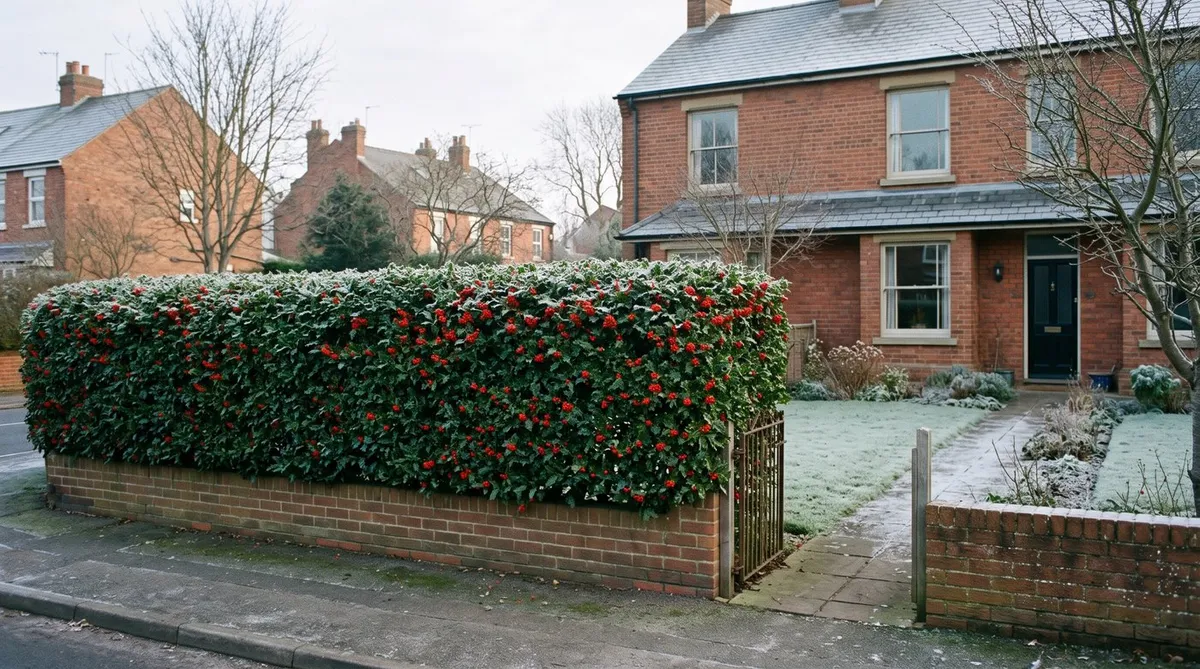
Holly makes a dense, glossy, evergreen hedge that looks good all year. It has some big benefits:
- Security. The spiny leaves make a hedge that people and animals won’t push through.
- Shade and wind. Holly grows well in shade and copes with wind and sea air.
- Wildlife. Birds nest in the shelter and eat the berries in winter.
- Low upkeep. Once established, it needs only one trim a year.
- Any soil. It grows on clay, chalk, sand and acid soil, as long as it isn’t waterlogged.
The downsides are slow early growth and prickly leaf litter. Fallen holly leaves are sharp, so don’t plant it right beside a lawn where children play barefoot.
Best holly varieties for hedging
| Variety | Leaves | Berries | Good for |
|---|---|---|---|
| Common holly, Ilex aquifolium | Dark green, spiny | Red, on female plants | Native, wildlife and security hedges |
| ’J.C. van Tol’ | Dark green, few spines | Red, self-fertile | Berries without a male, softer to trim |
| ’Alaska’ | Small, dark green | Red, on females | Neat, compact hedges |
| ’Argentea Marginata’ | Green edged with cream | Red, on females | A brighter, variegated hedge |
| ’Golden King’ | Green edged with gold | Red (a female, despite the name) | Colourful hedges in sun |
Common holly is the cheapest and best choice for most hedges. It’s often sold as bare-root or cell-grown plants. Variegated hollies need more sun to keep their colour.
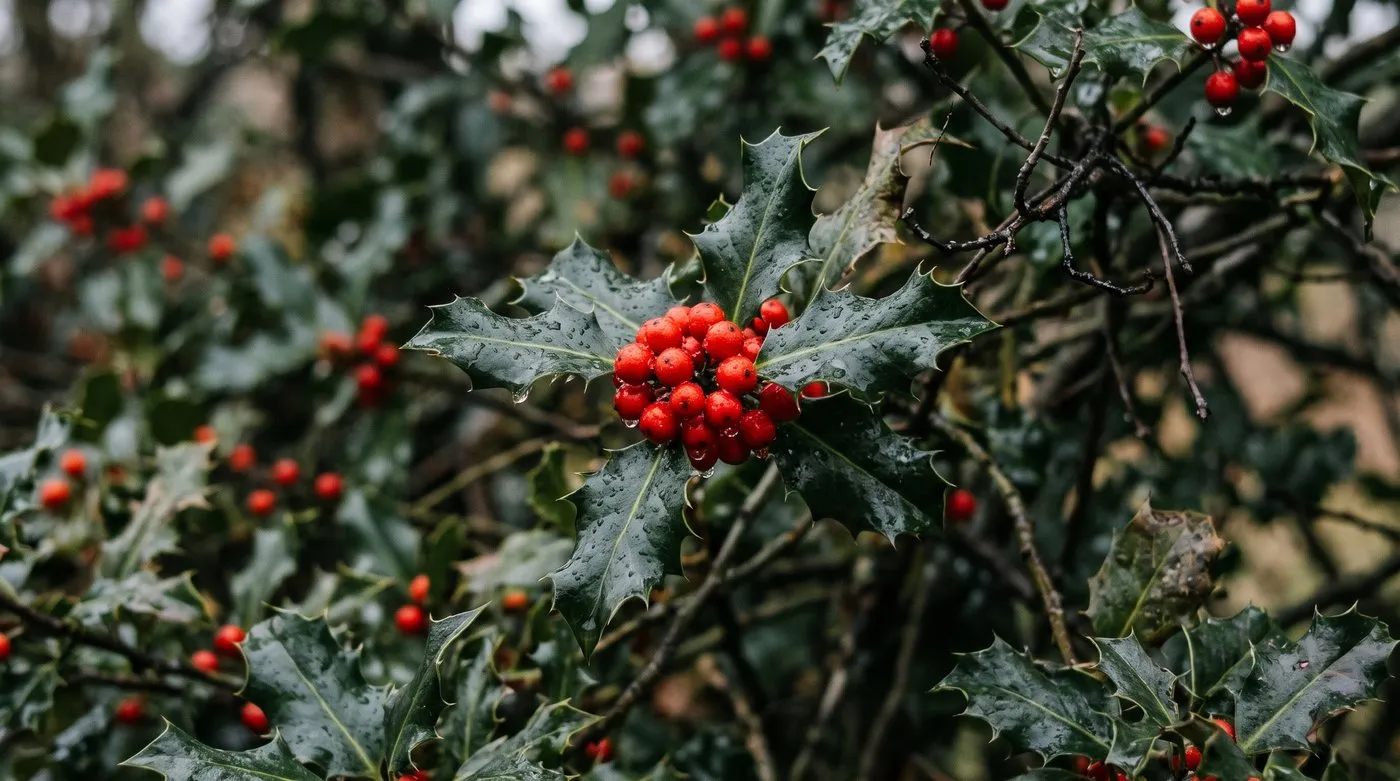
Female holly plants carry berries in winter. Include a male plant, or choose a self-fertile variety.
Bare-root, cell-grown or potted holly?
Bare-root holly is dug from the field while dormant and sold without soil, from November to March. It’s the cheapest way to plant a long hedge. Holly doesn’t love having its roots disturbed, so plant it quickly and keep the roots moist.
Cell-grown holly comes in small plugs of compost. It costs a little more than bare-root but settles in more reliably. It’s a good choice for holly.
Root-balled and potted holly is bigger and more expensive. It gives an instant hedge, and potted plants can go in at almost any time if you water them well.
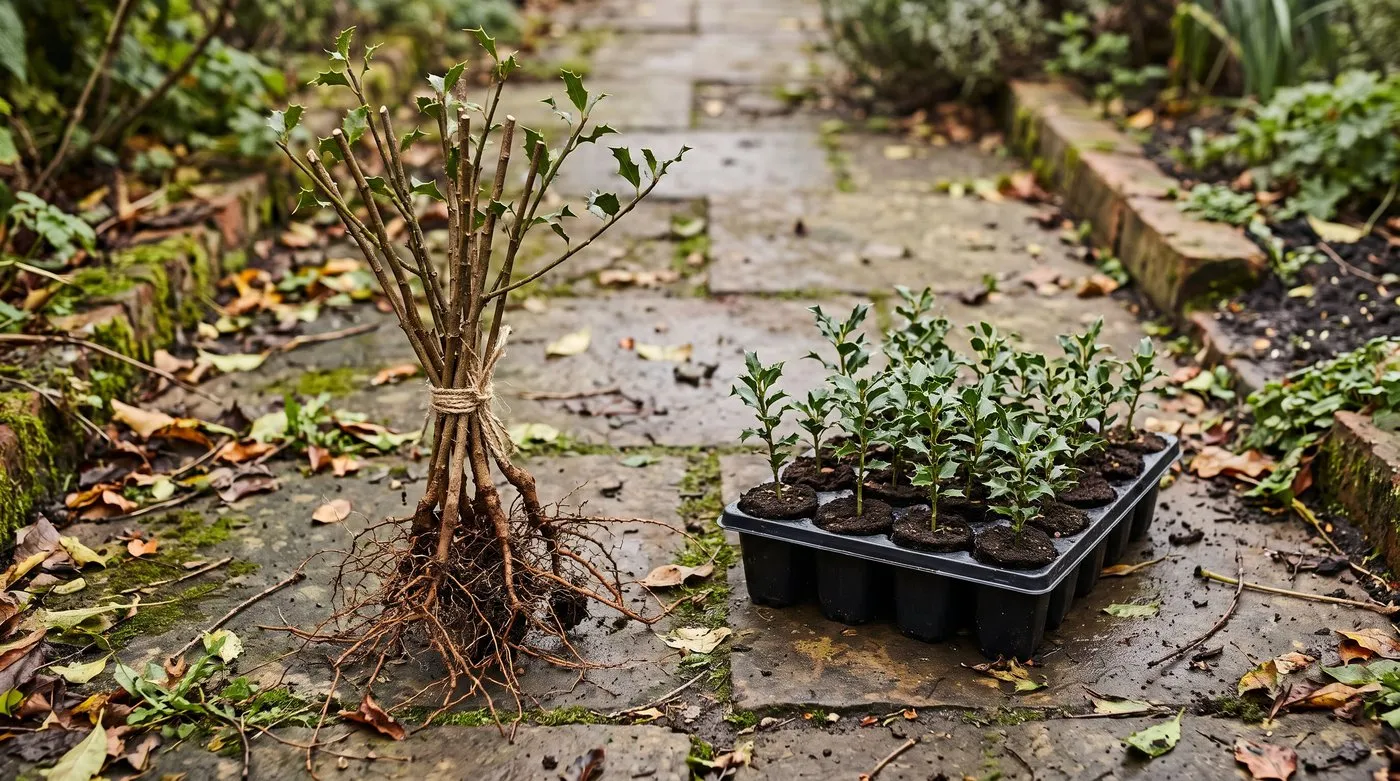
Bare-root whips, left, are the cheapest option. Cell-grown plugs, right, settle in more reliably.
For a long run, bare-root or cell-grown holly is the best value. Our hedge planting guide compares the options for other hedging plants too.
How to plant a holly hedge
Plant from November to March, when the ground isn’t frozen or waterlogged.
- Mark the line. Peg out a string line. Clear weeds and grass from a strip about 60cm wide.
- Prepare the soil. Dig over the strip and mix in some well-rotted compost.
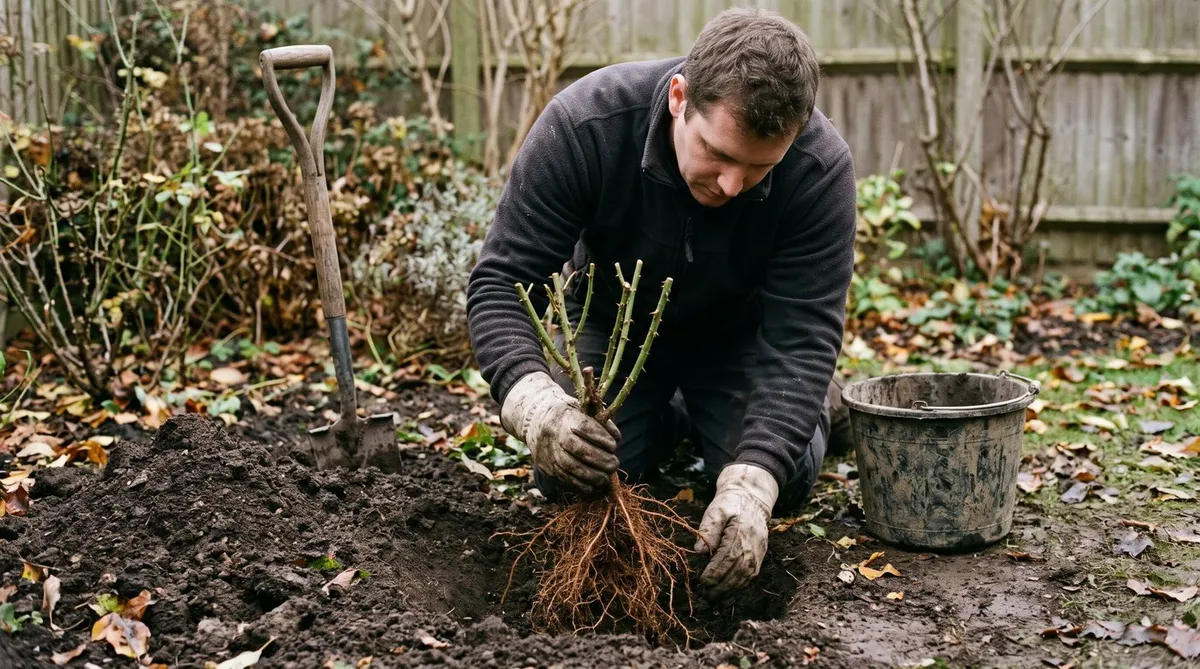
- Soak the plants. Stand bare-root or cell-grown holly in a bucket of water for an hour or two.
- Dig a trench or holes. Make them wide enough to spread out the roots.
- Space the plants. Set them about 45cm apart in a single row.
- Plant at the right depth. Use the soil mark on the stem as a guide. Don’t bury the stems deeper.
- Firm and water. Fill in, firm with your heel and water well.
- Mulch. Spread a thick layer of bark or compost along the row.
For a thicker, faster-filling hedge, plant a staggered double row. Set two rows about 40cm apart, with plants zigzagging between them, roughly three per metre. Our guide to planting bare-root trees covers soaking and heeling in.
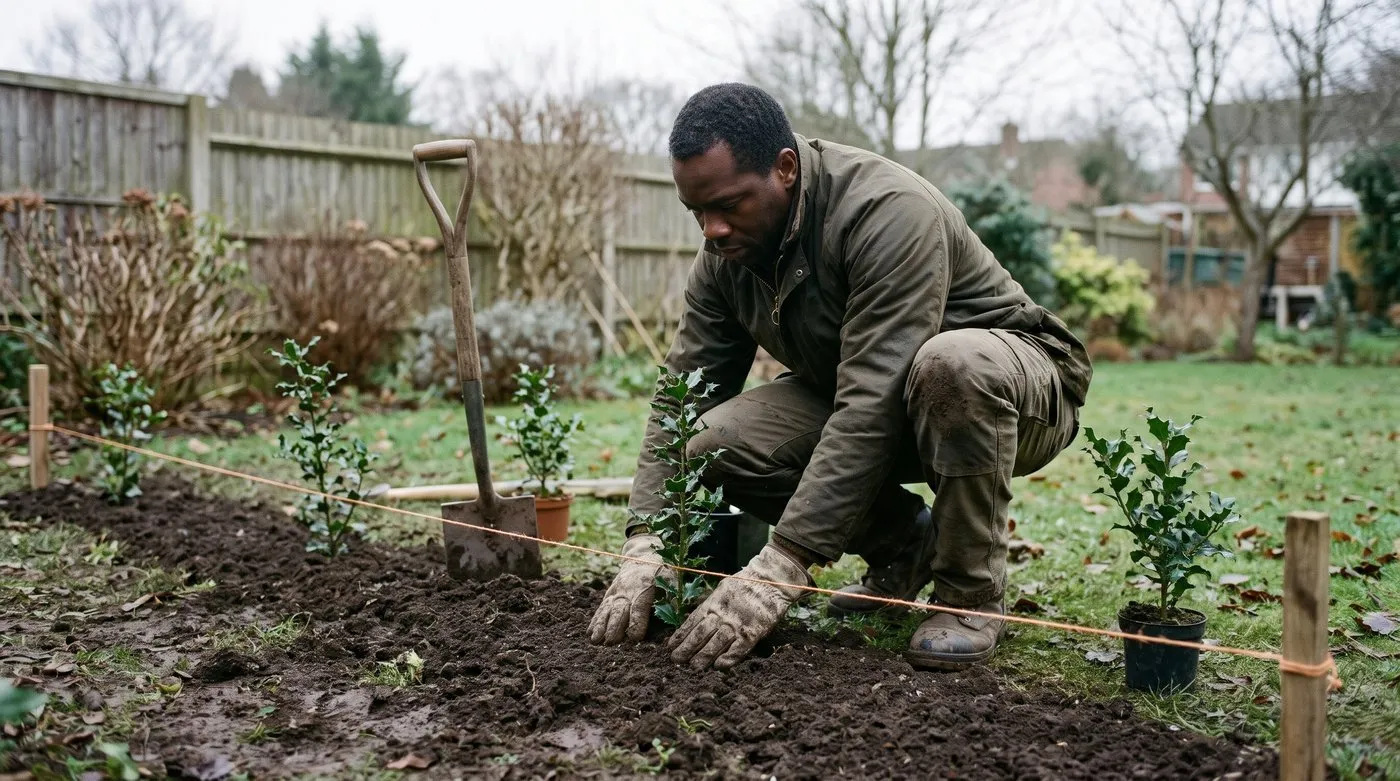
A string line keeps the row straight. Space young holly plants about 45cm apart.
Warning: Holly leaves are sharp, even on small plants. Wear thick gardening gloves when you plant and trim.
Caring for a new holly hedge
Water is the key in the first two summers. Give the row a thorough soak once a week in dry spells. A seep hose along the base makes this easy.
Weeds compete for water, so keep a clear strip along the hedge. A thick mulch each spring keeps weeds down and holds in moisture.
Leaf drop is common after planting. New holly often sheds some leaves as it settles. Established holly also drops old leaves each spring. Don’t panic, as fresh leaves follow.
Rabbits and deer may nibble young plants. Use spiral guards in rural gardens.
Gardener’s tip: Trim the tips of the side shoots lightly in the first late summer. It encourages bushy growth low down, so the hedge stays thick to the ground.
How fast does a holly hedge grow?
Holly is slow. Expect about 20 to 30cm a year once it has settled, less in the first year. A hedge usually takes around six to eight years to reach 1.5m.
It’s worth the wait. A slow-growing hedge needs far less trimming than fast hedges such as leylandii or privet. Our guide to slow-growing hedging plants compares holly with yew and box alternatives.
How to trim a holly hedge
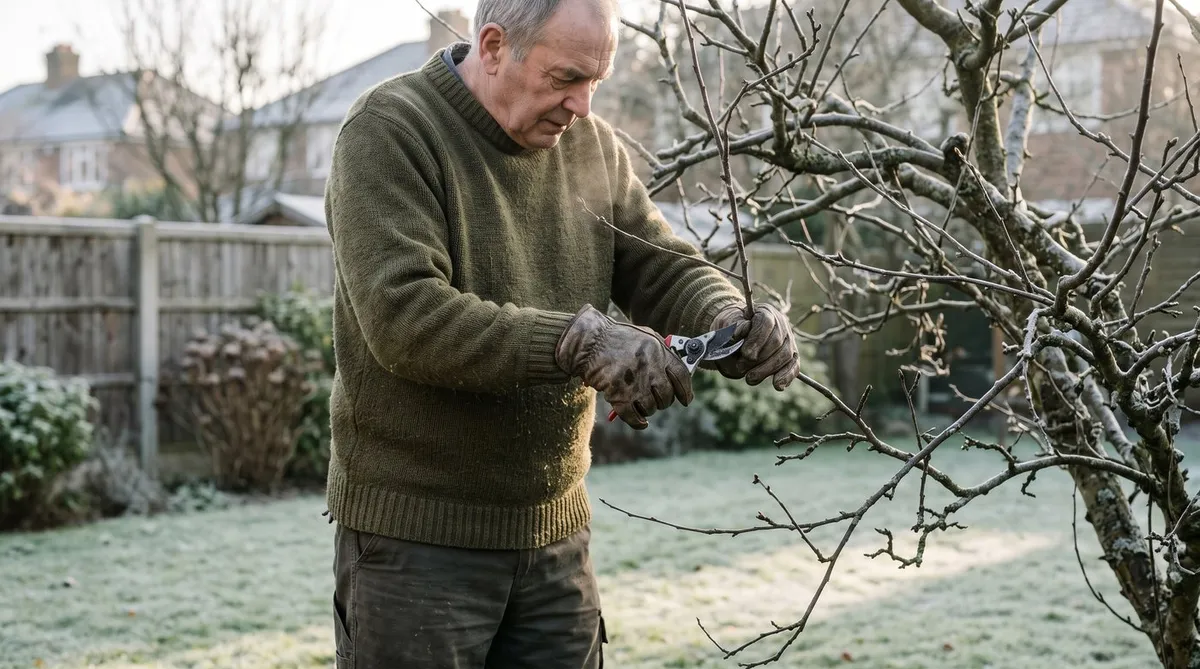
Trim once a year in late summer, from about late July to September. Shears, a hedge trimmer or secateurs all work.
- Shape it like an A. Keep the base slightly wider than the top, so light reaches the bottom.
- Check for nests first. Disturbing an active bird’s nest is against the law. Our guide to when to cut hedges explains the rules.
- Go easy for berries. Berries form on last year’s growth, so a light trim keeps more of them.
- Clear up. Rake up the cuttings, as the dry leaves stay prickly for months.
Holly responds well to hard cutting. An overgrown hedge can be cut back hard in late winter or early spring, before birds start nesting. It will regrow from old wood, though it may look bare for a season.
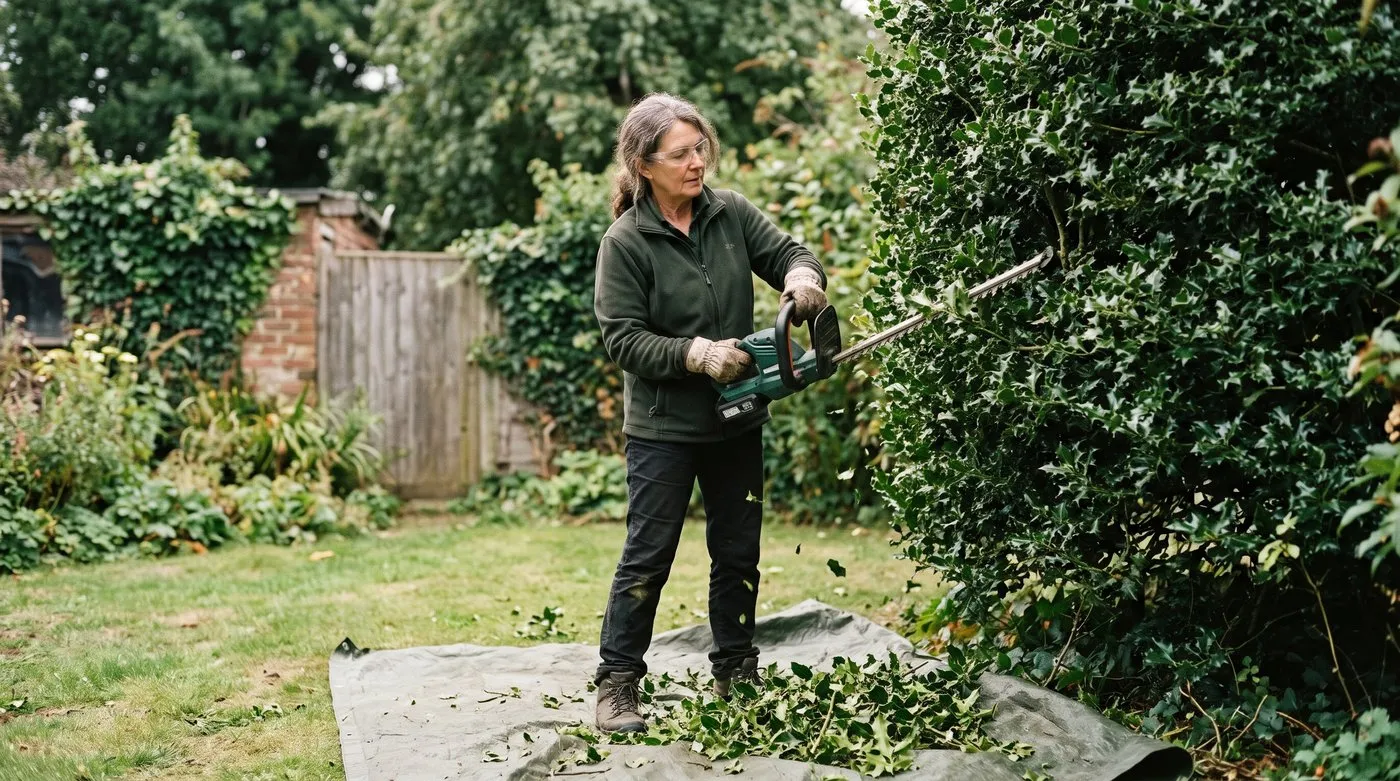
Trim holly once a year in late summer. Keep the base a little wider than the top.
Holly in a mixed hedge
Holly is a great addition to a mixed native hedge. Plant roughly one holly for every five or six deciduous plants, such as hawthorn, hazel and field maple. The holly keeps the hedge green and sheltered in winter. Our guide to native hedgerow plants suggests good mixes.
Holly hedge calendar
| Month | What to do |
|---|---|
| November to March | Plant bare-root and cell-grown holly |
| March | Mulch the row. Hard-cut an overgrown hedge before nesting starts |
| April to August | Water new hedges weekly in dry spells |
| Late July to September | Trim once, after checking for nests |
| November to February | Enjoy the berries and watch for birds feeding |
Common mistakes with holly hedges
Planting too far apart leaves gaps that take years to close. Stick to about 45cm, or use a double row.
Letting new plants dry out in their first summer is the main reason holly hedges fail. Water weekly in dry spells.
Burying the stems too deep can make young holly rot at the base. Plant at the same depth it grew before.
Trimming in spring or early summer risks disturbing nesting birds. Wait until late summer.
Expecting berries from an all-male hedge leads to disappointment. Include female plants and a male, or a self-fertile variety.
Frequently asked questions
How far apart should you plant holly for a hedge?
Plant holly about 45cm apart in a single row. For a thicker hedge, plant a staggered double row with about three plants per metre. A looser screen can go 60cm apart.
How fast does a holly hedge grow?
Holly grows about 20 to 30cm a year once settled. It can sulk for the first year or two after planting. A hedge usually takes around six to eight years to reach 1.5m.
When is the best time to plant a holly hedge?
Plant bare-root and cell-grown holly from November to March, when the ground isn’t frozen or waterlogged. Pot-grown holly can go in at other times if you keep it watered.
When should you cut a holly hedge?
Trim a holly hedge once a year in late summer, from about late July to September. Always check for nesting birds first. A hard renovation cut is best done in late winter or early spring.
Will a holly hedge have berries?
Only female holly plants carry berries, and they need a male holly nearby. Mix in a few males, or plant a self-fertile variety such as ‘J.C. van Tol’. Trimming in late summer removes some berries, so trim lightly.
Why is my new holly hedge dropping leaves?
Some leaf drop after planting is normal, as holly adjusts to its new home. Established holly also sheds old leaves each spring. Keep new plants watered in dry spells and new leaves will follow.
Is a holly hedge safe for pets?
Holly berries can upset a dog’s or cat’s tummy if eaten, causing sickness and diarrhoea. The spiky leaves usually put them off. If your pet eats a lot of berries, call your vet.
Looking for other ways to screen your garden? See our guide to privacy hedges and trees. Then order your holly this winter and get planting while it’s dormant.
Our team produces practical UK gardening guidance from source research, contributor records and established horticultural practice. Editorial standards are overseen by Matt W.