Quick answer
To overwinter begonias and cannas in the UK, lift them after the first frost blackens the leaves. Dry begonia tubers for a few weeks, then store them in dry compost somewhere cool and frost-free. Store canna rhizomes in barely damp compost so they don't shrivel. In mild areas cannas can stay in the ground under a thick mulch.
Key points6 at a glance
- Begonias and cannas are tender and need protecting from frost
- Lift both after the first frost has blackened the leaves
- Store begonia tubers bone dry, but cannas in barely damp compost
- Keep them cool, dark and frost-free, around 5 to 10C
- Plants in pots can stay in their pots in a frost-free shed or garage
- Start them back into growth indoors in March
In this article7 sections
To overwinter begonias and cannas, lift them after the first frost and store them somewhere cool, dark and frost-free. The one big difference is moisture. Begonia tubers want to be bone dry, while canna rhizomes need barely damp compost so they don’t shrivel. Get that right and both come back bigger every year.
Begonias and cannas at a glance
| Begonias | Cannas | |
|---|---|---|
| What you store | Round, flat tubers | Chunky rhizomes |
| When to lift | After the first frost | After the first frost |
| Dry first? | Yes, for 2 to 3 weeks | Just a few days |
| Store in | Dry compost or sand | Barely damp compost |
| Store at | Cool, around 5 to 10C | Cool, around 5 to 10C |
| Restart | March | March to April |
Not sure what a tuber or rhizome is? Our guide to bulbs, corms, tubers and rhizomes explains the difference.
How to overwinter begonias
This works for tuberous begonias, the big-flowered and trailing types grown from tubers. Fibrous bedding begonias are usually grown fresh each year.
- Wait for frost. Let the first frost blacken the leaves, usually in October or November.
- Lift or bring in. Dig the tubers from beds, or move pots and baskets under cover.
- Let them dry. Lay the tubers somewhere dry and frost-free for two to three weeks. The old stems fall off on their own.
- Clean them. Rub off loose soil and any stem stumps. Throw away soft or mouldy tubers.
- Store dry. Pack them in a box of dry compost, sand or vermiculite. Keep the box somewhere cool, dark and frost-free.
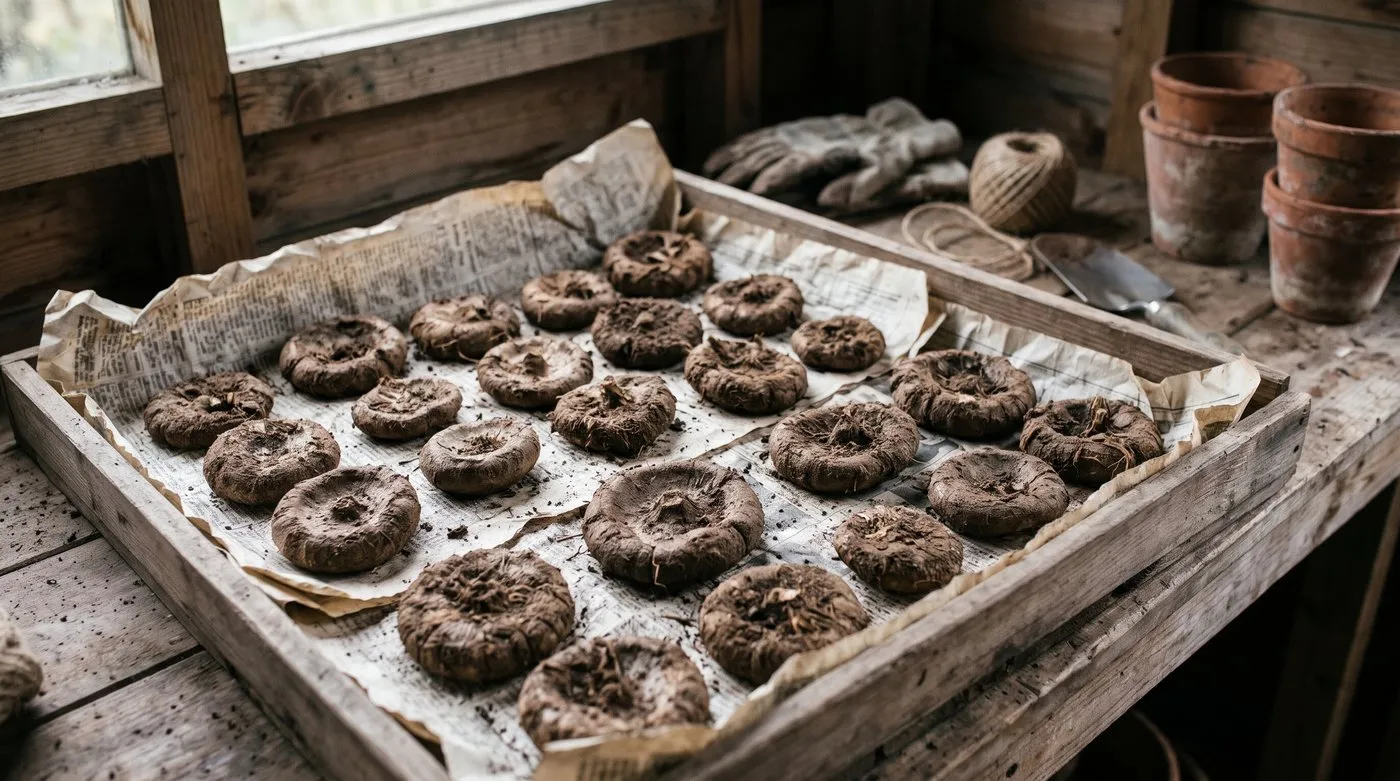
Let begonia tubers dry fully before you store them. Damp tubers rot.
Begonias in pots are even easier. Once the leaves die back, stop watering. Move the pot into a frost-free shed or garage and leave the compost dry until spring. For more on growing them, see our guide to growing begonias.
Gardener’s tip: Vine weevil grubs love begonia tubers. Check each one as you lift it and look for C-shaped white grubs. Our vine weevil guide shows what to do.
How to overwinter cannas
Leaving cannas in the ground
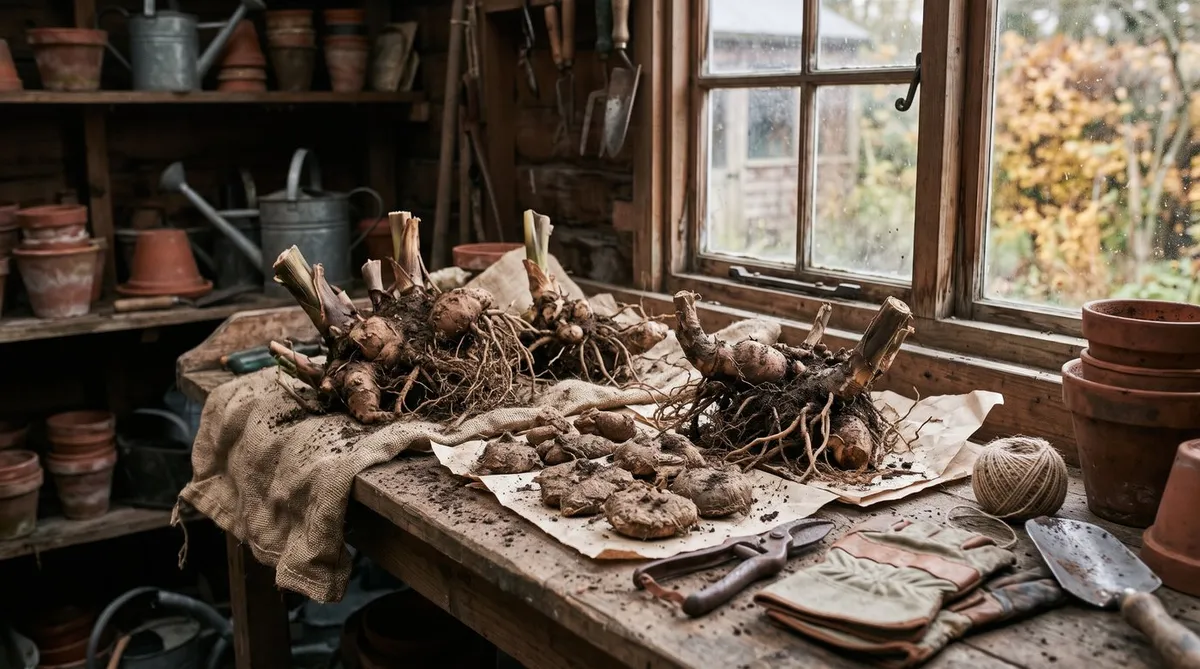
In mild areas, like the south coast, cannas in free-draining soil often survive outdoors. Cut the stems down after frost and pile a thick mulch over the crown. Use bark, straw or compost, about a spade’s depth.
On heavy clay or in colder gardens, lift them. Wet, cold soil rots the rhizomes.
Lifting and storing cannas
- Wait for frost. Let it blacken the leaves.
- Cut back. Trim the stems to about 10cm.
- Lift the clump. Dig a wide circle with a fork and ease it out.
- Shake off soil. Leave the clump to dry for a few days, but not for weeks.
- Store barely damp. Pack it in a box of just-moist compost. Keep it cool, dark and frost-free.
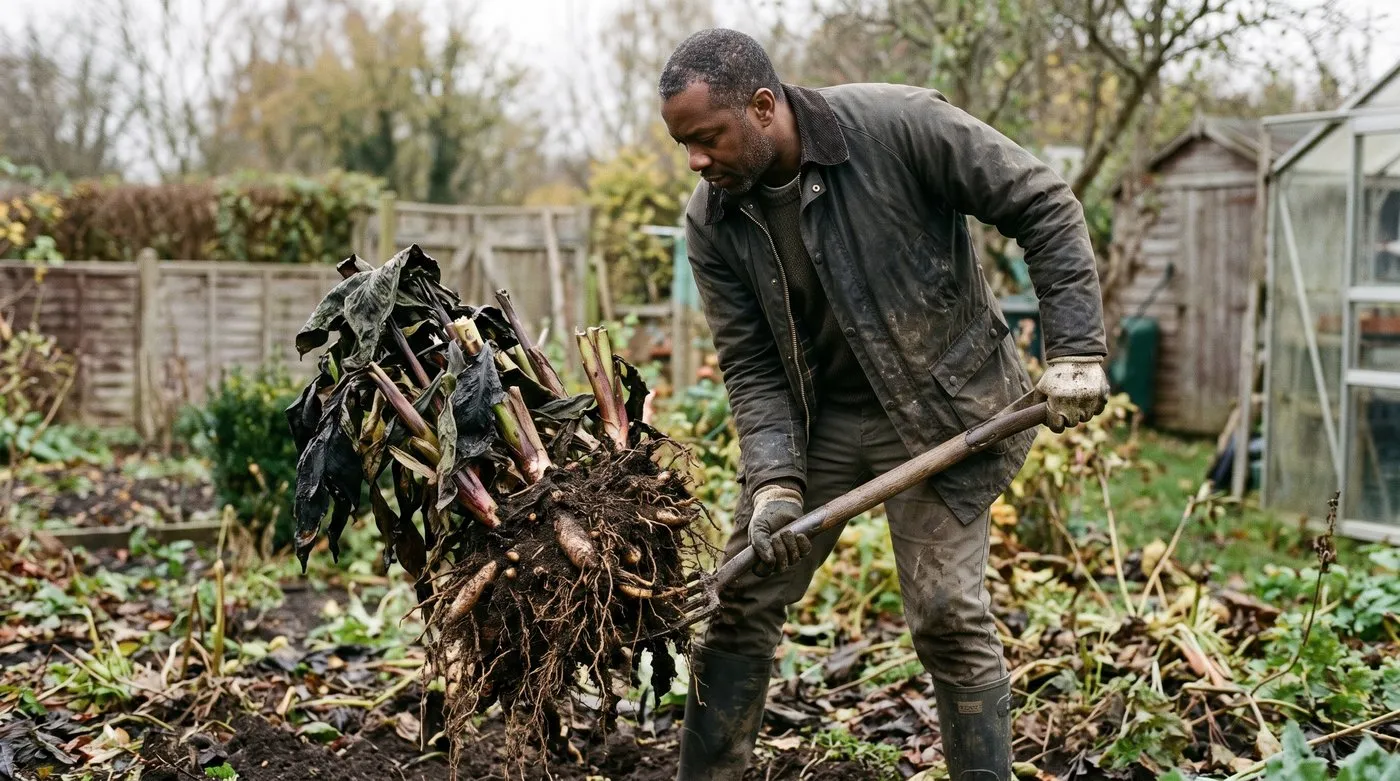
Lift cannas after the first frost and keep a short length of stem as a handle.
Cannas in pots can stay in their pots. Cut them back and move them into a frost-free shed, garage or greenhouse. Water just enough to stop the compost drying out completely. Our guide to growing cannas has more on choosing varieties.
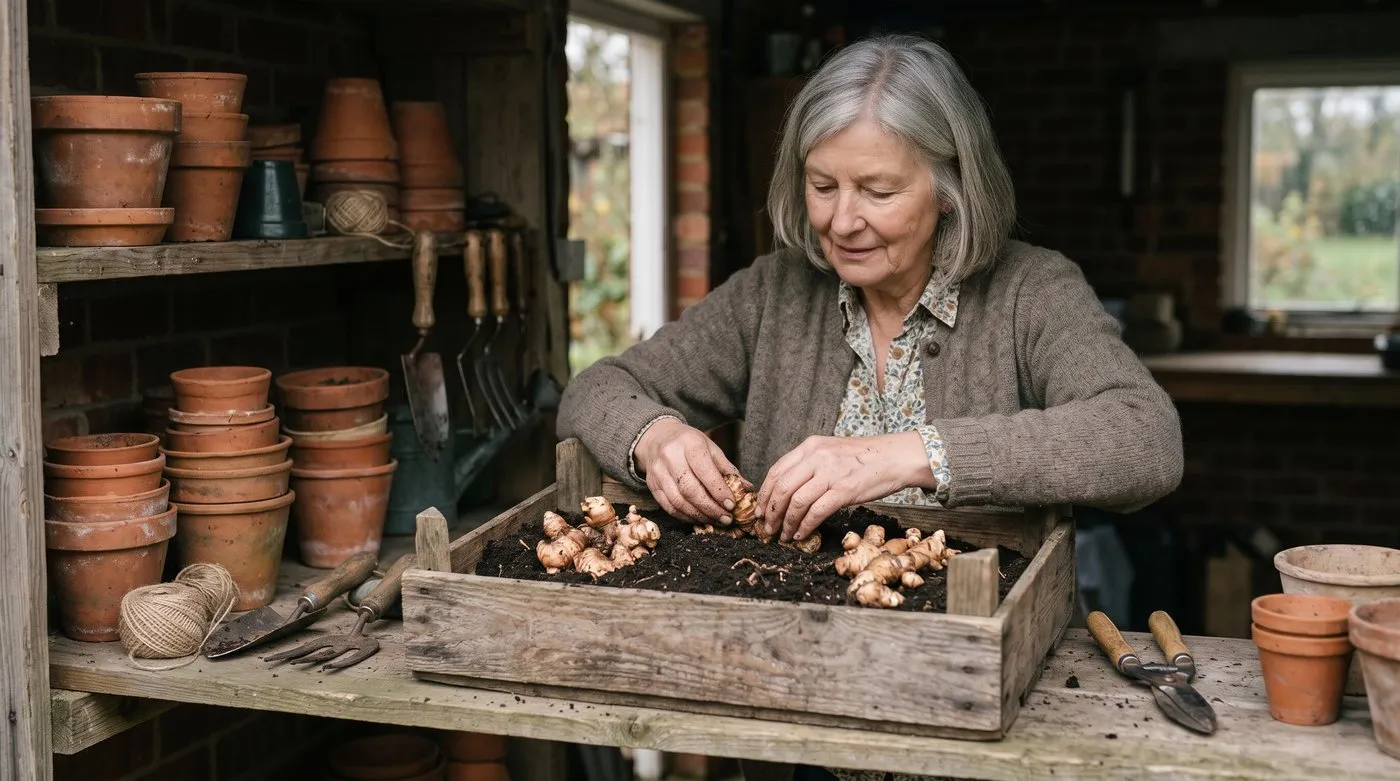
Check stored rhizomes once a month and remove any that feel soft.
Where to store them
Somewhere cool, dark and frost-free is ideal. Good spots include:
- A frost-free garage or shed
- An unheated spare room or cupboard
- Under the staging of a frost-free greenhouse
- A cellar, if it’s not damp
Avoid anywhere warm, like an airing cupboard. Warmth makes them sprout too early or dry out. If your greenhouse might freeze, our greenhouse heating guide explains low-cost frost protection.
Warning: Check stored tubers and rhizomes once a month. Cut away any soft or mouldy patches. Shrivelled cannas need a little more moisture.
Bringing them back in spring
Begonias: In March, press the tubers hollow side up into trays of moist compost. Don’t bury the top. Keep them warm and bright indoors, then pot them on as they grow.
Cannas: In March or April, pot the rhizomes into fresh compost and water lightly. Keep them warm and bright. Big clumps can be split into pieces with a bud on each.
Plant both outside once all risk of frost has passed, usually late May or early June. Protect new shoots from slugs, which love them. See our guide to getting rid of slugs.
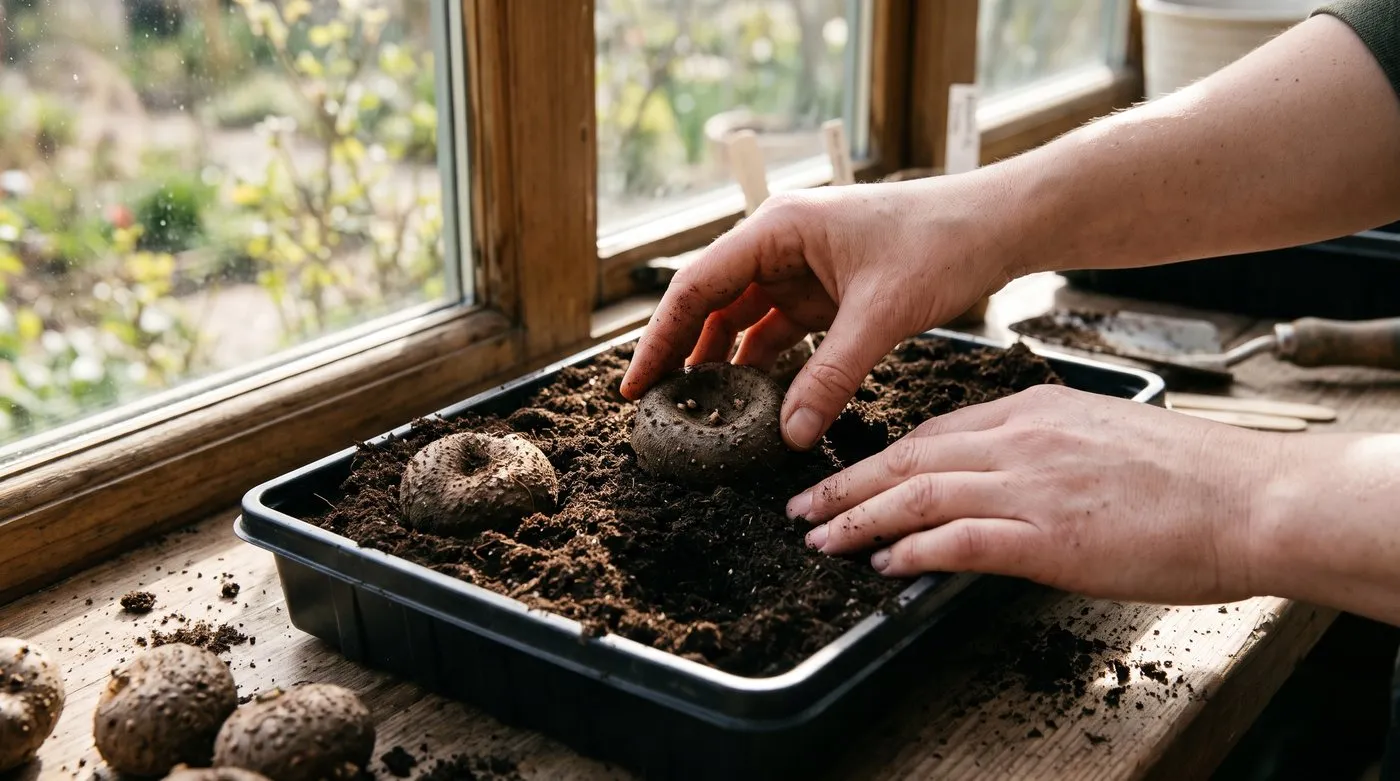
Start begonia tubers hollow side up in March for flowers by early summer.
Common mistakes
Storing begonia tubers before they’re dry is the most common one, and it leads to rot.
Storing cannas bone dry makes the rhizomes shrivel.
Lifting too early, before frost, cuts their growing season short.
Keeping them somewhere too warm makes them sprout weakly in winter.
Forgetting to label them means a guessing game in spring.
For dahlias, pelargoniums and other tender plants, see our full guide on how to overwinter plants.
Frequently asked questions
How do you overwinter begonia tubers?
Lift them after the first frost, let the stems fall away and dry the tubers for a few weeks. Store them in a box of dry compost or sand somewhere cool, dark and frost-free.
Can cannas stay in the ground over winter in the UK?
In mild areas with free-draining soil they often survive under a thick mulch. In colder gardens or on heavy clay, lift the rhizomes and store them frost-free.
How do you store canna rhizomes?
Cut the stems to about 10cm, lift the clump and shake off the soil. Pack it in a box of barely damp compost and keep it somewhere cool and frost-free.
Can I leave begonias in their pots over winter?
Yes. Once the leaves die back, stop watering and move the pot into a frost-free shed or garage. Keep the compost dry until spring.
When should I start begonia tubers again?
Start them in March. Press the tubers hollow side up into trays of moist compost and keep them warm and bright indoors.
Why did my begonia tubers rot over winter?
They were usually stored damp or put away before they were fully dry. Always let the old stems fall off and the tubers dry out first.
Do cannas need light in winter?
No. Dormant canna rhizomes are happy in the dark. They just need to be kept cool, frost-free and very slightly moist.
So once frost has blackened the leaves, lift your begonias and cannas and tuck them away somewhere cool. They’ll be ready for another bright summer show next year.
Our team produces practical UK gardening guidance from source research, contributor records and established horticultural practice. Editorial standards are overseen by Matt W.