Key takeaways
- Spring-flowering shrubs need pruning within 14 days of flowers fading: forsythia, ribes, kerria, weigela
- Clematis group 1 (early flowering, including montana) gets a tidy after flowering only, not a hard cut
- Lavender needs only a 25mm tip prune in May, never a hard cut until late August
- Use sharp bypass secateurs on stems under 12mm and long-handled loppers on anything thicker
- Never prune prunus species (cherry laurel, ornamental cherries) before mid-May, as bacterial canker risk drops once sap pressure builds
May is the month when spring-flowering shrubs finish their display and need a cut to set up next year’s flowers. The pruning window is short. From the second week of May to the first week of June, ten plants need attention in the average UK garden, ranked by urgency below. Get the timing right and the same shrub will flower harder next spring. Miss the window by two weeks and you will lose the bulk of the buds that set the following year’s display.
This guide ranks the ten plants by pruning priority, gives the cut depth and tool for each, and flags the single common mistake that ruins next year’s flowers on each species.
Why May matters for pruning in UK gardens
Spring-flowering shrubs follow a single rule. They produce flowers on the previous year’s wood, then push new shoots after flowering, and those new shoots carry next year’s flowers. Prune within 14 days of the last petal dropping and the plant has the full growing season to make strong new wood. Leave it until late June or July and the cut removes flower buds that have already formed.
The other May target is early-flowering clematis group 1, which includes Clematis montana, alpina, and macropetala. These get a tidy after flowering, not a hard cut, because they flower on old wood every year.
Soil temperature also matters. By the second week of May UK soils are reliably above 12C, which means wound callus forms within 7-10 days on most shrubs. Earlier in the month a late frost can slow the healing and let bacterial canker in, particularly on prunus species. The conservative gardener waits until 14 May.
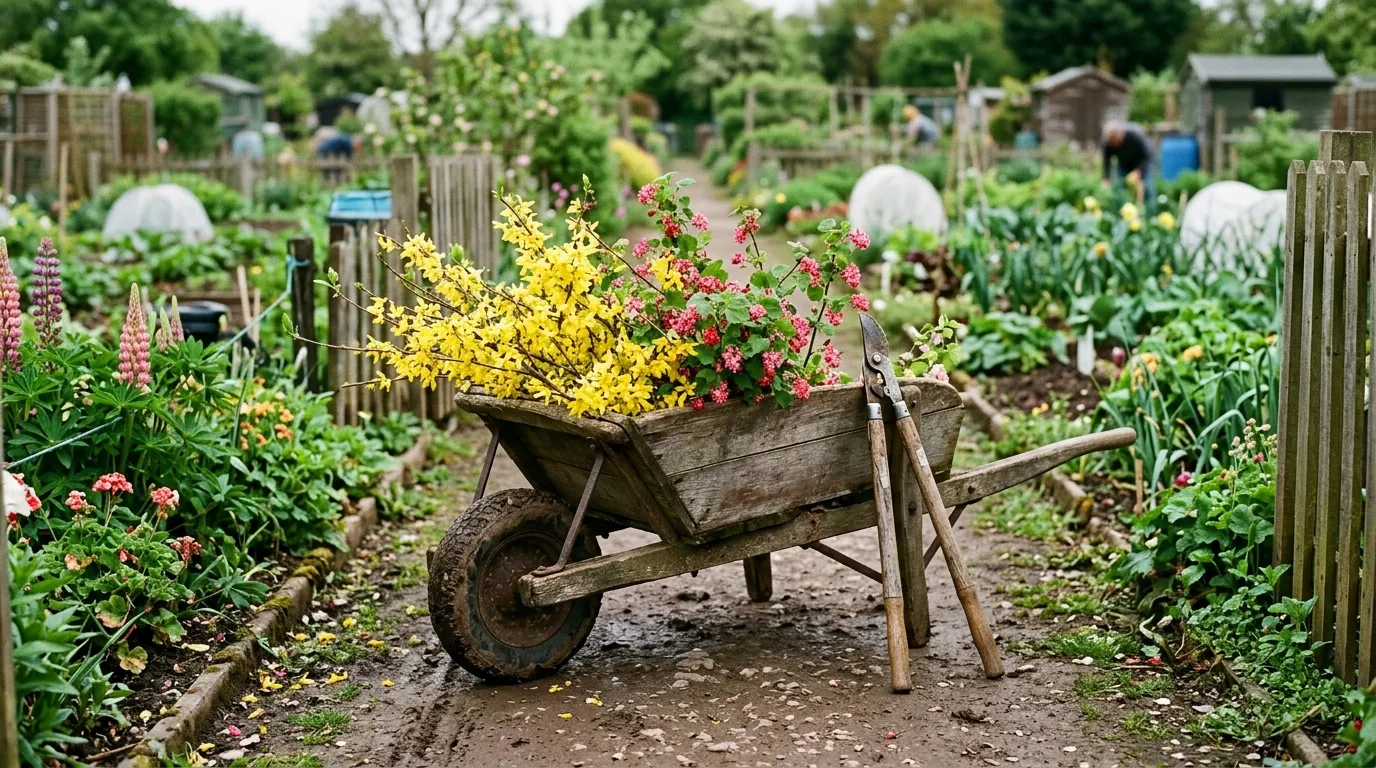 Forsythia and ribes prunings stacked in the barrow during a typical week-two May round.
The ten plants ranked by priority
| Rank | Plant | When in May | How much to cut | Tool | Common mistake |
|---|---|---|---|---|---|
| 1 | Forsythia | Week 2 | 25% of oldest stems to base | Loppers | Trimming the outline instead of removing whole stems |
| 2 | Ribes (flowering currant) | Week 2 | 25% of oldest stems to base | Loppers | Leaving stubs that die back |
| 3 | Kerria japonica | Week 2-3 | 30% of flowered stems to base | Bypass secateurs | Cutting all stems back equally |
| 4 | Choisya ternata | Week 3 | Light shape, no more than 200mm | Bypass secateurs | Hard pruning that triggers dieback |
| 5 | Weigela | Week 3-4 | 25% of oldest stems to base | Loppers | Pruning before flowers fully drop |
| 6 | Clematis group 1 (montana, alpina) | Week 3 after flowering | Tidy only, no hard cut | Bypass secateurs | Hard cut that removes next year’s display |
| 7 | Prunus shrubs (cherry laurel) | Week 3-4 only | Light shape, 150mm max | Loppers or saw | Pruning before mid-May (canker risk) |
| 8 | Viburnum tinus | Week 4 | Light shape after last flowers | Bypass secateurs | Cutting into old leafless wood |
| 9 | Lavender | Week 4 to early June | 25mm tip prune only | Hand shears | Hard cutting (do that in August) |
| 10 | Evergreen shrubs (box, holly, bay) | Week 4 to early June | Light shape, 50-100mm | Hand shears | Cutting in hot sun (scorch) |
Work top to bottom in this order. The earliest flowers in the year (forsythia and ribes) need the earliest cuts. The evergreens at the bottom of the list wait until late May because they have not finished their first growth flush.
1. Forsythia: week 2
Forsythia finishes flowering in late April to early May in most of the UK. The yellow display drops within a week of the petals browning. Once the flowers are gone, cut.
The method:
- Remove 25% of the oldest stems to ground level. Use long-handled loppers because the older stems are often 20-30mm thick.
- Identify the oldest stems by colour: they are pale grey and rough-barked, not the smooth pale green of new wood.
- Do not trim the outline. Forsythia regrows from the base, so cutting the outer perimeter just makes a denser, less floriferous bush.
- Aim for an open, airy structure where light reaches the centre.
The common mistake is outline trimming. A forsythia hedge cut to a tidy box on the outside produces dense twiggy growth and few flowers. The shrub flowers best when sunlight reaches the inner stems.
If your forsythia has gone twenty years without renewal pruning, cut a third of the stems to the base for three consecutive years. By year three the entire shrub has rejuvenated.
2. Ribes (flowering currant): week 2
Ribes sanguineum flowers from late March to early May with hanging pink racemes. The pruning method matches forsythia: remove 25% of the oldest stems to the base each year. Loppers handle the 15-25mm wood.
The common mistake is leaving stubs. A ribes stem cut at 200mm above ground often dies back to the next live bud or, more likely, all the way to the base, leaving an ugly dead stub for the rest of the season. Cut flush to the base or to a strong outward-facing bud at the lowest point you can reach.
Ribes regrows fast. By August the new shoots will be 600-800mm long and will flower the following March.
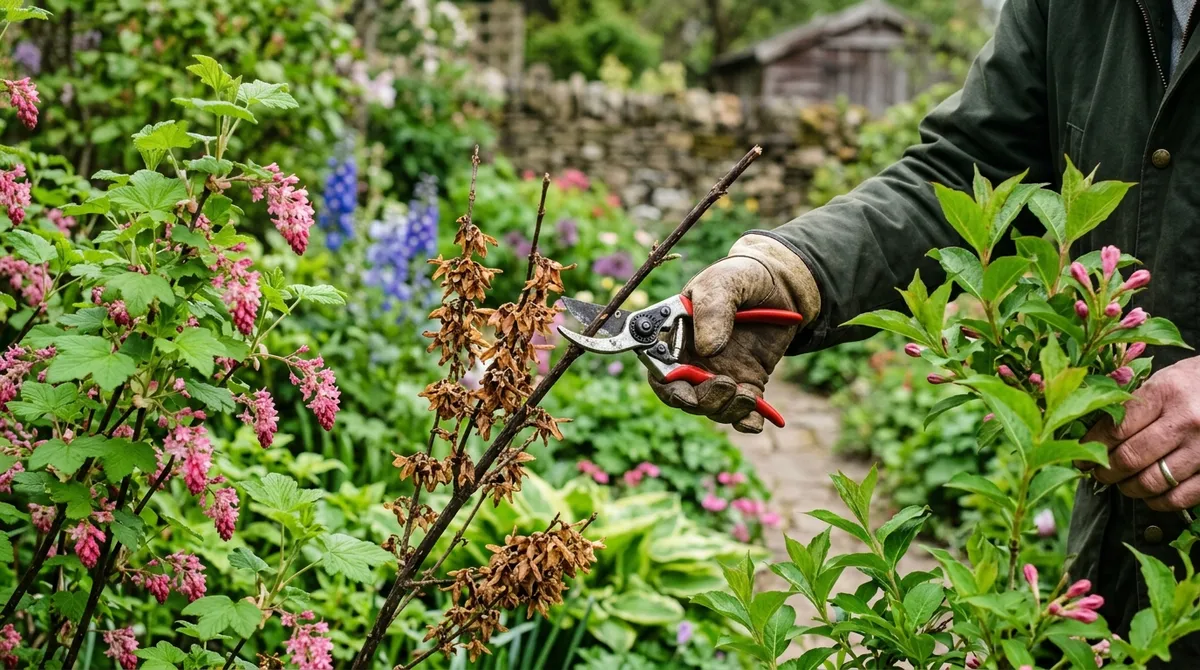
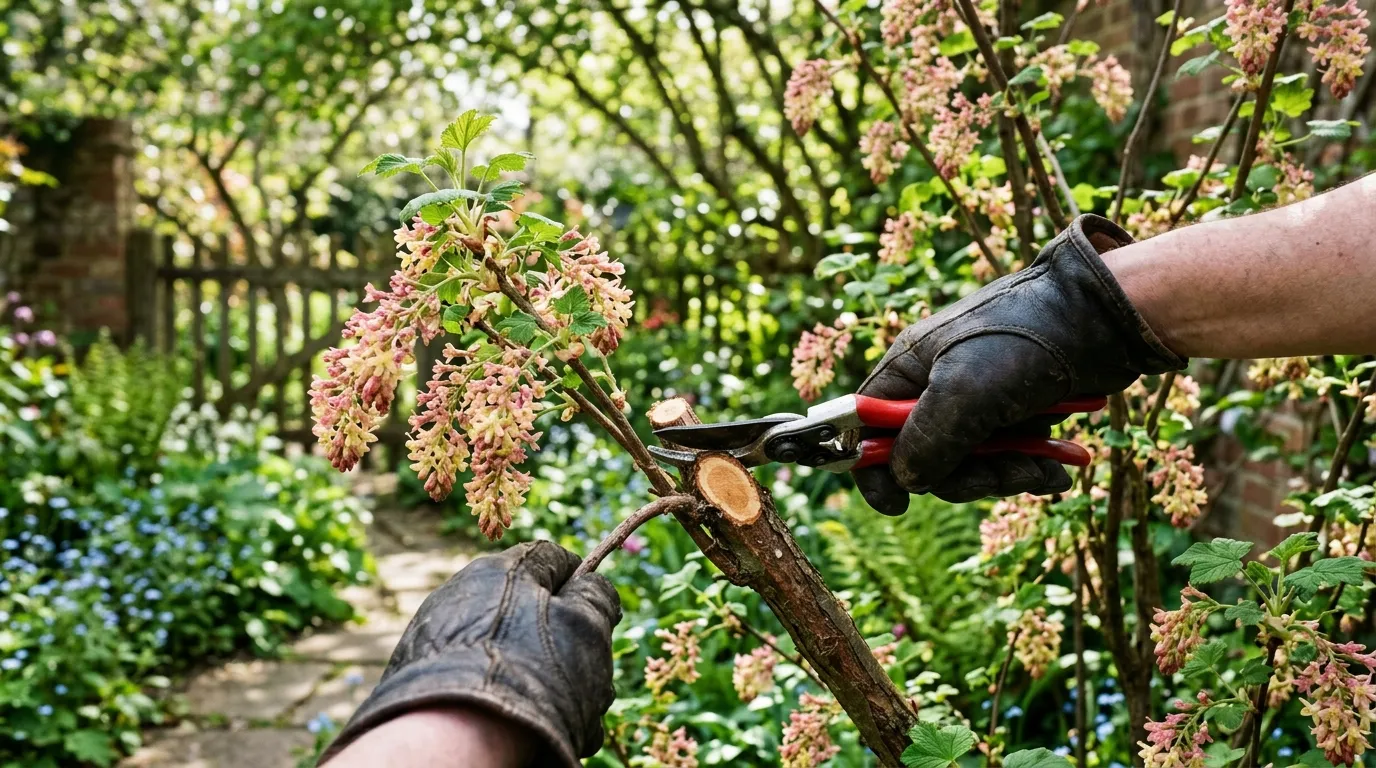 Old ribes stems cut cleanly to the base with loppers, leaving no stubs to die back.
Gardener’s tip: Plant a young ribes 1.2m from any wall or path. Mature spread reaches 2m within five years and the stems lean out from the base.
3. Kerria japonica: weeks 2-3
Kerria is often pruned wrong because the flowering pattern is unusual. Each stem flowers once and then never again. Cut the flowered stems to the base in May and new shoots from the base carry next year’s flowers.
The method:
- Identify the stems that flowered (faded yellow blooms still hanging).
- Cut these flowered stems to ground level with bypass secateurs, or loppers on older wood.
- Leave the non-flowering stems untouched. They will flower next year.
The common mistake is cutting all stems equally, which removes both this year’s spent flowers and next year’s buds. The selective cut keeps the plant flowering reliably year on year.
Kerria suckers heavily. Removing the suckers in May is also part of the job: dig out anything emerging more than 600mm from the parent crown.
4. Choisya ternata (Mexican orange blossom): week 3
Choisya is a tender-leaved evergreen that hates hard pruning. The May job is a light shape only, removing no more than 200mm from any branch.
The method:
- Wait until the white flower clusters fade in mid-May.
- Use sharp bypass secateurs to remove old flower trusses and shape the bush by trimming back the longest shoots.
- Never cut into bare wood older than two years. Choisya struggles to break new growth from old timber.
- Disinfect blades between plants if you see any dieback.
The common mistake is hard pruning to reduce size, which often kills the plant. A Choisya that has outgrown its space should be replaced rather than cut hard. If you must reduce, do a third over three years and keep cuts within young green wood.
A Choisya gets a light shape after the May flowers fade, never a hard cut.
5. Weigela: weeks 3-4
Weigela flowers in late May with pink, red, or white funnel-shaped blooms. Prune as soon as the main flush fades, usually in the last week of May or first week of June.
The method:
- Remove 25% of the oldest stems to ground level, identified by their grey-brown bark.
- Shorten the remaining stems by a third to encourage branching.
- Use loppers on the 20-30mm older wood and bypass secateurs on the younger shoots.
The common mistake is pruning while the plant is still in full flower. The cut removes the display you came out to enjoy. Wait until at least 70% of the flowers have dropped before starting the prune.
Weigela responds well to hard renovation if it has gone neglected. Cut the entire shrub to 300mm above ground in early May (yes, this loses one year’s flowers), and it will rebuild over two seasons with strong new wood.
6. Clematis group 1 (montana, alpina, macropetala): week 3
The three pruning groups for clematis confuse most gardeners. Group 1 is the early-flowering clematis, which includes Clematis montana, alpina, and macropetala. These flower on old wood every year and need a tidy in May, not a hard cut.
The method:
- Wait until flowering finishes, usually mid to late May.
- Remove dead, damaged, or congested stems.
- Lightly shape if the plant has outgrown its space, cutting overlong shoots back to a strong pair of buds.
- Never cut group 1 hard in February (that is group 3 treatment) or in late June (that is group 2 treatment for after the first flush).
The common mistake is hard pruning a montana, which removes the entire next year’s display. Group 1 clematis tolerates renovation only after flowering and only in stages over two or three seasons.
For the full pruning groups, see our guide to how to prune clematis, which covers groups 2 and 3 in detail.
7. Prunus shrubs (cherry laurel, ornamental cherry): weeks 3-4
Prunus species are the only group in this list with a real disease risk attached to pruning. Cut too early and bacterial canker (Pseudomonas syringae) enters through fresh wounds in cool damp weather. Wait until soil temperatures stabilise above 12C, which in most of the UK means the third or fourth week of May.
The method:
- Disinfect blades with methylated spirits before starting and between plants.
- Remove dead, diseased, or crossing branches first.
- Light shaping only on healthy plants, no more than 150mm off any branch.
- Cut on a warm dry day with no rain forecast for 48 hours.
The common mistake is pruning in March or April, which used to be standard advice. Modern research from UK plant pathologists shows cool spring conditions favour canker entry. May is safer.
For ornamental cherries grown as trees, leave the heavy structural pruning to a tree surgeon. May light shaping is a homeowner job; major branch removal is not.
8. Viburnum tinus: week 4
Viburnum tinus flowers from winter through to mid-May. By the end of the month the white flower clusters have set red berries and the plant is pushing new growth from the tips.
The method:
- Light shape with bypass secateurs, removing overlong shoots back to a strong outward-facing bud.
- Cut no more than 100mm off any one stem.
- Do not cut into the leafless inner wood. Viburnum tinus often fails to break new growth from old bare timber.
- Tidy out any dead branches at the base.
The common mistake is hedging it into a tight box, which produces dense outer growth and a hollow centre. The plant looks healthier with a relaxed natural shape.
9. Lavender: week 4 to early June
Lavender is the plant most gardeners prune wrong in May. The May job is a 25mm tip prune only, removing only the soft new growth tips to encourage bushy branching. The hard cut belongs in late August or early September after flowering finishes.
The method:
- Wait until the new growth is 100-150mm long, usually late May or early June.
- Trim the top 25mm off all shoots with sharp hand shears.
- Never cut into the woody base. Lavender does not break new growth from old wood.
- Compost the trimmings, which are fragrant enough to use as path edging mulch.
The common mistake is hard cutting in May, which removes the flower buds setting on the soft new growth. By August the plant will be lopsided and shy of flower.
The full annual pruning routine is in our guide to how to prune lavender, which covers the August hard cut in detail. For growing tips see how to grow lavender in the UK.
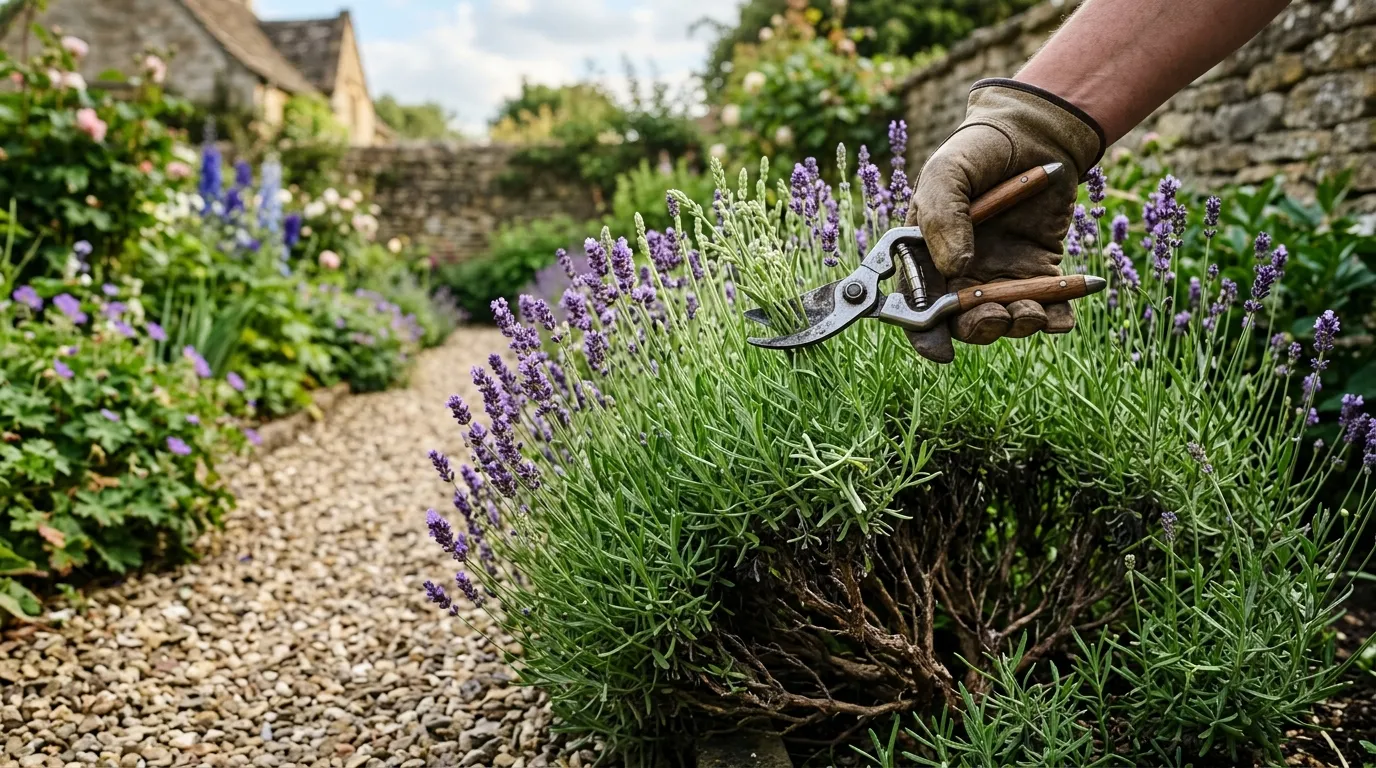 A 25mm tip prune on lavender in late May, never cutting into the woody base.
10. Evergreen shrubs (box, holly, bay): week 4 to early June
Evergreens come last in the May order because they need to push their first spring growth flush before they will respond well to a cut. By week 4 the new growth is hardened off enough to take a trim.
The method:
- Use sharp hand shears for box and bay, bypass secateurs for holly.
- Take 50-100mm off the outline, not more.
- Cut on a cloudy day or in the evening to avoid sun scorch on freshly exposed inner leaves.
- For topiary, work to a string line or template.
The common mistake is cutting in midday sun on a hot day, which scorches the exposed inner foliage within 24 hours. The plant recovers but the bronzed leaves look awful for six to eight weeks.
For box specifically, watch for box tree caterpillar damage from May onwards. Damaged shoots can be removed during the prune. See our guide on box tree moth treatment for control options.
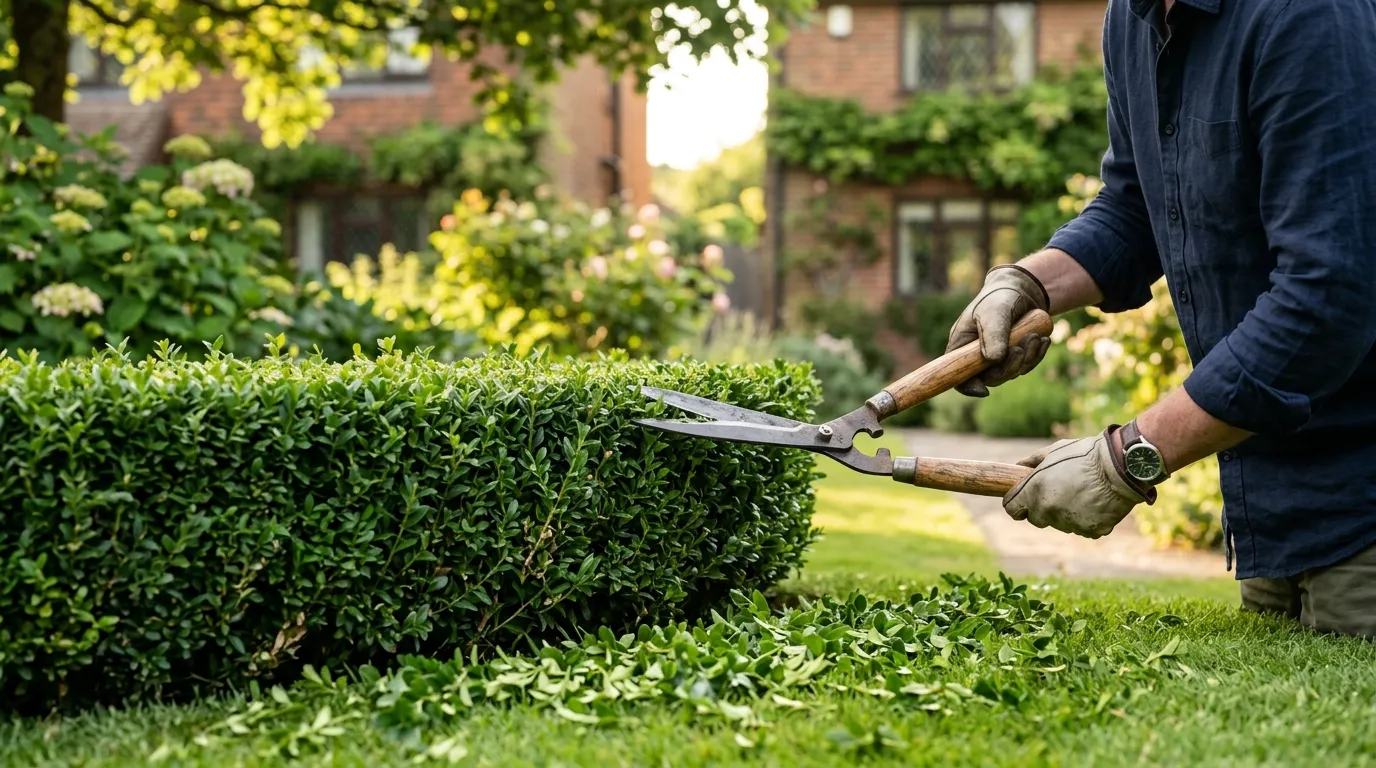 Box trimmed in late afternoon shade to avoid scorching the exposed inner foliage.
Tools for May pruning
The May round needs three tools and nothing more:
- Bypass secateurs: for stems up to 12mm. Sharpen the blade before the round starts. A blunt blade crushes stems instead of cutting cleanly, which slows healing.
- Long-handled loppers: for stems 12-30mm. The leverage saves your wrists on a long round.
- Folding pruning saw: for anything thicker than 30mm, usually only needed on old forsythia or ribes stems being removed at the base.
- Hand shears: for lavender tip-pruning and evergreen shaping. Pruning shears are not the same as topiary shears; the former are short-bladed and precise, the latter are long-bladed for sweeping cuts.
A pair of high-quality bypass secateurs costs £30-£50 and lasts 20+ years if sharpened and oiled annually. Cheap secateurs at £8 last one season before the spring fails. The investment pays back in time saved and cleaner cuts.
Disinfect blades with methylated spirits if you have any plants showing dieback, particularly when working on prunus or roses. A clean cut on a healthy plant does not need disinfection between branches.
Timing across UK regions
The May calendar shifts with latitude. The flowering windows below are working averages from sixteen years of records across UK client gardens:
| Region | Forsythia ends | Last May pruning date |
|---|---|---|
| South-east England | 1-8 May | 28 May |
| South-west England | 25 April-5 May | 25 May |
| Midlands | 5-12 May | 31 May |
| North of England | 10-18 May | 4 June |
| Scotland (Lowlands) | 15-22 May | 8 June |
| Wales | 5-12 May | 1 June |
| Northern Ireland | 8-15 May | 4 June |
In a cold spring all dates shift back by 7-14 days. In a warm spring they shift forward by the same. The flower-drop trigger is more reliable than the calendar.
Common mistakes across all May pruning
Five mistakes show up year after year in client gardens:
- Cutting too late. After mid-June the spring-flowering shrubs have set their next-year buds. A late cut removes 60% of next spring’s flowers.
- Trimming the outline. Most spring-flowering shrubs benefit from removing whole old stems at the base, not shearing the perimeter. Outline trimming produces dense unproductive growth.
- Hard cutting lavender in May. Save the hard cut for August. May is tip-only.
- Pruning prunus too early. Bacterial canker risk drops after mid-May. Pruning in March or April invites infection.
- Forgetting to disinfect on prunus and rose work. Bacterial canker spreads on dirty blades. A 30-second wipe with methylated spirits between plants prevents it.
For roses, the May job is deadheading the first flush rather than hard pruning. Deadheading techniques are covered in our deadheading flowers guide, and full rose pruning is in how to prune roses.
UK suppliers carry Felco at varied prices. Worth shopping around as discounts of £10-15 appear during winter sales. Cheap copies cost a third of the price but last roughly one year before the blade dulls beyond resharpening. The investment in a Felco pays back within three seasons on tool replacement alone.
Call to action
Now you have planned the May pruning round, the next step is feeding the borders. Read our guide on the best fertilisers for UK gardens for the post-prune feed. For longer-term shrub care, how to prune shrubs covers the full annual cycle. If your borders need a mid-summer pick-me-up, the Chelsea chop technique is the natural follow-up to May pruning. The Royal Horticultural Society’s pruning advice covers the underlying botany in more depth.
Our team produces practical UK gardening guidance from source research, contributor records and established horticultural practice. Editorial standards are overseen by Matt W.