Spring Pruning Guide: What to Cut Now
UK spring pruning guide for roses, shrubs, fruit trees and climbers. Month-by-month timing from expert trials in Staffordshire clay since 2012.
Key takeaways
- February to March: prune roses, buddleja, lavatera, hardy fuchsia, Group 3 clematis and cornus
- April: prune evergreen shrubs, hedges and tender plants once frost risk drops
- Never prune spring-flowering shrubs (forsythia, philadelphus, weigela) until after they bloom
- Fruit trees: winter prune apples and pears, but summer prune trained forms like espaliers
- One rule covers most decisions: if it flowers before June, prune after flowering, not before
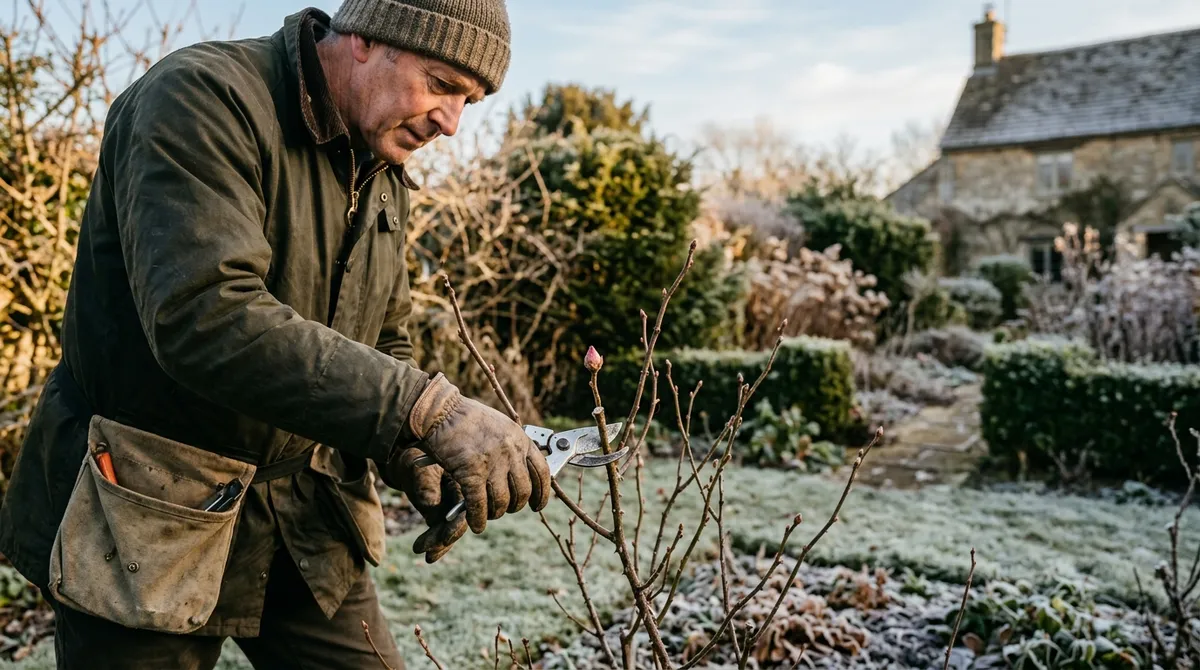
Spring pruning is the single most productive hour you can spend in the garden each year. The right cuts at the right time transform leggy shrubs into compact flowering machines and turn neglected roses into strong, healthy plants.
The challenge is knowing what to cut now, what to leave, and what to delay. Get the timing wrong and you strip away this year’s flower buds before they have a chance to open.
After 14 years of trialling 80+ shrub species in Staffordshire clay, I can tell you the rules are simpler than most books make them. This guide covers every common UK garden plant that needs attention between February and April.
The one rule that prevents most pruning mistakes
If a shrub flowers before June, it flowers on last year’s wood. Pruning it now removes those flower buds. Wait until the flowers fade, then prune.
If a shrub flowers from June onwards, it flowers on new growth. Pruning it now encourages strong new stems that will carry this summer’s flowers.
This single rule covers forsythia, philadelphus, weigela, deutzia and kerria (all spring bloomers on old wood) as well as buddleja, lavatera, caryopteris and hardy fuchsia (all summer bloomers on new wood).
Write it on a label and stick it to your secateurs.
What to prune in February
February is the start of the pruning season for deciduous plants that flower on new wood. The buds are swelling but growth has not yet started, giving you a clear view of the plant’s structure.
Roses are the priority job. Prune hybrid tea and floribunda roses in the last week of February to mid-March. Cut hybrid teas to 15-20cm above ground, always to an outward-facing bud. Floribundas are less severe at 25-30cm. Remove any dead, crossing or inward-growing stems completely.
Cornus (dogwood) grown for winter stem colour should be coppiced now. Cut all stems to 5-10cm above ground level. This produces the brightest new bark for next winter’s display.
Buddleja davidii responds well to hard pruning in late February. Cut the entire framework back to 60-90cm. Left unpruned, buddleja becomes a 4m tree with flowers only at the tips. Hard pruning keeps it compact with flowers at eye level.
Ornamental grasses like miscanthus and pennisetum should be cut to 10cm above ground before new growth emerges. The old foliage provided winter interest and insect habitat. Now it needs to go.
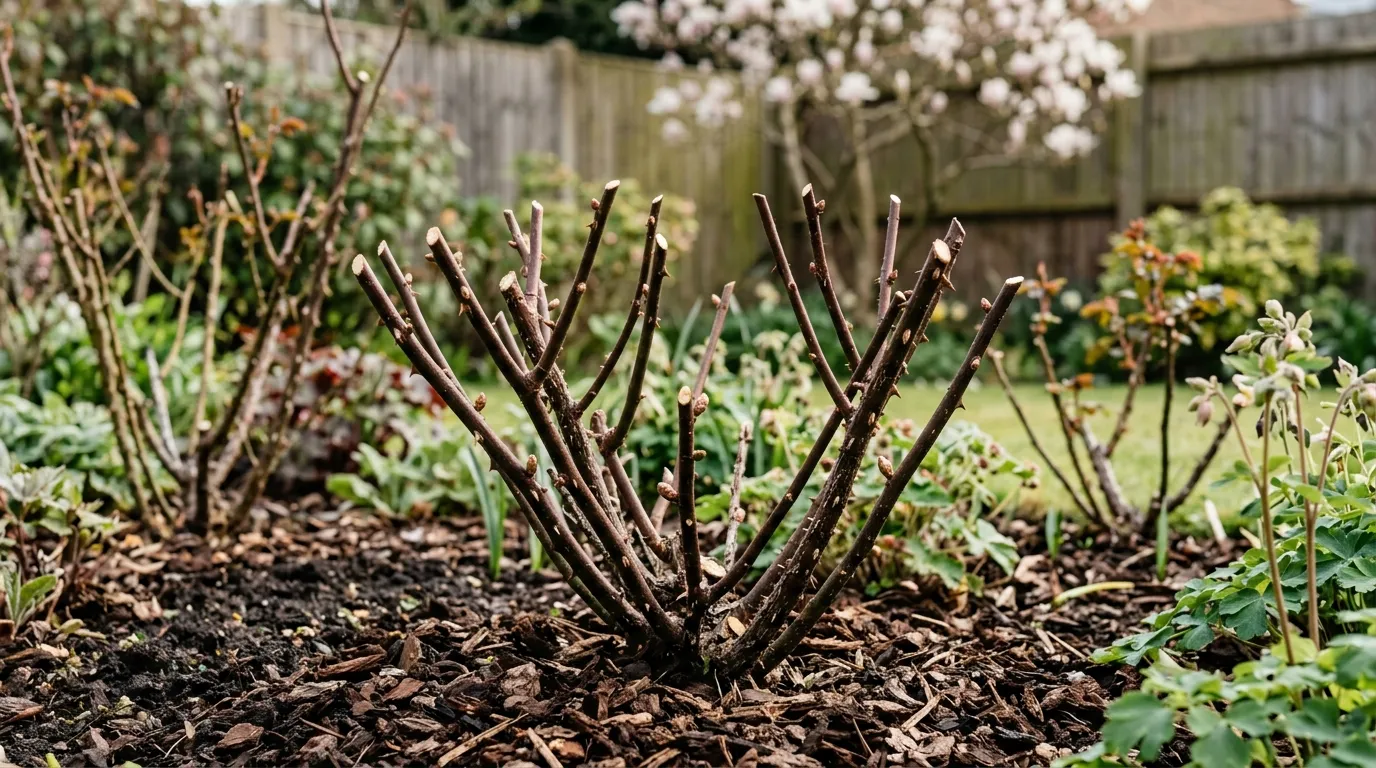
Hybrid tea roses pruned in late February to outward-facing buds. The framework should look like an open vase with no crossing stems.
What to prune in March
March is the busiest pruning month. The list of plants to tackle is long but the work is satisfying because you see results within weeks.
Hardy fuchsia: Cut all stems to ground level or to 5cm above the woody base. New growth shoots from the base and flowers from July onwards. In mild coastal areas, you can leave a higher framework.
Lavatera (tree mallow): Hard prune to 30cm. These fast-growing shrubs put on 1.5m of new growth each season. Without hard pruning they become woody and top-heavy, snapping in summer storms.
Penstemons: Cut back old stems to the lowest pair of fresh green shoots. Do not cut into bare wood as penstemons rarely regenerate from it. In cold gardens, delay this until you see new growth emerging.
Clematis Group 3: Hard prune to 15-30cm above ground. All of this season’s flowers will come on new stems.
Lavender: Give a light trim to remove old flower stalks and the top centimetre of growth. Never cut into old bare wood. Lavender pruning is about maintaining shape rather than hard renewal.
Wisteria: The second of two annual prunes. Shorten the summer pruned shoots to 2-3 buds from the main framework. This concentrates energy into flower bud production.
What to prune in April
April pruning focuses on evergreens and tender plants that benefit from waiting until the worst frost risk has passed.
Evergreen shrubs like choisya, viburnum tinus, photinia and laurel can be shaped and reduced now. Cut back to a side branch or bud within the leafy canopy. Avoid cutting into bare wood on broadleaf evergreens as regrowth is slow and patchy.
Box hedging gets its first trim of the season in late April. Use sharp hedging shears and cut to the shape you want for summer. A second trim in late August maintains the line.
Santolina and helichrysum: Hard prune to 15cm. These Mediterranean sub-shrubs get leggy without annual hard pruning. New silver growth follows quickly.
Rosemary: Only light pruning into green growth. Rosemary does not regenerate from old bare wood, so never cut below the last green leaves.
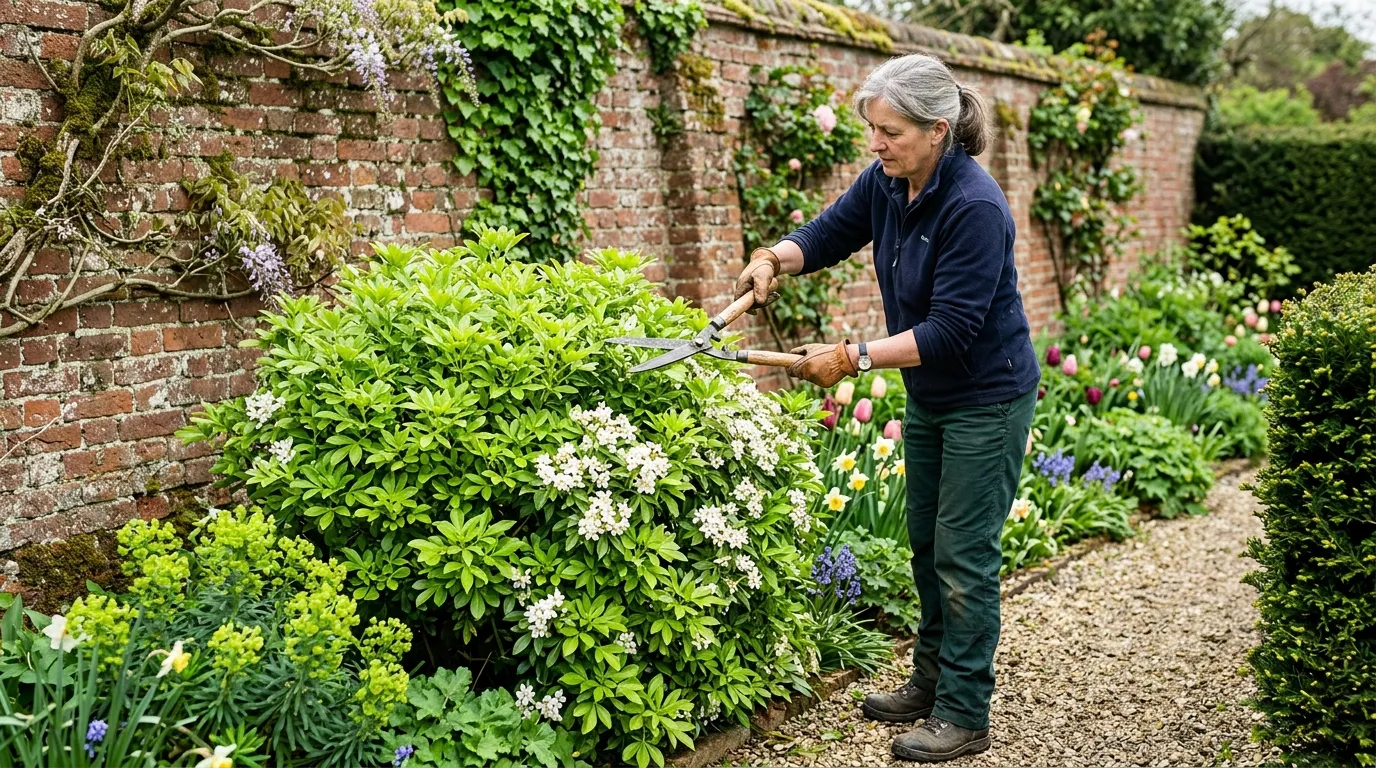
April is the right time for shaping evergreen shrubs. Choisya and photinia respond well to hard pruning once frost risk drops.
What NOT to prune in spring
This list is as important as the pruning list. These plants flower on last year’s wood and pruning now removes the flower buds:
| Plant | Flowers on | Prune after flowering |
|---|---|---|
| Forsythia | Old wood | May |
| Philadelphus | Old wood | July |
| Weigela | Old wood | June |
| Deutzia | Old wood | June |
| Kerria | Old wood | May |
| Spiraea (spring types) | Old wood | June |
| Camellia | Old wood | May |
| Rhododendron | Old wood | June |
| Clematis Group 1 | Old wood | May to June |
| Flowering cherry | Old wood | After flowering |
The same applies to spring-flowering clematis, magnolia, witch hazel and winter jasmine. If it is covered in flower buds or actively flowering right now, put the secateurs down.
Fruit tree pruning in spring
Apple and pear trees should ideally be winter pruned (November to February). If you missed the window, light corrective pruning is still possible in March. Remove dead wood, crossing branches and water sprouts (vertical shoots growing straight up from horizontal branches).
Trained forms (espaliers, cordons, fans) are an exception. These are summer pruned in July and August, not spring. Spring pruning encourages excessive vegetative growth instead of fruit bud formation.
Stone fruit (cherry, plum, damson) should only be pruned between May and August when sap flow is strongest. This reduces the risk of silver leaf disease entering through pruning wounds.
Soft fruit varies by type:
- Autumn-fruiting raspberries: cut all canes to ground level in February
- Summer-fruiting raspberries: only remove last year’s fruited canes (brown ones), keep new green canes
- Gooseberries and redcurrants: spur prune sideshoots to 2-3 buds in February
- Blackberries: remove fruited canes after harvest, tie in new ones
Essential pruning tools and technique
Clean cuts heal faster and reduce disease risk. The three tools you need:
Bypass secateurs for stems up to 15mm diameter. Bypass models (curved blade passing a flat counter-blade) make cleaner cuts than anvil types. Felco 2 or Felco 6 are the industry standards. Sharpen and oil them at the start of every pruning session.
Loppers for stems 15-35mm. Long handles provide leverage for thicker wood. Bypass loppers again outperform anvil types for live wood.
Pruning saw for anything over 35mm. A folding pull-saw cuts on the back stroke and produces clean, fast cuts. Avoid bow saws in tight spaces.
Cutting technique: Always cut to just above a bud, angled slightly away from the bud to shed rain. On opposite-budded plants like hydrangeas, cut straight across above a bud pair. Remove the cut material and compost it unless it shows signs of disease.
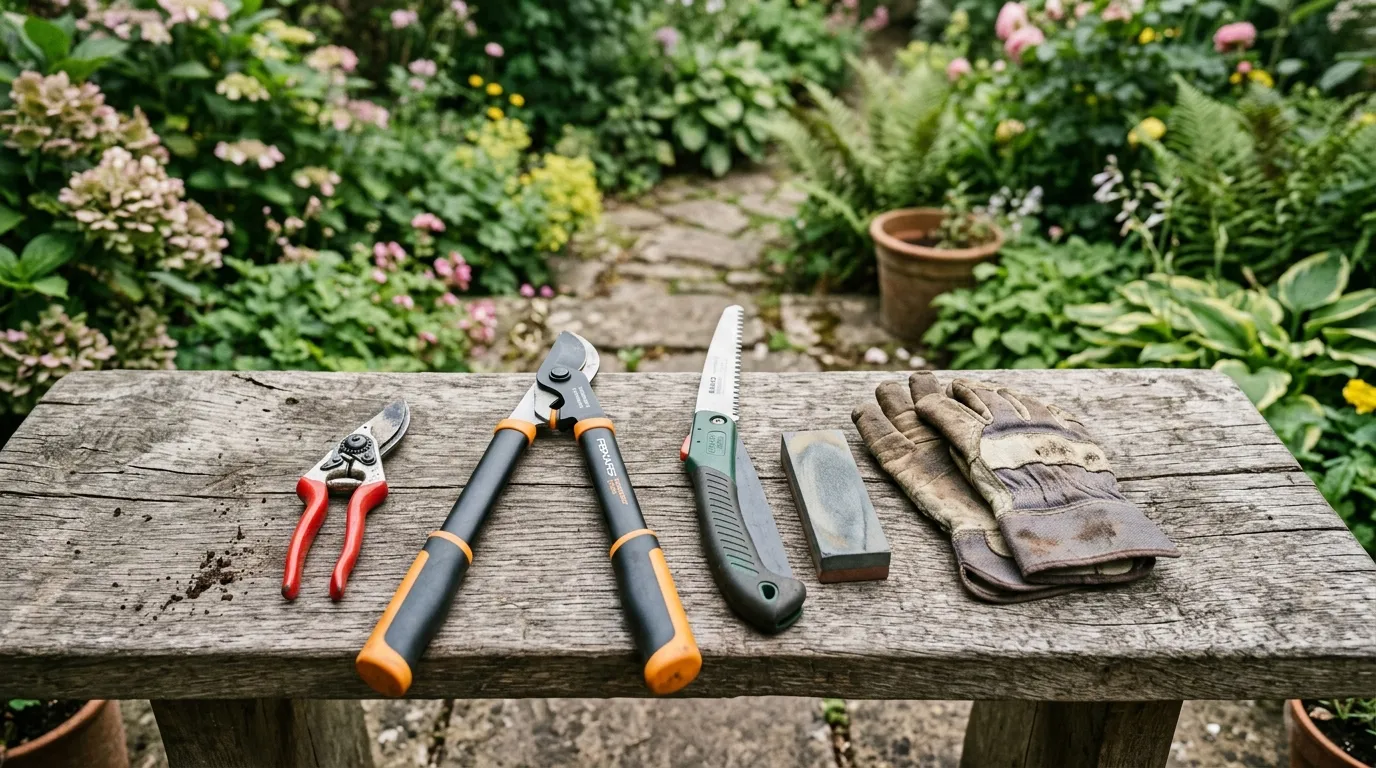
The three essential pruning tools: bypass secateurs, loppers and a folding pruning saw. Clean, sharp blades make better cuts and reduce disease risk.
Spring pruning checklist
Use this quick-reference list for the most common UK garden plants:
| Plant | When | How hard | Notes |
|---|---|---|---|
| Hybrid tea roses | Feb to Mar | 15-20cm | Outward-facing bud |
| Floribunda roses | Feb to Mar | 25-30cm | Outward-facing bud |
| Climbing roses | Feb to Mar | Sideshoots to 2-3 buds | Keep main framework |
| Buddleja davidii | Late Feb | 60-90cm | New framework each year |
| Hardy fuchsia | Mar | Ground level | New shoots from base |
| Lavatera | Mar | 30cm | Prevents wind damage |
| Cornus (stem colour) | Feb to Mar | 5-10cm | Coppice for bright bark |
| Clematis Group 3 | Feb to Mar | 15-30cm | Above a bud pair |
| Lavender | Mar to Apr | Light trim only | Never cut bare wood |
| Wisteria | Feb | 2-3 buds | Second prune of the year |
| Penstemons | Mar | To lowest new shoots | Wait for green growth |
| Ornamental grasses | Feb to Mar | 10cm | Before new growth starts |
| Evergreen shrubs | Apr | Shape as needed | After last frost |
| Box hedging | Late Apr | To desired shape | Second trim in August |
Related reading
Lawrie has been gardening in the West Midlands for over 30 years. He grows his own veg using no-dig methods, keeps a wildlife-friendly garden, and writes practical advice based on real UK growing conditions.