Key takeaways
- Summer prune in late July to August
- Cut new whippy shoots back to 6 leaves (about 150mm)
- Forces formation of flower spurs for next year
- Tie in growth needed to extend the structure
- Pair with winter prune in January-February
- Doubles next year's flowering versus unpruned plants
Wisteria after flowering needs the August summer prune to set up next year’s display. Cut the new whippy shoots back to 6 leaves and the plant responds by forming flower buds rather than more leaves. This guide covers the technique, the timing, and the pairing with winter pruning that doubles UK wisteria flowering.
After 6 years of UK wisteria management at Staffordshire on a 12m south wall, the patterns are clear. August summer prune decides next year’s flower count. 6-leaf cut is the right length. Combined summer plus winter prune beats either single prune.
Why Summer Pruning Matters
UK wisteria flowering depends on flower buds forming on short spurs from the main framework. Without pruning, the plant produces long whippy summer growth that sets very few flower buds.
The pruning logic:
- Long shoots = leafy growth, few flowers
- Short stubs = flower spurs, many flowers
- Summer prune cuts long shoots back to short stubs
- Plant responds by forming flower buds on the stubs
- Winter prune refines the stubs further
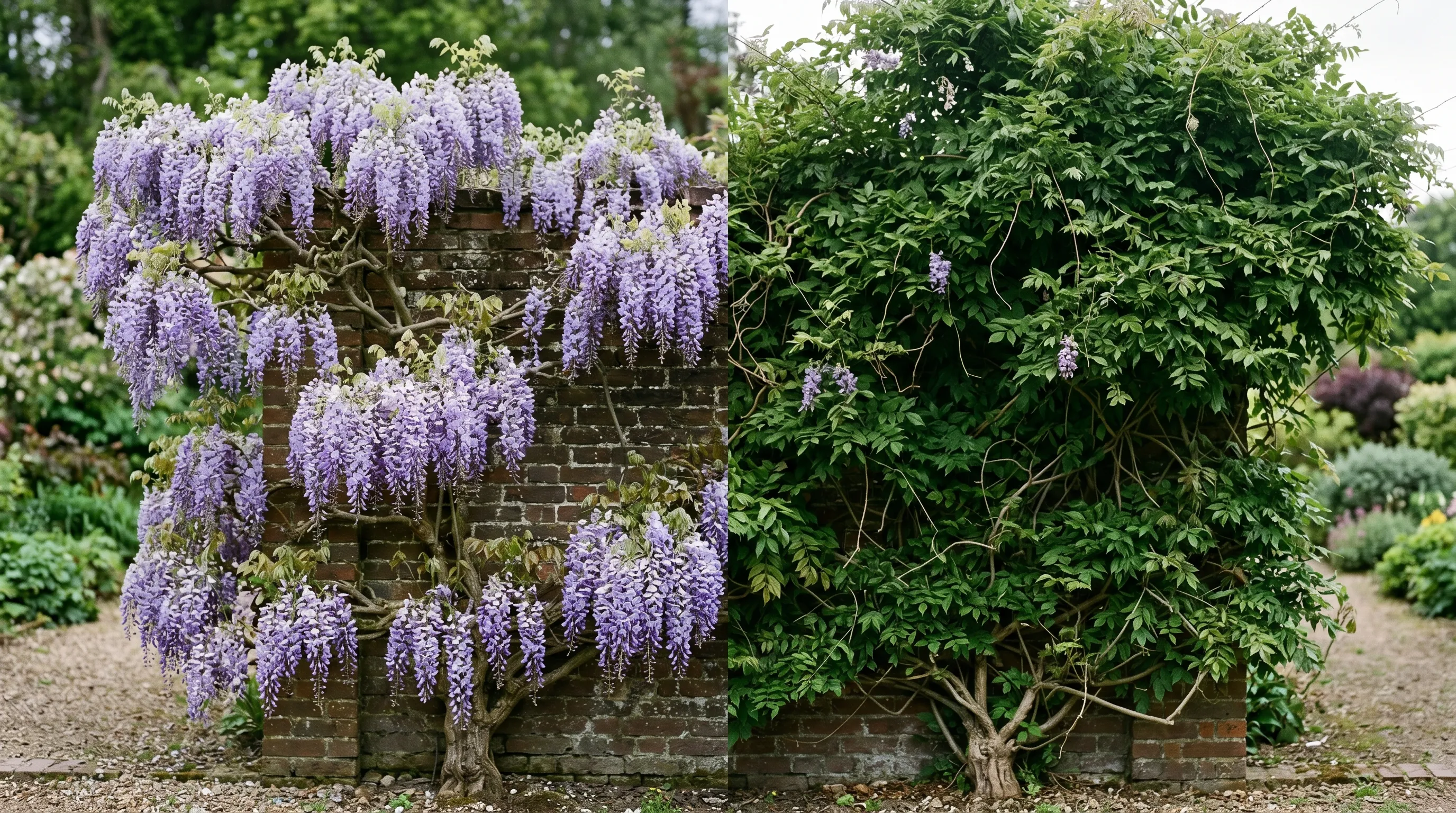
The Staffordshire wisteria produced 40-50 flower racemes in years following both summer and winter pruning. Years with only winter pruning: 18-25 racemes. Years with no pruning: 5-12 racemes plus extensive vegetative tangle.
For the wider UK wisteria growing approach, our wisteria guide covers planting, support and full-year care. For the winter pruning that follows the summer cut, our pruning guide covers the January-February refinement.
When to Summer Prune
Timing varies slightly by UK region.
| Region | Summer prune window |
|---|---|
| Southern England | Late July to mid August |
| Midlands | Early to mid August |
| Northern England | Mid to late August |
| Scotland | Late August to early September |
The signal is the end of new whippy growth. The plant’s main growth surge for the season finishes by late July to mid August. Pruning while growth continues triggers another round of whippy regrowth.
Test: look at the youngest leaves on a whippy shoot. If they’re still pale and tender, growth is continuing; wait. If they’re hardened and dark green, growth has stopped; time to prune.
The Summer Prune Technique
Each whippy shoot gets a single cut.
Method:
- Identify each new whippy shoot growing from the main framework
- Count 6 leaves from the base of the shoot
- Cut just above the 6th leaf (around 150mm from framework)
- Compost the removed tip
- Continue across the whole plant
For a typical UK garden wisteria covering 10-15m² of wall, the summer prune takes 1-2 hours. A 30m mature wisteria across a house front takes 4-6 hours.
Equipment:
- Sharp bypass secateurs
- Stepladder (for high growth)
- Long-arm pruner (for hard-to-reach high shoots)
- Strong gardening gloves
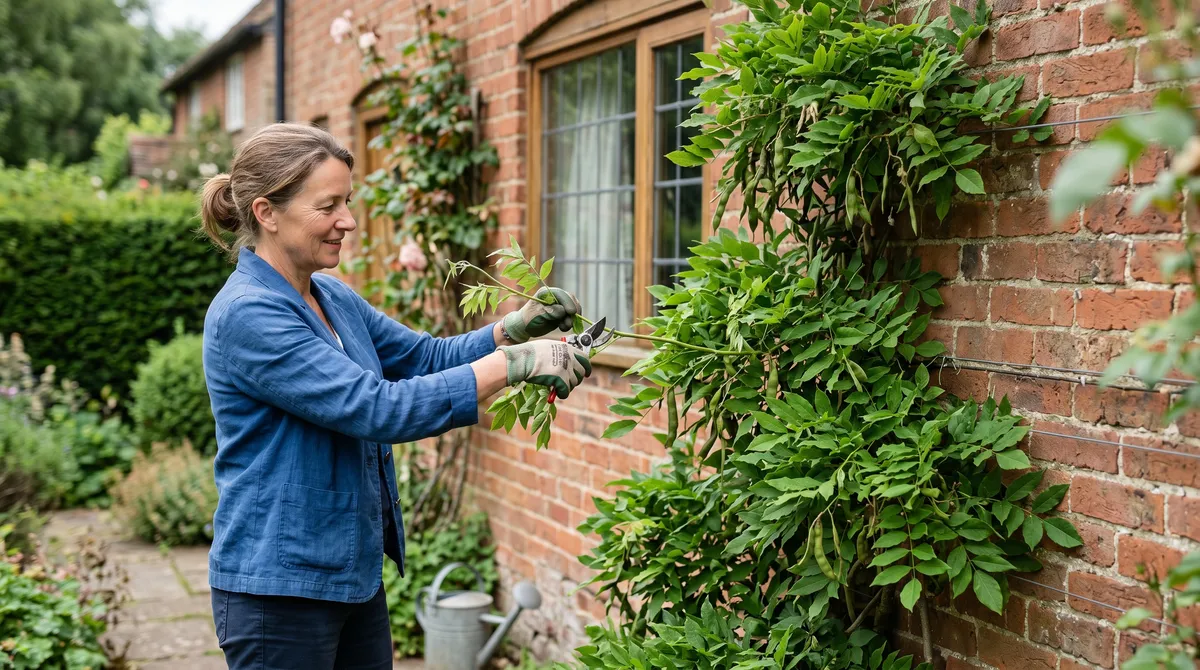
The 6-leaf rule: counts from the leaf joint at the base of the new shoot. Each leaf is on a stem segment. Cut just above the 6th leaf joint. The remaining 6-leaf stub develops into a flower spur over autumn and winter.
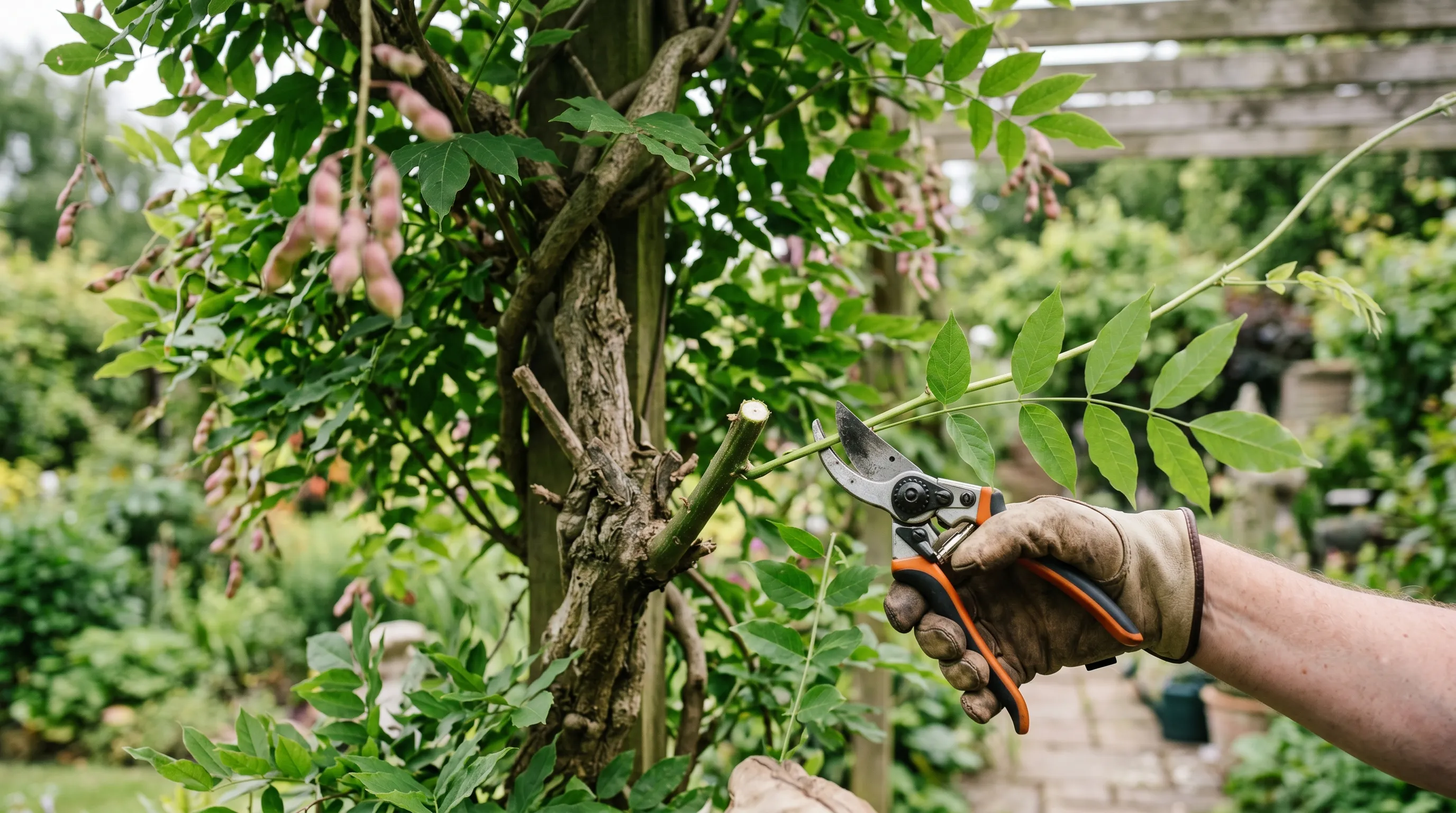 The 6-leaf summer prune cut on a Staffordshire wisteria. Cut just above the 6th leaf joint, leaving approximately 150mm of stub. The stub develops into a flower spur over autumn-winter, forming next year’s flower buds.
Tying In Structural Growth
Not every shoot gets pruned. Shoots needed to extend the structure (filling gaps, extending across walls or pergolas) get tied in instead.
Method:
- Identify gaps in the main framework
- Select a whippy shoot growing in the right direction
- Tie in to wires/training using soft twine
- Train horizontally (horizontal growth produces more flower buds than vertical)
- Allow this shoot to continue growing for the rest of the season
- Prune this shoot lightly in winter to refine
A typical UK wisteria needs 0-3 new structural shoots per year once established. All other shoots get the 6-leaf cut.
After the Summer Prune
Two follow-up jobs in August-September.
1. Feed. Apply rose feed or potash-rich fertiliser at 70g per m² around the drip line. Water in.
2. Watering. Continue dry-week watering through August-September. Wisteria flower buds form on the summer-pruned stubs through these two months.
For the wider summer feeding programme, our fertiliser guide covers UK feed options.
 Late-summer feeding on the Staffordshire wisteria after summer prune. 70g per m² of rose feed around the drip line, lightly raked into the soil and watered in. Supports flower bud development through autumn.
Common Mistakes With UK Wisteria Summer Pruning
Mistake 1: pruning too early. Cutting while plants are still growing triggers more whippy regrowth. Wait until late July-August.
Mistake 2: pruning too short. Cutting below 6 leaves removes potential flower buds. The 6-leaf cut is the right depth.
Mistake 3: skipping summer entirely. Winter prune alone produces 50-70% of best flowering. Add summer prune for best results.
Mistake 4: heavy nitrogen feed. Produces leafy growth not flowers. Use rose or potash feed.
Mistake 5: pruning everything. Some shoots are needed for structural extension. Tie those in; only prune the rest.
For the wider UK wisteria growing approach, our wisteria guide covers planting and training. For the winter prune that pairs with this summer prune, our winter pruning guide covers the January refinement.
Wisteria Calendar UK Month-by-Month
| Month | Wisteria task |
|---|---|
| January | Winter prune (cut stubs to 2-3 buds) |
| February | Check support structure for winter damage |
| March | Apply rose feed at base |
| April | Watch for buds emerging |
| May | Peak flowering (most varieties) |
| June | Dead-head spent flower racemes |
| July | Watch for end of whippy growth |
| August | Main summer prune window |
| September | Tie in any structural shoots |
| October | Continue inspection; light tidy |
| November | Plant dormancy approaching |
| December | Plan next year’s training |
Frequently asked questions
When should I prune wisteria after flowering?
Late July to August in the UK, after the spring flowers have faded. Cut back this year’s new whippy growth to 6 leaves (about 150mm from the main framework). This summer prune forces flower bud formation for next year. Combined with a January winter prune, it produces the best UK wisteria flowering.
How do I prune a wisteria in summer?
Identify new whippy shoots growing from the established framework. Cut each shoot back to 6 leaves (about 150mm length). The remaining short stub develops into a flower spur over the following autumn. Use sharp secateurs and cut cleanly just above a leaf joint.
Will my wisteria flower if I don’t prune?
Yes but much less abundantly. Unpruned wisteria produces lots of leaves and few flowers because the plant cannot set flower buds in dense leafy growth. UK trials show pruned plants produce 2-3 times more flowers than unpruned plants of the same age and variety. Summer plus winter pruning is the standard for productive UK wisteria.
Should I feed wisteria after flowering?
Yes. Apply rose feed or potash-rich fertiliser at 70g per m² around the drip line in May-June. Avoid high-nitrogen feeds; they produce lush growth and few flowers. The mid-summer feed plus summer pruning together set up the strongest flowering for next year.
What is the difference between summer and winter wisteria pruning?
Summer prune (July-August): cut new growth to 6 leaves to force flower bud formation. Winter prune (January-February): cut back the same shoots further to 2-3 buds. Both prunes are needed for best flowering. Summer prune is more important; winter is the refining cut.
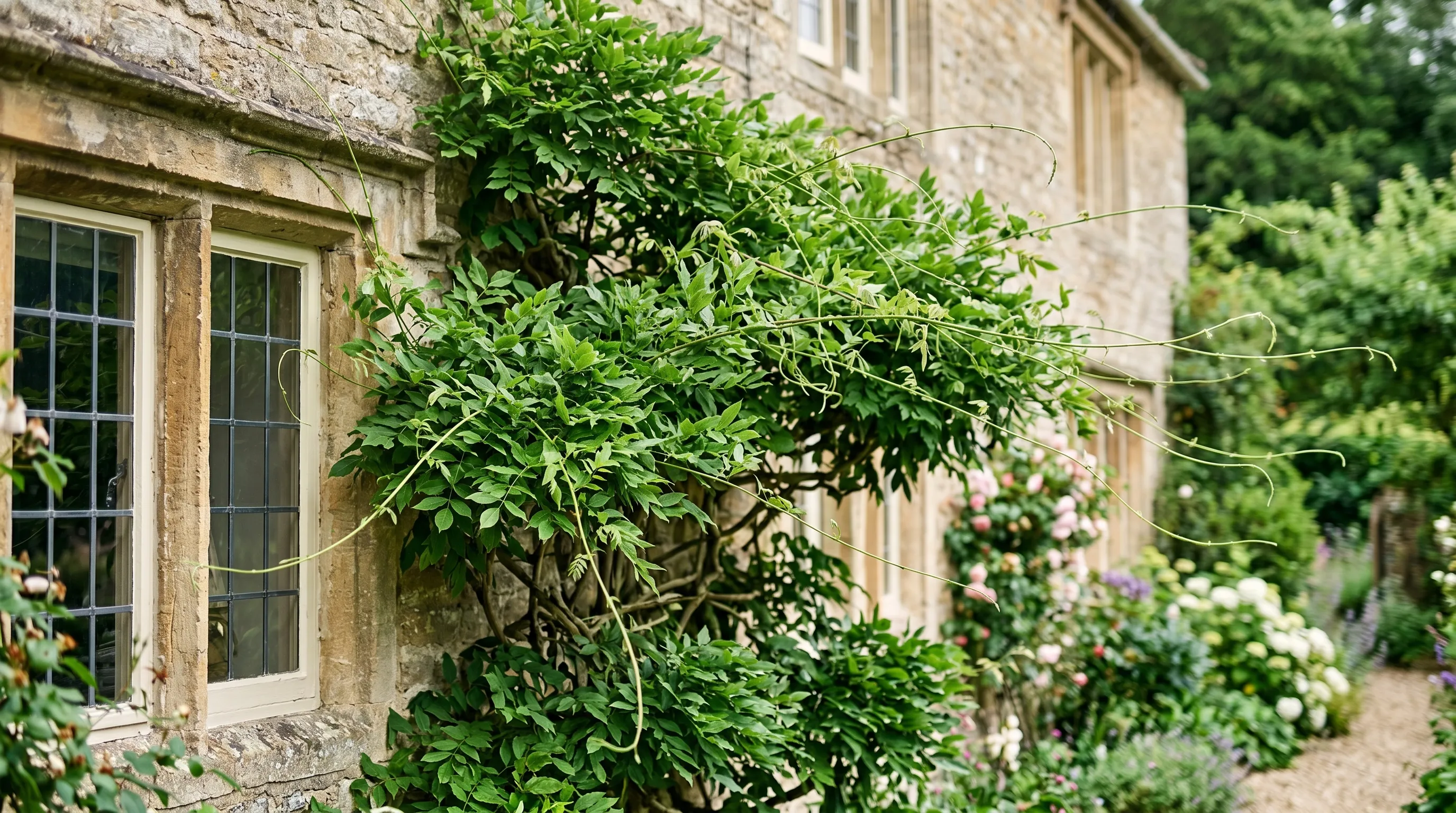 The Staffordshire wisteria before summer pruning in early August. Long whippy shoots extending in all directions. Without pruning, these would produce dense leafy growth and few flowers next year.
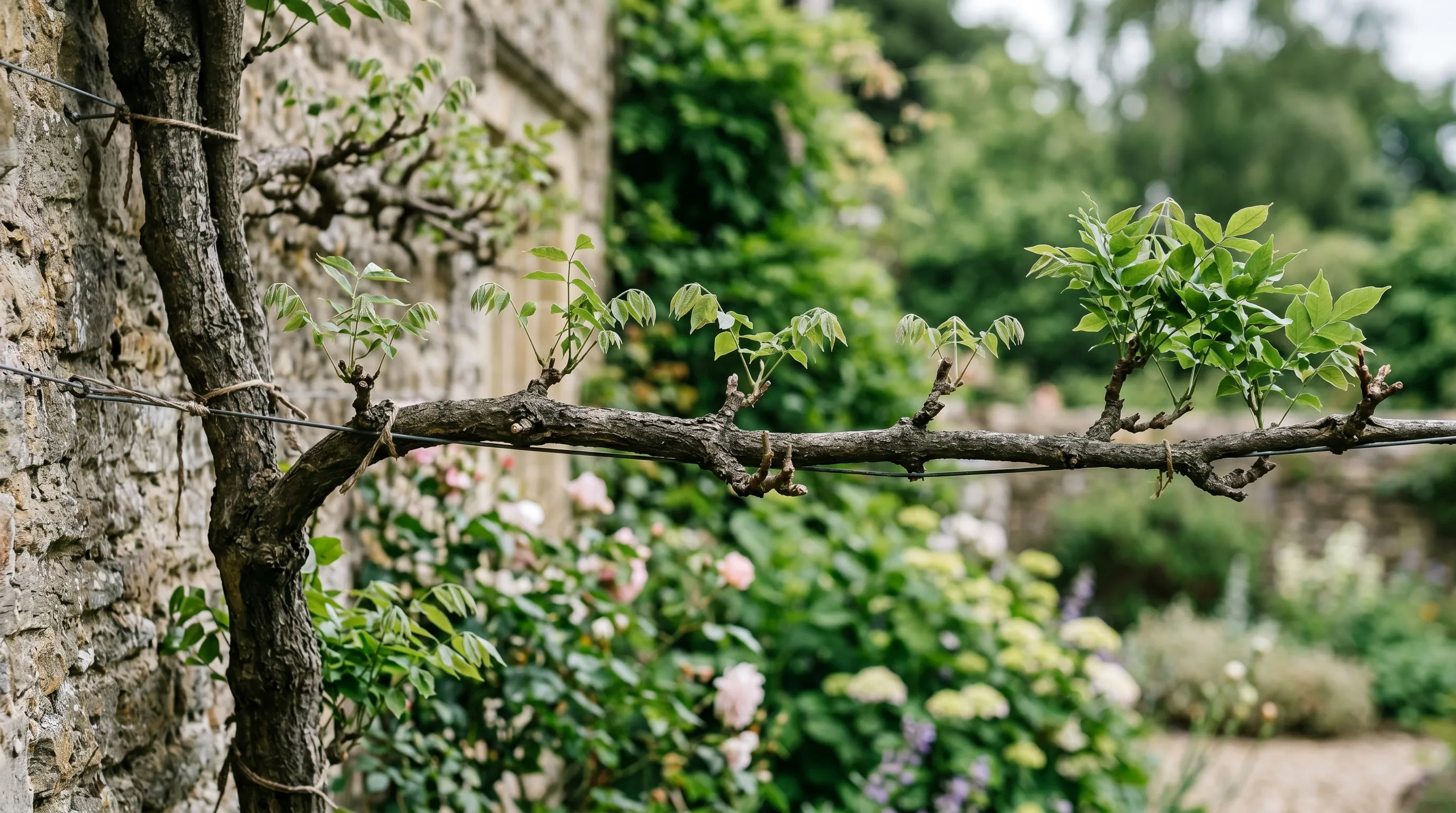 The same wisteria after summer pruning. Whippy growth reduced to 6-leaf stubs along the framework. Tidy appearance and visible structure. The stubs become next year’s flower spurs.
Now plan the wider wisteria year
Summer pruning is one of two annual cuts. For the winter prune that pairs with it, our pruning guide covers the January refinement. For the wider wisteria growing approach, our wisteria guide covers planting, training and support. For the related UK climbing plant care, our hydrangea guide covers a related summer-flowering plant. And for the broader UK feeding programme that supports wisteria flowering, our best fertilisers UK guide covers the wider feed options.
Our team produces practical UK gardening guidance from source research, contributor records and established horticultural practice. Editorial standards are overseen by Matt W.